8 Best Puzzle Toys for Dogs (2026 Mental Stimulation Guide)

If your dog bounces off the walls after a long walk, the problem probably isn’t a lack of exercise — it’s a lack of thinking. Finding the best puzzle toys for dogs can change everything: a mentally tired dog is a calm, happy, well-behaved dog. Puzzle toys channel your pup’s natural problem-solving instincts into a game that burns brain energy, slows down fast eaters, and keeps boredom (and the chewed-up couch that comes with it) at bay. Whether you have a clever border collie or a food-motivated beagle, there’s a puzzle toy below that matches your dog’s brainpower.
How to Choose a Puzzle Toy
Not all puzzle toys are created equal, and the “best” one depends entirely on your dog. Here’s what to consider before you buy:
- Difficulty level: Start easy. Beginner puzzles (Level 1) have large treat compartments and simple sliding or flipping actions. Intermediate (Level 2) adds multi-step moves, and advanced (Level 3+) combines sequences your dog must learn. Buy one step below what you think your dog can handle — frustration kills the fun fast.
- Durability: Plastic puzzle boards are for supervised play only, not chewing. If your dog is a power chewer, choose rubber-based stuffable toys (like KONG-style designs) that can take a beating, and reserve boards for brain-work sessions.
- Cleaning: Treat puzzles get grimy. Look for dishwasher-safe pieces or designs that come apart easily for washing. Removable lids and nooks that trap old food are a bacteria party waiting to happen.
- Size: Match the toy to your dog’s nose and paws. Tiny compartments frustrate big dogs, and small dogs can’t budge stiff sliders meant for Labs.
The 8 Best Puzzle Toys for Dogs
1. Outward Hound Nina Ottosson Dog Tornado — Best Overall
Best for: Most dogs, beginner to intermediate

The Dog Tornado is the puzzle toy I recommend to almost every dog owner first. Three spinning layers rotate independently, hiding treats underneath bone-shaped covers. Dogs learn to spin, lift, and nudge — a satisfying chain of small wins that keeps them engaged far longer than a simple treat ball.
- Pros: Adjustable difficulty (add or remove covers), easy to clean, suits all sizes
- Cons: Supervised play only; clever dogs may learn it quickly
Check price: Outward Hound Nina Ottosson Dog Tornado
2. KONG Wobbler — Best for Active Dogs
Best for: Food-motivated dogs who need to move

The Wobbler is part puzzle, part exercise machine. Your dog bats it with nose and paws, and the weighted base keeps it rocking unpredictably, spilling kibble as it goes. It’s one of the few puzzle toys that also gets your dog moving around the room — great for rainy days when walks get cut short. It doubles as a slow feeder for dogs who inhale dinner.
- Pros: Durable, dishwasher safe, works as a slow feeder
- Cons: Noisy on hard floors; large size can overwhelm toy breeds
Check price: KONG Wobbler
3. Outward Hound Nina Ottosson Dog Brick — Best Intermediate
Best for: Dogs ready for a real challenge

When your dog masters beginner boards, the Dog Brick is the natural next step. Dogs must flip hinged lids, slide red panels, and lift bone-shaped covers — three distinct moves in one toy. The variety keeps smart dogs from getting bored, and you can increase the challenge by loading some compartments and leaving others empty so there’s no pattern to memorize.
- Pros: Three puzzle types in one, BPA/PVC/phthalate-free, multiple difficulty tweaks
- Cons: Plastic construction — not for unsupervised chewing
Check price: Outward Hound Nina Ottosson Dog Brick
4. West Paw Toppl — Best Stuffable Puzzle
Best for: Dogs who love licking and frozen treats

The Toppl looks simple, but that’s its genius. Fill it with kibble, peanut butter, or wet food, freeze it, and you get a long-lasting licking challenge that soothes anxious dogs and extends mealtime. The wide opening makes it easier to fill (and for smaller mouths to access) than classic cone-shaped stuffables, and it’s made in the USA from dishwasher-safe Zogoflex rubber.
- Pros: Freezable, dishwasher safe, great for anxious dogs
- Cons: Smart dogs finish it fast when unfrozen; not as challenging as board puzzles
Check price: West Paw Toppl
5. Snuffle Mat — Best Gentle Enrichment
Best for: Puppies, seniors, and nervous dogs

A snuffle mat is the lowest-pressure puzzle there is: scatter kibble in the fabric strips and let your dog’s nose do the work. It taps into natural foraging instincts, slows down fast eaters, and builds confidence in shy or nervous dogs because there’s no wrong move. It’s also the gentlest option for senior dogs or pups recovering from injury who can’t do much else.
- Pros: Zero learning curve, washable, great confidence-builder
- Cons: Needs regular washing; chewers can shred the fabric
Check price: Snuffle Mat for Dogs
6. LickiMat Soother — Best for Calming
Best for: Anxious dogs and slow feeding

Repetitive licking releases calming endorphins in dogs, which makes a lick mat one of the best tools for bath time, nail trims, crate training, and thunderstorm anxiety. Spread it with a thin layer of yogurt, pumpkin, or peanut butter and your dog settles into a focused, soothing rhythm. It’s less of a “puzzle” and more of a mindfulness exercise — and many dogs need exactly that.
- Pros: Excellent anxiety reducer, slows eating, easy to clean
- Cons: Supervised use only; determined chewers can bite through silicone
Check price: LickiMat Soother
7. TRIXIE Move-2-Win — Best Advanced Puzzle
Best for: Genius-level dogs who need a real test
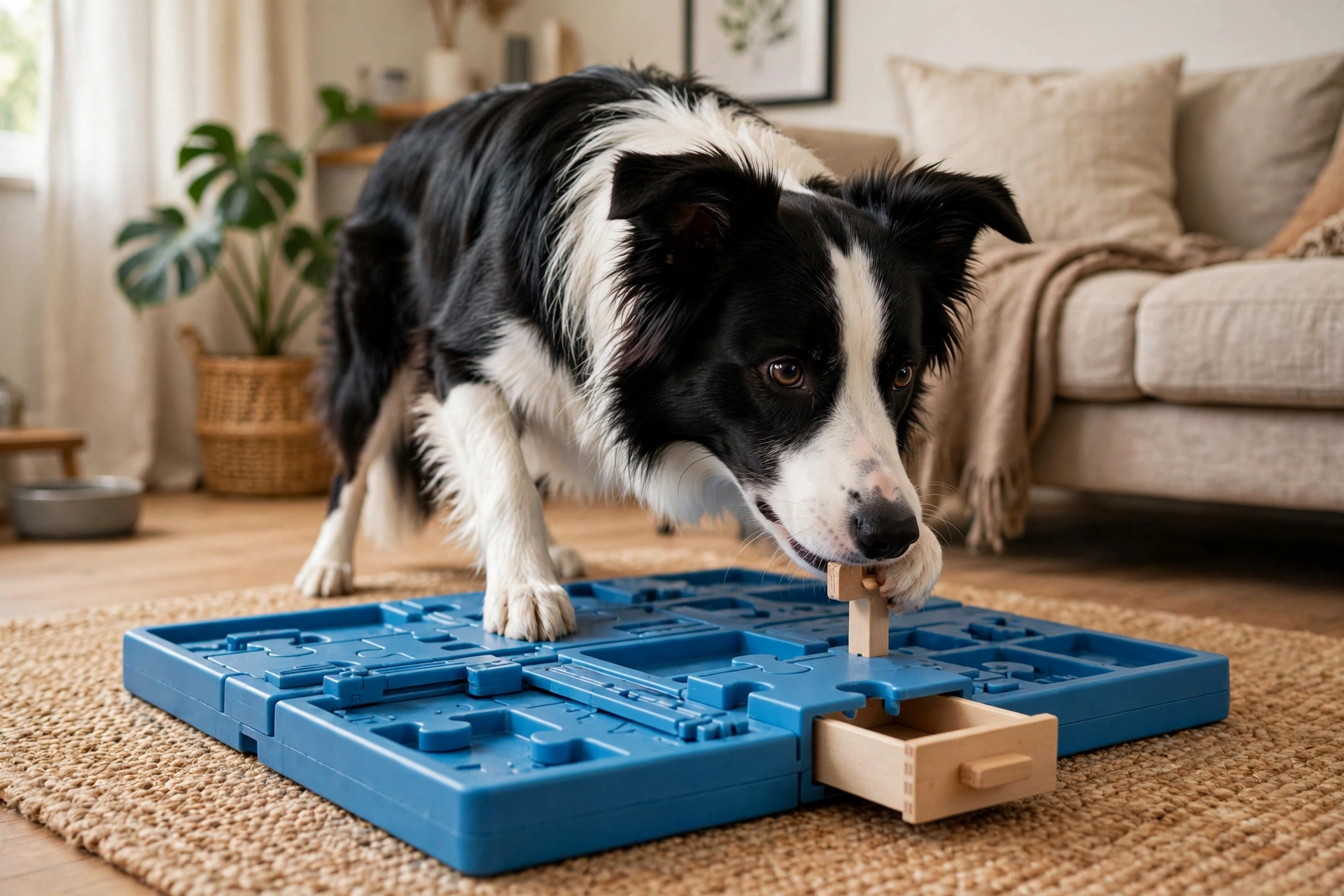
For dogs who solve intermediate puzzles in minutes, the Move-2-Win is a worthy adversary. This Level 3 strategy game layers three levels of play: sliding knobs along tracks to open drawers, pulling rope loops, and lifting cone stoppers to release locked compartments. It demands sequential thinking and concentration — the closest thing to homework your dog will ever get.
- Pros: Genuinely challenging, training tips included, non-slip base
- Cons: Too hard for beginners; smaller pieces need supervision
Check price: TRIXIE Move-2-Win Dog Puzzle
8. KONG Classic — Best Beginner
Best for: First-time puzzle owners and puppies
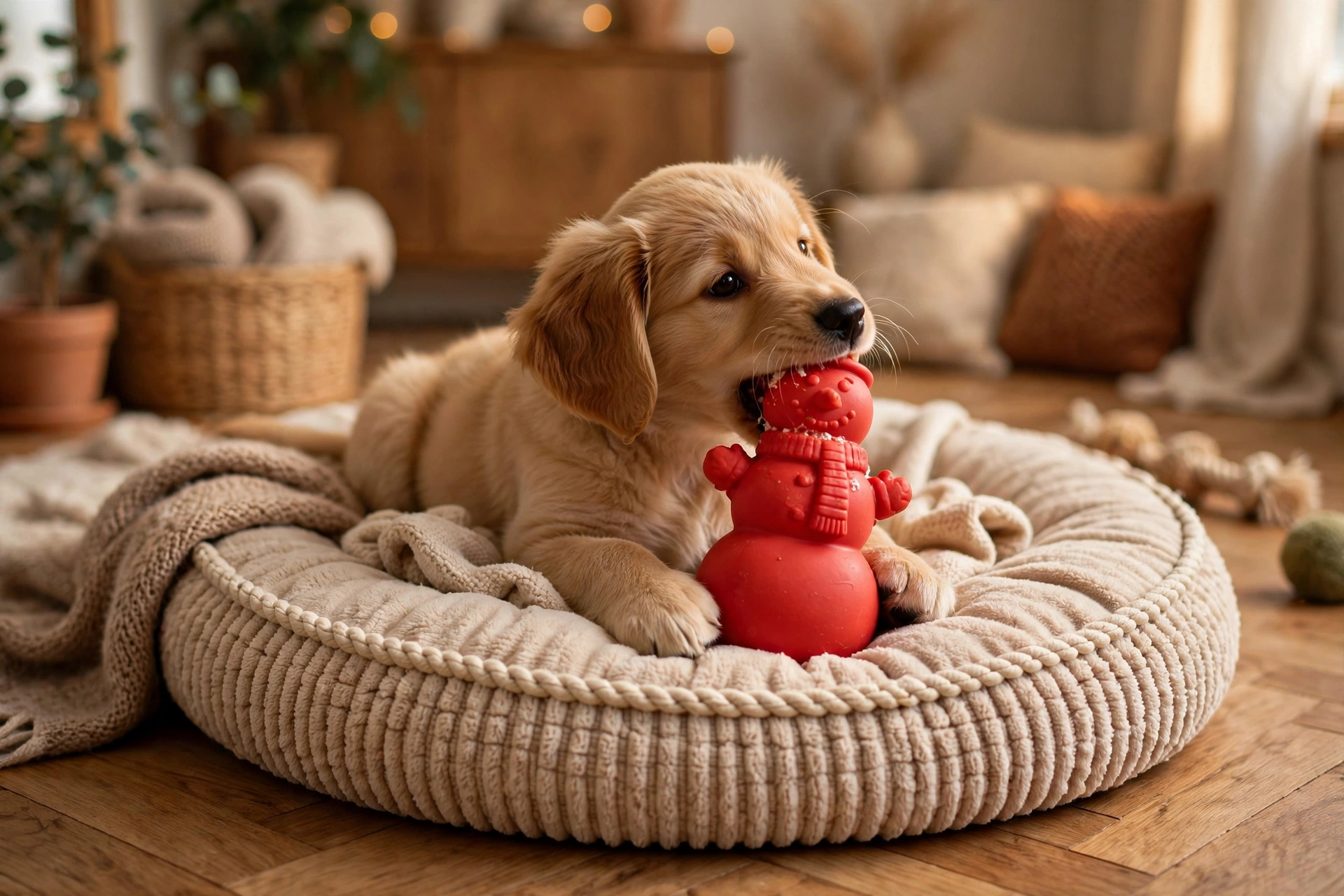
The original puzzle toy is still one of the best. Stuff it with treats, smear the inside with peanut butter, freeze it, and hand it over — puppies and puzzle newbies learn the game in seconds. The nearly indestructible red rubber stands up to determined chewers, and it’s the cheapest way to find out whether your dog enjoys puzzle play before investing in fancier boards.
- Pros: Extremely durable, freezer-friendly, affordable
- Cons: Easy for smart dogs; pick the right size or treats fall out too fast
Check price: KONG Classic
Matching Puzzles to Your Dog’s Personality
Not every dog solves puzzles the same way. A high-energy Jack Russell wants fast, bouncy action like the Wobbler; a thoughtful border collie thrives on layered boards like the Move-2-Win; a nervous rescue dog does best with the zero-pressure success of a snuffle mat. Watch how your dog plays for the first few sessions: persistent nose-nudgers love sliders and spinners, paw-swipers prefer flippable lids, and lickers are happiest with stuffables and lick mats. When the toy matches the dog’s natural style, engagement time doubles — and so does the calming effect.
Age matters too. Puppies under six months have short attention spans, so stick with beginner-level toys and very short sessions of five minutes or less. Adult dogs in their prime can handle intermediate and advanced boards. Senior dogs often do best going back to basics: snuffle mats and lick mats are gentle on aging joints and declining eyesight while still giving them a rewarding job to do.
Tips for Introducing Puzzle Toys
- Start embarrassingly easy. Load the puzzle so treats are visible and fall out with minimal effort. Your dog’s first session should end in a win, not frustration.
- Demonstrate it once. Move the sliders or spin the layers with your hand while your dog watches. Most dogs imitate surprisingly well.
- Keep sessions short. Ten to fifteen minutes of puzzle play is plenty. End the game while your dog is still having fun so they stay eager for next time.
- Supervise always. No puzzle toy is chew-proof. Watch for broken or separated pieces, and put the toy away when the treats are gone.
- Rotate the lineup. Dogs get bored with the same puzzle, just like kids. Keep two or three in rotation and swap weekly to keep the challenge fresh.
- Match treats to effort. Use high-value treats (tiny bits of cheese, freeze-dried meat) for harder puzzles and ordinary kibble for easy ones — the reward should match the work.
- Build a puzzle routine. Many owners make puzzle time part of the daily schedule — one puzzle at breakfast, a frozen Toppl before bed. Dogs thrive on routine, and a predictable “thinking session” gives them something to look forward to, especially on days you’re away longer than usual.
- DIY before you buy more. A muffin tin with tennis balls on top, a rolled-up towel with treats tucked inside, or kibble scattered across the lawn all provide real enrichment for free. DIY games are a great way to discover what kind of puzzle your dog enjoys before you invest in the fancy boards.
Are Puzzle Toys Worth It?
Absolutely — and trainers, vets, and behaviorists agree. Fifteen minutes of focused mental work can tire a dog out as effectively as a much longer walk. For owners with busy schedules, puzzle toys fill the gap between the walks you can give and the stimulation your dog needs. The reduction in destructive behavior alone usually pays for the toy within a week: fewer chewed shoes, less counter surfing, calmer evenings. Think of the cost as cheap insurance against boredom-driven mischief — plus, watching your dog figure out a tricky puzzle is genuinely fun.
Frequently Asked Questions
How long should my dog play with a puzzle toy?
Ten to twenty minutes per session is the sweet spot for most dogs. Watch for signs of frustration — pawing aggressively without strategy, barking at the toy, or walking away — and simplify or end the session. Two short sessions a day beats one long frustrated one.
Can puzzle toys replace walks?
No, but they reduce the amount of physical exercise a dog needs to feel satisfied. Mental stimulation and physical exercise serve different needs, and dogs do best with both. Think of puzzles as the perfect complement on busy days, not a replacement for the leash.
What if my dog ignores the puzzle toy?
Drop down to the easiest possible version: loosely packed snuffle mats, a KONG with large easy-to-extract treats, or a puzzle with visible rewards. Some dogs need to learn that the toy pays off — smear a little peanut butter on the outside to build interest, then let curiosity take over.
Are puzzle toys safe to leave with my dog alone?
No. Puzzle toys are for supervised play. Dogs can chew off and swallow pieces from plastic boards, and even durable rubber toys should be inspected regularly. Once the treats are gone, pick the toy up and store it until the next session.
How do I clean dog puzzle toys?
Many rubber and silicone toys (like the Toppl and LickiMat) are top-rack dishwasher safe. Plastic boards should be taken apart and hand-washed with warm soapy water, then air-dried completely before the next use. Clean after every session — old food residue grows bacteria fast.
Keep reading: How to Keep Your Dog Entertained While You’re at Work · Best Puppy Playpens for Small Dogs · Lick Mat Ideas for Dogs · How to Calm a Hyper Puppy
As an Amazon Associate, PetPostHub earns from qualifying purchases.