10 Pet Clinic Design Ideas That Actually Reduce Anxiety in Animals

A thoughtfully planned pet clinic design can turn a stressful vet visit into a calm, reassuring experience. Animals read their environment instantly: harsh lights, loud echoes, and slippery floors all raise anxiety before the exam even begins. The good news is that small design choices — warm lighting, quieter surfaces, separate zones for cats and dogs — make a measurable difference in how pets feel.
Below are 10 original pet clinic design ideas that blend style, practicality, and animal comfort. Whether you are building a new practice or refreshing an existing one, each idea comes with simple ways to put it into action.
Table of Contents
- 1. Cheerful Reception With Paw-Shaped Lighting
- 2. A Dedicated Cat-Only Waiting Suite
- 3. Non-Slip Flooring in Calm, Muted Colors
- 4. Minimalist Exam Rooms With Soft Surfaces
- 5. Sound-Dampening Acoustic Wall Panels
- 6. A Living Green Wall Welcome Corner
- 7. Built-In Kennel Alcoves Under the Counter
- 8. Central Retail Display Column
- 9. A Sunlight-Filled Recovery Room
- 10. Separate Entrances for Cats and Dogs
1. Cheerful Reception With Paw-Shaped Lighting

First impressions matter — for pets and their people. Replace cold fluorescent panels with warm, playful lighting shaped like paw prints. Paw-shaped pendant lights over the reception desk set a welcoming tone the moment a nervous dog walks in. Pair them with a warm terracotta or honey-colored accent wall and a curved upholstered bench that invites owners to sit and settle their pets.
To put it into action: install the paw pendants on dimmers so brightness can be lowered during quiet hours, add built-in wall cabinets for leashes and retail items, and keep seating low and open so staff can spot stressed animals quickly. Helpful pick: UMICKOO LED Strip Lights — run them along shelving coves for a soft, warm glow that echoes the paw-light theme.
2. A Dedicated Cat-Only Waiting Suite
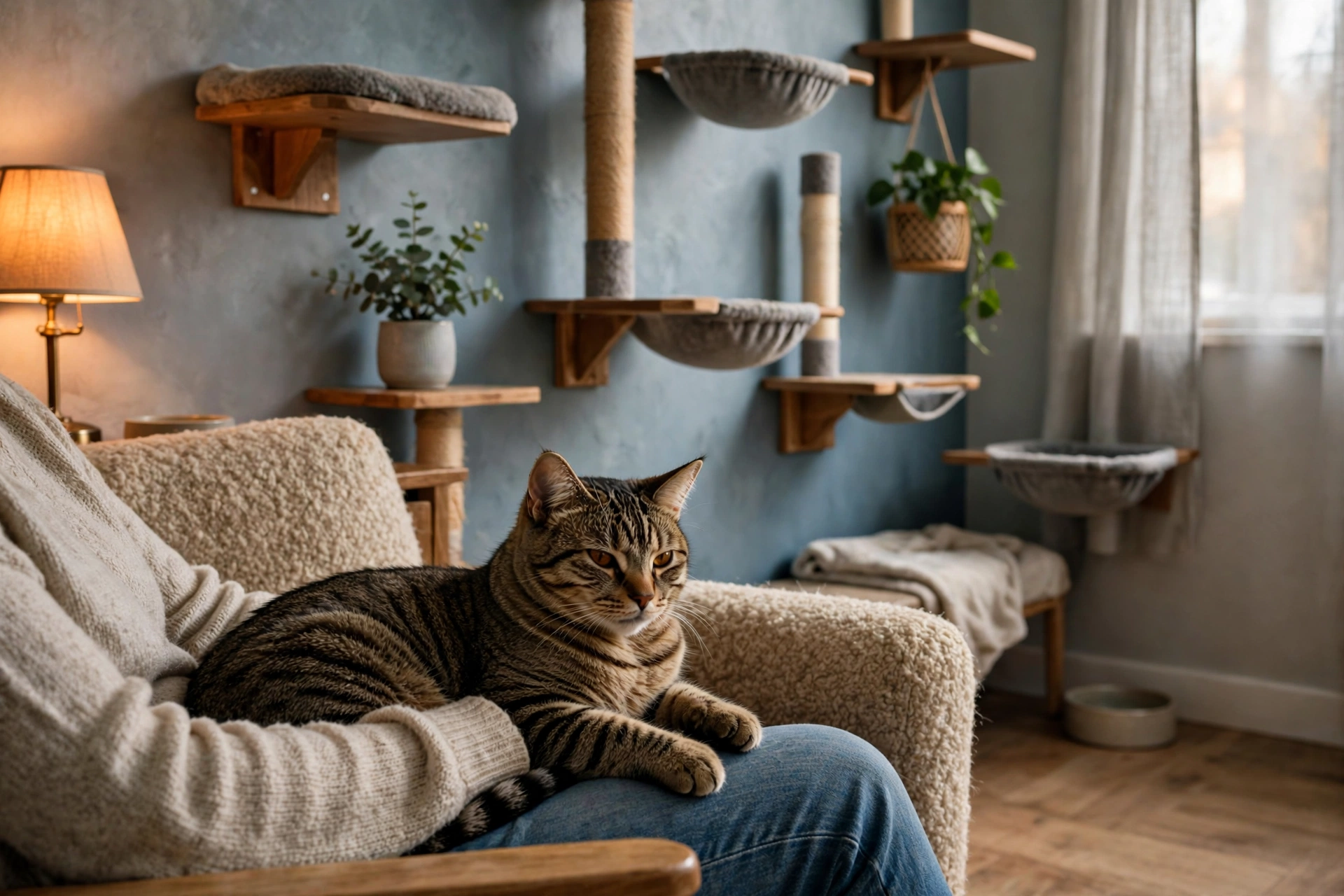
Cats are the pets most stressed by shared waiting rooms. A separate cat-only suite — even a small one — removes the biggest trigger: barking dogs. Paint it in cool, quiet tones like soft blue or gray, add elevated perches and a couple of cozy armchairs, and keep the lighting low and warm rather than clinical.
Make it work by placing the cat suite on the opposite side of the building from dog traffic, adding a window perch where cats can watch the outdoors, and keeping carriers off the floor on dedicated shelves. Helpful pick: AMOSIJOY Foldable Cat Window Perch — gives waiting cats a secure, elevated spot that supports calmer behavior.
3. Non-Slip Flooring in Calm, Muted Colors
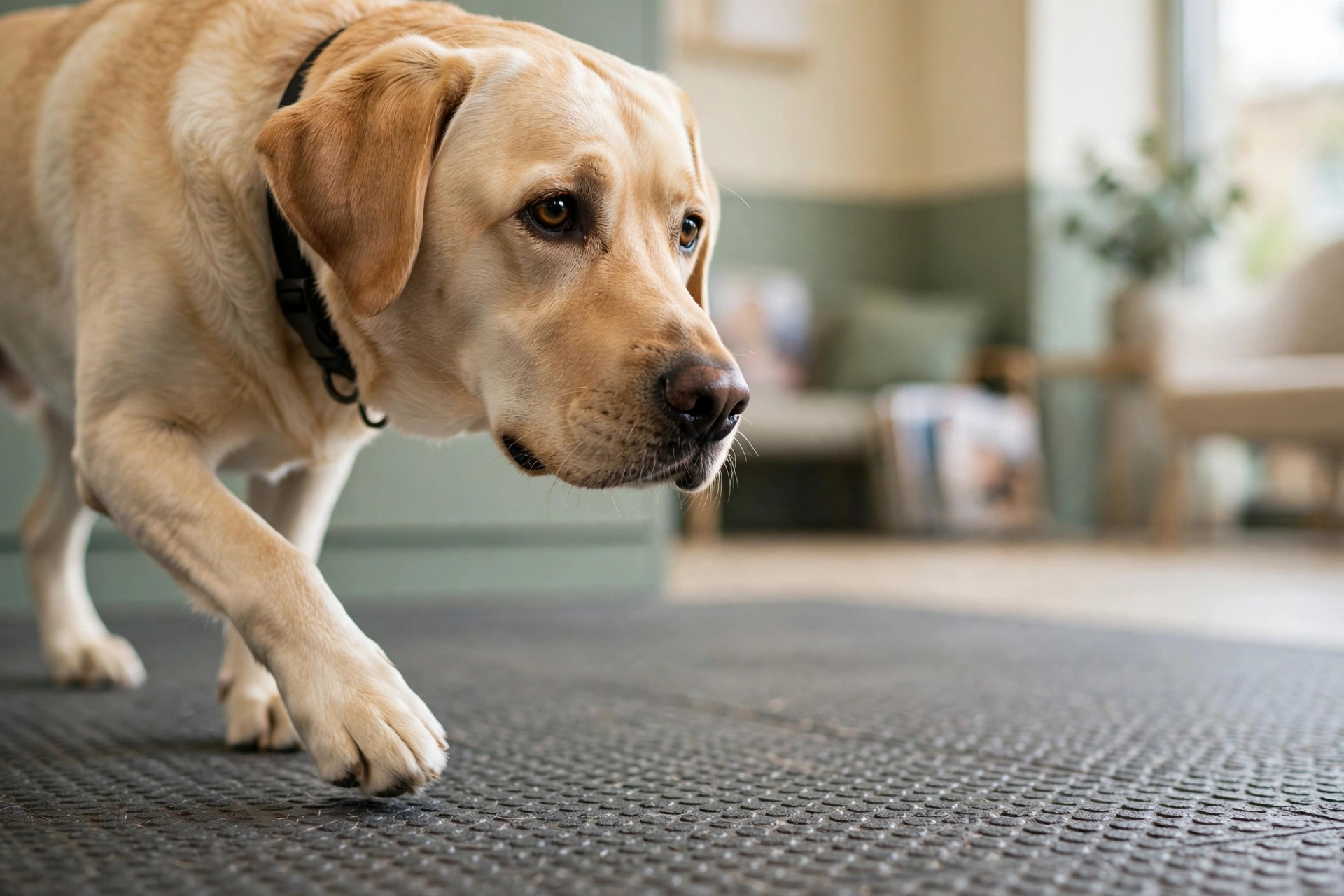
Slippery floors are a silent stressor. Anxious dogs scramble for footing on polished tile, which only increases panic. Choose textured, non-slip rubber or vinyl flooring in muted sage, warm gray, or cream — colors that read as calm rather than clinical. The flooring should also be seamless enough to mop quickly between patients.
Practical tip: run the same flooring from entrance to exam room so there is no jarring surface change, and choose a subtle pattern that hides scuffs and paw prints. Helpful pick: Orgthin Carpet Floor Tiles — modular tiles with a grippy surface that suit waiting zones and can be replaced individually.
4. Minimalist Exam Rooms With Soft Surfaces

Exam rooms are where anxiety peaks, so less is more. A minimalist room — one exam table, a single cabinet, hidden storage — gives nervous animals fewer things to react to. Keep walls in warm neutrals, use soft recessed lighting instead of overhead glare, and place a washable fleece pad on the exam table so the surface feels warm and familiar rather than cold steel.
Keep counters clear of clutter, mount tools on the wall inside cabinets, and store towels and treats within arm’s reach but out of sight. Helpful pick: YourFleece Anti-Pill Fleece Fabric — cut into exam-table pads; soft, washable, and easy to swap between patients.
5. Sound-Dampening Acoustic Wall Panels

Clinics are noisy — barking, dryers, clippers — and sound bounces off hard walls. Fabric-wrapped acoustic panels absorb that echo, noticeably lowering the ambient stress level. Choose geometric felt panels in soothing tones; they double as design features while quietly doing their job.
Install panels in exam rooms, the grooming area, and corridors where sound travels. Pair them with a door sweep on exam-room doors to keep noise from leaking. For extra calm during loud moments, keep a distraction ready. Helpful pick: KONG Classic Dog Toy — a stuffed KONG keeps dogs happily occupied during the noisier parts of a visit.
6. A Living Green Wall Welcome Corner

Greenery changes the emotional temperature of a room. A living (or high-quality faux) plant wall behind the reception desk or grooming station adds warmth and a spa-like calm without looking unprofessional. It also gives waiting clients something pleasant to look at — and makes a great photo backdrop for post-grooming pictures.
Mount panels securely and out of chewing reach, choose washable faux panels for busy areas, and add a small sign inviting clients to snap photos. Helpful pick: Petgrow Artificial Grass Rug — layer real-grass texture under waiting benches to extend the natural, grounding feel.
7. Built-In Kennel Alcoves Under the Counter
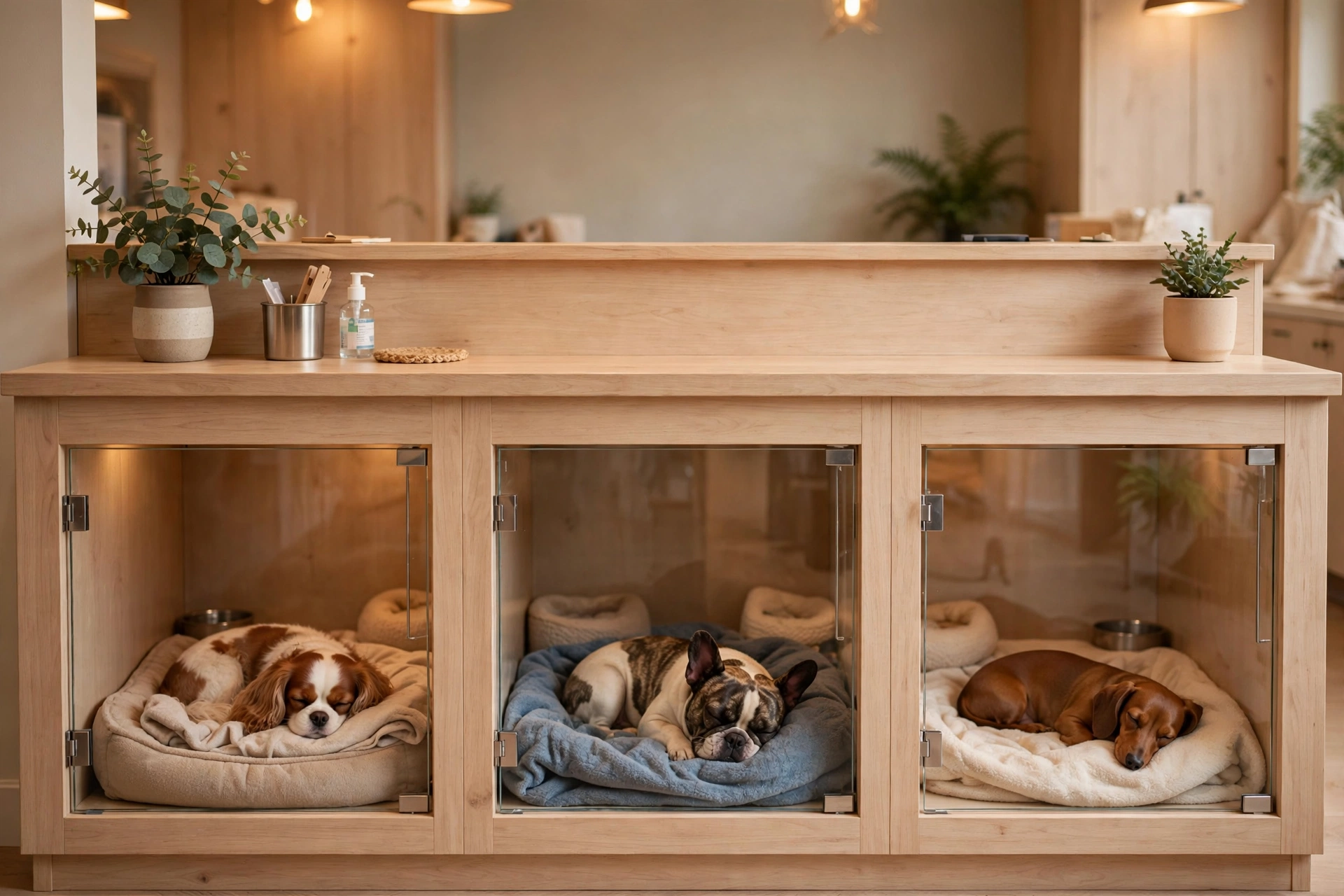
Instead of wire crates stacked in a back room, build quiet kennel alcoves right into the reception counter or a hallway wall. Dogs waiting for grooming or pickup rest in cozy, den-like spaces behind glass or barred fronts — visible to staff, sheltered from the bustle. It looks beautiful and keeps short-stay pets calm and supervised.
Line each alcove with a soft bed, add individual ventilation, and keep the fronts easy to wipe down. Label each bay so staff can track patients at a glance. Helpful pick: ONUPGO Wood Dowels — sturdy dowels for building or reinforcing custom alcove frames and dividers.
8. Central Retail Display Column

A freestanding display column turns the waiting area into a gentle retail moment. Stock it with the shampoos, dental chews, and skin-care products your vets actually recommend, arranged on open shelving clients can browse from all sides. It keeps product sales visible without cluttering the reception desk.
Place the column where foot traffic naturally passes — between the entrance and checkout — and light it well so labels are easy to read. Group items by concern (coat care, dental, calming) rather than by brand. Helpful pick: LSK L-Shaped Brackets — solid hardware for anchoring display shelving safely to walls and columns.
9. A Sunlight-Filled Recovery Room

Post-procedure pets recover better in quiet, sunlit spaces than in windowless wards. If you can dedicate even a small room with large windows, do it: natural light regulates circadian calm, and a peaceful view gives recovering animals something gentle to watch. Keep the room low-traffic, softly lit in the evening, and furnished with supportive bedding.
Add blackout options for photosensitive patients, keep the temperature steady, and place water within easy reach of each bed. Helpful pick: CHAMPETS Washable Pet Bed — supportive, machine-washable bedding that suits a clinical recovery setting.
10. Separate Entrances for Cats and Dogs

The single most effective anxiety reducer is also the simplest: do not mix species at the door. Separate entrances — one clearly marked for dogs, one quieter for cats — prevent the lobby collisions that spike stress before the visit even starts. Even a second door on the same facade, with a small vestibule, makes a difference.
Mark each entrance clearly, give the cat entrance a calmer, more sheltered approach, and route each to its own waiting zone. Use interior pet doors to keep the zones divided without blocking staff movement. Helpful pick: IKUSO Interior Cat Door — a clean, lockable pet door for keeping cat and dog zones properly separated.
Keep Reading
- 10 Dog Hotel Design Ideas for Happy Boarders
- 9 Pet Boutique Ideas That Attract Customers
- 15 Indoor Dog Park Ideas for Rainy Days
- 7 DIY Dog Bunk Bed Ideas to Build This Weekend
- 15 Cat Cafe Design Ideas for a Cozy Space
Frequently Asked Questions
What colors work best in a pet clinic design?
Warm neutrals, soft sage, muted blue, and warm gray tend to read as calm for both animals and owners. Avoid stark white everywhere and very bright reds or oranges in treatment areas, which can feel overstimulating.
How can a clinic reduce noise for anxious pets?
Combine fabric acoustic wall panels, solid-core doors, separate species zones, and quieter equipment. Background music designed for animals can also mask sudden sounds.
Should cats and dogs share a waiting room?
Ideally not. Separate waiting areas — or at least a dedicated cat-only room — remove the most common stress trigger for feline patients and make visits smoother for everyone.
What flooring is best for a veterinary clinic?
Textured, non-slip rubber or vinyl flooring that is seamless, easy to sanitize, and comfortable underfoot. It supports traction for nervous dogs and speeds up cleaning between patients.
Do small design changes really calm pets?
Yes. Warmer lighting, quieter surfaces, species separation, and cozy resting spots all lower the sensory load on animals, which supports calmer behavior during exams and recovery.
As an Amazon Associate, PetPostHub earns from qualifying purchases.