When Do Cavalier Puppies Calm Down? Age, Causes & Easy Solutions
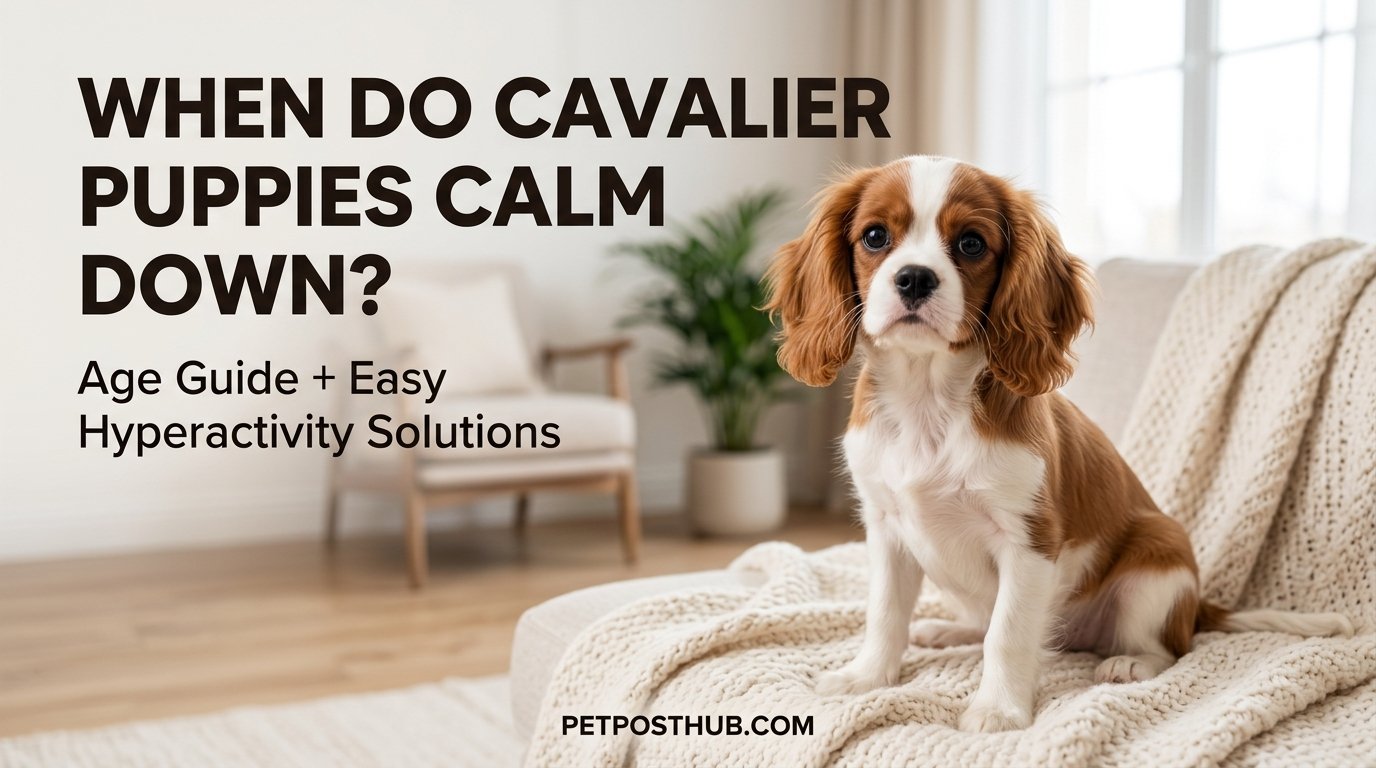
If your Cavalier King Charles Spaniel puppy seems to have endless energy, you may be wondering, “When do Cavalier puppies calm down?” The good news is that puppy craziness is usually temporary. Most Cavaliers gradually become calmer as they mature, with noticeable improvement around their first birthday and continued settling between 1 and 2 years old.
However, age is only part of the story. Exercise, training, mental stimulation, sleep, routine, and your puppy’s individual personality can all affect how energetic they seem.
When Do Cavalier Puppies Calm Down?
Most Cavalier puppies begin settling down between 12 and 18 months, although some may take closer to 2 years to fully mature. You may notice smaller changes much earlier, especially as teething ends and your puppy becomes better at following household routines.
Here’s what to expect during each stage.
0–6 Months: Curious and Energetic
Young Cavaliers spend a lot of time sleeping, eating, exploring, and learning. Around 10–12 weeks, their curiosity often increases, and you may see more running, chewing, playful biting, and puppy zoomies.
This is an important period for gentle training and socialization. Keep sessions short, reward desirable behavior, and give your puppy safe things to chew and explore.
Remember that puppies also need plenty of sleep. An overtired puppy can sometimes look hyperactive rather than sleepy.
6–12 Months: The High-Energy Stage
Between six months and one year, many Cavalier puppies become more energetic and adventurous. They may test boundaries, become distracted during training, or suddenly seem to “forget” commands they previously knew.
Consistency matters most during this stage. Maintain a predictable routine that includes age-appropriate exercise, training, play, naps, and quiet time.
As your puppy approaches its first birthday, you may begin to notice longer periods of calm.
12–18 Months: Settling Into Adulthood
After the first year, many Cavaliers start becoming noticeably more relaxed. They are usually better at controlling their impulses and understanding household expectations.
Your dog may still have energetic bursts, but they should become easier to manage. Continue reinforcing good manners rather than assuming your puppy will automatically outgrow every unwanted behavior.
18+ Months: A More Settled Cavalier
By around 18 months and beyond, many Cavalier King Charles Spaniels have reached a much more mature stage.
Your dog may still enjoy walks, games, and playful zoomies, but it should also be capable of relaxing at home. Cavaliers are adaptable companion dogs, so a balanced routine can help them fit comfortably into different lifestyles.
Are Cavalier King Charles Spaniels Hyper Dogs?
Usually, no. Cavaliers are generally affectionate, adaptable companion dogs rather than extremely high-energy working breeds.
That doesn’t mean every Cavalier is naturally calm. Puppies have much more energy than mature dogs, and individual temperament can vary considerably.
A puppy that constantly runs around the house may not necessarily need more exercise. Sometimes the real issue is boredom, inconsistent routines, overstimulation, or simply being overtired.
Why Is My Cavalier Puppy So Hyper?
If your Cavalier seems unusually energetic, look at the basics first.
1. Not Enough Age-Appropriate Exercise
A puppy needs opportunities to move, play, sniff, and explore. If your Cavalier has excess energy, incorporate appropriate walks and short play sessions into its daily routine.
Avoid trying to exhaust a young puppy with excessive exercise. Puppies need activity balanced with rest.
2. Too Little Mental Stimulation
Physical exercise isn’t the only way to tire a puppy out. Training, sniffing games, food puzzles, and simple problem-solving activities can give your Cavalier’s brain a workout.
Even five to ten minutes of focused training can be useful when repeated throughout the day.
3. Too Much Excitement or Too Little Sleep
This is an often-overlooked cause of puppy “hyperactivity.” A tired puppy doesn’t always settle down on its own. Instead, it may become mouthy, frantic, or start racing around the house.
Give your puppy a quiet place to nap and build regular downtime into the daily schedule.
4. Inconsistent Training
If jumping, barking, chewing, or demanding attention sometimes receives a reward, your puppy may continue repeating the behavior.
Use the same rules every day and reward calm behavior when you see it.
5. Anxiety or Discomfort
Sudden changes in behavior shouldn’t automatically be blamed on normal puppy energy. Fear, anxiety, pain, or another underlying problem can affect behavior.
If your Cavalier suddenly becomes much more restless or difficult to settle, speak with your veterinarian.
How to Calm Down a Cavalier Puppy
You don’t need to eliminate your puppy’s energy. The goal is to teach your Cavalier how to manage it.
Keep Your Own Energy Calm
Dogs can respond to the emotional energy around them. If your puppy becomes excited, avoid turning the moment into an even bigger event.
Use a calm voice, slow movements, and simple cues.
Redirect Unwanted Behavior
If your puppy starts chewing furniture or racing around looking for trouble, redirect that energy toward an appropriate toy, chew, sniffing game, or short training session.
Reward your puppy when it chooses the appropriate activity.
Reward Calm Behavior
Don’t only interact with your Cavalier when it is being noisy or demanding attention.
When your puppy lies quietly, settles beside you, or relaxes on its bed, calmly reward that behavior. Over time, your dog learns that calmness is valuable too.
Create a Daily Routine
A predictable routine can make life easier for both you and your puppy.
A simple day might include:
- Morning potty break and short walk
- Breakfast
- Training or enrichment
- Nap and quiet time
- Play session
- Another age-appropriate walk
- Evening relaxation
The exact routine should be adjusted to your puppy’s age and individual needs.
Use Mental Games
Try simple activities such as:
- Treat-search games
- Puzzle feeders
- Basic obedience training
- Sniffing walks
- “Find the toy” games
- Food-filled enrichment toys
Mental work can help satisfy a puppy without relying entirely on physical exercise.
Give Plenty of Sleep
Young puppies need substantial amounts of sleep. If your puppy becomes increasingly wild, bitey, or unable to settle, it may actually need a nap.
A quiet, comfortable sleeping area can make a major difference.
When Should You Worry About Hyperactivity?
Normal puppy energy usually comes with periods of rest and becomes easier to manage as the dog matures.
Contact your veterinarian if your Cavalier’s behavior changes suddenly, your dog appears distressed, cannot settle even after appropriate activity and rest, or shows signs of pain, fear, or anxiety.
A qualified dog trainer or veterinary behavior professional can also help when unwanted behavior continues despite consistent training.
Final Thoughts
So, when do Cavalier puppies calm down? For many Cavaliers, the biggest improvement happens after the first year, with further settling between 12 and 24 months.
The key is not simply waiting for your puppy to grow up. Appropriate exercise, mental stimulation, sleep, positive training, and a predictable routine can help your Cavalier learn how to relax while still enjoying its playful personality.
A little puppy chaos is part of the journey—and it usually gets much easier with time.