Cavalier King Charles Spaniel Snoring: Causes, Solutions & When to See a Vet
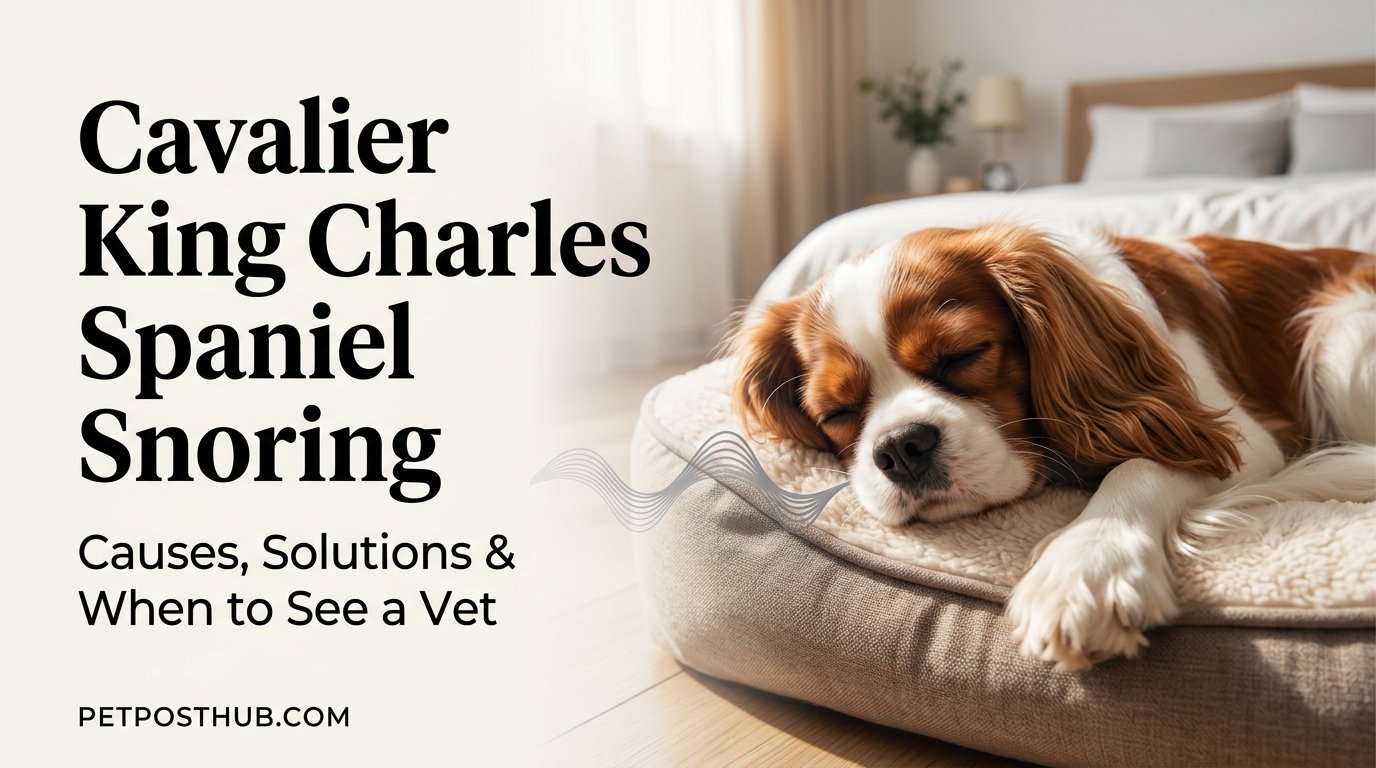
Cavalier King Charles Spaniels can make surprisingly loud noises while sleeping. Occasional snoring may simply come from sleeping position or relaxed throat tissues, but new, worsening, or unusually loud snoring can sometimes point to an underlying problem.
If your Cavalier has suddenly started snoring, is snorting more than usual, or seems to struggle while breathing, it’s worth paying attention. Below are the most common Cavalier King Charles Spaniel snoring causes and practical steps that may help.
Why Is My Cavalier King Charles Spaniel Snoring?
Snoring happens when airflow becomes partially restricted and tissues in the upper airway vibrate. In Cavaliers, several factors can contribute.
1. Airway Structure
Some Cavaliers have naturally narrow nasal passages or other upper-airway features that make breathing noisier. These structural differences can become more noticeable during sleep when the throat muscles relax.
If your dog has always snored but otherwise breathes comfortably, eats normally, exercises well, and sleeps peacefully, it may simply be their normal breathing pattern. However, breathing difficulty should never be ignored.
2. Allergies and Nasal Congestion
Environmental allergies can cause sneezing, nasal discharge, congestion, and irritated airways. Common triggers include pollen, dust, mold, smoke, and dust mites.
If your Cavalier snores more during certain seasons or after exposure to a particular environment, allergies or congestion may be contributing.
3. Respiratory Infection
A cold-like respiratory infection can temporarily make your dog snore. A blocked or irritated nose makes it harder for air to move normally, producing louder breathing during sleep.
Watch for additional symptoms such as coughing, sneezing, nasal discharge, reduced energy, or changes in appetite.
4. Excess Weight
Extra body fat can contribute to airway narrowing and make snoring worse. Cavaliers can gain weight as they become less active with age, so maintaining a healthy body condition is important.
If your dog is overweight, avoid crash diets. Work with your veterinarian to choose an appropriate food intake and exercise routine.
5. Age-Related Changes
Snoring can become more noticeable as a Cavalier gets older. Changes in muscle tone, weight, sleeping habits, or the upper airway may affect nighttime breathing.
A new snoring habit in a senior dog deserves more attention than lifelong occasional snoring, particularly when other symptoms appear.
6. Sleeping Position
Sometimes the simplest explanation is the sleeping position. A Cavalier sleeping flat on its back may have more airway vibration than when sleeping on its side.
If your dog otherwise seems healthy, gently encouraging a comfortable side-sleeping position may reduce occasional snoring.
How to Help Reduce Cavalier King Charles Spaniel Snoring
1. Give Your Dog a Comfortable Bed
A supportive bed can encourage a more comfortable sleeping position. A bed with gently raised edges may also give your Cavalier somewhere to rest its head.
Keep the bedding clean because accumulated dust and allergens can irritate sensitive airways.
2. Keep the Sleeping Area Clean
Wash bedding regularly and reduce dust, smoke, strong fragrances, and other airborne irritants around your dog.
Good indoor air quality can be especially helpful when congestion or environmental allergies are contributing to noisy breathing.
3. Maintain a Healthy Weight
Feed appropriate portions and keep treats under control. Regular, age-appropriate exercise can also help your Cavalier maintain a healthy body condition.
If you’re unsure whether your dog’s weight is appropriate, ask your veterinarian rather than relying only on appearance.
4. Try a Different Sleeping Position
If your Cavalier only snores in certain positions, encourage comfortable side sleeping. Never force or restrain your dog into a particular position.
A simple change may help when positional snoring is the main issue.
5. Don’t Ignore Persistent Snoring
Home changes may help mild positional or environmental snoring, but they can’t fix an underlying airway, heart, respiratory, or other medical problem.
If the snoring is new, progressively worse, or accompanied by other symptoms, schedule a veterinary examination.
When Is Cavalier Snoring a Problem?
Occasional snoring isn’t necessarily an emergency. However, contact your veterinarian if you notice:
- Snoring that suddenly starts or becomes much louder
- Difficulty breathing while awake
- Persistent coughing or frequent gagging
- Heavy or labored breathing
- Repeated pauses in breathing during sleep
- Blue, gray, or very pale gums or tongue
- Fainting, weakness, or unusual tiredness
- Trouble exercising compared with normal
- Significant nasal discharge
- A sudden change in your dog’s bark or voice
Breathing difficulty, collapse, or blue/gray gums should be treated as an emergency.
A Simple Way to Help Your Vet
If your Cavalier’s snoring is unusual, record a short video of your dog sleeping and breathing. A recording can help your veterinarian understand what the noise sounds like and whether there are noticeable pauses, coughing, or changes in breathing.
Also note when the snoring happens, how frequently it occurs, and whether it is worse after exercise, during certain seasons, or in particular sleeping positions.
Frequently Asked Questions
Is it normal for Cavalier King Charles Spaniels to snore?
Some Cavaliers may snore occasionally, particularly in certain sleeping positions. Lifelong mild snoring without other symptoms may be less concerning, but persistent or changing snoring should still be monitored.
Why did my Cavalier suddenly start snoring?
Sudden snoring can occur with nasal congestion, respiratory illness, allergies, weight changes, or other airway problems. A new breathing noise is worth discussing with your veterinarian.
Can changing my Cavalier’s sleeping position help?
Yes, positional snoring may improve when your dog sleeps comfortably on its side rather than on its back. However, persistent breathing problems need veterinary evaluation.
Should I worry if my Cavalier snores every night?
Not necessarily, but frequency alone doesn’t determine whether snoring is harmless. Look for changes in breathing quality and other symptoms, especially breathing difficulty, coughing, exercise intolerance, or unusual tiredness.
Can overweight Cavaliers snore more?
Yes. Excess body weight can contribute to airway narrowing and may make existing snoring worse. A veterinarian can help determine whether your dog’s weight is healthy.
Final Thoughts
Cavalier King Charles Spaniel snoring can be harmless, especially when it has been present for years and your dog otherwise breathes normally. But a sudden change in snoring or any sign of breathing difficulty deserves attention.
Start by checking your dog’s sleeping position, weight, bedding, and exposure to airborne irritants. If the problem persists or comes with other symptoms, your veterinarian is the best person to identify the underlying cause and recommend appropriate treatment.