
Do Dogs Dream? 7 Fascinating Facts About Dog Dreams

If you’ve ever watched your dog’s paws pedal mid-nap or heard a muffled little woof escape while they sleep, you’ve probably wondered: do dogs dream? The short answer is yes — dogs really do dream. Sleep researchers have spent decades studying canine sleep, and the evidence is remarkably similar to what scientists see in dreaming humans. Below are 7 fascinating facts about dog dreams, what they mean, and how to give your pup the best sleep possible.
Table of Contents
- 1. Yes, Dogs Dream — REM Sleep Is the Proof
- 2. Puppies and Seniors Dream More Than Adult Dogs
- 3. Dogs Likely Dream About Their Day
- 4. Twitching, Whimpering, and Paw-Pedaling Are Normal
- 5. Don’t Wake a Dreaming Dog
- 6. Small Dogs Dream More Often (Big Dogs Dream Longer)
- 7. Nightmares Happen — But Most Night “Scares” Aren’t One
- When Dreaming Signals a Health Issue
- Frequently Asked Questions
1. Yes, Dogs Dream — REM Sleep Is the Proof
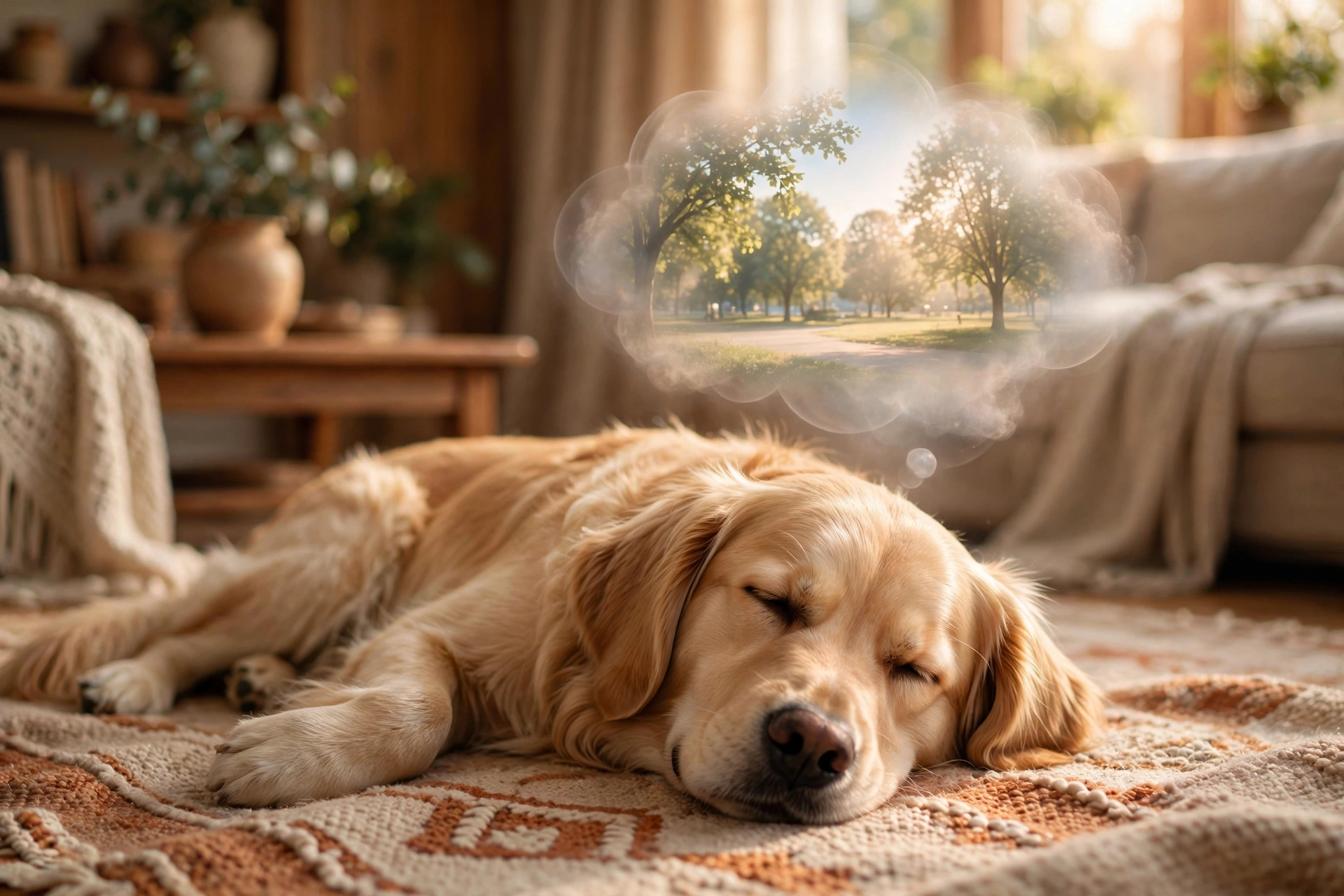
The marker of dreaming in humans and animals alike is REM (rapid eye movement) sleep. In the 1970s, Stanford sleep researcher Dr. William Dement found that dogs cycle through REM and non-REM sleep just like people do. When researchers measure a dog’s brain waves during REM sleep with an EEG, the patterns look nearly identical to the erratic, wake-like brain activity of a dreaming human. Cats, rats, and mice show the same thing — dreaming during REM is very likely a mammalian universal.
Owner tip: Deep, dream-rich sleep happens most easily when your dog has a truly comfortable, quiet sleeping spot they don’t have to guard. A supportive bed in a calm corner helps your dog settle into full sleep cycles instead of staying half-alert.
Helpful pick: Best Friends by Sheri Donut Cuddler Calming Dog Bed — the raised rim supports your dog’s head and neck for deep, cozy rest.
2. Puppies and Seniors Dream More Than Adult Dogs
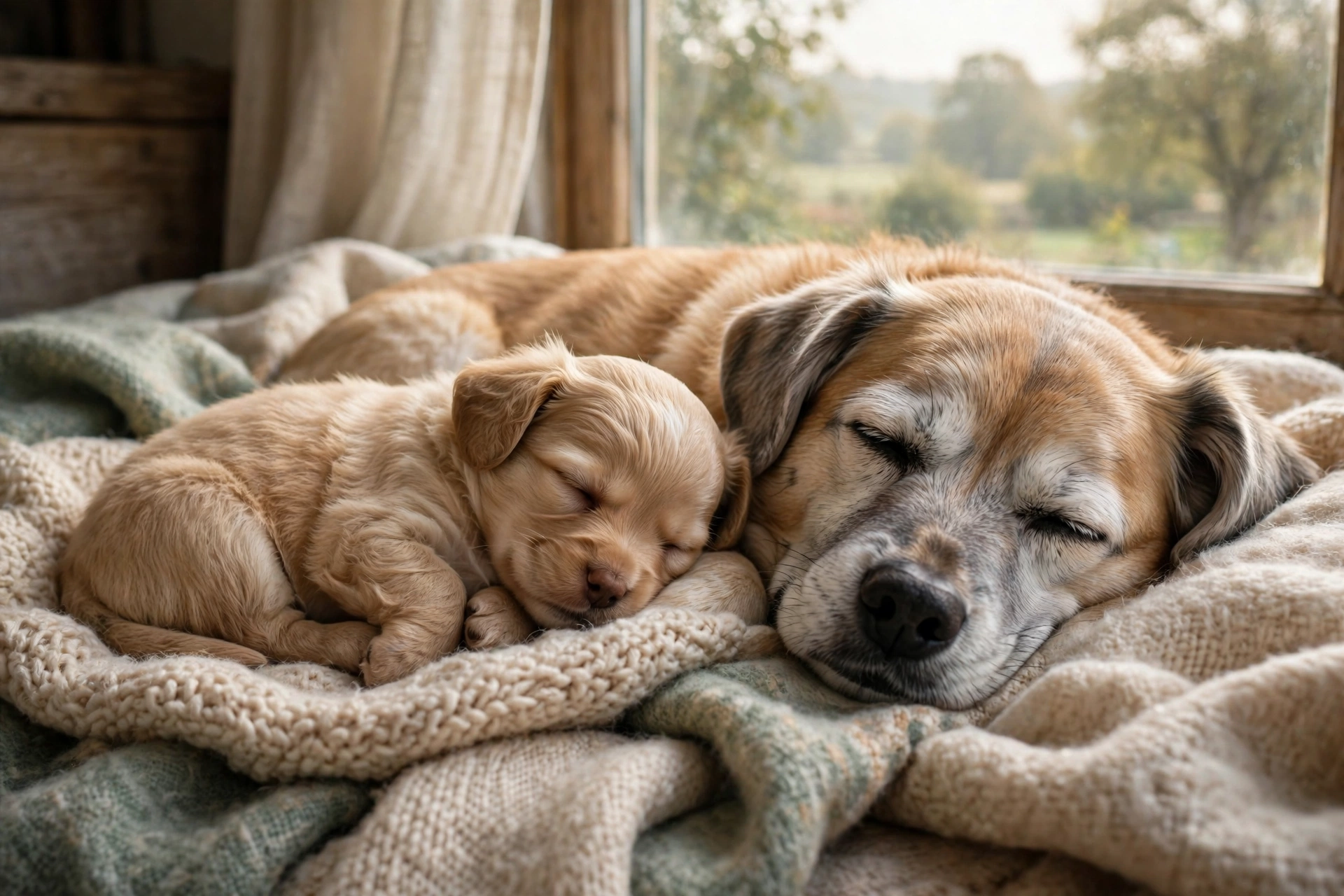
Researchers believe puppies dream more often than middle-aged dogs — and senior dogs dream more too. For puppies, the leading theory is that dreaming helps process the flood of new experiences, people, smells, and skills their growing brains take in each day. For older dogs, more time spent sleeping naturally means more time spent in REM. If your puppy’s naps look like a full-body workout, that’s a sign of a busy, healthy developing brain, not a problem.
Owner tip: Growing and aging dogs both need more rest than busy adults, so let sleeping puppies and seniors lie. Stick to a predictable daily routine so their sleep isn’t constantly interrupted.
Helpful pick: Snuggle Puppy Heartbeat Stuffed Toy — the pulsing heartbeat comforts puppies (and anxious seniors) into calmer, deeper sleep.
3. Dogs Likely Dream About Their Day

We can’t ask dogs what they dream about, but the clues point strongly to day-replays. At MIT, researchers studying rat brains found that sleeping rats replayed the exact maze routes they’d run that day — even the specific turns. Dog researcher Dr. Stanley Coren has noted that breed tendencies show up in dreams too: pointers may point at dream birds, while guarding breeds may dream of guarding. Your dog’s brain is probably re-running the highlights of their day: the park, the game of fetch, the treat you dropped.
Owner tip: A mentally rich day gives your dog good material to process — and helps them sleep better. Short training sessions, sniffy walks, and play are worth more than one long, boring walk.
Helpful pick: KONG Classic — stuff it with peanut butter for daytime enrichment that may sweeten those dreams.
4. Twitching, Whimpering, and Paw-Pedaling Are Normal
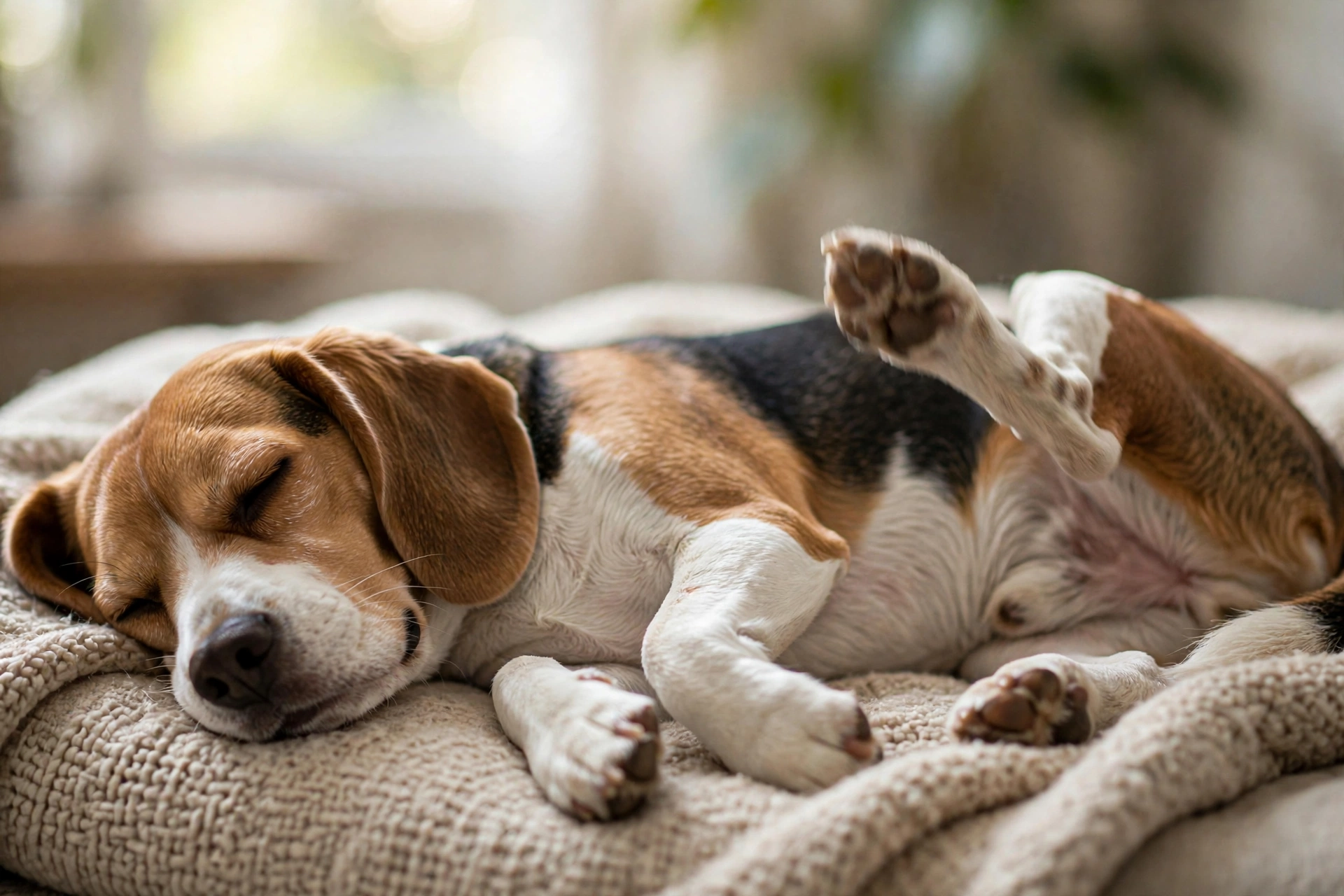
Here’s the fascinating part: during REM sleep, the brain actively paralyzes the large muscles so you don’t act out your dreams. In dogs, this “off switch” is imperfect, so bits of dream activity leak through — the paddling paws, the twitching whiskers, the soft whimpers and barks. When researchers medically deactivated that muscle-off switch in dogs, the dogs actually got up and acted out their dreams, which is considered strong confirmation that real dreaming is happening.
Owner tip: Short episodes of twitching and quiet vocalizing are normal. Watch for the pattern instead: a few seconds of leg movement followed by stillness is a dream; rigid, rhythmic full-body shaking that doesn’t stop is not.
Helpful pick: Zesty Paws Calming Chews — a calm evening routine supports relaxed, restful sleep.
5. Don’t Wake a Dreaming Dog
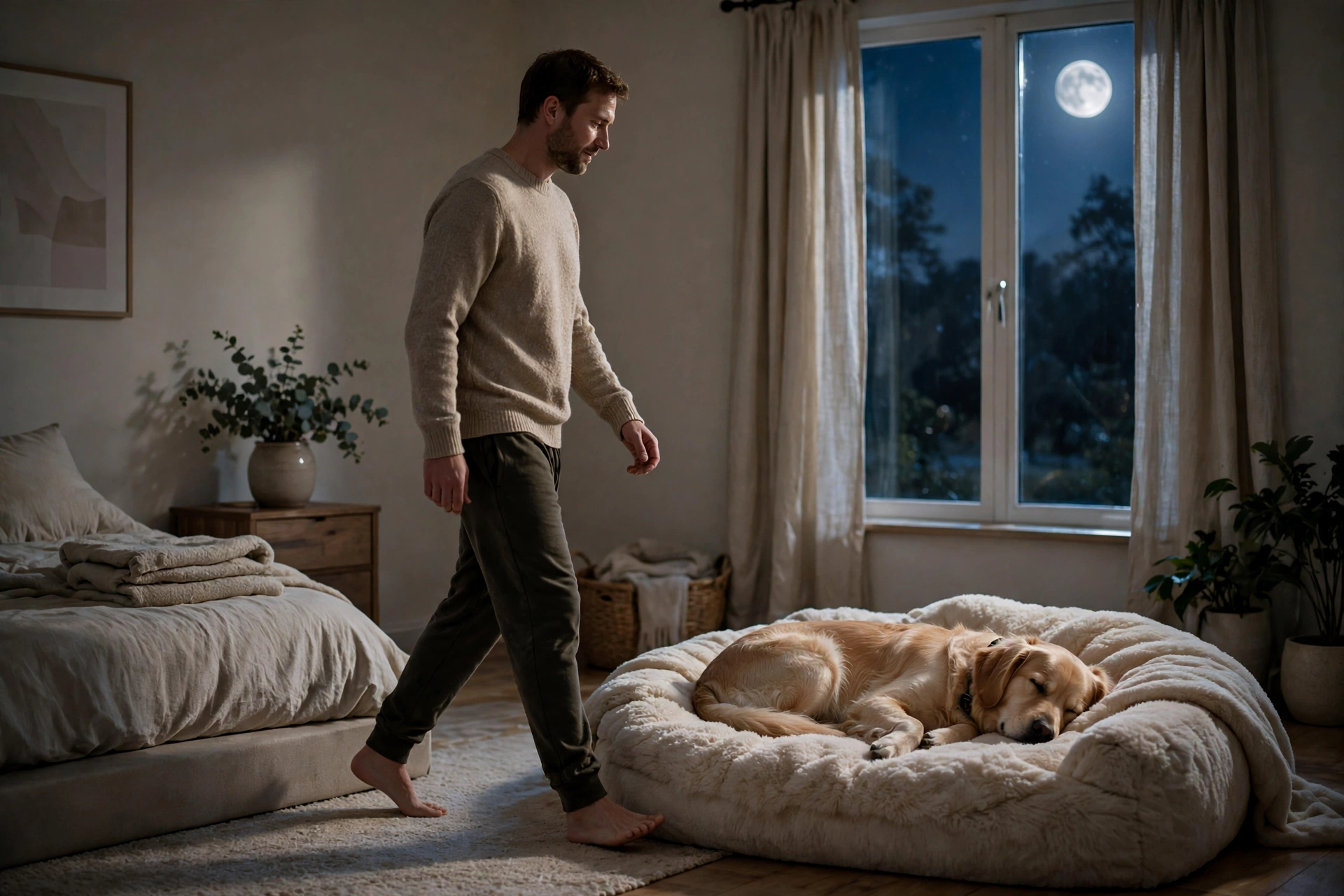
Waking a dog mid-dream is startling — especially during REM, when they’re least aware of their surroundings. A suddenly awakened dog can snap or bite purely out of confusion, even a normally gentle one. Waking them also fragments the very sleep cycles that help their brain process the day’s learning. Let them finish the dream; they’ll come out of it on their own in a minute or two.
Owner tip: If you truly must wake a sleeping dog, say their name softly from a short distance and give them a few seconds to orient before touching them. Teach kids the same rule: sleeping dogs are off-limits.
Helpful pick: ADAPTIL Calm Home Diffuser — promotes a calm sleeping environment so bedtime stays undisturbed.
6. Small Dogs Dream More Often (Big Dogs Dream Longer)

Dream frequency depends on size. A small dog’s sleep cycle is short — roughly 10 to 12 minutes — so they dip into REM frequently, dreaming every few minutes. A large breed like a Great Dane runs a much longer cycle, around 45 minutes, with dream periods of up to 10 minutes. Neither pattern is better; it’s just how their sleep is wired. That also explains why a Chihuahua’s nap looks busy while a Mastiff’s looks marathon-long.
Owner tip: Match the sleep setup to the dog: small breeds often sleep better in an enclosed den-like space (it feels safer), while large breeds need room to sprawl out fully for deep sleep.
Helpful pick: Outward Hound Dog Tornado Puzzle — daytime mental exercise helps dogs of any size settle into healthy sleep.
7. Nightmares Happen — But Most Night “Scares” Aren’t One

Dogs probably experience unpleasant dreams too — researchers who believe dogs dream about their day logically conclude bad days can produce bad dreams. A dog that bolts awake panting and looking around may have had one. But here’s the catch: most things owners call nightmares are just normal REM twitching, and many “scared awake” moments are actually the startle of being woken up (see fact 5) rather than the dream itself.
Owner tip: If your dog wakes from a rough-looking dream, stay calm and speak softly — don’t grab or shake them. Give them a moment to orient, then offer quiet comfort. A familiar blanket or bedtime routine helps them settle back down quickly.
Helpful pick: Bedsure Waterproof Dog Blanket — a familiar, cozy blanket makes the sleep spot feel safe night after night.
When Dreaming Signals a Health Issue
Normal dream twitching is brief, irregular, and happens only while the dog is clearly asleep. Call your vet if you notice: episodes where the dog stays rigid or paddles violently for more than a couple of minutes; the dog seems unaware or confused long after waking; repeated episodes while the dog is awake or just drowsy; or drooling, loss of bladder control, or injury during an episode. These can indicate seizures or a sleep disorder rather than dreaming — and unlike dreams, those need medical attention. When in doubt, film an episode on your phone and show your vet; video is the single most helpful diagnostic tool you can bring.
Keep Reading
- What Your Dog’s Sleeping Position Really Means
- Dog Anxious at Night? 8 Ways to Help Them Sleep
- 10 Signs Your Dog Is in Pain (And What to Do)
- Why Does My Dog Lean on Me? 7 Reasons
- Dog Body Language Guide: 12 Signals Explained
Frequently Asked Questions
Do all dogs dream, or just some breeds?
All dogs dream. Every breed studied shows REM sleep with the same brain-wave patterns. Size changes the frequency and length of dreams, but not whether they happen.
What do dogs dream about most?
Experts believe dogs dream about their daily lives — playing, walking, sniffing, eating, and spending time with you. Breed instincts seem to shape dream content too.
Is it normal for my dog to cry or bark in their sleep?
Yes. Soft whimpers, muffled barks, and growls during REM sleep are normal dream vocalizations. They’re usually brief and the dog settles back into quiet sleep.
Should I wake my dog if they seem to be having a nightmare?
It’s best not to. A startled dog can bite accidentally, and most “nightmares” are just normal REM twitching. Speak softly from a distance if you must intervene, and comfort them once they’re awake.
How can I tell the difference between dreaming and a seizure?
Dreaming is brief, irregular, and only happens during sleep — the dog wakes up normally afterward. Seizures are rhythmic, stiff, prolonged, and may happen while awake. Film any concerning episode and ask your vet.
As an Amazon Associate, PetPostHub earns from qualifying purchases.




2 Comments