
Why Does My Dog Groan? 7 Meanings (And When to Worry)

That low, rumbling sound your dog makes when flopping onto the couch can be adorable, a little dramatic, or — occasionally — a quiet plea for help. If you’ve been asking yourself “why does my dog groan,” you’re not alone: groaning is one of the most common canine vocalizations, and it means very different things depending on the moment it happens.
The short answer: most groans are happy, everyday sounds. Dogs groan when they’re settling in, stretching, dreaming, or just being a little theatrical about their feelings. But groaning can signal pain or discomfort too — especially when it’s new, frequent, or paired with other changes in behavior.
In this guide, we’ll walk through the 7 most common reasons dogs groan, what each one means, how to respond, and exactly when a groan deserves a trip to the vet.
Table of Contents
- 1. Contentment While Settling In
- 2. Attention-Seeking (The Drama Groan)
- 3. Stretching and Stiff Old Joints
- 4. Dreaming (Sleep Groans)
- 5. Boredom or Frustration
- 6. Pain or Discomfort
- 7. Age-Related Cognitive Changes
- Groaning vs. Whining: How to Tell the Difference
- Frequently Asked Questions
1. Contentment While Settling In

The classic “happy groan” happens when your dog circles, flops down, and lets out a deep, satisfied sigh-groan. Just like we groan when we sink into a hot bath or a soft mattress, dogs vocalize the pure pleasure of getting comfortable. You’ll usually see a loose, wiggly body, half-closed eyes, and a wagging tail right before the flop.
What it means: Your dog feels safe, warm, and completely at ease. This is one of the loveliest sounds in dog ownership — it means you’re doing everything right.
How to respond: Enjoy it! A little gentle petting is fine, but don’t wake a dog who’s settling into a deep rest. One of the best ways to encourage more happy groans is giving your dog a bed they truly love — and learning what their sleeping positions mean helps you read their comfort level.
Helpful pick: Best Friends by Sheri Donut Cuddler Calming Bed — the raised rim supports the head and neck so dogs settle in faster and groan with contentment.
2. Attention-Seeking (The Drama Groan)
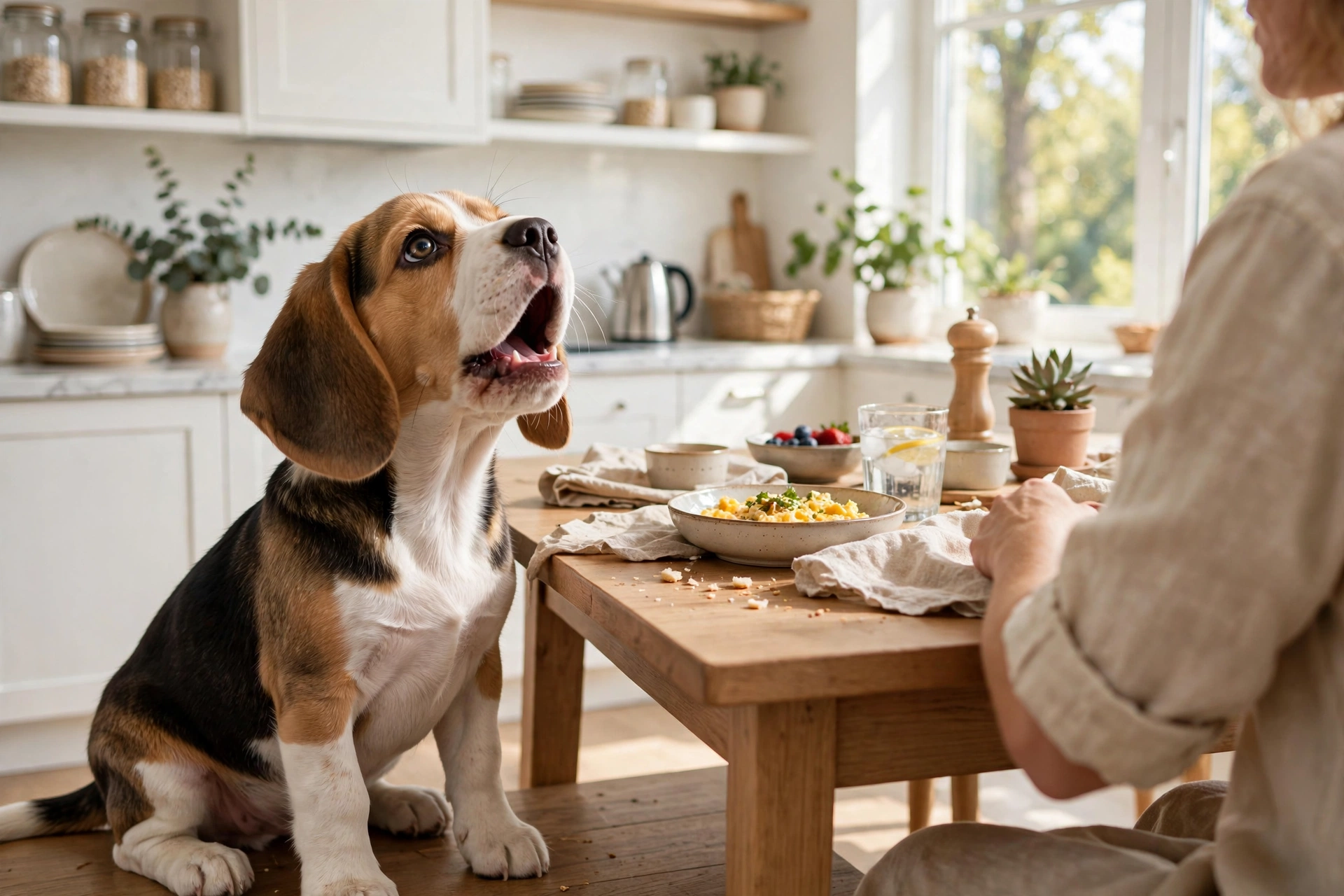
Some dogs are natural comedians. They’ll walk up, plop down with an exaggerated groan, and stare at you with enormous eyes. Translation: “I’m here. Entertain me.” This is the groan of admitted defeat too — the dog who begged for table scraps, got nothing, and groaned all the way to their bed to sulk.
What it means: Your dog has learned that groaning gets a reaction — a laugh, a pet, a treat. It’s communication, not a complaint.
How to respond: It’s fine to enjoy the theatrics, but don’t reward groaning that turns demanding. Instead, redirect that energy into something productive: a training session, a game, or a puzzle toy. Reward quiet, calm behavior with attention rather than the groan itself.
Helpful pick: KONG Classic Dog Toy — stuff it with peanut butter and freeze it to turn an attention-groaning dog into a happily busy one.
3. Stretching and Stiff Old Joints
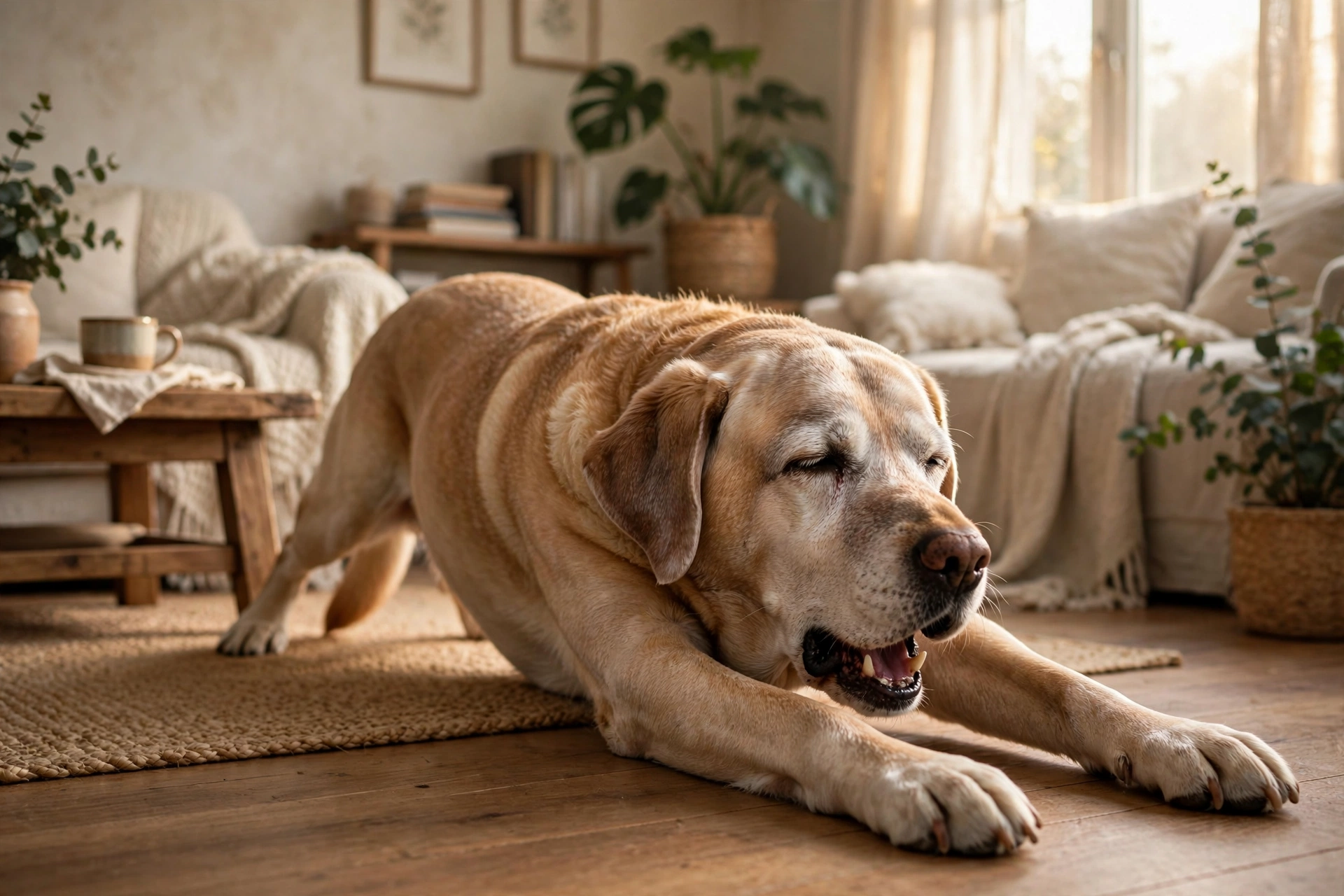
Watch a dog rise from a nap and do that long front-down, rear-up stretch, and you’ll often hear a groan along with it. Just like us, dogs get stiff when they’ve been lying still — and older dogs feel it even more. Arthritis, hip dysplasia, and plain old aging make every stretch a little more vocal.
What it means: Usually nothing alarming. It’s the canine version of your grandpa’s morning “ooof.” But if the groaning during movement is getting more frequent, it may be an early sign of joint trouble.
How to respond: Keep your dog at a healthy weight (extra pounds punish joints), maintain gentle daily exercise, and give older dogs a supportive bed that cushions pressure points. If groaning when standing, climbing stairs, or getting into the car becomes regular, talk to your vet about joint support — many dogs do wonderfully with joint-friendly nutrition and vet-approved supplements.
Helpful pick: Zesty Paws 8-in-1 Multivitamin Bites — a daily chew that supports hip and joint health in aging dogs.
4. Dreaming (Sleep Groans)

Dogs dream — research on sleep cycles confirms they experience REM sleep just like we do — and their dreams can be surprisingly noisy. A sleeping dog may groan, whimper, twitch its paws, or “woof” softly in its sleep. Puppies and senior dogs dream the most, so their groans are especially frequent.
What it means: Your dog is likely replaying the day’s highlights: that park run, the squirrel that got away, the treat that definitely existed. Sleep groaning is completely normal.
How to respond: Let them sleep. Never wake a dreaming dog suddenly — even the sweetest dog can startle and snap when jolted awake. If your dog seems restless at night, a consistent bedtime routine and a cozy sleeping spot help them settle into deeper, calmer sleep. (Curious what’s going on in that busy little head? Read our piece on why dogs dream.)
Helpful pick: Snuggle Puppy Heartbeat Stuffed Toy — the pulsing heartbeat comforts anxious sleepers and supports calmer nights.
5. Boredom or Frustration

That long, dramatic sigh-groan while you’re working, watching TV, or — worst of all — eating something delicious without sharing? That’s boredom, frustration, or a little of both. Dogs groan to express dissatisfaction: the walk is late, the game ended, life is simply unfair.
What it means: Your dog’s brain needs a job. Under-stimulated dogs don’t just groan — they escalate to chewing furniture, digging, and inventing their own “games” you won’t enjoy.
How to respond: Take the groan as useful feedback. Add a training session, a sniff walk, or 10 minutes of interactive play to the day. Mental exercise tires dogs out faster than physical exercise, so puzzle feeders and food-dispensing toys are gold for bored groaners.
Helpful pick: Outward Hound Dog Tornado Puzzle Toy — spinning treat compartments keep clever dogs busy and quiet.
6. Pain or Discomfort
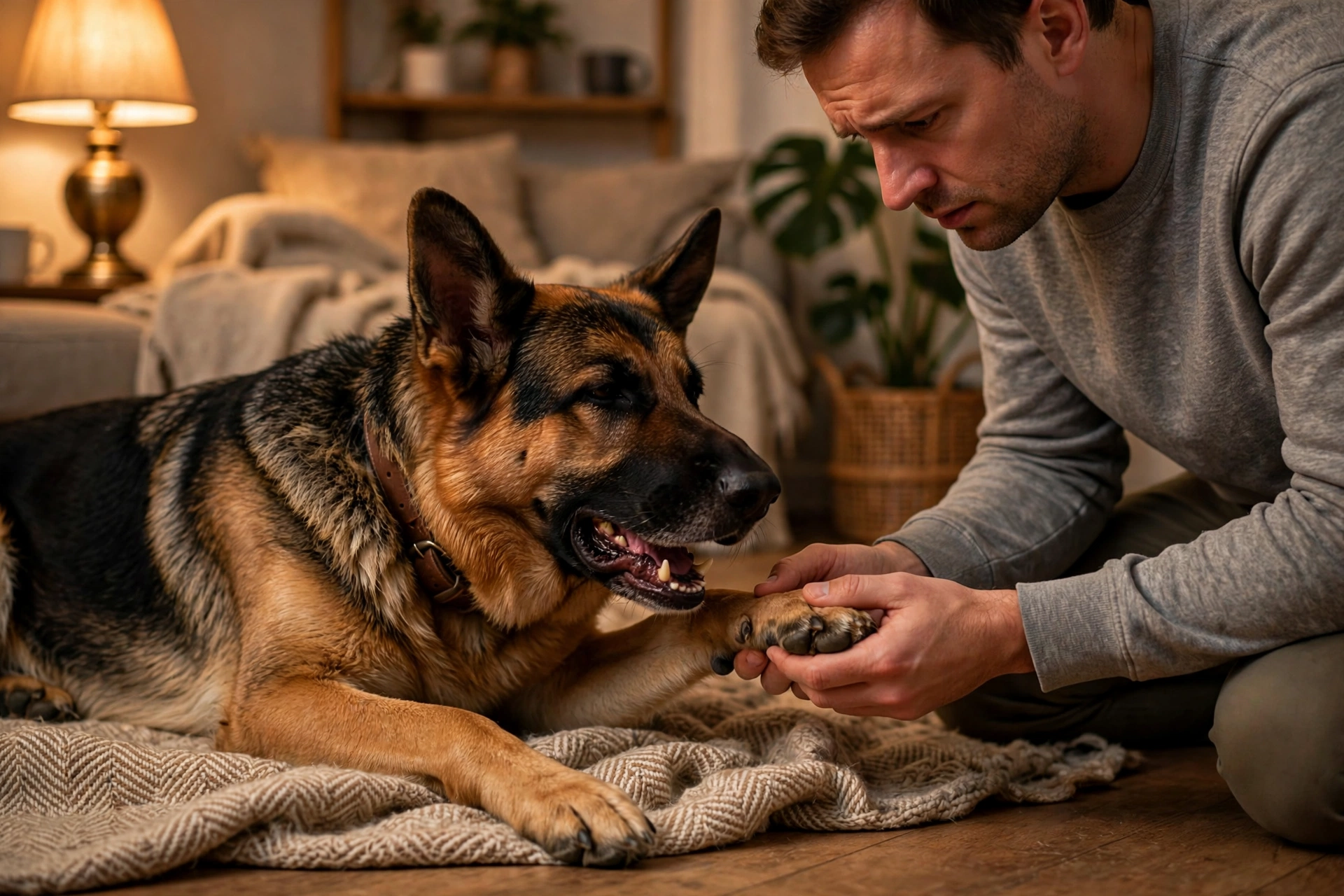
This is the groan that matters most. Dogs are masters at hiding pain, so when a dog groans from discomfort, it’s often a sound worth listening to. Pain groans tend to sound different — tenser, sharper, or repeated — and they come with context clues.
What it means: Possible sources include joint pain (arthritis, hip dysplasia), abdominal discomfort, an injury you haven’t spotted, dental pain, or internal issues like bloating. Dogs may also groan when shifting positions if lying still hurts — an expression of relief at finding a more comfortable spot.
How to respond: Watch for the warning signs: groaning that’s new or suddenly frequent, stiffness or limping, reluctance to climb stairs or jump, panting at rest, loss of appetite, or groaning when touched in a specific spot. A supportive orthopedic bed can ease pressure on sore joints, but it doesn’t replace a vet visit. If groaning is paired with any of those signs, call your vet — and never give a dog human pain medication, which can be dangerous for them.
Helpful pick: Furhaven Orthopedic Sofa Dog Bed — memory foam eases pressure on achy joints and supports more restful sleep.
7. Age-Related Cognitive Changes
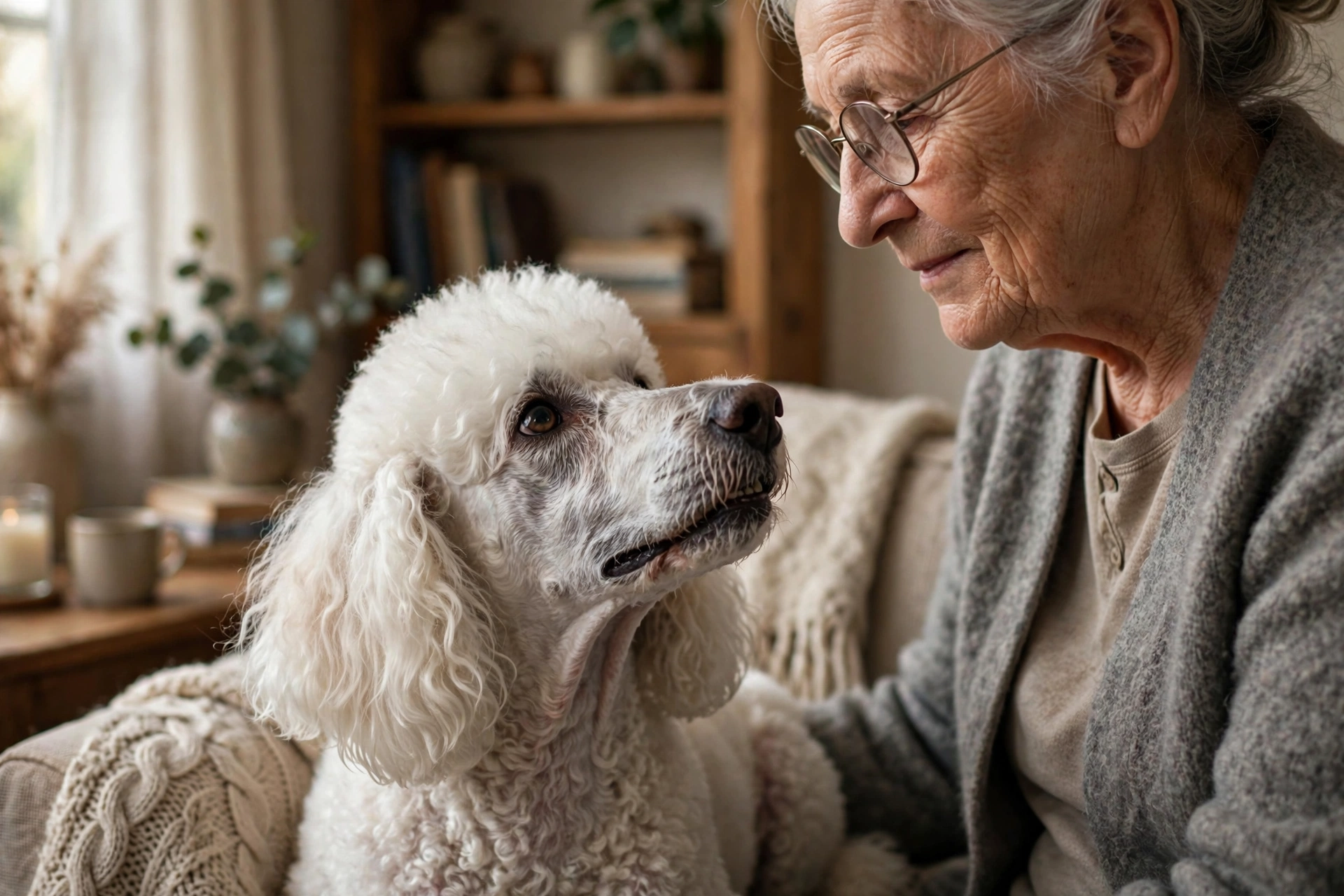
Senior dogs sometimes start groaning more as they age — not from a single injury, but from the general landscape of getting older. Canine cognitive dysfunction (the dog version of dementia) can bring restlessness, confusion, and vocalizing, including groans, especially at night. Older dogs may also groan simply because everything takes more effort now.
What it means: Your old friend’s body and brain are changing. Increased groaning in a senior dog often goes hand-in-hand with slower movement, disrupted sleep, or seeming “lost” in familiar rooms.
How to respond: Make life easier: keep routines predictable, add nightlights for nighttime wandering, use ramps instead of stairs, and keep their bed warm — older dogs feel the cold more. Our senior dog care tips cover all of this in detail. Mention new or worsening vocalizing to your vet at the next checkup; there are diets and routines that support cognitive health in senior dogs. Above all, be patient — the groans of an old dog are the soundtrack of a life well lived.
Helpful pick: K&H Pet Products Self-Warming Lounge Sleeper — reflects body heat to soothe stiff senior joints on chilly nights.
Groaning vs. Whining: How to Tell the Difference
Groaning and whining sit on different ends of the canine communication spectrum, and mixing them up can lead you to misread your dog:
- Groaning is low, short, and guttural — like a sigh with effort behind it. It usually signals contentment, mild frustration, or physical effort (stretching, settling). A groaning dog’s body is typically relaxed.
- Whining is higher-pitched, longer, and more insistent — often repeated. It signals anxiety, excitement, pain, or a strong want (to go out, to be fed, to be comforted). A whining dog is usually tense or restless.
The context rule works for both: a groan during a belly rub is joy; a groan when standing up is worth watching. When in doubt, check the body language — loose and wiggly means happy, stiff and withdrawn means something’s wrong. For a deeper dive into reading the whole picture, see our dog body language guide and signs your dog is in pain.
Frequently Asked Questions
Is it normal for a dog to groan when lying down?
Yes — groaning when settling down is one of the most normal dog sounds there is. It’s usually a sign of contentment, like a sigh of relief. Only be concerned if the groaning is new, very frequent, or paired with stiffness or reluctance to move.
Why does my older dog groan all the time?
Senior dogs groan more because of stiffer joints, general aging, and sometimes cognitive changes. Keep them comfortable with a supportive bed, gentle exercise, and regular vet checkups — and mention any big increase in vocalizing to your vet.
Should I wake my dog if it’s groaning in its sleep?
No. Sleep groaning means your dog is dreaming, and waking a dog suddenly can startle them. Let them finish their dream in peace.
Do dogs groan when they’re happy?
Absolutely. The “happy groan” during petting, cuddling, or settling into a favorite spot is one of the clearest signs of a content, relaxed dog.
When should I call the vet about groaning?
Call your vet if groaning is sudden and new, happens with limping or stiffness, is paired with appetite loss, panting, or lethargy, or if your dog groans when touched in a specific spot. Trust your instincts — you know your dog’s normal sounds best.
As an Amazon Associate, PetPostHub earns from qualifying purchases.


One Comment