Why Does My Dog Sleep Between My Legs? 6 Reasons (2026)

If you are wondering why does my dog sleep between my legs, you are far from alone. That nightly wedging — paws braced, head resting on your shin — is one of the most common (and most endearing) dog habits. It is not random, and it is almost never a problem. Your legs happen to be the warmest, safest, most familiar real estate in your dog’s world.
Below are the six real reasons behind this cozy habit, what each one tells you about your dog, and simple ways to respond. The good news: this behavior usually means your dog trusts you deeply.
1. You Are Their Favorite Heat Source (The Warmth Cave)
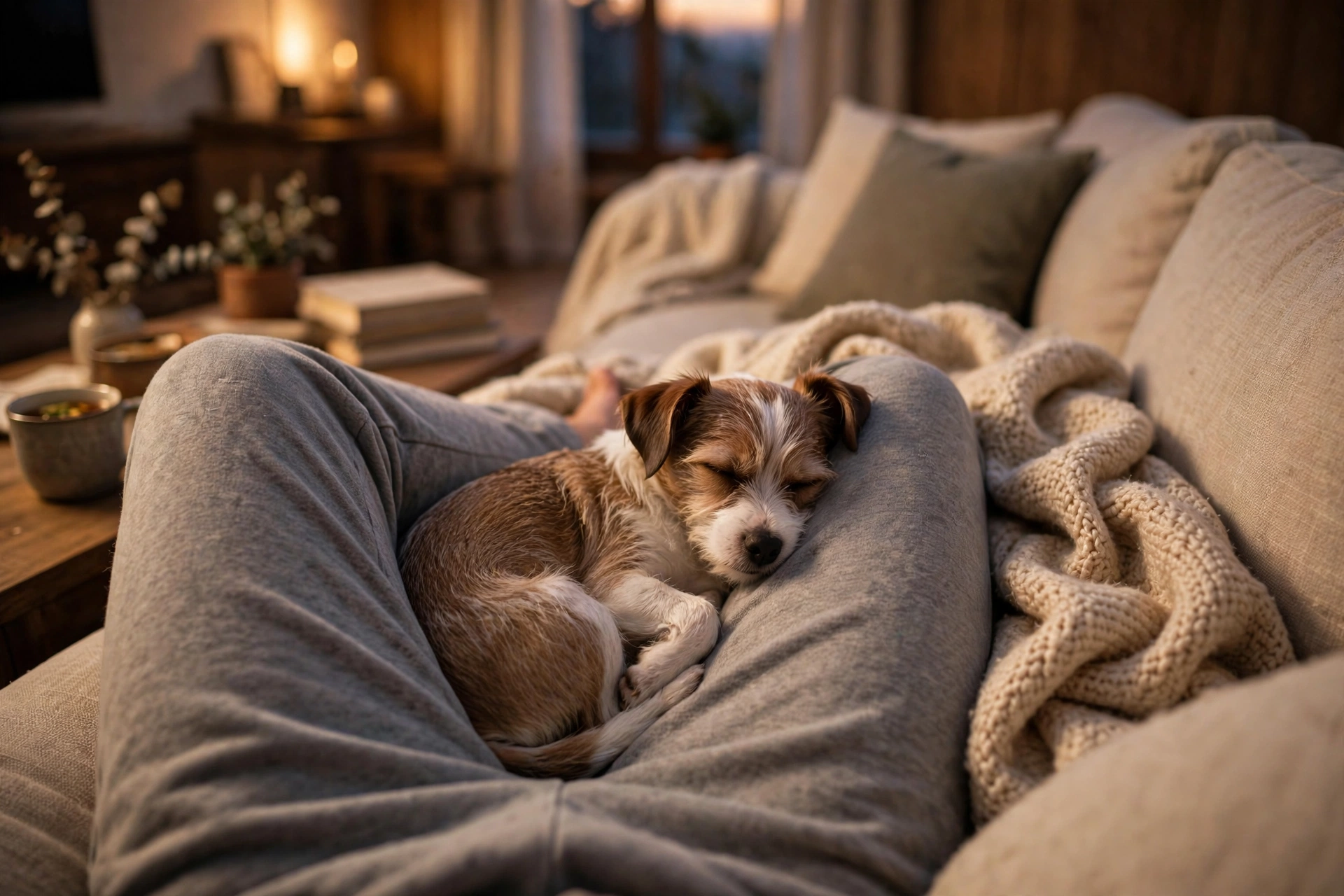
What it means: Dogs run warmer than we do, but they still love extra heat. The space between your legs traps your body heat, blocks drafts, and forms a snug little cave that is warmer than the open floor or even their own bed. Small and short-haired breeds feel this most — a Chihuahua or a lean greyhound-type gets chilly fast, and your legs become an instant heated blanket.
What to do: Nothing urgent — this is pure comfort-seeking. On cold nights, make sure their own bed is warm too, so warmth becomes a choice rather than a necessity. A washable blanket on your lap or bed keeps things hygienic without breaking the ritual.
Helpful pick: PETMAKER Waterproof Dog Blanket — toss it over your legs or bed to keep the cozy spot clean and warm.
2. It Feels Like a Safe Den

What it means: Dogs are denning animals. Puppies pile together in a warm, sheltered heap, and the habit of seeking an enclosed, protected space sticks around for life. Your legs form walls on both sides; your weight above feels like a ceiling. To your dog, that shape reads as “shelter” in the deepest part of their brain.
What to do: If your dog loves the den feeling, give them a second den option nearby — a covered crate or a bed with raised bolsters can scratch the same itch. Never drag them out abruptly; instead, lure them to their new spot with treats and praise.
Helpful pick: Best Friends by Sheri Original Calming Donut Bed — the raised rim mimics the enclosed, protected feeling of sleeping between your legs.
3. Trust and Closeness
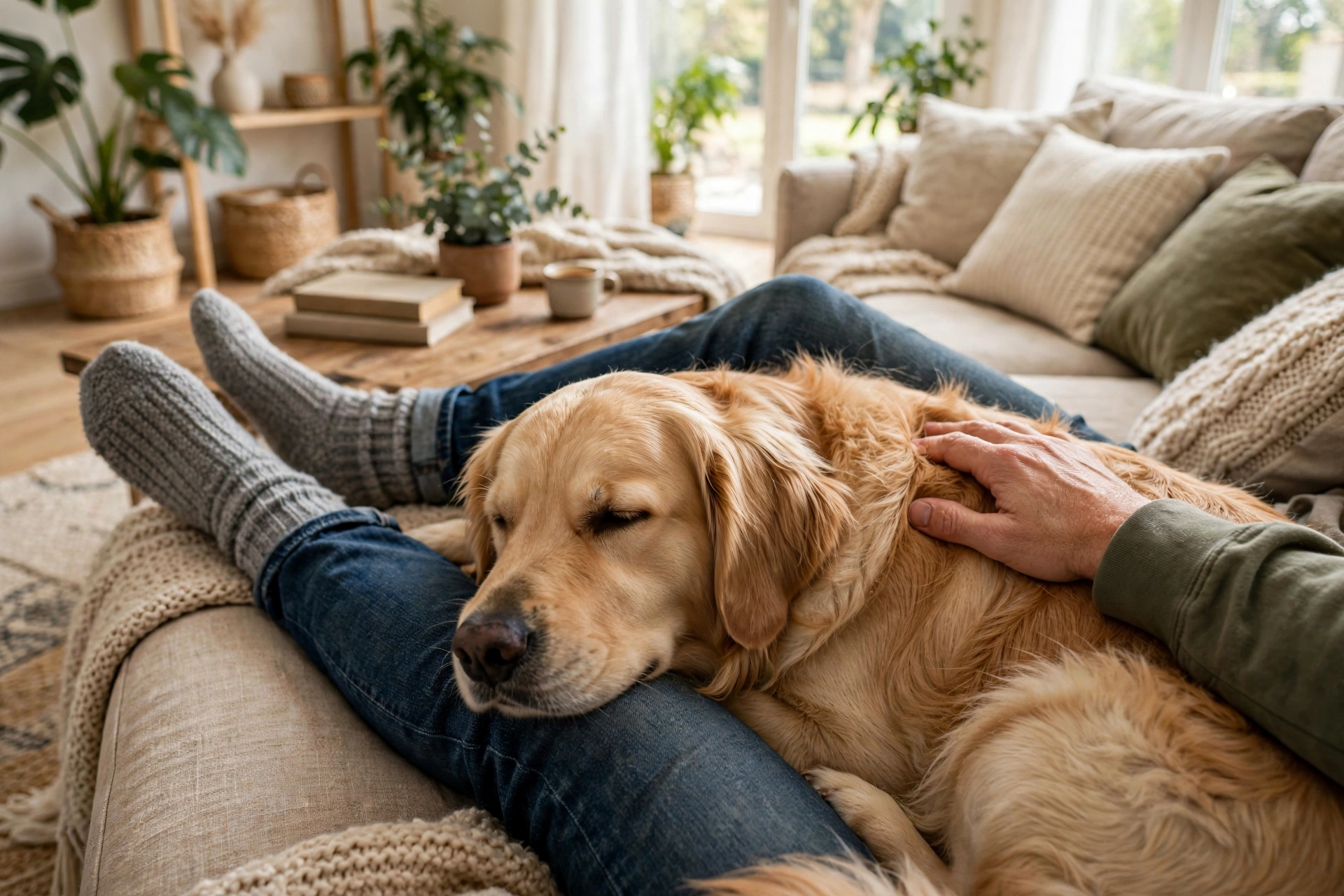
What it means: Sleeping is when a dog is at their most vulnerable, so choosing to sleep against you is one of the strongest trust signals a dog can give. Dogs bond through physical contact, and over time, pressing into your legs becomes part of their nightly routine of connection. This is the “velcro dog” in action: not just near you, practically attached to you.
What to do: Enjoy it, and give a little back — a calm hand on their shoulder tells them the bond is mutual. If you want more personal space, reward calm settling on a bed right next to you so closeness is still honored.
Helpful pick: AKC Self-Heating Pet Bed — a warm spot of their own beside your bed so they can feel close to you without pinning you down.
4. Scent Comfort

What it means: To dogs, scent is emotional. Your blankets, your clothes, and your body all carry a smell that reads as “home” to them. Research has even suggested that sleeping near their person changes how securely some dogs rest. That patch of skin between your legs is saturated with your familiar scent, and breathing it in helps your dog settle faster and sleep more deeply.
What to do: This is sweet, not problematic. If you want them to use their own bed, place a worn (unwashed) t-shirt of yours on it — your scent transfers, and the bed starts to feel like part of the pack.
Helpful pick: SmartPetLove Snuggle Puppy — a heartbeat plush that carries familiar scent and comforts dogs settling on their own.
5. Anxiety and Reassurance-Seeking

What it means: Sometimes the leg-cave is a coping strategy. During thunderstorms, fireworks, household changes, or times of illness, dogs crowd closer to their trusted person because closeness lowers their stress. Watch for the difference: a relaxed dog settles quickly and stays loose; an anxious dog pants, trembles, lip-licks, or refuses to leave your side even for a moment.
What to do: Stay calm — your tension feeds theirs. Offer quiet comfort without dramatic fussing, and address the root stressor (storm noise, routine change). If clinginess appears suddenly or is paired with appetite or behavior changes, check in with your vet.
Helpful pick: ADAPTIL Calm Home Diffuser — releases calming pheromones that support a relaxed mood at bedtime.
6. Guarding You While You Sleep
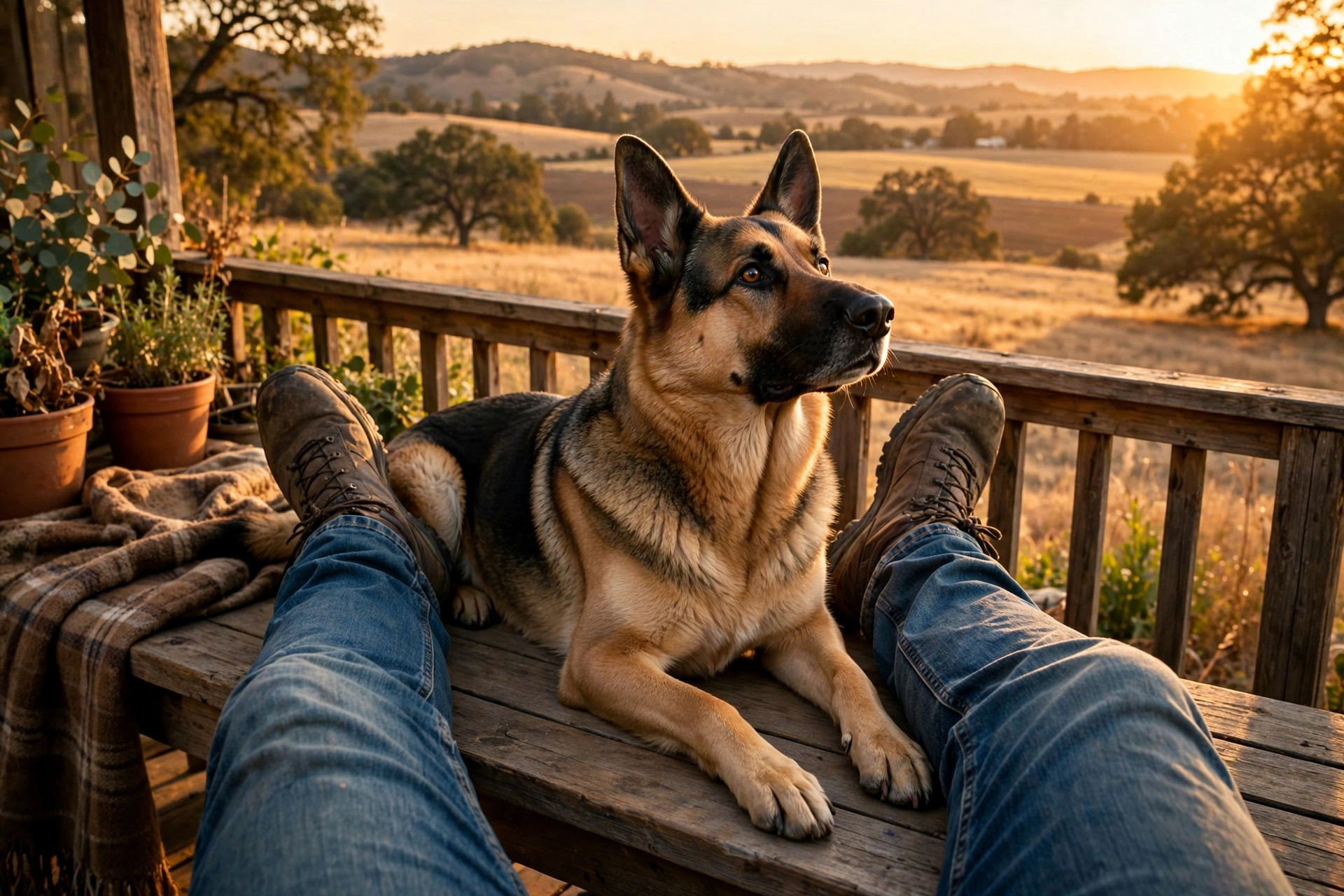
What it means: Some dogs see the leg-spot as a guard post. Positioned right over their favorite person, they can feel any movement and wake instantly if something changes. This protective streak is normal — it comes from the same pack instinct that made wild canines sleep in tight groups for mutual defense.
What to do: Mild guarding is harmless. But if your dog stiffens, growls, or blocks others from approaching you in bed, that is resource guarding, and it can escalate. Teach a reliable “off” cue with treats, and talk to a professional trainer if the behavior intensifies.
Helpful pick: Zesty Paws Calming Chews — supports a calmer wind-down routine before bed.
Should You Let Your Dog Sleep Between Your Legs?
For most dogs and owners, yes — this is a healthy, affectionate habit. It usually means your dog trusts you, feels safe, and simply likes you. Letting them do it strengthens the bond, and many owners find it genuinely comforting too.
The only reasons to change it are comfort, sleep quality, or safety: if your legs fall asleep, if you keep waking up, or if your dog growls when disturbed (a red flag worth addressing). To shift the habit kindly, place a warm, scent-familiar bed right beside yours and reward your dog for choosing it — patience beats scolding every time.
Keep Reading: Why Does My Dog Sleep by My Head? · Dog Sleeping Positions Meaning · Signs Your Dog Loves You · Why Does My Dog Circle Before Lying Down?
Frequently Asked Questions
Why does my dog only sleep between my legs and not my partner’s?
Dogs pick their favorite person — usually whoever gives them the most attention, walks, treats, or comfort. It is not a slight against your partner; it is just preference built from routine.
Is it bad for my dog to sleep between my legs?
No. It is normal and healthy for most dogs. The only concerns are resource guarding (growling when disturbed), anxiety-driven clinginess, or disrupted human sleep — all manageable with gentle training.
Why did my dog suddenly start sleeping between my legs?
A sudden change can mean anxiety, a new stressor (move, new pet, schedule change), illness, or simply colder weather. If the shift is abrupt and paired with other behavior changes, a vet check is wise.
How do I get my dog to sleep in their own bed instead?
Make their bed irresistible: warm, slightly scented with your worn shirt, placed near you. Reward every calm settle on the bed within seconds, and calmly ignore (don’t scold) returns to your legs.
Do all dogs sleep between their owner’s legs?
Not all — it is more common in small breeds, puppies, seniors, anxious dogs, and “velcro” breeds like Cavalier King Charles Spaniels, Labradors, and Vizslas. Confident, independent dogs often prefer their own space.
As an Amazon Associate, PetPostHub earns from qualifying purchases.