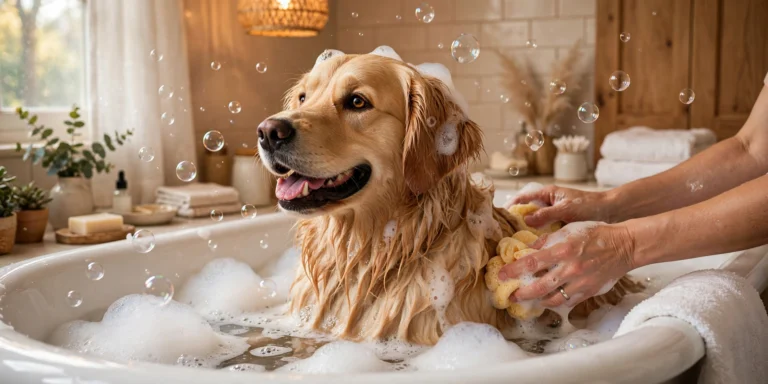
Why Does My Dog Smell After a Bath? 6 Reasons (2026)
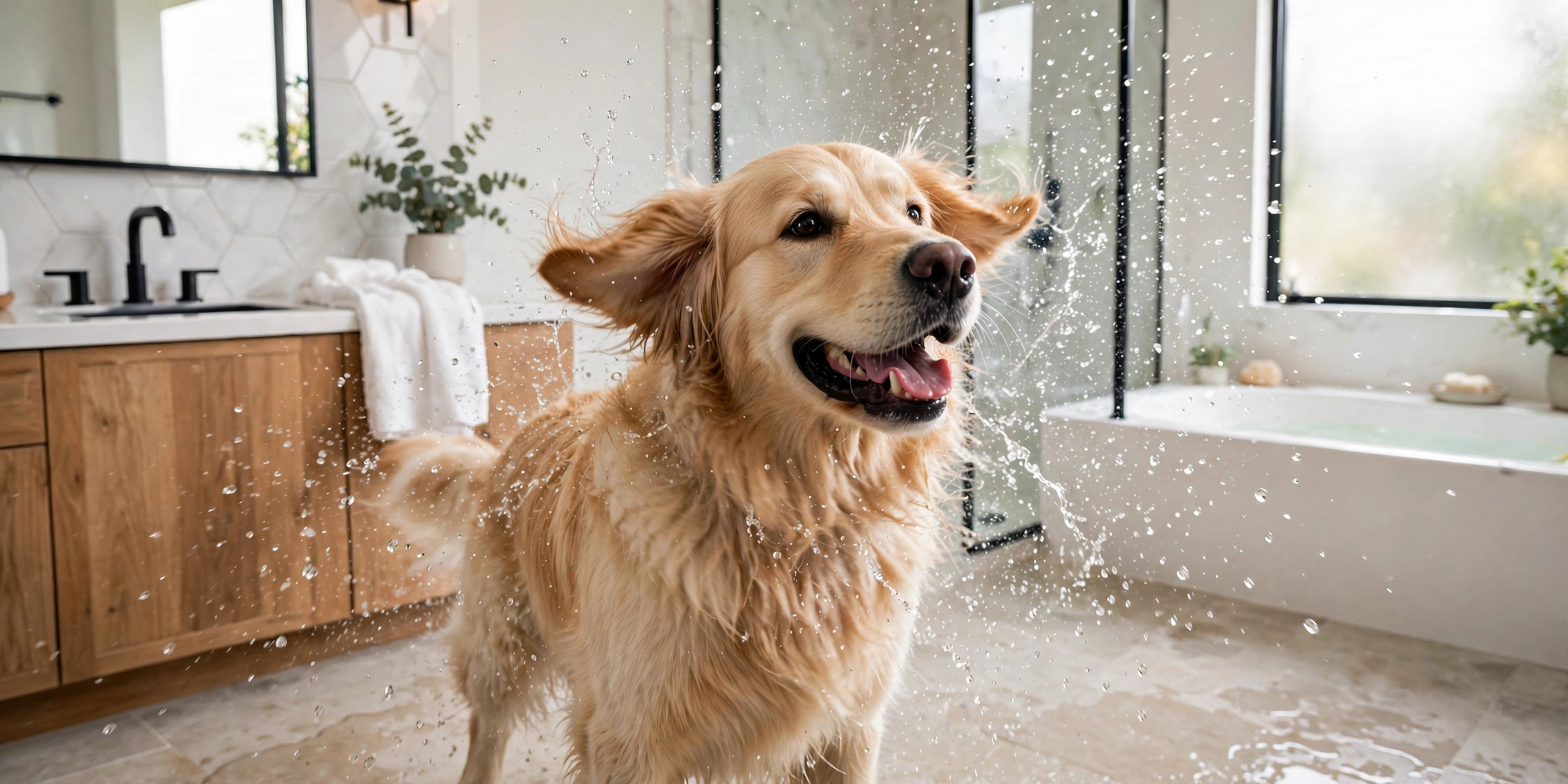
You scrubbed, you rinsed, you toweled — and yet you’re asking why does my dog smell after a bath? It’s one of the most confusing moments in dog ownership: your pup should smell like a fresh meadow, but twenty minutes later there’s that familiar funk again. The good news is that a post-bath smell almost always has a clear, fixable cause. Here are the six most common reasons your clean dog still stinks, and exactly what to do about each one.
1. Your Dog Isn’t Fully Dry
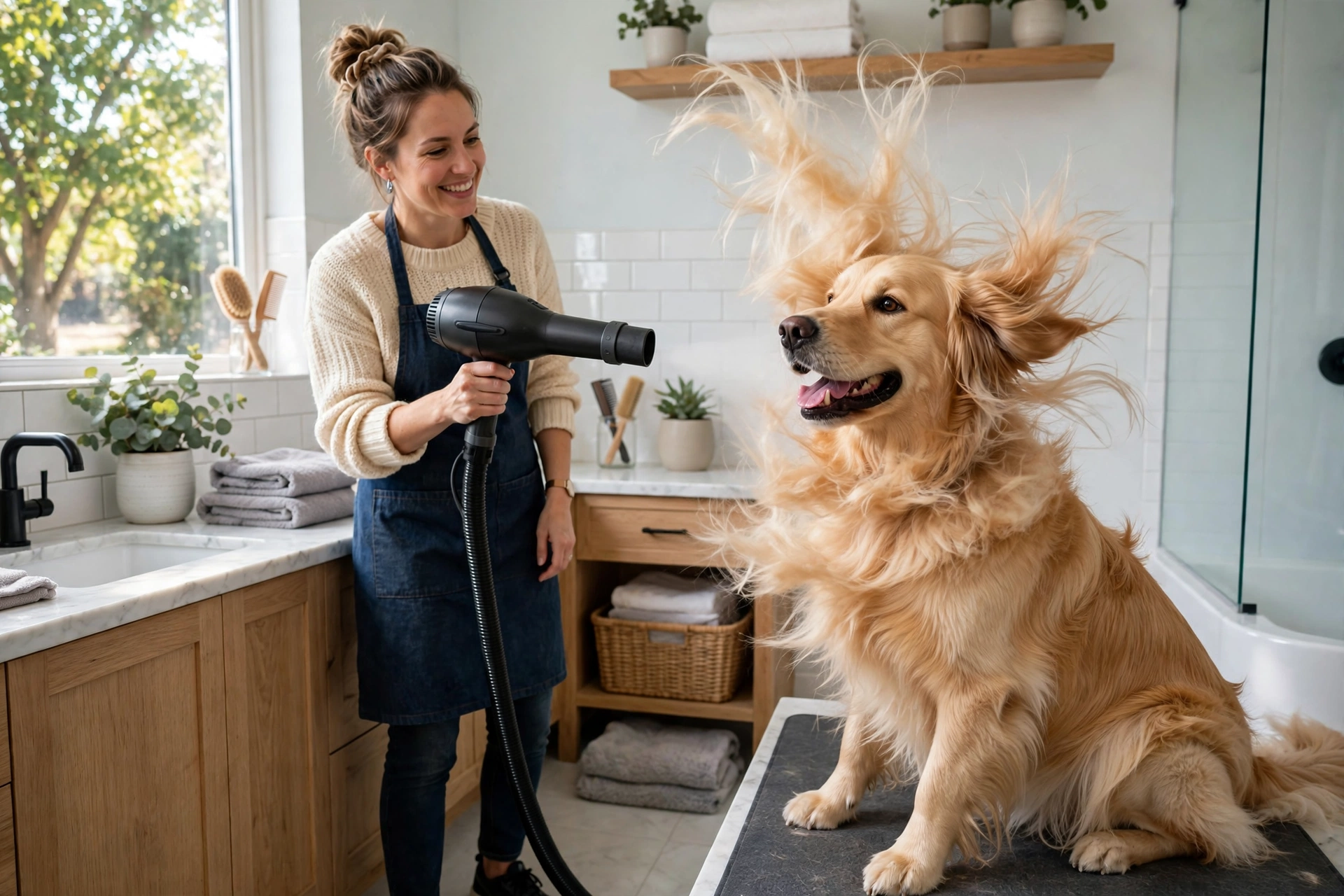
What it means: This is the number-one reason dogs smell right after a bath, and it’s the easiest to fix. Damp fur is a playground for the yeast and bacteria that live on every dog’s skin — mostly harmless when dry, but once wet they release volatile compounds (the classic “wet dog” smell) as water evaporates. Thick double coats, skin folds, armpits, the belly, and the paws can stay damp deep down for hours after the surface feels dry, and the odor actually gets stronger as drying progresses. Dogs who flop onto the couch while still damp also turn their bedding into an odor sponge, so the smell seems to “come back” even though you just bathed them.
What to do: Dry like you mean it. Press towels into the coat — don’t just wipe the surface — and hit the chest, belly, legs, armpits, and between the toes. Then follow up with gentle airflow on a low, cool-to-warm setting; high-velocity pet dryers move air without dangerous heat and blast water out of dense undercoats far better than a human hair dryer. Keep your dog off fabric furniture and bedding until 100% dry, and dry the paws and toe webs last, since those hidden spots turn funky fast.
Helpful pick: B-Air Bear Power 4 HP High Velocity Pet Dryer — blasts water out of thick double coats without hot air, so dampness (and the smell it feeds) doesn’t linger.
2. Bacteria and Yeast Got Trapped in the Coat
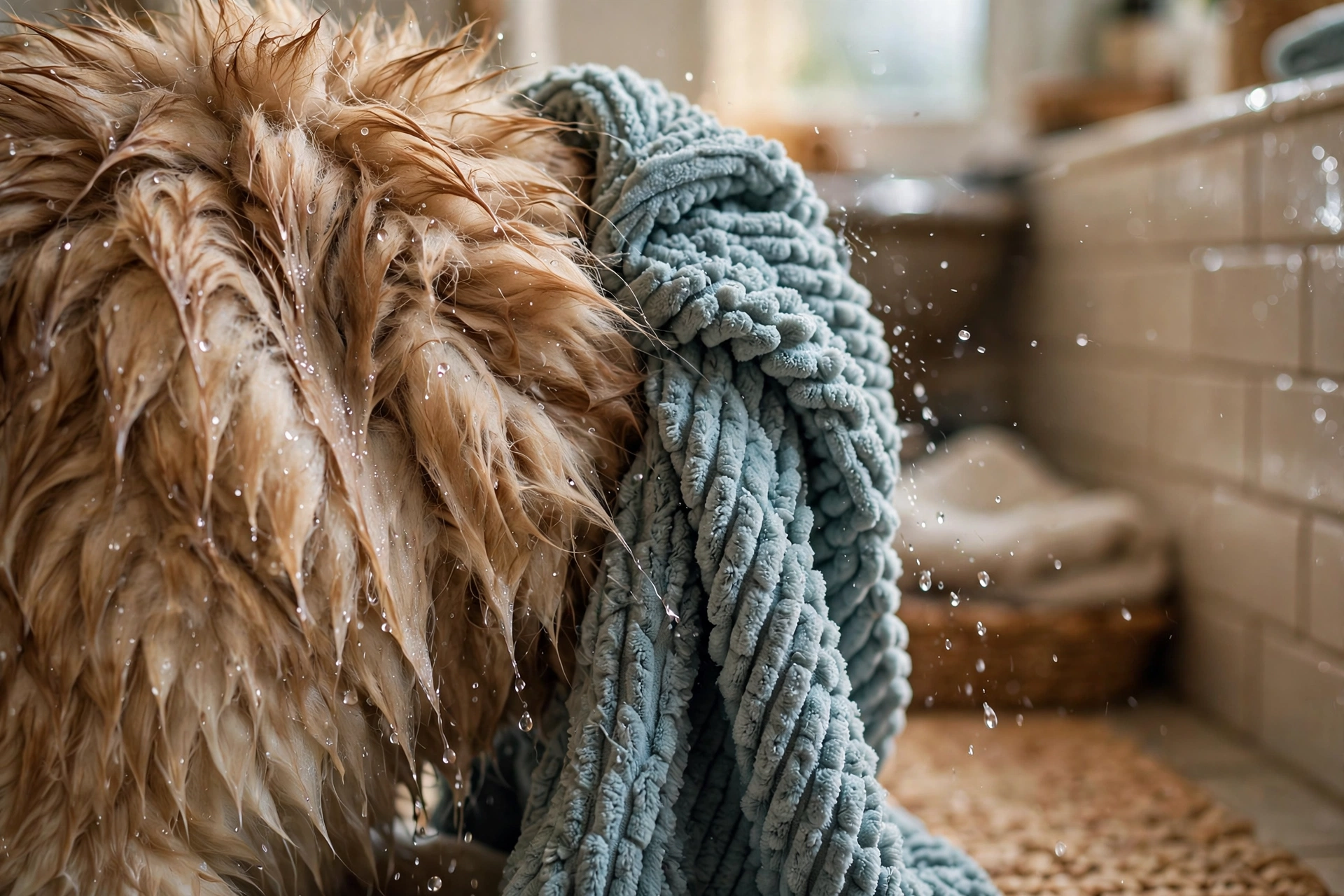
What it means: Every dog’s skin hosts a normal population of yeast (like Malassezia) and bacteria. When the coat is dry, they stay quiet. But a bath temporarily gives them everything they need to throw a party: moisture, warmth, and natural skin oils. If water gets trapped against the skin — under a dense undercoat, in wrinkles, or anywhere the fur mats — microbes multiply quickly and produce the sour, musty odor we recognize as “wet dog.” This is also why dogs who swim or play in the rain sometimes smell worse than before their bath.
What to do: Start with a thorough pre-bath brush to remove dead undercoat and prevent mats from trapping water. In the bath, lather all the way to the skin and rinse completely — leftover residue feeds microbes. Afterward, upgrade your towel game: plush microfiber chenille dog towels absorb up to 7x their weight in water and wick moisture out of thick coats far better than old bath towels. Wash your dog’s bedding, blankets, and any towels used on them frequently, since those fabrics become breeding grounds for the same microorganisms.
Helpful pick: Soggy Doggy Super Shammy Dog Towel — ultra-absorbent microfiber chenille with hand pockets that pulls water deep out of the coat before microbes can settle in.
3. There’s a Skin or Yeast Infection Underneath
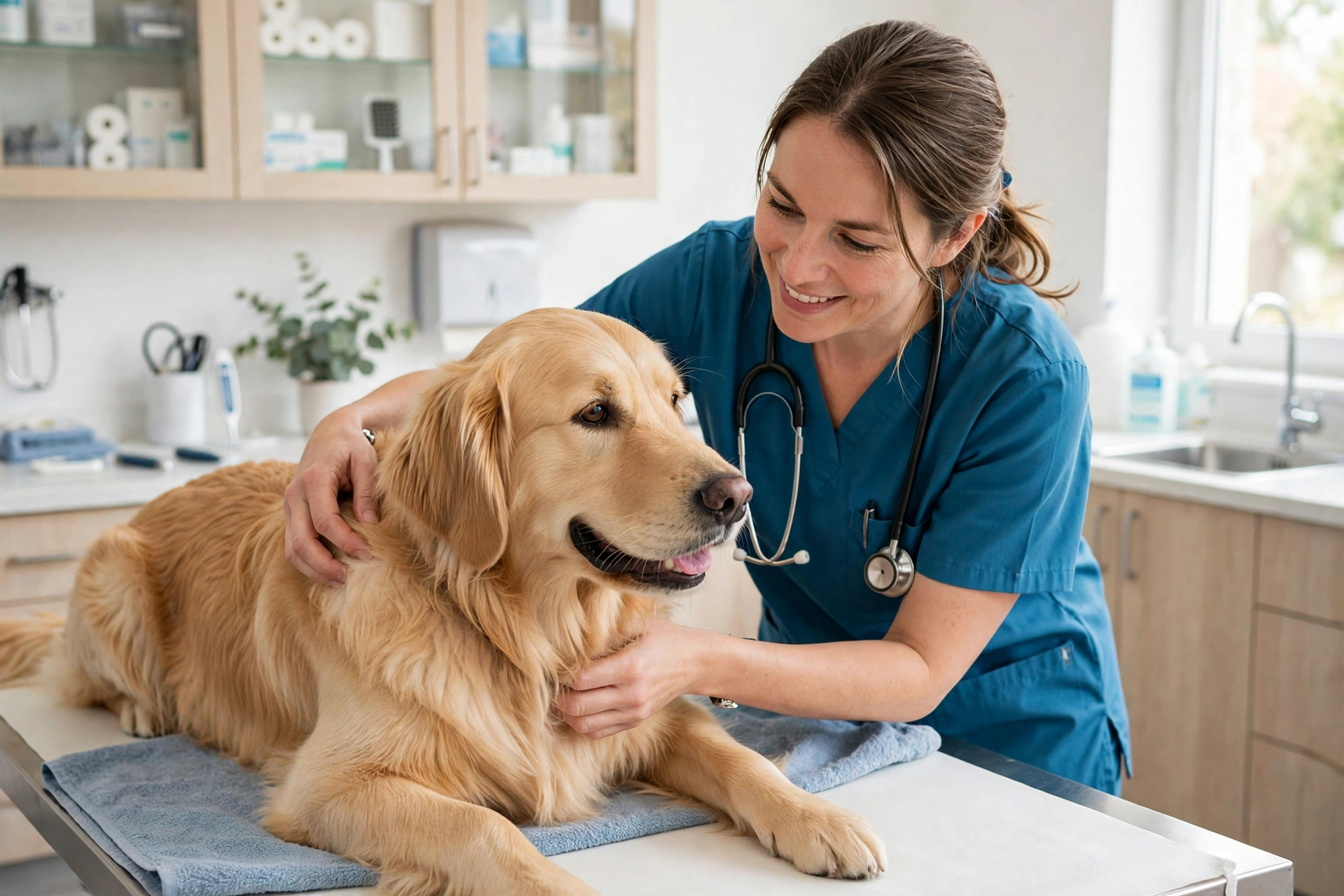
What it means: If your dog smells bad even when completely dry — and the odor returns within a day or two of bathing — the problem is likely living in the skin itself, not on it. Yeast overgrowth (Malassezia) produces a distinctive musty, slightly sweet, sometimes “corn chip” odor, while bacterial skin infections (pyoderma, hot spots) smell sharp and foul. Affected dogs often have redness, greasy or flaky skin, hair loss, or constant scratching. Bathing gives temporary relief, but the smell comes roaring back because the source was never treated. Breeds with skin folds or dense coats are especially prone.
What to do: Don’t try to wash this problem away — see your veterinarian for a proper diagnosis. Skin scrapings or cytology will identify yeast, bacteria, or both, and your vet can prescribe medicated shampoos or treatment. At home, you can support healthy skin with omega-3 fatty acids, which help maintain the skin barrier that keeps microbial populations balanced. Persistent, worsening, or patchy odor with skin changes always deserves a vet visit rather than another round of shampoo. (Vet note: skin infections can worsen quickly — get checked promptly.)
Helpful pick: Zesty Paws Wild Alaskan Salmon Oil — omega-rich supplement that supports healthy skin and coat from the inside out.
4. The Anal Glands Are Full
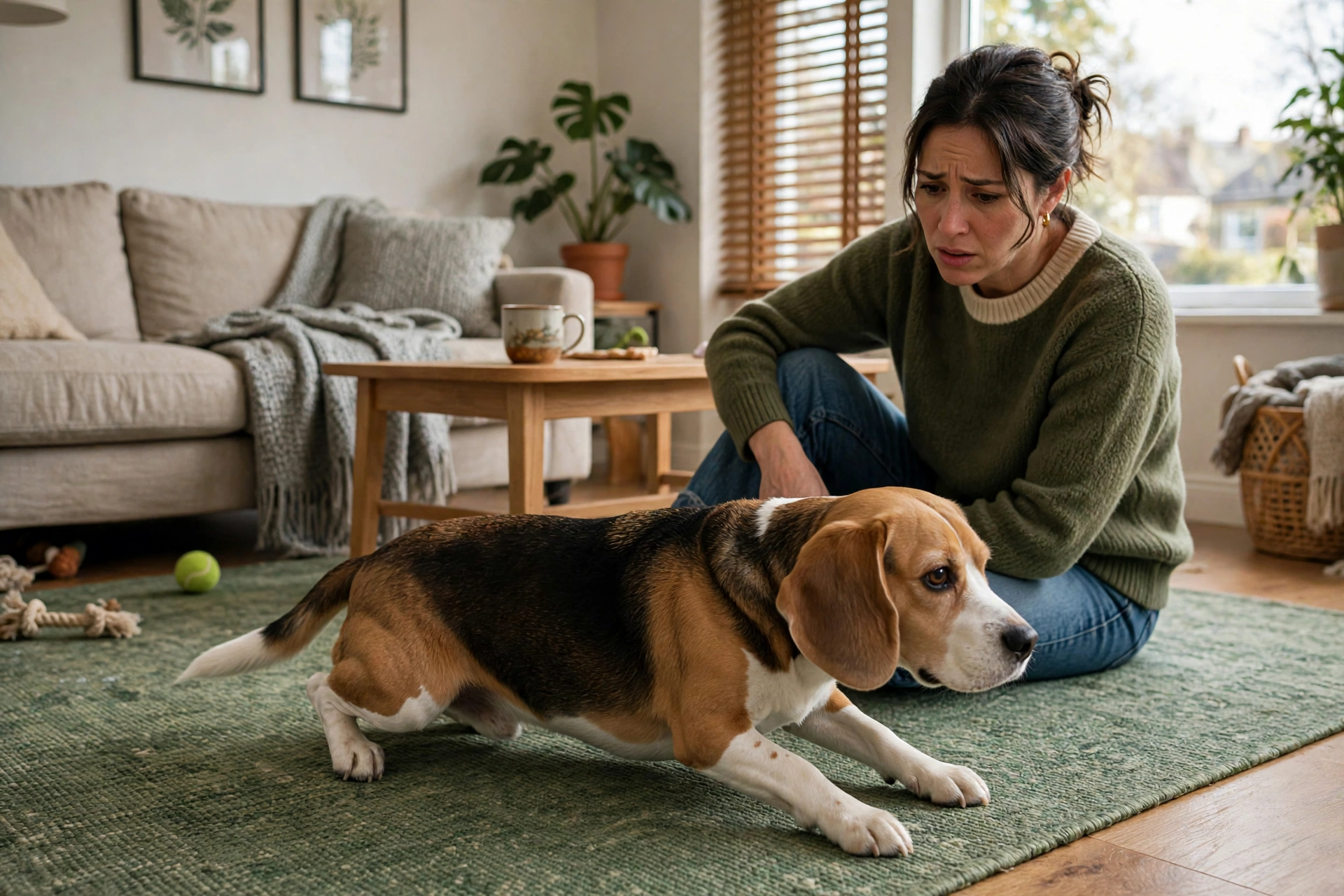
What it means: Two small scent glands sit just inside your dog’s anus. Normally they empty a tiny amount of potent fluid during defecation and you never notice. But when they’re overfull, impacted, or infected, they release a remarkably distinctive fishy, metallic smell — and it’s so pervasive it can make the entire dog smell bad even after a thorough bath, because bathing never reaches or empties these glands. If your dog is also scooting on the floor, licking or biting at their rear, or suddenly smells fishy an hour after bath time, the glands are a prime suspect.
What to do: Have your vet or groomer check and express the glands — never squeeze them yourself unless trained, since rough handling can cause injury or infection. For dogs with recurring issues, fiber-rich anal gland support chews can help promote natural emptying during bowel movements. Watch for scooting, tail chasing, or a swollen rear, which can signal impaction that needs professional attention.
Helpful pick: Glandex Anal Gland Support Chews & Wipes Bundle — fiber-and-probiotic chews formulated to support natural anal gland emptying, plus deodorizing wipes for between baths.
5. An Ear Infection Is Leaking Odor
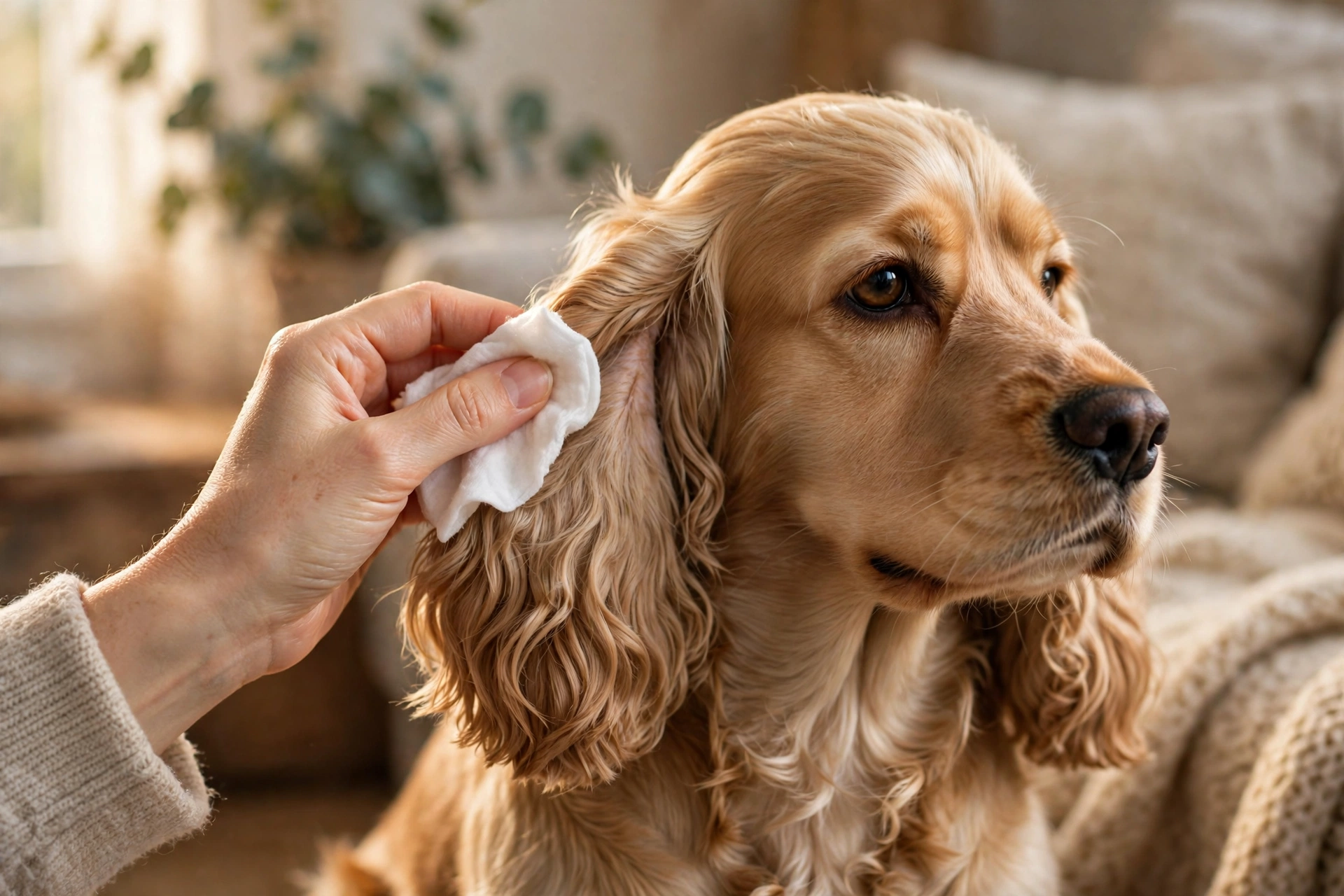
What it means: Many dogs smell “fine” on the body but carry a strong odor around the head — and that’s usually the ears. Yeast or bacterial ear infections produce a sweet, yeasty, or sour smell that easily transfers to the rest of the coat when your dog shakes, scratches, or rubs their head on furniture. Baths don’t fix ears; in fact, getting water trapped in the ear canal during a bath can make an existing infection worse. Warning signs include head shaking, scratching at one ear, a strong smell near the head and neck, redness, or dark waxy discharge.
What to do: Do a gentle sniff-and-look check near the ear opening — no deep poking or Q-tips. For routine maintenance, use a veterinary ear cleanser to keep wax and moisture under control, and place a cotton ball loosely in each ear during baths to keep water out. If you notice a strong odor, heavy discharge, redness, or your dog seems painful, see your vet — ear infections need proper diagnosis and treatment, and they come back fast if only partially treated. (Vet note: untreated ear infections can damage the ear canal — don’t wait.)
Helpful pick: ZYMOX Ear Cleanser — gentle enzymatic formula that helps keep ears clean and odor-free between vet visits.
6. You Used the Wrong Shampoo

What it means: Not all shampoos are created equal — for dogs or for your specific dog. Human shampoo (or dish soap in a pinch) strips the coat’s natural oils and disrupts the skin’s pH, which can trigger rebound oiliness and odor within days. Heavily fragranced shampoos can mask smells temporarily but leave residue that traps odor, and some dogs react to harsh ingredients with itchy, flaky skin that smells worse than before. Using too much product without a complete rinse has the same effect: residue plus moisture equals funk.
What to do: Switch to a high-quality dog-specific shampoo — an oatmeal or fragrance-free formula is best for most dogs, especially those with sensitive or itchy skin. Dilute concentrated shampoos as directed, massage all the way to the skin, and rinse, rinse, rinse until the water runs completely clear and the coat squeaks. If your dog has recurring odor, ask your vet about a medicated or deodorizing formula matched to their skin type rather than grabbing whatever smells nicest at the pet store.
Helpful pick: earthbath Oatmeal & Aloe Fragrance-Free Shampoo — gentle, soap-free formula that cleans without stripping natural oils or leaving odor-trapping residue.
How to Get Rid of Post-Bath Smell
If your dog still smells after a bath, run through this checklist in order: 1) Dry completely — towel to the skin, then airflow, including paws and skin folds. 2) Keep them off fabric until bone-dry. 3) Sniff the ears and check the rear for fishy gland odor — baths don’t fix those. 4) If the smell persists when fully dry, look for skin redness, flaking, or greasiness and book a vet visit. 5) Between baths, brush regularly to distribute oils and remove the dead coat that traps odor, wash bedding weekly, and consider a dog-safe deodorizing wipe or dry shampoo for touch-ups. Most post-bath smells disappear once drying and the real odor source — ears, glands, or skin — get proper attention.
For more on keeping your pup fresh between washes, see our guides on why dogs smell in general, the best dog hair dryers for home grooming, how to groom your dog at home step by step, and why your dog might smell like fish.
Frequently Asked Questions
Is it normal for a dog to smell right after a bath?
A mild wet-dog smell while drying is completely normal — it’s just moisture activating the microbes on the skin. But the smell should fade once your dog is fully dry. If it lingers or returns quickly, one of the six causes above is at play.
Why does my dog smell worse after a bath than before?
Water amplifies the volatile compounds produced by yeast and bacteria on the skin, and as it evaporates the odor drifts into the air. Incomplete drying, trapped moisture in thick coats, or an underlying skin or ear infection can all make a freshly bathed dog smell worse than when he was dry and dirty.
How do I stop my dog from smelling like wet dog?
Dry thoroughly with towels and airflow (a high-velocity pet dryer works best), brush out dead undercoat before bathing, rinse all shampoo residue, and keep bedding washed. Persistent odor despite all this usually means ears, anal glands, or a skin infection need attention.
Can over-bathing make my dog smell worse?
Yes. Bathing too often strips natural oils, disrupts the skin barrier, and can trigger rebound greasiness and irritation — all of which smell. Most dogs only need a bath every 4–8 weeks unless they get genuinely dirty.
When should I take my smelly dog to the vet?
See your vet if the odor persists when your dog is fully dry, keeps returning within a day or two of bathing, or comes with redness, flaking, hair loss, head shaking, scooting, or discharge. Those are signs of skin, ear, or gland issues that need professional treatment.
As an Amazon Associate, PetPostHub earns from qualifying purchases.