10 DIY Raised Dog Bowl Ideas: Easy Feeding Stations for Every Dog
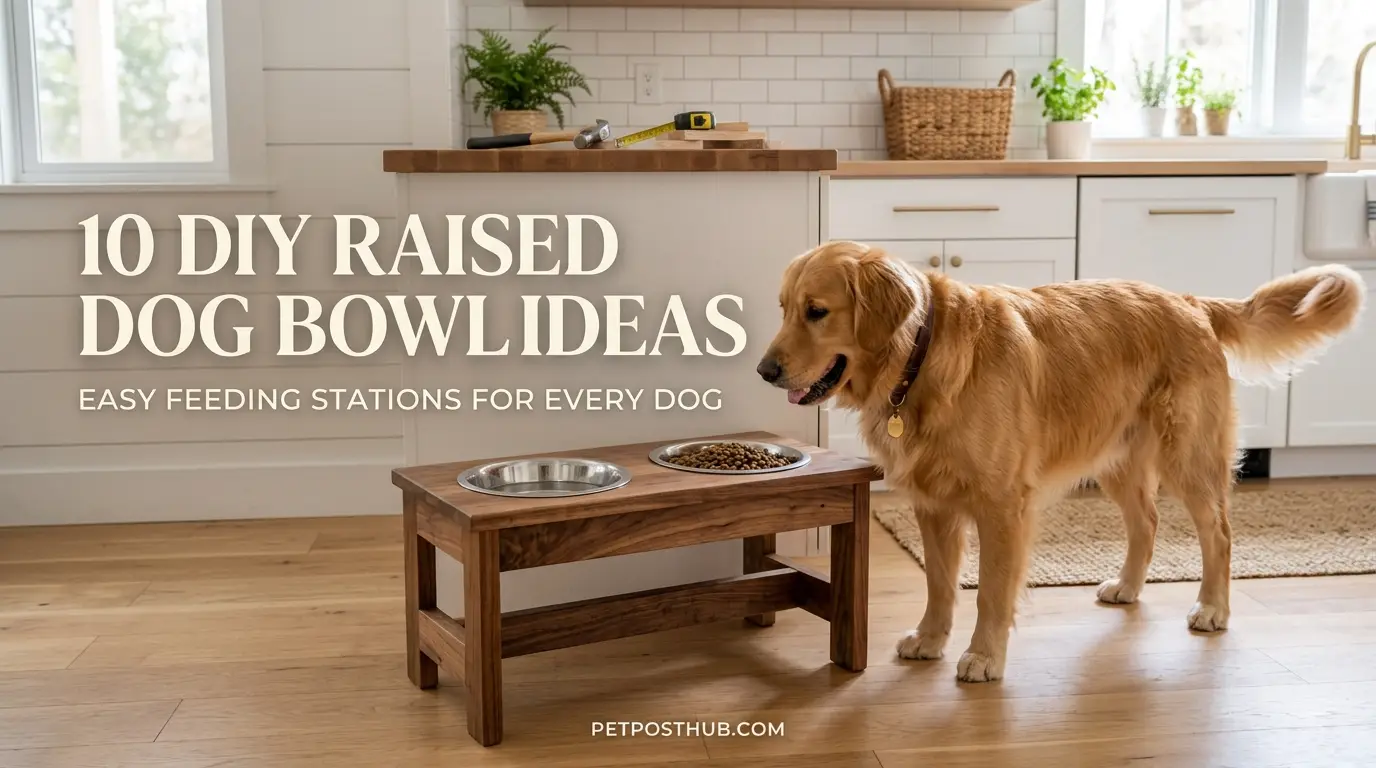
A dog bowl that slides across the kitchen, tips over, or leaves water everywhere gets annoying fast. A simple raised feeding station can solve some of those everyday problems while giving your dog’s feeding area a more organized, furniture-like look.
But there is one important detail to get right: a raised dog bowl isn’t automatically better for every dog. Height, stability, bowl material, cleaning, and your dog’s individual needs all matter. In fact, raised feeders have been associated with an increased risk of gastric dilatation-volvulus (GDV) in some large and giant-breed dogs, so talk with your veterinarian before choosing an elevated setup if your dog is at higher risk.
If you’re comfortable with DIY projects, these 10 raised dog bowl ideas give you plenty of ways to create a feeding station that fits your home and your dog’s routine.
1. Rustic Wooden Double-Bowl Stand
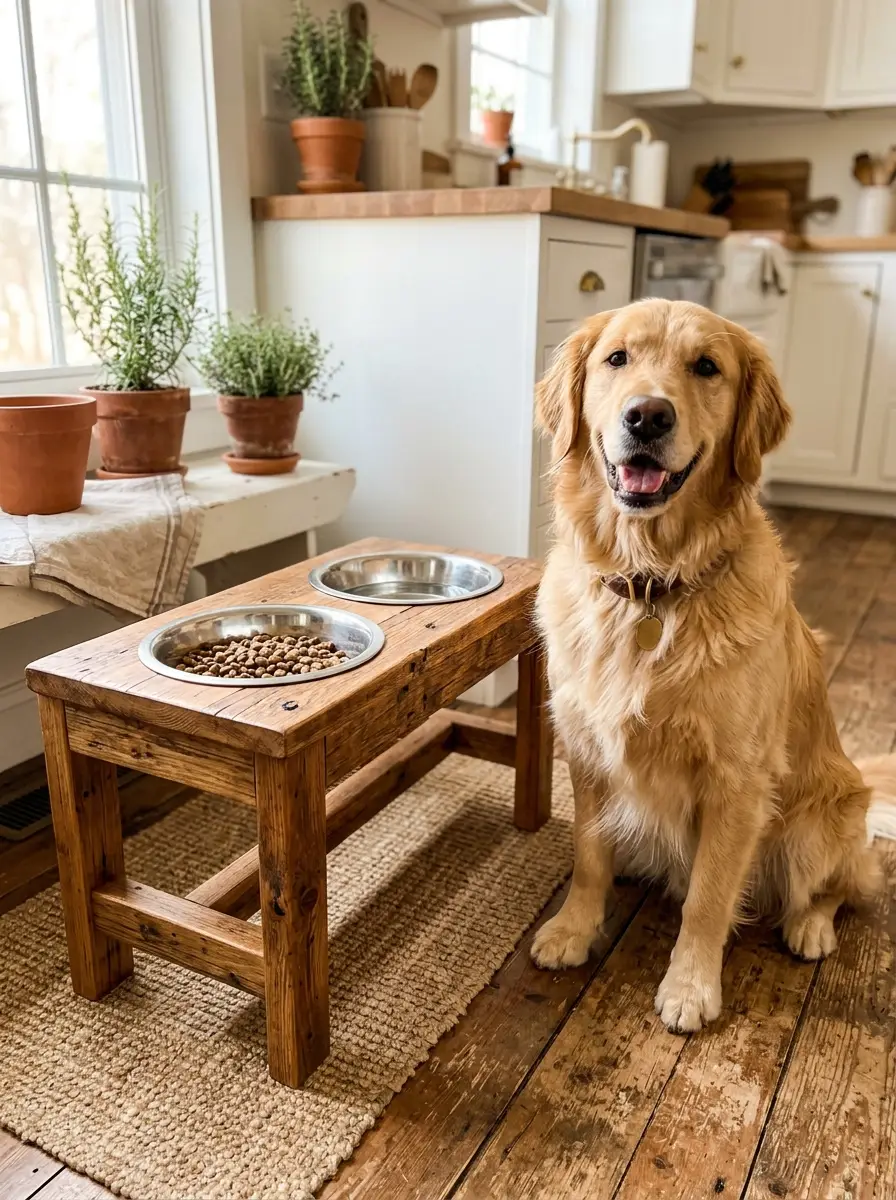
A simple wooden stand is one of the easiest DIY raised dog bowl projects to customize. Start with a solid wood board, cut two openings for stainless steel bowls, and attach four sturdy legs underneath.
Choose the height based on your dog’s size rather than copying a measurement from another project. The bowls should be secure without forcing your dog to stretch upward or crouch excessively.
Best for: Medium and large dogs when an elevated feeder is appropriate.
DIY tip: Buy the bowls first and measure the outside rim before cutting the holes. A slightly incorrect opening can make the bowl unstable.
2. DIY Wooden Crate Feeding Station
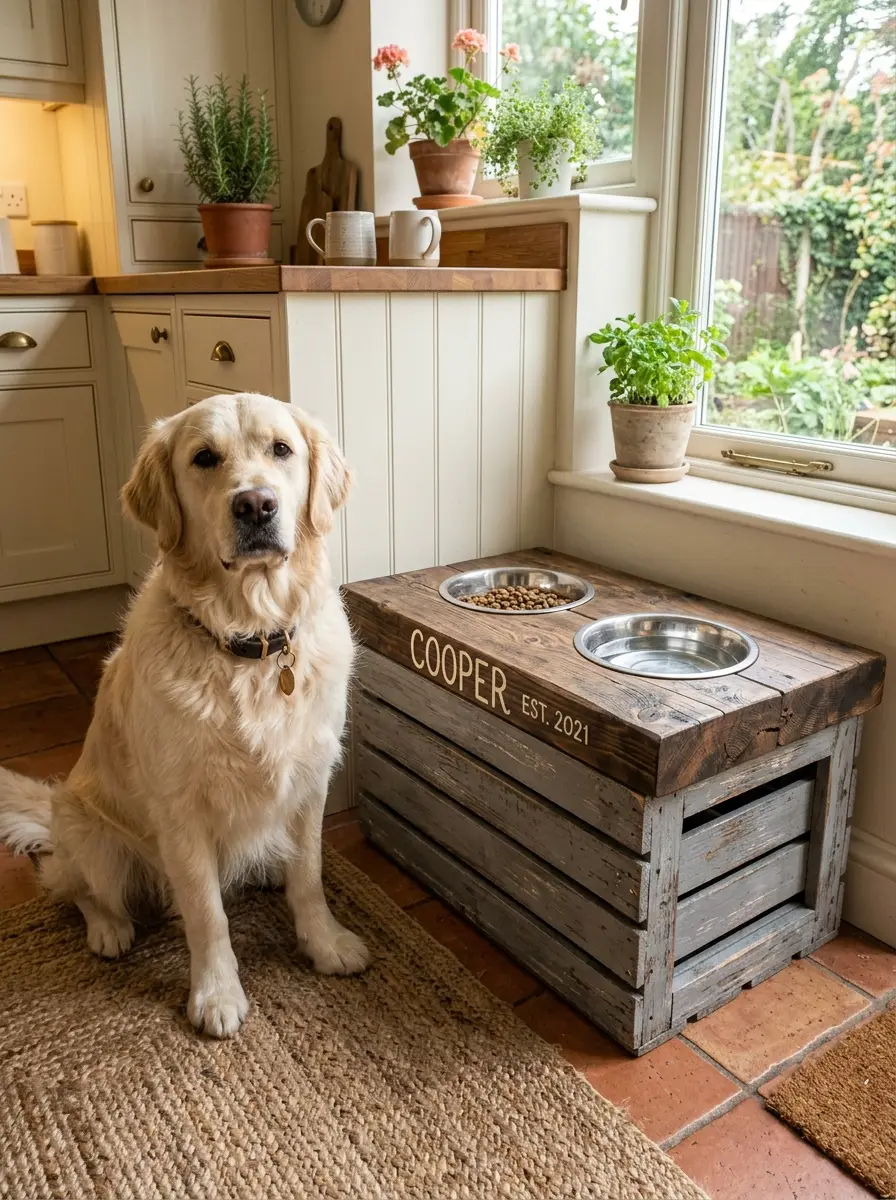
An unfinished wooden crate can become a charming feeding station with very little construction work. Add a sturdy wooden top, cut openings for two bowls, and finish the exterior with a pet-safe coating.
You can paint the crate, stain the top, or personalize the front with your dog’s name. The enclosed base also creates a useful storage space for food scoops, towels, or spare bowls.
Best for: Farmhouse, rustic, and casual kitchens.
DIY tip: Make sure the crate is strong enough to support your dog’s weight and reinforce the top before cutting bowl openings.
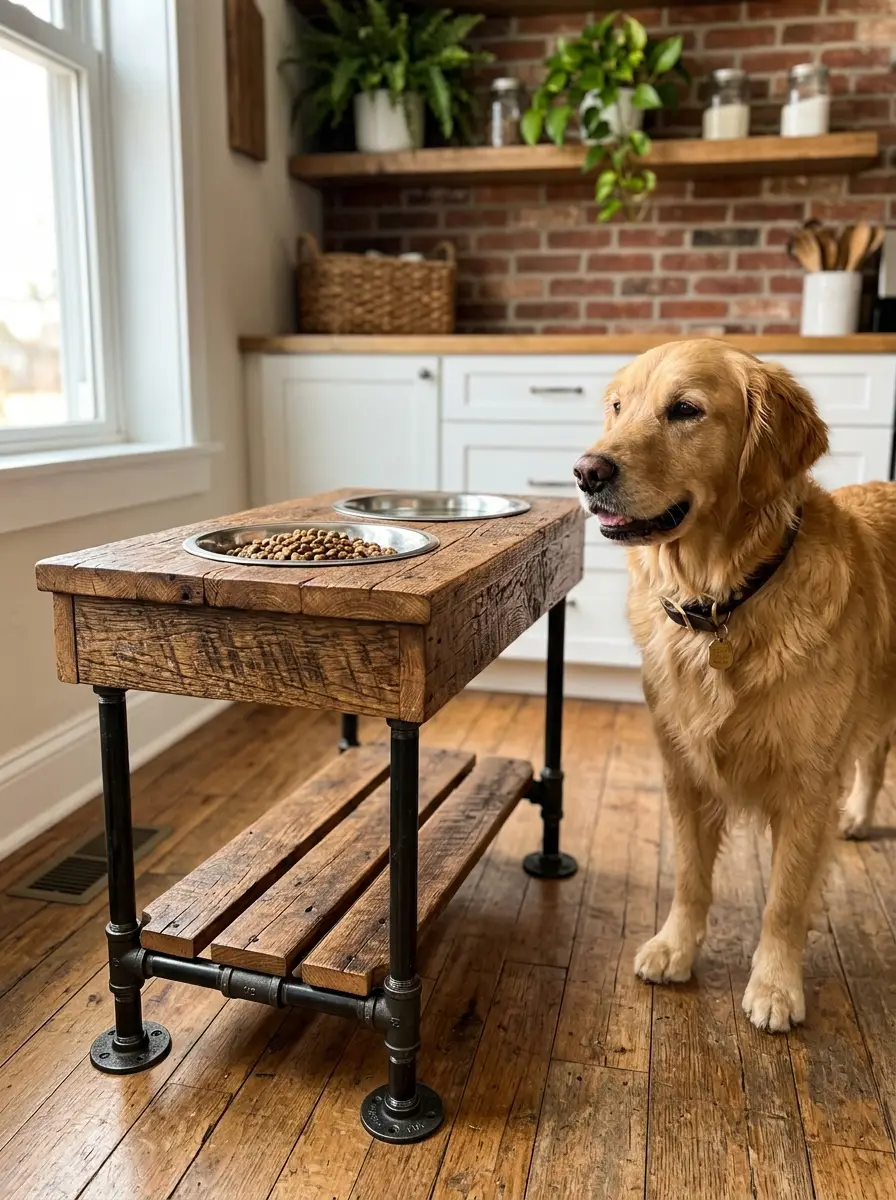
3. Industrial Pipe Dog Bowl Stand
For a modern or industrial interior, combine a wooden top with black metal pipe legs. The contrast between warm wood and dark hardware makes a practical feeder look more like a piece of furniture.
Cut two circular openings into the top and attach the pipe framework underneath. Add adjustable feet or rubber pads if the stand will sit on smooth flooring.
Best for: Modern kitchens and heavier dogs.
DIY tip: Check that every pipe connection is tight and that the finished stand doesn’t rock when pressure is applied from different sides.
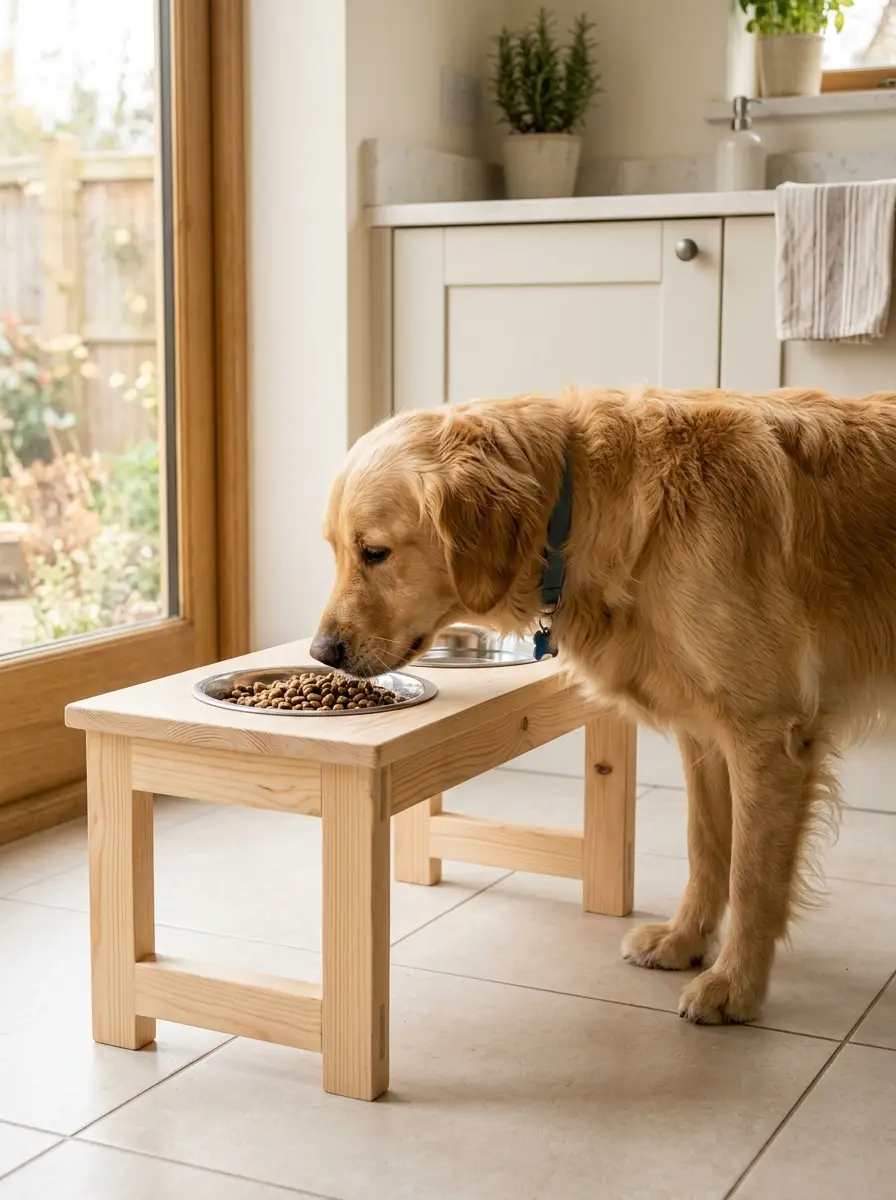
4. Simple Pine Raised Dog Feeder
You don’t need expensive hardwood to make a useful dog bowl stand. Pine boards can be cut into a basic rectangular frame with a top panel containing one or two bowl openings.
Sand every surface thoroughly before assembly and round over sharp corners. A simple design is also easier to repair if water eventually damages the finish.
Best for: First-time DIYers.
DIY tip: Keep the design uncomplicated. A stable, easy-to-clean feeder is more useful than an elaborate stand with difficult-to-reach corners.
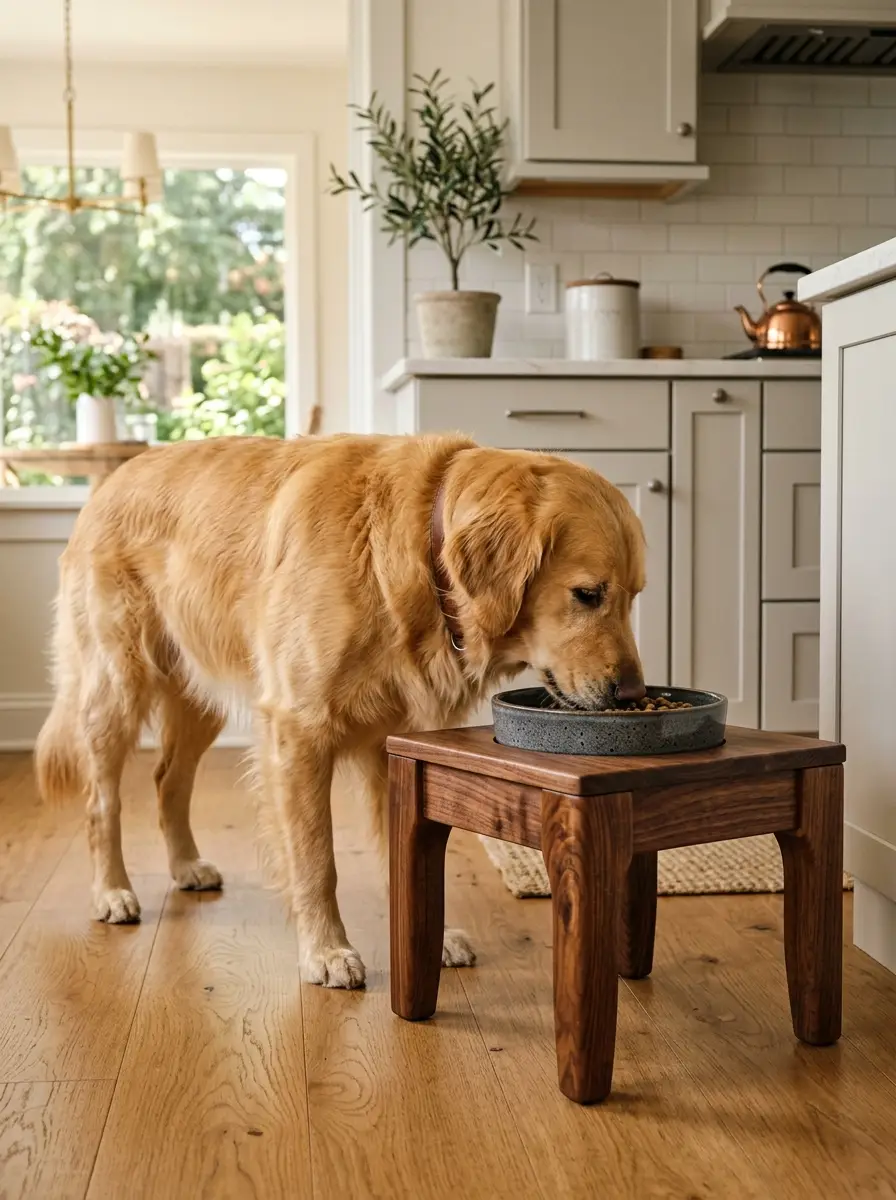
5. Single-Bowl Walnut Feeder
If your dog needs only one bowl at the feeding station, a compact walnut stand makes an attractive option. A thick walnut panel with four short legs can create a minimalist feeder without taking up much floor space.
The rich wood grain gives this project a premium appearance, while a removable stainless steel bowl makes daily cleaning much easier.
Best for: Dogs with a dedicated food bowl and smaller feeding areas.
DIY tip: Use the bowl’s actual rim measurement when making the opening rather than relying on the manufacturer’s advertised bowl diameter.
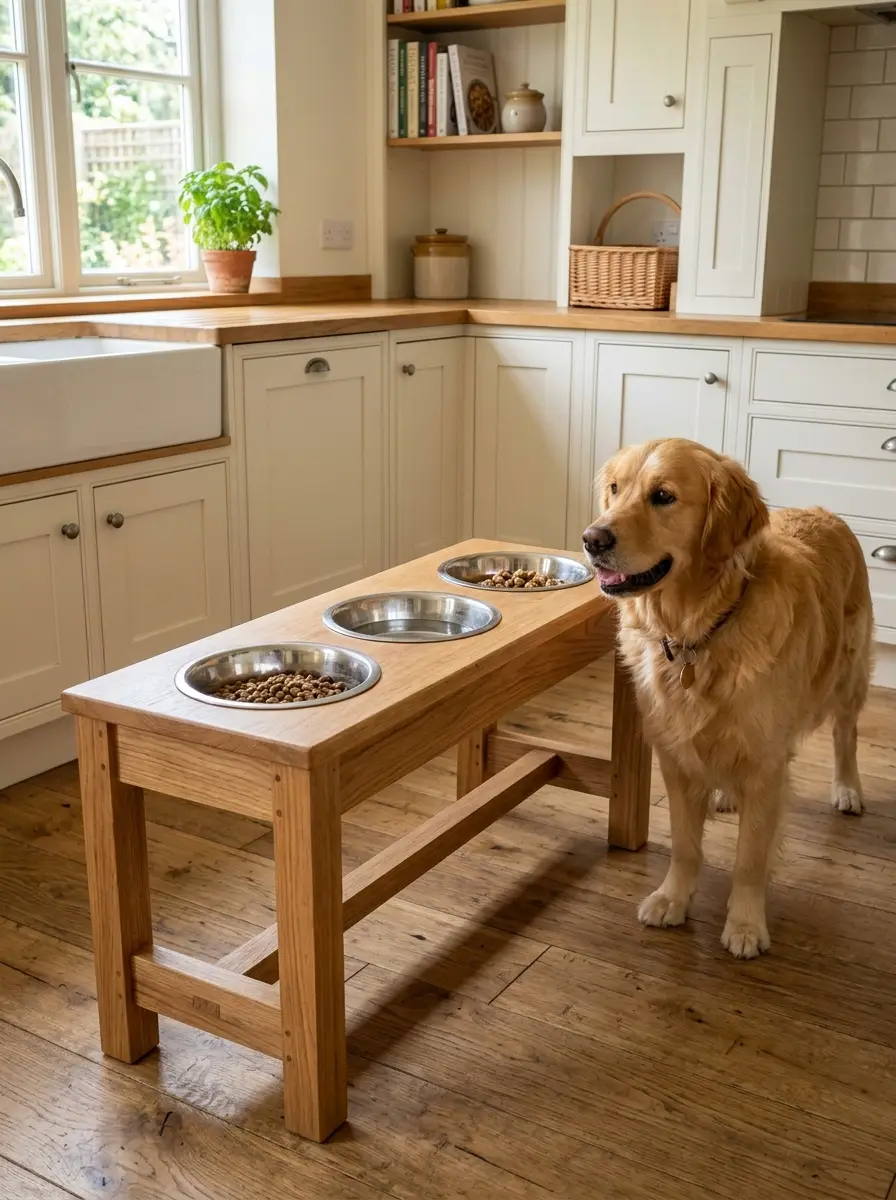
6. Triple-Bowl Feeding Station
Dogs who use separate bowls for food and water—or households with multiple pets—may benefit from a wider feeding station.
Build a long wooden frame with three removable stainless steel bowls. Add a center support underneath the top to prevent flexing, especially if you are using a wide board.
Best for: Multi-bowl setups and homes with more than one pet.
DIY tip: Leave enough space between bowls for your dog to comfortably reach each one without knocking the neighboring bowl.
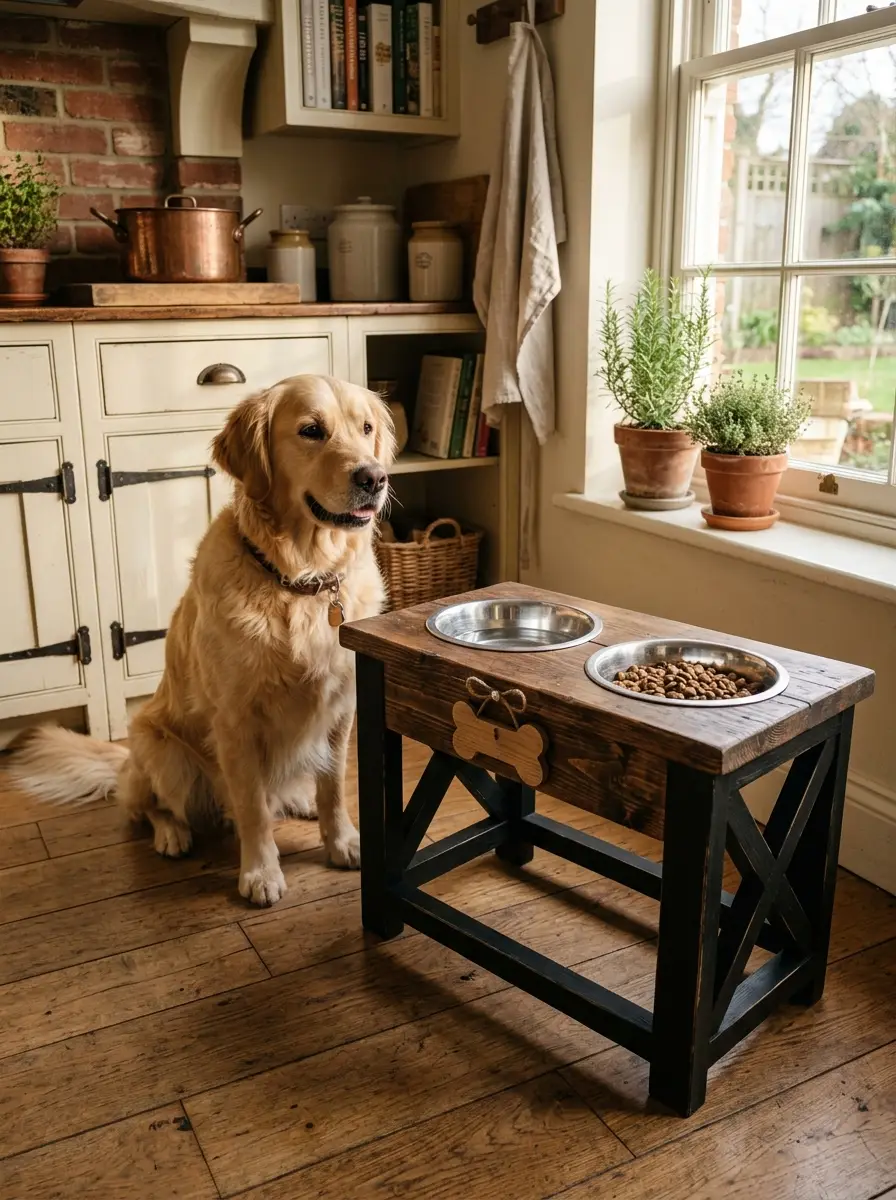
7. Farmhouse Dog Bowl Stand With Name Tag
For a decorative option, pair a stained wood top with painted legs and a small personalized name tag.
The construction can remain simple: make a rectangular base, attach a solid top, and cut one or two bowl openings. A bone-shaped wooden plaque adds personality without making the project complicated.
Best for: Farmhouse and country-style interiors.
DIY tip: Use a finish that is appropriate for surfaces exposed to occasional water and food splashes, and keep decorative pieces away from areas your dog can chew.
8. Hairpin-Leg Raised Dog Bowl Stand
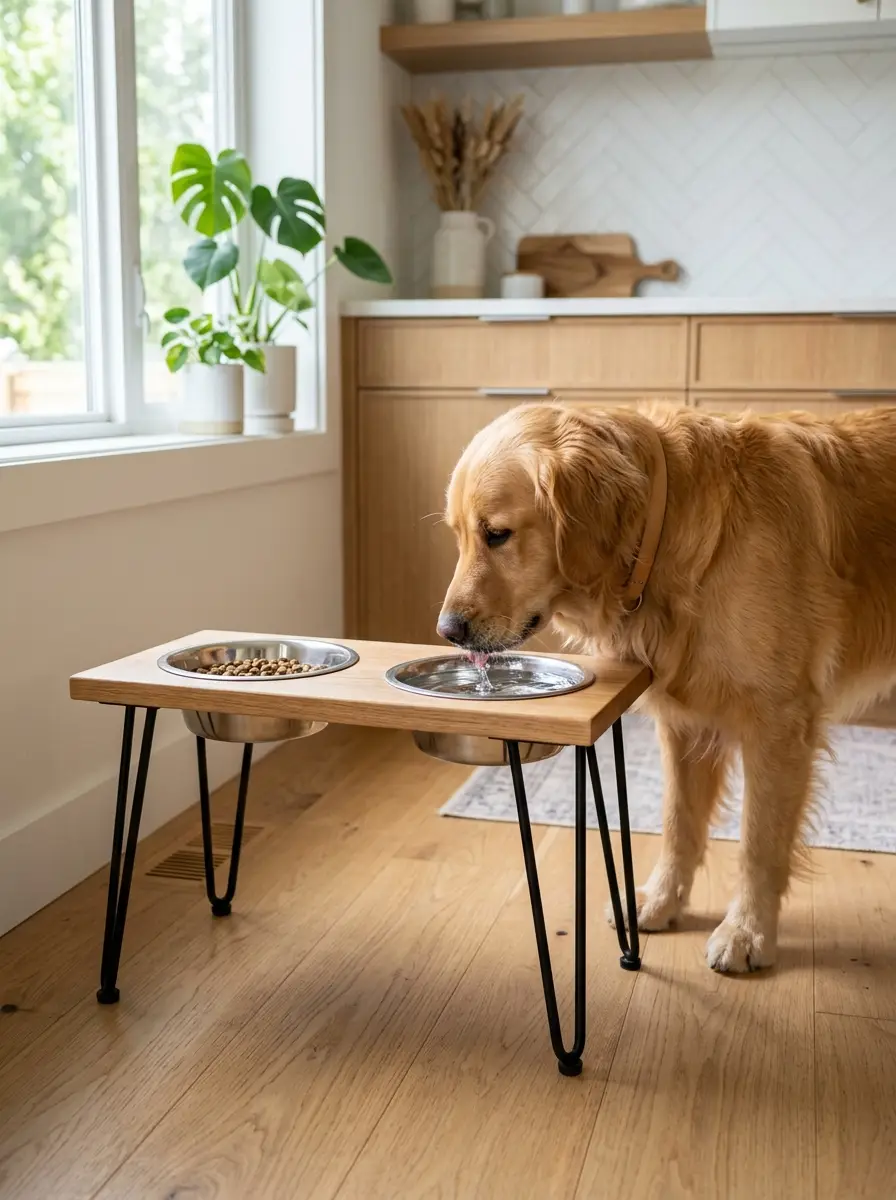
Hairpin furniture legs aren’t just for tables. They can also turn a basic wooden board into a lightweight-looking dog feeding station.
Attach four legs underneath a sanded wood panel and cut openings for your bowls. Because hairpin legs come in different heights, you can customize the overall design more easily than with a fixed crate.
Best for: Small spaces and modern homes.
DIY tip: Add non-slip pads underneath the legs to reduce movement on tile, hardwood, or laminate flooring.
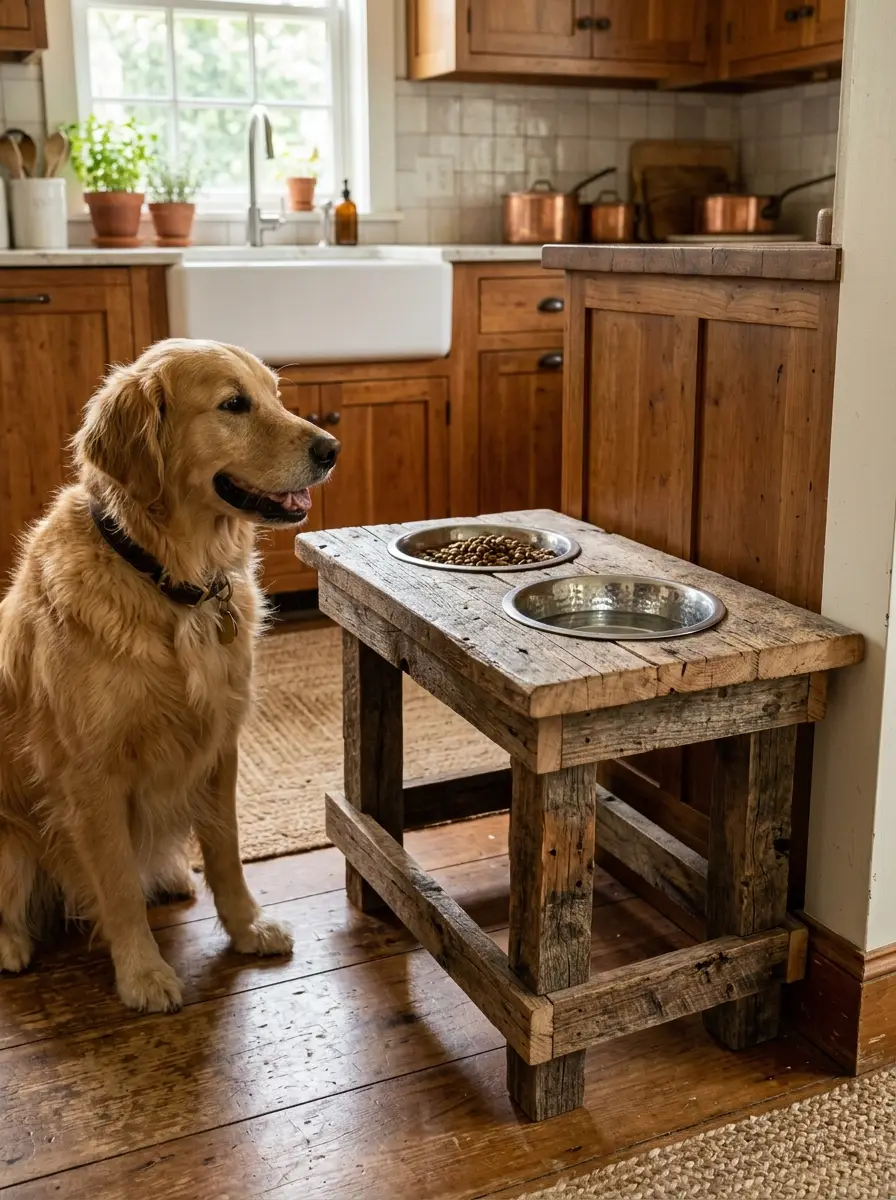
9. Reclaimed Wood Dog Feeding Station
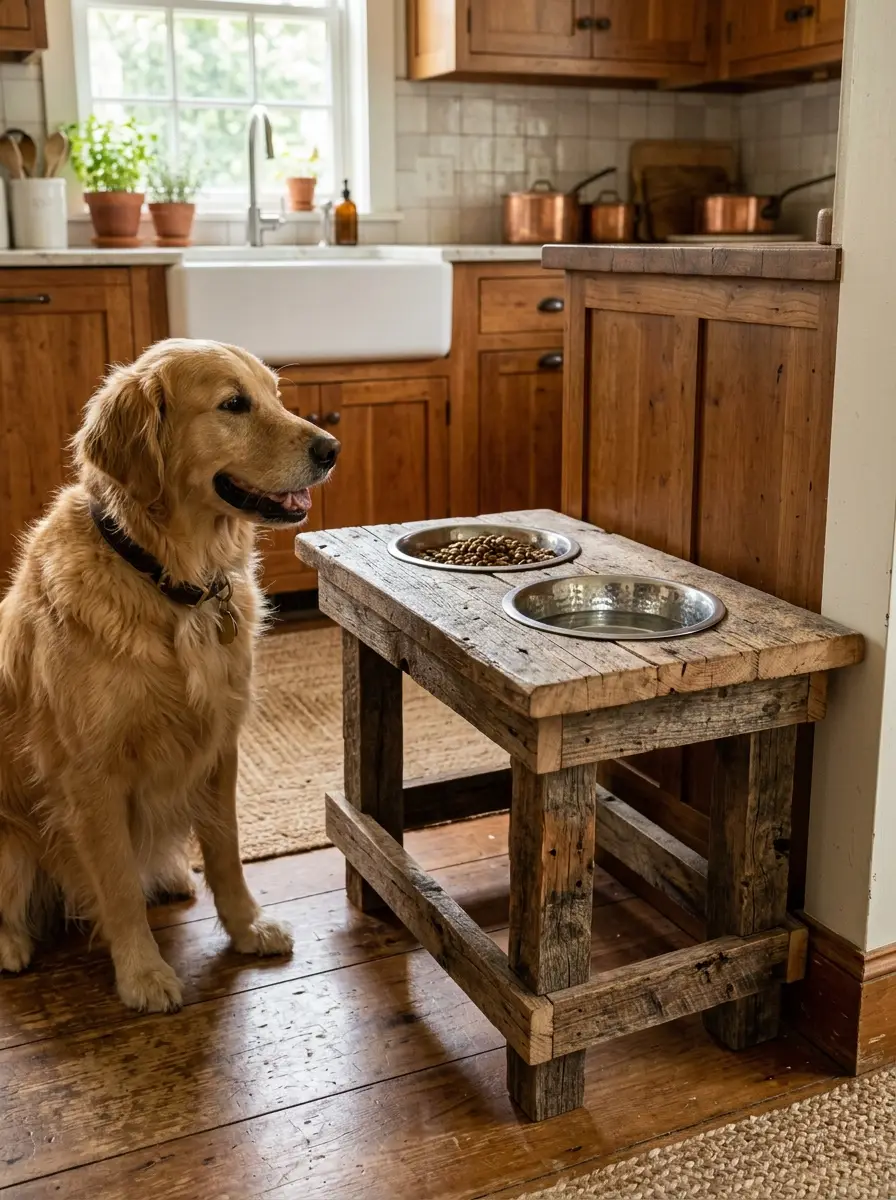
Have leftover barnwood or reclaimed boards? Turn them into a one-of-a-kind feeding station.
Sand the surface carefully, remove loose splinters, and inspect the wood for nails, staples, chemicals, or other contaminants before using it around your dog. Combine the reclaimed top with a simple wooden or metal base.
Best for: Rustic and vintage-inspired homes.
DIY tip: Avoid questionable reclaimed wood. If you don’t know where the material came from or what it was previously treated with, choose new pet-safe lumber instead.
10. Minimalist Angled-Leg Dog Bowl Stand
A clean, angled-leg design can make a DIY feeder look surprisingly sophisticated. Use a hardwood or quality plywood top with two circular openings and four slightly angled legs.
The wider stance gives the base a stable footprint while keeping the overall design visually light.
Best for: Contemporary homes and DIYers who want a furniture-style feeder.
DIY tip: Test the stand on the floor before applying the final finish. Press gently from each side to make sure it doesn’t wobble.
How High Should a DIY Raised Dog Bowl Be?
This is where many DIY projects go wrong.
There isn’t one universal bowl height that works for every dog. Your dog’s size, body shape, age, mobility, eating habits, and health all matter.
Instead of blindly copying an 8-inch or 10-inch measurement, use your dog’s natural standing posture as your starting point. The bowl should be positioned so your dog can eat comfortably without having to excessively stretch upward or bend down.
If your dog has arthritis, neck problems, swallowing difficulties, or another medical condition, ask your veterinarian whether an elevated feeder is appropriate and what height they recommend.
Are Raised Dog Bowls Safe for Dogs?
Raised bowls can be convenient, but they aren’t automatically safer than bowls on the floor.
One particularly important concern is GDV, commonly called bloat. Research has identified elevated feeding as a potential risk factor, particularly in large and giant-breed dogs, so owners of breeds predisposed to GDV should discuss raised feeders with their veterinarian before building one.
A raised station also won’t automatically prevent gulping, digestive problems, or choking. If your dog eats too quickly, a slow-feeder bowl may be more appropriate than simply raising the bowl.
Choose the Right Bowl for Your DIY Stand
The stand is only half of the project.
For everyday use, stainless steel bowls are a practical choice because they are durable and generally easy to clean. Ceramic bowls can also work well when they are made specifically for food use and are free from cracks or damaged glaze.
Before cutting your wooden top, measure:
- Bowl opening diameter
- Bowl rim diameter
- Bowl depth
- Overall bowl height
- Distance between multiple bowls
Always measure the actual bowl you own. Different brands can have surprisingly different dimensions even when they advertise the same capacity.
DIY Raised Dog Bowl Safety Checklist
Before putting your new feeder into daily use, check these details:
- The stand should sit firmly without wobbling.
- Bowl openings should hold the bowls securely.
- Sand all exposed wood edges smooth.
- Avoid exposed screws, nails, or sharp hardware.
- Use finishes suitable for pet-contact areas.
- Keep paint and decorative materials away from areas your dog can chew.
- Make bowls easy to remove for daily washing.
- Add non-slip feet when necessary.
- Inspect the stand regularly for cracks, loose hardware, or water damage.
- Ask your veterinarian before using a raised feeder for a dog at increased risk of GDV.
How to Keep a Wooden Dog Bowl Stand Clean
Water is usually the biggest enemy of a homemade wooden feeder.
Wipe spills as soon as possible and don’t allow standing water to sit underneath the bowls. Removable bowls make cleaning much easier because you can wash them separately instead of repeatedly soaking the wooden stand.
Inspect the underside of the feeder too. Water can collect underneath bowls and gradually cause swelling, cracking, mold, or finish failure.
Which DIY Raised Dog Bowl Idea Should You Build?
For beginners, the simple pine stand or wooden crate feeder is probably the easiest place to start.
If appearance matters most, try the walnut, reclaimed wood, or hairpin-leg designs. If you need several bowls, the triple-bowl station gives you more room without requiring an especially complicated build.
The most important thing isn’t choosing the fanciest design. It’s building a feeder that is stable, easy to clean, correctly sized, and appropriate for your individual dog.
A good DIY feeding station should make your routine easier—not create another piece of furniture you have to worry about.
FAQs About DIY Raised Dog Bowls
Are raised dog bowls better than floor bowls?
Not necessarily. Some dogs may find an elevated bowl more convenient, while others don’t need one. Dogs at increased risk of GDV should have the decision discussed with a veterinarian.
What is the best material for a DIY dog bowl stand?
Solid, properly finished wood is a popular DIY choice because it is easy to work with and looks attractive. Stainless steel is a practical material for the removable bowl itself.
Can I use a wooden crate to make a dog feeder?
Yes, provided the crate is structurally sound, properly reinforced, smoothly sanded, and finished with a suitable pet-safe coating.
Should a raised dog bowl touch my dog’s chest?
Don’t use a generic measurement as a rule. Your dog’s body proportions and health needs matter more than a fixed height. Check the feeding posture with your veterinarian if you’re unsure.
Are raised bowls good for Golden Retrievers?
Golden Retrievers are among the breeds that can be susceptible to GDV. Because elevated feeding has been identified as a possible GDV risk factor, speak with your veterinarian before choosing a raised feeder.
Final Thoughts
A DIY dog bowl stand can be a great weekend project when you focus on the things that actually matter: stability, correct sizing, easy cleaning, durable materials, and your dog’s individual needs.
Choose a design that fits your home, measure your bowls before cutting anything, and don’t assume that higher automatically means healthier. The best feeding station is one that works comfortably for your dog and remains safe and practical for you to maintain.