8 Best Dog Brushes for Shedding (2026 De-Shedding Guide)
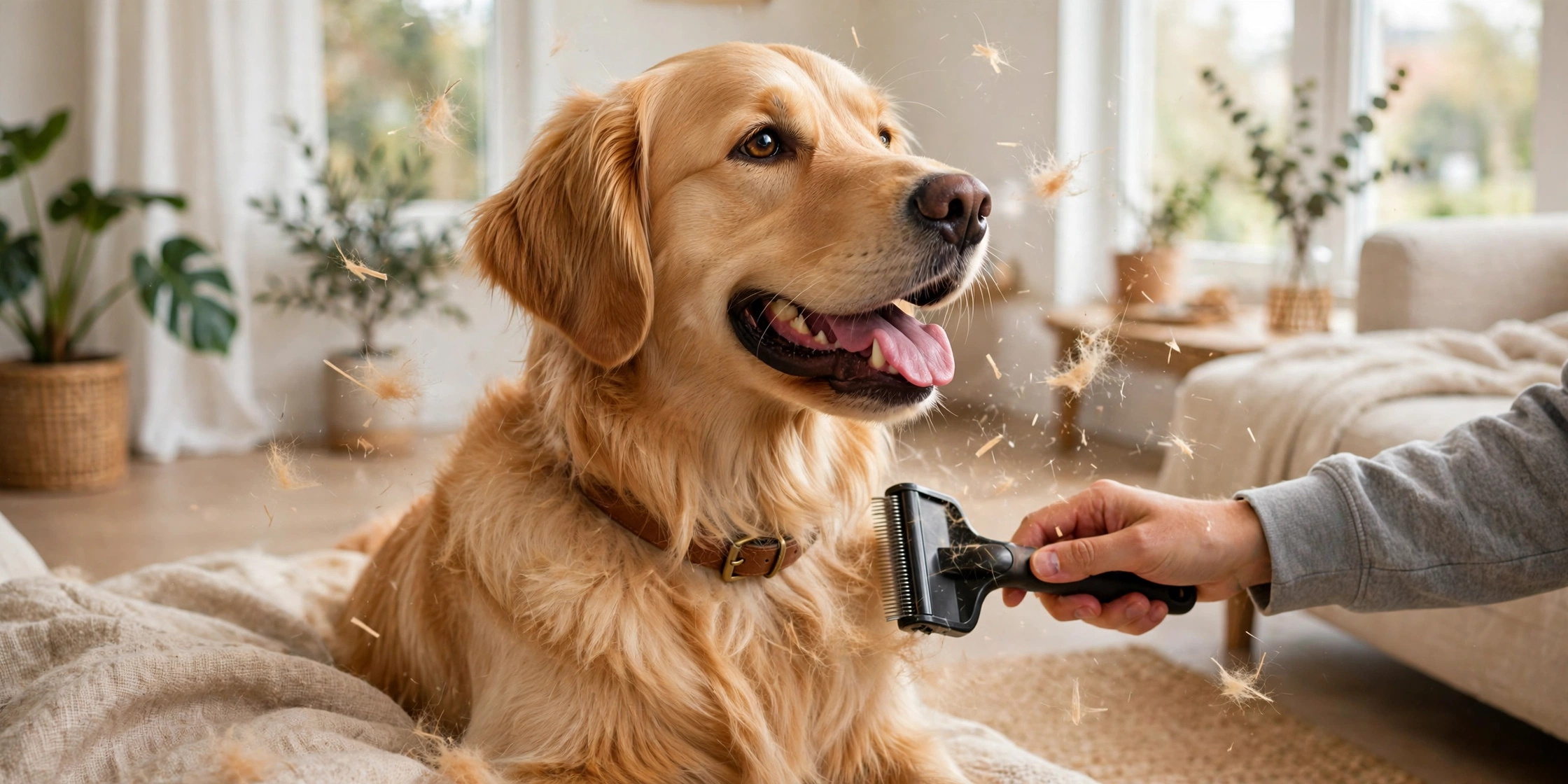
If you’re finding tumbleweeds of dog hair in every corner of your house, you need the best dog brushes for shedding — not just any brush off the shelf. Shedding is normal, but the right de-shedding tool can dramatically cut the amount of loose hair that ends up on your furniture, clothes, and floors. In this guide, you’ll learn how to choose the right brush for your dog’s coat type and discover the 8 best de-shedding brushes worth your money in 2026.
How to Choose a De-Shedding Brush
Not every brush tackles shedding. A regular bristle brush smooths the topcoat; a de-shedding tool reaches the loose undercoat where most of the shedding comes from. Here’s what to consider:
- Coat type: Double-coated breeds (Huskies, Goldens, Shepherds) do best with undercoat rakes and de-shedding blades. Short-haired dogs often respond well to curry-style tools like the SleekEZ. Slicker brushes work for finishing and light daily maintenance.
- Undercoat rakes vs. de-shedding blades vs. slickers: Rakes have widely spaced teeth that penetrate thick coats. De-shedding blades use fine stainless-steel teeth to grab loose undercoat. Slickers have fine wire pins for smoothing and removing surface hair — great for upkeep, less effective for heavy undercoat.
- Comfort and safety: Look for rounded tooth tips so the tool can’t scratch skin, and an ergonomic non-slip handle — you’ll be using it weekly, and long sessions shouldn’t hurt your hand.
- Size: Match the tool head to your dog. Wide heads cover large dogs faster; compact tools suit smaller breeds.
Rule of thumb: never press hard. Let the tool’s teeth do the work, use short gentle strokes in the direction of hair growth, and stop if your dog shows any discomfort.
The 8 Best Dog Brushes for Shedding
1. FURminator Undercoat deShedding Tool — Best Overall

The FURminator is the name everyone knows, and for good reason: its stainless-steel de-shedding edge reaches through the topcoat to pull out loose undercoat hair without cutting the skin when used as directed. It comes in sizes for different dogs and coat lengths, and the ergonomic handle keeps long grooming sessions comfortable. If you want one tool that handles serious shedding, this is the classic choice.
- Pros: Highly effective undercoat removal; multiple size options; ergonomic handle
- Cons: Pricier than most alternatives; can be overused — stick to weekly sessions
Check the FURminator Undercoat deShedding Tool on Amazon
2. SleekEZ Dog Brush — Best Gentle, No-Tug Pick

SleekEZ uses a patented wave-pattern blade with tiny teeth that grab loose hair at the tips instead of tugging at the roots, so most dogs find it far more comfortable than bladed tools. It works on short, medium, and long coats and doubles as a fur remover for furniture, car seats, and bedding — a genuinely versatile grooming-station addition.
- Pros: Pain-free design dogs tolerate well; also works on furniture and fabric; made in USA
- Cons: Less aggressive on very thick undercoat than a dedicated rake
Check the SleekEZ Dog Brush on Amazon
3. Maxpower Planet Undercoat Rake — Best Budget Pick

This dual-sided rake gives you two tools in one: a 9-tooth side for working through stubborn mats and tangles, and a 17-tooth side for thinning and de-shedding. The sharpened but rounded teeth are skin-safe, and the non-slip handle makes it easy to control. For the price, it’s hard to beat as a first de-shedding tool for a heavy shedder.
- Pros: Dual-sided for mats and shedding; very affordable; rounded teeth protect skin
- Cons: Handle comfort is basic compared with premium tools
Check the Maxpower Planet Undercoat Rake on Amazon
4. GoPets 2-in-1 Dematting Comb — Best Dematting + De-Shedding Combo

If your dog’s coat tangles as well as sheds, this double-sided comb handles both jobs: one side works out mats and knots while the other strips loose undercoat. The stainless-steel blades glide through fur without pulling, and rounded edges protect sensitive skin. A smart buy for long-haired breeds that mat behind the ears and legs.
- Pros: Tackles mats and shedding in one tool; gentle on sensitive dogs; ergonomic non-slip handle
- Cons: Not the widest head for very large dogs
Check the GoPets 2-in-1 Dematting Comb on Amazon
5. Andis 65760 Deshedding Tool — Best Pro-Grade Pick

Andis builds tools for professional groomers, and their de-shedding tool reflects that: sharpened-but-rounded steel teeth that grip loose undercoat without scratching, plus a comfortable non-slip rubber handle. It’s designed to reduce shedding with regular use while keeping the topcoat damage-free — a workhorse for heavy-coated breeds.
- Pros: Professional-grade construction; skin-friendly rounded teeth; comfortable grip
- Cons: Heavier than simpler tools; a bit of a learning curve
Check the Andis 65760 Deshedding Tool on Amazon
6. DakPets Deshedding Tool — Best Value Blade Tool

The DakPets tool is a budget-friendly alternative to the premium blade-style deshedders, with a stainless-steel blade and a detachable design that makes cleanup easy. It reduces loose hair quickly and includes a protective blade cover for safe storage. Great if you want the blade-style approach without the premium price tag.
- Pros: Very affordable; detachable blade for easy cleaning; blade cover included
- Cons: Use gently — blade tools all require a light touch
Check the DakPets Deshedding Tool on Amazon
7. Hertzko Self-Cleaning Slicker Brush — Best Slicker for Everyday Upkeep

For daily maintenance between deeper de-shedding sessions, a slicker is unbeatable — and the Hertzko’s self-cleaning button retracts the pins so collected fur releases with one press. Fine stainless-steel pins lift loose hair and light tangles, making it ideal for regular touch-ups that keep shedding from building up in the first place.
- Pros: One-press self-cleaning; great for daily use; gentle on skin
- Cons: Won’t replace a rake for heavy undercoat seasons
Check the Hertzko Self-Cleaning Slicker Brush on Amazon
8. Pat Your Pet Double-Sided Undercoat Rake — Best Extra-Wide Coverage
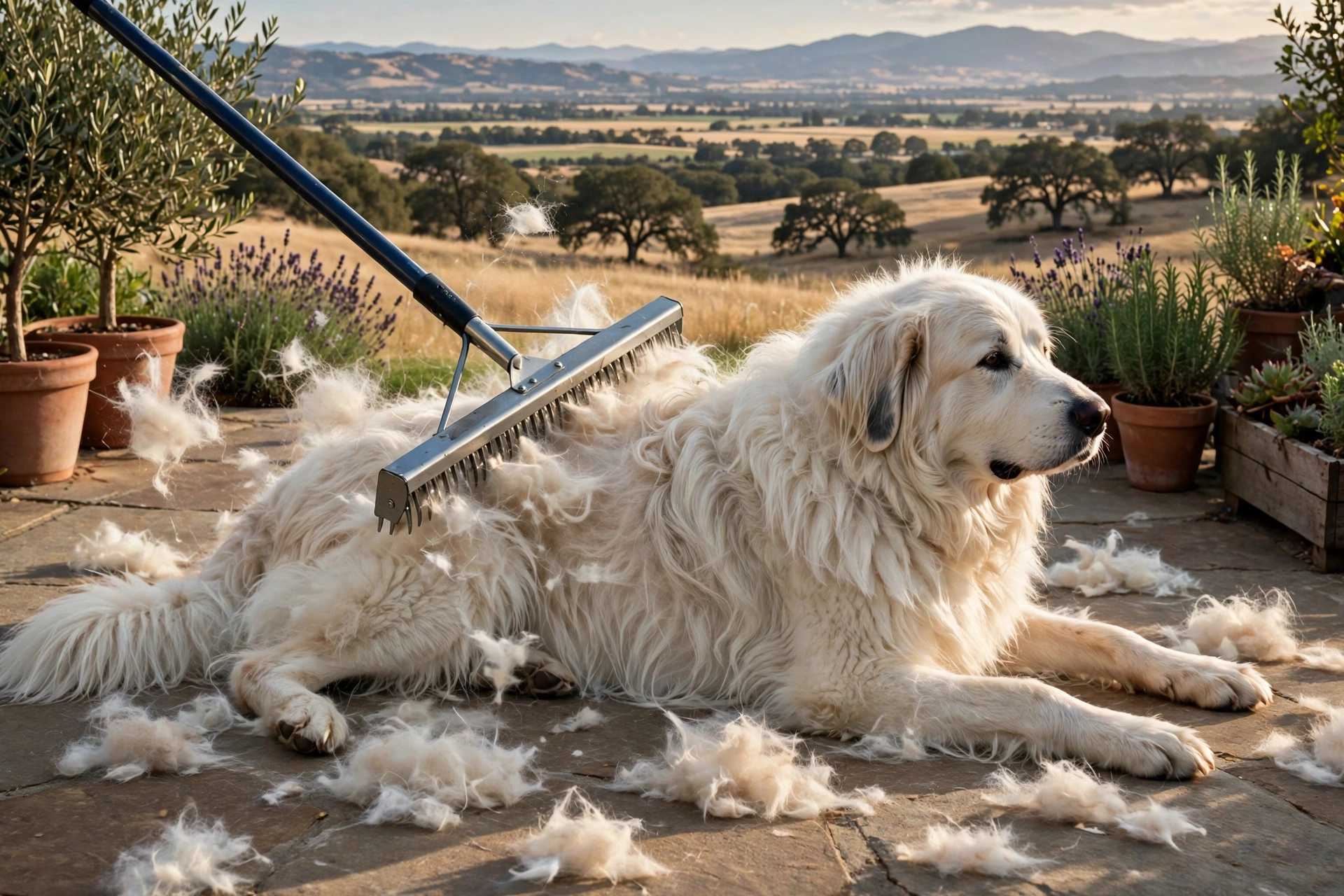
This extra-wide rake covers more coat with every stroke, so grooming a big dog goes noticeably faster. Like other dual-sided rakes, it pairs a mat-busting 9-tooth side with a 17-tooth de-shedding side, with rounded teeth for skin safety. A practical pick when your shepherd, retriever, or husky needs a full undercoat workout.
- Pros: Wide head speeds up grooming on large dogs; dual-sided versatility; skin-safe rounded teeth
- Cons: Too bulky for small breeds or tight spots
Check the Pat Your Pet Undercoat Rake on Amazon
De-Shedding Tips That Actually Work
- Brush before bath time: De-shed first so loose hair doesn’t clog your drain, then bathe — many owners find shedding drops after a good bath and blow-dry.
- Stick to a schedule: Once a week is the sweet spot for most shedders; daily quick slicker sessions during spring and fall coat-blow season.
- Always brush in the direction of hair growth with light, even pressure. Pressing harder doesn’t remove more hair — it irritates skin.
- Watch for over-grooming: Red or irritated skin, bald patches, or flinching means you’re doing too much or pressing too hard. Take a break.
- Pair brushing with nutrition: A balanced diet with omega fatty acids supports a healthy coat. Ask your vet about supplements if shedding seems excessive.
- Manage the environment too: Wash bedding regularly, vacuum with a pet-hair tool, and keep a lint roller by the door. A good brush like the ones above handles the source; these habits handle the fallout.
If your dog is shedding suddenly and excessively with bald spots, itching, or skin changes, see your vet first — that can signal allergies, thyroid issues, or skin infections rather than a grooming problem.
For more help managing the mess, read our guides to removing dog hair from furniture, choosing the best grooming brush for small dogs, and picking a dog hair dryer for home grooming. And if you’re tired of the fur altogether, browse our list of small dogs that don’t shed — plus don’t forget that dry, flaky skin can worsen shedding, so check how to treat dry skin in dogs.
Frequently Asked Questions
How often should I de-shed my dog?
For most dogs, once a week is plenty. During seasonal coat blows (usually spring and fall), bump it up to two or three short sessions per week. Daily brushing with a gentle slicker is fine as maintenance.
Can de-shedding tools damage my dog’s coat?
They can if misused — pressing too hard or over-brushing can thin the topcoat or irritate skin. Use light pressure, short strokes, and stop if you see redness. Blade-style tools are the most powerful, so they’re the ones that demand the gentlest hand.
What’s the difference between a de-shedding tool and a regular brush?
Regular brushes (slickers, bristle brushes, pin brushes) smooth and tidy the topcoat. De-shedding tools reach the loose dead hair in the undercoat — the source of most shedding — and pull it out before it lands on your couch.
Do de-shedding brushes work on short-haired dogs?
Yes, but choose the right type. Short-coated breeds often do best with curry-style tools like the SleekEZ or a rubber grooming mitt, which grab loose hair without the aggressive teeth of a rake.
My dog hates being brushed. What should I do?
Start with the gentlest tool you own, keep sessions to a few minutes, and pair every stroke with treats — classic desensitization. Let your dog sniff the brush first, and never force it. Most dogs learn to enjoy brushing once it becomes a treat-paired routine.
As an Amazon Associate, PetPostHub earns from qualifying purchases.