How to Stop Your Dog from Licking Paws at Night: 9 Fixes

If your dog keeps you awake with nonstop paw licking every night, you’re not alone. Learning how to stop dog from licking paws at night starts with understanding why it happens: allergies, dry skin, boredom, anxiety, or something stuck between the toes. This guide walks you through 9 practical, vet-aligned fixes you can start tonight.
Table of Contents
- 1. Give Paws a Soothing Soak or Bath
- 2. Wash Paws After Every Walk
- 3. Check for Foxtails and Debris
- 4. Manage Allergies at the Source
- 5. Beat Boredom with Evening Enrichment
- 6. Build a Calming Bedtime Routine
- 7. Use a Cone or Recovery Collar Short-Term
- 8. Moisturize with a Dog-Safe Paw Balm
- 9. See the Vet for Persistent Licking
- Why Paws Get Licked at Night
- Frequently Asked Questions
1. Give Paws a Soothing Soak or Bath
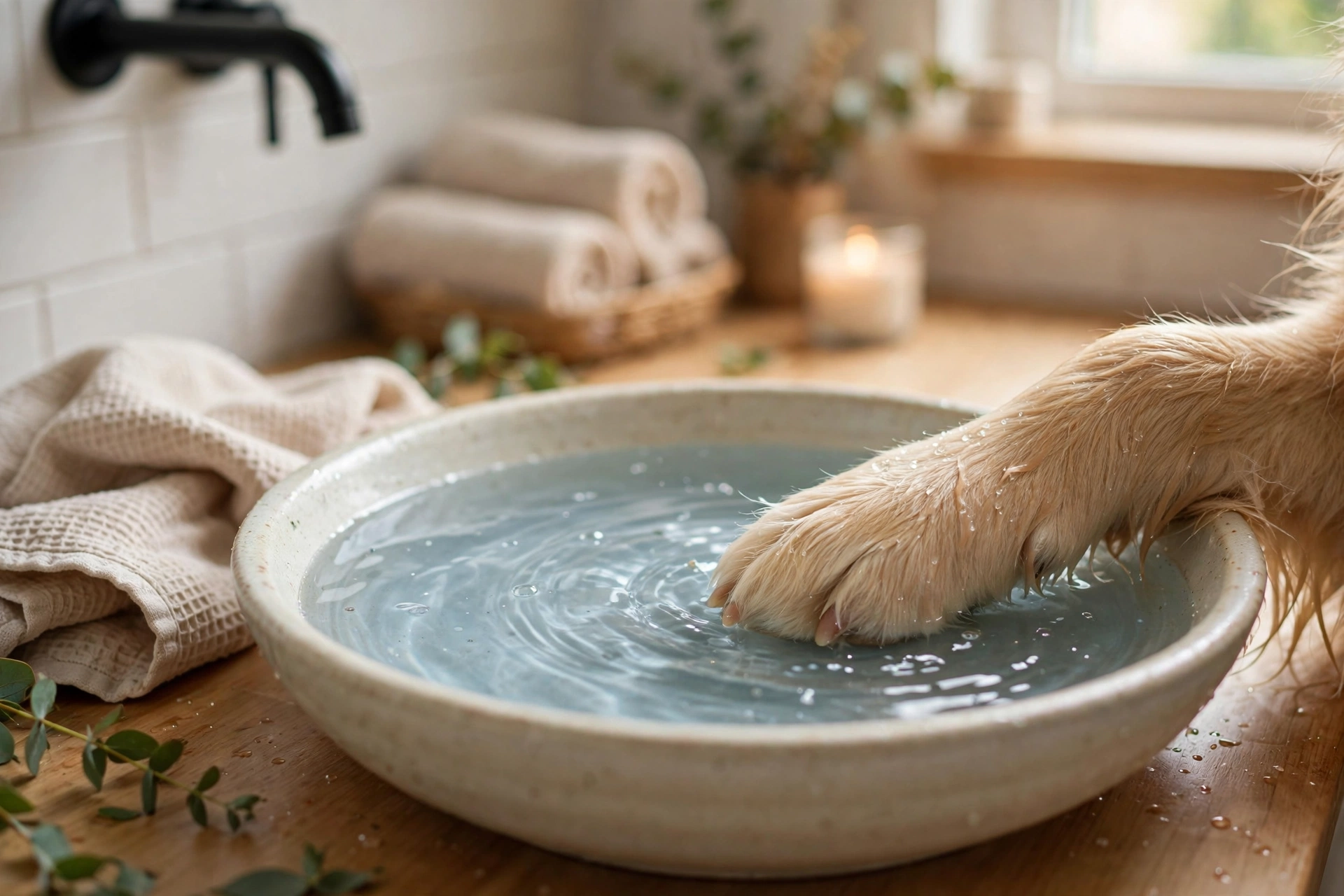
Nighttime licking often flares because allergens and irritants have built up on the paws all day. A quick evening soak in lukewarm water with a gentle, oatmeal-based dog shampoo helps wash away pollen, dust, and yeast that fuel itching.
How to do it: Fill a shallow basin with lukewarm (never hot) water and a small amount of dog shampoo. Let your dog stand in it for 2-3 minutes per paw, gently massaging between the toes. Rinse thoroughly and pat completely dry — damp paws invite yeast and bacteria, which make licking worse.
Pro tip: Skip human shampoo; its pH is wrong for dog skin and can cause more irritation. Stick to a fragrance-free, soap-free dog formula.
Helpful pick: earthbath Oatmeal & Aloe Dog Shampoo — a gentle, soap-free wash that soothes itchy paws without stripping the skin.
2. Wash Paws After Every Walk
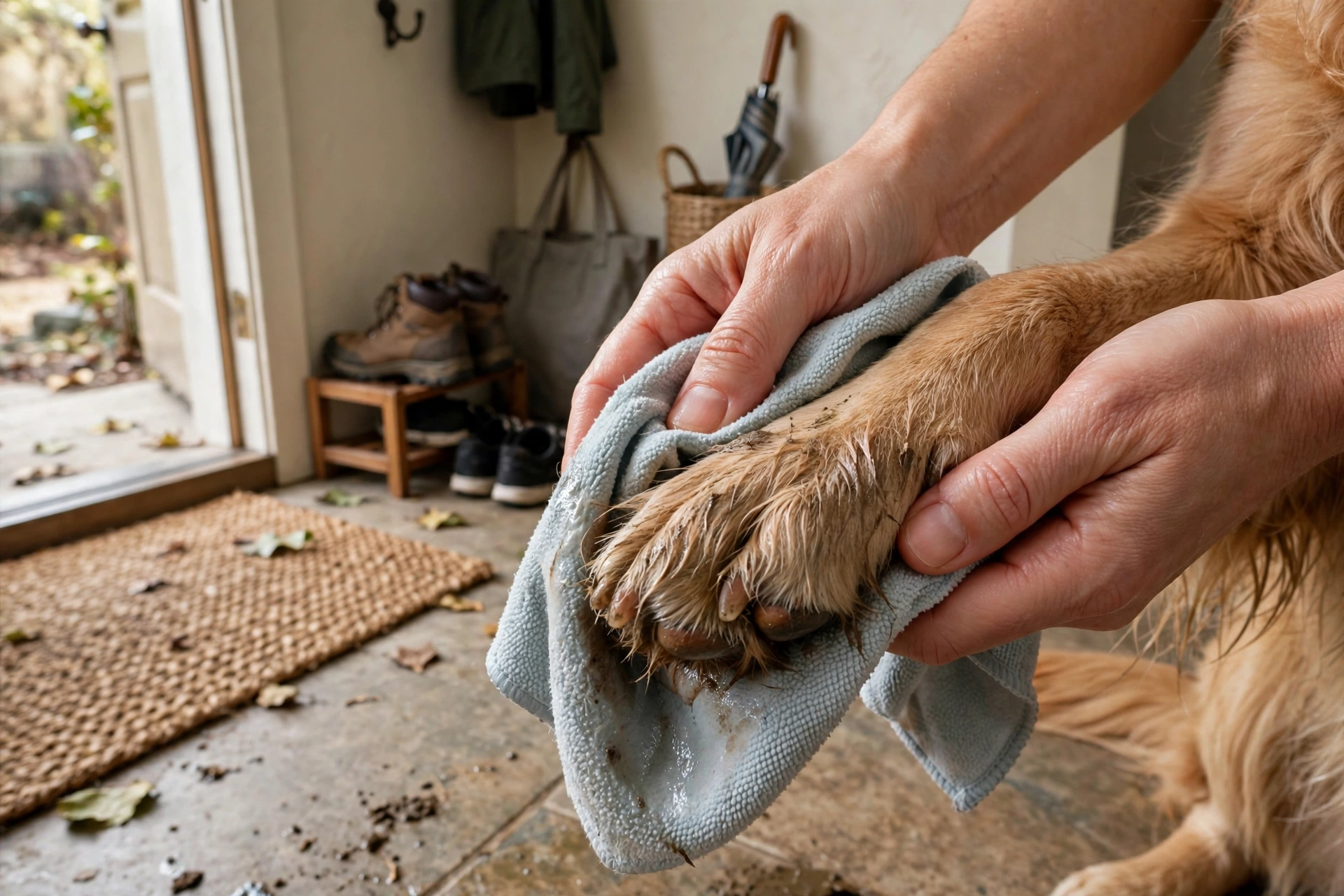
Pollen, grass sap, road salt, and lawn chemicals cling to paw pads and between toes. If your dog licks mostly on evenings after walks, these irritants are the likely trigger. Rinsing paws the moment you come home removes the problem before the nighttime licking marathon begins.
How to do it: Keep a paw washer or a bowl of warm water plus a towel by the door. After each walk, swirl each paw for about 30 seconds, then dry well. Pay extra attention between the toes, where allergens hide.
Pro tip: Make it a game with a treat after each paw so your dog walks to the door station willingly.
Helpful pick: Dexas MudBuster Portable Dog Paw Cleaner — soft silicone bristles loosen dirt and allergens from paws in seconds, no mess.
3. Check for Foxtails and Debris

Sometimes the cause is mechanical: a foxtail seed, thorn, burr, or small pebble lodged between the toes. Dogs with something stuck in a paw often focus on just one foot, licking it obsessively. A two-minute inspection can save you a vet bill — or catch something that genuinely needs one.
How to do it: Spread the toes gently and look for redness, swelling, or foreign objects. Sniff for a yeasty or foul odor, which can signal infection. Trim long fur between the pads so debris has nowhere to hide, and keep nails at a healthy length so the paw sits naturally.
Pro tip: If you spot a foxtail that has broken the skin, don’t dig at it — foxtails migrate inward. See your vet.
Helpful pick: Boshel Large Dog Nail Clippers — keeping nails and paw-pad fur trimmed makes inspections easy and reduces places for debris to lodge.
4. Manage Allergies at the Source

Allergies are the single most common reason dogs lick their paws, and nighttime licking is classic: the house is quiet, and the dog finally focuses on the itch that built up all day. Environmental triggers (grass, pollen, dust mites) and food sensitivities both show up as paw chewing.
How to do it: Talk to your vet about whether an elimination diet or allergy testing makes sense. Meanwhile, omega-3 fatty acids from fish oil support the skin barrier and can reduce itchiness over time. Wash bedding weekly in hot water to cut dust-mite exposure.
Pro tip: Even dogs that have eaten the same food for years can develop sensitivities over time — don’t rule food out just because nothing changed.
Helpful pick: Zesty Paws Wild Alaskan Salmon Oil — omega-3s that support healthy skin and a strong coat from the inside out.
5. Beat Boredom with Evening Enrichment
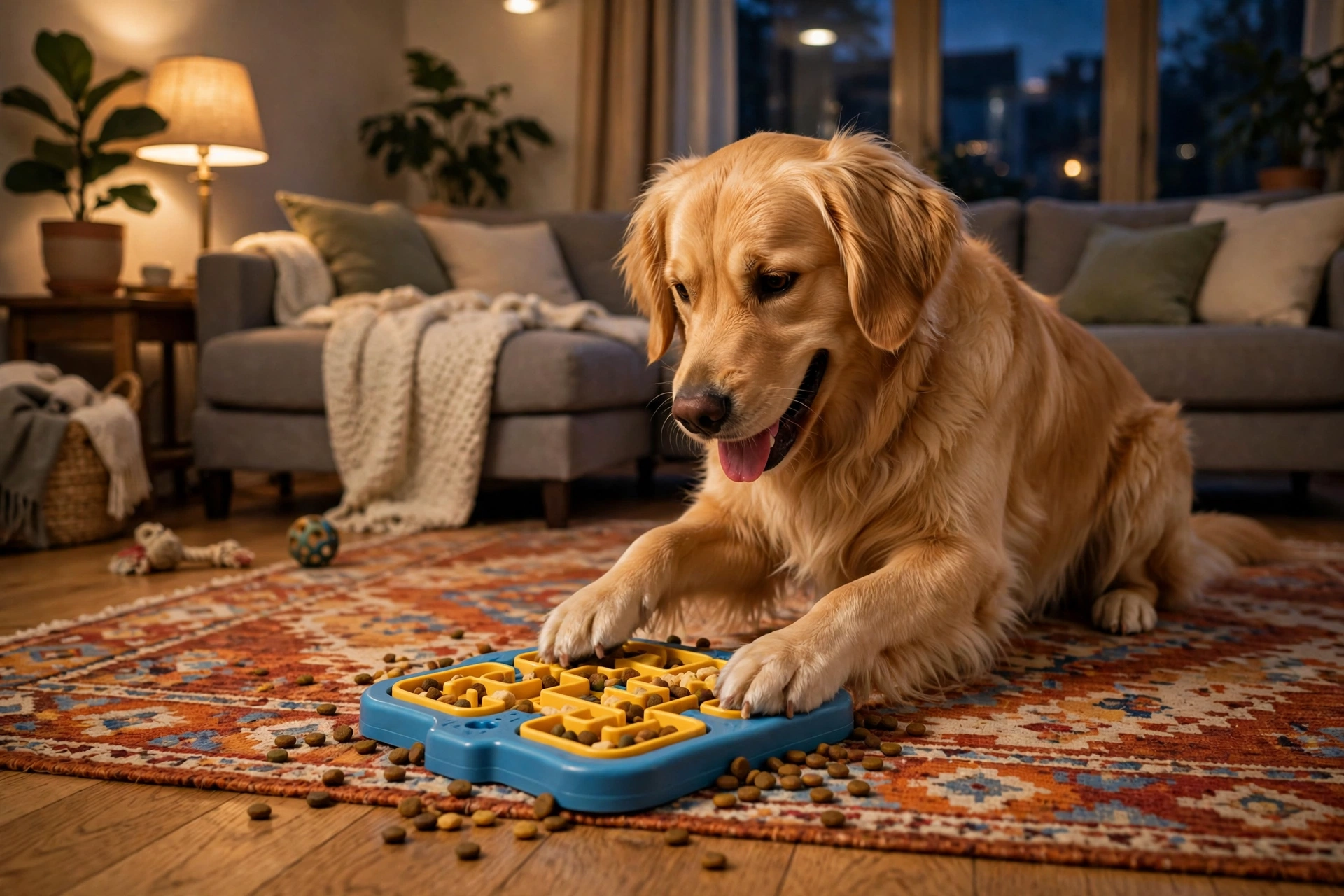
Some dogs lick their paws at night simply because they’re under-stimulated. Licking releases endorphins, so it becomes a self-soothing habit — especially for dogs that don’t get enough mental work during the day. If your dog’s paws look healthy but the licking continues, boredom is a strong suspect.
How to do it: Add a 15-20 minute enrichment session to the evening: a frozen stuffed KONG, a snuffle mat, or a short training game. The goal is a tired brain, not just a tired body. End the session about an hour before bed so your dog can wind down.
Pro tip: Rotate toys weekly so they stay novel. A toy your dog ignores during the day can become irresistible again after a short break.
Helpful pick: KONG Classic Dog Toy — stuff it with peanut butter and freeze for a long-lasting evening brain workout.
6. Build a Calming Bedtime Routine
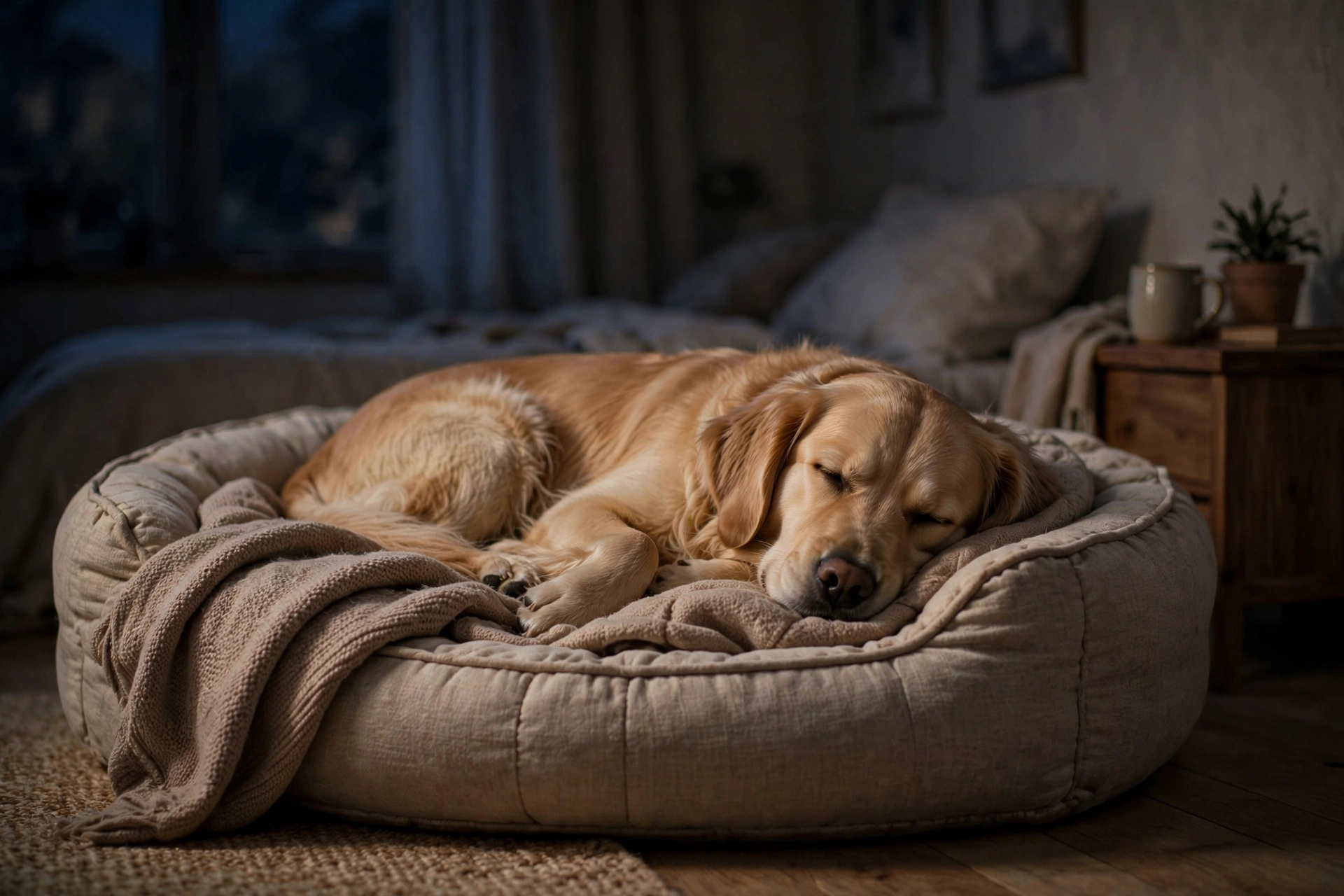
Anxiety is a major driver of nighttime paw licking. When the house goes quiet, some dogs soothe themselves the way people bite their nails. A predictable, calming bedtime routine gives anxious dogs the security they need to settle instead of licking.
How to do it: Keep the last 30-45 minutes of the evening calm: dim lights, a gentle massage, and a consistent “bedtime” cue. A heartbeat-style comfort toy can be especially soothing for puppies and newly adopted dogs. Avoid exciting play right before sleep.
Pro tip: White noise or soft music can mask the small nighttime sounds that keep anxious dogs alert and licking.
Helpful pick: SmartPetLove Snuggle Puppy — a heartbeat and heat-pack comfort toy that eases nighttime anxiety for puppies and nervous dogs.
7. Use a Cone or Recovery Collar Short-Term
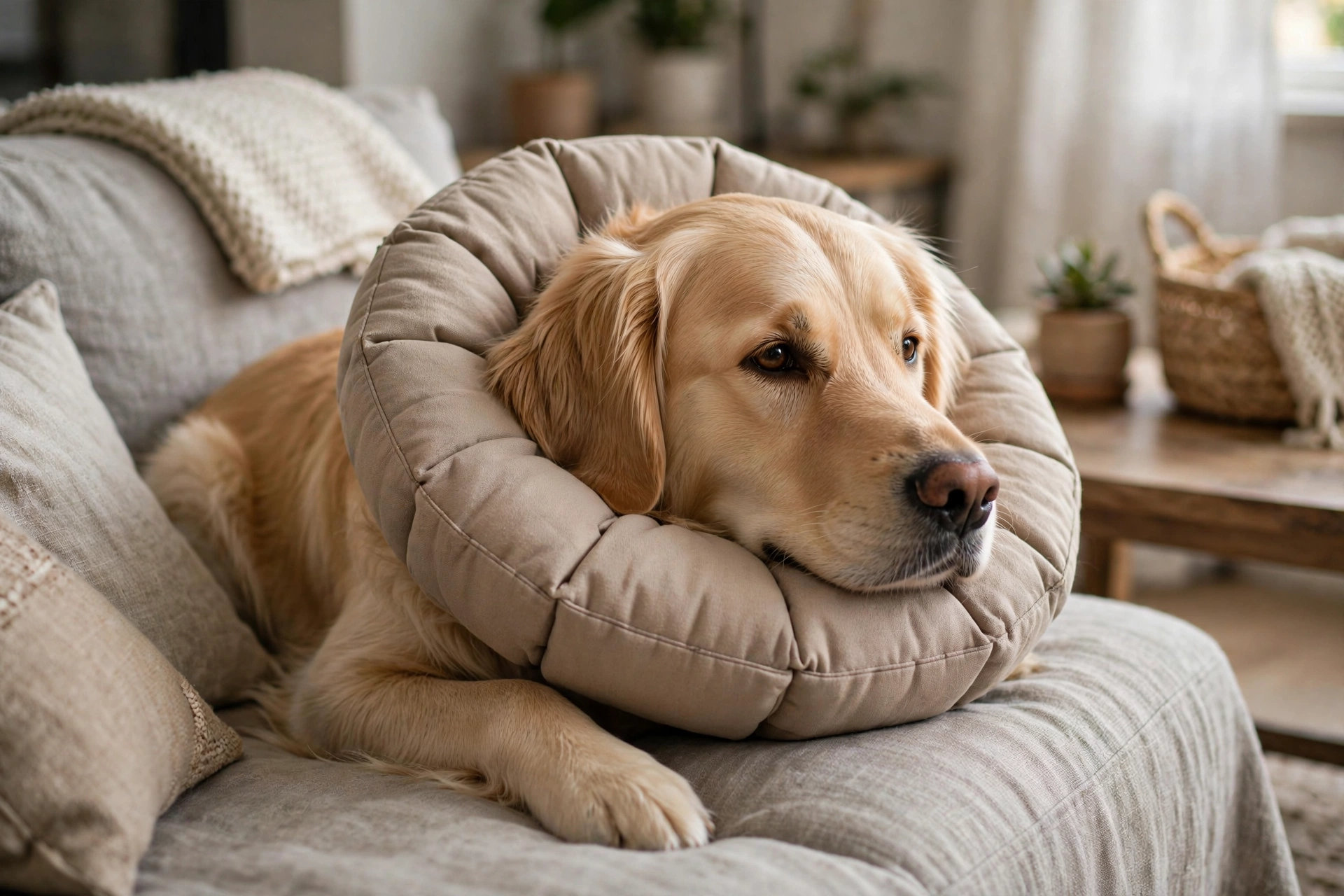
When licking has already caused raw spots, hot spots, or hair loss, the paw needs time to heal — and licking keeps restarting the damage. A short-term barrier breaks the cycle so treatments and balms can actually work.
How to do it: Use a soft, inflatable-style or fabric recovery collar at night while the paws heal, and remove it during the day under supervision if your dog isn’t licking. Pair the barrier with treatment (soaks, balm, vet-prescribed medication) — the collar alone doesn’t fix the underlying cause.
Pro tip: Modern soft cones are far more comfortable than the rigid plastic “cone of shame,” so dogs accept them more readily at bedtime.
Helpful pick: Kuoser Soft Dog Cone Collar — a padded, comfortable recovery collar that blocks nighttime licking while letting your dog sleep easily.
8. Moisturize with a Dog-Safe Paw Balm

Dry, cracked paw pads itch — and itching leads to licking. Winter weather, hot pavement, and frequent washing can all dry out pads. A dog-safe paw balm seals in moisture and creates a protective barrier against irritants.
How to do it: Massage a thin layer of balm into the pads and between the toes before bed, when your dog is calm and less likely to lick it straight off. For very dry paws, apply twice daily for a week, then maintain a few times a week.
Pro tip: Never use human lotions or petroleum-heavy products on paws — many contain ingredients that are unsafe if licked.
Helpful pick: Musher’s Secret Paw Wax — a lick-safe wax barrier that moisturizes pads and shields them from salt, ice, and hot surfaces.
9. See the Vet for Persistent Licking
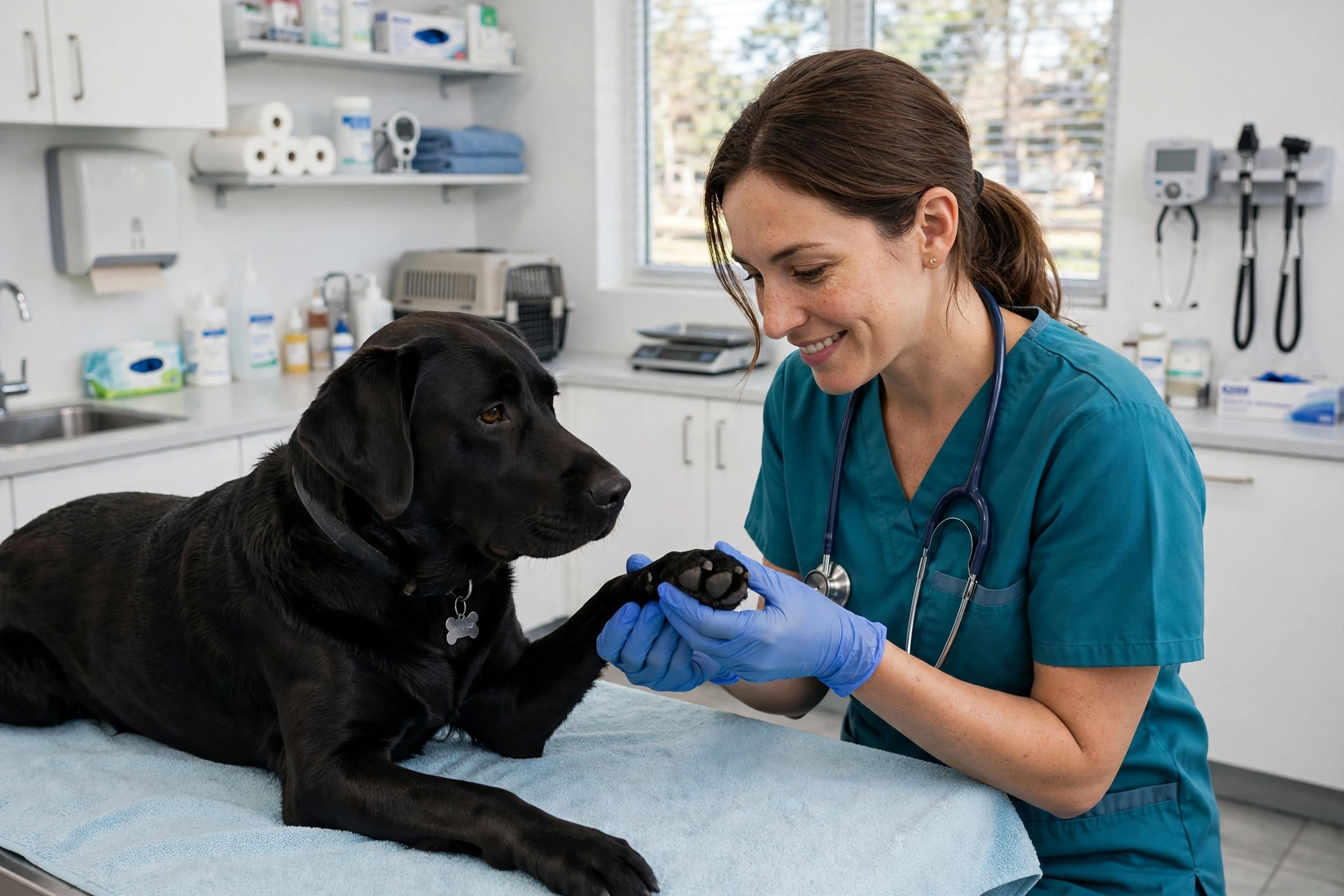
If you’ve tried the fixes above for a week or two with no improvement, or if you see redness, swelling, bleeding, hair loss, limping, or a foul smell, it’s time for a vet visit. Persistent paw licking can signal infections (bacterial or yeast), mange mites, autoimmune issues, or even pain from arthritis that your dog is “treating” by licking.
How to do it: Note which paws your dog licks, when it started, and what you’ve tried — this helps the vet narrow it down fast. The vet may do a skin scraping, cytology, or allergy testing. Don’t start antihistamines or steroids on your own; dosing and suitability need professional guidance.
Pro tip: A quick at-home temperature check before the visit gives your vet useful context, especially if infection is suspected.
Helpful pick: PetMedics Non-Contact Pet Thermometer — a quick, stress-free way to check for fever before your vet appointment.
Why Paws Get Licked at Night
Understanding the timing helps you pick the right fix. Nighttime paw licking is common for a few reasons:
- Accumulated allergens: A full day of pollen, dust, and grass exposure reaches peak itchiness by evening.
- Quiet and focus: With the day’s distractions gone, your dog finally notices the itch — or has nothing better to do than soothe itself.
- Endorphin loop: Licking releases feel-good chemicals, so anxious or bored dogs turn to it like a comfort habit, especially at bedtime.
- Heightened sensitivity: Tired dogs can be more reactive to mild irritation, the same way a scratchy tag bothers you more when you’re exhausted.
If you’re also dealing with general paw licking during the day, our guide on why dogs lick their paws covers the daytime side of the habit. For itch-driven causes, see dog allergy symptoms and relief and how to treat dry skin in dogs. And if anxiety seems to be the root, signs your dog is stressed can help you confirm it.
Frequently Asked Questions
Is it normal for dogs to lick their paws at night?
Occasional grooming-style licking is normal. But frequent, intense, or lengthy nighttime licking — especially if it wakes you up or damages the skin — is not normal and deserves investigation.
Why does my dog only lick his paws at night and not during the day?
Allergens accumulate through the day and peak by evening, and the quiet of nighttime gives anxious or bored dogs the opportunity to self-soothe by licking. Daytime distractions simply mask the urge.
Can I put coconut oil on my dog’s paws to stop licking?
A small amount of plain coconut oil is generally safe and can moisturize dry pads, but it won’t fix allergies or infections — and some dogs lick more because they like the taste. A dedicated paw balm usually works better.
Will a cone stop my dog from licking paws at night?
Yes, as a short-term barrier while the underlying cause is treated. But a cone alone doesn’t fix allergies, anxiety, or skin issues — pair it with soaks, balms, enrichment, or vet care.
When should I worry about paw licking?
See your vet if licking is constant, causes hair loss or raw skin, produces a bad smell, or comes with limping, swelling, or behavior changes. These can signal infection, mites, or pain.
As an Amazon Associate, PetPostHub earns from qualifying purchases.