How to Train a Puppy to Come Inside: 9 Steps
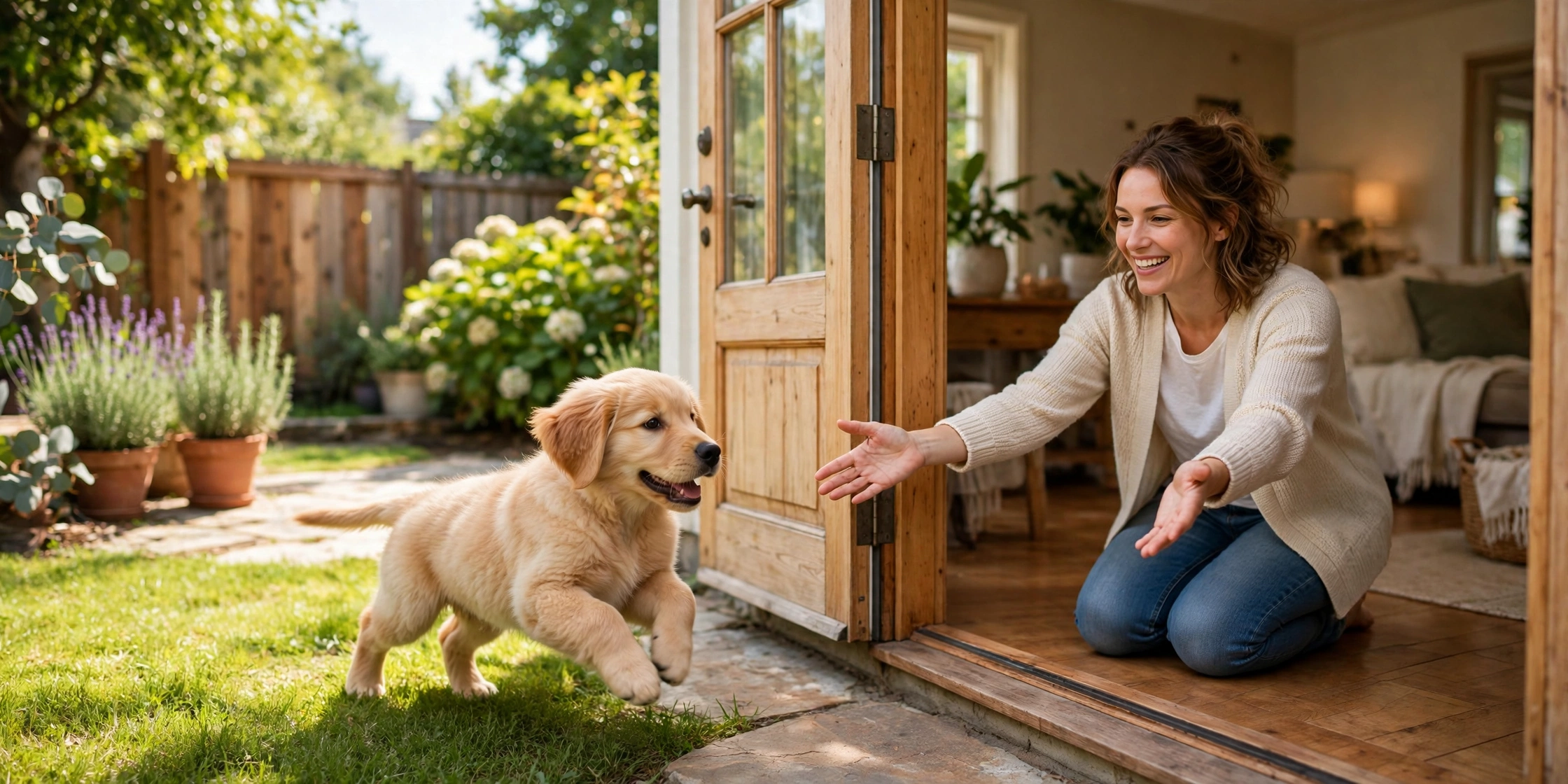
If your puppy treats the backyard like an amusement park and coming inside feels like the end of the fun, you are not alone. Learning how to train a puppy to come inside is really just recall training with a twist: you need your pup to believe that trotting through that door is the best decision they could possibly make. The secret is never chasing, never punishing, and always paying well. This step-by-step guide shows you exactly how.
Table of Contents
- 1. Make Coming Inside Rewarding
- 2. Use a Happy Recall Cue
- 3. Jackpot the Wins
- 4. Never Chase Your Puppy
- 5. Keep Sessions Short and Fun
- 6. Practice on a Long Line for Safety
- 7. Practice at the Door Itself
- 8. Add Distractions Gradually
- 9. Never Punish Coming Inside
- Why Puppies Resist Coming Inside
- Frequently Asked Questions
1. Make Coming Inside Rewarding

First, take a hard look at what coming inside means in your puppy’s mind right now. If every recall ends with playtime over, a crate door closing, or a boring afternoon, your puppy has done the math: outside is fun, inside is a buzzkill. You need to flip that equation.
Start by pairing the doorway with amazing things. Stand inside, let your puppy wander near the door, and reward every single step toward you with treats and praise. Feed a few meals just inside the threshold. Toss toys so they land inside. Within a few days, your puppy should start looking at the doorway like it dispenses jackpots.
Pro tip: Do several of these “doorway party” sessions before you ever formally call your puppy inside from across the yard.
Helpful pick: Egiao Dog Treat Pouch — keeps your rewards on your hip so you can pay your puppy instantly at the door.
2. Use a Happy Recall Cue

Choose a clear, cheerful recall word like “come,” “here,” or even a fun whistle, and protect it like gold. Your recall cue should never sound frustrated, flat, or tired, because puppies read tone of voice long before they understand words.
Practice the cue in boring indoor moments first. Say the word in a sing-song, upbeat voice while your puppy is already looking at you, and reward the second they take a step toward you. Repeat five or six times, then take a break. You are not training obedience yet; you are simply building a happy association between the word and wonderful things.
Pro tip: Never use your recall cue when you need to do something your puppy dislikes, like a bath or nail trim. Go get them instead.
Helpful pick: STMK Dog Training Clicker Kit — a clicker marks the exact moment your puppy responds, making your happy cue even clearer.
3. Jackpot the Wins

When your puppy comes inside in the early days, do not be stingy. This is the time to overpay. Give three to five small treats in a row instead of one, followed by big praise, a favorite toy, or a quick game. Trainers call this a “jackpot,” and it works because it makes the behavior unforgettable.
Use genuinely high-value rewards for these reps: tiny pieces of cheese, cooked chicken, or soft commercial treats. Kibble is fine for easy sits, but recalling away from the glorious outdoors deserves premium pay. The better the reward, the stronger the habit.
Pro tip: Vary the jackpot. Sometimes treats, sometimes a tug game, sometimes a belly rub party. Unpredictability keeps puppies hooked.
Helpful pick: Zuke’s Mini Naturals Training Treats — soft, tiny, and perfect for rapid-fire jackpot rewards.
4. Never Chase Your Puppy

This is the rule that changes everything: never, ever chase your puppy to bring them inside. To a puppy, being chased is a hilarious game, and every time you play it, you teach them that avoiding you is the best fun ever. If your puppy darts away from the door, you have just been recruited into a game you cannot win.
Instead, do the opposite. If your puppy blows off your cue, turn and walk away, crouch down, or run away from them, squeaking like an excited puppy yourself. Most puppies cannot resist chasing you. When they come, throw a party.
Pro tip: If you must bring your puppy in and they will not come, go to them calmly, clip on a leash without drama, and walk inside together like nothing happened.
Helpful pick: Chuckit! Classic Ball Launcher — an irresistible fetch game gives your puppy a reason to charge toward you on their own.
5. Keep Sessions Short and Fun

Puppies have the attention span of a goldfish with Wi-Fi, so training sessions should last three to five minutes and feel like a party. Do two or three mini-sessions a day, and always end while your puppy still wants more. A puppy that is tired, bored, or frustrated learns nothing.
Mix your recall reps into normal life. Call your puppy between rooms, reward them when they wander over on their own, and celebrate like they won the lottery. The more often coming to you pays off in daily life, the more reliable it becomes when it really matters.
Pro tip: If your puppy stops responding in a session, you pushed too far. End with something easy they know, reward it, and try again later.
Helpful pick: KONG Classic Dog Toy — stuff it with treats and use it as the grand finale of a training session.
6. Practice on a Long Line for Safety
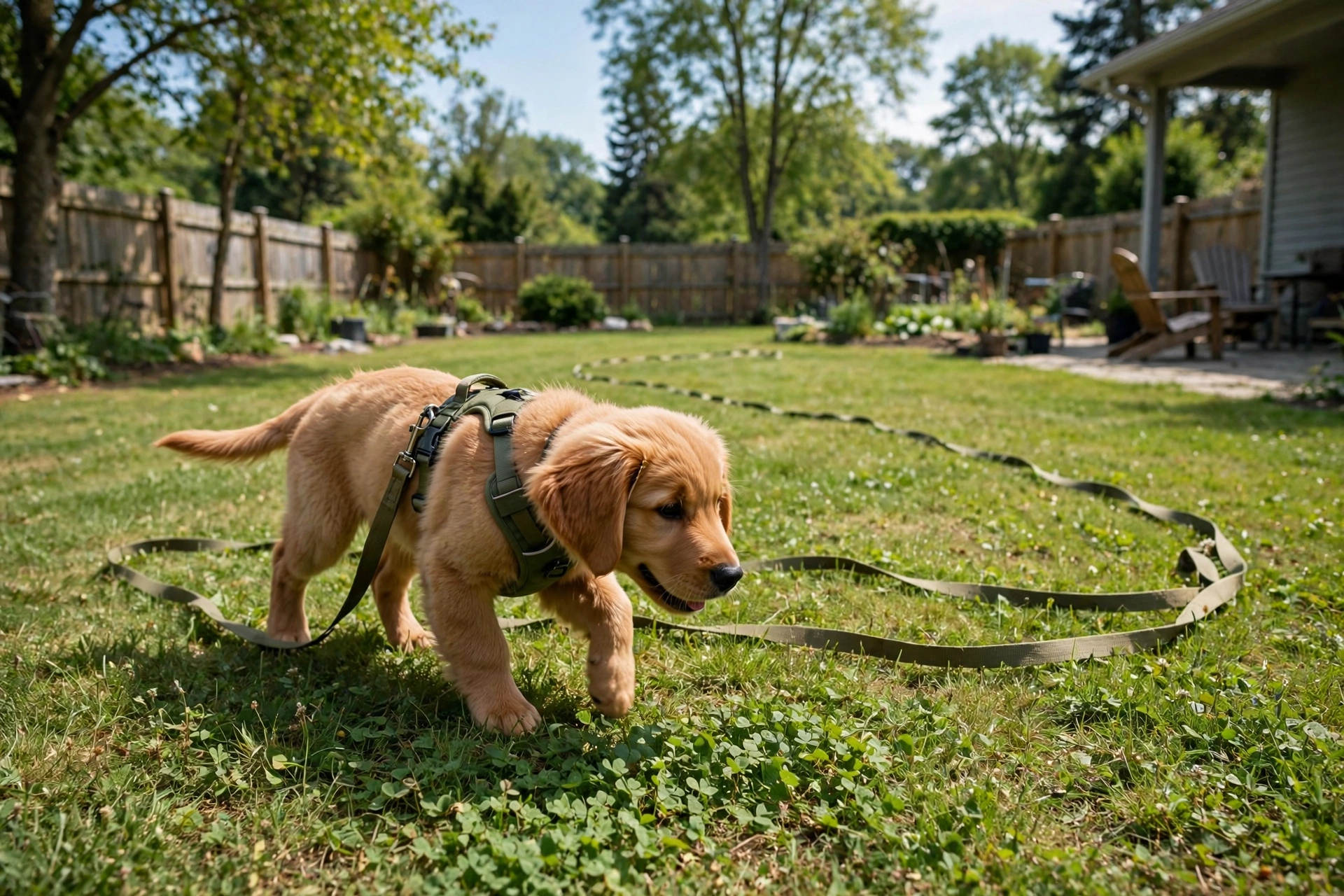
Once your puppy is coming happily indoors from close range, move outside with a long line (a 20 to 30-foot lightweight leash) attached to a harness. The long line keeps your puppy safe while giving them the feeling of freedom, which is exactly when you need recall to work.
Let your puppy wander, then call them in your happy voice. If they hesitate, gently guide them with the line and reward generously when they arrive. Never use the line to reel them in with a jerk; it is a safety net, not a winch. Practice in the yard, then in slightly more distracting spots.
Pro tip: Clip the long line to a back-clip harness, never to a collar, to avoid any pressure on the neck.
Helpful pick: Joytale 30ft Training Long Line — gives your puppy room to roam while keeping you in control.
7. Practice at the Door Itself

Many puppies do great on recall in the open yard but freeze at the doorway. The threshold is its own context, so train it specifically. Start with the door wide open and the puppy just outside, call them through, and jackpot the arrival. Gradually increase the distance from the door over many reps.
Next, add realistic details: the door only halfway open, you standing a few feet inside, or the door being opened and closed between reps. Each small change makes the behavior more robust, so your puppy comes through the door no matter how the moment looks.
Pro tip: Practice at different doors too. Puppies do not generalize well, so a back-door recall may need retraining at the front door.
Helpful pick: SmartPetLove Snuggle Puppy — a calming companion that helps your puppy settle happily once they are inside.
8. Add Distractions Gradually

Recall that only works in a quiet living room is not really recall. Once your puppy is reliable at the door, start adding mild distractions: a toy on the ground nearby, a family member walking past, another room with interesting smells. Only raise the difficulty when your puppy is succeeding about eight times out of ten.
If you jump too far ahead and your puppy fails, do not scold. Simply go back to the last level where they succeeded and rebuild. Progress is not a straight line, and temporary setbacks are completely normal with young puppies.
Pro tip: Build impulse control with food-puzzle games. A puppy that can think around temptation recalls far more reliably.
Helpful pick: Outward Hound Nina Ottosson Tornado Puzzle — puzzle play builds the focus and impulse control that strong recalls need.
9. Never Punish Coming Inside

This is the golden rule of recall, and it applies forever: no matter how long it took, no matter how frustrated you are, never punish your puppy for coming inside. No scolding, no grumpy tone, no “too bad” face. From your puppy’s perspective, punishment after coming teaches exactly one lesson: coming inside gets me in trouble.
Even if you chased your puppy around the yard for ten minutes and they finally trotted in, greet them like a hero. The puppy did the right thing in the end, and that is the part you want them to remember. Save your frustration for a deep breath, then smile.
Pro tip: If you catch yourself calling your puppy in anger, stop mid-call. Go collect them calmly instead, and practice more in easier settings.
Helpful pick: ADAPTIL Calm Home Diffuser — helps keep your home atmosphere calm so coming inside always feels like a good place to be.
Why Puppies Resist Coming Inside
Understanding the “why” makes training easier. Outside is where the smells, squirrels, textures, and freedom live; inside, by comparison, can feel dull. Puppies also learn fast that “come” predicts the end of fun, especially if every recall means playtime over, crate time, or being left alone. Fear can play a role too: a puppy that has been chased, grabbed, or scolded after being called has every reason to keep their distance. The good news is that all of these problems respond to the same fix: make coming to you the highlight of your puppy’s day, every single time.
Keep Reading
- How to Teach a Dog to Come When Called: 9 Steps
- How to Train a Puppy to Walk on Leash
- Puppy Socialization Checklist
- How to Stop Your Dog from Running Away
Frequently Asked Questions
At what age should I start teaching my puppy to come inside?
You can start as early as 8 weeks old with simple, happy indoor recalls. Keep it playful and pressure-free, and save formal distance work for a few months later when focus improves.
My puppy comes inside but then runs back out. What should I do?
Close the door calmly once they are in, reward them, and redirect to an activity inside. Do not chase or panic; instead, practice more doorway reps until crossing in feels rewarding on its own.
Should I use a leash or long line every time?
Use a long line whenever your puppy is not yet reliable, especially in unfenced areas. It is a safety tool, not a punishment. Fade it out gradually as recall becomes consistent.
What treats work best for recall training?
Soft, smelly, high-value treats like tiny pieces of cheese, cooked chicken, or soft commercial training treats. Save the best rewards for recall so coming to you always outshines the environment.
My puppy only comes when I have treats. Is that a problem?
Not at all in the beginning. Once your puppy is reliable, gradually shift to a variable reward schedule: sometimes treats, sometimes toys, sometimes just big praise. Always pay a big reward for recalls in difficult situations.
As an Amazon Associate, PetPostHub earns from qualifying purchases.