How to Stop Your Dog from Digging Under the Deck: 7 Fixes
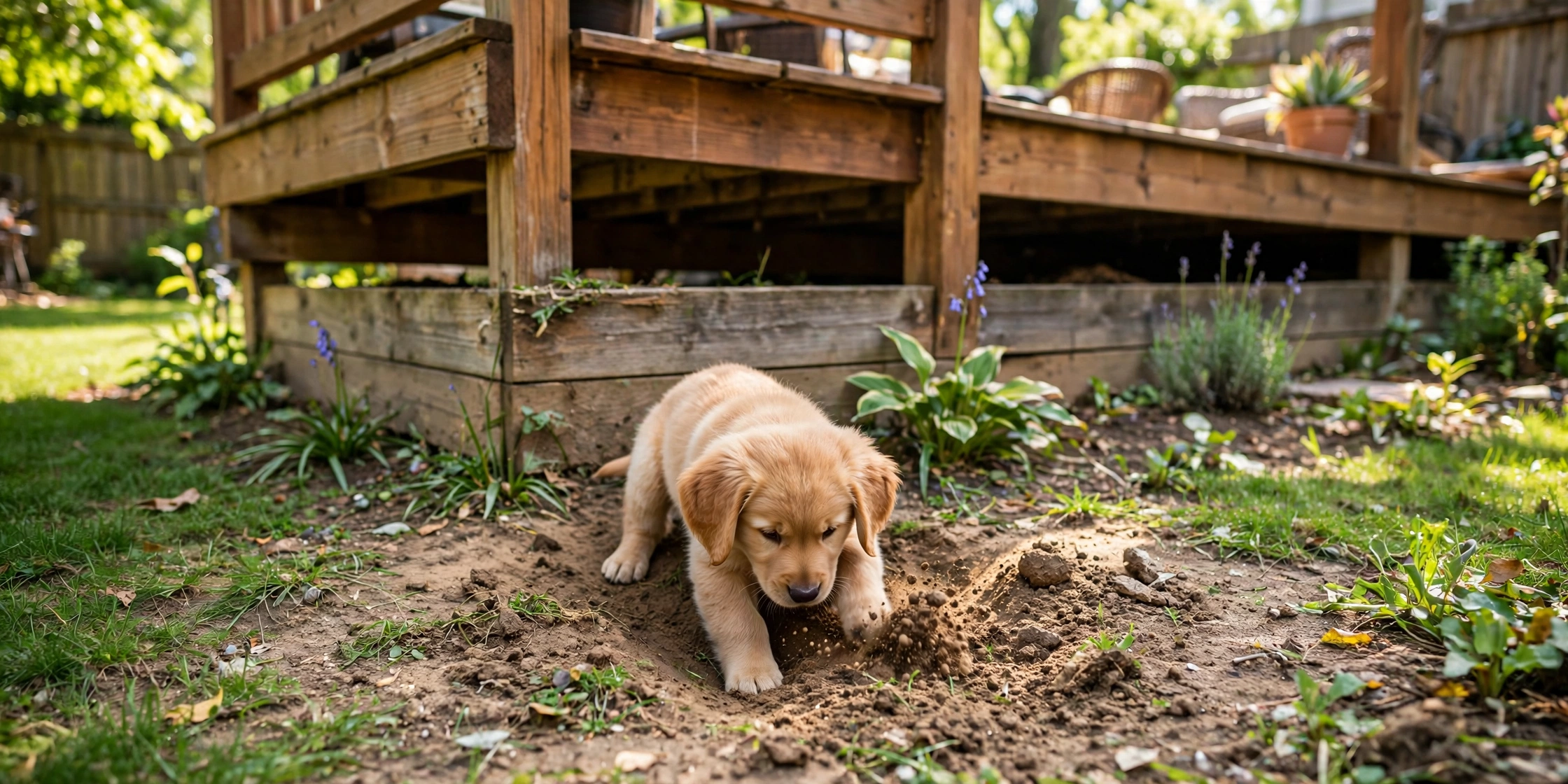
If you have ever come home to find your dog squeezed under the deck with muddy paws and a guilty grin, you already know how stressful this habit can be. Learning how to stop dog from digging under the deck is not just about protecting your landscaping — it is about keeping your pup safe. A dog that tunnels under the deck can escape the yard, get stuck in tight spaces, step on nails or treated lumber, or end up in the road. In this guide, you will find seven practical fixes that actually work, from physical barriers to training tricks that redirect the urge.
Safety first: A dog that digs under the deck can slip out of the yard and into traffic, or get trapped under low joists. Until you fix the problem, supervise yard time closely.
Table of Contents
- 1. Block Access with Lattice Skirting
- 2. Bury Chicken Wire Along the Deck Edge
- 3. Exercise Your Dog More
- 4. Build a Legal Dig Box
- 5. Teach a Rock-Solid “Leave It”
- 6. Supervise Outdoor Time
- 7. Address Underlying Anxiety
- Why Dogs Dig Under the Deck
- Frequently Asked Questions
1. Block Access with Lattice Skirting
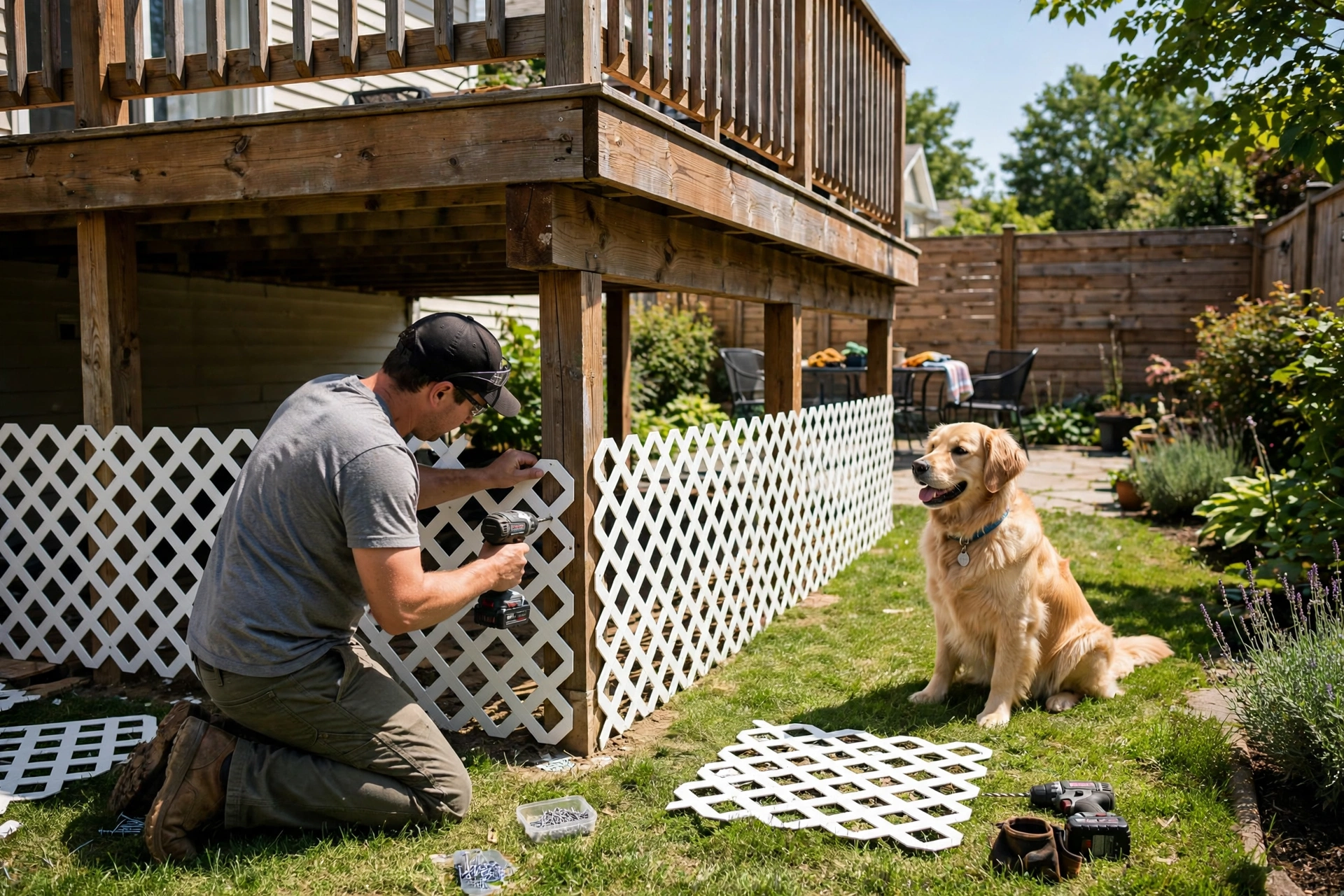
The simplest long-term fix is to close off the gap between the ground and the deck frame entirely. Vinyl or wood lattice panels cut to size and fastened around the deck perimeter create an attractive barrier that removes the temptation. Leave a few inches of clearance at the top for ventilation, and bury the bottom edge an inch or two into the soil so a determined digger cannot nose underneath the panels.
Pro tip: Use pressure-treated wood framing strips to attach the lattice, and check it each spring for loose sections after the ground freezes and thaws.
Helpful pick: Acurio Square Vinyl Lattice Decorative Panel — sturdy, weatherproof, and easy to cut for deck skirting projects.
2. Bury Chicken Wire Along the Deck Edge
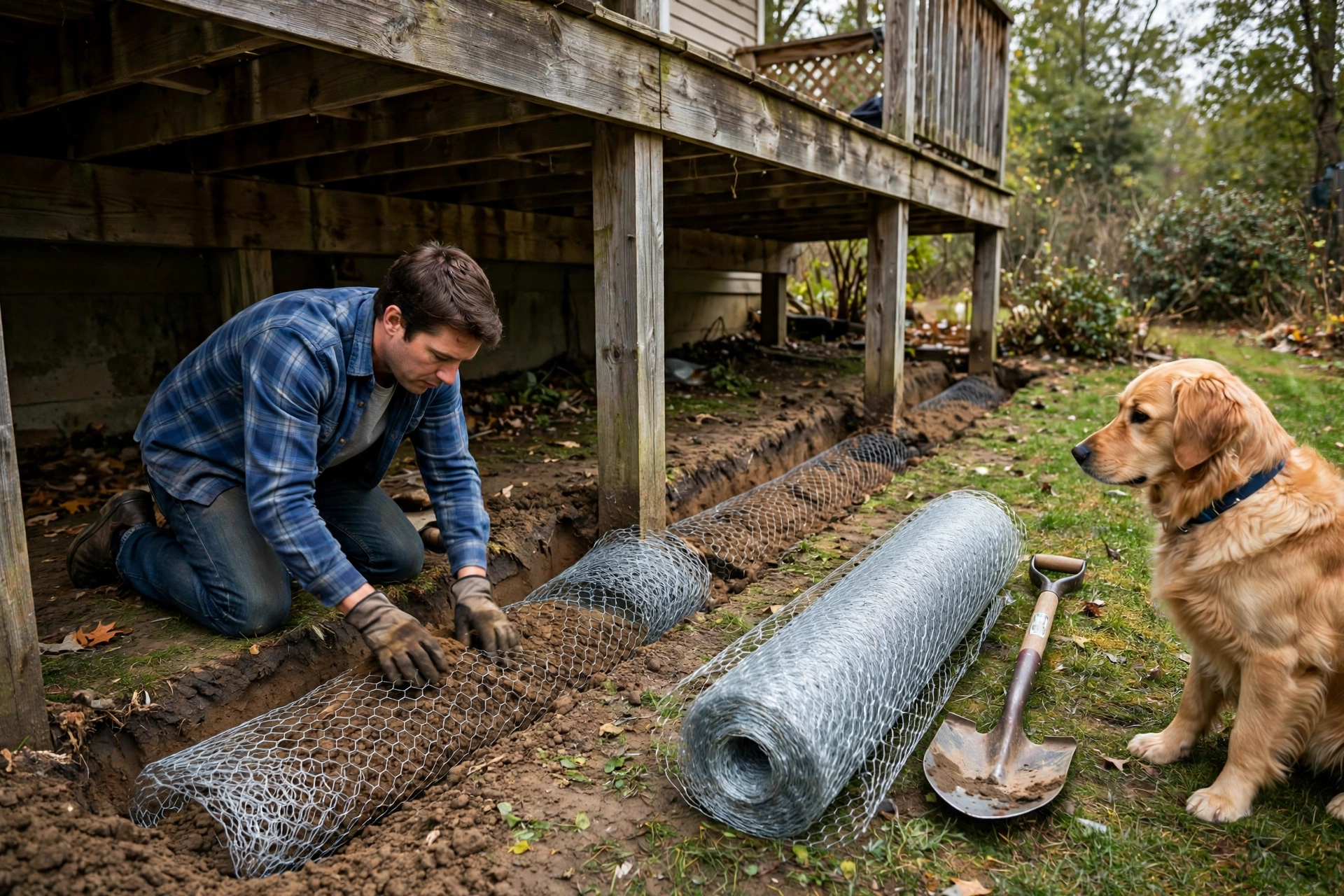
If your dog is an escape artist who tunnels under existing barriers, an underground “L-footer” is the gold standard. Dig a trench about a foot deep and six inches wide along the deck edge, then lay galvanized wire mesh vertically in the trench and bend the bottom foot outward in an L shape away from the deck. Backfill the trench. When your dog starts digging, they hit wire and give up — most dogs will not try a second spot after one unpleasant encounter.
Pro tip: Fold the cut edges of the wire inward and wear gloves during installation; raw wire ends can scratch paws. Choose welded hardware cloth over thin chicken wire for serious diggers.
Helpful pick: Tatuo Galvanized Hardware Cloth 48in x 150ft — hot-dip galvanized after welding so it resists rust underground for years.
3. Exercise Your Dog More
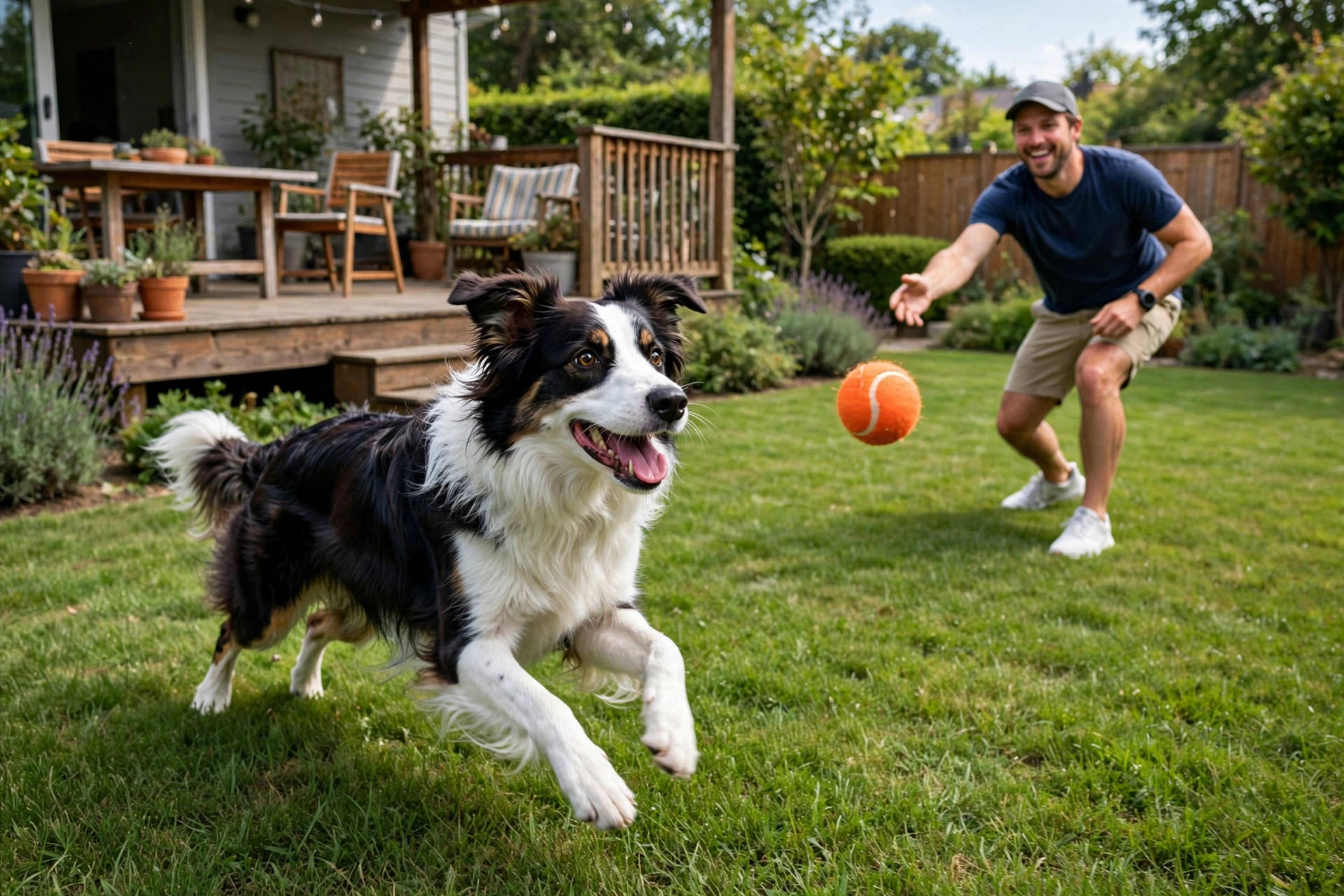
Many deck-digging cases are really a boredom problem in disguise. A dog with a full tank of energy will invent their own entertainment, and excavating the yard is endlessly self-rewarding. Aim for a solid walk or play session before your dog gets unsupervised yard time, plus at least one good fetch or tug session daily. High-energy breeds like terriers, huskies, and herding dogs often need two sessions a day before the digging urge fades.
Pro tip: End exercise sessions with a short training rep and a calm-down routine so your dog learns that yard time can be relaxing, not just wild.
Helpful pick: Chuckit! Ball Launcher — throws farther with less effort, perfect for tiring out an energetic digger fast.
4. Build a Legal Dig Box
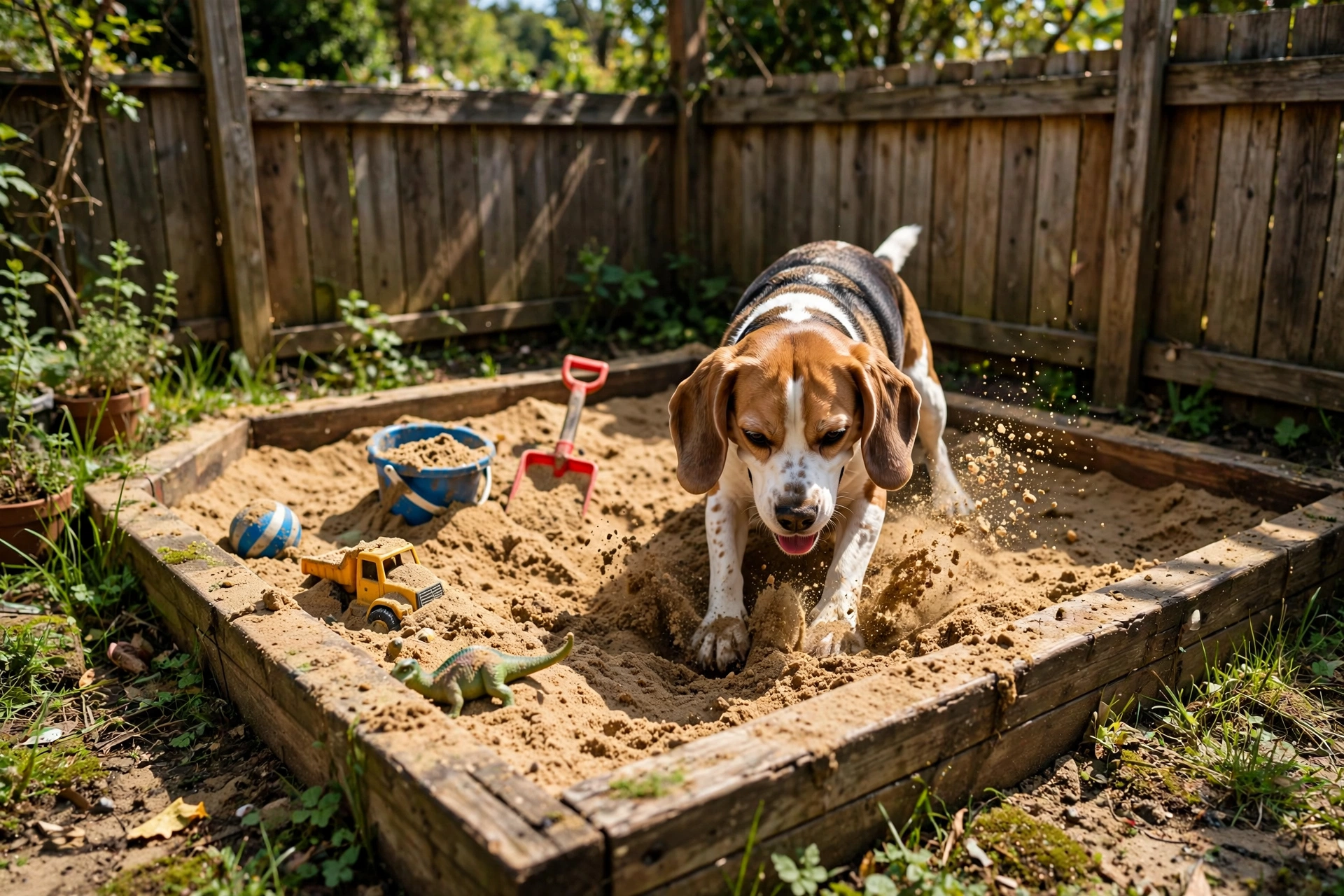
Fighting the digging instinct head-on is exhausting; redirecting it is far easier. Set up a designated digging spot — a sandbox or a framed area of loose soil at least a foot deep in a quiet corner of the yard — and bury toys and treats in it. Reward your dog enthusiastically every time they dig there. Within a couple of weeks, most dogs learn that the dig box pays out and the deck does not.
Pro tip: Keep the dig box in the shade if possible, since some dogs dig to find cool soil on hot days.
Helpful pick: Zuke’s Mini Naturals Training Treats — soft, smelly, and ideal for hiding in the dig box to make it irresistible.
5. Teach a Rock-Solid “Leave It”
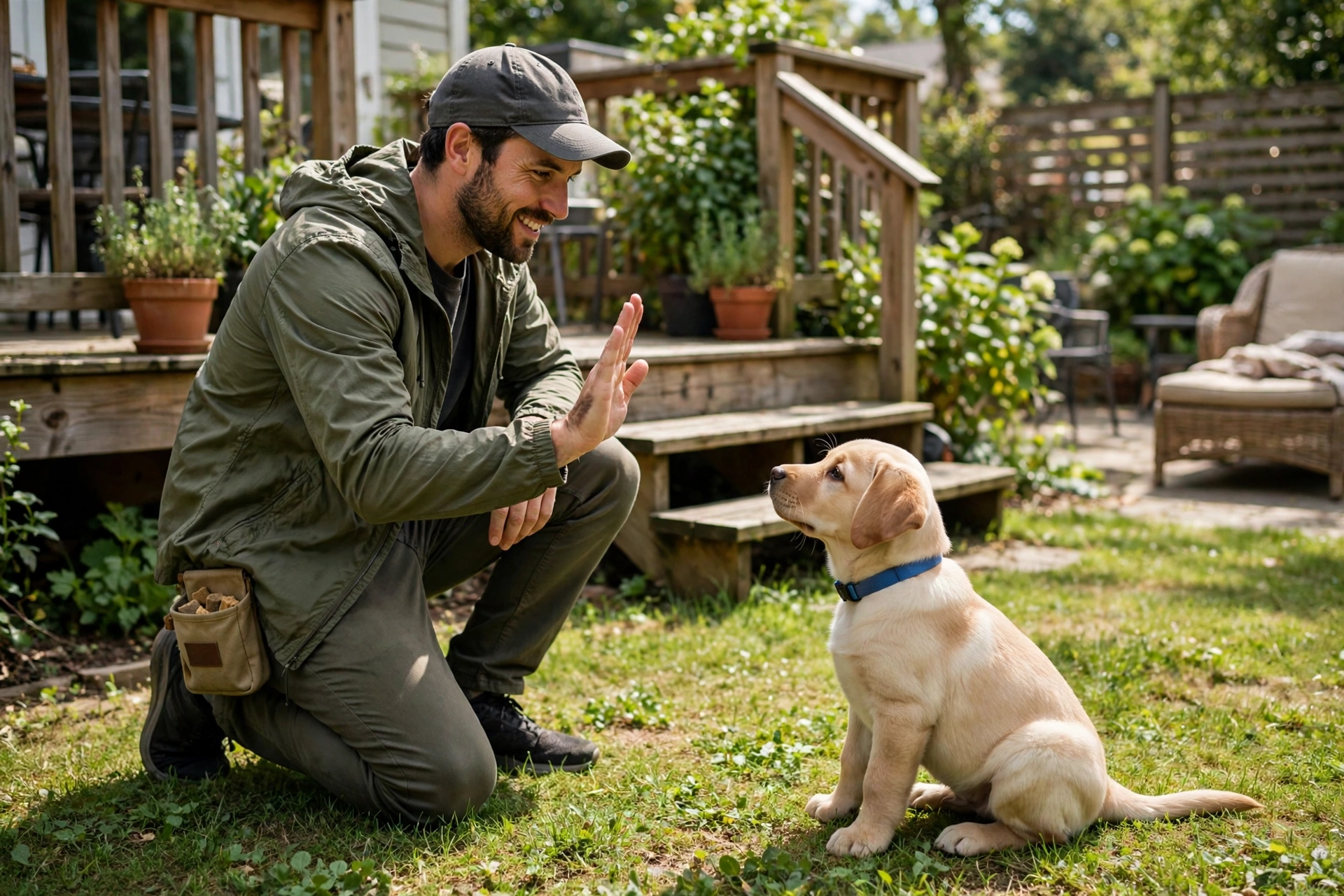
Training gives you a remote control for the digging moment itself. Start indoors with low-value items, mark and reward the instant your dog turns away, then gradually practice near the deck with higher-value temptations. Keep early outdoor sessions short and heavily rewarded — you are building a habit, not testing willpower. Once your dog will break off from a sniff at the deck edge on cue, you have a tool you can use from across the yard.
Pro tip: Never punish digging after the fact. Dogs do not connect delayed scolding to the hole, and fear-based reactions can actually make escape-motivated digging worse.
Helpful pick: Egiao Dog Treat Pouch — keeps high-value rewards handy so you can pay “leave it” wins instantly.
6. Supervise Outdoor Time

Until your barrier and training are solid, do not leave your dog alone in the yard. Most deck tunneling happens in unsupervised minutes — the dog gets bored, starts scratching at the deck edge, and five minutes later there is a hole. Use a long training leash tied off or held during this phase so your dog has freedom to roam but you can interrupt digging the second it starts and redirect to a toy or the dig box.
Pro tip: Rotate yard toys every few days so the environment stays novel and your dog is less tempted to self-entertain under the deck.
Helpful pick: Joytale 30ft Long Training Leash — gives supervised yard freedom while keeping your digger within redirect range.
7. Address Underlying Anxiety

Some dogs dig under the deck to create a den when they are anxious — during storms, fireworks, or when left alone. If the digging always happens during stressful events, treat the emotion, not the hole. Create a cozy indoor safe space, play calming background sounds during storms, and consider a calming diffuser or anxiety wrap for predictable triggers. A dog that feels secure has far less need to excavate a hiding spot.
Pro tip: If anxiety digging is new or sudden in an adult dog, a vet visit is wise — pain and cognitive changes can show up as new compulsive behaviors.
Helpful pick: ADAPTIL Calm Home Diffuser — clinically tested calming pheromones that support relaxation during stressful events.
Why Dogs Dig Under the Deck
Dogs rarely dig under the deck just to annoy you. Common reasons include:
- Boredom and excess energy — the top cause; digging is fun and self-rewarding.
- Seeking cool or warm shelter — the shaded space under a deck is naturally appealing.
- Prey drive — chipmunks, rabbits, and squirrels often live under decks, and your dog knows it.
- Escape attempts — some dogs tunnel to reach something exciting on the other side.
- Anxiety — digging is a self-soothing behavior for stressed dogs.
Matching the fix to the cause speeds everything up: barriers work for escape artists, exercise and dig boxes work for bored diggers, and calming support works for anxious ones.
Frequently Asked Questions
Will my dog stop digging under the deck on his own?
Almost never. Digging is self-rewarding — every successful dig under the deck teaches your dog it is worth trying again. You need barriers, training, or redirection to break the cycle.
Is chicken wire safe for dogs?
Yes, when installed correctly. Bury it so no sharp edges are exposed, fold cut ends inward, and use welded hardware cloth rather than thin hexagonal wire for determined diggers. Supervise the first few days.
How deep should I bury the wire barrier?
A 12-inch-deep trench with an L-shaped footer extending outward is enough to stop most dogs. For serious escape artists, go 18 to 24 inches deep. Call 811 before trenching to check for buried utilities.
Can I just fill the holes with rocks?
Large rocks can discourage one spot, but most dogs simply move to a new spot along the deck. A continuous barrier or lattice skirting is far more effective than spot-filling.
My dog only digs under the deck during storms. What should I do?
That is anxiety-driven denning behavior. Focus on calming support — an indoor safe space, background noise, and a calming diffuser — rather than barriers alone, since the motivation is fear, not fun.
Keep Reading
- How to Stop Your Dog from Digging: 7 Proven Fixes
- Why Does My Dog Dig on My Bed? 7 Reasons
- Signs Your Dog Is Stressed (and How to Help)
- Best Puzzle Toys for Dogs
- How to Teach Your Dog to Come When Called
As an Amazon Associate, PetPostHub earns from qualifying purchases.