
How to Stop a Dog from Digging: 8 Fixes That Actually Work

If your backyard looks like it lost a fight with a tiny excavator, you’re not alone — learning how to stop a dog from digging is one of the most common training challenges owners face. Digging is a natural, self-rewarding dog behavior, which means yelling at your dog rarely fixes it. The good news: once you understand why your dog is digging, you can redirect the urge into something you both can live with.
This guide walks you through the eight most effective, trainer-approved fixes — from giving your dog a legal place to dig to cooling tricks for hot-weather diggers. No punishment-heavy tactics, no miracle sprays that never work. Just practical steps that address the root cause.
Table of Contents
- Why Do Dogs Dig?
- 1. Burn Off the Digging Energy
- 2. Give Them a Legal Place to Dig
- 3. Tire the Brain, Not the Lawn
- 4. Give Hot Dogs a Cooler Option
- 5. Make Off-Limits Spots Unappealing
- 6. Supervise and Redirect in the Moment
- 7. Address Roaming and Hormone-Driven Digging
- 8. Beat Boredom With Companionship
- What NOT to Do
- Frequently Asked Questions
Why Do Dogs Dig?
Dogs don’t dig to ruin your landscaping — they dig because the behavior itself is rewarding. A dog may dig to burn off energy, cool down on a hot day, bury a prized bone, hunt a mole, or simply entertain themselves when they’re bored and unsupervised. Some breeds, like terriers, dachshunds, and huskies, have digging wired into their DNA: terriers were bred to dig out prey, and northern breeds dig to create cool resting spots.
Because digging satisfies the dog every time (cool dirt! interesting smells! a buried treasure!), it becomes a habit fast. That’s why this guide focuses on replacement and management, not punishment: you can’t easily talk a dog out of something that feels this good, but you can give them better options and make your yard less inviting for excavation.
1. Burn Off the Digging Energy
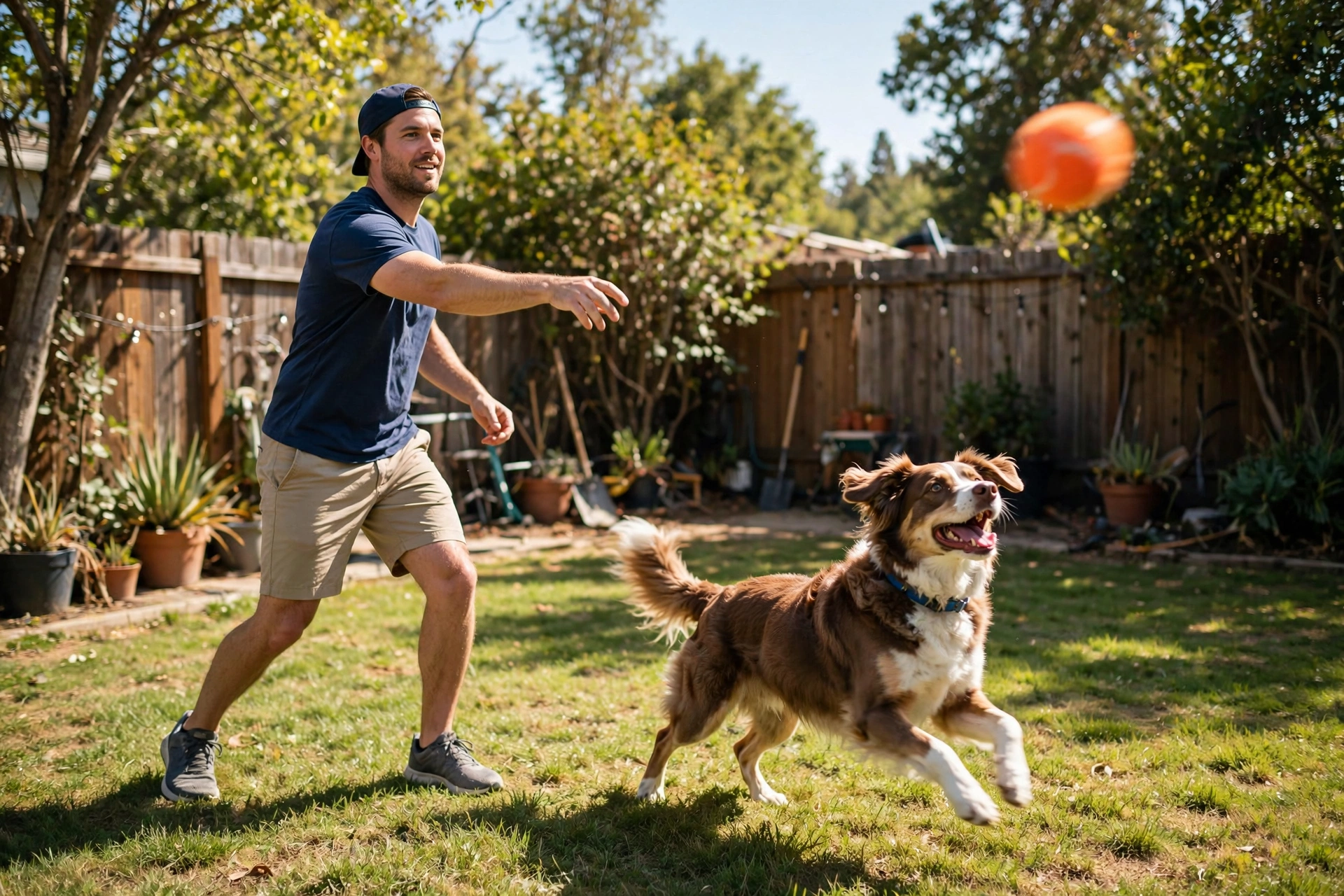
The number-one cause of destructive digging is an under-exercised dog. A dog with energy to spare will invent their own job — and digging is a fantastic whole-body workout. Most adult dogs need at least 30–60 minutes of real exercise a day (walks, fetch, tug), and high-drive breeds often need more. Two short walks around the block rarely cut it for a terrier or a young retriever.
Try structured, high-intensity play in short bursts: 10–15 minutes of fetch or flirt-pole play in the morning and again in the evening works wonders. A flirt pole is especially efficient — it mimics prey movement, gets your dog sprinting and changing direction, and tires them out in minutes with minimal effort from you. Teach a “drop it” cue so the game stays controlled.
Keep sessions positive and stop before your dog is exhausted. You’ll notice the payoff quickly: a dog that got a real workout this morning is far less likely to redecorate your lawn this afternoon.
Helpful pick: LUCOLOVE Flirt Pole for Dogs — a heavy-duty teaser wand that burns big energy fast in small yards.
2. Give Them a Legal Place to Dig

Here’s the counterintuitive secret the best trainers share: if you can’t beat digging, legalize it. Build your dog a designated digging pit — a small sandbox or a corner of the yard filled with loose, soft dirt or sand — and teach them that digging there earns praise and buried treasure.
Make the dig zone irresistible: bury a favorite toy or a few treats just under the surface at first, then bury them deeper as your dog catches on. When your dog digs in the zone, praise them enthusiastically. When they start digging elsewhere, calmly interrupt and lead them to the pit, rewarding them for finishing the job there. Most dogs learn the rule within a week or two: this spot is the sandbox, the rest of the yard is off-limits.
Keep the sand loose and clean (a covered sandbox stays dry and keeps neighborhood cats out), and “re-seed” it with buried surprises regularly so it stays more rewarding than the lawn. For natural-born diggers like dachshunds and terriers, this single change often solves 80% of the problem.
Helpful pick: Sumapner Large Sand Box Set with Lid — a foldable sandbox with a cover and shade umbrella, perfect as a dedicated dog dig zone.
3. Tire the Brain, Not the Lawn
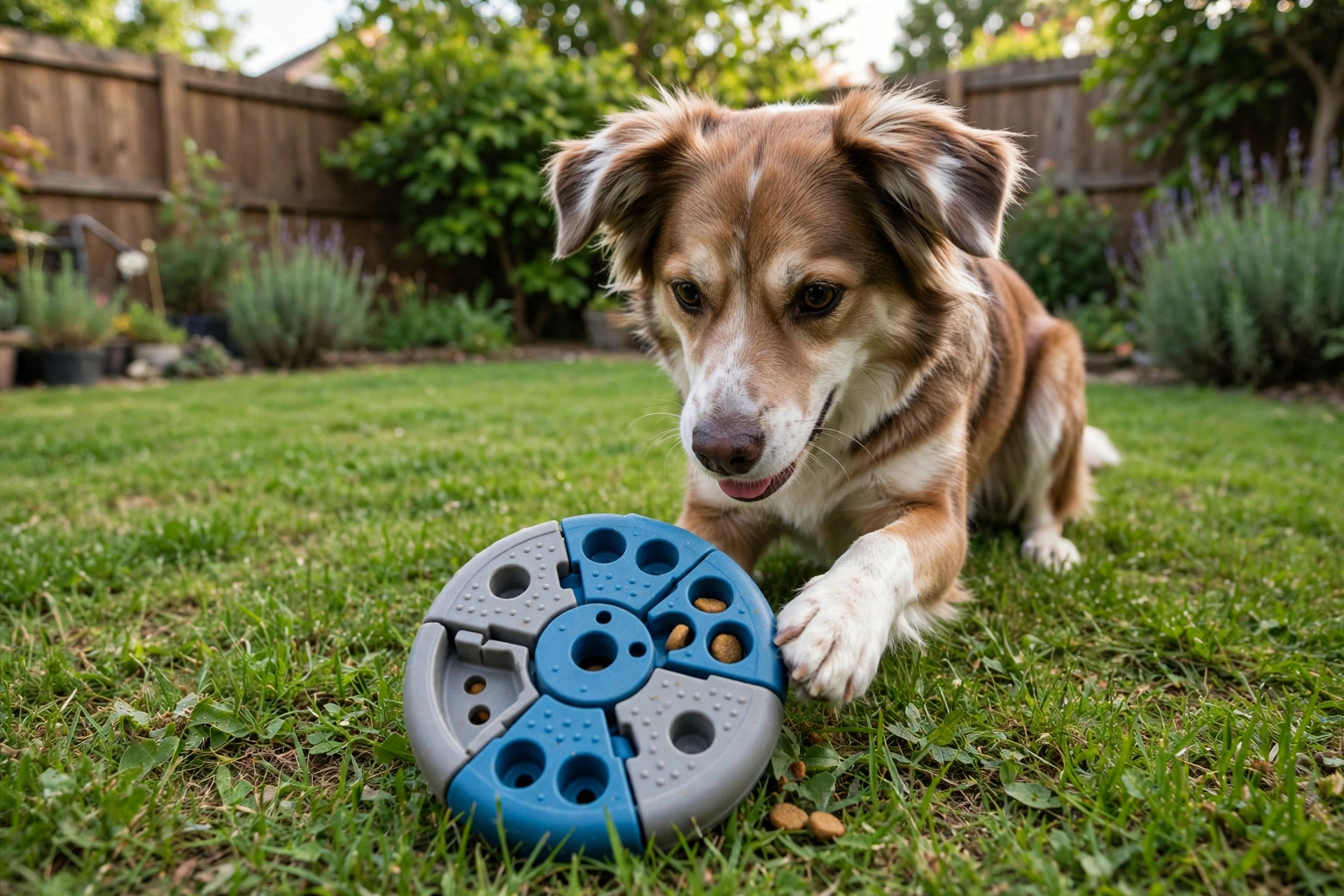
A tired brain is just as powerful as a tired body. Many “boredom diggers” don’t need more running — they need more thinking. Fifteen minutes of sniffing, problem-solving, or learning new tricks can exhaust a dog more than an hour of aimless yard time.
Rotate puzzle feeders, snuffle mats, and frozen stuffed toys through the week so they stay novel. Teach a trick a day (shake, spin, touch) in 5-minute sessions — training is mental weightlifting. Scatter feeding (tossing your dog’s kibble into the grass for them to hunt) turns mealtime into a 20-minute nose-work session that satisfies the same foraging instinct digging does.
The rule is simple: a dog whose brain has a job won’t go looking for one in your flower beds. Rotate toys every few days to keep them interesting, and always supervise puzzle toys with aggressive chewers.
Helpful pick: Outward Hound Dog Tornado Puzzle — a rotating treat puzzle that keeps smart dogs busy when you’d rather they weren’t digging.
4. Give Hot Dogs a Cooler Option
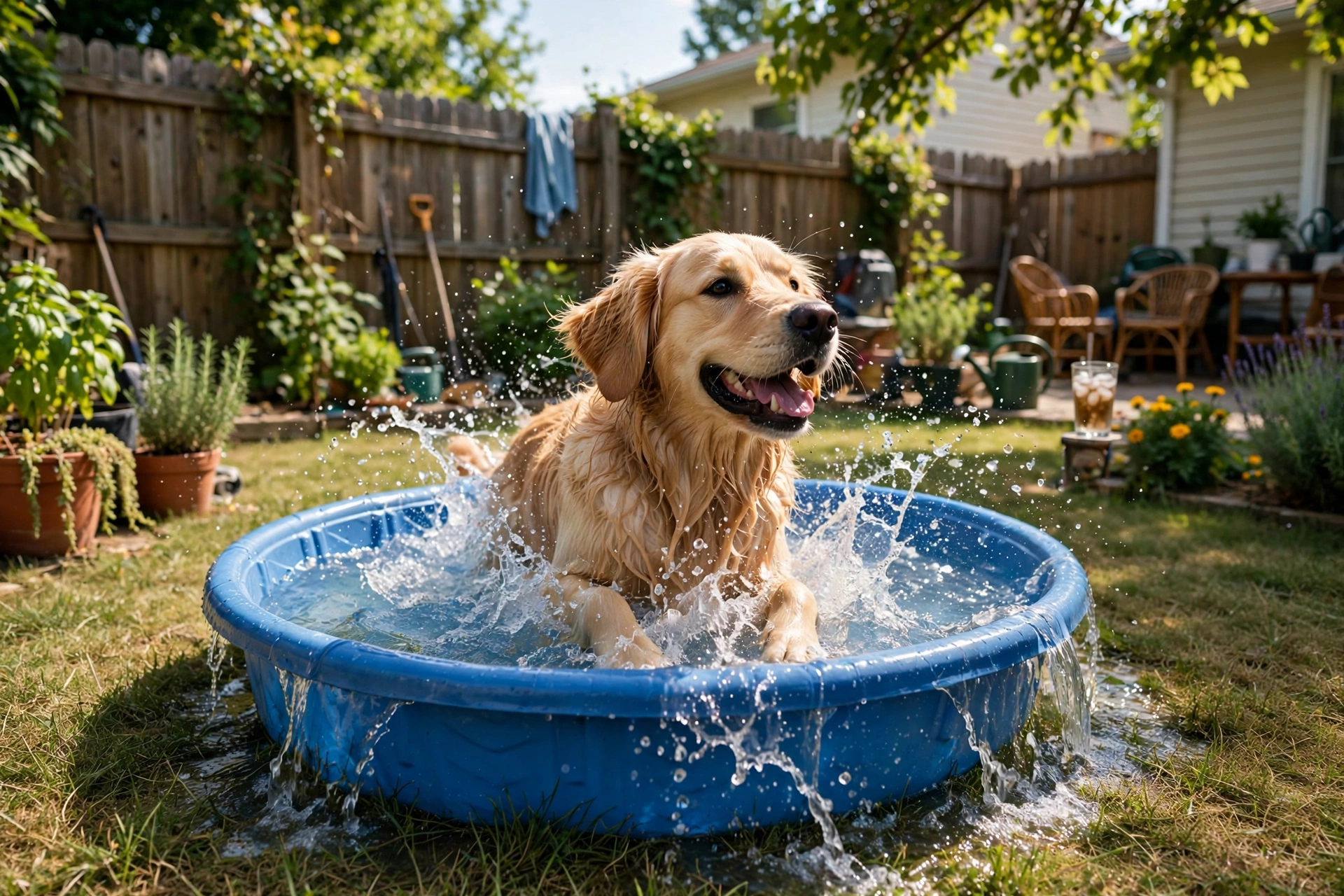
If the digging happens mostly on warm afternoons and the holes are shallow nests in shady spots, your dog isn’t being naughty — they’re air-conditioning themselves. Freshly turned earth is cool, and dogs instinctively dig down to reach it.
Solve the actual problem by giving them better ways to cool off: plenty of shade, a bowl of fresh cool water, and — the crowd favorite — a shallow kiddie pool. Most dogs learn to love splashing in a few inches of cool water, and a pool directly replaces the “cool dirt nest” function of digging. Bring your dog inside during the hottest part of the day if you can, and avoid heavy exercise between late morning and mid-afternoon.
Watch for the pattern: dogs who dig cool nests usually return to the same shady spots. Place the pool or a cooling mat right there, and redirect your dog to it a few times. Once they learn it’s the better cooling station, the excavation stops.
Helpful pick: CACSPS Foldable Dog Pool — a sturdy, collapsible splash pool that gives hot dogs a place to cool off besides your lawn.
5. Make Off-Limits Spots Unappealing

While you’re teaching the new rules, protect the areas your dog loves most. Fill favorite holes with soil and top them with large, smooth river rocks — too heavy to move, uncomfortable to paw at, but completely safe. For flower beds and garden borders, lay chicken wire flat about an inch under the soil surface; dogs hate the feeling on their paws, and it disappears under mulch.
Dog-safe deterrent sprays can also take the fun out of forbidden zones. A bitter-tasting, plant-safe spray on garden beds and fence lines makes those areas unrewarding to nose around in. Reapply after rain. One caution: never use cayenne pepper, mothballs, or any homemade “hot” deterrents — they can irritate eyes, noses, and skin and make your dog anxious in their own yard.
Think of deterrents as guardrails, not the whole solution: they buy you time while the exercise, enrichment, and dig-zone training do the real work.
Helpful pick: BLUECARE LABS Bitter Apple Spray — an alcohol-free, plant-safe deterrent spray for garden beds and other off-limits zones.
6. Supervise and Redirect in the Moment
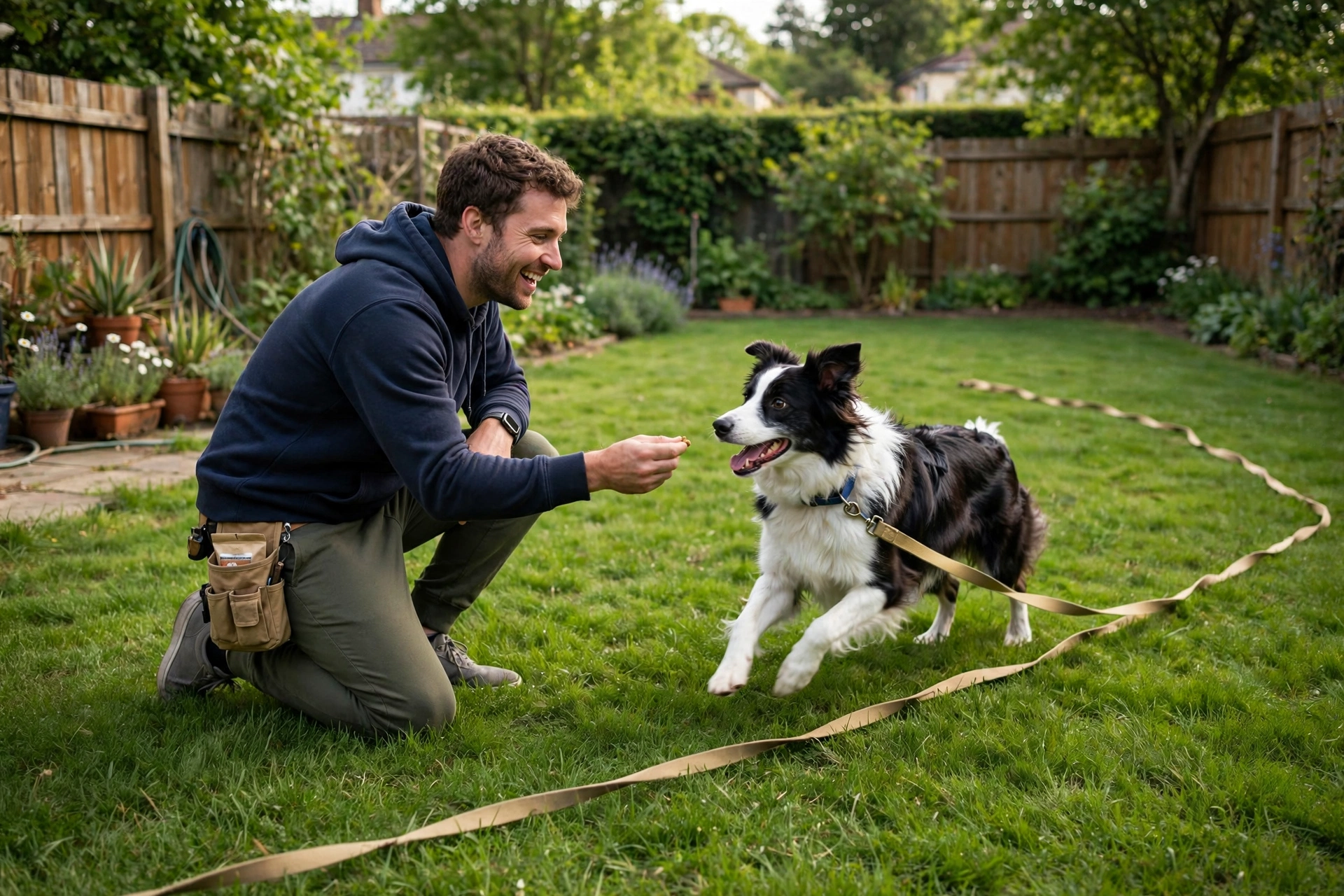
No strategy works if your dog practices digging unsupervised for hours every day — every hole is a self-rewarding rehearsal. Until the new habits stick, don’t leave your dog alone in the yard for long stretches. When you can’t watch them, they’re better off indoors or in a secure run.
When you catch digging in progress, interrupt calmly (a cheerful “uh-oh!” or a clap works) and redirect to something legal: toss a toy, start a quick training game, or walk them to the dig zone. Reward the redirect generously. A long training leash is a great tool here — it lets your dog roam the yard while you keep gentle control and can interrupt digging before it becomes a habit.
Never punish after the fact. Your dog won’t connect your anger to a hole they dug an hour ago — they’ll just learn that you sometimes act scary near holes, which teaches nothing about digging.
Helpful pick: Joytale 30ft Training Leash — gives yard freedom while you supervise and redirect digging in real time.
7. Address Roaming and Hormone-Driven Digging

Digging concentrated along the fence line is a different story — that’s often an escape attempt. Unspayed or unneutered dogs may dig under fences when they smell a dog in heat nearby, and anxious dogs may dig to reach their owners or escape scary noises.
Talk to your vet about spaying or neutering if your dog is intact; it removes one of the strongest motivations for fence-line digging (and has health benefits beyond behavior). For anxiety-driven digging, address the underlying stress — check out our separation anxiety guide — and make sure the fence line is secure with buried wire or concrete footers.
After any surgery, keep your dog calm and mentally occupied during recovery so they don’t return to digging out of restlessness. Frozen lick mats and snuffle games are perfect low-energy boredom busters for the healing period.
Helpful pick: LickiMat Soother — spread with peanut butter and freeze it for calm, low-energy enrichment during recovery.
8. Beat Boredom With Companionship
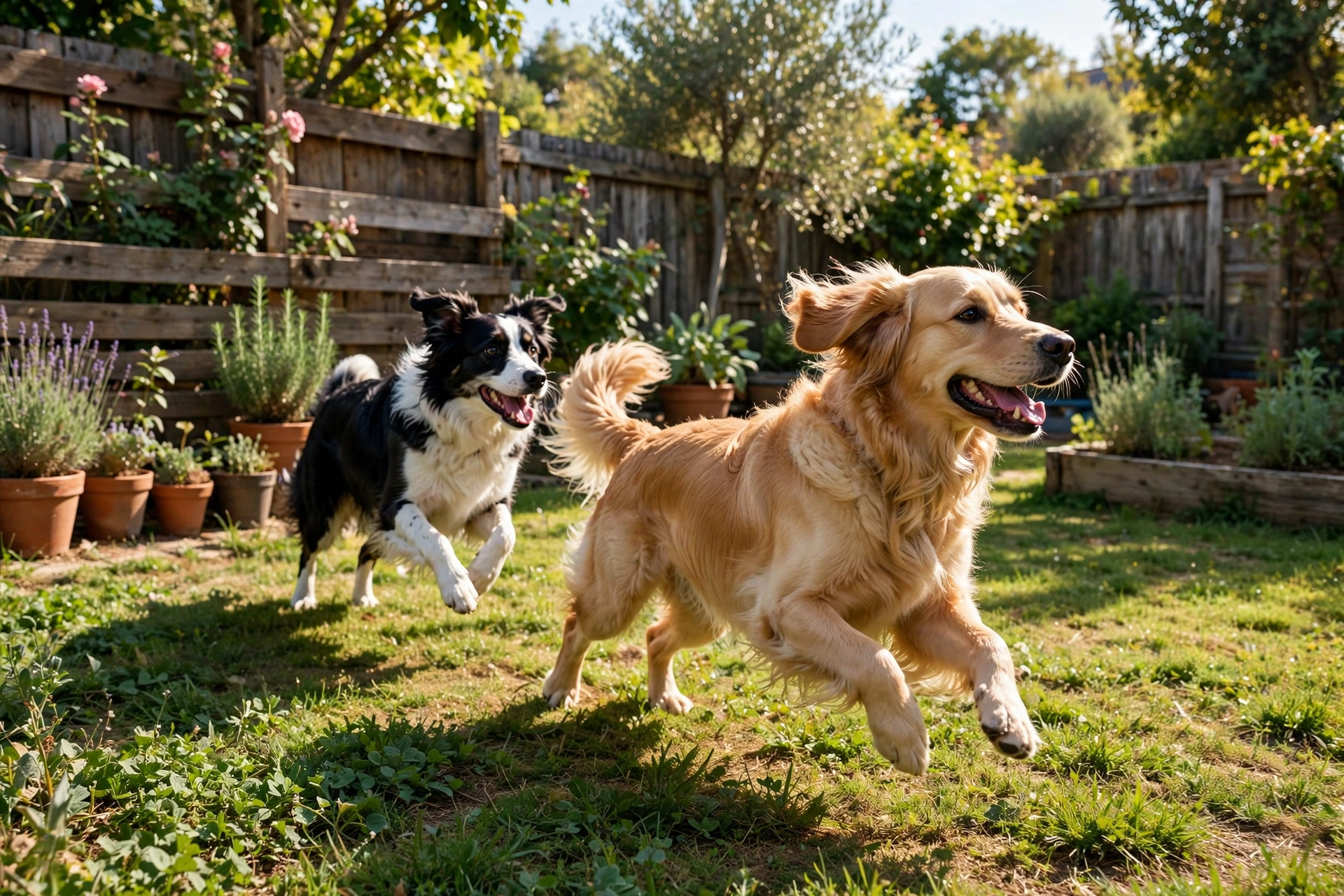
Dogs are social animals, and loneliness is a top driver of backyard destruction. A dog left alone in the yard all day with nothing to do will make their own entertainment — and digging is entertaining.
A playmate is the most powerful fix of all: two dogs will wrestle, chase, and tire each other out instead of excavating your lawn. That’s a big commitment, though — only add a second dog if it’s right for your household, not just as a digging cure. Short of that, arrange playdates, hire a dog walker for a midday visit, or bring your dog to daycare a couple of days a week.
Even small changes help: move your dog’s “hangout time” to when you’re home and can interact, and save solo yard time for after they’ve been exercised and enriched. If a second dog isn’t in the cards, an independent-play toy rotation (stuffed KONGs, durable chews) gives a lonely dog something to do besides dig.
Helpful pick: KONG Classic — stuff it with kibble and peanut butter and freeze it for hours of solo entertainment.
What NOT to Do
A few common “solutions” do more harm than good. Don’t fill holes with your dog’s poop — it’s unsanitary and can spread parasites if your dog sniffs or licks it. Don’t use shock collars, citronella collars, or any pain-based device for digging; they create fear and anxiety without teaching an alternative. Don’t rub your dog’s nose in a hole or punish them after the fact — dogs don’t connect delayed punishment to past behavior. And skip cayenne pepper, mothballs, and harsh chemicals as deterrents; they can irritate your dog’s eyes, nose, and skin. Stick with replacement and management: it’s slower than punishment feels, but it’s the only approach that actually lasts.
Frequently Asked Questions
Why does my dog dig holes all of a sudden?
A sudden digging spree usually means something changed: less exercise, a new neighborhood dog in heat, a mole moving in, hotter weather, or a new stressor like a schedule change. Run through the list above — exercise, heat, prey, boredom, anxiety — and fix the most likely cause first.
Will my dog grow out of digging?
Puppies often dig more because everything is a game, and many calm down with maturity and consistent training. But digging is self-rewarding, so it rarely disappears on its own — breeds with strong digging instincts (terriers, dachshunds, huskies) may always love a good dig, which is why a designated dig zone is such a good long-term answer.
Is digging a sign of anxiety in dogs?
It can be. Digging that appears alongside pacing, whining, destructive chewing, or escape attempts — especially when you’re away — may point to separation anxiety or general stress. If the digging seems frantic rather than playful, talk to your vet or a certified behaviorist.
Does vinegar stop dogs from digging?
Vinegar-soaked cotton balls placed in off-limit spots can discourage sniffing and digging for some dogs, but the effect is mild and short-lived (it fades fast outdoors). It works best as a temporary guardrail while you build the real habits: exercise, enrichment, and a legal dig zone.
Should I punish my dog for digging?
No — punishment doesn’t teach your dog what to do instead, and after-the-fact punishment teaches them nothing at all. Interrupting calmly in the moment and redirecting to a legal activity, then rewarding that choice, is the approach trainers recommend and the one backed by behavioral science.
If your dog’s digging comes with other behavior challenges, our guides on common dog training mistakes, stopping jumping, and the best toys for small dogs will help you build a calmer, happier routine for everyone.
As an Amazon Associate, PetPostHub earns from qualifying purchases.





One Comment