
16 Insulated Cat House Ideas for Winter Warmth

An insulated cat house is the difference between a stray surviving a brutal winter night and merely enduring it. When temperatures plunge, a basic wooden box or open shelter lets wind cut straight through — but with proper insulation, your outdoor cat keeps body heat where it belongs. These 16 insulated cat house ideas range from weekend DIY builds to smart upgrades for shelters you already own.
Table of Contents
- 1. Tote-in-Tote Insulated Sandwich Shelter
- 2. Styrofoam Cooler Winter Build
- 3. Plywood Cabin Lined With Reflective Foam
- 4. Old Ice Chest Winter Conversion
- 5. Cedar Garden Shed-Style Cat House
- 6. Doghouse Conversion With Draft-Proof Entry
- 7. Straw-Bale Windbreak Shelter
- 8. Raised Pallet Platform Shelter
- 9. A-Frame Roofed Shelter for Snowy Regions
- 10. Self-Warming Mylar Pad Den
- 11. Electric Heated Cat House Setup
- 12. Barn or Garage Corner Nook
- 13. Pallet-Wall Windbreak With Insulated Den Box
- 14. Dual-Entry Draft-Proof Shelter
- 15. Under-Deck Shelter With Insulated Floor
- 16. Reflective Liner Upgrade for Existing Houses
1. Tote-in-Tote Insulated Sandwich Shelter
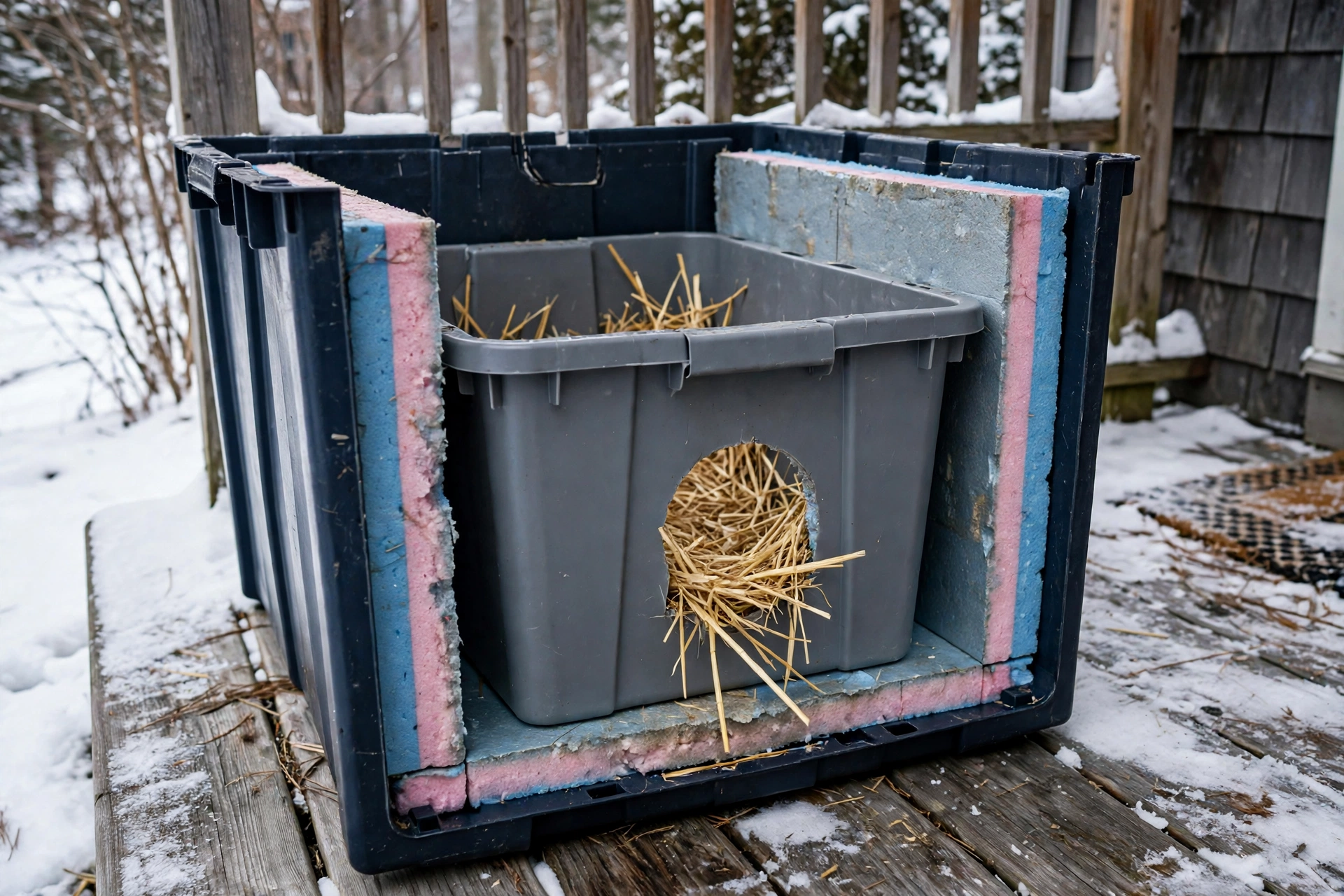
Set a smaller storage tote inside a larger one, pack the gap between the walls with rigid foam board, and cut one round six-inch entry hole through both totes on the same side. Line the interior floor with straw and snap the lids on tight — the trapped air layer between the walls slows heat loss dramatically.
Helpful pick: Sterilite Storage Tote — sturdy, lidded totes in two sizes make the nested-shell build easy.
2. Styrofoam Cooler Winter Build
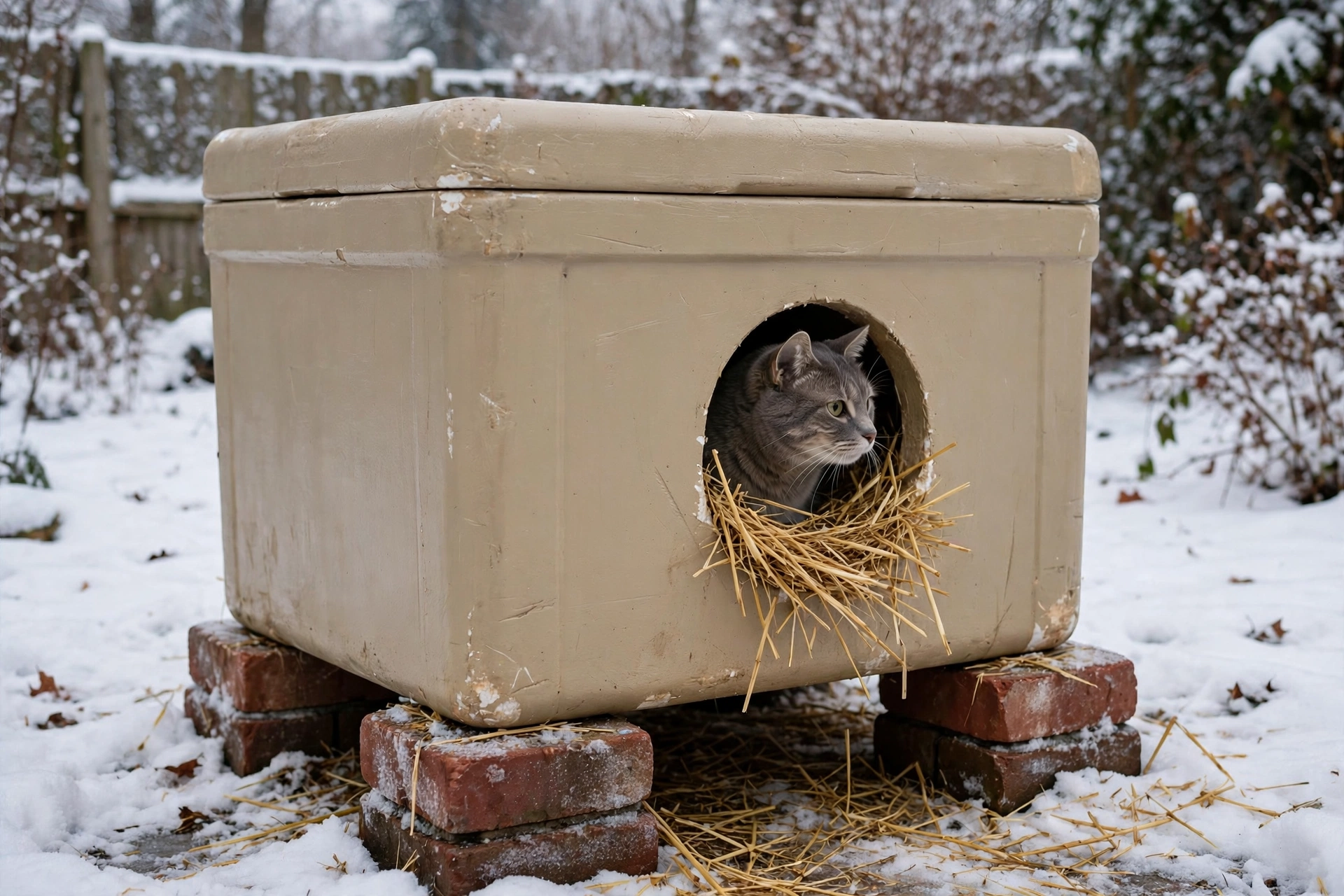
Cut a six-inch entry hole in one side, paint the exterior with two coats of exterior spray paint to protect the foam from sunlight, and weigh the lid down so wind cannot lift it. Elevate it on bricks so moisture never pools underneath, then fill the floor with straw.
Helpful pick: Large Foam Cooler — thick-walled coolers hold warmth far better than thin ones.
3. Plywood Cabin Lined With Reflective Foam

Build a simple box from half-inch plywood, then line the inside walls and ceiling with reflective foil insulation cut to fit. The foil reflects the cat’s body heat back into the sleeping space like a space blanket. Keep the entry hole small — about six inches — and offset it from the sleeping corner so drafts cannot blow straight onto the cat.
Helpful pick: Reflectix Reflective Insulation — flexible foil insulation that cuts easily with scissors.
4. Old Ice Chest Winter Conversion
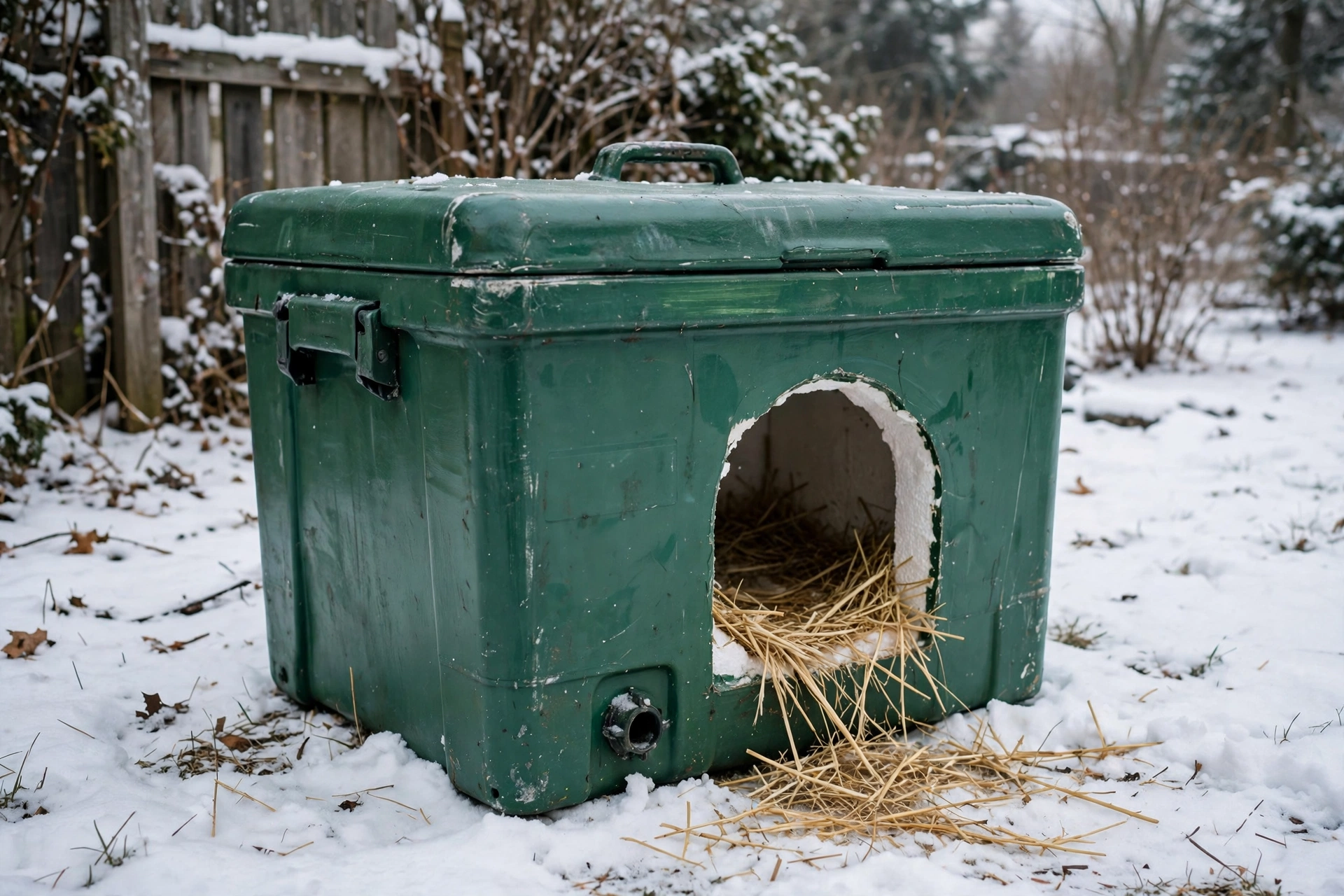
That retired ice chest in the garage already has insulated walls — it was designed to hold temperature. Cut a cat-sized entry hole in one side with a jigsaw, sand the edges smooth, and give the outside a fresh coat of paint to seal it against weather.
Helpful pick: Exterior Spray Paint — weather-sealing paint protects plastic shells from sun damage.
5. Cedar Garden Shed-Style Cat House
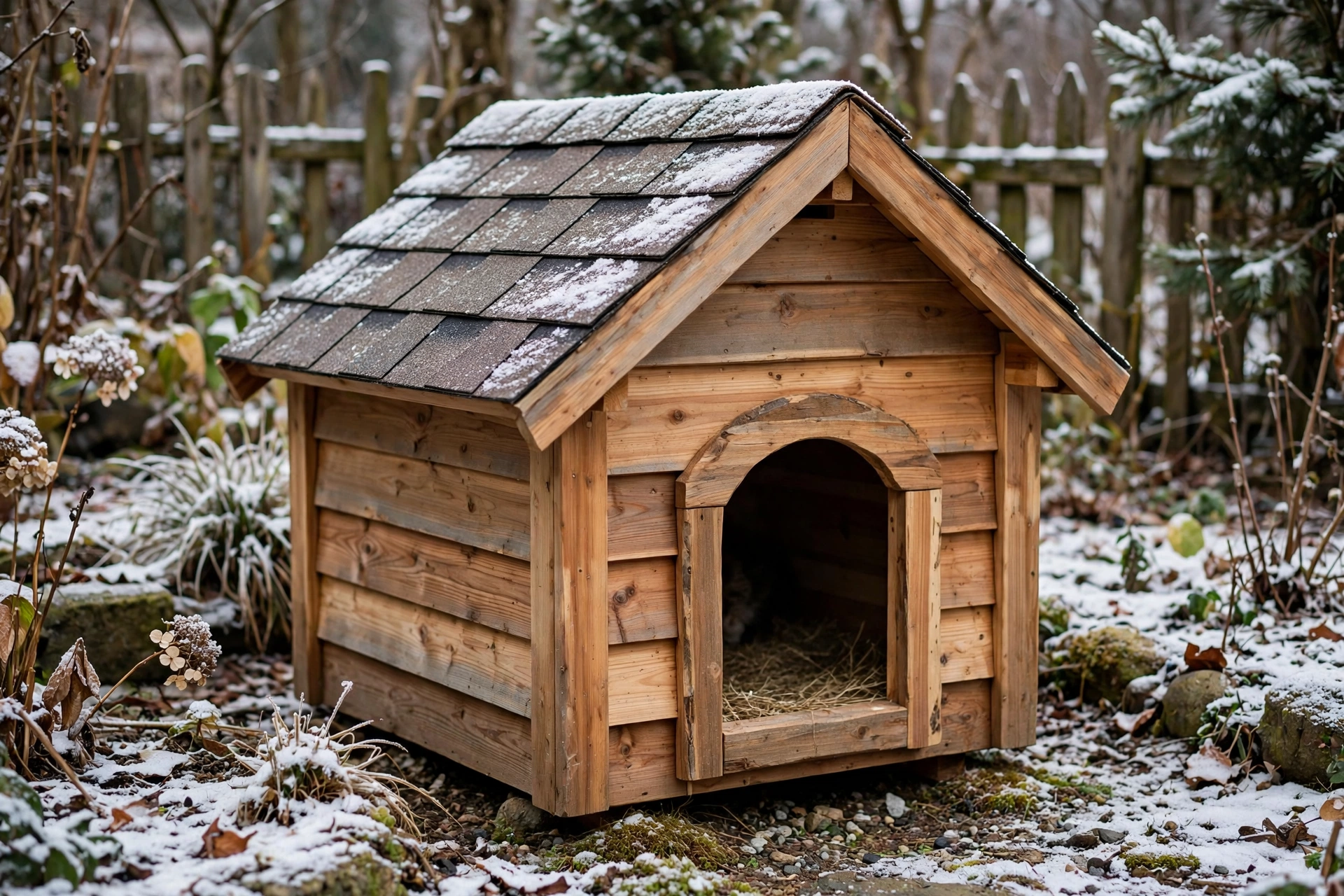
Cedar naturally resists moisture and insects, which makes it an excellent shell for an outdoor cat house. Build a compact shed shape with a peaked roof so snow and rain run off, then add rigid foam insulation behind the interior panels. A brush-on sealant each spring keeps the wood from soaking up rain that would steal interior warmth.
Helpful pick: Wood Stain and Sealer — outdoor sealant keeps cedar walls weatherproof and warm.
6. Doghouse Conversion With Draft-Proof Entry
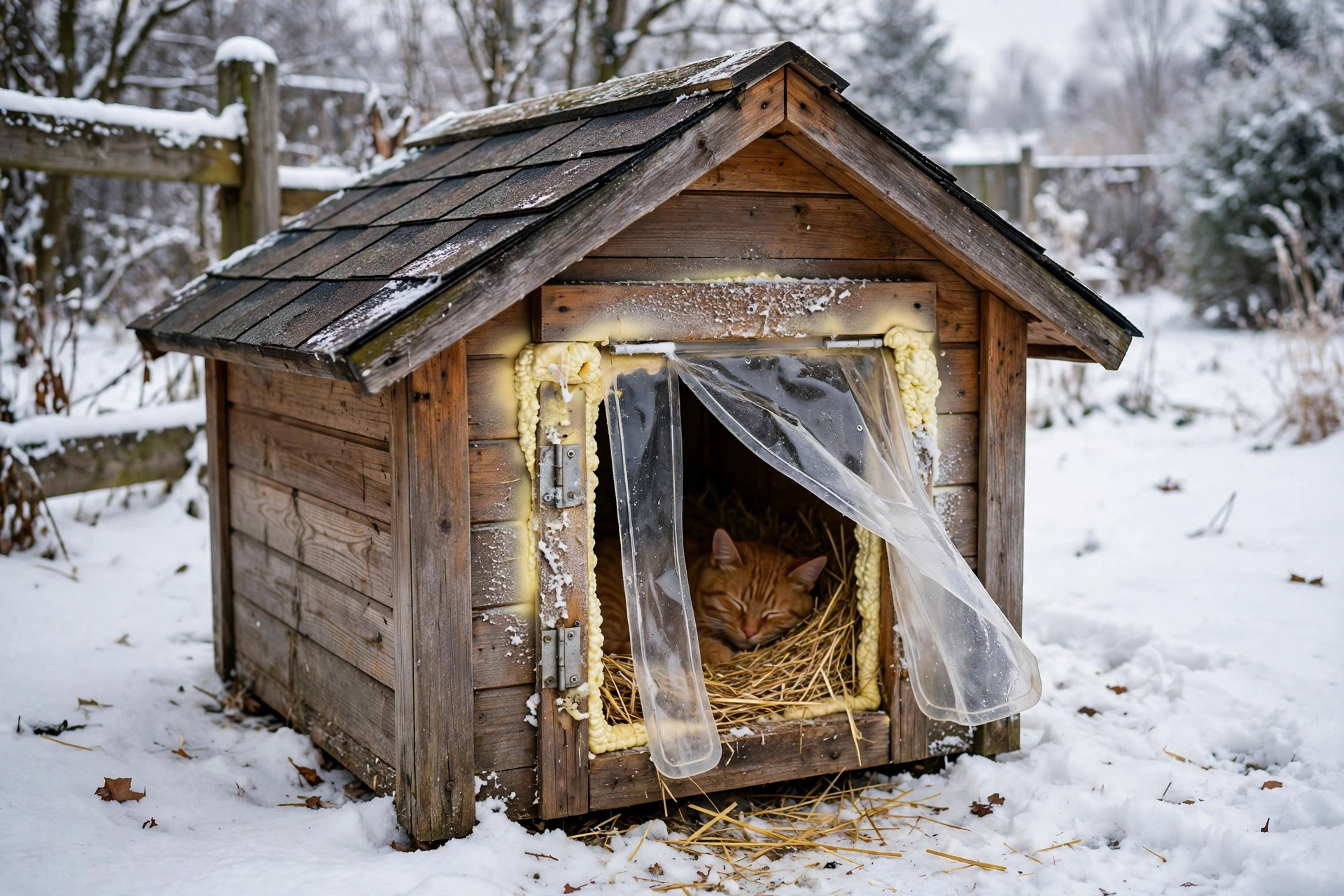
An unused doghouse becomes a cat shelter fast: add foam board to the inside walls, raise the floor off the ground, and install a flexible pet door flap over the entrance. The flap blocks wind while the cat passes through easily, and fill the sleeping area with straw rather than blankets.
Helpful pick: Pet Door Flap — a flexible entry flap cuts wind loss without trapping the cat.
7. Straw-Bale Windbreak Shelter
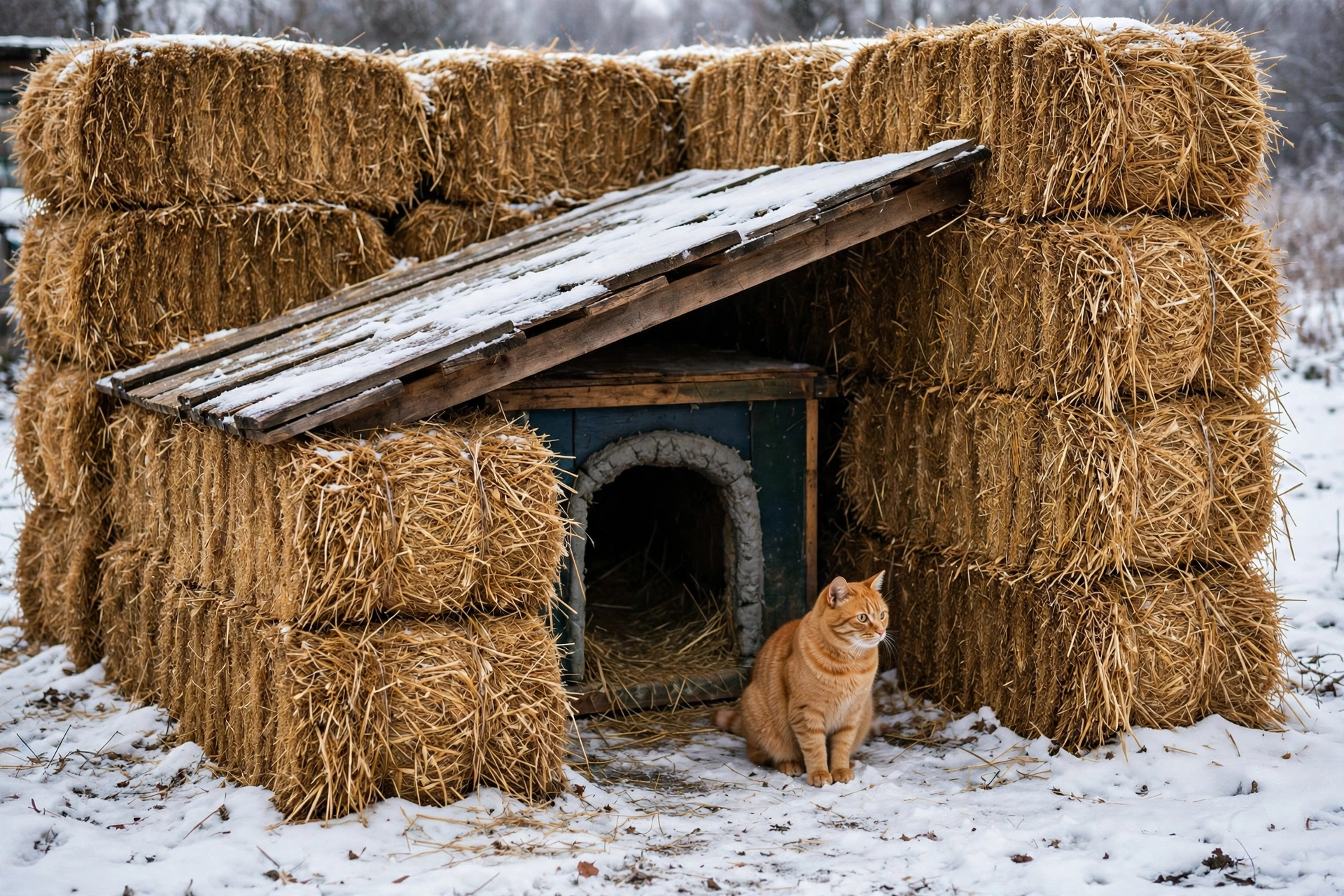
Stack straw bales in a U-shape around a simple insulated box, leaving the entry side open. The bales act as a massive windbreak that cuts the wind chill hitting the shelter, and air trapped between them adds insulation. Top the structure with a slanted board or tarp so precipitation sheds off.
Helpful pick: Straw Bale — clean straw works for both windbreak walls and interior bedding.
8. Raised Pallet Platform Shelter
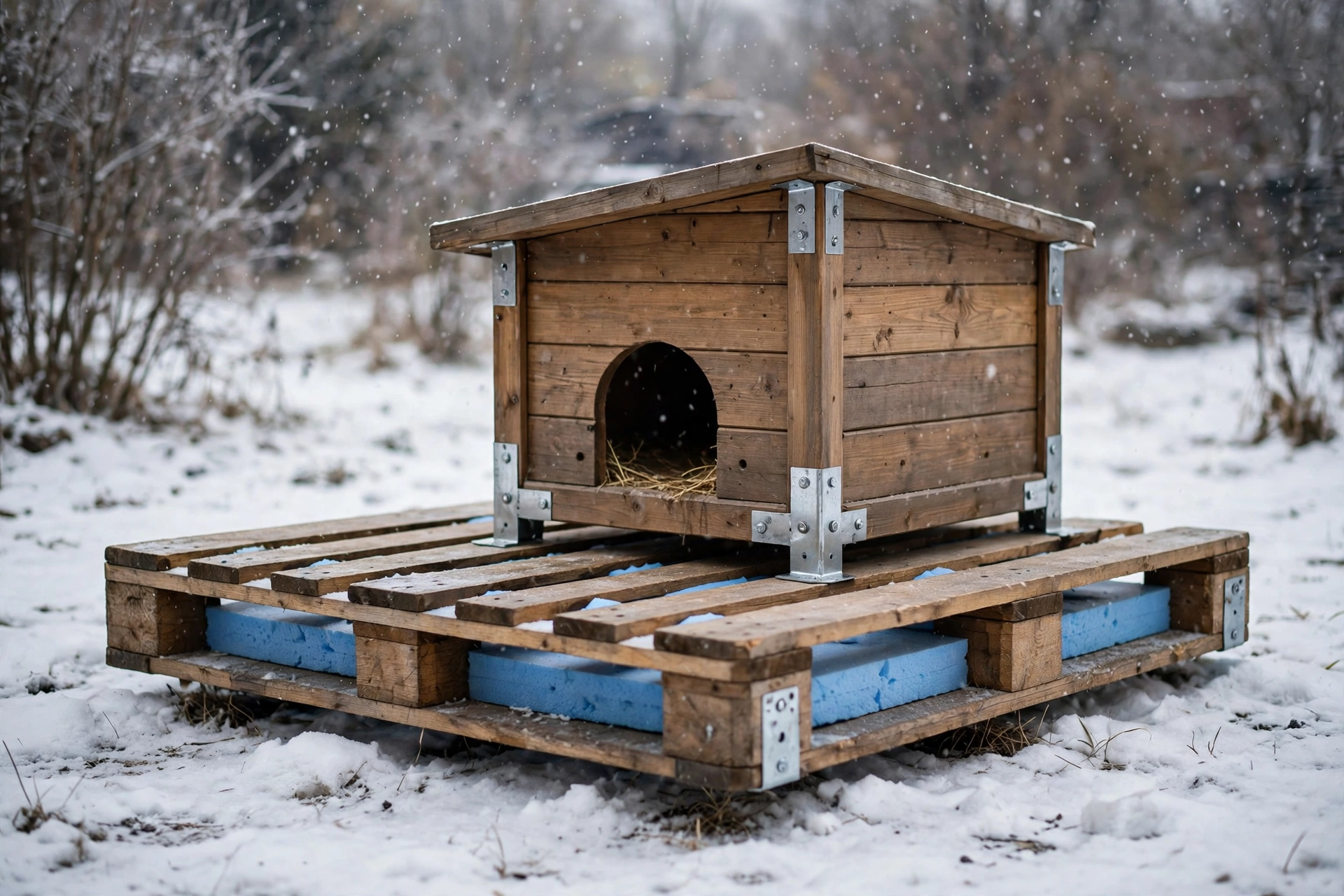
Ground cold is one of the biggest heat thieves, so raise any insulated house on a wooden pallet. Air circulating underneath keeps the floor dry, and you can staple a layer of foam board between the pallet slats for an insulated base. Anchor the shelter to the pallet with metal brackets so high winds cannot slide it off the platform.
Helpful pick: L Brackets — metal brackets secure the shelter firmly to its raised platform.
9. A-Frame Roofed Shelter for Snowy Regions

In heavy-snow regions, a steep A-frame roof sheds snow before it piles up and crushes a flat-topped shelter. Frame two insulated panels into a tall triangle, brace them with wooden dowels, and add a small entry at one gable end. The tall interior keeps bedding dry even when snow drifts pile against the sides.
Helpful pick: Wooden Dowels — sturdy dowels brace the A-frame panels against snow load.
10. Self-Warming Mylar Pad Den
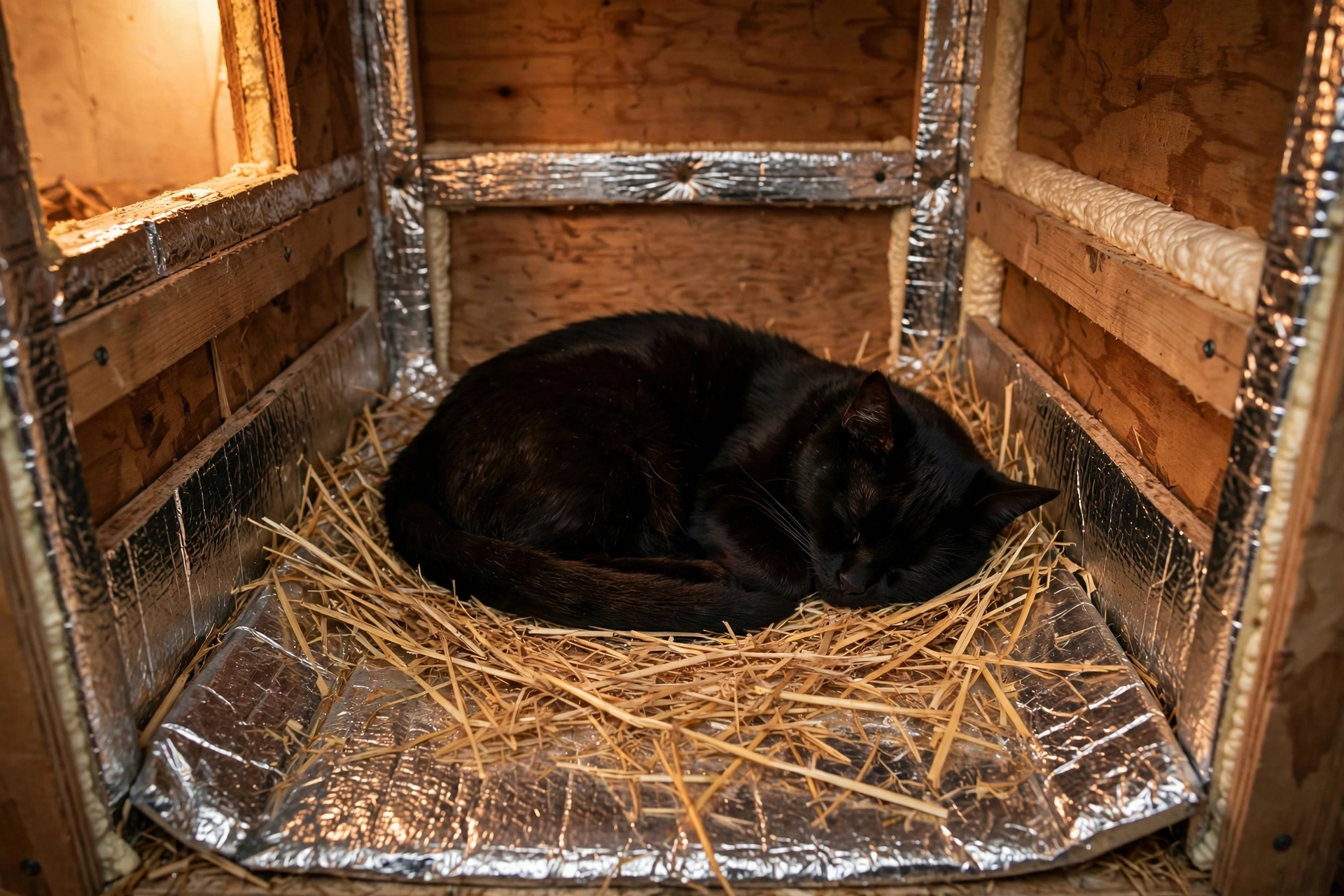
Lay a self-warming mylar pad inside any insulated box. The reflective layer bounces the cat’s body heat back toward them without cords or batteries. Place the pad under a thin layer of straw so the reflective surface never contacts the cat directly.
Helpful pick: Mylar Emergency Blankets — cut to size for a DIY self-warming floor pad.
11. Electric Heated Cat House Setup

If you have outdoor power, a heated house offers the most reliable winter warmth. Use a thermostat-controlled pad rated for outdoor shelters, and add a heated water bowl so the cat’s water never freezes. Route the cord along a wall or fence so weather and paws cannot damage it.
Helpful pick: K&H Heated Water Bowl — keeps drinking water liquid through freezing nights.
12. Barn or Garage Corner Nook
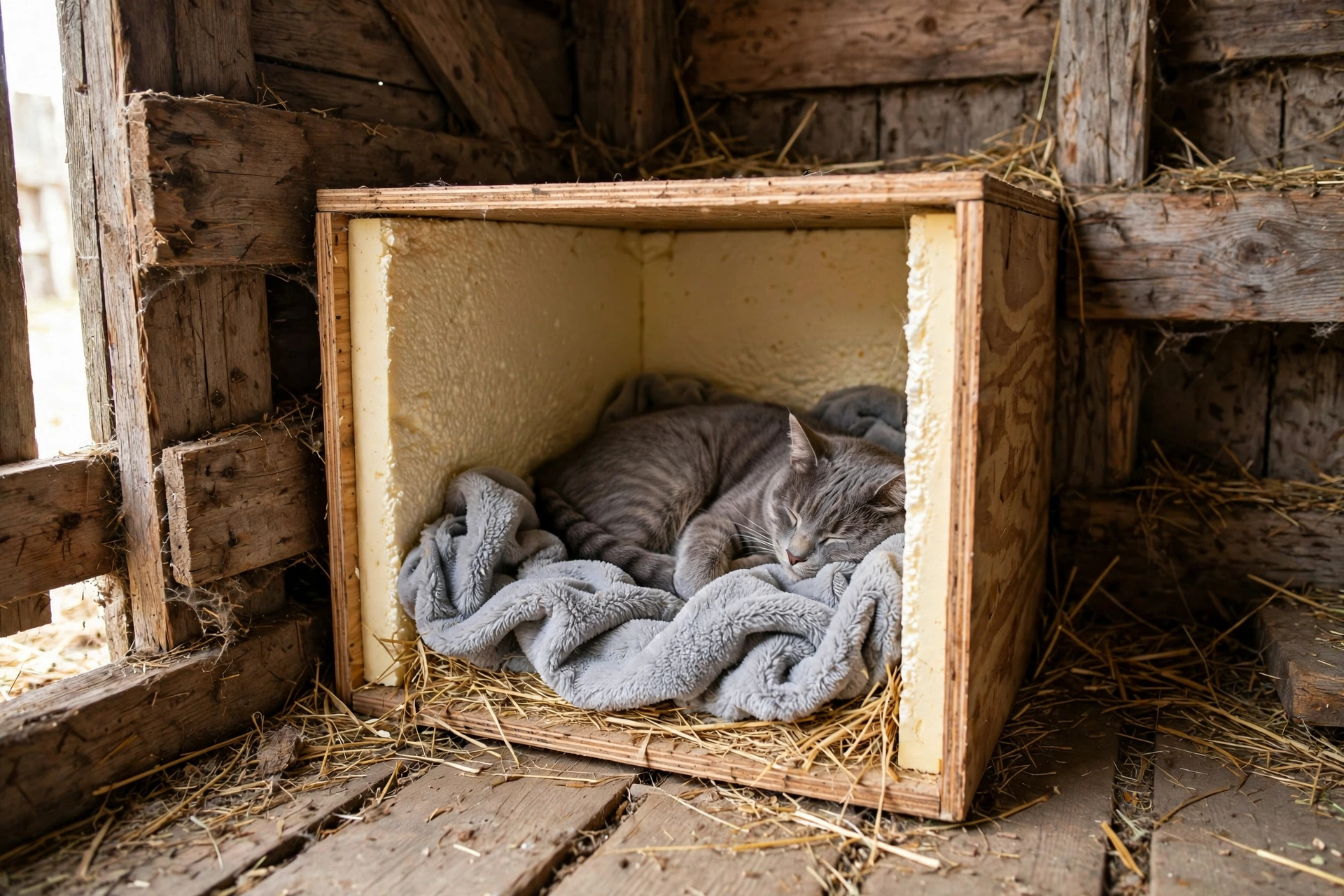
Sometimes the best insulated cat house is a nook inside an existing structure. Tuck an insulated box into a barn or garage corner — two solid walls already block half the wind — and add fleece bedding over the straw for a soft sleeping surface.
Helpful pick: Fleece Fabric — soft fleece bedding adds a cozy layer over insulated floors.
13. Pallet-Wall Windbreak With Insulated Den Box
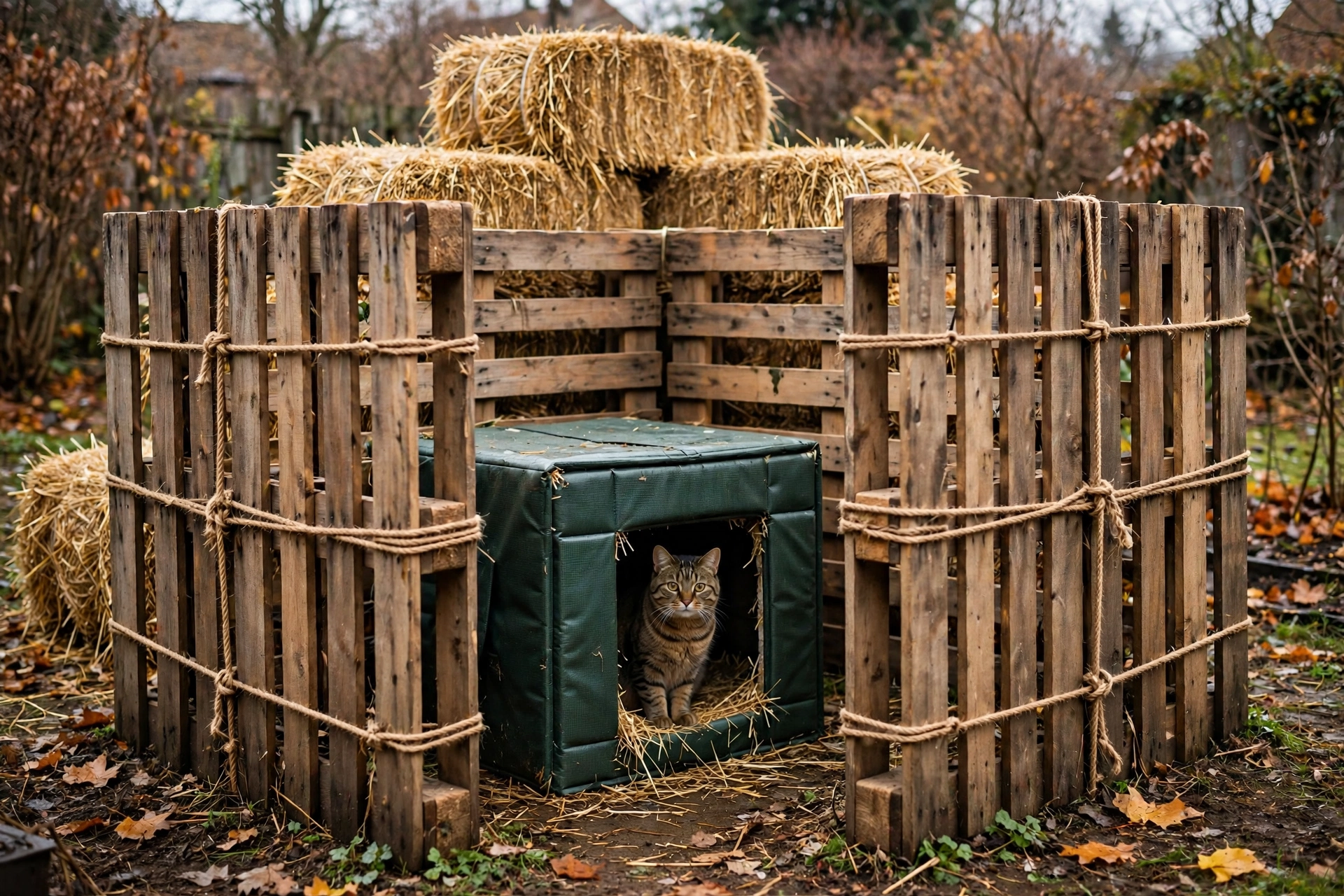
Stand pallets upright around an insulated den box and lash them together with sisal rope to form a windbreak wall. The pallets break the worst of the wind before it reaches the den, and you can stack straw behind them for extra insulation. Leave a narrow gap on one side so the cat has a clear, protected path to the entry hole.
Helpful pick: Sisal Rope — strong natural rope lashes pallet walls firmly together.
14. Dual-Entry Draft-Proof Shelter

Two small entry doors beat one large opening: cats feel safer with an escape route, and each door stays small enough to limit heat loss. Install lightweight hinged wooden doors on opposite sides of an insulated box so the cat can enter and exit while wind never blows straight through. Keep each opening at about six inches square.
Helpful pick: Wooden Cat Door — small pet doors create draft-resistant entries on any shelter.
15. Under-Deck Shelter With Insulated Floor
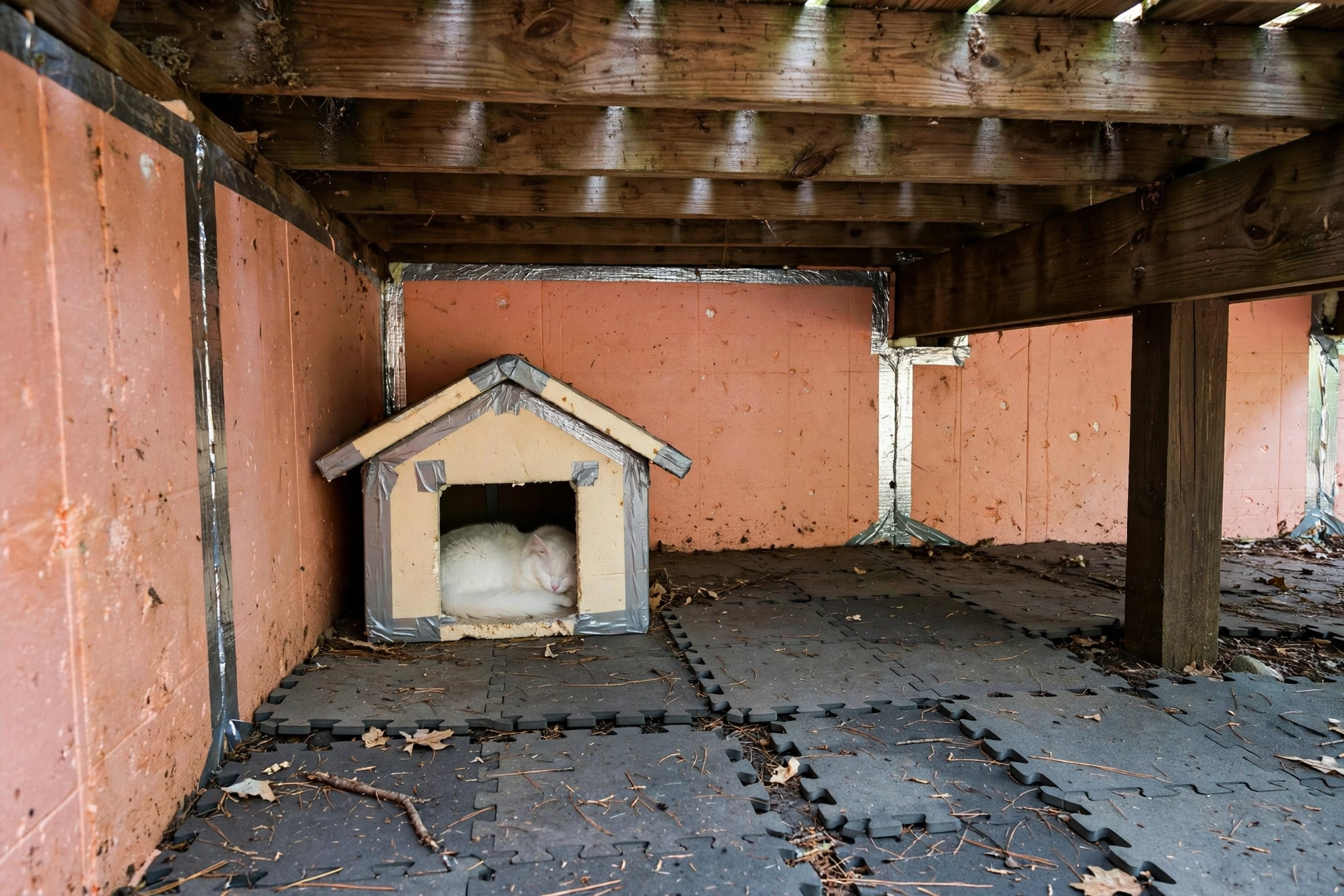
The space under a deck is naturally sheltered from rain and snow, making it an ideal spot for an insulated house. Set the box on interlocking carpet tiles to create a warm, moisture-proof floor layer, and add foam board to the exposed walls facing the yard. Because the deck overhead blocks precipitation, this setup stays dry with minimal weatherproofing.
Helpful pick: Interlocking Carpet Tiles — insulating floor tiles block cold rising from the ground.
16. Reflective Liner Upgrade for Existing Houses
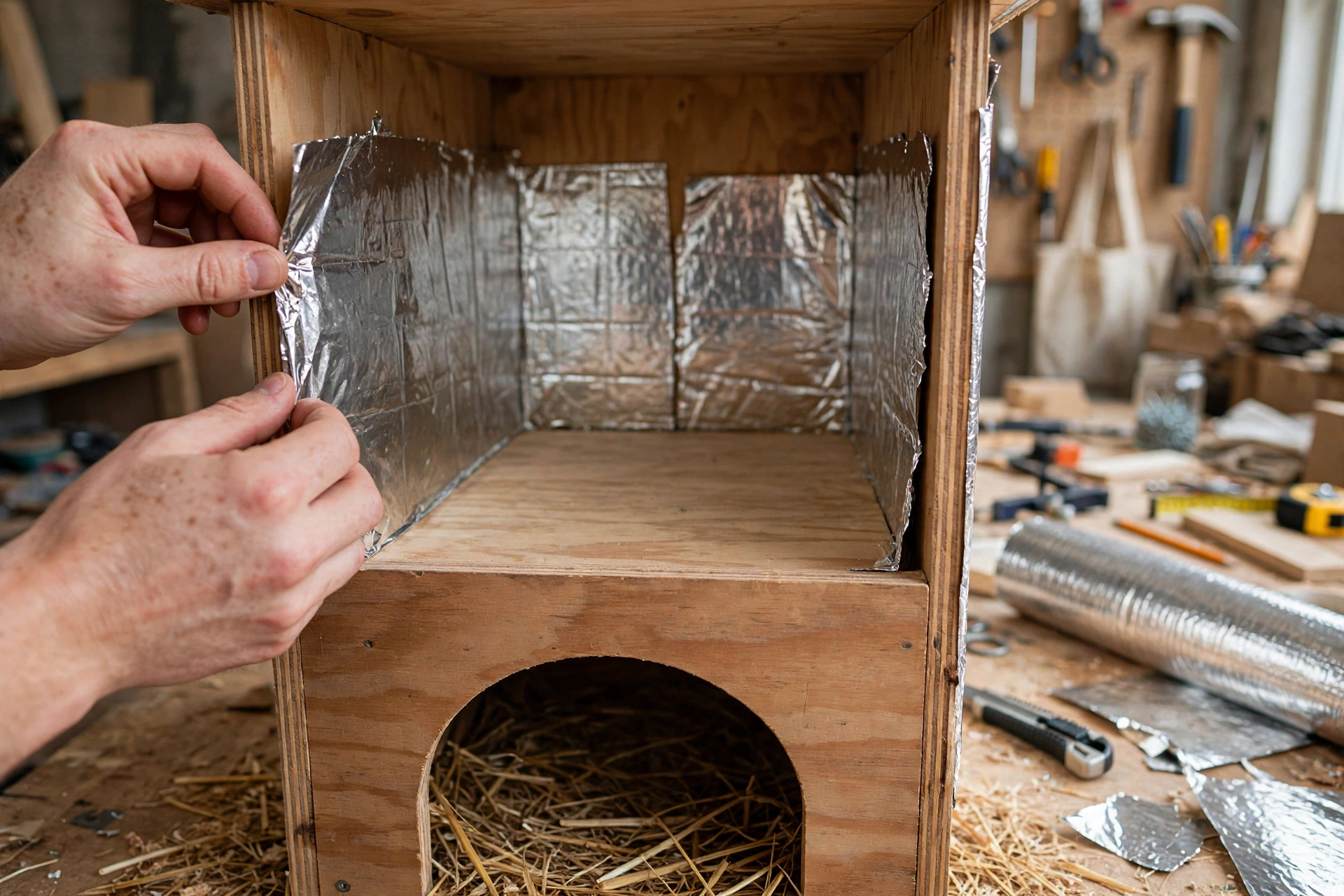
If you already own a basic cat house, you can double its winter performance in an afternoon. Cut reflective foil insulation to fit the walls and ceiling, tape the seams, and add a fresh layer of straw. This retrofit adds a real thermal barrier without rebuilding anything — perfect for shelters that worked fine in fall but struggle once hard freezes arrive.
Helpful pick: Heavy-Duty Utility Cutter — cuts foam board and insulation panels cleanly for retrofits.
Keep Reading
- DIY Stray Cat Shelter Ideas
- 7 DIY Cat Enclosure Ideas for Safe Outdoor Time
- Cat DIY Crafts to Make at Home
- 7 DIY Cat Hammock Ideas
- 14 DIY Cat Stuff Ideas Your Kitty Will Love
Frequently Asked Questions
What is the best insulation for an outdoor cat house?
Rigid foam board and reflective foil insulation work best because they block heat loss without absorbing moisture. Avoid fiberglass batts, which cats can chew and which lose insulating power when damp.
How big should the entry hole be on a winter cat shelter?
About six inches in diameter or square is ideal for most adult cats. Smaller openings hold heat inside and discourage larger animals from entering.
Should I use straw or blankets in an insulated cat house?
Use straw, not hay or blankets. Straw repels moisture and stays insulating when damp, while blankets freeze solid and hay traps moisture against the cat.
Where should I place an insulated cat house in winter?
Set it against a wall or fence with the entry facing away from the prevailing wind, ideally under an overhang. Raise it off the ground so the floor stays dry.
Do insulated cat houses work without electricity?
A well-insulated box with a small entry, straw bedding, and a self-warming mylar pad keeps a cat comfortable through most winter nights with no power source.
As an Amazon Associate, PetPostHub earns from qualifying purchases.




One Comment