Why Is My Cavalier King Charles Spaniel So Small? 5 Common Reasons
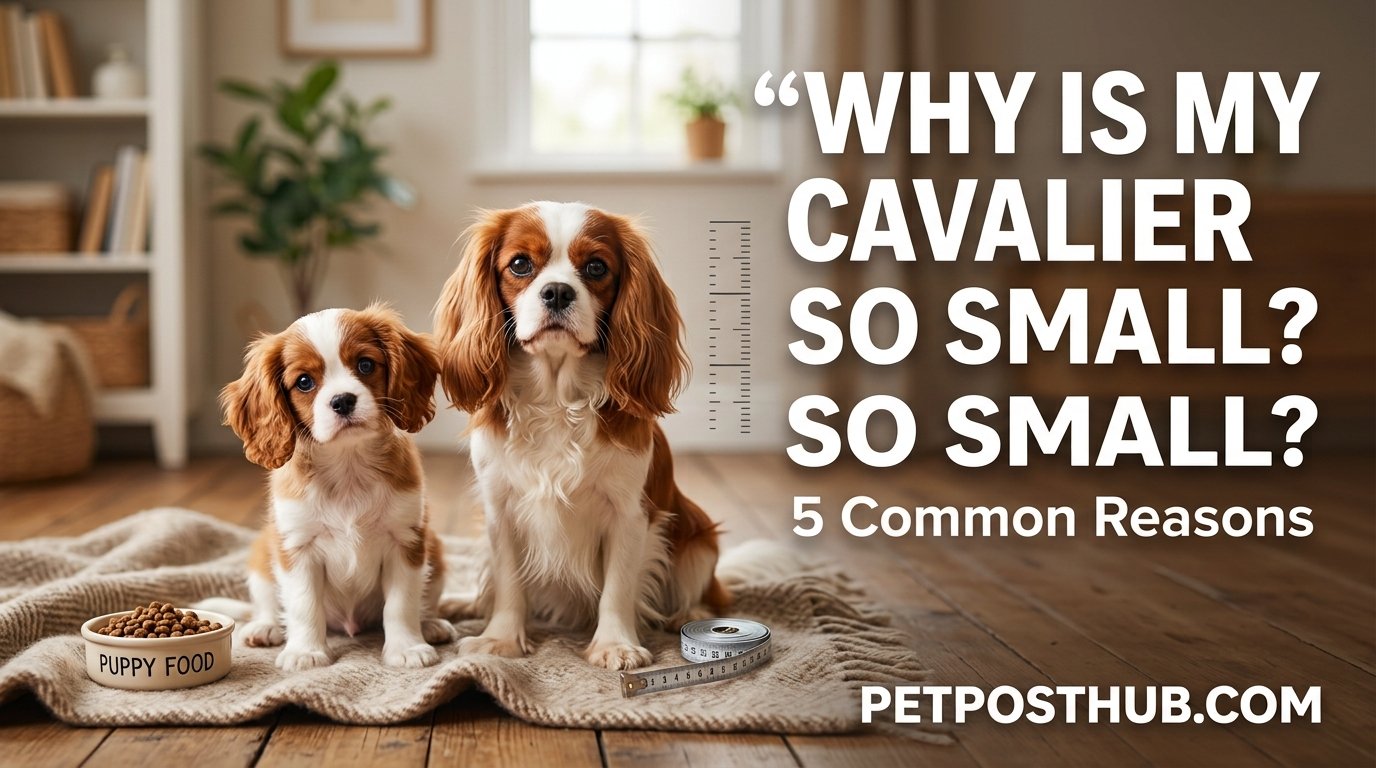
If your Cavalier King Charles Spaniel looks smaller than other Cavaliers of the same age, it’s natural to wonder whether something is wrong. The good news is that being small does not automatically mean your puppy is unhealthy. Genetics, age, nutrition, parasites, and underlying health conditions can all influence a Cavalier’s size.
Most Cavaliers continue developing through their first year and may fill out beyond their first birthday. Instead of comparing your puppy with other dogs, look at their overall growth, body condition, appetite, energy, and health.
Why Is My Cavalier King Charles Spaniel So Small?
A Cavalier King Charles Spaniel may be smaller than expected because of:
- Genetics and naturally smaller parents
- Being younger or developing more slowly
- Inadequate nutrition or insufficient calories
- Intestinal parasites
- An underlying health problem
The important question is not simply how small your Cavalier is, but whether they are growing steadily and maintaining a healthy body condition.
1. Your Cavalier Hasn’t Finished Growing
Puppies do not all grow at exactly the same rate. One Cavalier may look almost fully grown while another puppy of the same age still has plenty of growing and filling out to do.
During puppyhood, temporary differences in weight and height are common. Your Cavalier may gain height first and muscle or body mass later.
Rather than focusing on one measurement, track your puppy’s weight and development over time. A consistent growth pattern is generally more useful than comparing them with another dog.
2. Genetics Can Make Your Cavalier Naturally Small
Genetics is one of the biggest factors affecting adult size. If your Cavalier comes from smaller parents, they may naturally have a smaller frame even when they are perfectly healthy.
Body structure, height, muscle mass, and overall build can vary between individual Cavaliers. A smaller adult Cavalier is not necessarily underweight.
If your dog is energetic, eating normally, developing appropriately, and maintaining a healthy body condition, their smaller size may simply be part of their genetic makeup.
3. Your Cavalier May Not Be Getting Enough Nutrition
A growing puppy needs enough calories, protein, vitamins, minerals, and other nutrients to support bones, muscles, and normal development.
Poor-quality food, incorrect portions, excessive treats replacing balanced meals, or feeding a diet that isn’t appropriate for a growing puppy can interfere with healthy weight gain.
Instead of simply giving your Cavalier extra food to make them bigger, choose a complete and balanced diet appropriate for their life stage and follow appropriate feeding guidance. Your veterinarian can help determine whether your puppy is receiving enough food for their age, size, and activity level.
4. Intestinal Parasites Can Affect Growth
Parasites are another possible reason a Cavalier puppy may struggle to gain weight. Puppies can develop intestinal parasite infections even when they have a good appetite.
Common intestinal parasites include roundworms, hookworms, whipworms, and tapeworms. Depending on the parasite, symptoms can include diarrhea, vomiting, a dull coat, poor growth, abdominal discomfort, or changes in appetite.
Some infected dogs show few obvious symptoms, so regular veterinary examinations and appropriate parasite testing are important for puppies.
If your Cavalier is eating well but isn’t gaining weight normally, ask your veterinarian whether a fecal examination or parasite screening is appropriate.
5. An Underlying Health Problem May Be Affecting Growth
Sometimes poor growth or unexpected weight loss has a medical cause. Digestive disorders, chronic infections, dental problems, metabolic conditions, and other illnesses can affect appetite, nutrient absorption, or body weight.
Watch for warning signs such as:
- Persistent diarrhea or vomiting
- Loss of appetite
- Low energy
- Sudden weight loss
- Excessive thirst or urination
- A swollen or painful abdomen
- Poor coat condition
- Failure to gain weight over time
A Cavalier that is consistently smaller but otherwise healthy may simply have a naturally small build. However, poor growth combined with other symptoms deserves a veterinary checkup.
What Is the Normal Size of a Cavalier King Charles Spaniel?
Adult Cavalier King Charles Spaniels are generally small companion dogs. The breed standard gives an approximate adult height of 12 to 13 inches, while healthy adult weight can vary with sex, frame, muscle, and individual build.
Because healthy body size varies, weight alone cannot tell you whether your Cavalier is underweight. Your veterinarian can assess body condition and determine whether your dog is growing appropriately.
How Can I Tell If My Cavalier Is Too Small?
Look at the bigger picture instead of one number on the scale.
A healthy Cavalier puppy should generally have:
- Steady growth over time
- Good energy and normal behavior
- A healthy appetite
- A good-quality coat
- Normal bowel movements
- A body condition appropriate for their age
If your puppy’s growth has stalled, they are losing weight, or you notice other symptoms, schedule a veterinary examination.
When Should You Worry About a Small Cavalier?
Being petite isn’t automatically a problem. The bigger concern is failure to grow, unexplained weight loss, or other signs of illness.
Keep a record of your puppy’s weight and discuss their growth at routine veterinary visits. Your vet can assess their body condition, diet, development, and overall health and determine whether additional testing is needed.
Final Thoughts
If your Cavalier King Charles Spaniel is smaller than expected, don’t panic. Puppy age, genetics, nutrition, parasites, and health conditions can all influence size.
The best way to know whether your Cavalier is truly too small is to monitor their growth and body condition rather than comparing them with other dogs. If growth appears unusually slow or your puppy has symptoms such as diarrhea, poor appetite, lethargy, or weight loss, your veterinarian can help identify the cause early.