Why Does My Cavalier King Charles Spaniel Yelp When Picked Up? 7 Reasons & What to Do
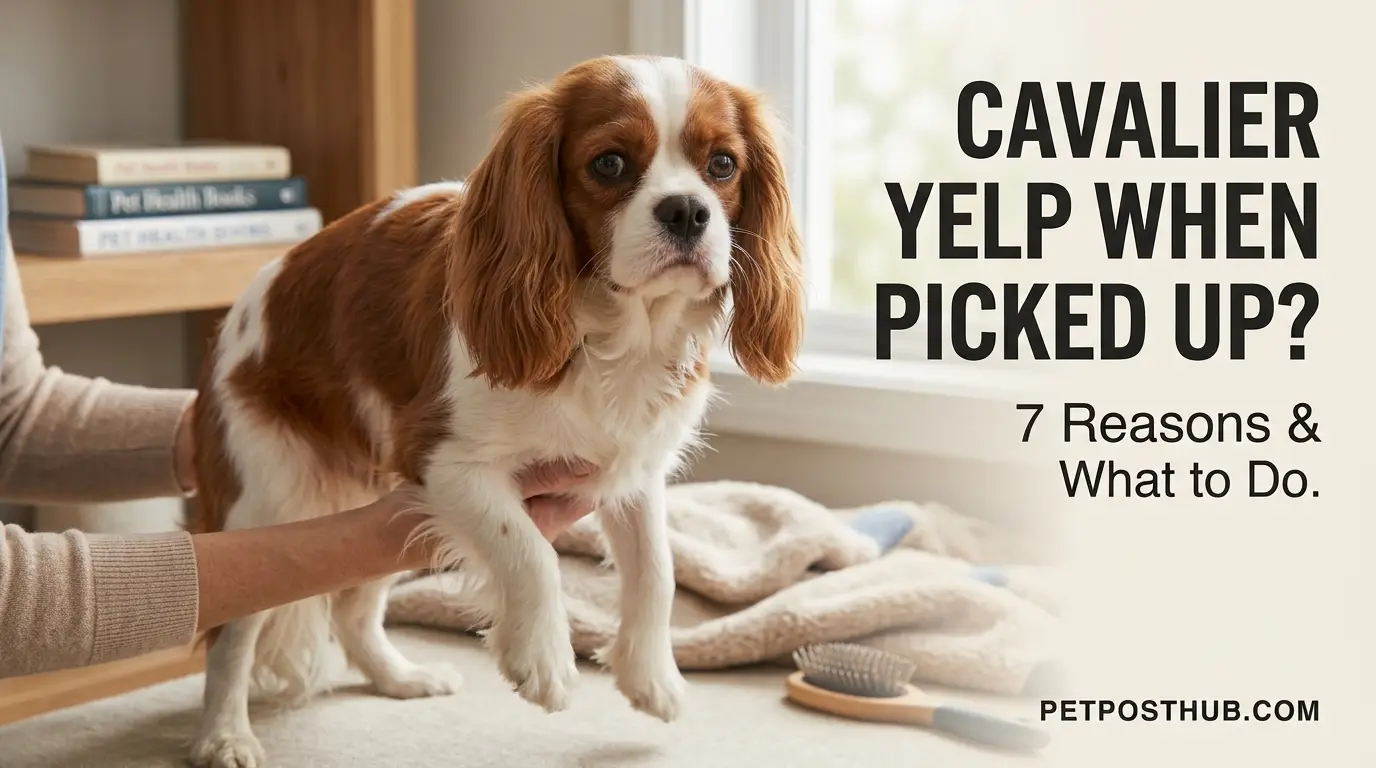
If your Cavalier King Charles Spaniel yelps, cries, or suddenly squeals when you pick them up, it is understandable to worry. Sometimes the reason is simple, such as being startled or being lifted awkwardly. However, repeated yelping can also indicate pain or an underlying health problem.
So, why does a Cavalier King Charles Spaniel yelp when picked up?
The most common possibilities include fear or surprise, improper lifting, muscle or joint pain, an injury, abdominal discomfort, back or neck pain, and Cavalier-specific neurological conditions such as Chiari-like malformation and syringomyelia.
The important thing is to look at what happens before, during, and after the yelp.
7 Reasons Your Cavalier Yelp When Picked Up
1. Your Cavalier Is Scared or Startled
Not every yelp means your dog is injured.
A puppy or nervous Cavalier may cry when someone suddenly reaches down and picks them up. This can happen if your dog does not see you approaching or has previously had an unpleasant experience while being handled.
Some dogs also learn to associate being picked up with things they dislike, such as bathing, nail trimming, medication, or a trip to the veterinarian.
Try approaching your Cavalier calmly, saying their name first, and giving them a moment to see what you are doing.
If they relax when you approach slowly but yelp when surprised, fear or startle may be contributing to the behavior.
2. Your Cavalier Is Being Lifted Incorrectly
One of the simplest explanations is improper support.
Never lift your Cavalier by the front legs, armpits, collar, or neck skin. These methods can place unnecessary pressure on the dog’s body and may be painful.
Instead, support both the front and rear portions of the body.
A small dog should feel secure and evenly supported while being lifted rather than dangling from one part of the body.
3. Your Cavalier Has Muscle or Joint Pain
Pain is another important possibility, particularly if the yelping happens repeatedly.
Dogs experiencing pain may become reluctant to jump, climb stairs, run, get up, or be handled. They may also vocalize or resist being picked up.
Cavaliers can develop orthopedic problems, including patellar luxation and hip-related conditions. The Cavalier breed’s recommended health screening includes both hip and patella evaluations.
Watch for additional signs such as:
- Limping or favoring one leg
- Difficulty getting up
- Reluctance to climb stairs
- Less interest in playing
- Difficulty jumping
- Stiffness
- Whining when touched
- Changes in walking or running
If these signs occur alongside yelping, arrange a veterinary examination.
4. Your Cavalier Has an Injury
An injury can make being picked up uncomfortable even when there is no obvious wound.
Your dog could have strained a muscle, hurt a joint, fallen from furniture, collided with something, or injured their back or neck.
Sometimes the first noticeable sign is simply that your normally affectionate dog suddenly does not want to be handled.
Do not repeatedly pick up or manipulate the painful area to figure out what is wrong. If your Cavalier appears painful, allow them to rest and contact your veterinarian.
Severe pain, inability to stand or walk, or pain following significant trauma warrants prompt veterinary attention.
5. Your Cavalier Has Abdominal Discomfort
Pain is not always caused by the legs, spine, or muscles.
Abdominal discomfort can also make a dog object when being lifted because your hands place pressure around the torso.
Pay attention to other signs, including:
- Vomiting
- Diarrhea
- Loss of appetite
- A swollen or painful abdomen
- Restlessness
- Weakness
- Repeatedly changing position
- Unusual lethargy
If your dog appears seriously ill or has severe abdominal pain, seek veterinary care promptly rather than trying to diagnose the problem at home.
6. Your Cavalier Has Neck or Back Pain
If your Cavalier yelps specifically when you lift or touch them around the neck, shoulders, chest, or back, pain involving the spine or surrounding tissues should be considered.
Dogs with neck or back pain may also become reluctant to move, jump, climb stairs, or change position.
VCA notes that pain when a dog’s neck or back is touched is a reason for veterinary evaluation.
Because spinal problems can sometimes become serious, repeated or unexplained pain should not simply be ignored.
7. Chiari-Like Malformation or Syringomyelia
This is particularly important for Cavalier King Charles Spaniel owners.
Chiari-like malformation (CM) and syringomyelia (SM) are neurological conditions recognized in Cavaliers. Clinical signs can include pain, sensitivity around the head and neck, scratching, touch aversion, behavioral changes, and vocalization.
Cavalier-specific veterinary resources report that some affected dogs may yelp when being picked up or when their position changes.
However, a Cavalier yelping once does not mean they have syringomyelia.
Similar signs can have many causes, and a veterinarian needs to assess the dog rather than relying on one symptom.
If your Cavalier repeatedly cries when lifted and also shows signs such as neck sensitivity, unusual scratching, reluctance to move, sleep disturbance, or changes in behavior, mention these symptoms specifically to your veterinarian.
How Should You Pick Up a Cavalier King Charles Spaniel?
The safest approach is to support your Cavalier’s body from underneath.
Place one hand under the chest, behind the front legs, while using your other hand to support the hindquarters. Keep the body close to you as you lift.
Avoid:
- Lifting by the front legs
- Letting the hindquarters dangle
- Pulling on the collar
- Holding only around the chest
- Sudden lifting movements
- Twisting the dog’s body while carrying them
The goal is to keep your Cavalier’s body supported and stable throughout the movement.
Should You Pick Up a Cavalier That Is Yelping?
It depends on why the dog is yelping.
If your Cavalier was simply startled and immediately returns to normal, you can try again later using a calm and gentle approach.
But if your dog repeatedly yelps, resists being handled, appears stiff, limps, cries when touched, or shows other changes in behavior, don’t keep picking them up to test the reaction.
Instead, arrange a veterinary examination.
Dogs can hide pain, and subtle changes such as resisting handling, reduced activity, reluctance to jump, or vocalizing can be important clues.
When Is a Cavalier’s Yelping an Emergency?
Contact a veterinarian promptly if the yelping is persistent or accompanied by other concerning symptoms.
Seek urgent veterinary attention if your Cavalier:
- Cannot stand or walk normally
- Has severe or sudden pain
- Has suffered significant trauma
- Develops weakness
- Has difficulty breathing
- Has a swollen or extremely painful abdomen
- Repeatedly cries when the neck or back is touched
- Suddenly becomes extremely lethargic
- Shows rapidly worsening neurological signs
Severe pain or an inability to walk normally should not be treated as a simple behavioral issue.
What Should You Do Until Your Vet Appointment?
If your Cavalier appears painful, keep things simple.
Avoid jumping, rough play, stairs, and unnecessary handling. Provide a comfortable place to rest and keep your dog calm.
Do not give human pain medication unless your veterinarian specifically tells you to. Some medications that are safe for people can be dangerous for dogs.
Also, don’t massage or stretch a painful area unless your veterinarian has advised you to do so.
If possible, record a short video of the behavior. A video showing how your dog reacts before, during, or after being picked up can sometimes give your veterinarian useful information.
Frequently Asked Questions
Why does my Cavalier cry when I pick him up?
Your Cavalier may cry because they are frightened, startled, being lifted incorrectly, or experiencing pain. Repeated yelping should be taken seriously, especially if it is accompanied by limping, stiffness, reduced activity, or sensitivity to touch.
Why does my Cavalier yelp when picked up under the chest?
Pain or sensitivity around the chest, neck, shoulders, or spine can cause a Cavalier to vocalize when lifted. Because this can also occur with Chiari-like malformation and syringomyelia, recurring episodes should be discussed with a veterinarian.
Can syringomyelia make a Cavalier yelp when picked up?
Yes. Vocalizing when being picked up has been reported among Cavaliers with CM/SM. However, yelping alone cannot diagnose syringomyelia because many other problems can cause pain when a dog is handled.
Should I stop picking up my Cavalier if they yelp?
If your dog repeatedly yelps or appears painful, avoid unnecessary lifting until you have spoken with your veterinarian. If the reaction happened because your dog was startled, approach more slowly and use proper body support.
How do I pick up a Cavalier correctly?
Support both the chest and hindquarters with your hands and lift smoothly. Never lift your Cavalier by the front legs, collar, or neck skin.
Final Thoughts
A Cavalier King Charles Spaniel should not routinely yelp or cry whenever they are picked up.
Sometimes the explanation is harmless, such as being startled or feeling insecure. But repeated yelping can be a sign of pain involving the muscles, joints, abdomen, neck, back, or nervous system.
Because Cavaliers can be affected by conditions such as Chiari-like malformation and syringomyelia, unexplained or recurring pain deserves veterinary attention.
The safest approach is simple: lift your Cavalier correctly, pay attention to other changes in behavior, and don’t ignore repeated signs of pain.