7 DIY Indoor Cat Playground Ideas to Burn Off Energy (2026)

If your indoor cat playground DIY ambitions have been sitting in a saved folder for months, you are not alone. A bored indoor cat does not just nap the day away — it invents its own entertainment, usually on your couch, your curtains, and that one shelf you asked it nicely to stay off. The good news is that a DIY cat playground gives your cat vertical territory, scratching outlets, and hiding spots, and it can look genuinely good in your home. These 7 builds range from a $15 cardboard project to a full wall system, and each one is written as a weekend-friendly build you can actually finish.
Table of Contents
- 1. Floor-to-Ceiling Sisal Tower with Platform Perches
- 2. Wall-Mounted Cubby Village with a Rope Bridge
- 3. Wall Playground with Hammock, Scratching Post, and Climbing Shelves
- 4. Corner Play Zone with Two Cat Trees
- 5. Cardboard Box Maze Playground
- 6. Window-Facing Elevated Cat Walk
- 7. Upcycled Bookshelf Climbing Tower
- Frequently Asked Questions
- Keep Reading
1. Floor-to-Ceiling Sisal Tower with Platform Perches

A tension-style vertical post turns one square foot of floor into a full climbing workout. Wrap a sturdy PVC or wooden core pole tightly with natural sisal rope, securing it with non-toxic glue every few inches as you spiral upward. Add round or square plywood platforms at two or three heights, bracing each one into a wall stud so nothing wobbles when your cat launches upward. The sisal section handles scratching duty while the platforms become lookout perches. Sand every platform edge smooth and anchor the base into both the floor and the ceiling (or a wall) so the tower cannot tip.
Helpful pick: TienYow 4mm Natural Sisal Rope, 164-Ft — one roll covers a full pole wrap with rope to spare.
2. Wall-Mounted Cubby Village with a Rope Bridge

When floor space is tight, the wall is your playground. Build three or four open-front wooden cubes from 3/4-inch pine, cut round entry holes in the front panels with a jigsaw, and mount each cube into wall studs with heavy-duty L-brackets. Connect two cubes with a short rope-and-slat suspension bridge so your cat has a wobbly, exciting route between them. Stagger the cubes in a zigzag so there is always an easy step from one to the next. Leave the wood natural or finish it with a pet-safe stain so the whole system reads as decor, not clutter.
Helpful pick: BUOGA Cat Wall Shelves with 3 Steps — pre-made steps you can bolt beside your DIY cubbies for a head start.
3. Wall Playground with Hammock, Scratching Post, and Climbing Shelves

This all-in-one wall system covers the four things cats want most: climb, scratch, hide, and nap. Mount a 48-inch jute-wrapped vertical post into studs as the scratching anchor, then arrange floating wooden shelves at staggered heights around it. Hang a fabric hammock between two wall rails near the top — canvas or thick cotton works well — and cats will treat it as their personal sky loft. Cover the shelves with washable carpet tiles or woven mats for grip. Every mount goes into a stud, never just drywall, because a jumping cat generates serious force.
Helpful pick: XIFOWE Wall Corner Cat Hammock — a sturdy corner hammock to copy or add to your wall route.
4. Corner Play Zone with Two Cat Trees

No tools required for this one. Take one tall multi-level cat tree as your anchor piece and a second shorter tower or condo, and style them together in an underused corner. Position them close enough that a confident cat can step between perches — roughly 8 to 10 inches apart — and fill the floor space between them with a plush tunnel or ball-track toy. Anchor both trees to the wall with the anti-tip kits they ship with. This setup works brilliantly for multi-cat homes because there are multiple high spots, which cuts down on perch competition.
Helpful pick: FourFurPets 72.4" Modern Cat Tower — a tall anchor tree with condos, perches, and scratching boards.
5. Cardboard Box Maze Playground

The cheapest build here is also the one many cats love most. Collect six to eight sturdy cardboard boxes, cut cat-sized doors (about 6 to 7 inches across) in each side with a utility knife, and connect them into a maze with packing tape on the outside seams only — tape inside can catch claws. Stack one or two boxes on top of the maze for a second level, cut a top hatch for entry, and scatter catnip inside the tunnels. Cut all doors before taping, keep every flap edge blunt, and replace boxes as they wear out. When the maze gets shabby, recycling day becomes renovation day.
Helpful pick: Markarbarka 2-in-1 Oval Cardboard Cat Scratcher Lounge — a durable cardboard lounge to set beside the maze.
6. Window-Facing Elevated Cat Walk

Give your cat a destination worth climbing for: the window. Mount a zigzag path of floating shelves along one wall, spacing them 12 to 14 inches apart vertically and 8 to 10 inches to the side, ending at a wide, padded window perch. Use 1-inch-thick pine boards at least 10 inches deep so landings feel secure, and screw every bracket into studs. Add a washable cushion to the final window platform and your cat gets the best seat in the house — sun, birds, and a parade of neighborhood drama. This path also burns real energy on rainy days when outdoor time is not an option.
Helpful pick: AMOSIJOY Cordless Cat Window Perch — a suction-cup window perch for the endpoint of your walk.
7. Upcycled Bookshelf Climbing Tower
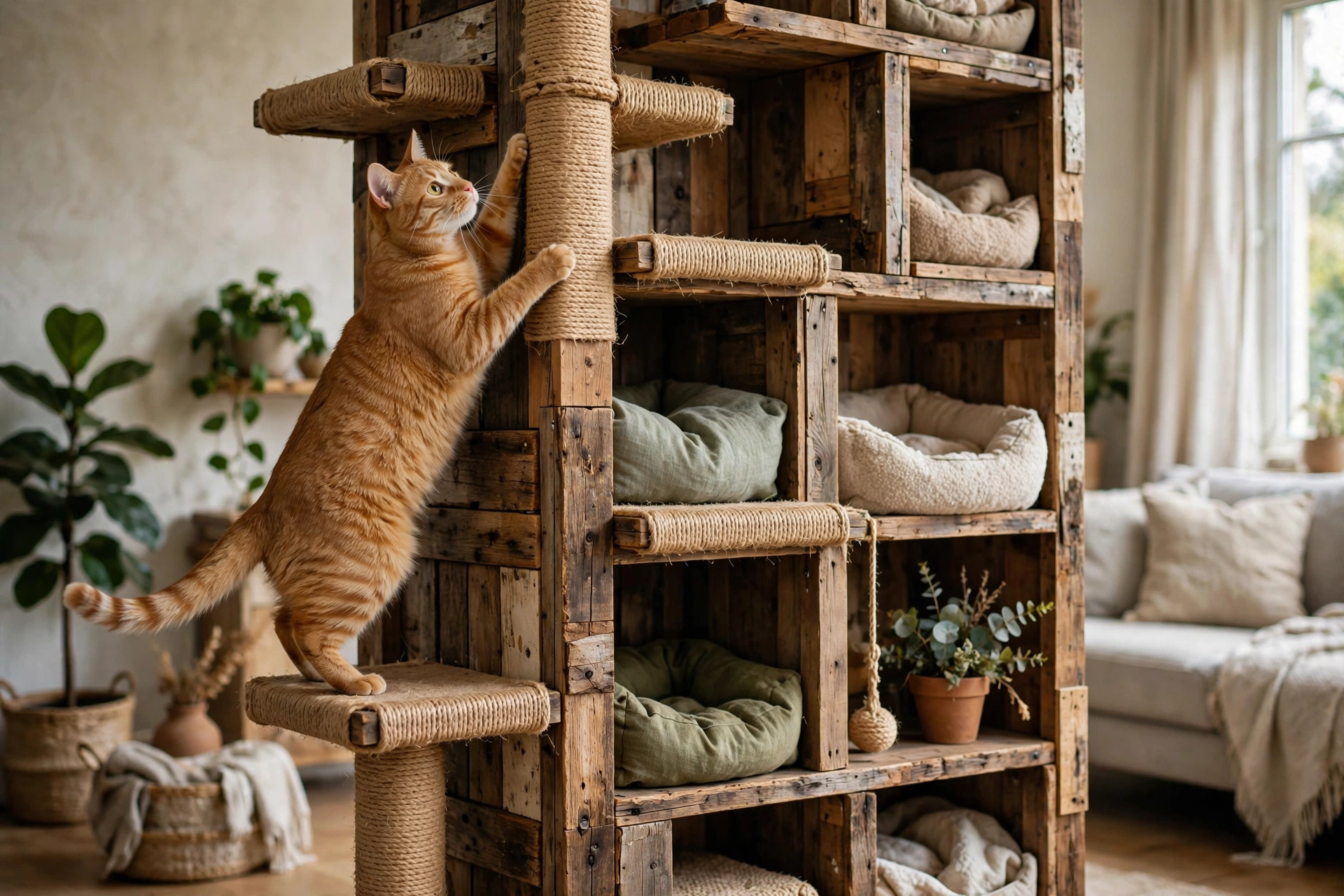
That old bookshelf collecting dust can become your cat’s favorite tower. Remove some shelves to create full-height jumping gaps, line the remaining shelves with non-slip mats or soft cushions, and wrap the two vertical side panels in sisal rope from base to mid-height for scratching. Cut a circular entry hole in one side panel so the bottom shelf becomes a hideout. Anchor the bookshelf firmly to the wall with furniture straps — climbing cats shift weight fast, and tall furniture must not rock. Sand any rough edges and finish with a wipeable, pet-safe sealant.
Helpful pick: Bedsure Donut Calming Cat Bed — a washable donut bed that fits perfectly on a wide bookshelf shelf.
Frequently Asked Questions
How much does an indoor cat playground DIY cost?
It depends on the build. A cardboard box maze can cost under $15 in tape and catnip, while a full wall-mounted system with wood, brackets, and fabric typically runs $80 to $150. The biggest cost driver is the wood and hardware, not the fancy extras.
Is a wall-mounted cat playground safe for all cats?
For healthy adult cats, yes — as long as every bracket goes into a wall stud and shelves are wide enough for confident landings. Senior cats and kittens do better with lower, wider shelves spaced closer together, around 10 to 12 inches apart.
What materials are safe for DIY cat furniture?
Use untreated pine or birch, natural sisal rope, non-toxic wood glue, and water-based pet-safe finishes. Avoid pressure-treated lumber, strong-smelling adhesives, and rough carpet that sheds fibers a cat could ingest.
How do I get my cat to actually use the playground?
Start with treats and catnip on the lowest platforms, then move rewards higher as your cat gets curious. Never place a cat on a high perch yourself — let them discover the route. Most cats explore a new vertical space within a few days once they realize it is sturdy.
How often should I check my DIY cat playground?
Give it a quick monthly once-over: tighten screws and brackets, check rope for fraying, and make sure nothing wobbles. Cats test structures daily, so a small maintenance check keeps every build safe for years.
Keep Reading
- 16 DIY Cat Wall Ideas to Transform Your Space and Pamper Your Pet
- 12 Stylish Cat Box Ideas for Your Home
- 14 DIY Cat Stuff Ideas Your Kitty Will Absolutely Love
- 12 Clever Cat Cage Ideas Your Feline Will Actually Love
- 6 Clever Cat Corner Ideas Your Feline Will Adore
As an Amazon Associate, PetPostHub earns from qualifying purchases.