Cavalier King Charles Spaniel Drooling: Causes, Fixes & When to Worry

Noticed your Cavalier King Charles Spaniel drooling more than usual? You’re not alone. While cavalier king charles spaniel drooling is often perfectly normal — these affectionate little dogs do get excited, overheated, and carsick — a sudden change in drool can also signal something that needs attention. The good news: most causes are easy to recognize and simple to manage at home.
In this guide, we’ll cover the 7 most common reasons your Cavalier drools, what you can do about each one, and the red flags that mean it’s time to call your vet.
Table of Contents
- Do Cavaliers Drool a Lot?
- 1. Excitement and Anticipation
- 2. Heat and Overheating
- 3. Nausea or Motion Sickness
- 4. Dental Problems
- 5. Foreign Object in the Mouth
- 6. Anxiety and Stress
- 7. Poisoning or Toxin Exposure
- How to Manage Everyday Drool
- Frequently Asked Questions
Do Cavaliers Drool a Lot?
Cavalier King Charles Spaniels are not heavy droolers by breed standards — they score around 2 out of 5 on most drool ratings, far below breeds like Saint Bernards or Bloodhounds. Most Cavaliers only drool in specific situations: mealtime, excitement, heat, or stress. So if your normally dry-mouthed Cavalier suddenly starts leaving puddles on the floor, it’s worth investigating. A change in drooling habits is always more meaningful than the amount of drool itself.
1. Excitement and Anticipation

Why it happens: This is the number one cause of cavalier king charles spaniel drooling, and it’s completely normal. When your Cavalier sees food, spots their leash, or greets a favorite person, their salivary glands kick into high gear. It’s the same reflex that made Pavlov’s dogs famous — anticipation of something wonderful literally makes their mouth water.
What to do: Nothing, really! Excitement drool is harmless. If mealtimes turn into a slip-and-slide, feed your dog on an easy-to-clean mat and keep a towel handy. Some owners teach a calm “wait” before meals, which can reduce the Pavlovian flood over time.
Red flags: None for this one — unless the drooling is constant even when your dog is calm and nothing exciting is happening.
Helpful pick: Soggy Doggy Super Shammy — an ultra-absorbent microfiber towel that’s perfect for a quick chin wipe after mealtime drool.
2. Heat and Overheating

Why it happens: Cavaliers are brachycephalic (short-nosed), which makes them heat-sensitive. When they overheat, they pant heavily and drool excessively as their body tries to cool down. Drooling combined with heavy panting on a hot day is your dog’s built-in air conditioning working overtime.
What to do: Move your dog to shade or air conditioning immediately, offer cool (not ice-cold) water, and let them rest. For prevention, walk early or late in the day, never leave your Cavalier in a parked car, and keep fresh water available at all times.
Red flags: Thick, sticky drool plus glazed eyes, stumbling, vomiting, or bright red gums can signal heatstroke — a life-threatening emergency. Cool your dog with wet towels and get to the vet immediately.
Helpful pick: Green Pet Shop Chillz Cooling Mat — a pressure-activated gel mat that gives your Cavalier a cool spot to sprawl on during hot days.
3. Nausea or Motion Sickness

Why it happens: Excessive drooling is one of the earliest signs of nausea in dogs — it often appears before vomiting. Motion sickness is especially common in young Cavaliers whose inner ears are still developing. If your dog drools strings of saliva during car rides but is fine at home, motion sickness is the likely culprit.
What to do: Keep car rides short and positive for puppies, crack a window for fresh air, and avoid feeding a big meal right before travel. Most dogs outgrow motion sickness by about one year of age. For longer trips, talk to your vet about safe anti-nausea options.
Red flags: Drooling plus repeated vomiting, lethargy, or refusal to eat outside of car rides may point to an upset stomach, dietary indiscretion, or something more serious — check with your vet.
Helpful pick: Zesty Paws Calming Bites — a tasty chew that supports relaxation, which can help take the edge off stressful car rides.
4. Dental Problems

Why it happens: Cavaliers are prone to dental disease, and a sore mouth produces extra saliva. Drooling caused by dental issues often comes with bad breath, pawing at the mouth, reluctance to chew hard food, or visibly red gums. Tartar buildup, gingivitis, a cracked tooth, or an abscess can all turn on the drool tap.
What to do: Gently lift your dog’s lips and look for red, swollen gums, brown tartar, or broken teeth. Brush up on home dental care — daily brushing is the gold standard — and schedule a professional dental checkup if you spot anything concerning. Learn more in our guide to cleaning your dog’s teeth without brushing.
Red flags: Bloody drool, facial swelling, or a sudden refusal to eat means a prompt vet visit is needed — dental infections can become serious quickly.
Helpful pick: Petkin Plaque Tooth Wipes — an easy toothbrush alternative for wiping away plaque and freshening breath between brushings.
5. Foreign Object in the Mouth

Why it happens: Cavaliers are curious, and sticks, grass awns, bits of bone, or even a piece of toy can get lodged between teeth, under the tongue, or across the roof of the mouth. A dog with something stuck in its mouth will drool heavily and often paw at its face, gag, or rub its muzzle on the ground.
What to do: Calmly open your dog’s mouth and look inside — check the teeth, gums, tongue, and roof of the mouth. If you can see and easily remove the object, do so gently. Never force anything or reach blindly down the throat.
Red flags: If you can’t find the object, your dog is choking, gagging continuously, or drooling blood, get to the vet or emergency clinic right away.
Helpful pick: ARCA PET Pet First Aid Kit — a compact kit with the essentials for handling mouth injuries and other small emergencies at home.
6. Anxiety and Stress
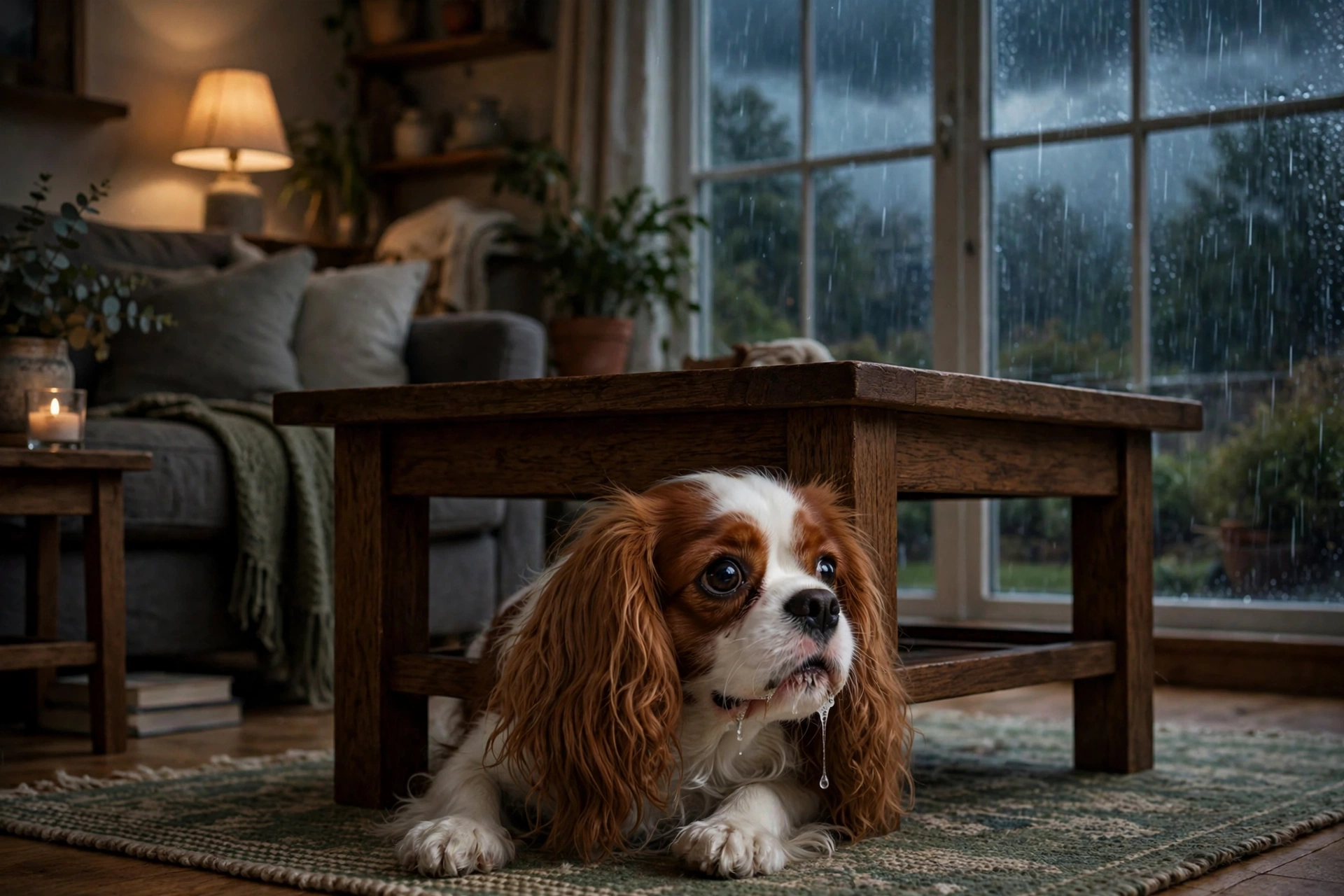
Why it happens: Cavaliers are deeply bonded to their people and are prone to separation anxiety. Stress triggers the same drool response as excitement — thunderstorms, fireworks, vet visits, new environments, or being left alone can all cause stress drooling. One CavalierTalk forum discussion describes a puppy who drools heavily only on leash walks, stopping the moment he’s home — a classic stress pattern.
What to do: Identify the trigger and work on gentle desensitization. Keep departures low-key, provide a safe cozy space, and consider calming music or enrichment toys. Check out our guide on helping a dog with separation anxiety for a full plan.
Red flags: Drooling paired with destructive behavior, self-injury, or panic that doesn’t improve may need professional help — talk to your vet or a certified behaviorist.
Helpful pick: ADAPTIL Calm Home Diffuser — releases a comforting pheromone that supports a calmer home environment for anxious dogs.
7. Poisoning or Toxin Exposure

Why it happens: Sudden, profuse drooling — especially with foaming — can mean your dog has licked or eaten something toxic: cleaning products, certain plants, medications, xylitol-containing gum, chocolate, or grapes. The drool is the body’s attempt to flush the irritant, and it can escalate fast.
What to do: This is the one cause where speed matters most. Remove your dog from the source, note what they may have eaten and how much, and call your vet or the ASPCA Animal Poison Control Center ((888) 426-4435) immediately. Do NOT induce vomiting unless a professional tells you to. Rinsing the mouth with cool water can help if the toxin was on the tongue.
Red flags: All of them — vomiting, tremors, collapse, seizures, or difficulty breathing alongside drooling is an emergency. Don’t wait to see if it passes; go now.
Helpful pick: Infassic Pet Toxic Food & Plant Magnet — a fridge reference of common pet toxins so the whole household knows what’s dangerous.
How to Manage Everyday Drool
For normal, healthy droolers, a little routine keeps things tidy:
- Keep drool towels handy near the food bowl, the couch, and the car.
- Wipe the chin after meals and walks to prevent that musty drool smell.
- Protect furniture with washable throws in your Cavalier’s favorite spots.
- Stay on top of dental care — clean teeth mean less problem drool. See our DIY dog toothpaste guide for a fresh-breath boost.
- Know your dog’s baseline. The most important “fix” is simply paying attention: if drooling patterns change, you’ll catch problems early.
Want the full picture of your breed’s health? Read our Cavalier health issues guide and the things you should never do to your Cavalier.
Frequently Asked Questions
Is it normal for a Cavalier King Charles Spaniel to drool?
Yes, in moderation. Cavaliers typically drool when excited, eating, hot, or stressed. They’re not heavy droolers by breed, so sudden or constant drooling deserves a closer look.
Why is my Cavalier drooling all of a sudden?
Sudden drooling most often means nausea, a dental problem, something stuck in the mouth, or toxin exposure. Check the mouth, think about what your dog may have eaten, and call your vet if it doesn’t resolve quickly.
Do Cavalier puppies drool more than adults?
Often, yes. Teething puppies drool as new teeth come in (usually resolving within a couple of weeks), and young dogs are more prone to motion sickness and excitement drool.
Can anxiety cause drooling in Cavaliers?
Absolutely. Cavaliers are sensitive, people-oriented dogs, and stress from separation, storms, or new situations commonly causes drooling alongside pacing, whining, or hiding.
When should I worry about my dog drooling?
Worry when drooling is sudden, heavy, or paired with other symptoms — vomiting, lethargy, pawing at the mouth, bad breath, swelling, tremors, or collapse. When in doubt, call your vet.
As an Amazon Associate, PetPostHub earns from qualifying purchases.