Cavalier King Charles Spaniel Breeders in Maryland: How to Find a Reputable One

Searching for Cavalier King Charles Spaniel breeders in Maryland is an exciting step — and a decision worth taking slowly. The Cavalier is one of the sweetest, most people-loving breeds out there, but these little dogs also come with breed-specific health concerns that make choosing the right breeder especially important. A good breeder doesn’t just sell you a puppy; they set you and your dog up for a healthy life together.
This guide walks you through exactly how to find a reputable Cavalier breeder in Maryland: what health testing to expect, the questions to ask before you commit, the red flags that should send you running, and the rescue options worth considering too.
Table of Contents
- What to Look for in a Reputable Maryland Breeder
- Questions to Ask Before You Commit
- Red Flags to Avoid
- Cavalier Adoption and Rescue Options in Maryland
- Frequently Asked Questions
- Keep Reading
What to Look for in a Reputable Maryland Breeder

A reputable breeder’s top priority is the health and temperament of their dogs — not the number of puppies they can produce. Here is what that looks like in practice.
Thorough health testing
Cavaliers are prone to certain inherited conditions, most notably mitral valve disease (a heart condition), syringomyelia, eye disorders, and patellar luxation. A responsible breeder tests every breeding dog and shares the results openly. At a minimum, look for:
- Heart clearances from a board-certified veterinary cardiologist
- Eye examinations by a certified veterinary ophthalmologist
- Patella (knee) evaluations, ideally registered with the Orthopedic Foundation for Animals (OFA)
If a breeder says their dogs are “vet checked” but can’t show you specialist clearances, that is not the same thing. Ask to see documentation — a good breeder will be proud to show it.
AKC registration and breed club involvement
Reputable Cavalier breeders register their litters with the American Kennel Club and often belong to breed clubs such as the Cavalier King Charles Spaniel Club-USA. Club involvement signals a breeder who stays current on breed health and ethics, not someone breeding casually on the side.
Written contracts and health guarantees
Expect a written purchase contract that spells out both sides’ responsibilities: a health guarantee (typically one to two years against serious genetic conditions), a spay/neuter agreement if the puppy is sold as a pet, and a return policy requiring the dog to come back to the breeder if you can ever no longer keep it. That last clause is a hallmark of breeders who truly care where their puppies end up.
An in-person visit
A trustworthy Maryland breeder will insist on meeting you — and will welcome you to meet the puppies and at least the mother in their home or kennel. Puppies raised in a clean, stimulating home environment, handled daily and exposed to normal household sights and sounds, grow into far more confident adult dogs than puppies raised in isolation.
Quality over quantity
Good breeders raise only one or a few litters per year and usually focus on a single breed. If someone always seems to have puppies available across multiple breeds, that is a commercial operation, not a dedicated hobby breeder.
Questions to Ask Before You Commit
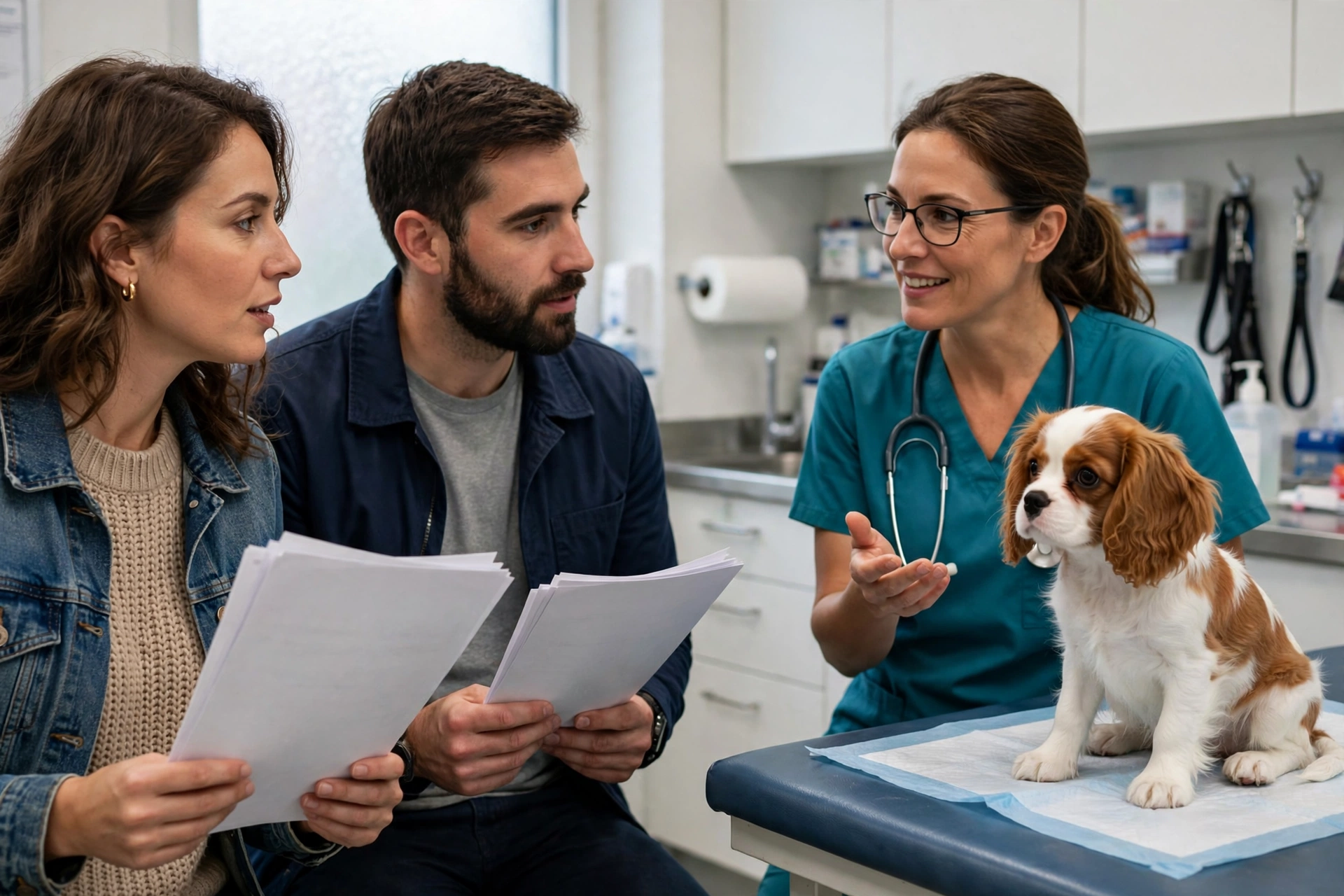
Bring these questions to every breeder conversation. The answers — and how willingly they’re given — tell you everything you need to know.
- What health testing do you do on your breeding dogs, and can I see the certificates?
- How old are the parent dogs, and how many litters has the mother had?
- Where are the puppies raised — in your home or in a kennel building?
- What early socialization do the puppies get before going home?
- What is in your contract — health guarantee, return policy, spay/neuter terms?
- What happens if I can no longer keep the dog at any point in its life?
- Can I meet the mother of the litter, and see where the puppies live?
- What support do you offer after the puppy goes home?
A reputable breeder will also interview you — about your home, schedule, experience, and plans for the dog. If a breeder asks you nothing and just wants a deposit, walk away.
Red Flags to Avoid

No matter how adorable the puppies look in photos, steer clear if you spot any of these warning signs:
- No health testing. “Vet checked” is not a substitute for cardiac, eye, and patella clearances.
- Won’t let you visit. Breeders who only meet in parking lots or ship puppies sight-unseen are hiding something.
- Always has puppies available. Constant availability across multiple breeds points to a puppy mill or broker.
- Pressure tactics. “Someone else wants this one” or demands for immediate full payment are manipulation, not business.
- No contract or guarantee. A breeder unwilling to put anything in writing is unwilling to stand behind their dogs.
- Puppies too young. Cavalier puppies should stay with their mother and littermates until at least 8 weeks old — reputable breeders often keep them 9 to 10 weeks.
Cavalier Adoption and Rescue Options in Maryland
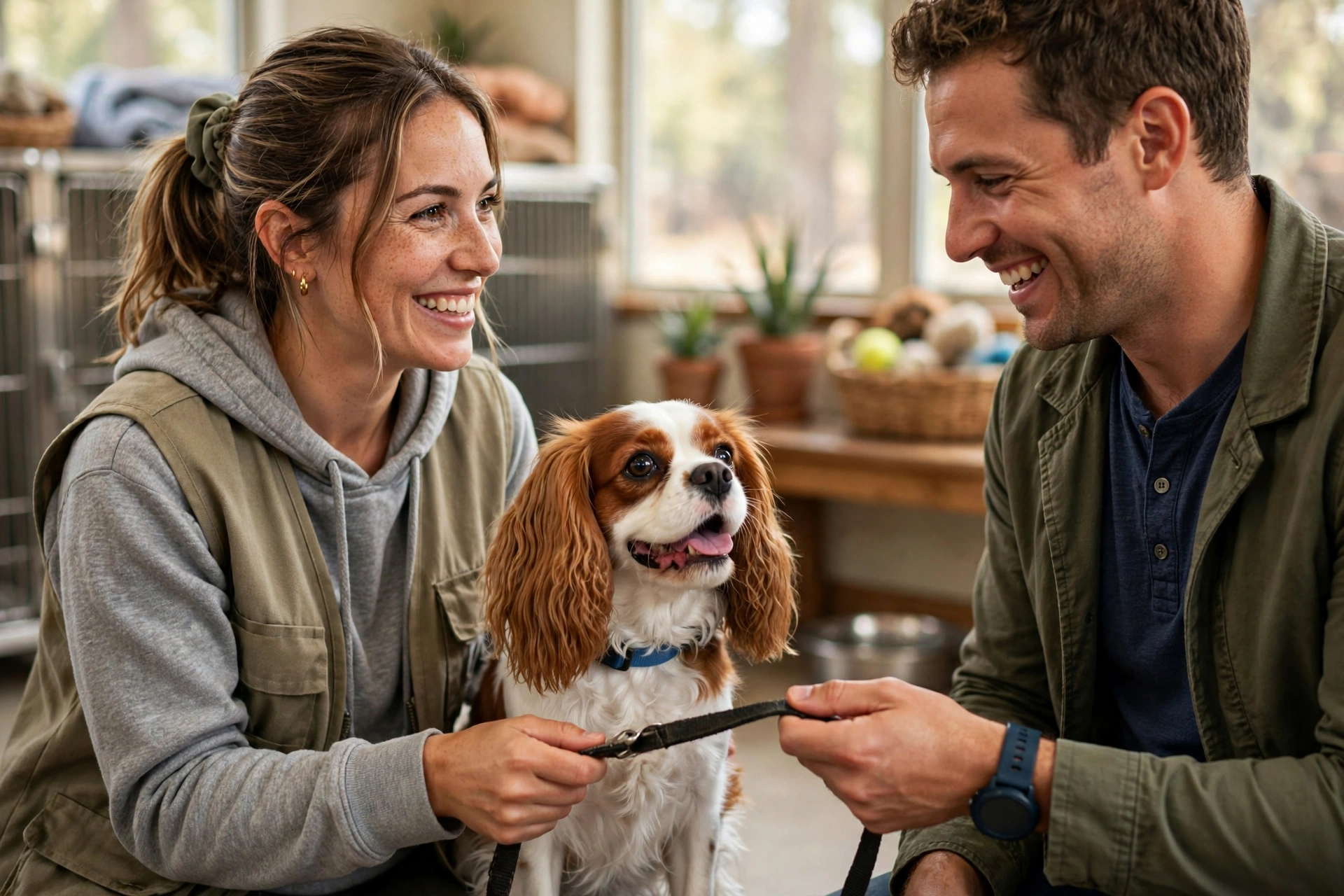
Buying from a breeder is not the only path to a Cavalier. Breed-specific rescues and local shelters in Maryland regularly have Cavaliers and Cavalier mixes looking for homes — including wonderful adult dogs past the chaotic puppy stage.
Rescue is especially worth considering if you want to skip house-training, prefer a dog whose personality is already known, or simply want to give a deserving dog a second chance. Most rescues thoroughly vet-check, spay or neuter, and temperament-test their dogs before adoption, and adoption fees are typically a fraction of a breeder puppy’s price.
Check with Cavalier-specific rescue organizations serving the Mid-Atlantic region, your county humane society, and reputable listing sites like Petfinder. Be patient — Cavaliers are popular and get adopted quickly, but new dogs arrive all the time.
Frequently Asked Questions

How much does a Cavalier King Charles Spaniel puppy cost in Maryland?
From a reputable breeder, expect to pay roughly $2,500 to $5,000, depending on the breeder’s reputation, the puppy’s pedigree, and coat markings. Prices far below that range are a red flag — health testing and quality care cost money, and bargain puppies usually mean corners were cut.
What health tests should a Maryland Cavalier breeder perform?
At minimum: cardiac clearance from a board-certified cardiologist, eye clearance from a veterinary ophthalmologist, and patella evaluation (ideally OFA-registered). Ask to see the actual certificates, not just verbal assurances.
Should I adopt or buy a Cavalier puppy in Maryland?
Both are great options. A reputable breeder gives you health history and a young puppy; a rescue gives a deserving dog a home at lower cost, often with the dog’s adult temperament already known. Avoid pet stores and online sellers who can’t show you the breeding facility.
How long do Cavalier King Charles Spaniels live?
Typically 9 to 14 years. Choosing a breeder who health-tests breeding stock is the single best thing you can do to give your Cavalier the longest, healthiest life possible.
Is a Cavalier a good breed for first-time dog owners?
Yes — Cavaliers are gentle, affectionate, eager to please, and adaptable to apartments or houses. They do need companionship (they hate being left alone for long hours) and regular grooming for their silky coats.