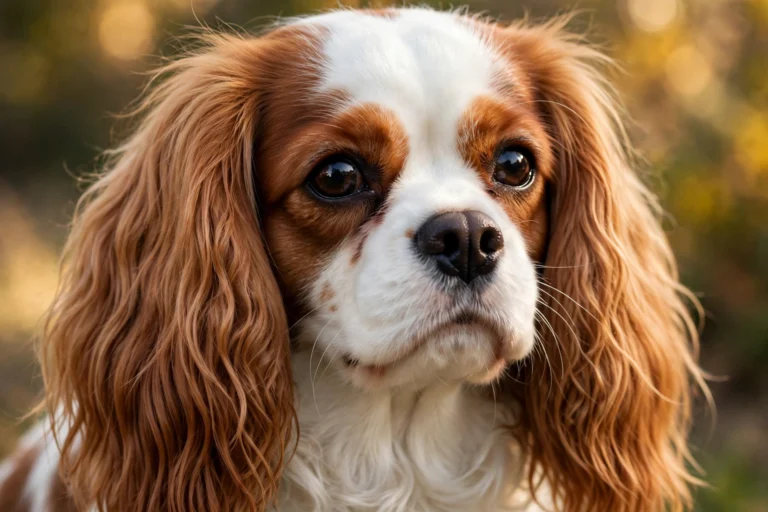
Cavalier King Charles Spaniel Pregnancy: Week-by-Week Guide

If you’ve just learned your Cavalier King Charles Spaniel is expecting puppies, you probably have two feelings at once: excitement and a long list of questions. Cavalier King Charles Spaniel pregnancy lasts around 63 days, and those nine weeks pass faster than you think. Knowing what to expect each week will make the whole experience calmer for both of you.
1. Confirming the Pregnancy and Veterinary Care

The first thing to do after a successful mating is book a vet visit. Around day 21 to 28, your vet can confirm pregnancy through an ultrasound, and by day 28 to 35, X-rays can reveal how many puppies to expect. Your vet will also want to know the exact breeding dates so they can calculate an accurate due date.
Plan for at least two checkups during the pregnancy: one early on to confirm everything is progressing well, and one near the due date to check puppy positions and discuss the birth plan. Tell your vet about any medications, supplements, or flea treatments your dog is on, since some are not safe during pregnancy. Keep vaccinations current before breeding whenever possible, because vaccinating during pregnancy is generally avoided unless your vet advises otherwise.
If this is your Cavalier’s first litter, ask your vet about working with a canine reproduction specialist or an experienced breeder mentor. Having expert backup removes a lot of guesswork and gives you a clear plan for emergencies.
2. Nutrition Needs During Pregnancy

For the first four weeks, your Cavalier can usually stay on her regular high-quality adult diet. Her calorie needs climb sharply in the second half of pregnancy, when the puppies do most of their growing. By week six, switch her to a nutrient-dense puppy or all-life-stages formula, since these support the extra energy, protein, and calcium she needs.
Feed smaller, more frequent meals, because her growing uterus leaves less room in her stomach. By late pregnancy, three to four small meals a day usually work better than two big ones. Keep fresh water available at all times, and avoid giving extra calcium supplements unless your vet specifically recommends them, since too much calcium at the wrong time can interfere with normal labor.
Watch her weight, but don’t panic about every pound. A healthy Cavalier typically gains 15 to 25 percent of her pre-pregnancy body weight. Sudden weight loss, refusal to eat for more than a day, or vomiting in late pregnancy all deserve a call to your vet.
3. Exercise and Activity

Regular, gentle exercise keeps a pregnant Cavalier fit, which pays off during labor. Continue her normal routine of short walks and calm playtime through the first two-thirds of pregnancy. As her belly grows, shorten the walks and slow the pace. Let her set the limit: if she wants to rest, let her rest.
Avoid rough play, jumping, long hikes, swimming in cold water, and any activity where she could overheat or get knocked around. Keep her away from unfamiliar dogs at parks and boarding facilities to reduce the risk of infections. Cavaliers are people-focused dogs, so replace strenuous activity with calm companionship: lap time, gentle brushing, and quiet indoor enrichment keep her happy without taxing her body.
4. The 63-Day Timeline, Week by Week

Weeks 1 to 2: Fertilized eggs travel to the uterus and implant. You won’t see any changes yet. Keep her routine normal.
Week 3: Embryos begin developing. Some dogs show mild morning-sickness-like symptoms such as a skipped meal or slight lethargy. Your vet can confirm pregnancy with an ultrasound from around day 21.
Week 4: Puppies’ eyes, spinal cords, and faces start forming. Her nipples may enlarge and her appetite often increases. This is a good time for the first prenatal checkup.
Week 5: Fetal organs develop and puppies begin to look like tiny dogs. Her belly may start to swell noticeably. Increase her food gradually if your vet agrees.
Week 6: Puppies’ claws, whiskers, and coat patterns form. Switch fully to a calorie-dense diet and begin setting up the whelping area so she can explore it.
Week 7: Puppies are nearly fully formed and you may feel them move when she rests. She may start shedding belly hair and nesting. Reduce exercise to short, easy outings.
Week 8: Puppies settle into position for birth. Her appetite may drop as the puppies press on her stomach. Start taking her temperature twice daily; a drop below 100°F (37.8°C) usually means labor will begin within 24 hours.
Week 9: Labor begins. Most Cavaliers deliver between days 58 and 68. Stay close, keep your vet’s number handy, and let her work at her own pace.
5. Preparing the Whelping Area

Set up the whelping box by day 55 at the latest, in a quiet, draft-free room where the family spends time but foot traffic is low. A box with low sides works well for a small breed like the Cavalier: she can step in and out easily, but newborn puppies can’t wander. Line it with washable blankets or towels, and keep extras on hand because you’ll change them often.
Gather a delivery kit ahead of time: clean towels, a digital thermometer, a heating pad or warm water bottles wrapped in towels, unwaxed dental floss and clean scissors for tying umbilical cords if needed, a bulb syringe for clearing airways, and a scale for weighing puppies. Introduce your Cavalier to the whelping area well before labor so she sees it as her safe spot, not a strange new place.
Keep other pets and young children away from the whelping room. A new mother’s protective instincts are strong, and calm surroundings make labor smoother for everyone.
6. Signs Labor Is Near
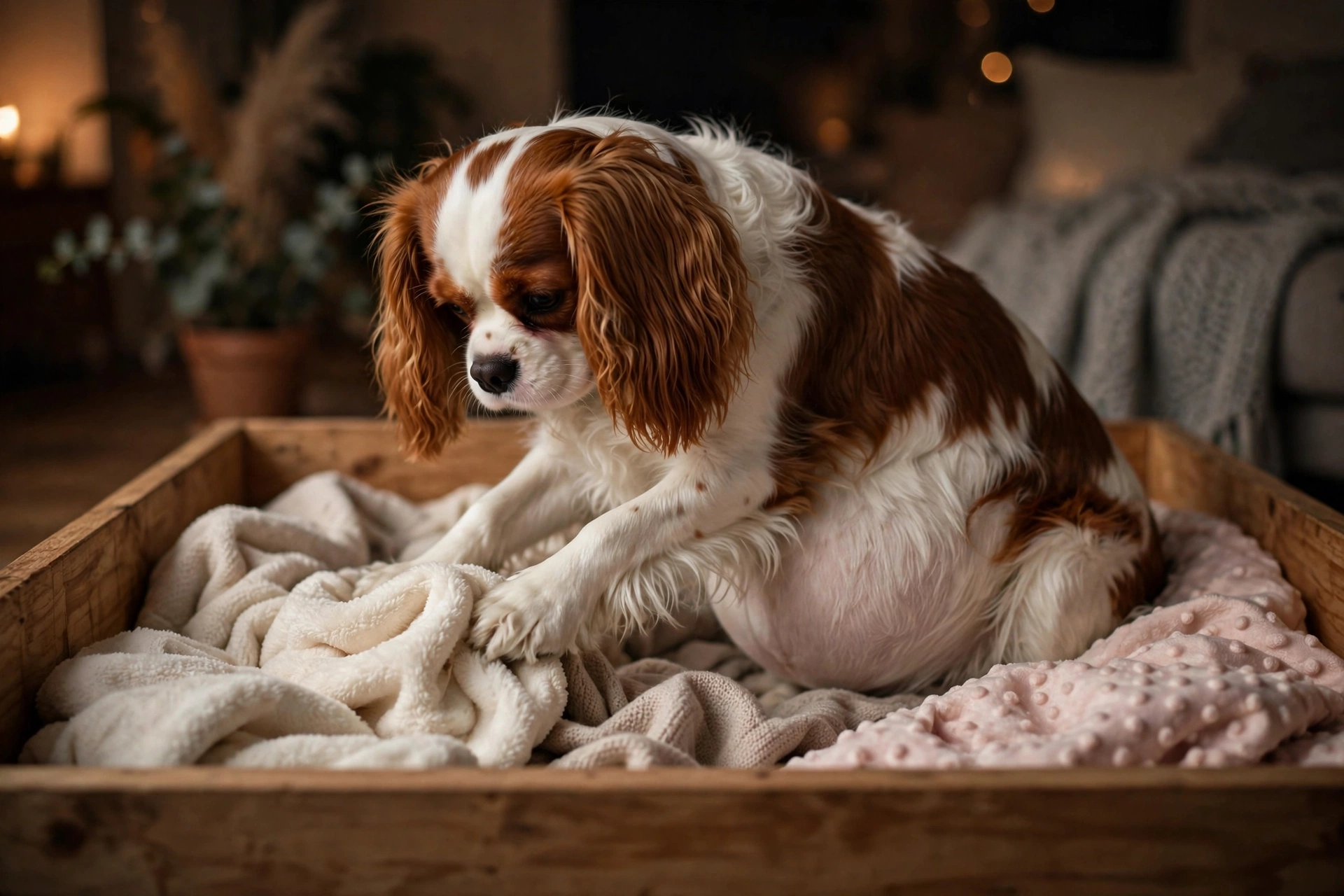
Labor happens in three stages. In the first stage, lasting 6 to 12 hours, you’ll see restlessness, pacing, panting, shivering, and nesting behavior. She may refuse food and want to be close to you, or she may seek solitude. Contractions are happening internally but aren’t visible yet.
The second stage is active delivery. Visible straining begins, and puppies arrive roughly 30 to 60 minutes apart, though a rest of up to two hours between puppies can be normal. Each puppy is born in its own amniotic sac, which mom usually breaks and cleans away. She will also chew through the umbilical cord and lick the puppy to stimulate breathing.
The third stage is the passing of the placenta after each puppy. Count placentas: there should be one per puppy, and a retained placenta can cause infection. Call your vet immediately if she strains hard for more than 30 minutes without producing a puppy, if more than two hours pass between puppies with visible distress, if you see greenish-black discharge before the first puppy, or if she seems exhausted, feverish, or in unusual pain.
7. Post-Birth Care for Mom
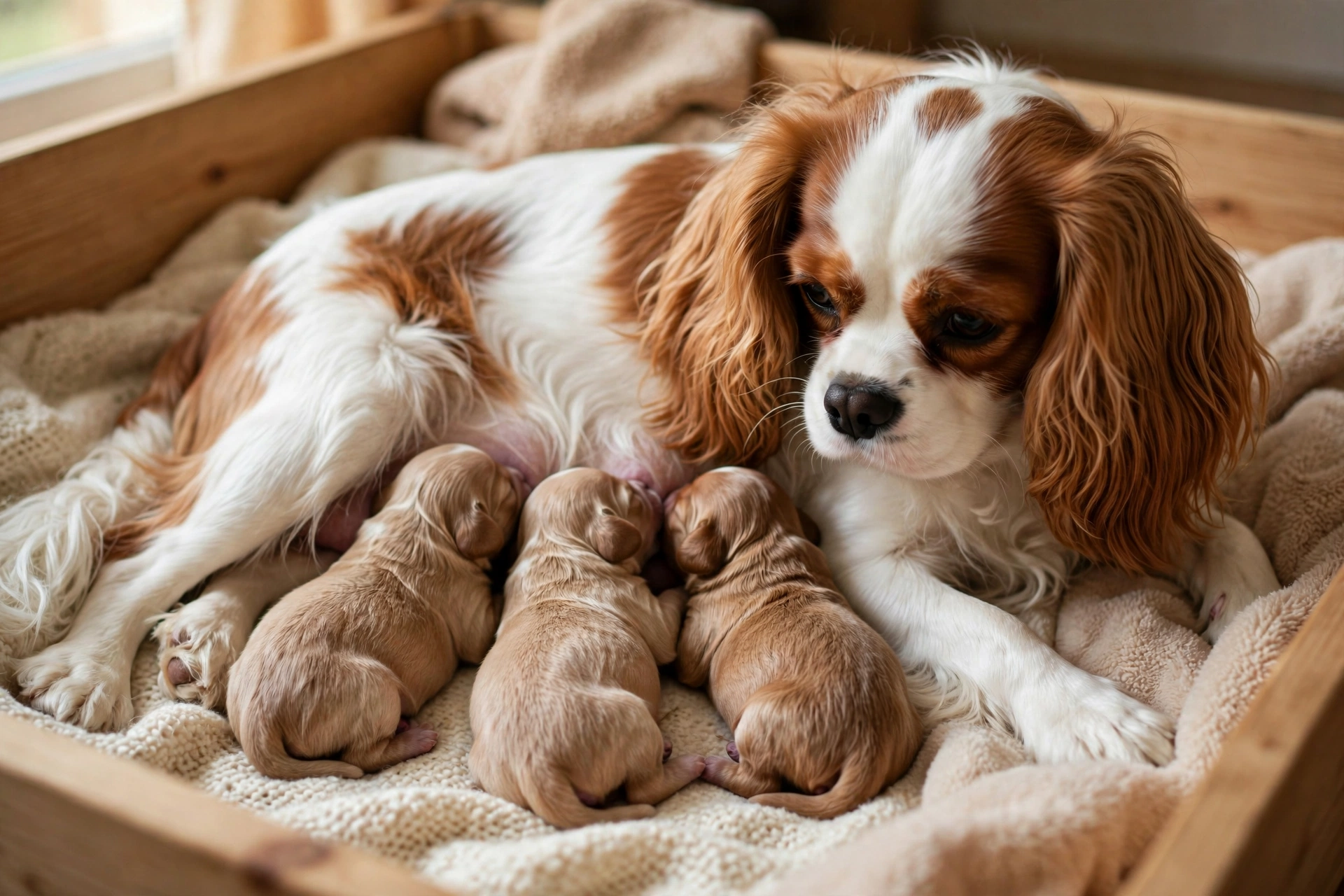
After delivery, let mom rest with her puppies and offer her water and a small meal. She may not eat much at first, but her appetite should return within a day. Continue feeding her a nutrient-rich diet throughout nursing, since producing milk demands even more calories than pregnancy did. Keep the whelping area warm, clean, and quiet.
Make sure every puppy nurses within the first few hours of birth to receive colostrum, the antibody-rich first milk. You may need to gently guide a weak puppy to a nipple. Keep the father dog and other pets away from mom and puppies for now; her protective instincts are at their peak and she needs peace.
Watch mom closely for warning signs in the days after birth: foul-smelling discharge, fever, loss of appetite, trembling, or stiffness can signal infection or dangerously low calcium, both of which need urgent veterinary care. Schedule a post-whelping vet check within 24 to 48 hours, and weigh the puppies daily to confirm they are gaining. With attentive care, most Cavalier moms settle into motherhood beautifully within the first week.
Frequently Asked Questions
How long is a Cavalier King Charles Spaniel pregnant?
About 63 days from the date of conception, though anywhere from 58 to 68 days is considered normal. Your vet can give you a more precise due date based on the breeding dates and an ultrasound.
How many puppies does a Cavalier usually have?
The average litter size is three to five puppies. First-time mothers often have smaller litters of two or three. An X-ray after day 45 gives the most reliable puppy count.
Can a pregnant Cavalier still go on walks?
Yes. Gentle daily walks are good for her throughout most of the pregnancy. Shorten them and slow down in the final two weeks, and skip rough play, jumping, and strenuous exercise entirely.
What should I feed my pregnant Cavalier?
Her regular high-quality food is fine for the first half of pregnancy. From around week six, switch to a nutrient-dense puppy or all-life-stages formula, fed in smaller, more frequent meals. Ask your vet before adding any supplements.
When should I call the vet during pregnancy or labor?
Call your vet if she stops eating for more than a day in late pregnancy, vomits repeatedly, has unusual discharge, strains for 30 minutes without delivering a puppy, or shows signs of fever, trembling, or extreme lethargy after birth.