10 DIY Dog Run Side Yard Ideas That Actually Work

That narrow strip of wasted land between your house and the fence doesn’t have to be a muddy dead zone. A dog run side yard turns the most awkward part of your property into a private exercise lane, potty station, and enrichment zone for your dog — without making your home look like a kennel. Whether you have a tight 3-foot corridor or a generous 10-foot strip, these 10 DIY designs combine function and style so your dog gets daily zoomies and you get zero muddy paw prints.
Before you pick a design, skim the quick surface comparison below, then dive into the 10 builds — each with a figure showing the look and a handy product pick to get you started.
Table of Contents
- Dog Run Surface Comparison
- Design #1: The Turf Sprint Lane
- Design #2: Pea Gravel Potty Strip
- Design #3: Mesh-Reinforced Fence Corridor
- Design #4: Shaded Cool-Down Run
- Design #5: Grass Revival Corridor
- Design #6: Splash Pool Cool-Down Corner
- Design #7: Night-Lit Evening Run
- Design #8: Elevated Cot Rest Station
- Design #9: The Low-Odor Cleaning Routine
- Design #10: Winter-Ready Water Station
- Keep Reading
- FAQ
Dog Run Surface Comparison
| Surface | Best For | Maintenance | Drainage | Muddy Paws? |
|---|---|---|---|---|
| Artificial turf | All climates, heavy daily use | Hose weekly | Excellent | No |
| Pea gravel | Hot climates, budget builds | Rake monthly | Excellent | No |
| Natural grass | Wide spaces, light use | Mow weekly | Moderate | Yes |
| Concrete or pavers | Permanent runs, easy cleaning | Hose weekly | Good with slope | No |
Design #1: The Turf Sprint Lane
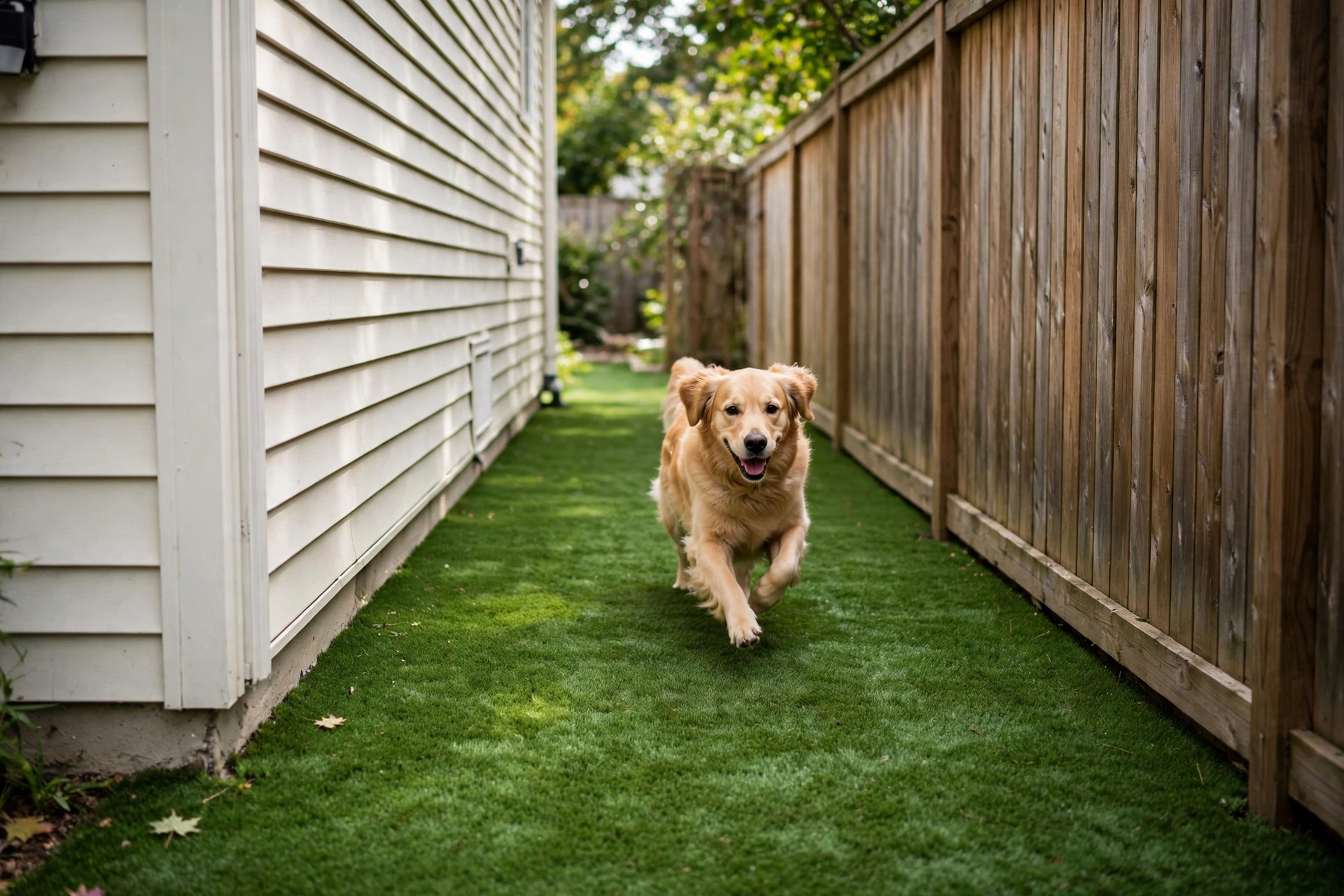
A 4-foot-wide corridor covered in premium artificial turf over a crushed-stone base gives your dog a 30-plus-foot sprint lane that drains in minutes after rain. Roll the turf over a 2 percent slope toward the yard so water never pools, and frame the edges with landscape timber for a finished look that reads as landscaping, not a kennel. Pet-grade turf with drainage backing hoses clean fast and stays green year-round.
Helpful pick: XiaZ Dog Agility Backyard Turf — a durable outdoor grass surface that gives your sprint lane a realistic look and holds up to daily zoomies.
Design #2: Pea Gravel Potty Strip
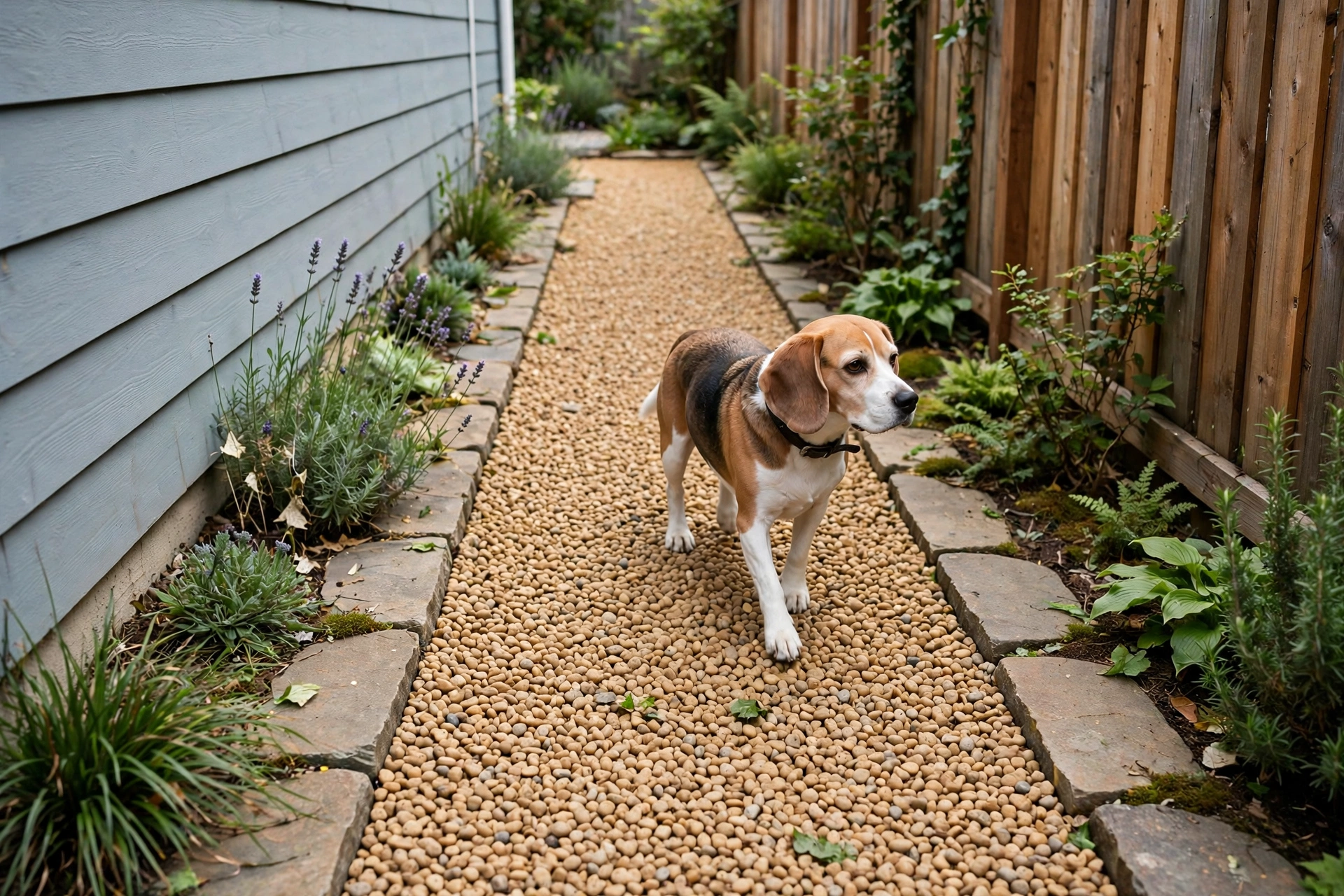
Reserve the first 6 to 8 feet nearest the house door as a dedicated potty zone covered in pea gravel over landscape fabric. Urine drains straight through instead of puddling, solids scoop off in seconds, and a monthly raking keeps it fresh. Border the strip with flat stones so it looks like an intentional garden path. This is the lowest-cost surface on the list and the easiest to replace when it eventually needs a refresh.
Helpful pick: Gray Pea Gravel Multi-Pack — enough smooth pea gravel to cover your potty strip with a drainage-friendly finish that stays kind to paws.
Design #3: Mesh-Reinforced Fence Corridor
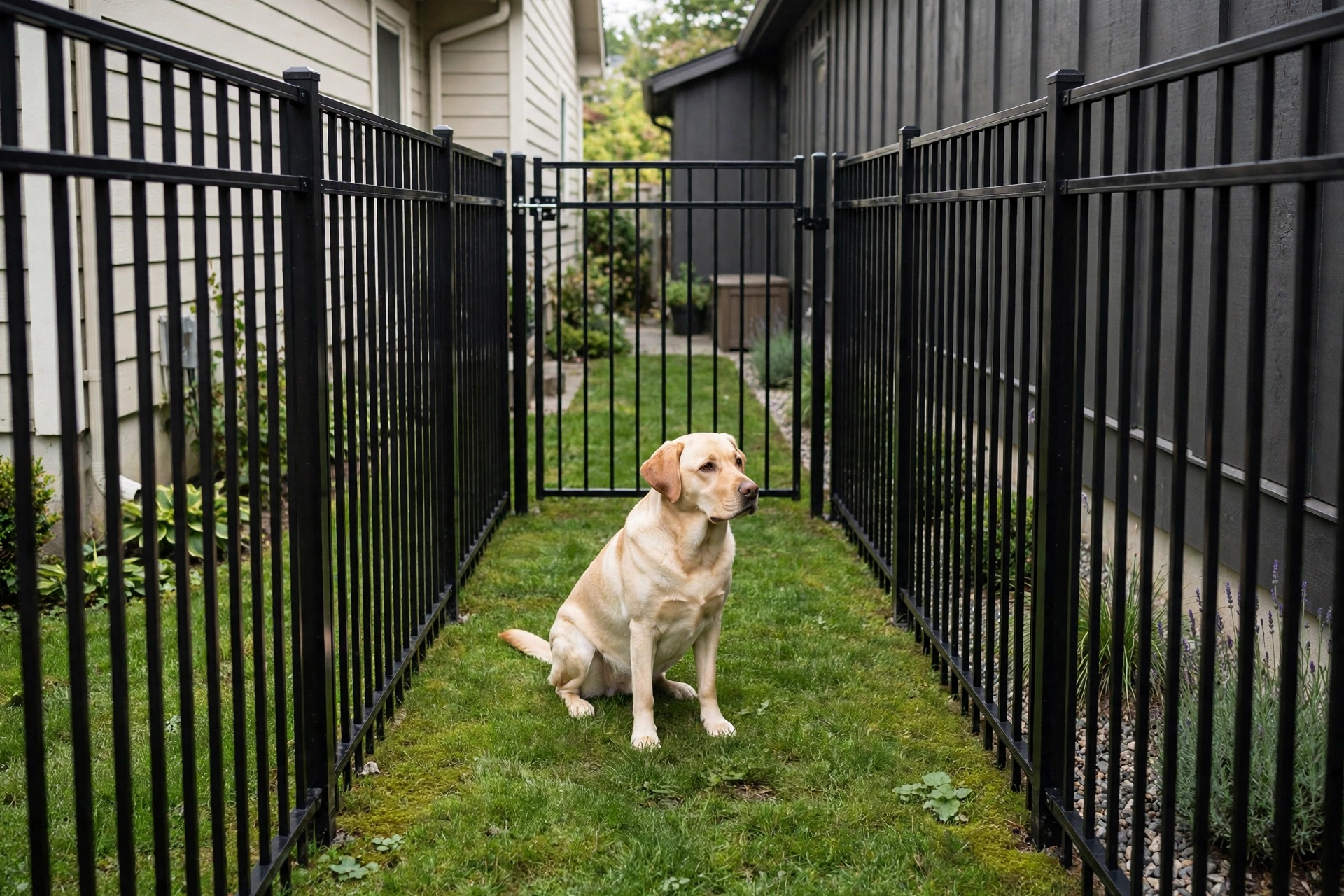
A secure side run needs a fence your dog respects. Black metal or vinyl-coated chain-link panels with a self-latching gate at each end turn the corridor into a proper run without blocking light or airflow. Reinforce wooden fences with hardware cloth buried 8 inches deep — that stops diggers cold. Double latches at both ends let you walk the run through without going back around the house.
Helpful pick: Fencer Wire Galvanized Hardware Cloth — the perfect reinforcement for the bottom of fence panels to keep diggers and chewers inside the run.
Design #4: Shaded Cool-Down Run

South-facing side yards can turn into ovens by midday. Stretch a triangular shade sail over the middle third of the run to block up to 90 percent of UV rays and give your dog a cool rest zone. Anchor it to the fence posts and the house wall with a slight tilt so rain runs off. Place a water bowl and a bed in the shade pocket, and the run doubles as a safe spot for lazy afternoon lounging instead of just exercise.
Helpful pick: Coolaroo Shade Sail — breathable, UV-blocking fabric that drops the temperature in your run’s rest zone on hot days.
Design #5: Grass Revival Corridor
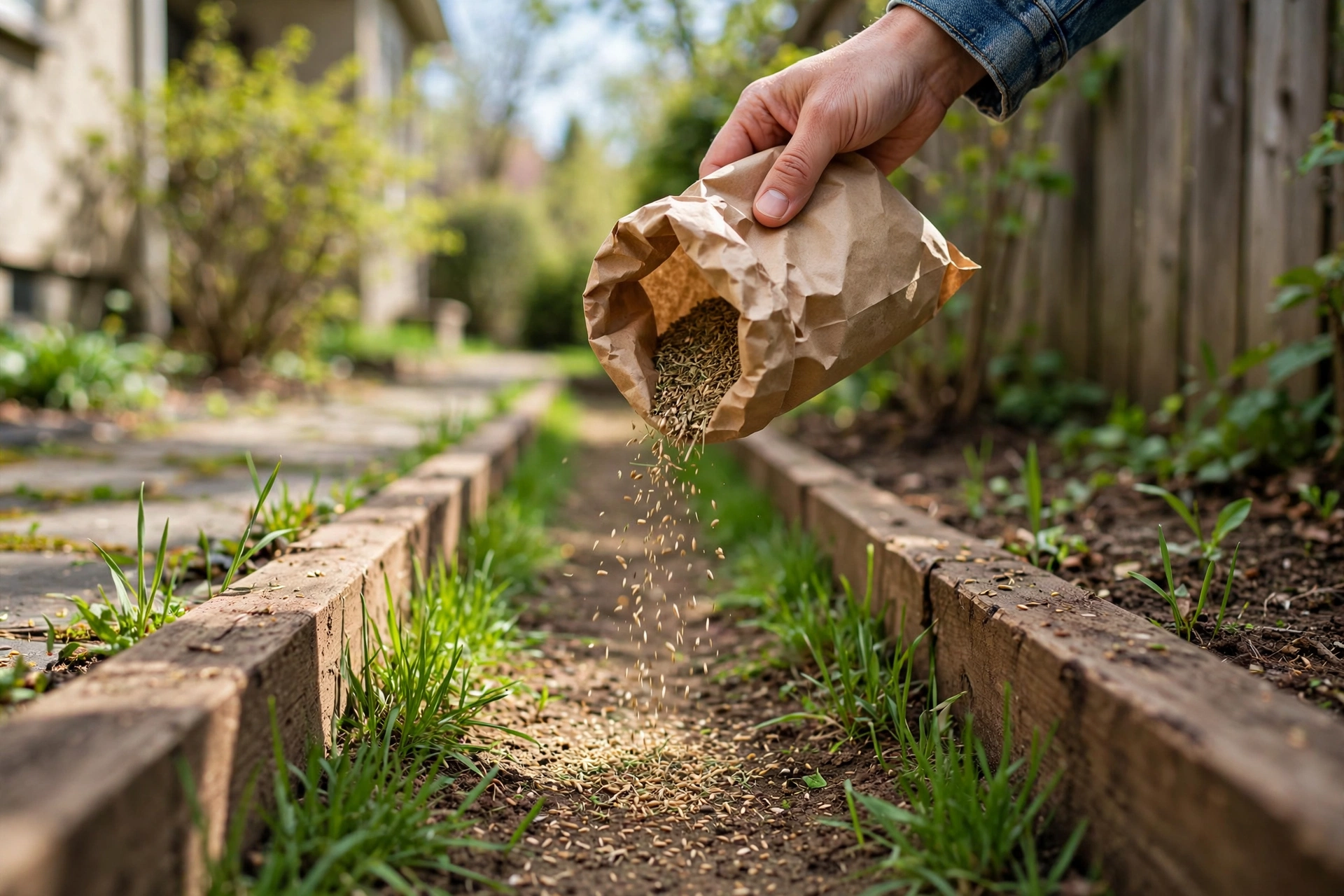
If your side strip is wide enough — 6 feet or more — real grass can survive a dog run with the right setup. Edge the corridor with boards to keep soil in place, top-dress bare spots, and overseed with a tough, fast-germinating ryegrass blend in spring and fall. Rotate your dog’s access between the side run and the main yard during the two-week germination window, and the corridor stays green enough to feel like a proper garden path instead of a worn track.
Helpful pick: Pennington Annual Ryegrass Seed — a fast-sprouting grass seed that revives worn side-yard strips in as little as a week.
Design #6: Splash Pool Cool-Down Corner
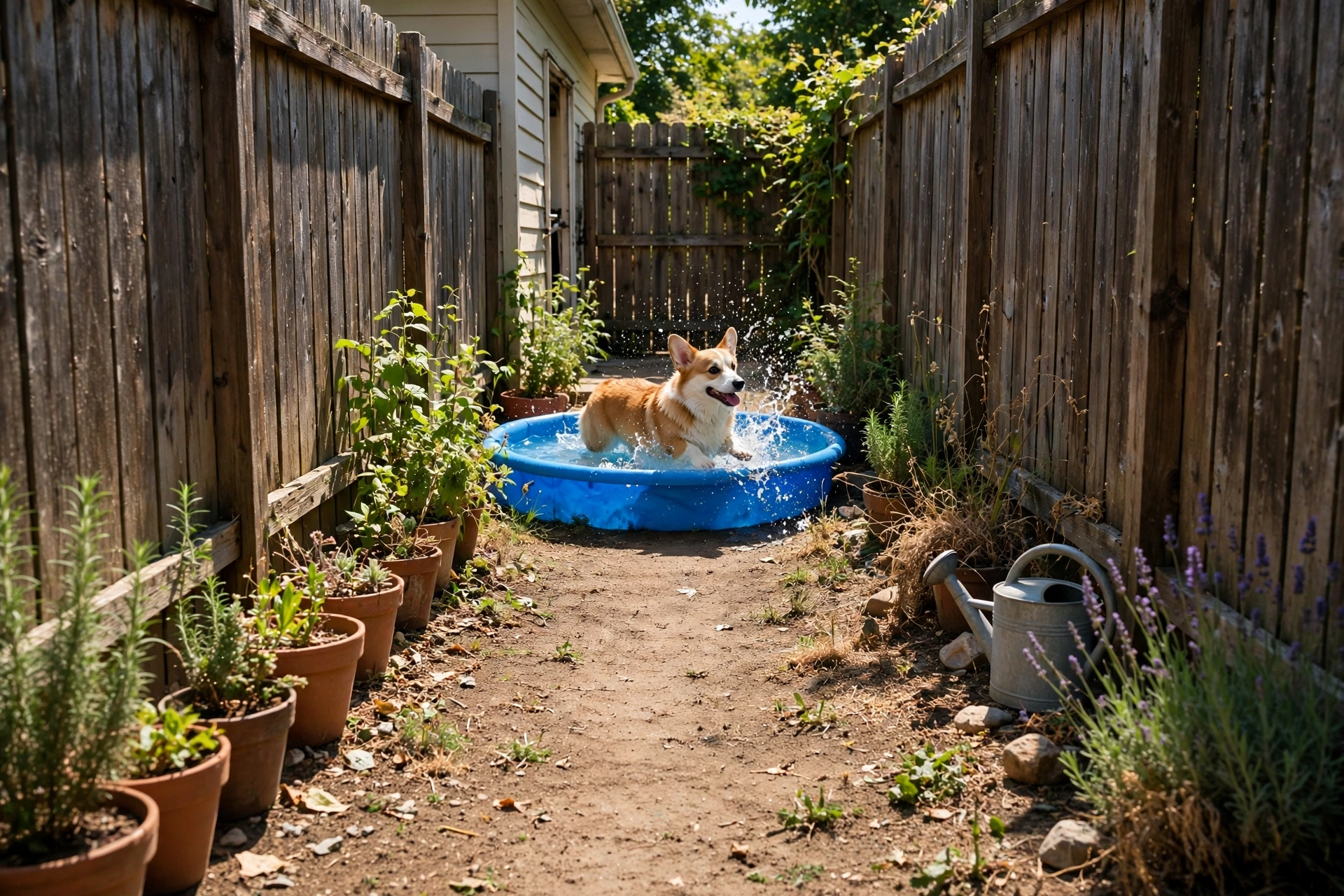
Give the far end of the run a job beyond zoomies: a foldable splash pool that sets up in seconds and drains just as fast. Water-loving dogs get a cool-down station after sprinting the corridor, and the pool doubles as a paw-rinse station before your dog comes back inside. Pick a rigid-sided model and empty it daily so it never becomes a mosquito nursery.
Helpful pick: Jasonwell Foldable Dog Pool — a sturdy, foldable splash pool that gives your dog a cool-down corner at the end of the run.
Design #7: Night-Lit Evening Run

Last-out potty breaks shouldn’t require fumbling for a flashlight. Line the fence base with solar pathway lights so the full corridor glows softly after sunset. Solar units charge all day and switch on automatically — no wiring, no outlets, no electrician. Your dog gets a clear, calm route to the potty zone at 10 PM, and you can see exactly where you’re stepping on those dark winter mornings.
Helpful pick: Beau Jardin Solar Path Lights — automatic solar lights that make the run safe and visible for late-night potty trips.
Design #8: Elevated Cot Rest Station

Tuck an elevated mesh cot into the shaded end of the run and it becomes your dog’s outdoor living room. The raised design keeps your dog off hot or damp ground and hoses down easily. Position it where you can see it from a kitchen window, and the run becomes a spot your dog chooses voluntarily — perfect for supervised afternoon rest while you get things done inside.
Helpful pick: K&H Elevated Dog Cot — a breathable raised bed that keeps your dog cool and dry in the run’s rest zone.
Design #9: The Low-Odor Cleaning Routine

A side run that smells is a side run your family avoids. Build the routine into the design: scoop solids daily, hose the surface twice a week, and treat the potty zone with an enzymatic cleaner every week or two to break down the odor-causing compounds that hose water leaves behind. Keep the spray bottle, scoop, and waste bags right at the gate so the routine takes under five minutes.
Helpful pick: Rocco & Roxie Enzyme Cleaner — an enzyme formula that breaks down pet odors in the potty zone instead of just masking them.
Design #10: Winter-Ready Water Station
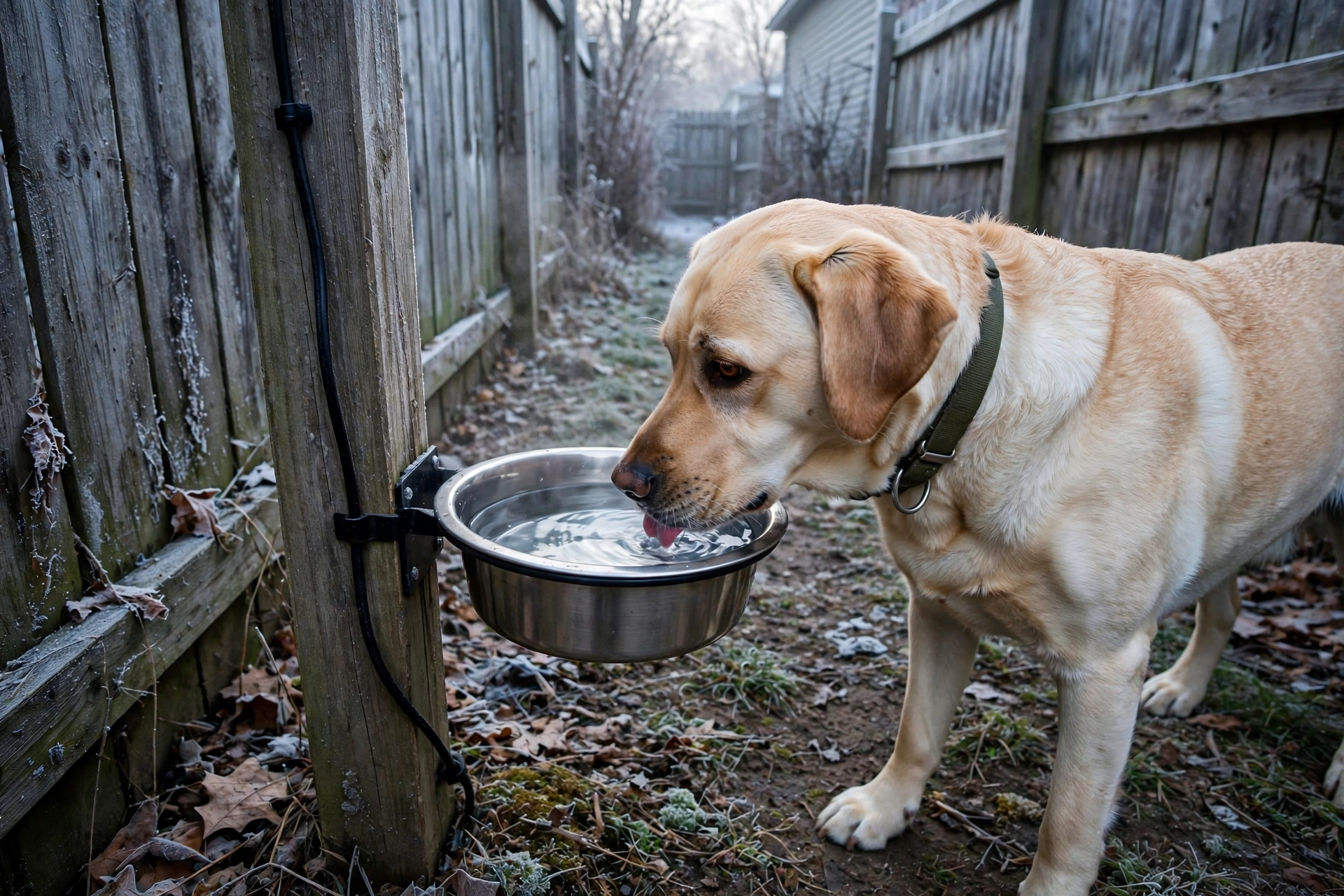
Dogs play hard in winter too, and a frozen bowl helps no one. Mount a thermostatically controlled heated water bowl on a post near the gate so fresh water is available year-round without you carrying bowls back and forth. Heated bowls only draw power when temperatures drop near freezing, and a post mount keeps the cord off the ground and away from chewing pups. Pair it with the night lighting from Design #7 and your run works beautifully in January, not just July.
Helpful pick: K&H Thermal Heated Water Bowl — keeps water ice-free in the run all winter with low, automatic power use.
Keep Reading
- 7 DIY Dog Bunk Beds to Make at Home (2026)
- 15 Indoor Dog Park Ideas for Rainy Days (2026)
- 10 Hotel for Dogs Ideas for a Cozy Boarding Stay (2026)
- 10 Dog Photo Ideas for Picture-Perfect Shots (2026)
- 10 Best Dog Park Equipment Picks for Home (2026)
Frequently Asked Questions
How wide does a side yard dog run need to be?
A minimum of 4 feet works for most dogs — enough room to trot, turn, and potty comfortably. Wider is always better for larger breeds, but even a narrow 3-foot strip can work as a potty lane for small dogs.
What is the cheapest surface for a DIY dog run?
Pea gravel over landscape fabric is the most budget-friendly option. It drains well, scoops clean easily, and costs a fraction of artificial turf or concrete.
How do I keep my dog run from smelling?
Scoop daily, hose the surface twice a week, and treat the potty zone with an enzymatic cleaner regularly. Good drainage underneath is the single biggest factor — standing water is what causes lingering odors.
Can I build a dog run on a sloped side yard?
Yes — a gentle 2 percent slope away from the house is actually ideal for drainage. For steeper slopes, terrace the run with landscape timbers and fill each level with gravel or turf over crushed stone.
Is a side yard dog run safe in hot weather?
With shade and water, yes. Add a shade sail over part of the run, provide a heated or regular water bowl, and use surfaces that don’t burn paws — turf and gravel stay far cooler than dark concrete or asphalt.
As an Amazon Associate, PetPostHub earns from qualifying purchases.