
10 Worst Foods for Cavalier King Charles Spaniels (Toxic Dangers)

If you share your home with a Cavalier King Charles Spaniel, you already know two things: these dogs are professional food thieves, and their stomachs (and hearts) are far more delicate than their pleading eyes suggest. The worst foods for Cavaliers are not just “unhealthy” — many are genuinely toxic, and a small body means a small margin of error. A single grape, a square of dark chocolate, or a dropped sugar-free mint can turn into a veterinary emergency.
Cavaliers are especially vulnerable for a few reasons: they are a small breed (typically 12–18 pounds), they are notorious counter-surfers and beggars, and many have sensitive digestion. This guide walks you through the 10 most dangerous foods for your Cavalier, why each one is harmful, the symptoms to watch for, and exactly what to do if your dog gets into something they should not have.
Table of Contents
- 1. Chocolate
- 2. Grapes and Raisins
- 3. Onions and Garlic
- 4. Xylitol (Birch Sugar)
- 5. Macadamia Nuts
- 6. Alcohol
- 7. Cooked Bones
- 8. Caffeine
- 9. High-Fat Table Scraps
- 10. Raw Bread Dough
- Emergency: What to Do If Your Cavalier Eats Something Toxic
- Frequently Asked Questions
1. Chocolate

Chocolate is the classic dog toxin, and it earns the top spot because it is everywhere — counters, coffee tables, purses, kids’ backpacks. The danger comes from theobromine and caffeine, compounds dogs metabolize far more slowly than humans. Dark chocolate, baking chocolate, and cocoa powder carry the highest theobromine levels; milk chocolate is less concentrated but still risky for a 13-pound Cavalier.
Symptoms: vomiting, diarrhea, restlessness, panting, rapid heart rate, muscle tremors, and in severe cases seizures. Signs often appear within 6 to 12 hours.
What to do: call your vet immediately with your dog’s weight, the type of chocolate, and how much was eaten. Do not wait for symptoms and do not induce vomiting unless your vet instructs you to.
Helpful pick: OXO Good Grips POP Containers — airtight storage keeps chocolate and baking supplies sealed away from curious noses.
2. Grapes and Raisins
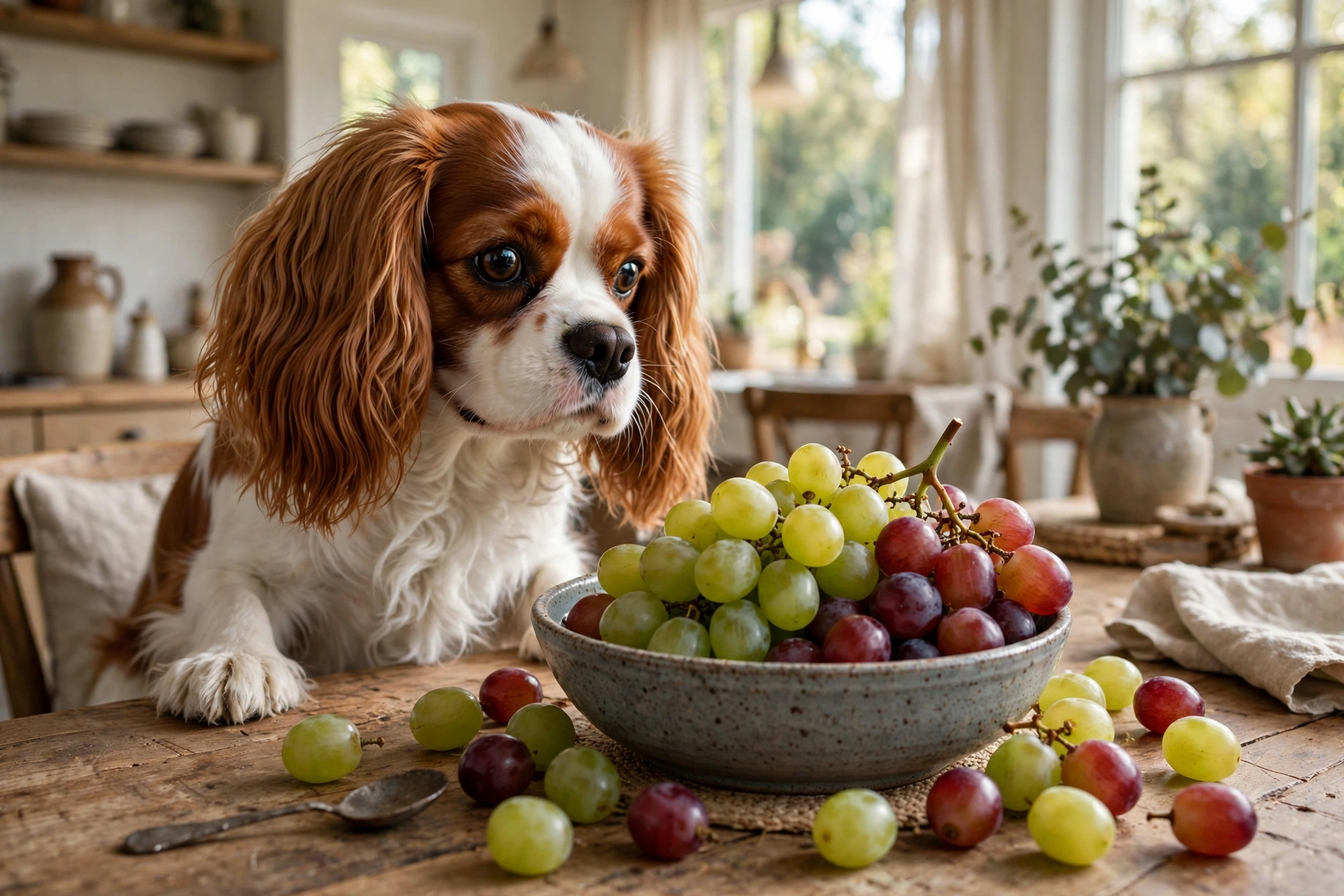
Grapes and raisins are among the most frightening foods on this list because there is no known safe amount. Some dogs eat them without obvious effects; others go into acute kidney failure after a single grape. Researchers believe tartaric acid plays a role, but the exact mechanism remains unclear — which makes these fruits unpredictable and dangerous for every Cavalier.
Symptoms: vomiting within hours, lethargy, loss of appetite, abdominal pain, and decreased urination — a red flag for kidney injury.
What to do: treat any grape or raisin ingestion as an emergency. Call your vet or the ASPCA Animal Poison Control Center (888-426-4435) right away, even if your dog seems fine.
Helpful pick: Infassic Toxic Foods for Dogs Fridge Magnet — a quick-reference chart on the fridge so the whole household knows grapes are off-limits.
3. Onions and Garlic
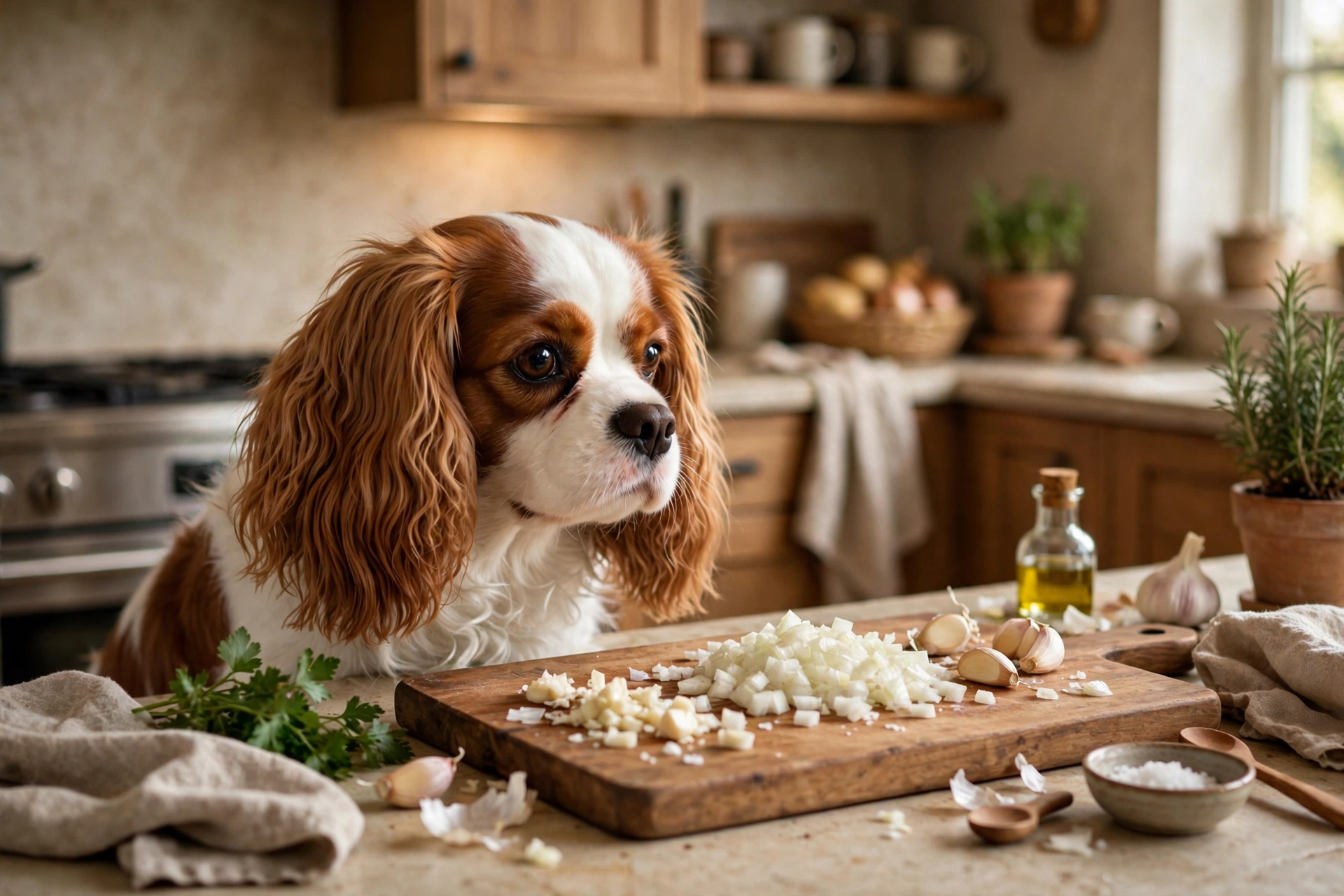
All members of the allium family — onions, garlic, leeks, chives, and shallots — are toxic to dogs whether raw, cooked, powdered, or dehydrated. They contain compounds that damage red blood cells and can cause hemolytic anemia. The scary part is that symptoms are often delayed by several days, so a dog can seem fine while the damage builds.
Symptoms: weakness, lethargy, pale gums, dark or reddish urine, rapid breathing, and collapse in severe cases.
What to do: if your Cavalier eats onion or garlic — including seasoned scraps, baby food, or broth — call your vet. Blood work may be needed even if your dog looks normal.
Helpful pick: simplehuman Pet-Proof Trash Can — locks shut so seasoned scraps and food waste stay out of reach.
4. Xylitol (Birch Sugar)
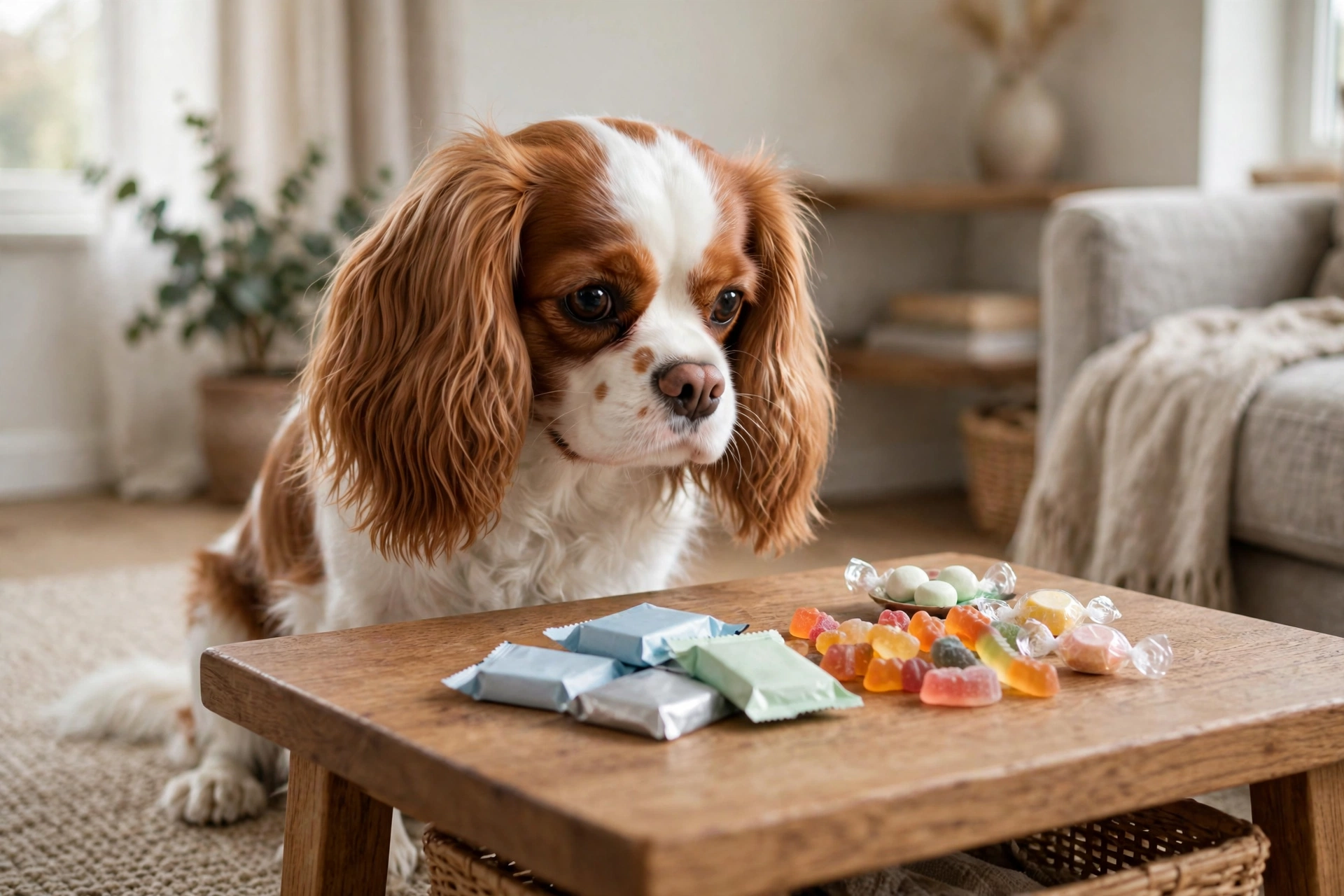
Xylitol — also labeled as birch sugar — is one of the fastest-acting and most dangerous substances for dogs. Found in sugar-free gum, mints, candy, some peanut butters, protein bars, and “keto” baked goods, it triggers a massive insulin release in dogs that can crash blood sugar within 10 to 60 minutes, followed by potentially fatal liver failure.
Symptoms: vomiting, weakness, stumbling, tremors, seizures, and collapse. Even small amounts can be life-threatening for a Cavalier.
What to do: this is a race-against-the-clock emergency. Get to a vet or emergency clinic immediately — do not wait for symptoms to appear.
Helpful pick: Mighty Paw Dog Peanut Butter — a xylitol-free peanut butter made for dogs, so treat time stays safe.
5. Macadamia Nuts
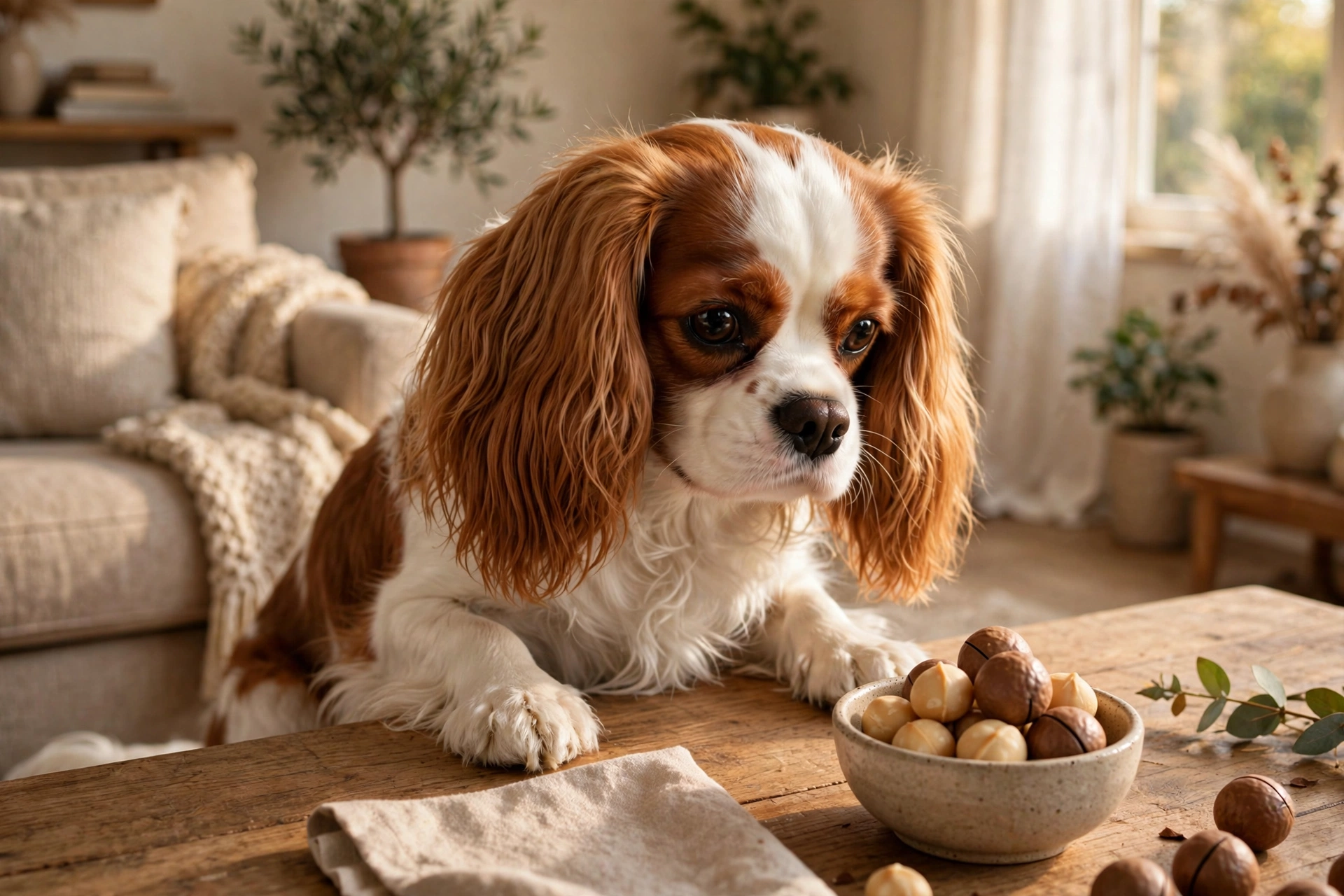
Macadamia nuts contain an unidentified toxin that affects dogs’ muscles and nervous system. They are especially common in holiday cookies, trail mixes, and gift baskets — exactly the kind of treats that end up at nose level during gatherings.
Symptoms: weakness (especially in the back legs), vomiting, tremors, fever, and lethargy, usually within 12 hours of eating them.
What to do: call your vet for guidance. Most dogs recover with supportive care, but your vet needs to assess how much was eaten relative to your Cavalier’s small size.
Helpful pick: Inaya Cabinet Locks — keep pantry doors secured so nut-filled snacks stay behind closed doors.
6. Alcohol

Beer, wine, liquor, and even alcohol-containing desserts or mouthwash can poison a small dog quickly. Cavaliers are light enough that a few laps of a spilled drink can cause real harm. Alcohol depresses the central nervous system and can dangerously lower blood sugar, blood pressure, and body temperature.
Symptoms: vomiting, disorientation, excessive drooling, tremors, difficulty breathing, and in severe cases coma.
What to do: contact your vet or an emergency clinic immediately. Keep your dog warm and still while you get help.
Helpful pick: ALPENKOK Bottle Cap Locks — a simple way to keep bottles and bar cabinets secured from curious paws.
7. Cooked Bones

Unlike raw bones (which still carry risks and should only be given under guidance), cooked bones become brittle and splinter easily. Chicken, turkey, and rib bones can crack into sharp shards that cut the mouth, get lodged in the throat, or puncture the stomach and intestines. For a small breed like the Cavalier, even a modest splinter can cause a blockage.
Symptoms: drooling, gagging, pawing at the mouth, vomiting, bloody stool, abdominal pain, or straining.
What to do: do not try to pull a lodged bone yourself. Call your vet — imaging may be needed to check for blockages or perforations.
Helpful pick: Best Bully Sticks — a safe, digestible chew that satisfies the gnawing urge without the splinter risk.
8. Caffeine

Caffeine belongs to the same chemical family as theobromine, so it overstimulates dogs in much the same way chocolate does. Coffee, espresso, energy drinks, tea, caffeine pills, and some pre-workout powders are all hazards — and a Cavalier only needs a small dose to feel it.
Symptoms: restlessness, rapid heartbeat, panting, muscle tremors, vomiting, and in severe cases seizures or collapse.
What to do: call your vet with the product name and estimated amount. Keep coffee grounds, pods, and energy drinks stored high and sealed.
Helpful pick: Fellow Atmos Vacuum Coffee Canister — vacuum-sealed storage keeps coffee beans and grounds locked away from counter-surfers.
9. High-Fat Table Scraps
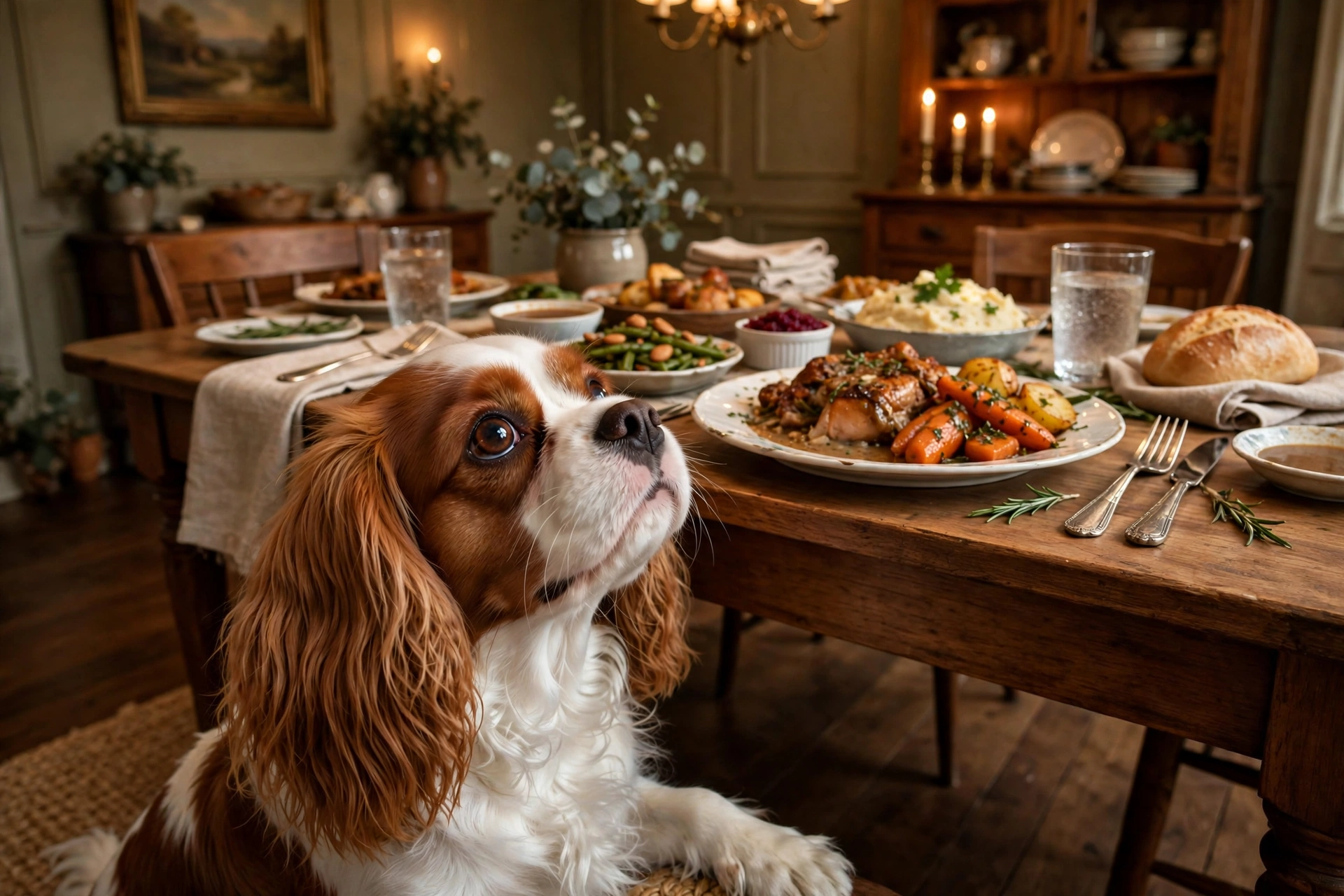
This one surprises many owners because it is not “poisonous” in the classic sense — but for Cavaliers, rich, fatty scraps (bacon grease, turkey skin, fried foods, buttery leftovers) are a leading trigger of pancreatitis, a painful and potentially life-threatening inflammation of the pancreas. Cavaliers’ sensitive digestive systems make them prime candidates.
Symptoms: repeated vomiting, loss of appetite, hunched posture or abdominal pain, lethargy, and sometimes fever.
What to do: pancreatitis needs veterinary treatment — IV fluids, pain management, and sometimes hospitalization. Call your vet promptly if symptoms appear after a fatty meal.
Helpful pick: Outward Hound Fun Feeder Slo Bowl — structured, portion-controlled meals make table scraps far less tempting for everyone.
10. Raw Bread Dough

Raw yeast dough is a double threat: it expands in the warm stomach, causing painful bloating and potential blockage, and as the yeast ferments it produces ethanol — meaning your dog can effectively get alcohol poisoning from bread dough. Holiday baking season is prime time for this hazard.
Symptoms: a distended, hard belly, retching without producing vomit, restlessness, staggering, and lethargy.
What to do: call your vet or emergency clinic immediately. Bloat can become life-threatening quickly, especially in a small dog.
Helpful pick: Vkania Cabinet Locks — keep flour, yeast, and rising dough secured in locked cabinets during baking days.
Emergency: What to Do If Your Cavalier Eats Something Toxic
Stay calm and act fast — minutes matter. Follow these steps:
- Remove access. Take away the remaining food and move your dog somewhere safe.
- Note the details. What did they eat, how much, and when? Save the packaging — it helps the vet enormously.
- Call for help immediately. Contact your veterinarian, an emergency animal hospital, or the ASPCA Animal Poison Control Center at 888-426-4435. Do not wait for symptoms.
- Do not induce vomiting unless a veterinarian or poison-control expert specifically tells you to — some substances cause more damage coming back up.
- Watch and record. Note any symptoms and their timing; share this with your vet.
Prevention is the real hero here: store dangerous foods high and sealed, secure trash cans and cabinets, and make sure every family member — including kids and guests — knows the rules. For a full breakdown of safe versus unsafe foods, see our guide on foods dogs can and can’t eat.
Related reading: Cavalier health issues to watch for, best dog food for allergies, things you must never do to your Cavalier, and our ultimate guide to dog nutrition.
Frequently Asked Questions
What is the single most dangerous food for a Cavalier?
Xylitol is arguably the most immediately dangerous because even tiny amounts can cause a fatal blood-sugar crash within an hour. Chocolate, grapes, and alcohol are close behind — and all are more dangerous in a small breed like the Cavalier.
Can Cavaliers eat cheese or peanut butter?
Plain cheese in small amounts is generally fine for most dogs, and xylitol-free peanut butter is a popular treat. Check peanut butter labels carefully for xylitol (birch sugar) and keep portions small — rich treats can upset sensitive Cavalier stomachs.
My Cavalier ate one grape. Should I panic?
Do not panic, but do act: call your vet immediately. Because there is no known safe threshold and Cavaliers are small, even one grape warrants professional guidance.
Are raw bones safe for Cavaliers?
Raw bones still carry risks (bacterial contamination, broken teeth, choking) and should only be given under your vet’s guidance with size-appropriate choices. Cooked bones should never be given.
How can I stop my Cavalier from stealing food?
Management beats willpower: store food securely, use trash cans with locking lids, train a solid “leave it” cue, and feed structured meals so your dog is not foraging out of hunger. Puzzle feeders and slow-feeder bowls also help satisfy food drive safely.
As an Amazon Associate, PetPostHub earns from qualifying purchases.



One Comment