7 Homemade Salmon Dog Food Recipes for Healthy, Shiny Coats (2026)

If your dog has been sniffing his kibble and walking away like dinner personally offended him, salmon might be the upgrade his bowl has been waiting for. Salmon dog food recipes are packed with omega-3 fatty acids, high-quality protein, and flavor that gets even picky pups excited at mealtime. These seven homemade recipes are dog-safe, budget-friendly, and made from ingredients you can pronounce.
Before we jump in, one non-negotiable rule: always cook salmon before feeding it to your dog. Raw or undercooked salmon can carry a parasite that causes salmon poisoning disease, which is serious and needs emergency vet care. Cook every fillet to an internal temperature of 145°F, remove all bones and skin, and skip the salt, garlic, onion, and spices your dog does not need.
Why Salmon Is Good for Dogs
Salmon is one of the healthiest proteins you can put in your dog’s bowl. The omega-3 fatty acids EPA and DHA support a shiny coat, healthy skin, and normal joint function, which is especially welcome for senior dogs or active breeds. It is also rich in B vitamins, vitamin D, and selenium, and it is easier for many dogs to digest than richer red meats. A quick talk with your vet before switching diets is always smart, especially if your dog has kidney issues, pancreatitis, or a fish allergy.
1. Simple Salmon & Brown Rice Bowl
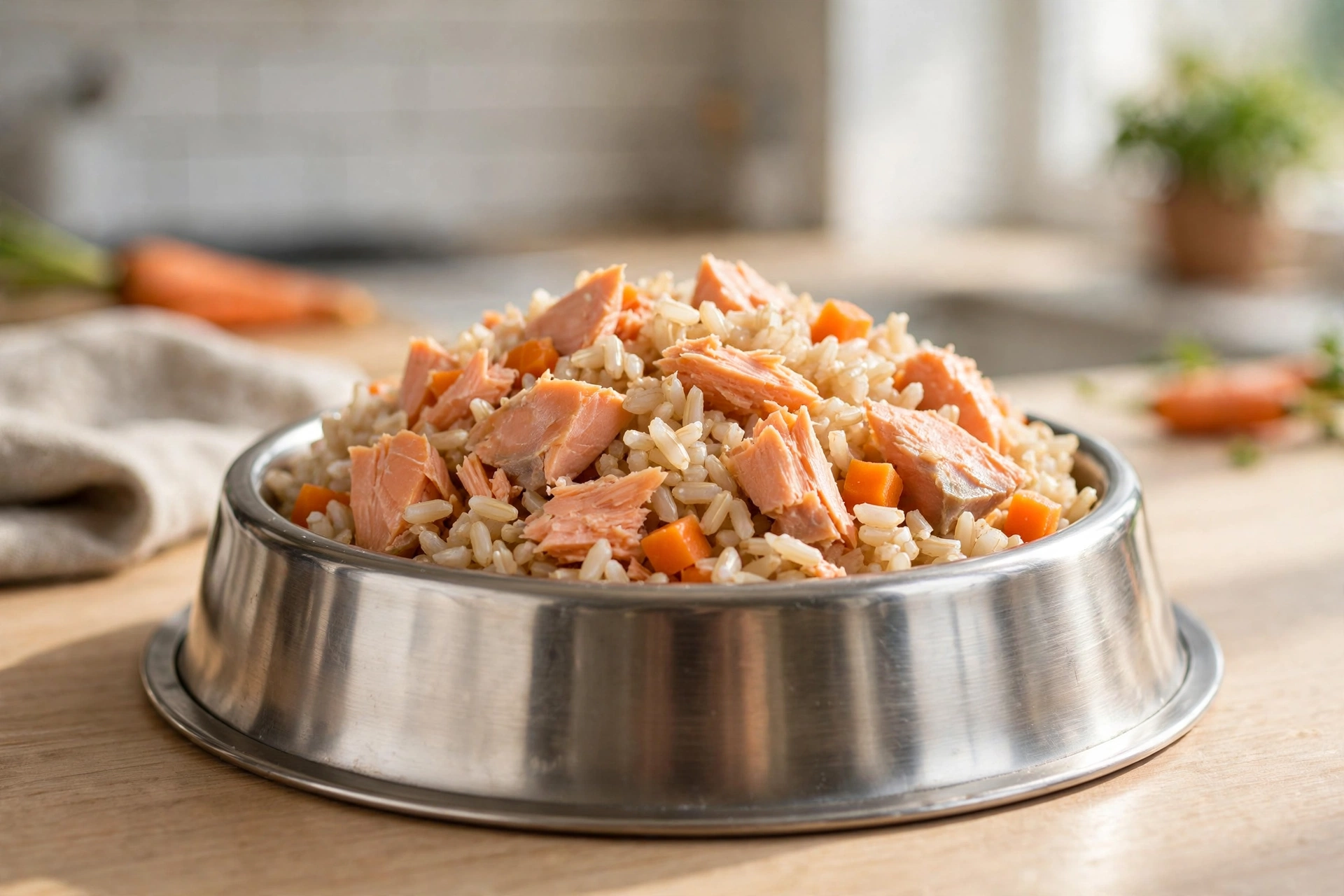
The easiest place to start. This gentle, balanced bowl is perfect for beginners and dogs with sensitive stomachs.
| Ingredient | Amount |
|---|---|
| Boneless, skinless salmon fillet | 1 lb |
| Brown rice | 1 cup uncooked |
| Diced carrots | 1 cup |
| Water or low-sodium broth | 2 cups |
- Cook the brown rice according to package directions and set aside.
- Place the salmon in a skillet over medium heat and cook 5–6 minutes per side until it flakes easily and reaches 145°F inside. Remove any bones and flake the meat.
- Steam the carrots until fork-tender, about 8 minutes.
- Combine everything in a large bowl, toss gently, and let cool to room temperature before serving.
Prep: 10 min | Cook: 30 min | Yield: about 4 cups
2. Salmon Pumpkin Mash
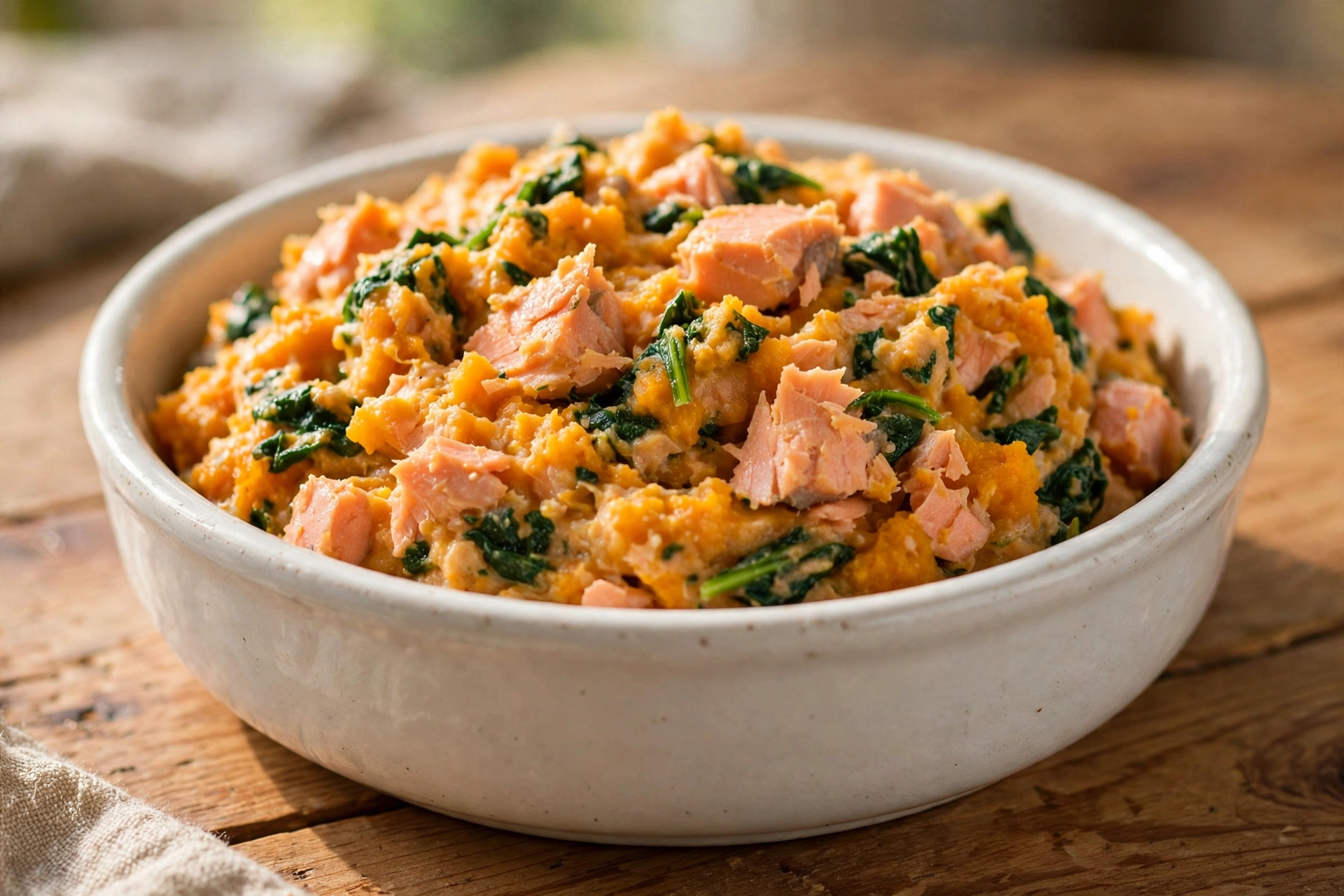
Pumpkin adds fiber that supports healthy digestion, and this soft mash is ideal for senior dogs.
| Ingredient | Amount |
|---|---|
| Salmon fillet, boneless and skinless | 12 oz |
| Plain canned pumpkin (not pie filling) | 1 cup |
| Cooked baby spinach | 1/2 cup |
| Plain low-fat yogurt (optional) | 2 tablespoons |
- Bake the salmon at 375°F for 15–18 minutes, until cooked through to 145°F. Cool and flake, removing any bones.
- Warm the pumpkin in a saucepan over low heat for 3–4 minutes, then stir in the chopped spinach.
- Fold in the flaked salmon and the yogurt if using. Mash lightly and cool completely before serving.
Prep: 10 min | Cook: 20 min | Yield: about 3 cups
3. Baked Salmon & Sweet Potato Patties

These firm little patties are great for portioning ahead and work as training rewards when made small.
| Ingredient | Amount |
|---|---|
| Cooked, flaked salmon | 2 cups |
| Mashed sweet potato | 1 1/2 cups |
| Old-fashioned rolled oats | 1 cup |
| Egg | 1, beaten |
- Preheat the oven to 350°F and line a baking sheet with parchment paper.
- Bake or poach your salmon first to 145°F, then flake it into small pieces, removing all bones.
- Mix the salmon, mashed sweet potato, oats, and egg until everything holds together.
- Scoop into 2-inch patties, flatten slightly, and bake 25 minutes, flipping halfway, until firm and golden at the edges.
- Cool completely before serving or storing.
Prep: 15 min | Cook: 25 min | Yield: about 12 patties
4. Slow Cooker Salmon & Veggie Stew
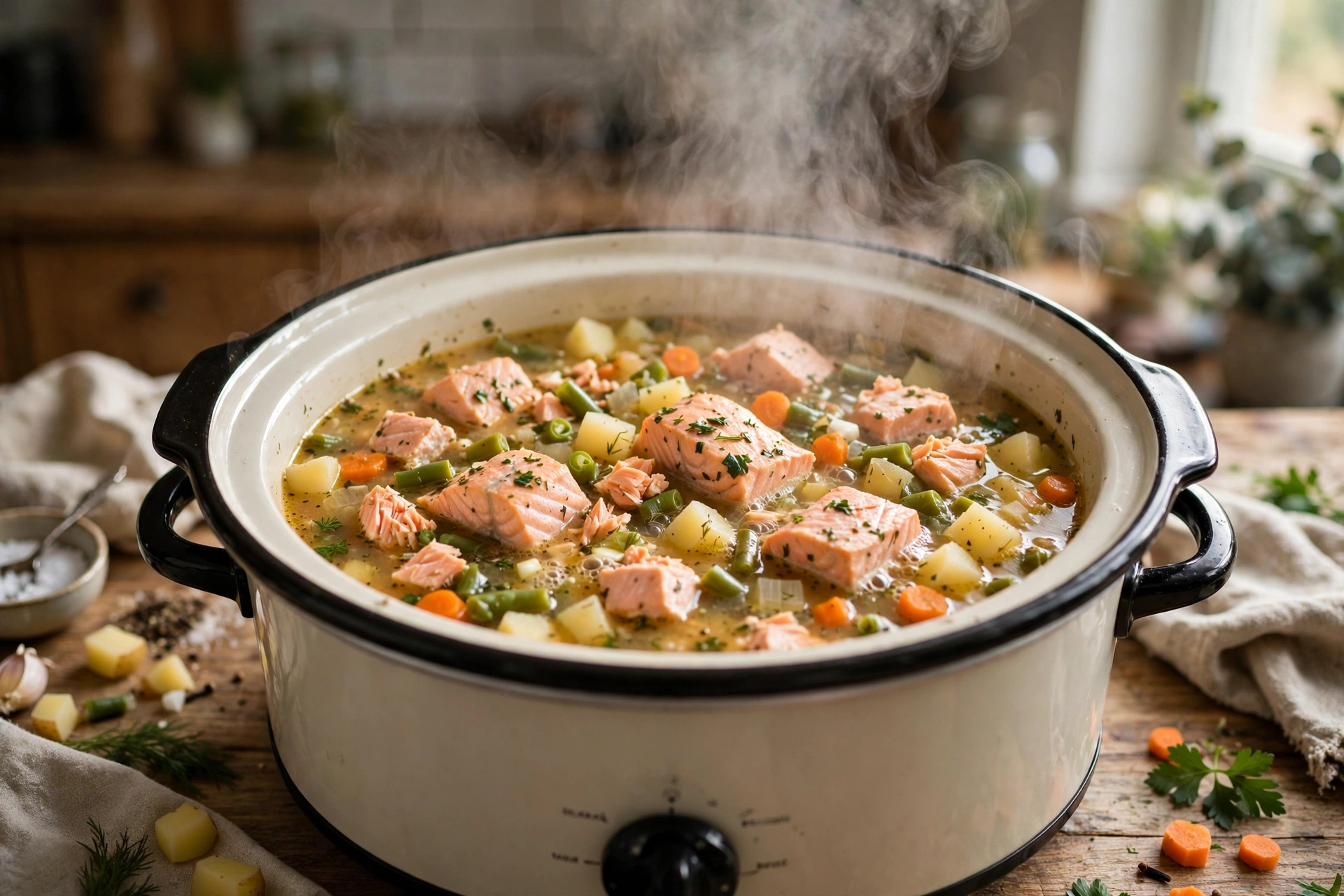
Toss everything in, walk away, and come home to a house that smells amazing.
| Ingredient | Amount |
|---|---|
| Salmon fillets, boneless and skinless | 1 lb |
| Diced potatoes | 2 cups |
| Green beans, trimmed and halved | 1 cup |
| Diced carrots | 1 cup |
| Water or low-sodium broth | 2 1/2 cups |
- Add the potatoes, green beans, carrots, and liquid to the slow cooker.
- Lay the salmon fillets on top. Cover and cook on low for 4 hours or high for 2 1/2 hours.
- Check the salmon with a thermometer; it must reach 145°F. Remove any bones and skin that worked loose.
- Shred the salmon with a fork, stir everything together, and cool for at least 1 hour before serving.
Prep: 15 min | Cook: 4 hours (low) | Yield: about 6 cups
5. Salmon Quinoa Power Bowl
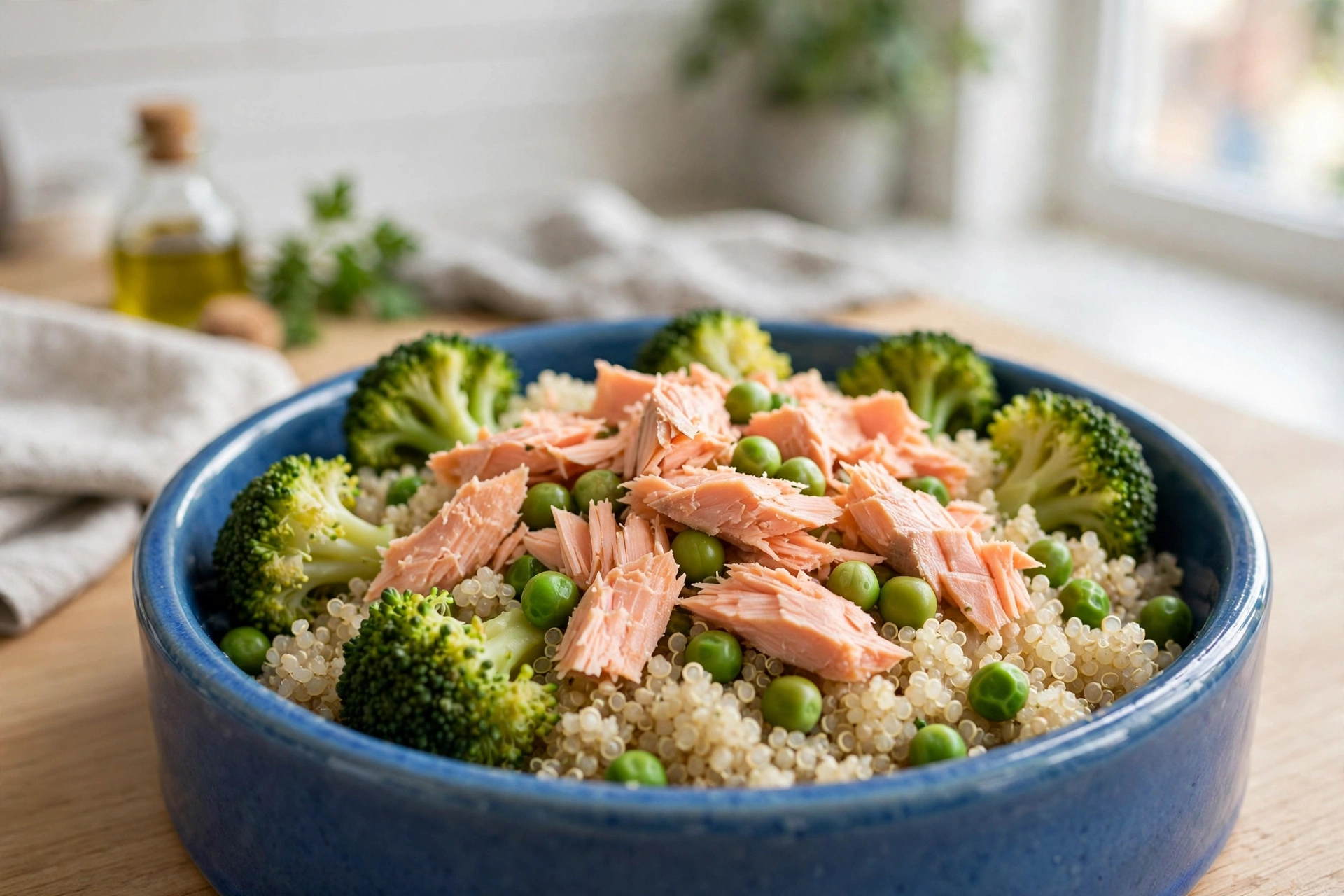
Quinoa brings complete plant protein to the bowl, making this a great option for high-energy dogs.
| Ingredient | Amount |
|---|---|
| Salmon fillet, boneless and skinless | 1 lb |
| Quinoa, rinsed | 1 cup uncooked |
| Broccoli florets | 1 cup |
| Green peas | 1/2 cup |
- Cook the quinoa in 2 cups of water for 15 minutes until the tails unfurl. Fluff with a fork.
- Poach the salmon in simmering water for 8–10 minutes until it flakes and hits 145°F. Flake and remove all bones.
- Steam the broccoli and peas until bright and tender, about 5 minutes.
- Combine everything, toss, and cool to room temperature before serving.
Prep: 10 min | Cook: 25 min | Yield: about 4 cups
6. Salmon Veggie Skillet Dinner
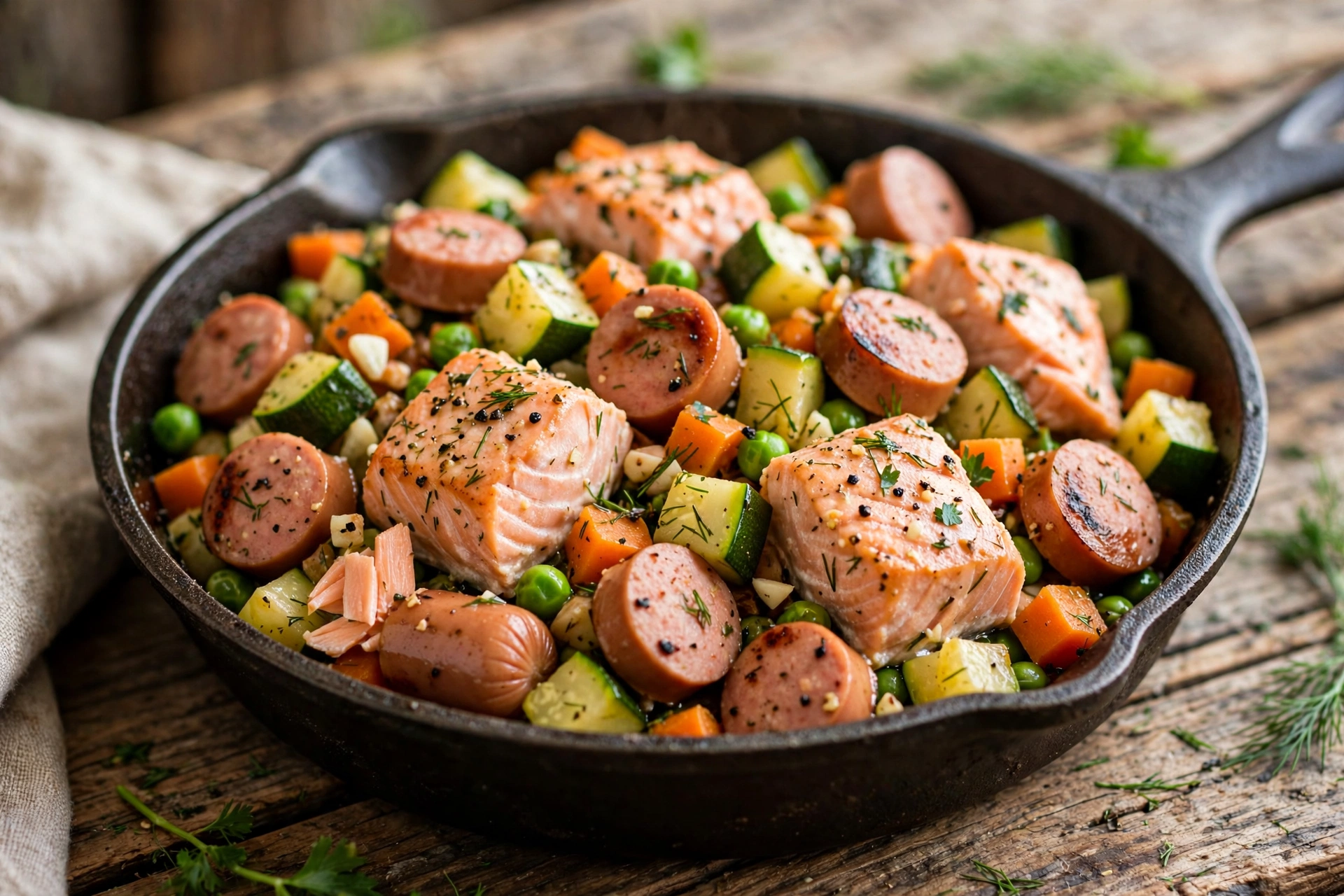
A one-pan weeknight dinner that comes together in under 30 minutes.
| Ingredient | Amount |
|---|---|
| Salmon fillet, diced, boneless and skinless | 1 lb |
| Diced zucchini | 1 1/2 cups |
| Diced carrots | 1 cup |
| Green peas | 1/2 cup |
| Water | 1/2 cup |
- Add the water, carrots, and zucchini to a large skillet over medium heat. Cover and steam 8 minutes.
- Add the diced salmon and peas, cover, and cook 8–10 more minutes until the salmon flakes and reaches 145°F.
- Break the salmon into bite-size pieces, stir well, and remove from heat.
- Cool completely to room temperature before serving.
Prep: 10 min | Cook: 20 min | Yield: about 4 cups
7. Salmon Oatmeal Training Bites
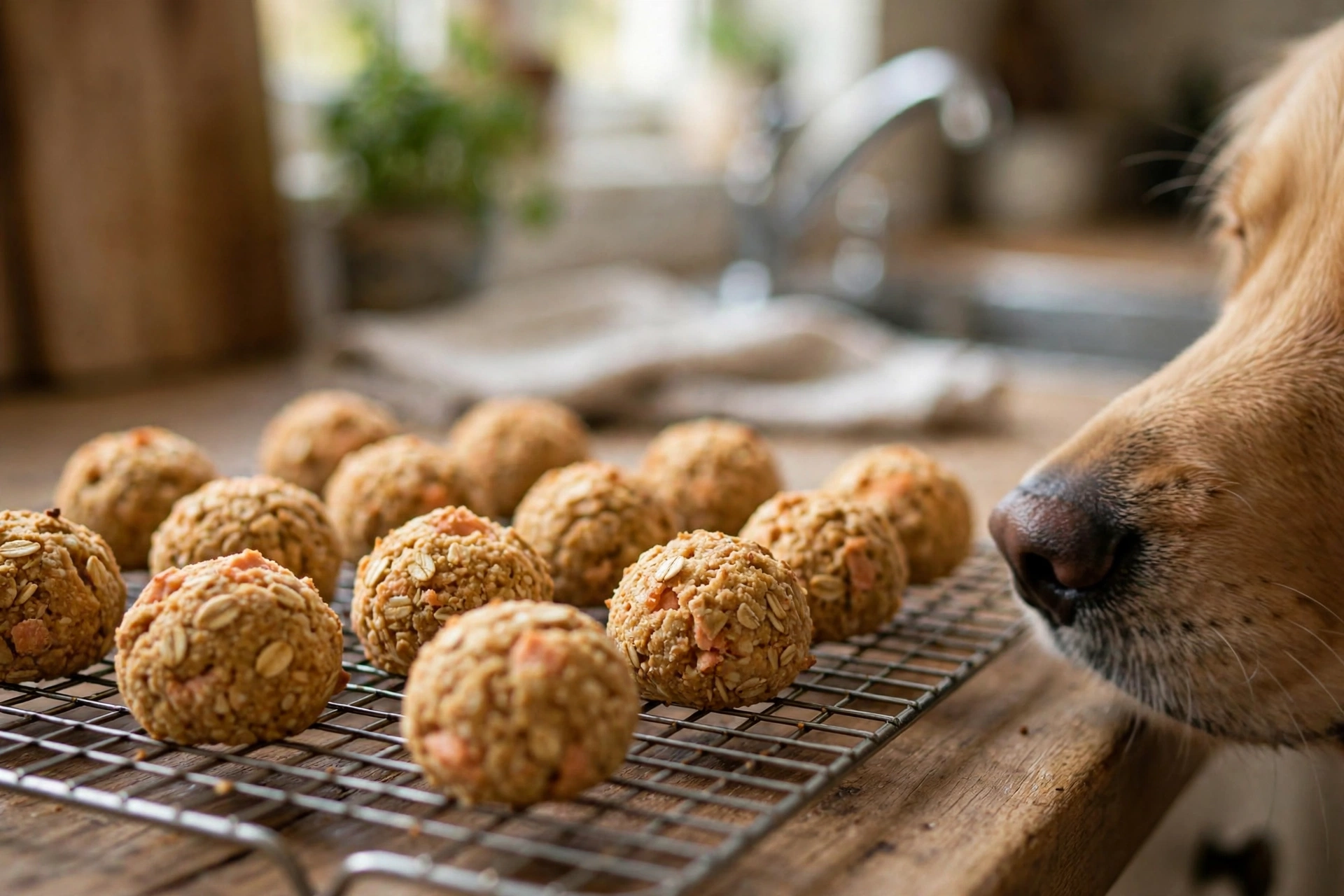
Bite-size, crunchy, and irresistible. Keep a jar by the door for training sessions.
| Ingredient | Amount |
|---|---|
| Cooked, flaked salmon (bones removed) | 1 cup |
| Old-fashioned rolled oats | 2 cups |
| Unsweetened applesauce | 1/2 cup |
| Egg | 1, beaten |
- Preheat the oven to 325°F and line a baking sheet with parchment paper.
- Pulse 1 cup of the oats in a blender into a coarse flour, then mix with the remaining oats, salmon, applesauce, and egg.
- Roll into 1-inch balls and place on the baking sheet, flattening slightly.
- Bake 25–30 minutes until firm and lightly golden. Cool completely on a wire rack.
Prep: 15 min | Cook: 30 min | Yield: about 30 bites
Salmon Safety Rules for Dogs
Keep these rules in mind every time you cook:
- Always cook it fully. Raw salmon can carry the parasite behind salmon poisoning disease, which can be fatal. Cook to 145°F internal temperature.
- Remove all bones. Salmon pin bones are small and easy to miss; flake every fillet with a fork and check by hand.
- Skip the skin. It is very high in fat and can upset stomachs or trigger pancreatitis in sensitive dogs.
- No seasoning. Garlic, onion, chili, soy sauce, and heavy salt are all inappropriate for dogs. Plain is perfect.
- Use canned salmon wisely. Canned salmon packed in water (not oil) is already cooked and affordable; drain it well and mash the soft bones for extra calcium.
- Watch the fat. Salmon is a fatty fish, so dogs with pancreatitis or weight issues should get smaller portions after a vet’s okay.
Portions by Dog Size
Homemade meals should be sized to your dog. As a starting point for a complete meal (replacing, not adding to, kibble):
| Dog Size | Per Meal |
|---|---|
| Small (under 20 lbs) | 3/4 to 1 cup |
| Medium (20–50 lbs) | 1 1/2 to 2 cups |
| Large (50–90 lbs) | 2 1/2 to 3 1/2 cups |
| Giant (over 90 lbs) | 4 to 5 cups |
Every dog’s metabolism is different, so watch your pup’s weight and energy over the first couple of weeks and adjust. A quick vet check-in helps dial in the right daily amount, especially since dogs need balanced calcium and vitamin levels over time.
Storage Instructions
- Refrigerator: Store cooled portions in airtight containers for up to 3–4 days.
- Freezer: Freeze in meal-size portions for up to 3 months. Press portions flat in freezer bags so they thaw evenly.
- Thawing: Thaw overnight in the fridge, never on the counter.
- Reheating: Warm gently and serve at room temperature; fish should never be served cold straight from the fridge or hot.
Frequently Asked Questions
Can dogs eat salmon every day?
Dogs can eat salmon regularly as part of a balanced diet, but variety matters. Rotating it with chicken, turkey, or lean beef gives a wider range of nutrients. Talk to your vet if you plan to feed salmon as the main protein long term.
Is canned salmon safe for dogs?
Yes. Canned salmon packed in water is already cooked, affordable, and safe once drained. Rinse it to reduce sodium, and avoid varieties packed in oil or with added seasonings.
Why can’t dogs eat raw salmon?
Raw or undercooked salmon can carry a parasite that causes salmon poisoning disease, a serious and potentially fatal illness. Symptoms include vomiting, diarrhea, and fever, and it needs prompt veterinary treatment. Always cook salmon to 145°F.
How much salmon can my dog have?
Follow the portion table above based on your dog’s weight, and count homemade meals as part of total daily calories. Treats and training bites should stay under 10 percent of daily calories.
Can puppies eat salmon?
Yes, fully cooked, boneless salmon is fine for puppies in small portions. Puppies have higher calorie and calcium needs, so check with your vet before making homemade food their main diet.