Herbs Dogs Can Eat: 9 Safe Picks and 6 to Avoid (2026)

If you have ever wondered which herbs dogs can eat safely, this guide has you covered. Plenty of common kitchen herbs can freshen your dog’s breath, settle an upset stomach, and support digestion, joints, and immunity — but only when you use the right ones in the right amounts. Here are nine dog-safe herbs, each with benefits, serving tips, and safety notes, plus the ones to keep far away from the food bowl.
Safety Rules Before You Season the Bowl
Even safe herbs can cause trouble in the wrong amounts. Follow these rules: start tiny (a pinch in one meal, then wait 24 hours for vomiting, diarrhea, or itching); use human-grade herbs and wash fresh ones well; get vet approval first for dogs with kidney, liver, or seizure conditions, pregnant dogs, or dogs on medication; never use essential oils (far too concentrated); and remember herbs are a garnish, not a main ingredient.
1. Parsley: Fresher Breath and Kidney Support

Parsley is the classic breath freshener — its chlorophyll is believed to neutralize odors from the digestive tract. It also provides vitamin K, which supports normal blood clotting, and may act as a mild diuretic that supports healthy kidney function.
How to serve: Chop fresh parsley finely and sprinkle it over food 2–3 times a week — about a teaspoon for small dogs, up to a tablespoon for large breeds.
Safety note: Use curly or Italian flat-leaf parsley only, never spring parsley (toxic). Dogs with kidney disease should skip it due to the diuretic effect.
2. Basil: Antioxidant Protection for Active Dogs

Basil is rich in antioxidants that help protect your dog’s cells from everyday oxidative stress — useful for athletic and outdoor dogs. It also offers mild anti-inflammatory and antimicrobial properties that support immune health.
How to serve: Chop a few fresh leaves and fold them into the meal — a pinch for small dogs, up to a teaspoon of chopped leaves for large dogs.
Safety note: Sweet basil is the safe choice. Avoid holy basil in large amounts, as it may affect blood clotting.
3. Rosemary: Mental Sharpness for Senior Dogs
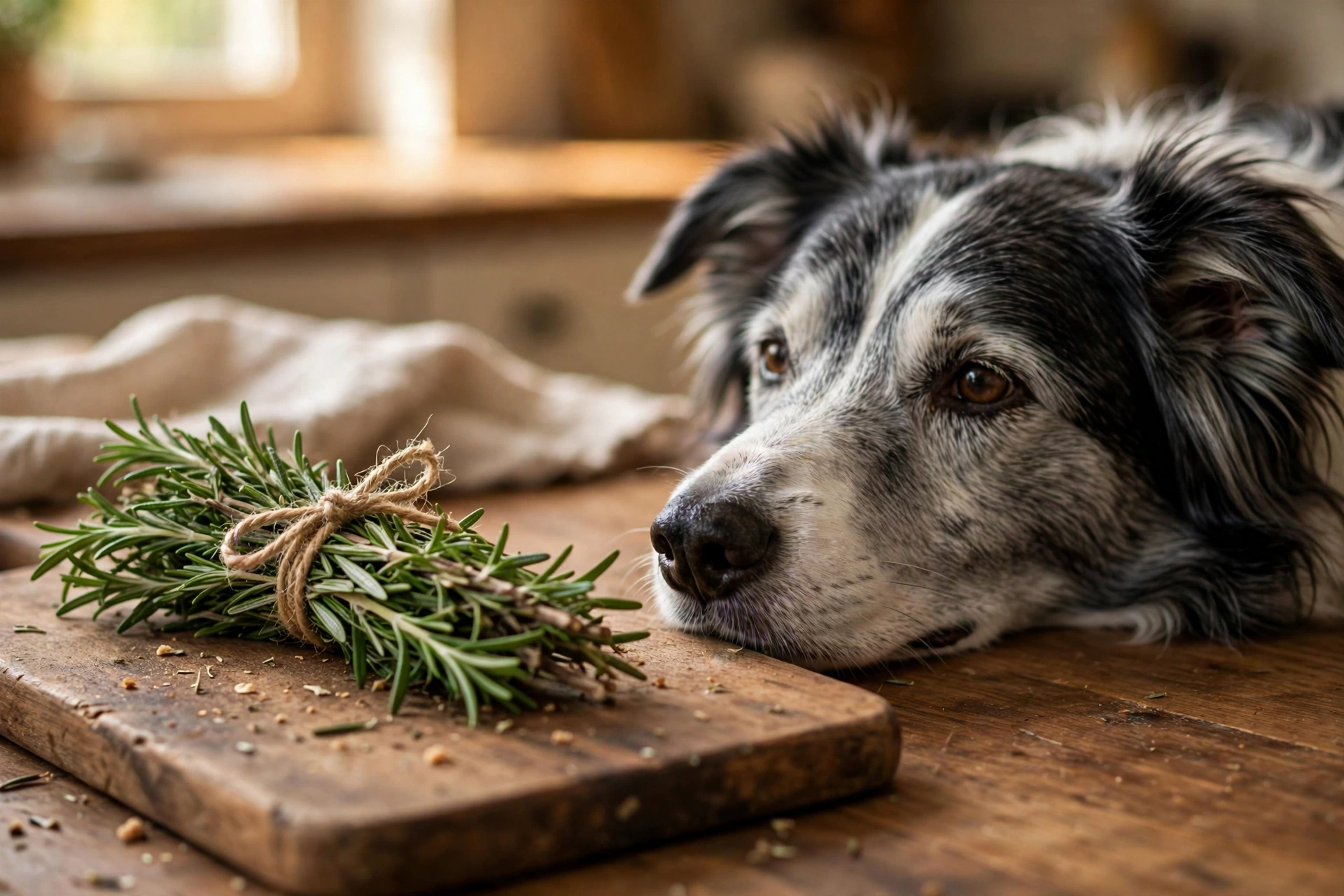
Rosemary contains carnosic acid, an antioxidant linked to cognitive protection — one reason many senior-dog formulas include it. It also supports immune health and offers mild anti-inflammatory properties that aging joints may appreciate.
How to serve: Sprinkle a little fresh or dried rosemary over food or mix it into baked treats — about 1/8 teaspoon of dried rosemary per 20 pounds of body weight daily is a common guideline.
Safety note: Not recommended for dogs with epilepsy, as it may lower the seizure threshold. Pregnant dogs should avoid it too.
4. Thyme: Gentle Help for Gassy Tummies

Thyme contains thymol, a natural compound with antimicrobial properties that can help balance gut bacteria, calm mild gas, and soothe a slightly upset stomach.
How to serve: Sprinkle about 1/8 teaspoon of dried thyme (or a small pinch of fresh leaves) into food a couple of times a week.
Safety note: Ordinary garden thyme is safe in food amounts. Avoid thyme essential oil and Spanish thyme, which is a different, non-dog-safe plant.
5. Mint: Cooling Relief in Small Doses
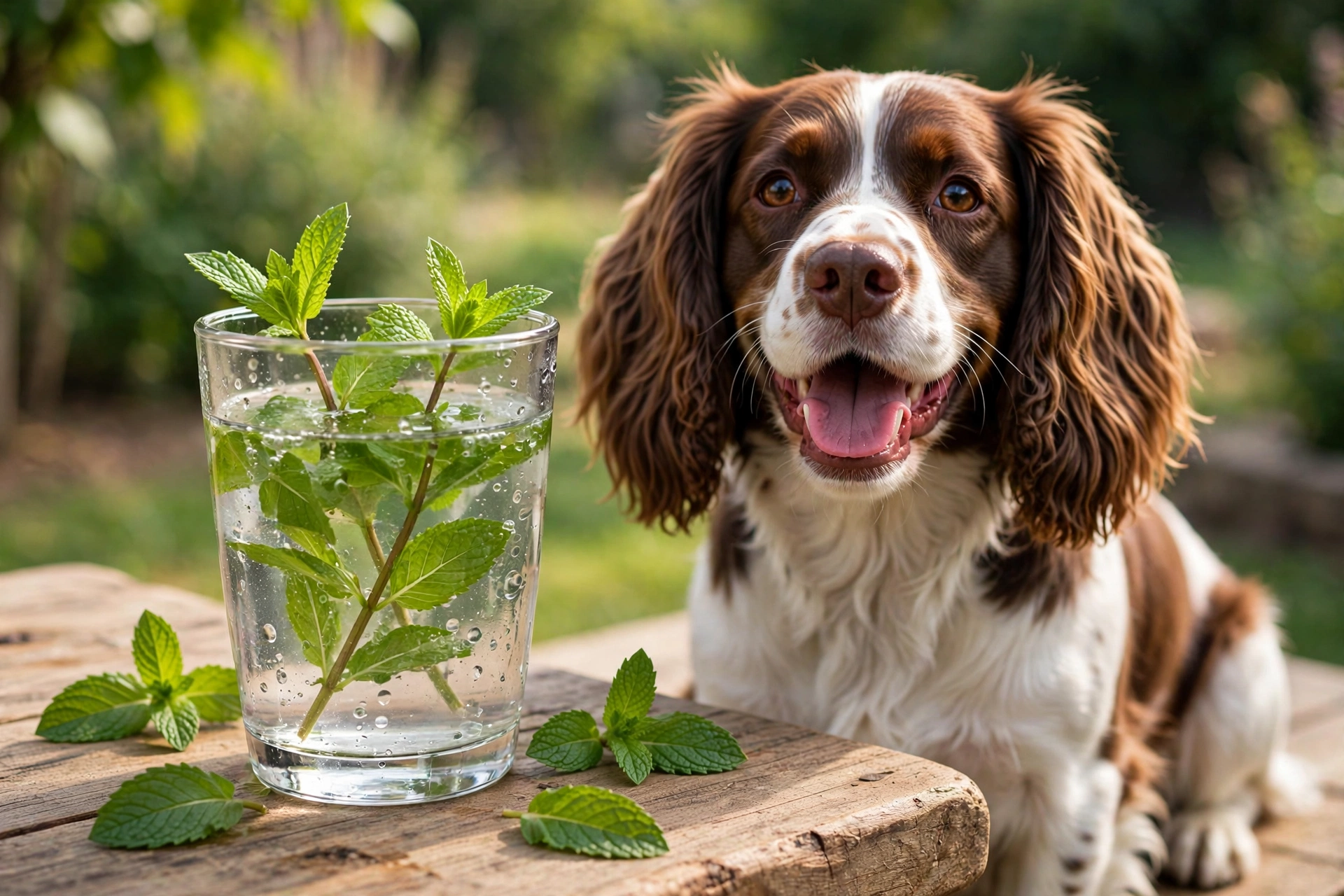
Mint can freshen breath and settle a mildly queasy stomach. One or two leaves chopped into food — or frozen into an ice cube on a hot day — makes a refreshing low-effort treat.
How to serve: Use spearmint or peppermint only. Or steep leaves briefly in hot water, cool completely, and pour a little over kibble.
Safety note: Never use pennyroyal mint — it is toxic and can cause liver failure. Skip mint essential oils entirely.
6. Dill and Fennel: The Bloat-Fighting Duo

Dill and fennel are traditional carminatives — they help release trapped gas and ease digestive cramping. Handy for deep-chested breeds like Great Danes and German Shepherds, which are more prone to bloating.
How to serve: Sprinkle about 1/2 teaspoon of fresh or dried dill per 20 pounds of body weight over meals. Crush a small pinch of fennel seeds to powder first for easier digestion.
Safety note: Keep portions modest — too much fennel can upset the stomach on its own.
7. Ginger: The Classic Upset-Stomach Soother

Ginger is one of the best-known natural digestive aids. It can help calm nausea, ease motion sickness on car rides, and reduce mild bloating, and its anti-inflammatory properties may support stiff joints.
How to serve: Grate about 1/4 teaspoon of fresh ginger into a medium dog’s food. For car sickness, a little ginger about 30 minutes before the ride may help.
Safety note: Ginger can thin the blood slightly — check with your vet if your dog takes blood thinners or is scheduled for surgery.
8. Turmeric: Golden Support for Stiff Joints

Turmeric’s active compound, curcumin, is known for its anti-inflammatory and antioxidant properties. It is a popular choice for senior dogs with arthritis or hip stiffness and may also support liver and digestive health.
How to serve: Start with about 1/8 to 1/4 teaspoon of turmeric powder per 10 pounds of body weight mixed into food daily. Pair it with a little healthy fat (like coconut oil) and a pinch of black pepper, since curcumin is poorly absorbed alone.
Safety note: It can interfere with blood thinners and diabetes drugs and may worsen gallbladder issues — vet approval first. It also stains everything it touches.
9. Chamomile: Calm in a Cup

Chamomile is best known as a calming herb — helpful for anxious dogs during storms, fireworks, or travel. Its mild anti-inflammatory and antispasmodic properties may also soothe a slightly upset stomach.
How to serve: Brew a weak cup of plain chamomile tea, cool it completely, and pour a tablespoon or two over food as a soothing topper. Use plain chamomile with no added flavorings or caffeine.
Safety note: Dogs allergic to ragweed or daisy-family plants may react to chamomile. Use occasionally rather than daily, and skip it for pregnant dogs.
Herbs Your Dog Must Never Eat
Keep these completely out of reach:
- Garlic and onion (all forms): Can damage red blood cells and cause anemia, even in small amounts — including powders and cooked versions.
- Chives and leeks: Same allium family, same red-blood-cell danger.
- Nutmeg: Can cause tremors, disorientation, and in larger amounts seizures.
- Pennyroyal: A mint lookalike that can cause severe liver damage.
- Comfrey: Contains compounds linked to liver damage with repeated exposure.
- Tea tree oil: Toxic to dogs even in small topical amounts.
If your dog eats any of these, call your vet or an animal poison helpline right away — do not wait for symptoms.
How Much Herb Is Safe? Portion Guide
These are daily maximums, not requirements — start at the low end and watch your dog for 24 hours:
| Dog Size | Fresh Herbs (per day) | Dried Herbs (per day) |
|---|---|---|
| Small (under 20 lbs) | 1/4 teaspoon | A small pinch |
| Medium (20–50 lbs) | 1/2 to 1 teaspoon | 1/4 teaspoon |
| Large (over 50 lbs) | 1 to 2 teaspoons | 1/2 teaspoon |
Easy ways to add herbs: chop fresh herbs over kibble with a splash of warm water; pour cooled weak chamomile tea over food as a topper; or mix dried parsley, thyme, or a little turmeric into your next batch of homemade dog treats.
When to Stop: Red Flags
Stop the herb and call your vet if you notice any of these within 24 hours: repeated vomiting or diarrhea, excessive drooling, sudden lethargy or weakness, itchy skin, hives, or swelling of the face or muzzle. Mild one-time soft stool may just mean the amount was too big — anything persistent or severe deserves a vet visit.
Keep Reading
- Homemade Dog Food Recipes: 10 Vet-Approved Meals (2026)
- Dog Treats for Sensitive Stomachs: 9 Gentle Recipes (2026)
- Grain-Free Dog Treats: 10 Easy Recipes (2026)
- 13 Easy Baked Dog Treats Better Than Store-Bought (2026)
- Homemade Frozen Dog Treats: 12 Cool Recipes (2026)
Frequently Asked Questions
Can dogs eat fresh herbs every day?
Small amounts of safe herbs like parsley or basil can be given most days, but moderation is best. Herbs supplement a balanced diet — rotate them and stick to the portion guide.
Are dried herbs as safe as fresh herbs for dogs?
Yes, as long as they are human-grade and free of added salt, onion, or garlic powder. Dried herbs are more concentrated, so use roughly one-third the fresh amount.
Can puppies eat herbs?
Most safe herbs are fine for puppies over 8 weeks in tiny amounts — use half the small-dog portion, introduce one herb at a time, and ask your vet first.
What should I do if my dog ate garlic or onion?
Call your vet immediately, even if your dog seems fine — symptoms like weakness and pale gums can take days to appear. Note how much was eaten and when.
Do herbs replace my dog’s medication?
No. Herbs can support your dog’s health but are not substitutes for prescribed medication. Always talk to your vet before adding herbs for a dog with a diagnosed condition.