Homemade Probiotics for Dogs: 6 Kitchen Staples for Gut Health (2026)

If your dog’s stomach has been acting up lately — the gurgles at 2 a.m., the gas that clears the room, the on-and-off soft stools — you’re not alone. Making homemade probiotics for dogs is one of the simplest things you can do in your own kitchen to support your pup’s gut health, and it costs a fraction of commercial supplements.
What Do Probiotics Actually Do for Dogs?
Probiotics are live beneficial bacteria and yeasts that support a balanced gut microbiome. A healthy gut is linked to steadier digestion, firmer stools, less gas, and a calmer immune response. When the balance tips — after a course of antibiotics, a stressful boarding stay, or a sudden diet change — dogs may develop loose stools, bloating, or a dull coat. These foods support digestive health; they are not a treatment for disease, and persistent symptoms always deserve a vet visit.
One more thing worth knowing: the specific strain matters. Live, unpasteurized foods carry active cultures; pasteurized or heavily heated versions often do not. Keep that in mind as you read through each option below.
6 Homemade Probiotic Foods for Dogs
1. Plain Kefir
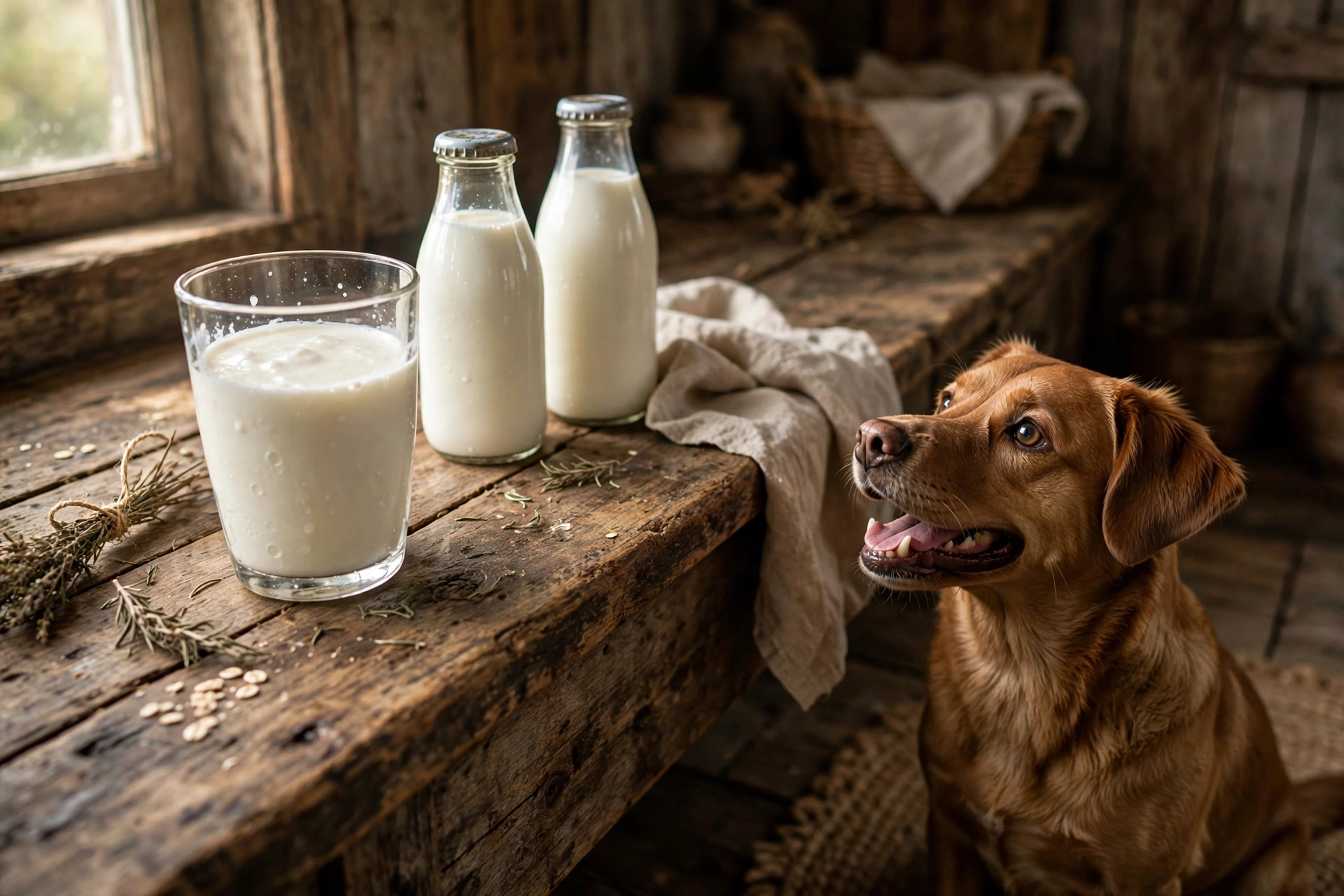
Kefir is a fermented milk drink packed with a wide variety of live cultures — usually more diverse than standard yogurt. Most dogs find its tangy taste appealing, and it pours easily over meals.
How to use: Offer 1 teaspoon per 10 pounds of body weight per day, poured over cooled food or served as a small side. Start with half that amount for the first week so your dog’s stomach can adjust gradually.
Safety notes: Choose plain, unsweetened kefir with no added fruit, sweeteners, or xylitol. Goat’s milk kefir is often better tolerated by dogs with dairy sensitivity than cow’s milk kefir. Never add kefir to hot food — heat destroys the live cultures (more on that below).
2. Plain Unsweetened Yogurt

Yogurt is the classic homemade probiotic and the easiest to find. Look for labels that say “live and active cultures” — that wording is what separates a true probiotic food from a plain dairy snack.
How to use: Serve 1 tablespoon per 10 pounds of body weight daily, either as a meal topper or frozen into small cubes for a cooling treat. A silicone muffin tray makes portioning easy.
Safety notes: Buy plain yogurt only. Flavored varieties can contain xylitol (extremely toxic to dogs), excess sugar, or artificial sweeteners. Dogs who are strongly lactose intolerant may do better with goat’s milk yogurt or kefir instead.
3. Raw Goat’s Milk

Raw, unpasteurized goat’s milk is naturally fermented and contains live cultures along with easily digestible fats. Many pet owners reach for it when their dog refuses other probiotic foods because most dogs love the taste.
How to use: Pour 1–2 ounces per 20 pounds of body weight over the daily meal, or serve it as a standalone “soup” on warm afternoons. Introduce it slowly over several days.
Safety notes: Only use raw goat’s milk from a reputable, pet-safe source — unpasteurized dairy can carry harmful bacteria if mishandled. Store it in the fridge, discard after the stated date, and stop serving if your dog develops diarrhea or vomiting.
4. Fermented Vegetables (Sauerkraut)

Properly fermented vegetables, like plain sauerkraut or fermented carrots, develop live lactic-acid bacteria during the fermentation process — the same family of cultures found in yogurt. They’re also a good source of fiber, which supports the bacteria already living in your dog’s gut.
How to use: Add 1–2 teaspoons of plain, unpasteurized sauerkraut juice or finely chopped sauerkraut per meal for a medium dog (scale down for small breeds). Unpasteurized is key — canned or jarred sauerkraut from the shelf is usually pasteurized and culture-free.
Safety notes: Check the label: the ingredient list should read just cabbage and salt. Avoid kraut with caraway seeds, garlic, onion, wine, or vinegar. Introduce tiny amounts first, since the salt content can upset an unadjusted stomach.
5. Green Tripe

Green tripe is the unwashed, unbleached stomach lining of ruminant animals. It smells awful to humans — dogs adore it. Beyond naturally occurring probiotics and digestive enzymes, it’s rich in amino acids that support overall gut function.
How to use: Feed raw green tripe as 10–20% of the daily diet, or use freeze-dried green tripe treats as a smaller supplement. It’s widely available frozen from raw pet food suppliers.
Safety notes: Only “green” tripe counts — the white, bleached tripe sold in grocery stores has been chemically cleaned and contains no live cultures. Because of its strong smell, store it sealed and thaw portions in the fridge. As with any raw food, practice basic hygiene and wash bowls and hands after handling.
6. Fermented Coconut Water
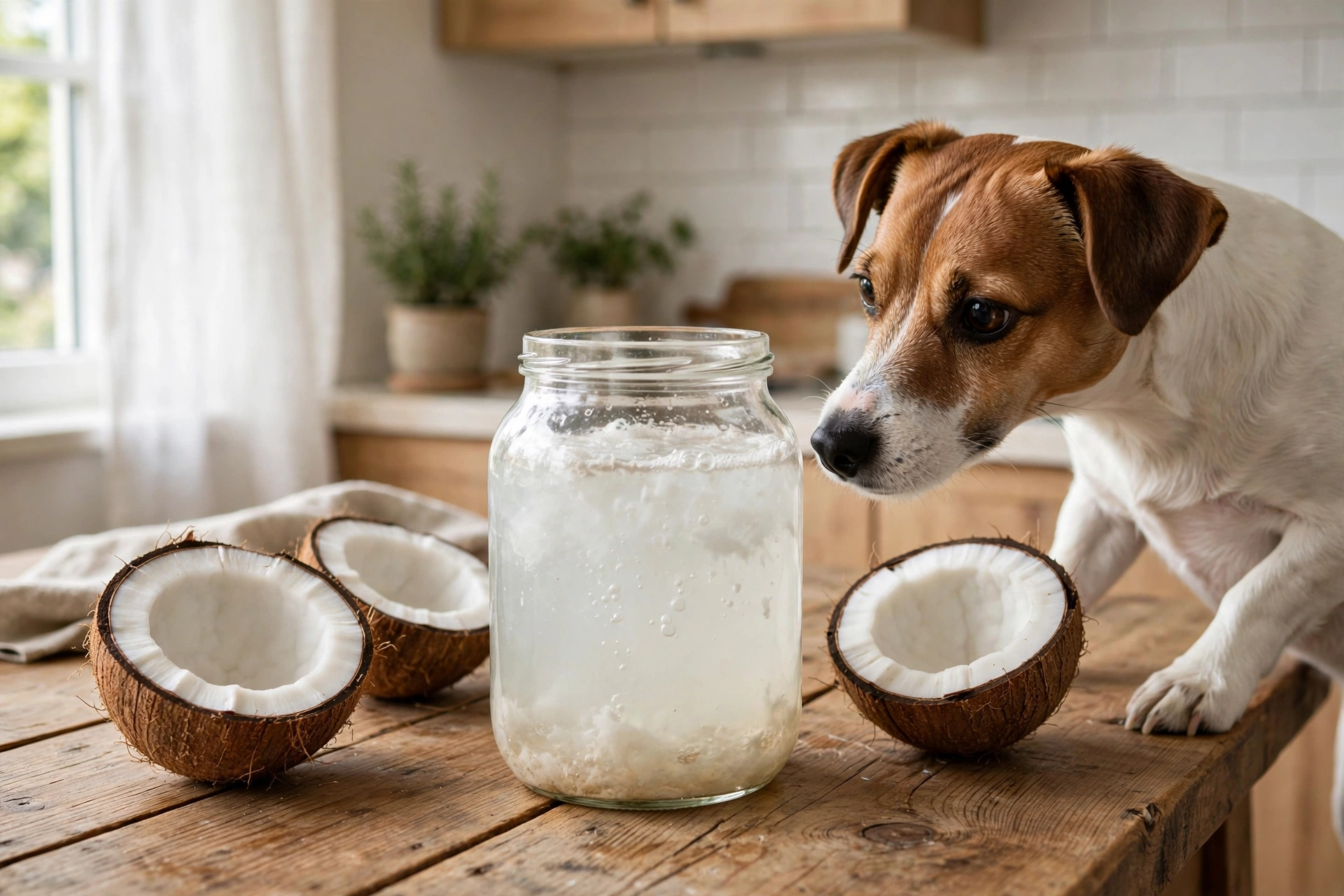
Coconut water kefir is made by fermenting young coconut water with kefir grains or a starter culture. The result is a light, hydrating drink with live cultures and electrolytes — a nice option for dogs that don’t tolerate dairy.
How to use: Serve 1–2 tablespoons for a small dog or up to 1/4 cup for a large dog daily, poured over food or offered as a drink. It’s especially handy after a long walk or on hot days.
Safety notes: Use only unsweetened, additive-free coconut water with no added sugars or flavorings. Homemade fermented batches should smell pleasantly tangy — discard anything that smells off or looks slimy. Start with small amounts, since the natural sugars can loosen stools in sensitive dogs.
The #1 Mistake That Wipes Out Live Cultures
Here is the thing most people get wrong with homemade probiotics: heat kills live cultures. Temperatures above roughly 115°F (46°C) destroy the beneficial bacteria you’re trying to feed your dog. Mixing yogurt or kefir into steaming-hot food, or baking it into treats, leaves you with a tasty snack — but no longer a probiotic one.
The fix is simple: always add probiotic foods after the meal has cooled to room temperature. If you cook for your dog, let the food cool completely first, then stir in the kefir, yogurt, or goat’s milk right before serving. The same rule applies to fermented vegetables — serve them raw or at room temperature, never cooked into the meal.
One related tip: live cultures degrade over time. Buy small quantities, check expiration dates, and store fermented foods in the fridge as directed. A forgotten tub of yogurt from two months ago is not doing your dog’s gut any favors.
Probiotic-Looking Foods to Avoid
Not every fermented-sounding food is safe for dogs. Keep these off the menu:
- Flavored yogurts and kefirs — often contain xylitol, which is toxic to dogs even in small amounts.
- Kombucha — contains caffeine, alcohol, and high acidity that can upset a dog’s stomach.
- Kimchi and pickled foods — usually contain garlic, onion, chili, or excessive salt.
- Store-bought “probiotic” treats with no live-culture guarantee — shelf-stable treats have typically been heat-treated; the cultures are dead by the time they reach the bag.
- Miso and soy sauce — far too salty and fermented with ingredients dogs don’t need.
When to See the Vet Instead
Homemade probiotics are for supporting everyday digestive balance, not for treating illness. Call your veterinarian if your dog has bloody or black stools, repeated vomiting, a bloated or painful belly, lethargy that doesn’t lift within a day, or diarrhea lasting more than 48 hours. Puppies, seniors, and dogs with immune conditions or on antibiotics should get a vet’s go-ahead before you start any new supplement routine — even a natural one.
Keep Reading
- Homemade Dog Food Recipes: Balanced Meals for Your Pup (2026)
- Grain-Free Dog Treats: Easy Homemade Recipes (2026)
- 13 Easy Baked Dog Treats Better Than Store-Bought (2026)
- 12 Dog Grooming Tips Every Pet Parent Should Know (2026)
- Homemade Frozen Dog Treats: Easy Recipes (2026)
Frequently Asked Questions
Can I give my dog human probiotic yogurt?
Yes, as long as it is plain, unsweetened, and contains live cultures — and has no xylitol. Human yogurt works fine for most dogs; just keep portions small and introduce it gradually.
How long before I see results from homemade probiotics?
Most owners notice steadier digestion within 1–2 weeks of consistent daily use. If nothing changes after 3–4 weeks, or symptoms get worse, check in with your vet.
Are homemade probiotics as good as commercial dog probiotics?
Homemade options like kefir and raw goat’s milk provide diverse live cultures and whole-food nutrition, which is a real advantage. Commercial products, though, deliver measured, dog-specific strains at guaranteed doses. Many owners use both: food-based probiotics daily and a targeted supplement when the vet recommends one.
Can puppies have homemade probiotics?
Small amounts of plain kefir or yogurt are generally fine for puppies over 8 weeks old, but start with tiny portions and watch for loose stools. Ask your vet first if the puppy is very young, underweight, or recently ill.
What kills probiotics in dog food?
Heat above about 115°F (46°C) destroys live cultures, as does long storage past expiration. Always add probiotic foods to cooled meals and store fermented products in the fridge.