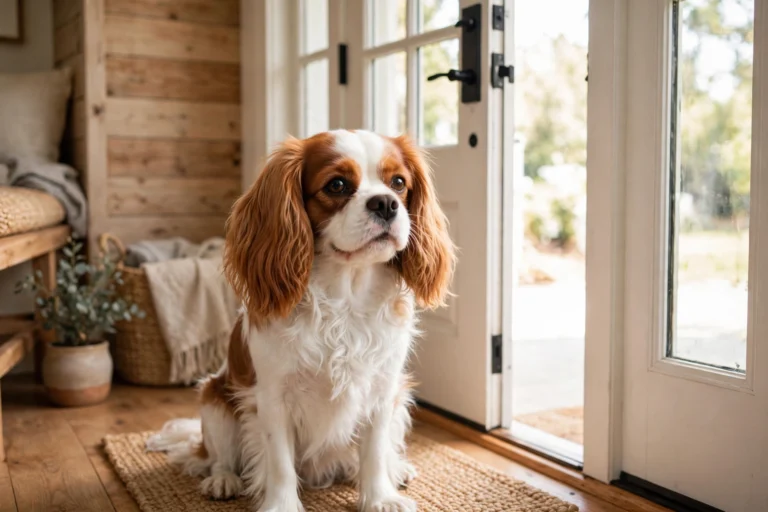
Why Does My Dog Cock His Head? 6 Reasons (2026)

There is almost nothing more charming than a dog cocking his head to one side while you talk to him — that sideways tilt says, “I’m listening, human!” But why does my dog cock his head, exactly? Is he trying to hear you better, reading your face, or just milking the moment because he knows you melt every time he does it? Here are the six most likely reasons behind the world’s most beloved head tilt, plus when that tilt might actually mean a trip to the vet.
Table of Contents
- 1. He’s Tuning In to Hear You Better
- 2. He’s Trying to Read Your Face
- 3. He’s Curious or Confused
- 4. He Learned It Gets Him a Reward
- 5. He’s Showing Empathy
- 6. His Ear Is Bothering Him (Vet Note)
- When Head Tilting Needs a Vet
- Frequently Asked Questions
1. He’s Tuning In to Hear You Better
The most widely accepted explanation for the head tilt is all about sound. Dogs process the tiny time differences between a sound reaching one ear versus the other to figure out where it is coming from, and slightly changing head position gives the brain better information about a sound’s height and distance. Tilt, and the ear flaps — the pinnae — reposition like little satellite dishes, sharpening directional hearing.
That is why an unfamiliar squeak, a high-pitched toy, or an odd tone in your voice can trigger an instant tilt. Your dog isn’t being dramatic; he is quite literally adjusting his antenna to catch every word. Breeds with heavy, floppy ears — like Cocker Spaniels and Basset Hounds — may tilt more often simply to lift the ear flap and open the ear canal a little wider, letting sound waves flow in more freely.
Interestingly, the same brain region that controls your dog’s ear muscles — part of the brain stem called the nucleus ambiguus — also governs facial expressions, gaze, and vocalizations. So the head tilt may partly be an involuntary reflex wired into the act of concentrating on sound, the way humans furrow their brows when they listen hard.
What to do: Nothing! A healthy, occasional head tilt at a new sound is your dog’s auditory system working exactly as designed. If you want to sharpen his word skills, say trigger words like “walk,” “treat,” or “ball” clearly and consistently so he keeps building associations.
Helpful pick: Egiao Dog Treat Pouch — keep training treats handy so you can reward the words he’s straining so hard to understand.

2. He’s Trying to Read Your Face
Here’s a less obvious one: your dog’s muzzle may be getting in the way of his view. Research by Dr. Stanley Coren found that long-muzzled breeds tilt their heads more often than flat-faced breeds, and the theory is that cocking the head shifts the snout out of the line of sight so the dog can see your full face — your eyes, your mouth, your expression.
Dogs are extraordinary readers of human emotion, and they rely on our facial cues to understand what we want and how we feel. That tilt while you speak may be him saying, “Let me see your whole face so I get this right.”
What to do: Talk face-to-face at his level when giving instructions. Short, consistent hand signals paired with words make his decoding job easier, and he’ll reward you with more of those melting tilts. Avoid talking to him from across a noisy room and then wondering why he seems confused — your face carries half the message, and he can only read it if he can see it.
Helpful pick: Outward Hound Dog Tornado Puzzle Toy — a brain-busting puzzle that keeps a clever, expressive dog mentally engaged between conversations.
3. He’s Curious or Confused
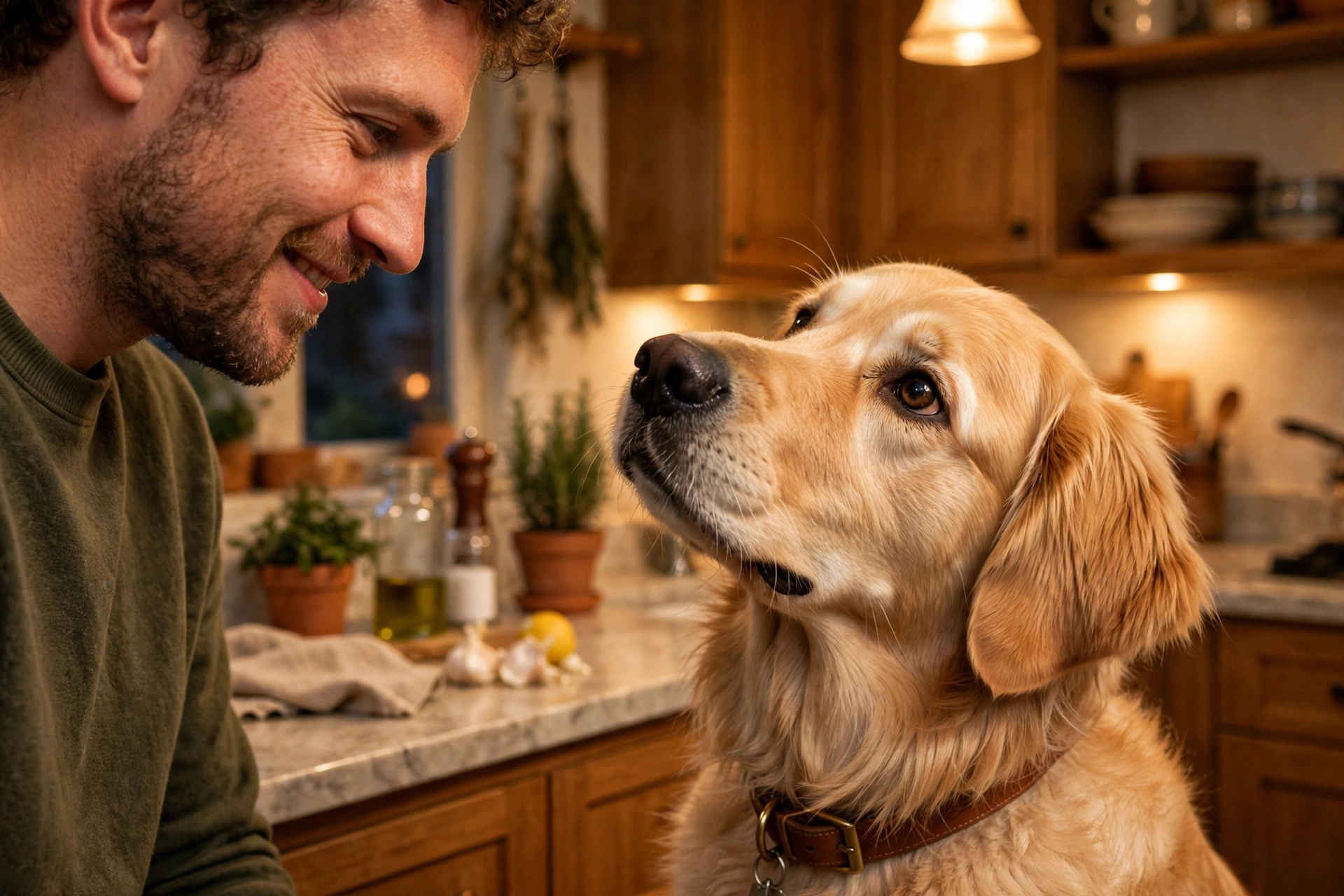
Sometimes a head tilt is pure cognitive processing. A 2021 study published in Animal Cognition found that dogs who were good at learning toy names tilted their heads about 42% of the time when asked to fetch a toy they recognized — far more than typical dogs. The researchers concluded the tilt is linked to mental effort, especially memory recall.
So when your dog cocks his head at a strange new object or a word he half-knows, he may be concentrating hard, mentally flipping through what he knows to make sense of it.
What to do: Give him a moment to think, then help him out with a clear cue. Turning curiosity into a game — “find the ball!” — channels that concentration into learning. If your dog tilts a lot at trigger words, use that window: say the word, let him process, then reward when he responds correctly. That tilt is a sign his mental gears are turning, and it is the perfect moment to reinforce the association.
Helpful pick: Snuffle Mat — feeds a curious nose and turns mealtime into a thinking game.

4. He Learned It Gets Him a Reward
Let’s be honest: the head tilt is rewarded like few behaviors on earth. Every time your dog cocks his head, somebody coos, laughs, grabs the phone camera, or hands over a treat. Dogs are brilliant operant learners, and behavior consultant Steven R. Lindsay calls this the “social head tilt” — the dog has figured out that tilting equals attention.
Once that connection clicks, the tilt becomes a deliberate tool. Want a treat? Tilt. Want belly rubs? Tilt. It’s not manipulation in a bad sense — it’s just a dog who discovered a language you can’t resist. Puppies often pick this up fastest, since every new tilt in a puppy is met with squeals of delight, training them from an early age that the head cock is their golden ticket.
What to do: Enjoy it! If you want to shape it into something useful, put it on cue — say “cute!” right before treating, and you’ll have a party trick in a week.
Helpful pick: Zuke’s Mini Naturals Training Treats — small, soft rewards perfect for reinforcing that adorable tilt.

5. He’s Showing Empathy
Dogs notice when our mood shifts, and the head tilt often appears at exactly those moments — when you’re upset, talking in a sad tone, or even crying. Combined with soft eyes and a relaxed body, the tilt becomes part of a comfort package: he’s tuning in emotionally, not just acoustically.
While scientists are still teasing apart canine empathy, plenty of owners report that the head tilt shows up right when they need it most. Coincidence or not, it’s one more way dogs say, “I’m here.” Pay attention to the rest of his body too — a tilt paired with a gently wagging tail and soft, blinky eyes is a comfort bid, while a tilt paired with stiff posture and pricked ears is more about alertness than affection.
What to do: Accept the comfort. A calm petting session or quiet time together strengthens the bond — and yes, he’ll probably tilt again.
Helpful pick: SmartPetLove Snuggle Puppy — a heartbeat plush that comforts anxious or empathetic pups when you can’t be right there.

6. His Ear Is Bothering Him (Vet Note)
Most head tilts are cute and harmless — but a persistent tilt is a different story. If your dog suddenly starts holding his head tilted to one side and keeps it there — no sound, no face-reading, just a constant lean — that can signal an ear infection, inflammation, or even a vestibular problem affecting balance.
Watch for red flags that suggest discomfort rather than curiosity: head shaking, scratching at the ear, a bad smell or discharge from the ear, loss of balance, circling, or reluctance to be touched on one side of the head.
What to do: Check the ear gently for redness, odor, or debris. For routine ear care, a vet-recommended cleanser helps keep things fresh — but if the tilt is constant, paired with balance problems, or accompanied by discharge or swelling, see your vet promptly rather than treating it at home.
Helpful pick: ZYMOX Ear Cleanser Solution — a vet-recommended, enzyme-based ear cleanser for routine ear care and odor control (ask your vet first if ears are sore or infected).

When Head Tilting Needs a Vet
The rule of thumb: an occasional, situational tilt (he hears something, he sees you, he tilts) is healthy communication. A constant, locked tilt to one side — especially one that appears suddenly with balance issues, vomiting, head shaking, or ear discharge — needs a vet visit soon. Vestibular disease and inner-ear infections can look a lot like a “cute tilt” in the beginning, so trust your gut if something feels off.
How to Get the Famous Head Tilt on Demand
If your dog only tilts occasionally and you wish he’d do it more, you can nudge the behavior along without any pressure. Speak in a slightly higher, animated tone and use a trigger word he half-knows — the mental effort often produces the tilt. Hold a treat just above your face so he has to look up at you to track it. Many dogs tilt at whistling, squeaky toys, or unusual sounds, so a quick “what’s that?” in a curious tone can do it too.
Remember: you’re reinforcing a communication habit, not performing a trick. Keep sessions short and joyful, and never frustrate a dog on purpose just to get the cute face. If he offers the tilt on his own, mark it with praise — you’re now fluent in each other’s language.
Frequently Asked Questions
Do all dogs tilt their heads?
Most do, but frequency varies. Long-muzzled breeds tilt more often than flat-faced breeds, and individual dogs differ — some are championship tilters, others barely bother.
Why does my dog tilt his head when I talk to him?
He’s likely combining reasons 1 and 2: adjusting his ears to hear you better while shifting his muzzle out of the way to read your face. It’s focused listening.
Is the head tilt a sign of intelligence?
The Animal Cognition study suggests frequent tilters may be better at processing and recalling words, but plenty of brilliant dogs rarely tilt. It’s a tendency, not an IQ test.
Can I teach my dog to tilt his head on cue?
Yes! Mark the moment with a word like “cute!” and treat immediately. Most dogs who already tilt naturally will offer it on cue within a week or two.
When should I worry about head tilting?
Worry when the tilt is constant rather than situational, always to the same side, and paired with balance problems, ear odor or discharge, head shaking, or appetite changes. That’s a vet visit, not a photo op.
Keep Reading
- Why Does My Dog Turn His Back on Me? 6 Reasons
- Why Does My Dog Press His Head Against Me? 6 Reasons
- Dog Body Language Guide: What Your Dog Is Really Saying
- 15 Signs Your Dog Loves You
- Why Does My Dog Stare at Me While Pooping? 5 Reasons
As an Amazon Associate, PetPostHub earns from qualifying purchases.