How to Stop Your Dog from Eating Cat Toys: 6 Fixes (2026)
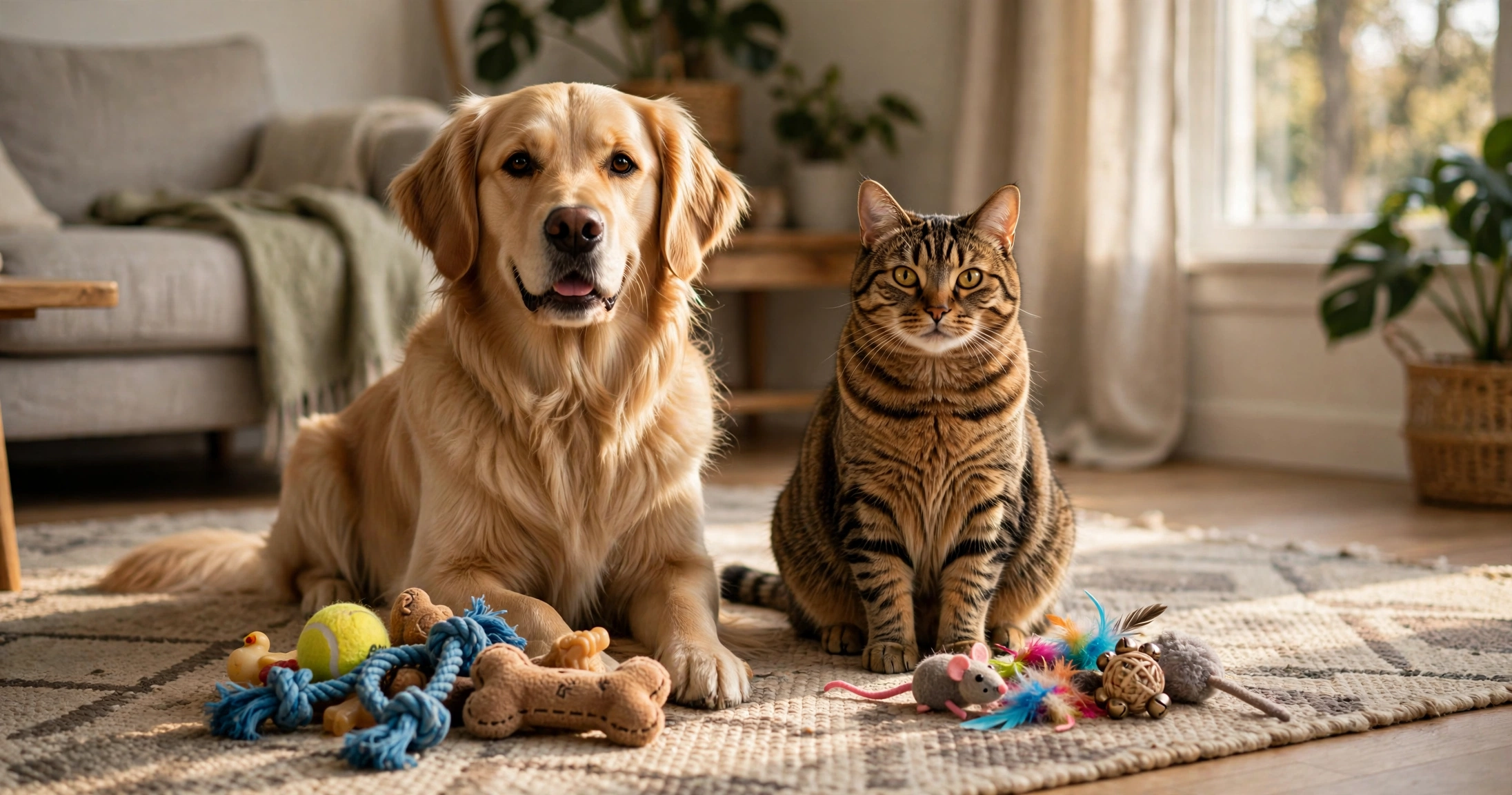
If you share your home with both a dog and a cat, you already know the drill: the moment you turn your back, your dog has the cat’s crinkle ball in his mouth, and your cat is giving you a look that says fix this. Learning how to stop dog from eating cat toys is not just about household peace — cat toys are small, soft, and often full of stuffing, string, or squeakers, and they can cause a dangerous intestinal blockage in your dog. Call your vet immediately if your dog swallows a cat toy, especially if you notice vomiting, gagging, loss of appetite, or lethargy.
The good news: this is a very fixable problem. Here are six practical fixes, from separating play zones to training a rock-solid “leave it.”
Table of Contents
- Why Dogs Eat Cat Toys
- 1. Create Separate Play Areas
- 2. Give Your Cat Toys a Dog-Proof Home
- 3. Train a Rock-Solid “Leave It”
- 4. Supervise Shared Playtime
- 5. Redirect to Dog-Sized Toys
- 6. Rule Out Medical Issues
- Frequently Asked Questions
Why Dogs Eat Cat Toys
Dogs are drawn to cat toys for the same reason kids are drawn to their sibling’s toys: novelty, curiosity, and that forbidden-fruit appeal. Most cat toys are also mouse-sized, fuzzy, and fun to chew — they tick every box of a dog’s prey-chase instinct.
Common drivers include:
- Prey instinct: fuzzy, mouse-shaped toys trigger the chase-and-catch sequence.
- Catnip: harmless for dogs (it is actually mildly calming for them), but it makes the toy smell irresistible.
- Boredom: a dog with no good chew options will invent his own — from your cat’s toy box.
- Taste: some cat treats and flavored toys smell like food to a dog.
- Pica or nutritional gaps: repeated swallowing of non-food items can signal a medical issue worth checking with your vet.
The real danger is not the play — it is the swallowing. Cat toys are designed for a small animal with delicate teeth, so squeakers, crinkle fillers, ribbons, and stuffing come apart easily in a dog’s mouth and can lodge in the stomach or intestines. That is why prevention matters so much here.
1. Create Separate Play Areas
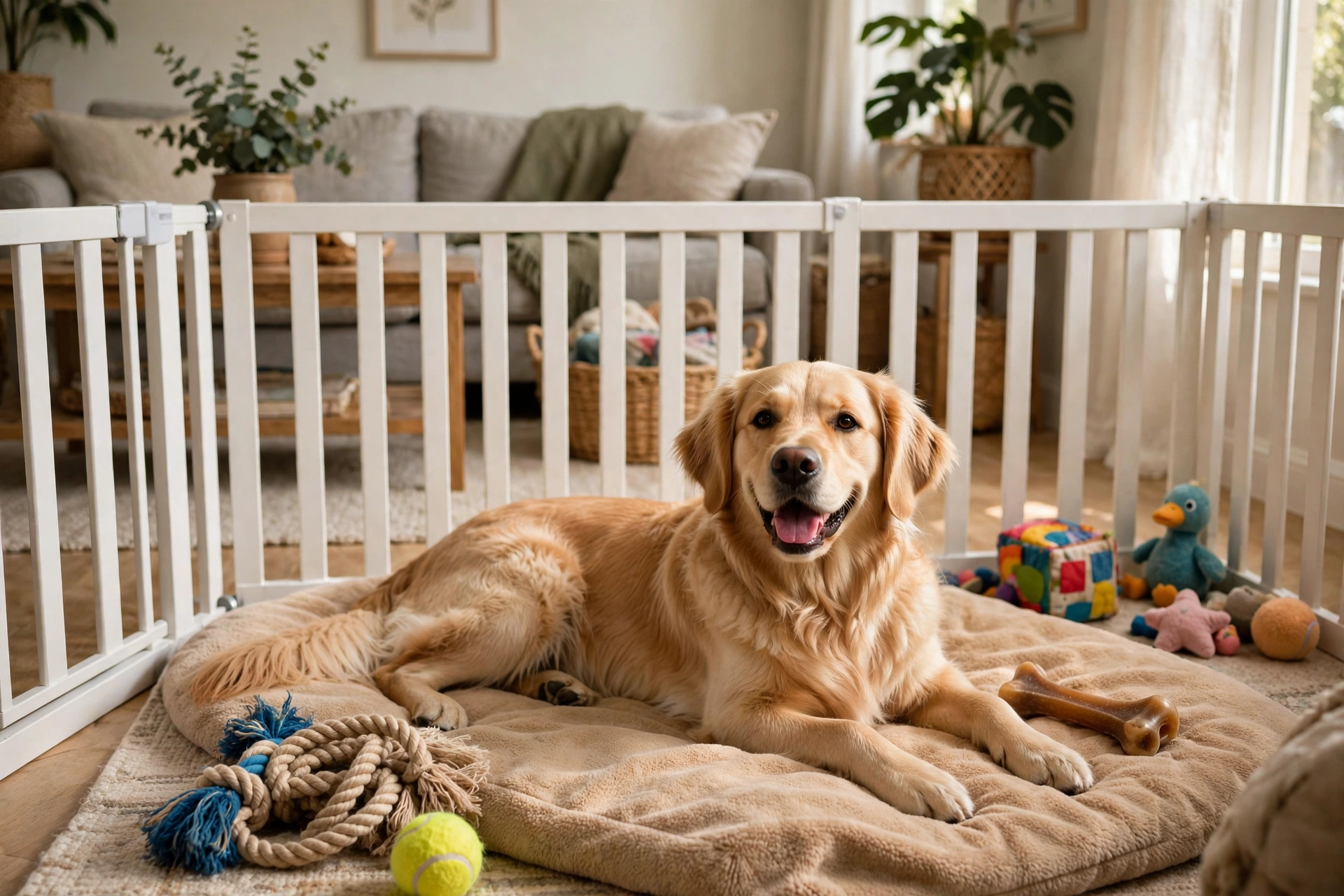
The single most effective fix is also the simplest: stop letting your dog and your cat’s toy stash occupy the same space unsupervised. Designate the living room as the dog’s play zone and keep the cat’s mice, crinkle balls, and wand toys in a room your dog cannot enter freely.
How to do it:
- Use a baby gate or exercise pen to split one room, or use closed doors between rooms.
- Give your dog a cozy, well-stocked corner with his own chew toys so the separation does not feel like punishment.
- Feed and play with your dog in his zone so it becomes his favorite place to be.
Pro tip: pick up the cat’s toys when playtime is over rather than leaving them scattered — most cat-toy raids happen when owners are not in the room.
Helpful pick: MidWest iCrate Dog Crate — a sturdy crate or pen setup makes creating a separate play area fast and easy.
2. Give Your Cat Toys a Dog-Proof Home
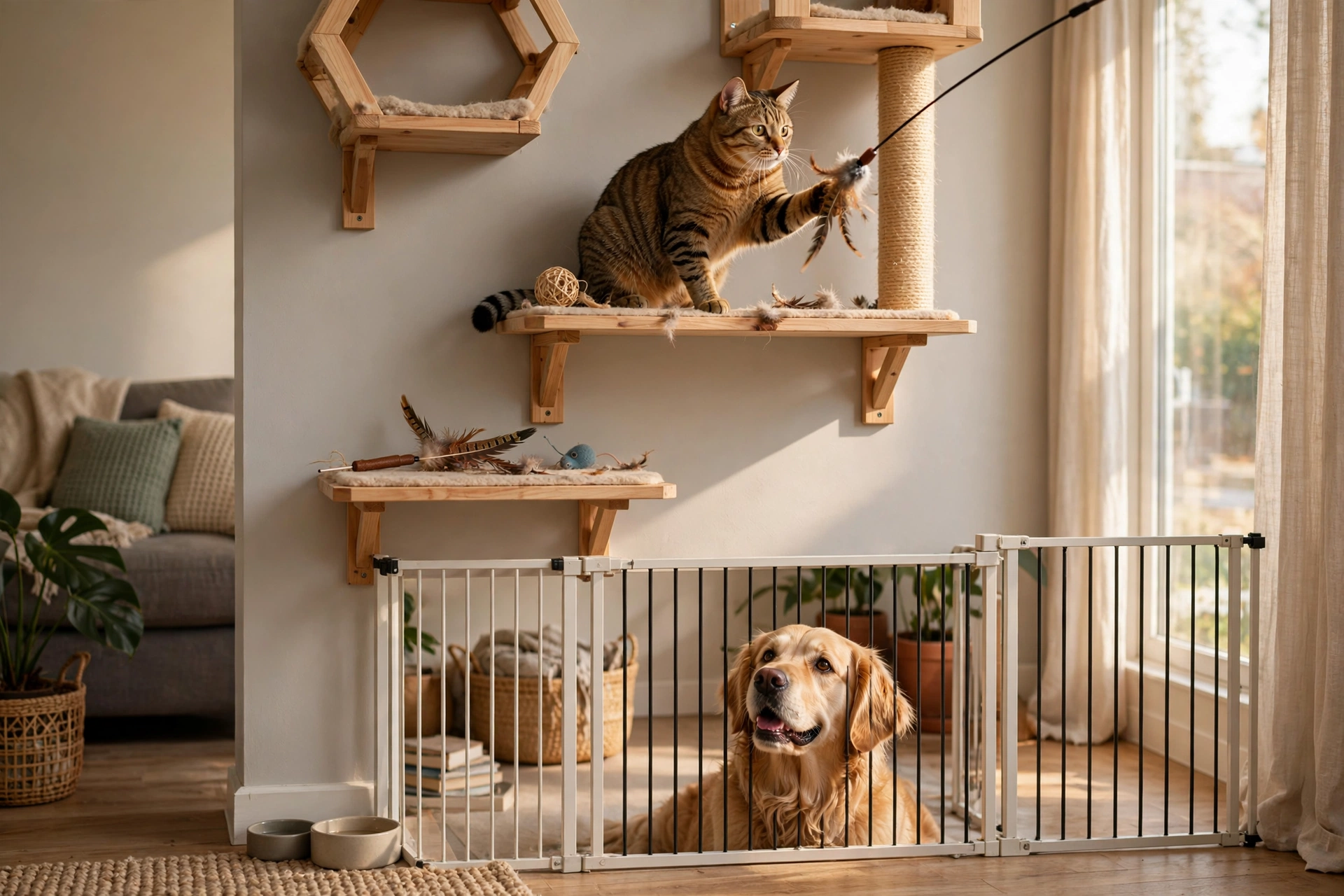
Cats love elevated spaces, and dogs (usually) cannot reach them. Moving cat play up a level solves the problem from the other direction: the cat keeps her toys, and the dog keeps his nose out of them.
How to do it:
- Install wall shelves or a cat tree with a built-in play ledge near the top.
- Keep a small basket of cat toys on a high shelf or closed closet where the dog never goes.
- Use a baby gate with a cat door — it lets the cat slip through into her private playroom while the dog stays out.
Pro tip: rotate which toys are available on the shelves so your cat stays interested without you needing to scatter toys across the floor.
Helpful pick: Baby Gate with Cat Door — lets your cat come and go freely while keeping your dog out of the cat-toy zone.
3. Train a Rock-Solid “Leave It”
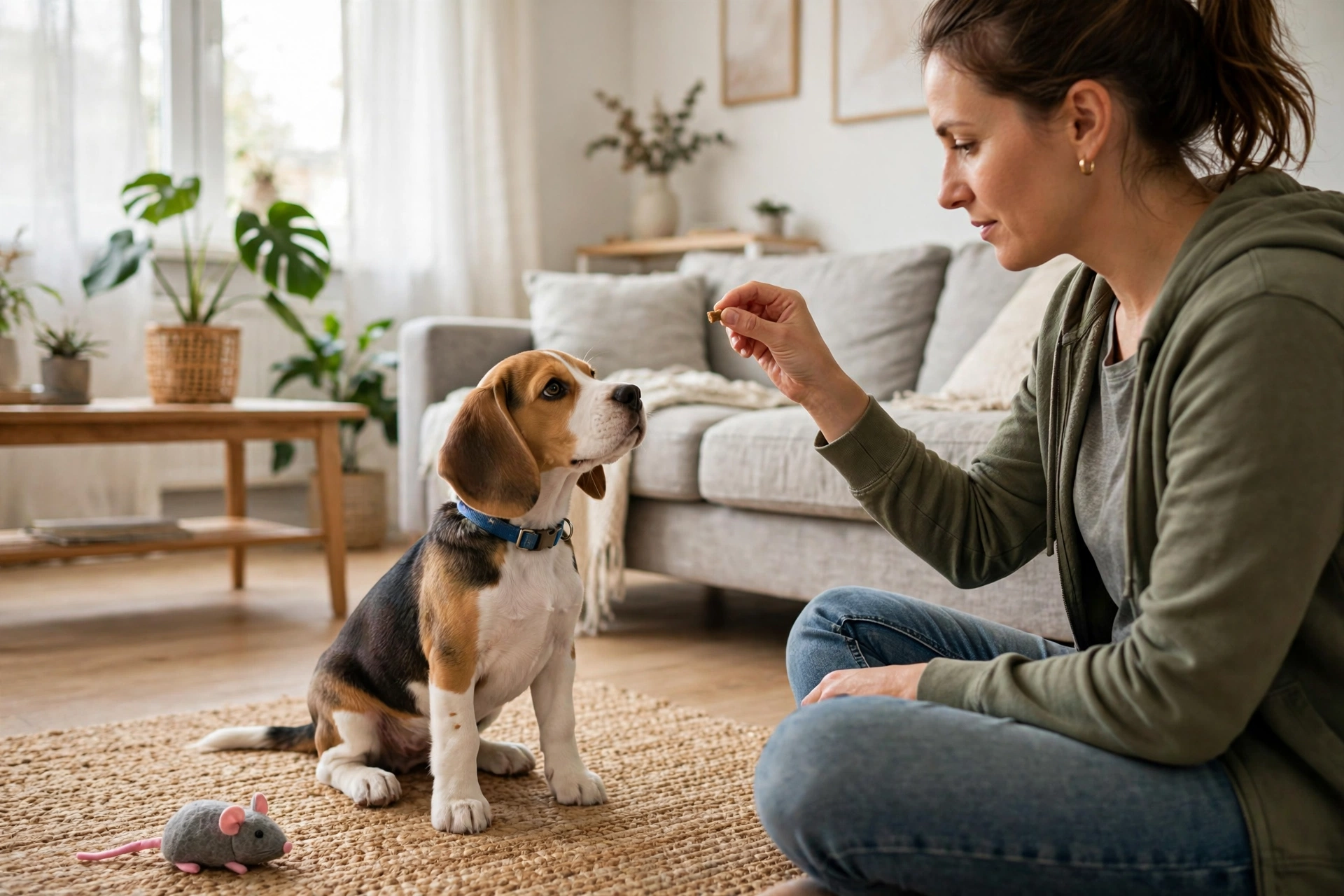
“Leave it” is the most important cue in any multi-pet household. A reliable “leave it” can stop your dog mid-dive toward a cat toy — before it ever reaches his mouth.
How to do it:
- Hold a treat in your closed fist. When your dog sniffs and backs off, say “yes” and reward from your other hand.
- Progress to placing a treat on the floor with your hand ready to cover it; reward the dog for pulling away.
- Swap the treat for a low-value toy, then eventually a real cat toy. Reward every successful ignore.
- Practice in short daily sessions of 3–5 minutes until the cue works at distance and around distractions.
Pro tip: never punish a dog for failing at “leave it” — go back to an easier step. Punishment around cat toys teaches the dog to snatch faster when you are not looking.
Helpful pick: Egiao Dog Treat Pouch — keeps training treats handy so you can reward lightning-fast “leave it” wins.
4. Supervise Shared Playtime
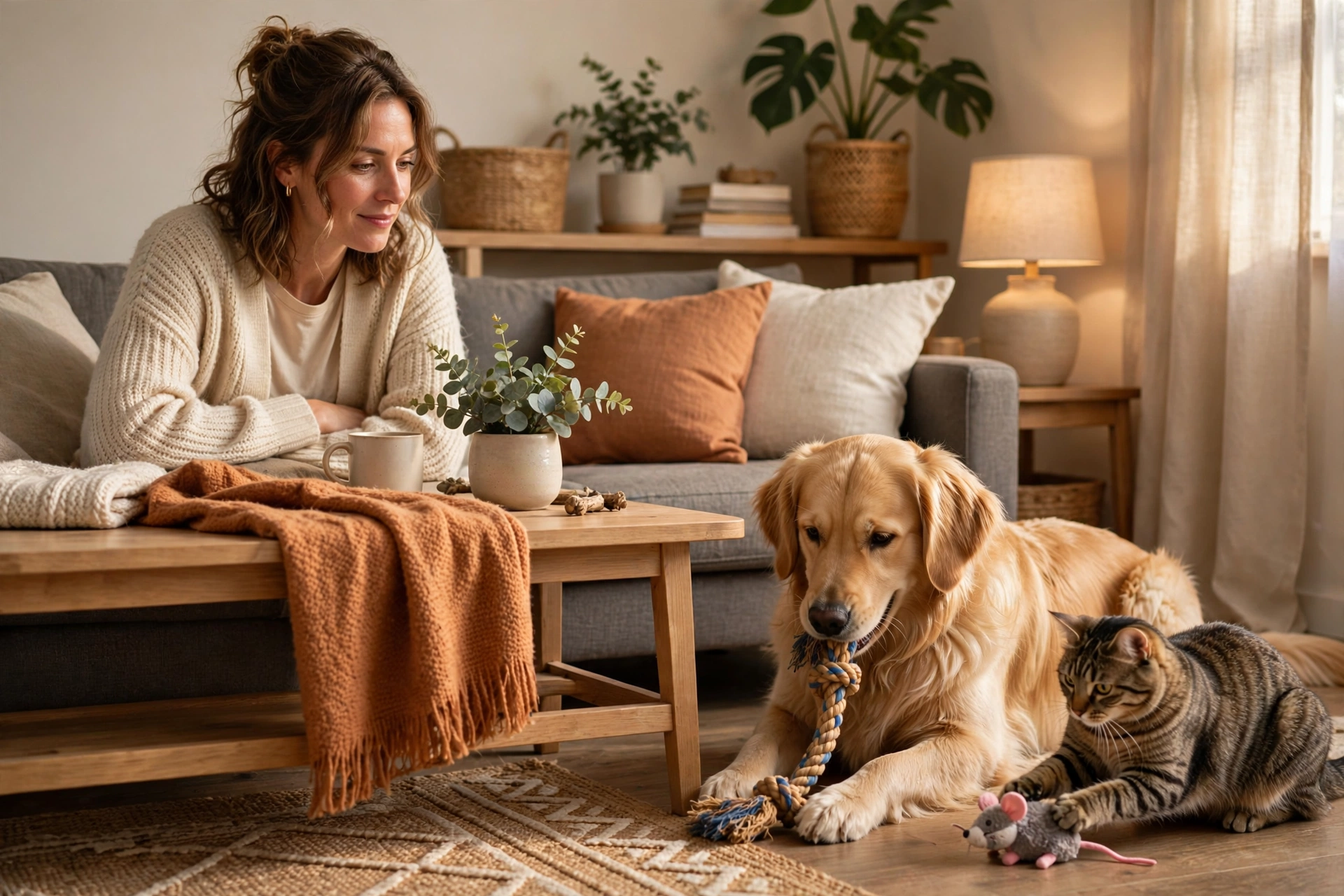
Dogs and cats can absolutely share a room — they just should not share unsupervised access to each other’s things. Most swallowed cat toys are grabbed during the moments nobody is watching.
How to do it:
- When the cat is batting toys around the living room, keep your dog on a leash or actively engaged with his own toy.
- Use a long indoor leash clipped to your belt for the first few weeks so your dog cannot sneak off for a raid.
- If you must leave the room, separate the pets or pick up all loose cat toys first.
Pro tip: supervised time together is also how you teach calm coexistence — reward your dog for lying on his bed while the cat plays nearby.
Helpful pick: Joytale 30ft Long Training Leash — gives your dog freedom to move while keeping him within redirect distance.
5. Redirect to Dog-Sized Toys
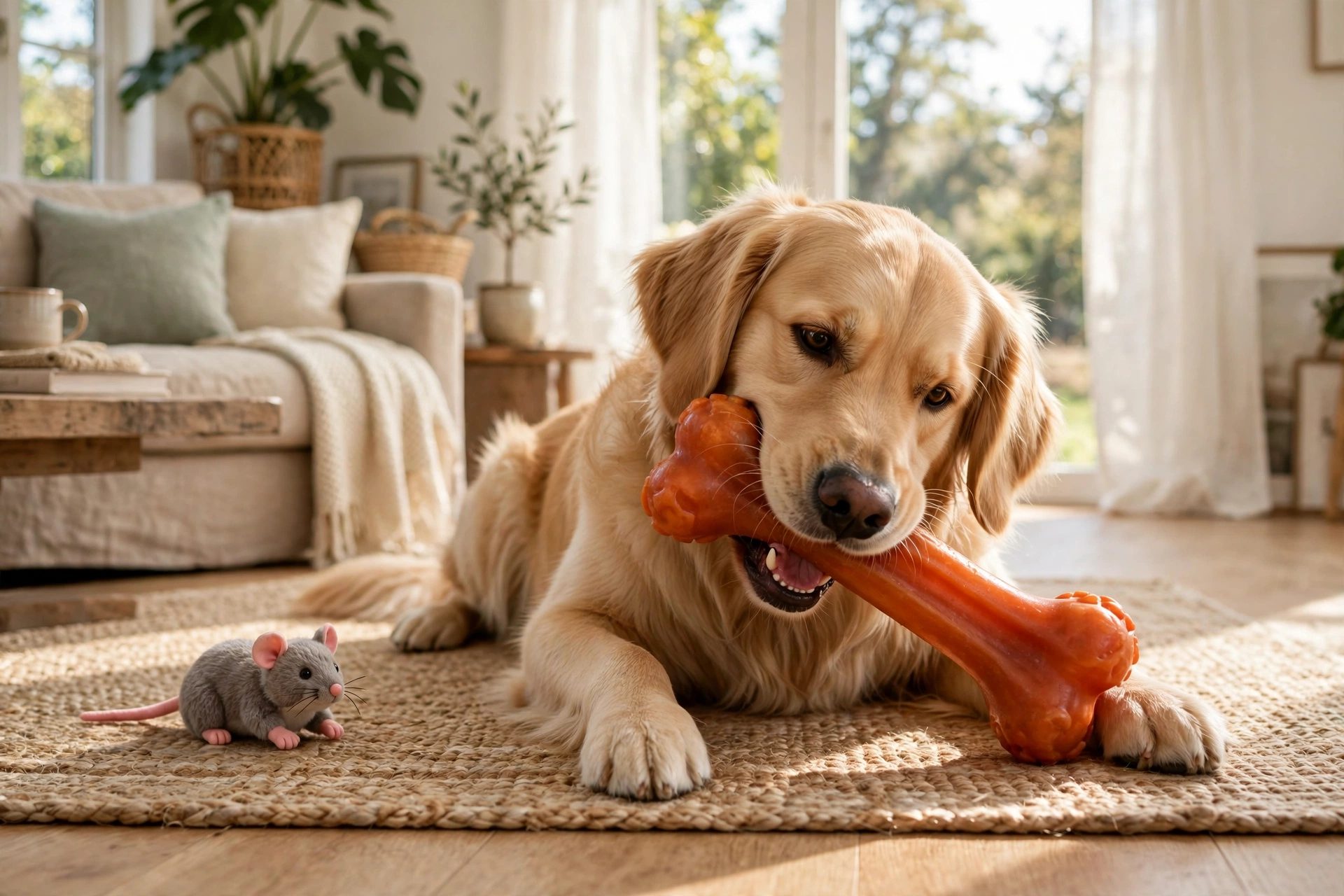
Sometimes the dog is not after the cat toy — he is after any toy, and the cat’s is simply the closest. Make sure your dog’s own toys are more interesting than anything the cat owns.
How to do it:
- Stock up on durable, dog-sized chew toys that satisfy the same mouth feel — long-lasting rubber chews work best.
- Use food puzzles and stuffed Kongs to give your dog’s mouth and brain a job during the cat’s play sessions.
- When your dog drops a cat toy for his own toy, celebrate it. Every voluntary trade teaches him which stash is his.
Pro tip: smear a little peanut butter inside a chew toy before cat playtime — a high-value redirect beats any cat mouse.
Helpful pick: Benebone Wishbone Chew Toy — a tough, satisfying chew that keeps dogs happily busy away from the cat’s toys.
6. Rule Out Medical Issues

An occasional stolen cat toy is normal curiosity. A dog who repeatedly swallows non-food items — toys, socks, trash — may have pica, a nutritional deficiency, dental pain, or a digestive problem worth investigating.
How to do it:
- Book a vet visit if the swallowing is frequent, compulsive, or paired with appetite changes, vomiting, or weight loss.
- Ask about bloodwork to rule out anemia or mineral deficiencies, which can drive strange eating.
- Review your dog’s diet with your vet to make sure it is complete and balanced for his age and size.
Pro tip: keep a short log of what your dog swallows and when — patterns (only at night, only when bored) help your vet pinpoint the cause.
Helpful pick: PetMedics Non-Contact Pet Thermometer — quick at-home health checks between vet visits.
Frequently Asked Questions
What should I do if my dog ate a cat toy?
Call your vet right away — do not try to induce vomiting unless your vet tells you to. Monitor for vomiting, gagging, loss of appetite, lethargy, or abdominal pain over the next 24–72 hours, and seek emergency care if any of those appear.
Is catnip dangerous for dogs?
No — catnip is safe for dogs to ingest and actually has a mildly calming effect on them. The danger is not the catnip; it is the small toy parts (squeakers, stuffing, ribbons) that can cause a blockage.
Why does my dog only steal the cat’s toys and ignore his own?
Novelty and scent. Cat toys smell like your cat, are fun to chase, and carry the thrill of the forbidden. Rotating your dog’s own toys and making his stash more rewarding usually fixes it.
Can I use bitter spray on cat toys to stop my dog?
Bitter spray works on some dogs but not all — and it may put your cat off her own toys too. Training and management (gates, cat-only spaces) are more reliable long-term solutions.
Will my dog grow out of eating cat toys?
Puppies often grow out of the chewing-everything phase with training, but the behavior rarely resolves on its own in adult dogs without management and a solid “leave it” cue.
Keep Reading
- How to Stop Your Dog from Eating Socks: 8 Fixes
- How to Stop Your Dog from Eating Rocks: 7 Fixes
- Why Does My Dog Follow My Cat? 5 Reasons
- Signs Your Dog Is in Pain (and What to Do)
As an Amazon Associate, PetPostHub earns from qualifying purchases.