Why Does My Dog Bury His Food? 5 Reasons (2026)
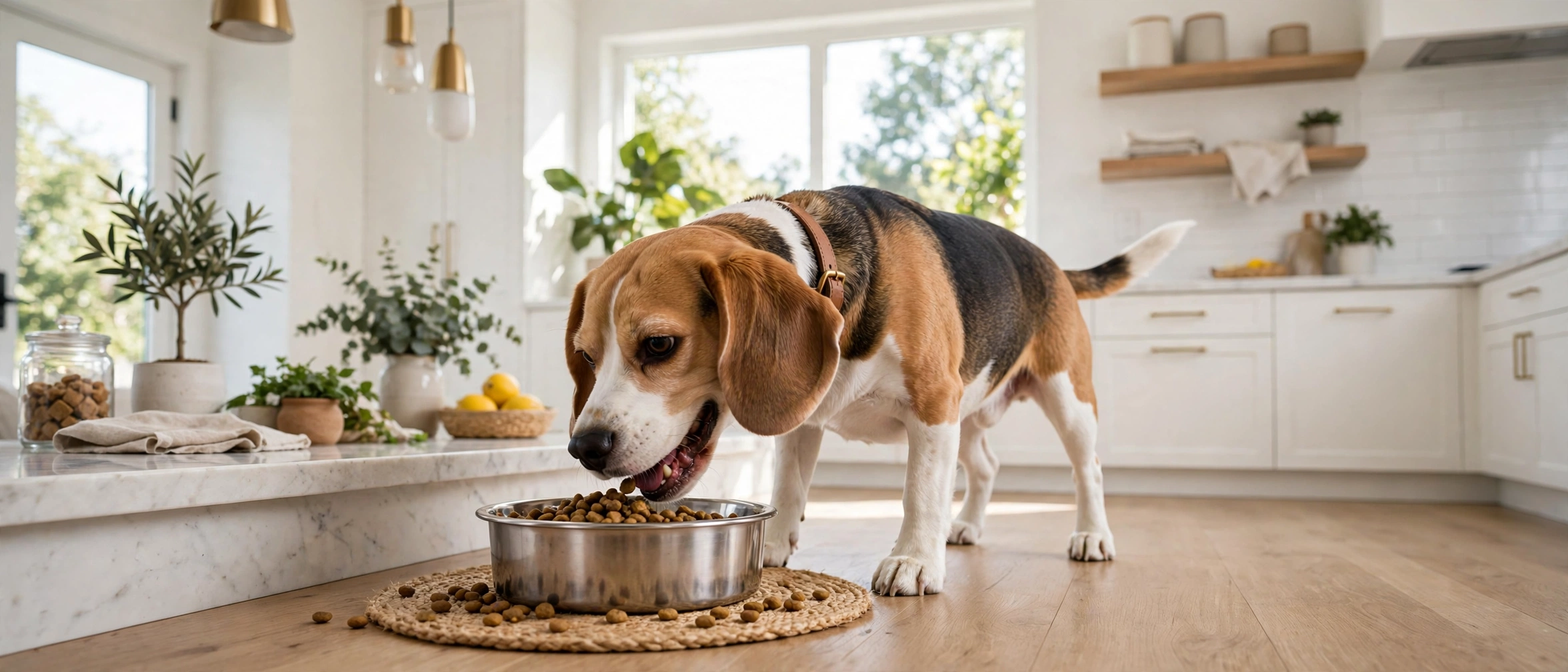
If you’ve ever watched your dog carefully drag his dinner bowl across the kitchen floor, paw imaginary dirt over his kibble, or sprint into the yard to stash a bone under the bushes, you’ve probably asked yourself: why does my dog bury his food when he gets two square meals a day without fail? It looks strange, and sometimes it’s downright messy — but this quirky habit is one of the most normal things your dog can do.
In this guide, we’ll dig into 5 real reasons dogs bury their food, what each one means for your pup, and simple steps you can take for each. Plus, we’ll cover when food-burying is totally harmless — and when it deserves a closer look.
Table of Contents
- 1. Survival Caching Instinct (The Wolf in Him)
- 2. He’s Saving It for Later
- 3. He’s Getting Too Much Food
- 4. Anxiety or Stress
- 5. Resource Guarding
- Is Food-Burying Ever a Problem?
- Frequently Asked Questions
1. Survival Caching Instinct (The Wolf in Him)
What it means
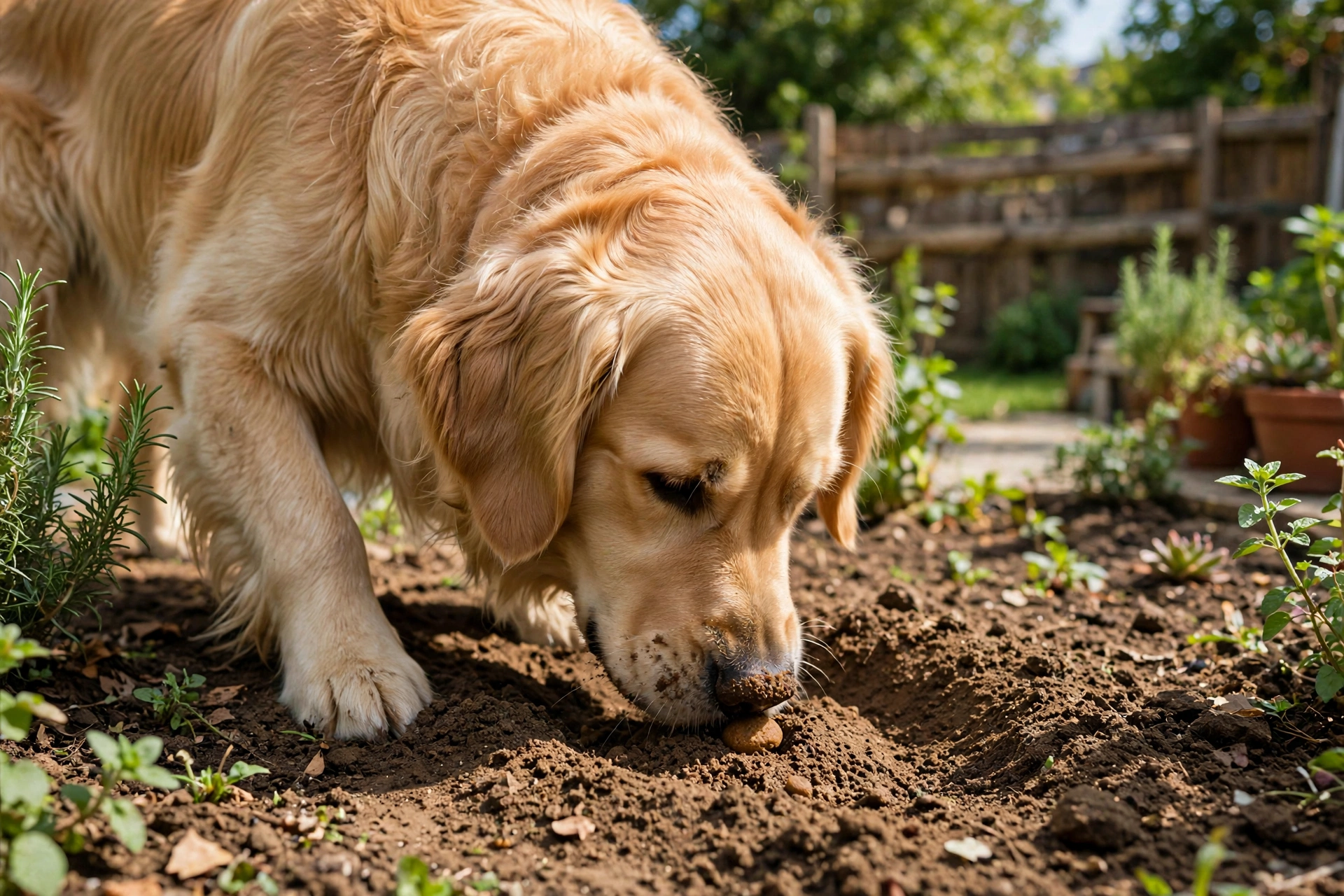
The most common answer to “why does my dog bury his food” is also the oldest one: his ancestors did it. Gray wolves are “scatter hoarders” — when a hunt produced more meat than the pack could eat in one sitting, they’d bury leftovers in shallow caches and return for them when prey was scarce. Even though your pup has never gone hungry in his life, that caching software is still installed in his brain. Breeds originally bred to dig and hunt small game — terriers, beagles, basset hounds, and dachshunds — tend to feel the urge most strongly.
What to do
Don’t scold an instinct; redirect it. Give the digging urge a legal outlet with interactive feeding toys and nose-work games so the couch cushions and garden beds stay safe.
Helpful pick: Outward Hound Tornado Puzzle Toy — channels caching instincts into a spinning treat game that keeps busy minds occupied.
2. He’s Saving It for Later
What it means
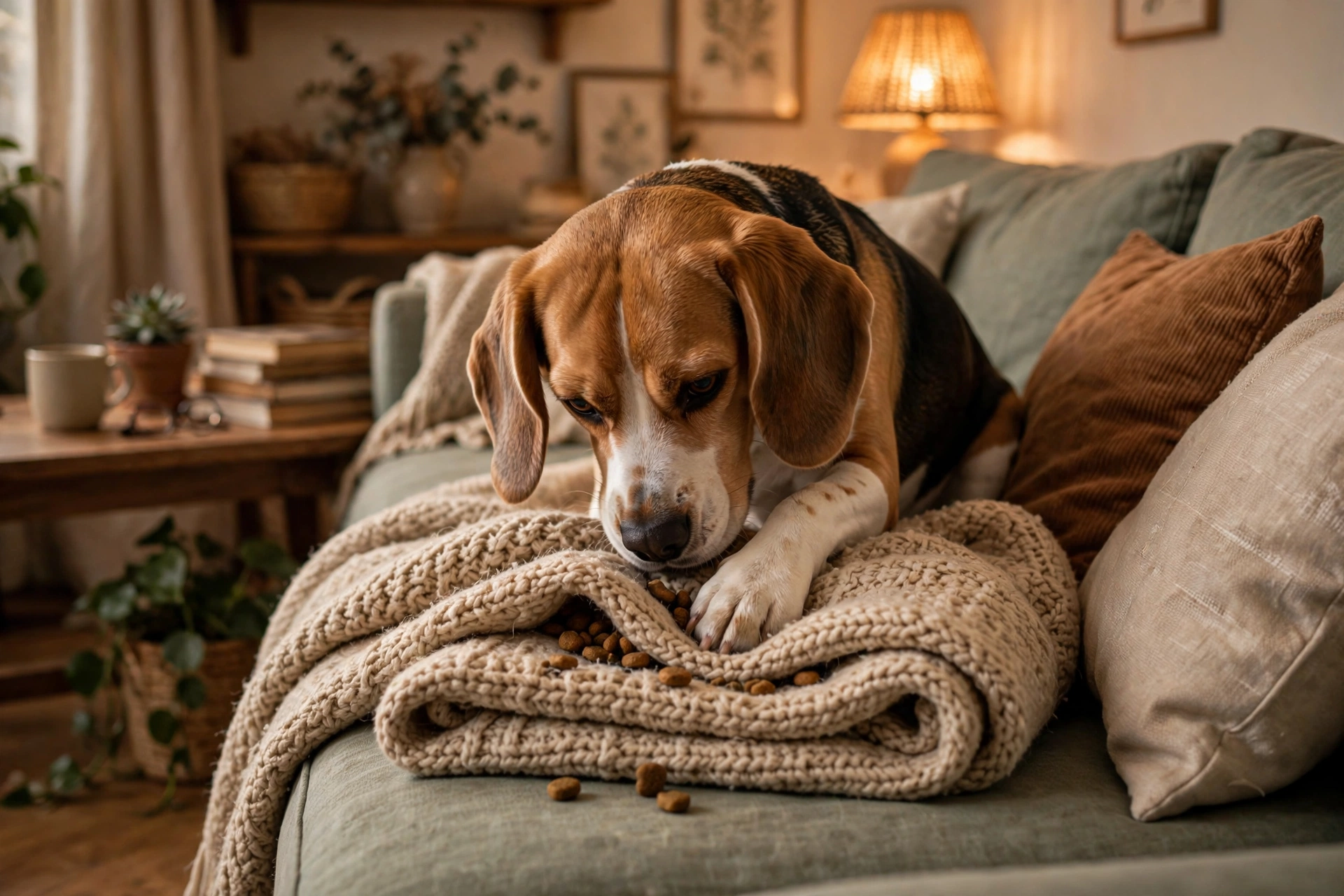
Professional trainer Teoti Anderson puts it plainly: “The reason why a dog buries something is to save it for later.” Sometimes your dog just isn’t hungry right now — maybe he had a big training session full of treats — but he likes what he smells and wants to enjoy it when his appetite returns. So he tucks kibble into the blanket or “air buries” it by nosing invisible dirt over the bowl. It’s the canine version of covering leftovers with plastic wrap.
What to do
Portion control solves most of this. Store uneaten food in an airtight container and offer it again at the next meal instead of leaving a full bowl down all day.
Helpful pick: Pearhead Bone-Lid Airtight Treat Jar — keeps saved portions fresh between meals so stashed food doesn’t go stale.
3. He’s Getting Too Much Food
What it means
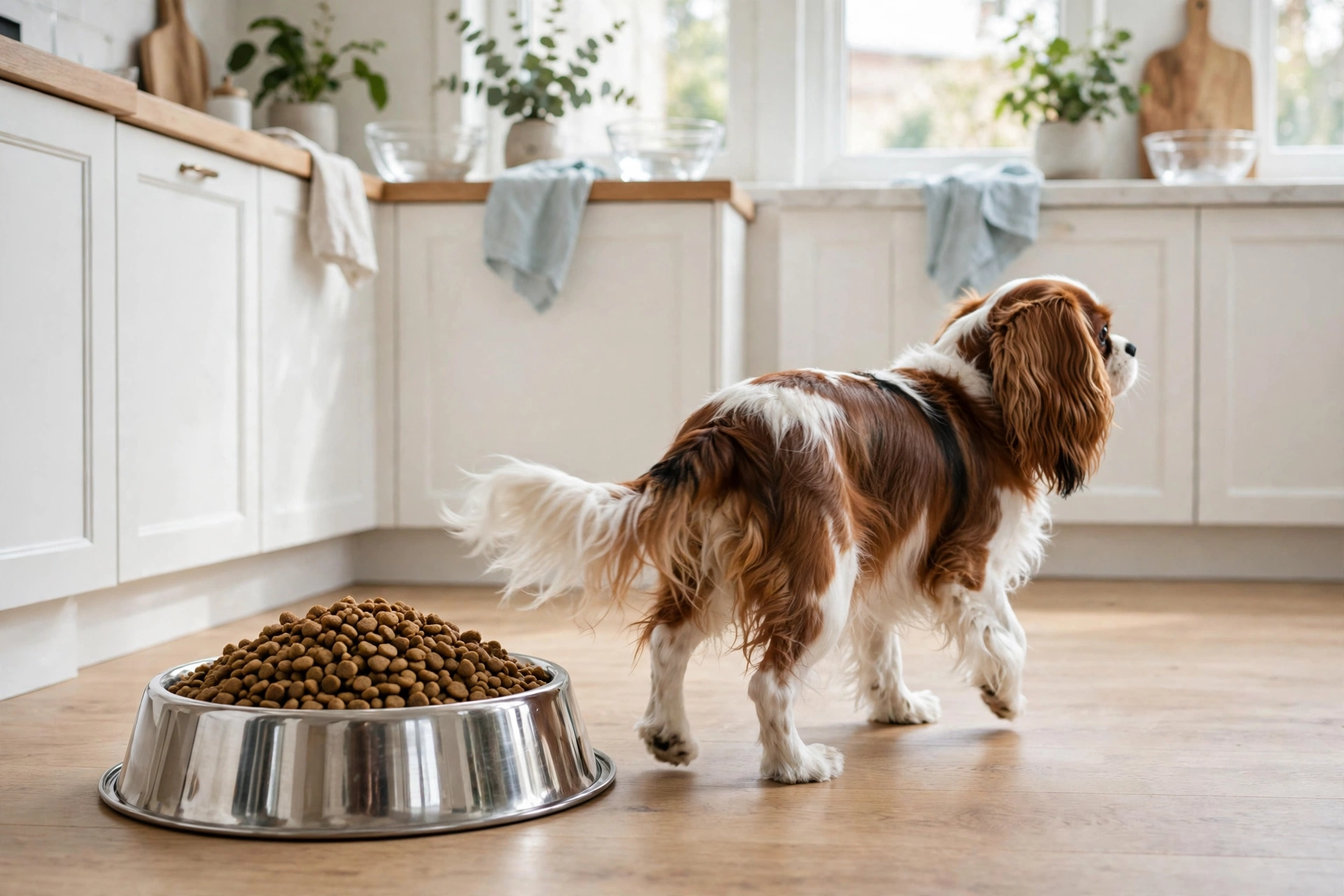
Food burying is often a polite way of saying “I’m full.” Some dogs, unlike the bottomless-pit stereotype, get full quickly. If he’s routinely leaving food and trying to hide the rest, he’s probably getting more than his daily calorie needs — especially if his exercise level dropped as he matured from puppy to adult.
What to do
Measure meals against the feeding guide for his weight and cut back gradually. Watch his weight over two to three weeks; if it holds steady, the new portion is right. Keep supporting a healthy gut while you adjust portions.
Helpful pick: Pet Honesty Probiotics for Dogs — supports healthy digestion while you fine-tune his diet and portions.
4. Anxiety or Stress
What it means
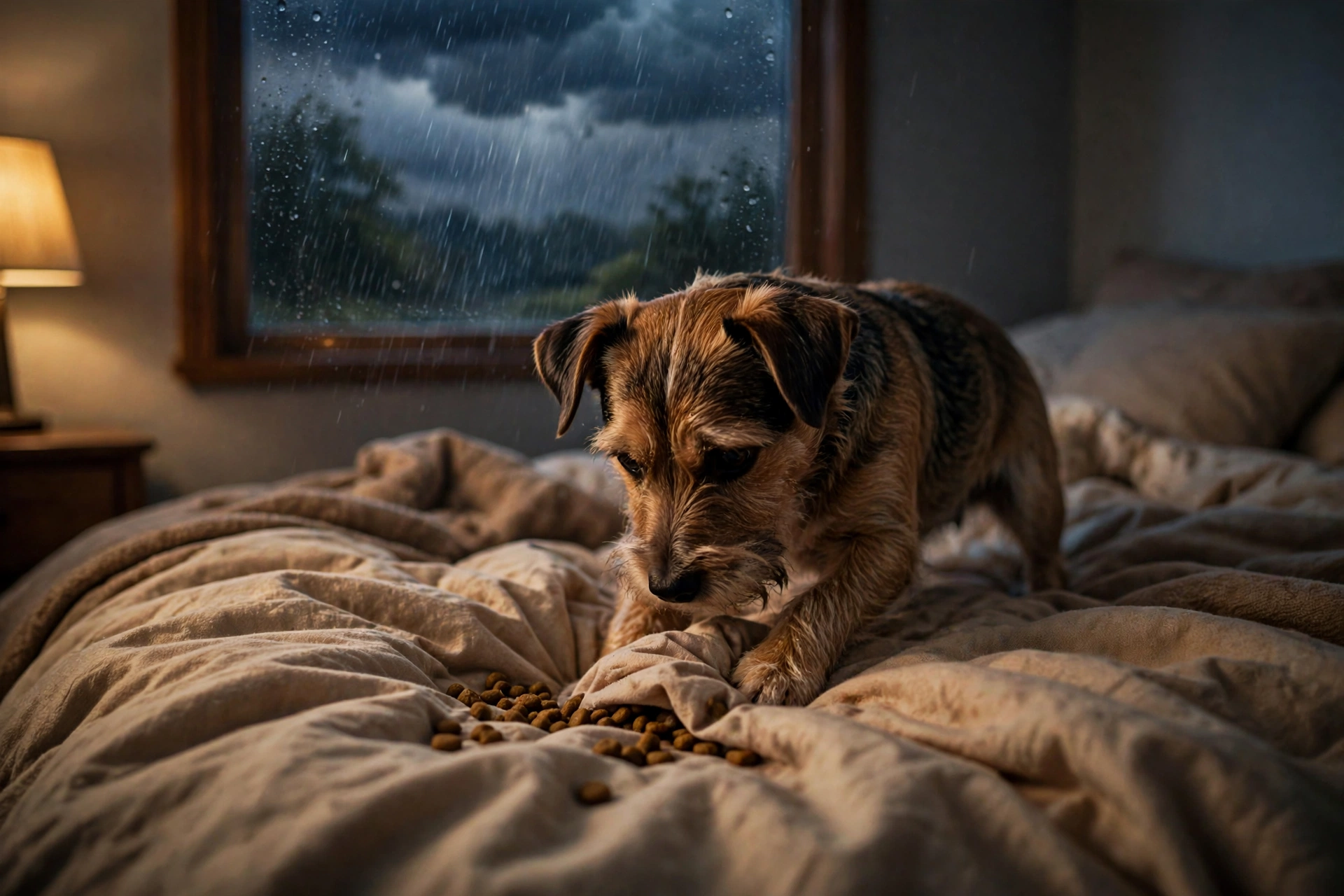
Digging and burying have a genuinely soothing effect on many dogs. Dogs from multi-pet households, hoarding situations, or chaotic homes may have learned that food isn’t always safe — so they stash it in secret, safe spots. Rescue dogs especially may keep this habit long after their bowl is reliably full. If the burying ramps up during storms, guests, or loud household changes, stress is likely the driver.
What to do
Feed in a quiet, consistent spot where he feels safe, and keep meal routines predictable. For ongoing anxiety, a calming routine plus vet guidance works better than punishment — burying is a coping behavior, not disobedience.
Helpful pick: ADAPTIL Calm Home Diffuser — releases comforting pheromones that help anxious dogs settle into a calmer routine.
5. Resource Guarding
What it means
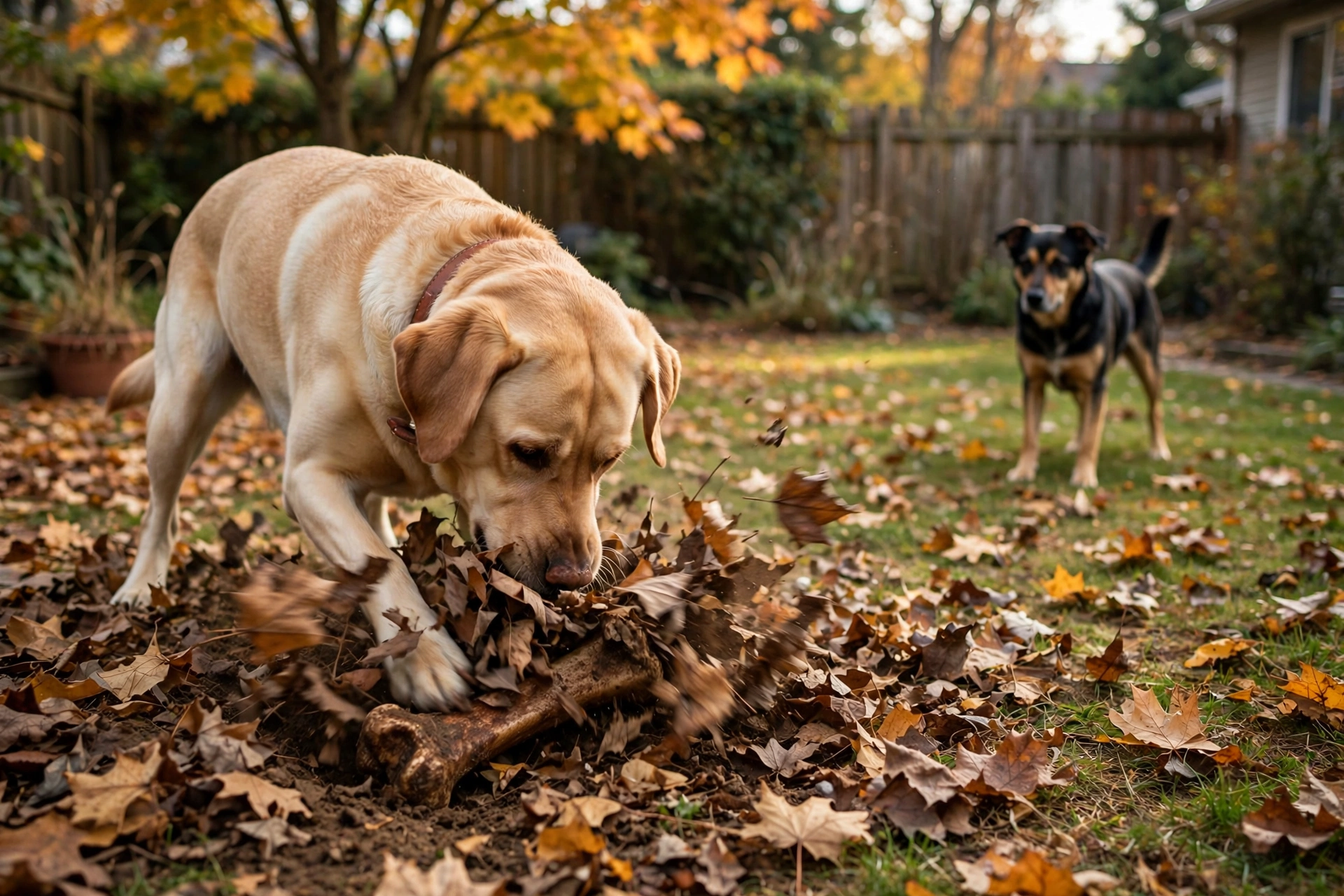
Sometimes burying is guarding in disguise. If your dog rushes his treats away from other pets or people, hides food specifically when another animal is around, or stiffens and stares when someone approaches his stash, he’s protecting his resources — the same impulse that makes wolves move caches away from their siblings. This is different from casual saving; it’s possessive, and it can escalate.
What to do
Never punish guarding — punishment raises the stakes and makes guarding worse. Feed dogs separately, pick up high-value items between sessions, and practice positive “trade-up” exercises with high-value training treats so your dog learns that people approaching his food predict something better, not theft. If he ever growls, snaps, or stiffens over food, talk to your vet or a certified behaviorist before trying to train through it.
Helpful pick: Zuke’s Mini Naturals Training Treats — perfect bite-size rewards for trade-up and desensitization exercises around food.
Is Food-Burying Ever a Problem?
For most dogs, burying is a harmless quirk — a leftover wolf habit or a sign he’d rather snack later. It becomes a problem when:
- He’s burying perishable raw food outdoors, which can spoil and attract pests.
- The habit appeared suddenly alongside nausea, vomiting, diarrhea, lethargy, or appetite loss — “air burying” can signal an upset stomach, and he needs a vet check.
- Burying is paired with aggression over food — that’s guarding, not saving, and it needs professional help.
- Your yard is turning into a minefield of holes — usually a sign he needs more mental stimulation and exercise.
If it’s just a happy dog tucking kibble into the sofa for later, relax and enjoy the comedy. His inner wolf is alive and well.
Frequently Asked Questions
Why does my dog try to bury his food indoors?
The instinct works anywhere — without soil, he’ll nose blankets, rugs, or even couch cushions over the bowl. It’s the same caching behavior, just adapted to apartment living.
Should I let my dog eat food he buried outside?
Generally no, especially raw or perishable food. Buried food can pick up soil bacteria, pesticides, and other dogs’ waste. Dig it up and replace it with a fresh meal.
Do certain breeds bury food more?
Yes — terriers, beagles, basset hounds, dachshunds, and huskies were bred to dig and hunt, so the caching instinct runs stronger in them.
My dog suddenly started burying food. Should I worry?
A sudden change deserves attention. Check for signs of nausea or illness (vomiting, diarrhea, lethargy, appetite changes) and see your vet if anything else seems off.
How do I stop my dog from digging holes to bury food?
Feed measured meals at set times, pick up uneaten food after 20 minutes, and give him legal digging outlets like a sandbox or puzzle feeders — most hole-digging fades once the urge has somewhere to go.
Keep Reading
- Why Does My Dog Hide His Treats? 5 Reasons
- Why Does My Dog Push His Food Bowl? 5 Reasons
- How to Stop Dog Resource Guarding: 7 Steps
- Best Dog Bowls for Cavaliers (2026 Guide)
- Signs Your Dog Is Stressed: 12 to Watch For
As an Amazon Associate, PetPostHub earns from qualifying purchases.