How to Stop Your Dog from Waking You Up: 9 Fixes
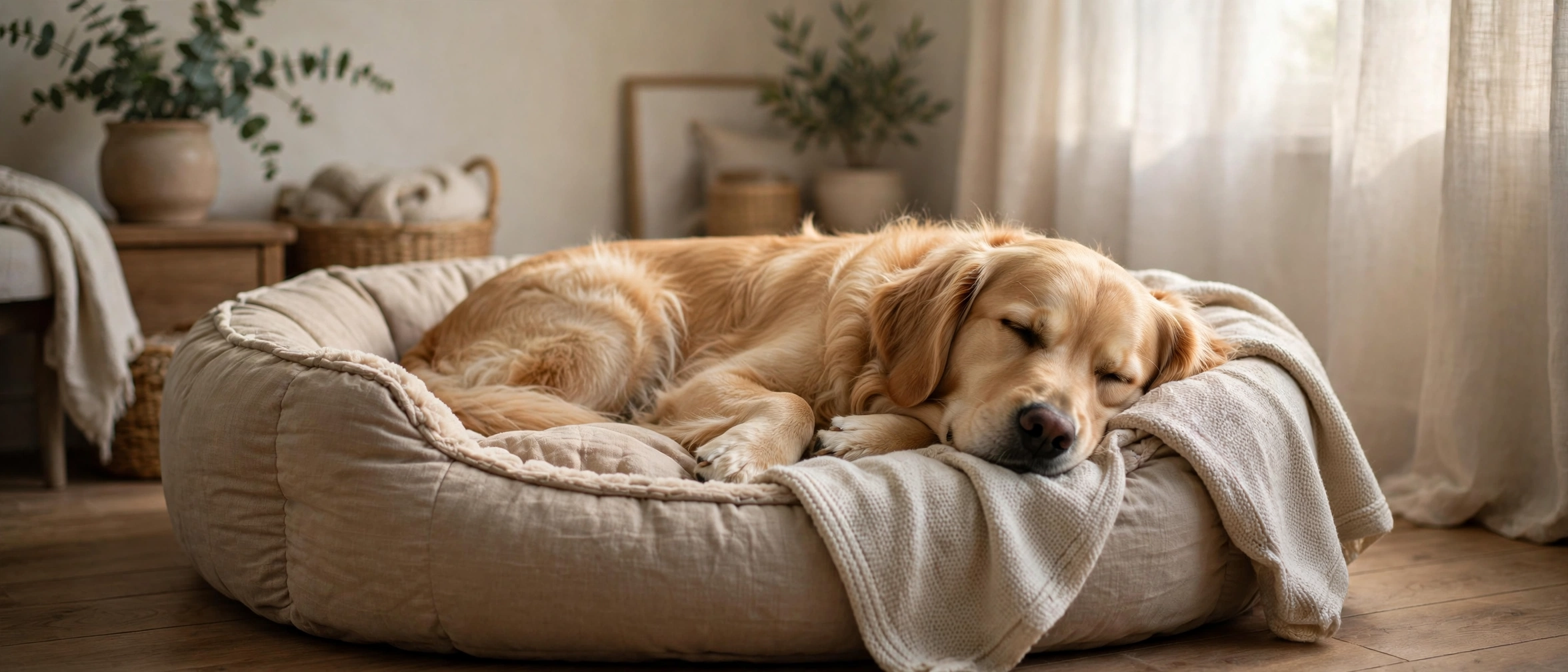
Nothing ruins your sleep quite like a cold nose pressed against your cheek at 4:30 in the morning. If you’re Googling how to stop dog from waking you up, you’re probably running on caffeine and love — in roughly that ratio. The good news: early-morning wake-ups are one of the most fixable dog behavior problems, as long as you find the real trigger and respond to it the right way.
Dogs wake us early for a handful of predictable reasons: a consistent routine they refuse to break, light streaming through the window, an empty stomach, a full bladder, or — the most common one — a learned habit they’ve trained into you without you even noticing. Here’s the thing: your dog’s wake-up time is a trained behavior, which means it can be retrained.
Below are nine practical fixes, ordered from easiest to most involved. You probably won’t need all of them — most dogs stop the early wake-ups once you apply two or three consistently for a week or two.
1. Set a Consistent Daily Schedule
Dogs are creatures of habit — and they hold you to a much stricter schedule than you hold yourself. If you feed breakfast at 5:30 AM on weekdays, your dog will absolutely wake you at 5:30 AM on Saturday too. Their internal clock doesn’t understand weekends.
The fix is to make your schedule predictable and slightly later. Pick a realistic morning routine — say, 7:00 AM — and apply it seven days a week. Same wake-up, same potty break, same breakfast. For the first week or two, this feels punishing (especially on weekends), but it’s the single most effective change you can make. Once your dog learns that good things happen at 7:00 AM and only at 7:00 AM, their body clock adjusts.
An automatic feeder can help enforce the new schedule without you acting as the alarm clock. When breakfast arrives from a machine at a fixed time, your dog stops linking your movement with food — and stops needing you upright to get fed.
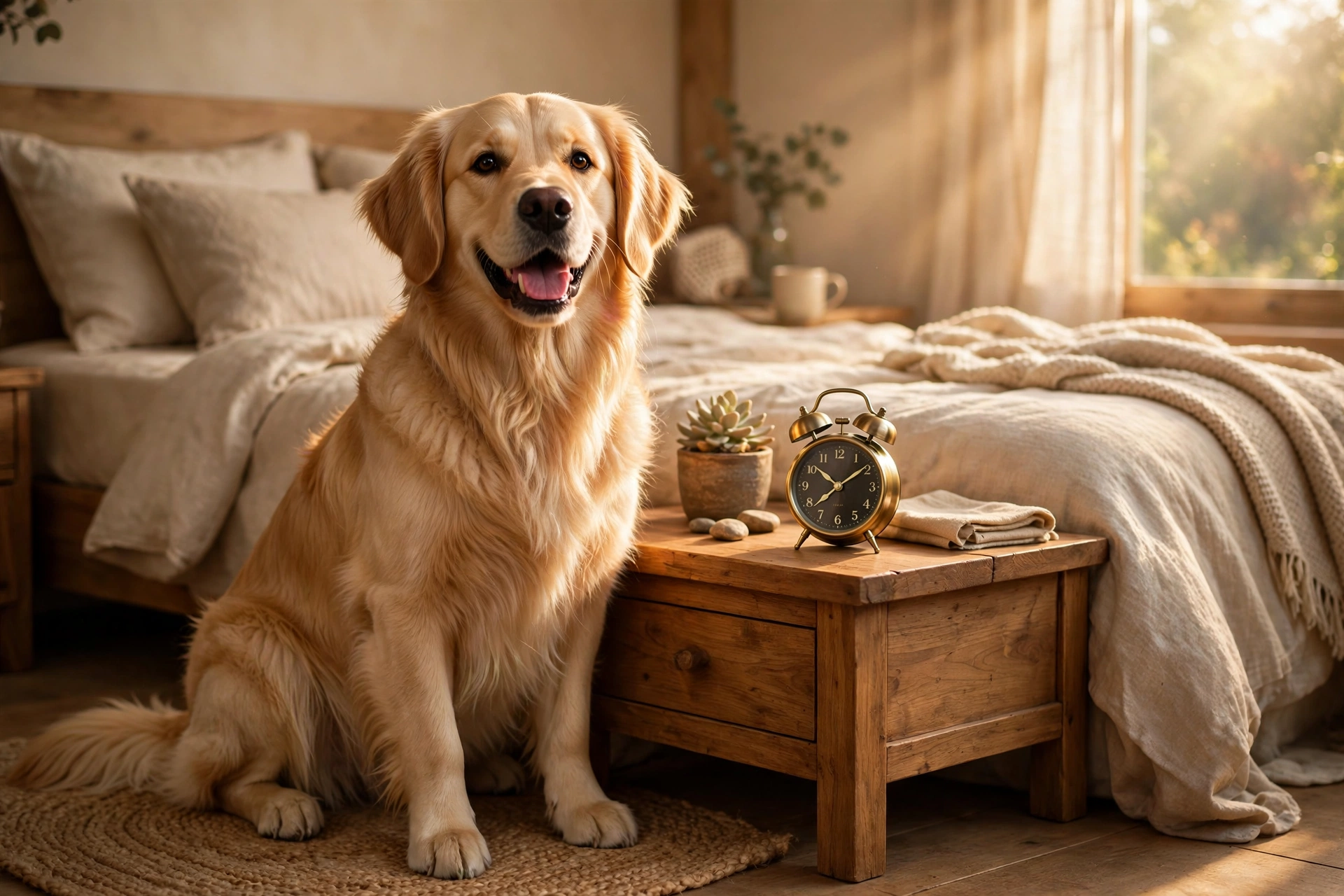
Helpful pick: PetSafe Smart Feed Automatic Feeder — programmable up to 12 meals a day, so breakfast arrives at the same time even on weekends.
Quick tip: Change your schedule in small steps. If your dog wakes you at 5:30, set the feeder (or your own alarm) for 5:45 for three days, then 6:00, and so on until you reach your target time.
2. Tire Them Out Before Bed
A dog that sleeps all afternoon and lounges through the evening has a full tank of energy at 4 AM. A tired dog, on the other hand, sleeps through almost anything. This is the most underused fix on the list — many early wake-ups vanish the moment the dog starts getting a real evening workout.
The best window is 60 to 90 minutes before bedtime. Take a brisk walk or a proper play session: fetch, tug, flirt pole, whatever gets your dog’s legs moving and their brain engaged. Just avoid frantic play in the last 20 minutes — you want them pleasantly worn out, not wired. Think of it like a workout cooldown: high energy first, then a calm wind-down.
Mental exercise counts too, and it tires dogs out surprisingly fast. A 15-minute training session (new trick practice, “find it” games, a stuffed KONG) in the evening can buy you as much morning sleep as a long walk.
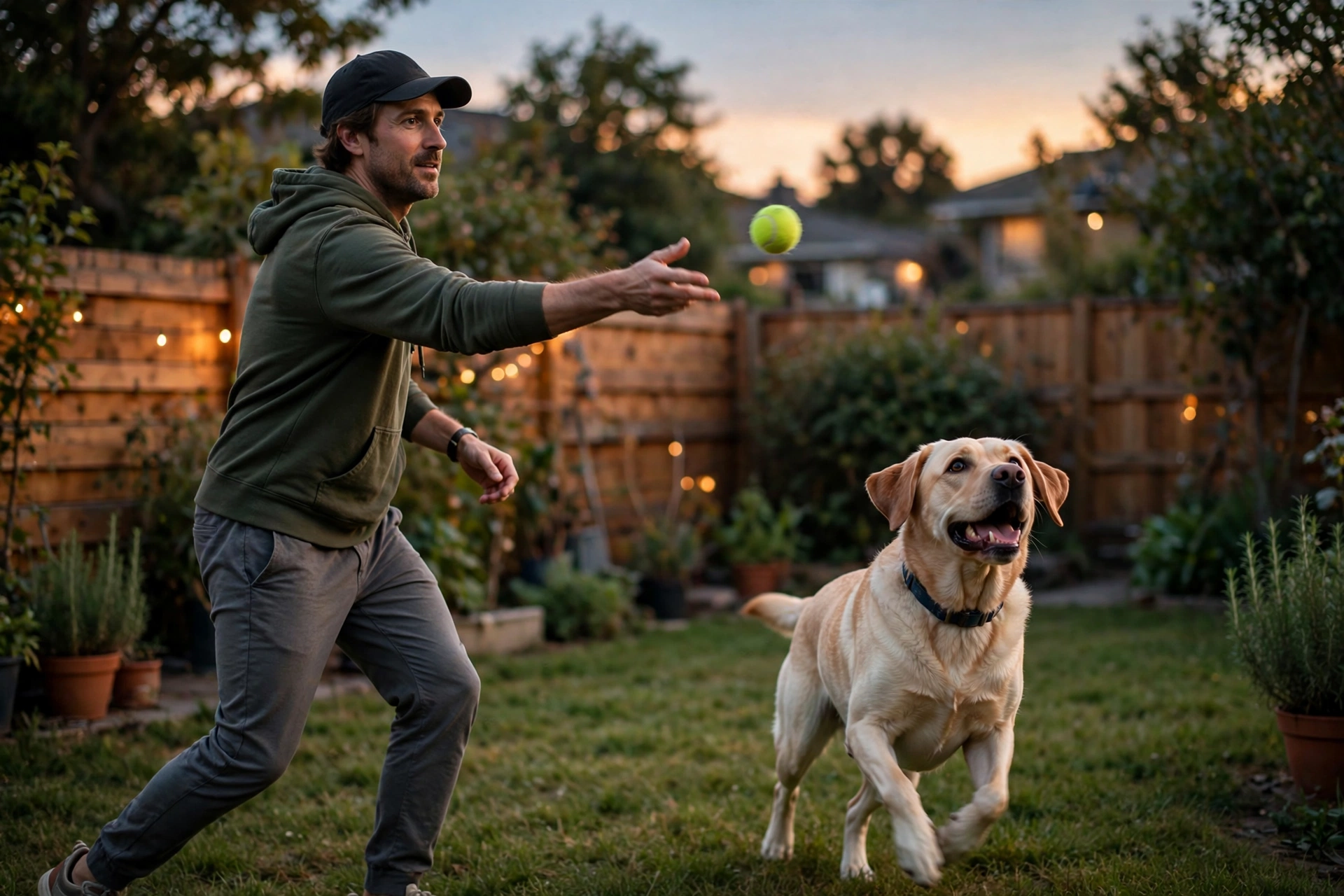
Helpful pick: Chuckit! Classic Ball Launcher — throws farther with less effort, so you can tire out even a fetch-obsessed dog in 15 minutes.
Quick tip: Puppies and adolescent dogs often need two play sessions — one in the late afternoon and a calmer one after dinner — to make it through the night without bouncing off the walls.
3. Give a Late-Night Potty Break
Your dog’s bladder is the most honest alarm clock in the house. If the last trip outside was at 8 PM, a 4:30 AM wake-up at 6 months of age is not a behavior problem — it’s biology. Puppies, seniors, and small breeds simply can’t hold it as long, and no amount of training overrides that.
The rule of thumb: take your dog out as the very last thing before bed, even if they went an hour ago. For puppies under six months, a middle-of-the-night break may still be genuinely necessary — set one alarm for a quick, boring potty trip (no play, no excitement, straight back to bed) and you’ll prevent both accidents and learned wake-ups.
Track what changes the wake-up time. If your dog sleeps two hours longer after a 10 PM potty break than after an 8 PM one, you’ve found your lever. Move the last break as late as you reasonably can, every single night.
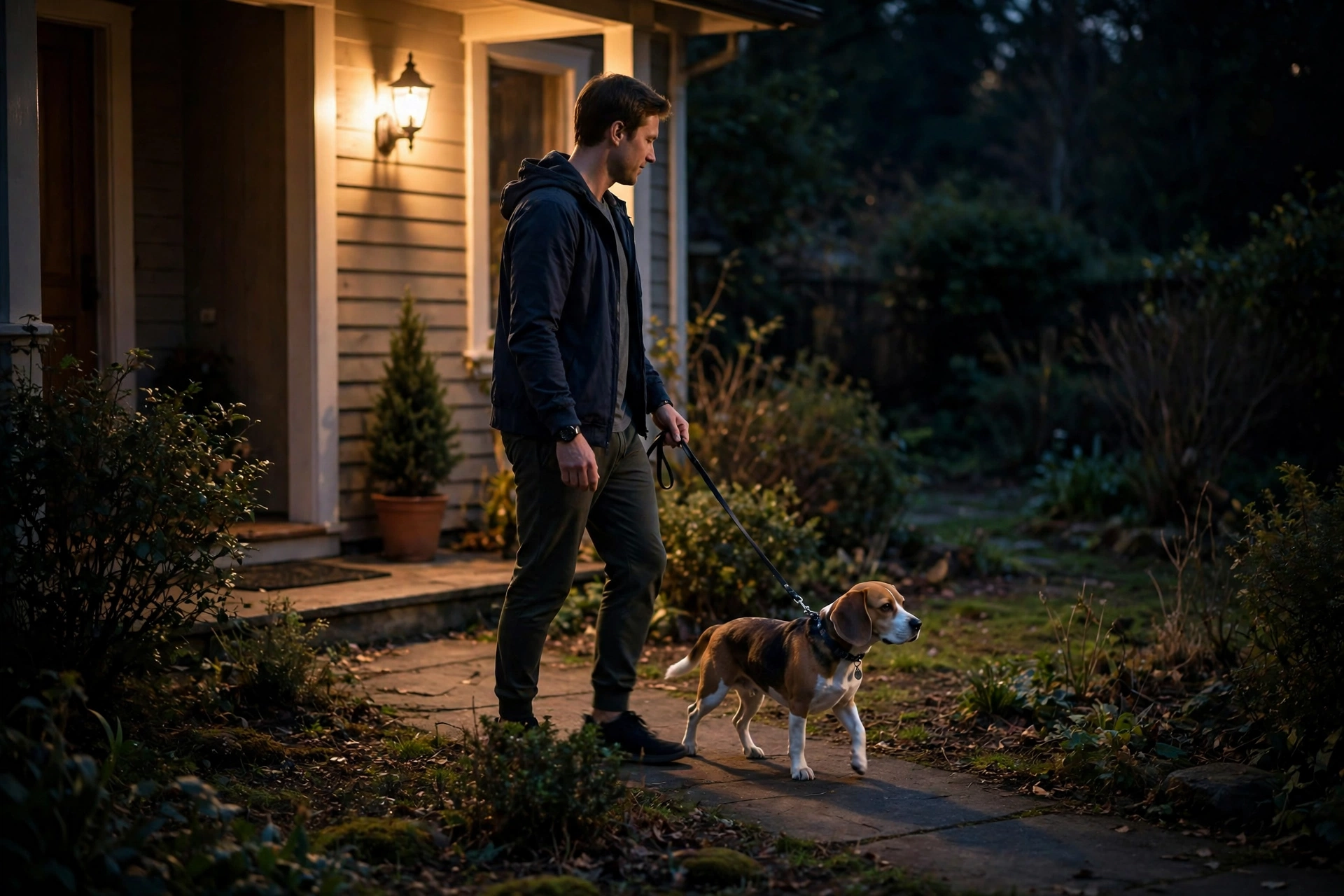
Helpful pick: Weesiber LED Light Up Dog Collar — makes late-night potty trips safer and keeps you from fumbling with a flashlight.
Quick tip: Make the late break deliberately boring. No talking, no play, leash on, do your business, back inside. You don’t want “midnight backyard party” to become a new habit.
4. Make the Bedroom Boring
Dogs don’t wake you at dawn because they’re morning people. They wake you because they’re bored, and you’re the most interesting thing in the room. If the bedroom is their playground — free roam, access to your bed, toys scattered around — they’ll treat it like one.
Start by limiting what your dog can do when they wake before you. A crate or a confined sleep area (a gated corner with their bed) turns “let’s go wake the human” into “nothing to do here, might as well sleep.” The crate shouldn’t be a punishment box — it should be a comfortable den they’ve been trained to love. If your dog already hates the crate, introduce it slowly with meals and treats inside during the day first.
Keep the room quiet and still overnight. No TV left on, no hallway lights flicking on, and definitely no 2 AM trips to the kitchen that your dog treats as a social event.
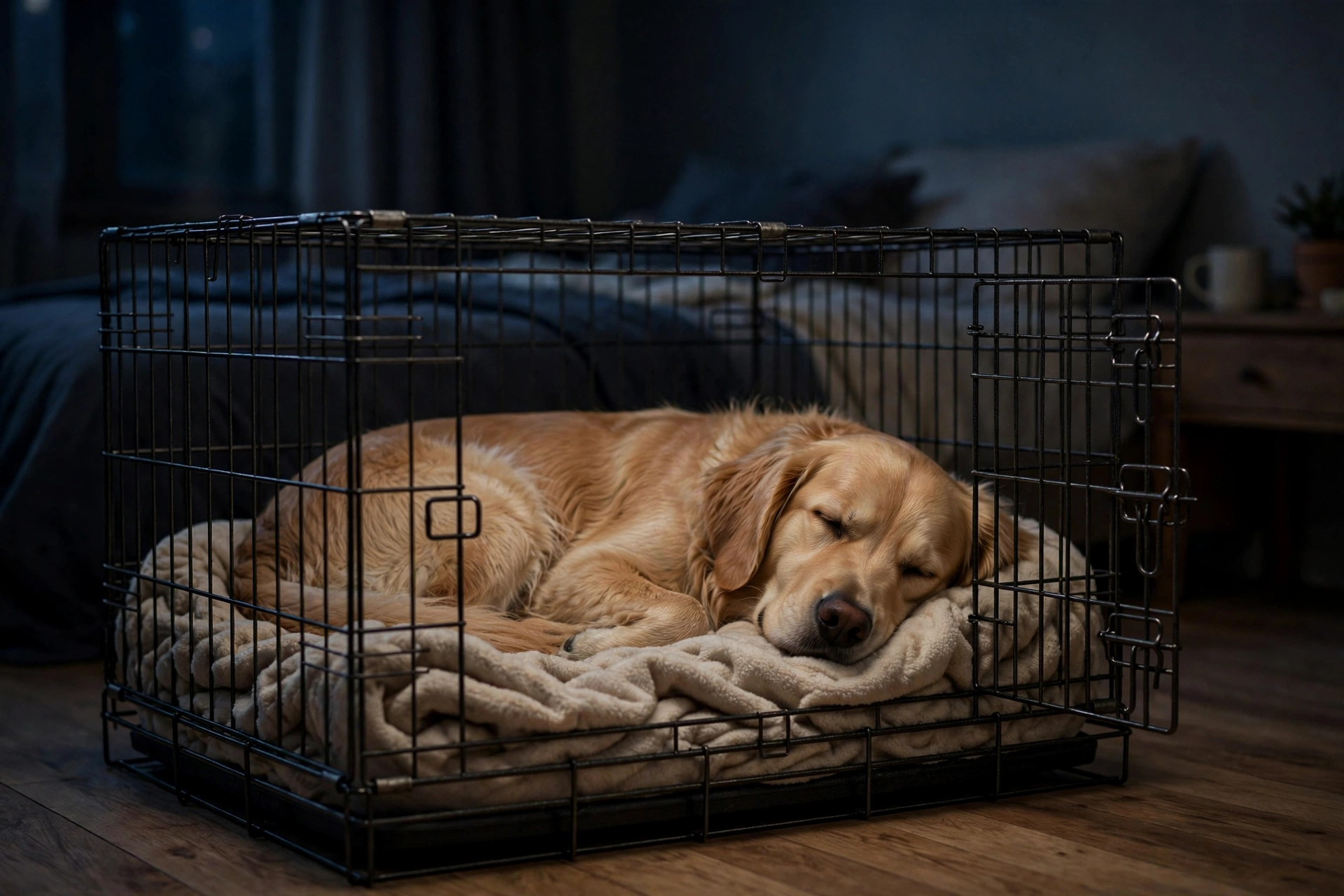
Helpful pick: MidWest iCrate Dog Crate — a divider panel lets it grow with your puppy, and a cover makes it feel den-like and dark.
Quick tip: Leave one safe chew toy in the crate overnight. If your dog wakes at 5 AM, a chew toy buys you time — and chewing is naturally calming.
5. Don’t Reward the Wake-Up
This is the hardest fix and the most important one. Every time you get up, talk to, pet, or feed your dog when they wake you, you’re paying them for the behavior. Dogs don’t understand “but it was only this once because I had an early meeting.” To a dog, even one breakfast at 4:30 AM is proof that 4:30 AM breakfasts are possible — and they’ll keep trying for weeks on a single payday.
The reset protocol is simple but demanding: no response at all until your target time. No talking, no eye contact, no getting up to shoo them away (getting up is a response). When the target time arrives, get up calmly and immediately reward with breakfast and a walk. You’re teaching: “quiet until 7 gets you everything; noise at 5 gets you nothing.”
Expect an “extinction burst” around day 3 or 4 — the behavior gets worse before it gets better, because your dog is doubling down on what used to work. If you cave during the burst, you just taught them that persistence pays. If you hold firm, most dogs give up within 7 to 14 days.
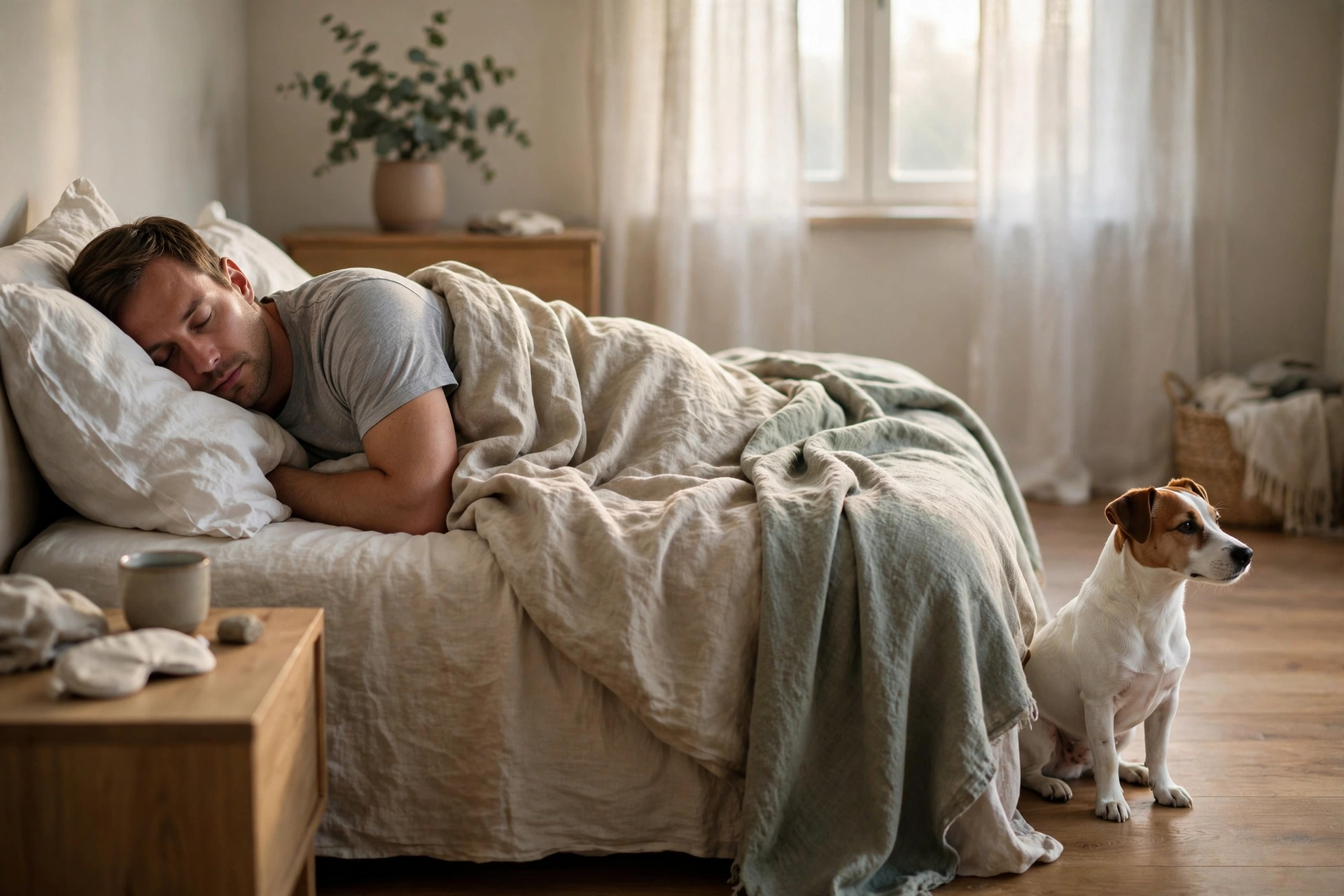
Helpful pick: SmartPetLove Snuggle Puppy — its heartbeat feature comforts anxious dogs at night, reducing attention-seeking wake-ups.
Quick tip: Warn your household (and maybe your neighbors) before you start. The first few nights of ignoring can be loud — earplugs are a perfectly legitimate training tool.
6. Use Blackout Curtains and White Noise
Sunrise is a cue your dog can’t ignore — dogs are naturally crepuscular, most active at dawn and dusk. If light floods the bedroom at 5 AM in summer, your dog’s brain registers “morning” long before yours does. Blackout curtains or blinds that keep the room genuinely dark remove that cue entirely.
Noise matters just as much. Birds at dawn, garbage trucks, a neighbor’s car door — these are the sounds that wake light-sleeping dogs and start the pacing-and-whining cycle that eventually reaches you. A steady white noise machine masks those sharp sounds so the whole room stays acoustically “flat” through the night.
You don’t need both to see results, but they work beautifully together: darkness says “night,” steady noise says “nothing interesting happening.” Together they mimic the conditions of deep sleep your dog needs.
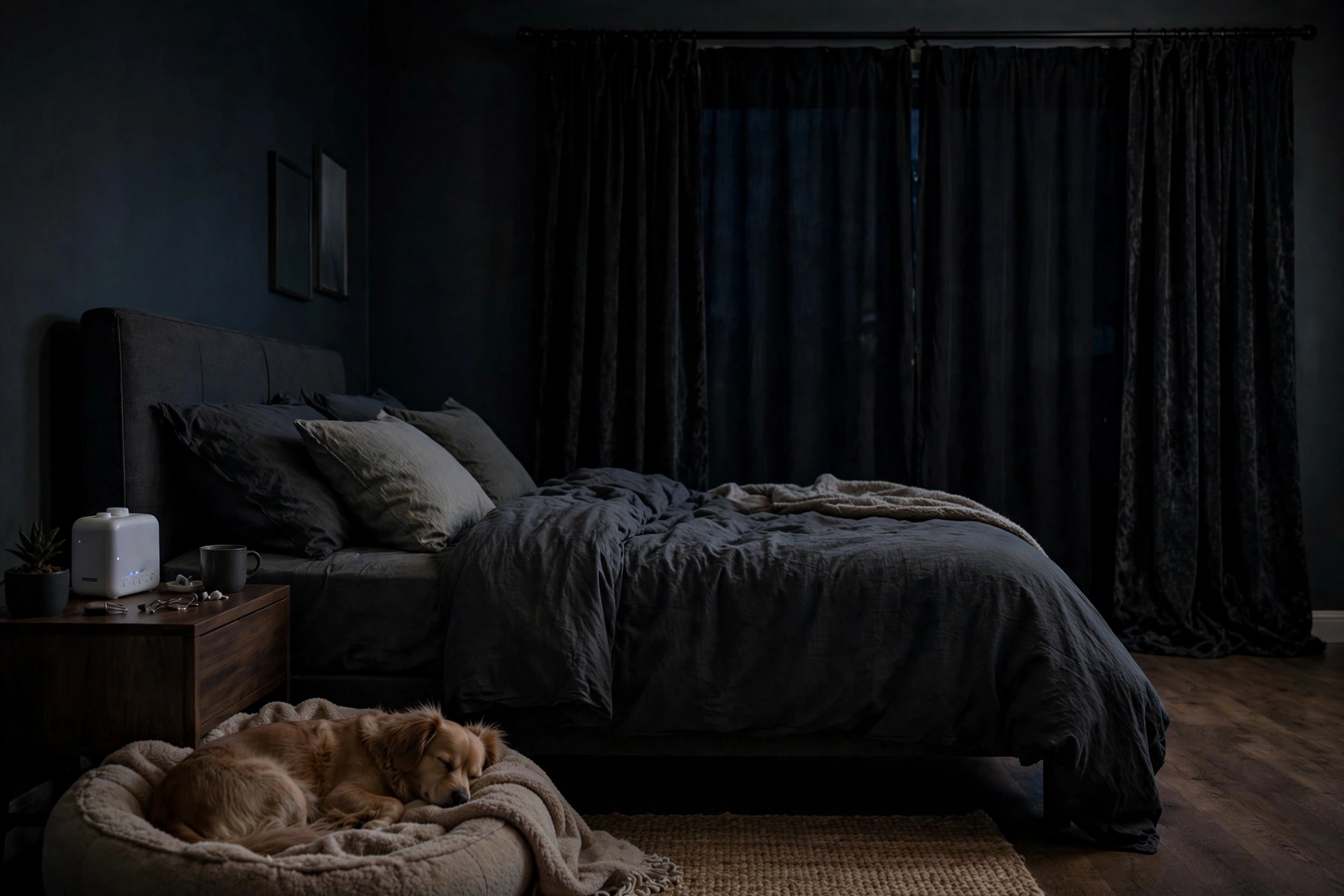
Helpful pick: Yogasleep Dohm Uno White Noise Machine — fan-based natural sound that masks dawn noises without looping audio.
Quick tip: If your dog sleeps in a crate, draping a breathable blanket over it achieves the same darkening effect for free.
7. Feed Dinner Earlier in the Evening
Hunger is a quiet but powerful wake-up trigger. If dinner happens at 5 PM, by 4 AM your dog has been running on empty for 11 hours — and their stomach is loud about it. Shifting dinner later (to around 6:30 or 7 PM) pushes the hunger window forward so it lands after your target wake-up time.
Don’t go too late, though — feeding right before bed means a midnight potty emergency. The sweet spot for most adult dogs is a dinner 3 to 4 hours before bedtime, which lets digestion settle while still keeping them satisfied through the night.
A slow feeder bowl at dinner doubles the effect: it stretches the meal out (mental work tires dogs out), and the slower eating pace may help them feel fuller longer. If your dog inhales dinner in 90 seconds, a slow feeder is one of the cheapest upgrades you can make.
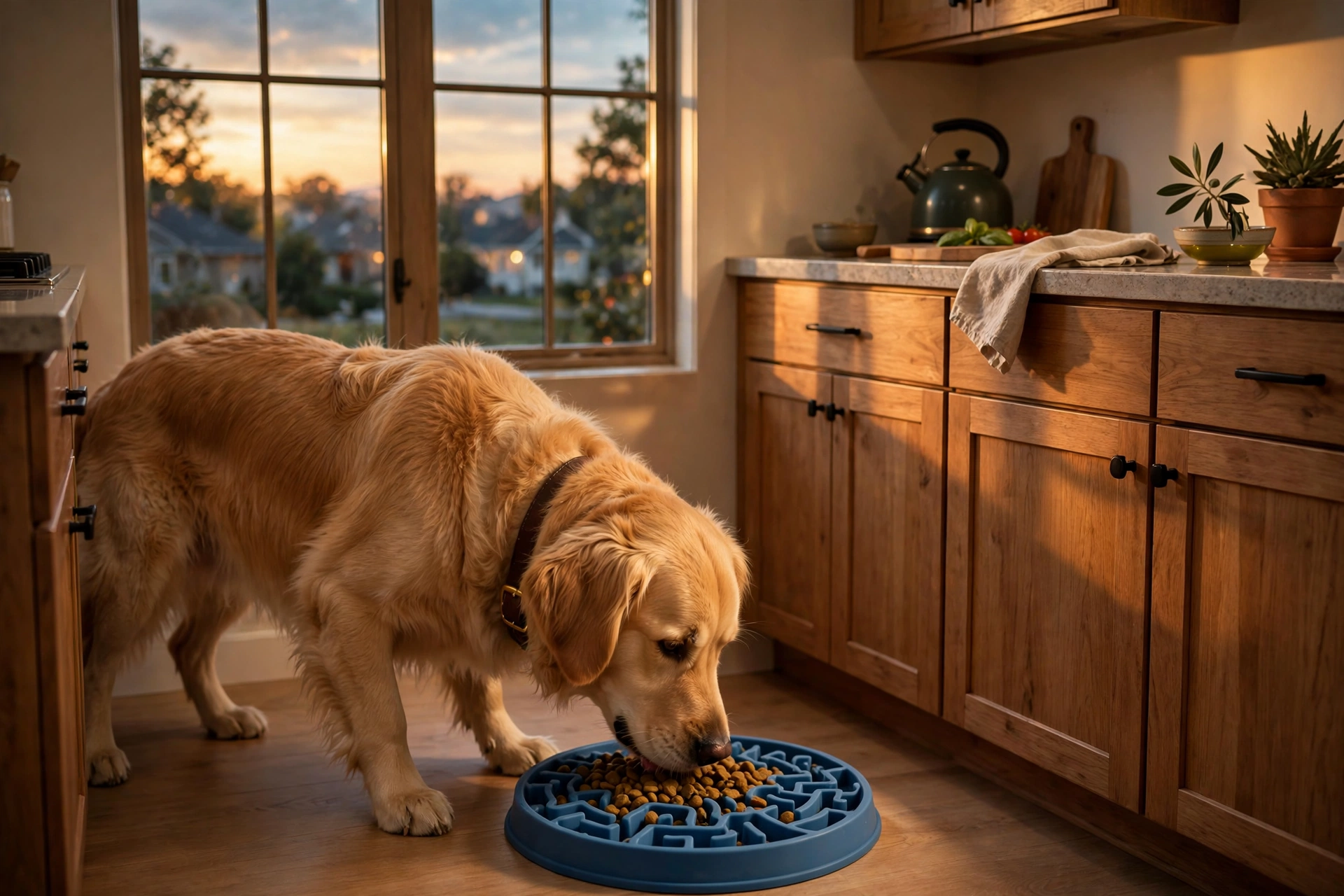
Helpful pick: Neater Pet Stainless Steel Slow Feed Bowl — slows down gulping and keeps evening meals satisfying longer.
Quick tip: Split dinner into two smaller meals — one at 5 PM and one at 7:30 PM — if your dog tends to wake hungry. The second mini-meal buys you hours.
8. Give Them a Genuinely Comfortable Sleep Spot
Ask yourself honestly: would you sleep through the night on your dog’s bed? A thin, flattened pad on a cold floor is a recipe for restless sleep — and a restless dog wakes up, wanders, and eventually comes to bother you. Senior dogs with achy joints are especially sensitive to this.
Upgrade the sleep surface: a thick, supportive bed (orthopedic foam for older dogs, a deep donut bed for curlers) in a warm, draft-free spot. Dogs that burrow prefer covered or cave beds. Dogs that sprawl need room. Watch how your dog sleeps and match the bed to the habit.
Location matters too. Many dogs sleep longest when they can see or smell you — a bed in your bedroom often beats a bed in a distant hallway. You don’t have to share your mattress; you just have to be within the same “den.”
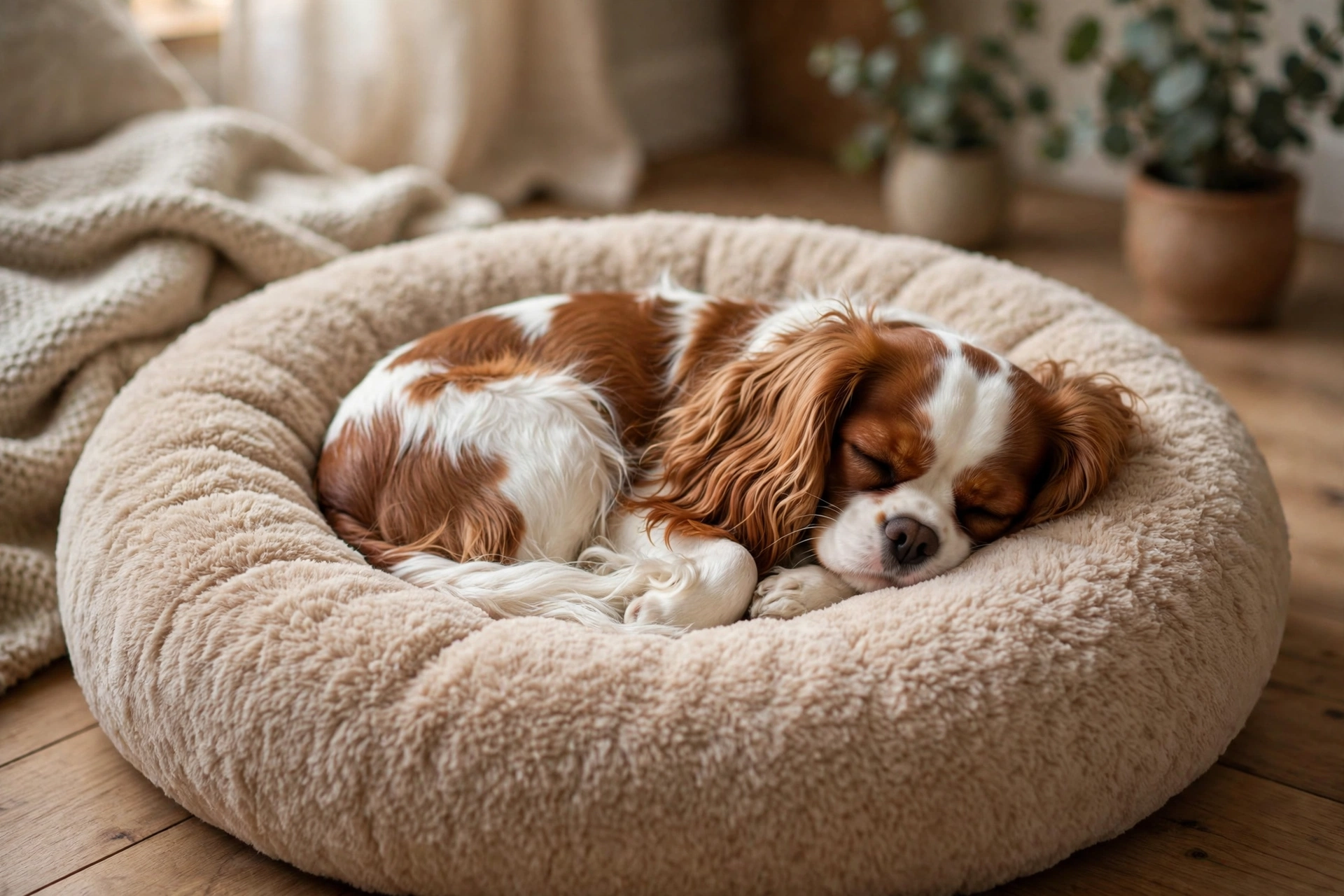
Helpful pick: Best Friends by Sheri Calming Donut Bed — the raised rim supports the head and neck, which helps anxious dogs settle faster.
Quick tip: Wash the bed regularly. A bed that smells like yesterday’s drool and damp paws is far less appealing than a fresh one — and scent is everything to a dog.
9. Rule Out Medical Issues
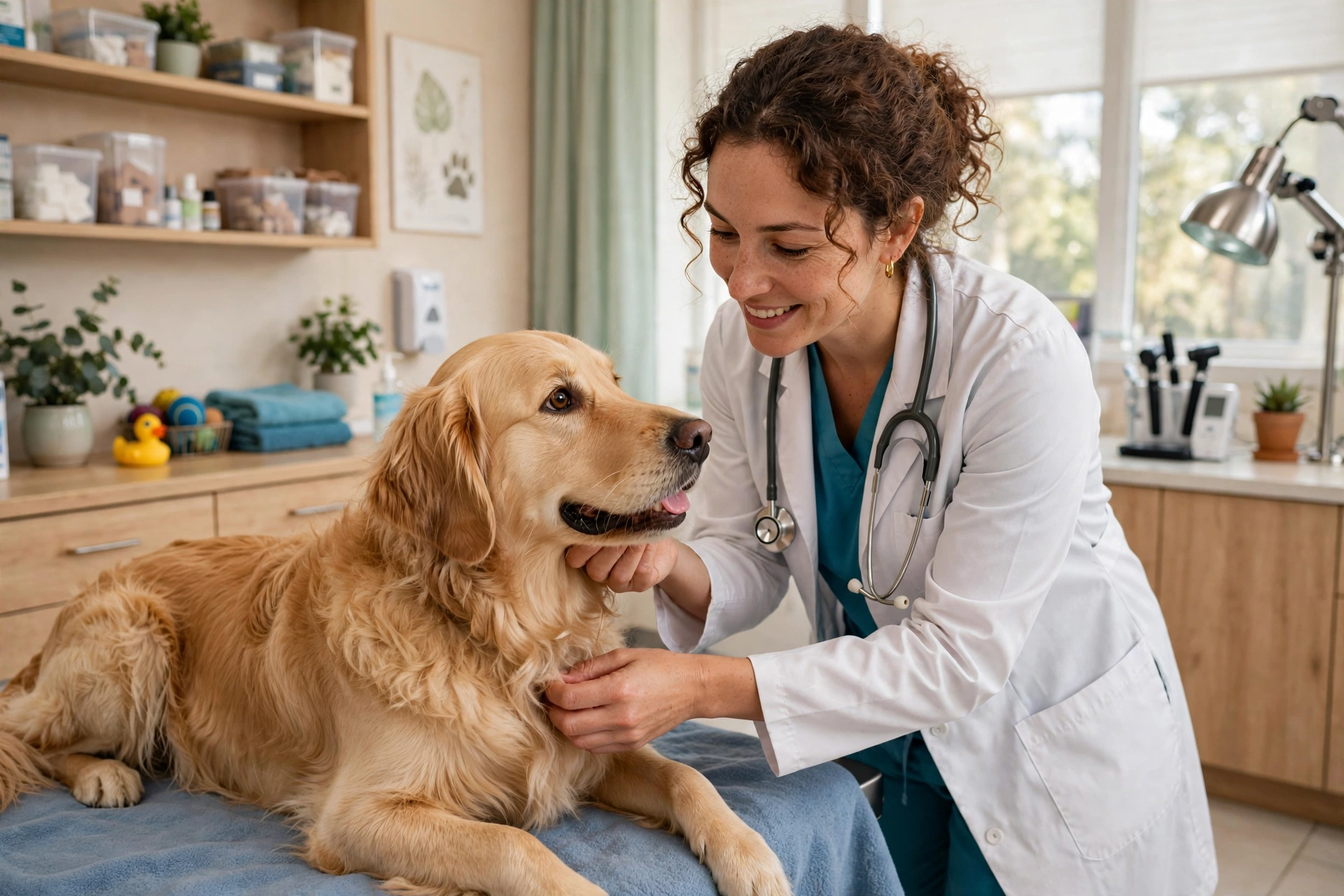
If the early wake-ups appeared suddenly in a dog who used to sleep fine, don’t assume it’s a behavior problem. A urinary tract infection makes a dog need to go now. Arthritis pain worsens after hours of stillness. Cognitive decline in senior dogs scrambles the sleep-wake cycle entirely — they may pace, whine, and wake at odd hours.
Red flags that point to a vet visit rather than a training fix: sudden onset, needing to urinate far more often than usual, whining or pacing that looks distressed rather than demanding, drinking a lot more water, or any change in appetite or energy. Puppies and seniors deserve extra slack here — their bodies genuinely can’t always wait.
Once your vet rules out pain, infection, and other medical causes, you can commit fully to the behavioral fixes above without worrying that you’re ignoring a real problem.
Helpful pick: PetMedics Non-Contact Pet Thermometer — a quick at-home check that helps you spot fever before the vet visit.
Quick tip: Senior dogs with nighttime restlessness may benefit from a vet check for canine cognitive dysfunction — there are medications and supplements that can genuinely help.
Why Dogs Wake You Up Early
Understanding the “why” makes every fix above easier to apply. Dogs wake us early for five main reasons, and most dogs have a combination:
- Routine: You (accidentally) trained them. Breakfast at 5:30 on weekdays means 5:30 wake-ups forever.
- Light and noise: Dogs are crepuscular — dawn is their natural “go time.” Sunrise and birdsong are wake-up calls.
- Hunger: A long gap between dinner and morning means an empty stomach at 4 AM.
- Bladder: Puppies, seniors, and small breeds physically can’t hold it all night.
- Reward history: If waking you has ever worked — even once — your dog will keep trying. Intermittent rewards create the most persistent behaviors of all.
The fastest wins come from fixing the physical triggers (light, noise, bladder, hunger) first, then retraining the learned habit with consistent non-response. Give the full plan two weeks. Most dogs — and their owners — are sleeping in by then.
Frequently Asked Questions
Is it cruel to ignore my dog when they wake me up?
No — as long as their basic needs are met (they’ve had a late potty break, dinner, water, and a comfortable bed). Ignoring attention-seeking wake-ups is standard, humane training. The key word is attention-seeking: if your dog genuinely needs to go out, always respond.
How long does it take to stop early wake-ups?
Most dogs adjust within 7 to 14 days of consistent non-response combined with the physical fixes above. Expect the behavior to get slightly worse around day 3 or 4 (the “extinction burst”) before it improves.
Should I wake my puppy up for a middle-of-the-night potty break?
Yes, proactively. Set an alarm to take your puppy out before they cry — this prevents them from learning that crying gets them out of the crate. Over time, push the alarm later in 15-minute increments until the break is no longer needed.
My dog only wakes me on weekends. Why?
Because on weekdays your alarm (or your routine) beats them to it. On weekends, their internal clock fires at the weekday time and you’re still in bed. The fix is a consistent wake-up time seven days a week — yes, including weekends.
Can I use a spray bottle or scolding to stop the wake-ups?
It’s not recommended. Punishing a dog for waking you often increases anxiety, which can make sleep worse, not better. Worse, if your dog actually needed the bathroom, punishment teaches them to hide accidents instead of asking. The calm non-response method works better and keeps your bond intact.
If your dog seems distressed rather than demanding — pacing, panting, or whining that doesn’t stop — consider whether anxiety could be part of the picture. Our guide on preventing separation anxiety in puppies covers calming routines that help nighttime restlessness too.
For more ways to keep your dog happily occupied during the day (so they actually sleep at night), see our roundup of the best puzzle toys for dogs.
As an Amazon Associate, PetPostHub earns from qualifying purchases.