10 Subtle Signs Your Dog Is Stressed (and What to Do)

During a recent thunderstorm, I watched my dog stand in the hallway, yawn twice, and lick her lips — with dinner hours away. Those tiny moments are the subtle signs your dog is stressed, and most of us walk right past them every day.
Dogs rarely announce their anxiety. They send small, polite signals instead — a flick of the tongue, a shifted gaze, a yawn that has nothing to do with being tired. Learn to read them and you can step in early. Below are the ten stress signs owners miss most, what each means, and what to do.
Table of Contents
- Why the Quiet Signals Matter Most
- 1. The Appeasement Grin
- 2. Whale Eye
- 3. The Tense, Deliberate Yawn
- 4. Lip Licking With No Food Around
- 5. The Whole-Body Shake-Off
- 6. Sudden Shedding at the Vet
- 7. Non-Stop Paw Licking
- 8. Clinginess That Never Settles
- 9. Going Completely Still
- 10. Displacement Sniffing and Scratching
- What NOT to Do When You Spot These Signs
- When It Might Be Pain, Not Stress
- Frequently Asked Questions
- Keep Reading
Why the Quiet Signals Matter Most
Growling, snapping, and bolting are the last resort — by the time a dog growls, every earlier signal has been ignored. The quiet signals are the first rung on the stress ladder, and they give you the chance to change the outcome.
- You catch trouble before it escalates. A lip lick is the first warning; a growl is the last.
- You stop mislabeling your dog. “Stubborn” and “guilty” are often just unread stress signals.
- You spot pain hiding underneath. Joint and dental pain can look exactly like behavioral stress.
- You build real trust. Dogs whose stress is respected grow confident; ignored dogs shut down or escalate.
Here are the ten most-missed signs, ranked by how easy they are to overlook.
1. The Appeasement Grin

Lips pulled back, teeth showing, eyes squinted, ears flattened — it looks like a goofy smile, and nearly everyone reads it that way. It is not joy or guilt. It is a documented appeasement signal that means, “I’m no threat, please ease up.” Common during tight hugs, scolding, or strangers leaning over. What to do: step back and let the dog move away on their own.
2. Whale Eye

The dog turns their head away but keeps the eyes fixed, exposing a half-moon of white — one of the strongest predictors of a defensive bite in behavior research, ahead of even a growl. What to do: interrupt immediately. Move the dog, move the trigger, or change rooms. Never reach for the face.
3. The Tense, Deliberate Yawn

A sleepy yawn is loose and full-bodied; a stress yawn is tight and deliberate, often aimed at the trigger, with the body stiff underneath. Trainers call it a “calming signal” dogs use to defuse tension. A yawn at the groomer or during a storm is almost never about sleep. What to do: create distance from the trigger or give a short break.
4. Lip Licking With No Food Around

A quick tongue flick across the nose with no food in sight — a classic displacement signal meaning the dog feels mildly uncomfortable and is self-soothing. Common during scolding, awkward handling, or fast approaches by strangers. What to do: soften your approach: a slower hand and a step back are often enough.
5. The Whole-Body Shake-Off

The same whole-body shake as drying off after a bath — but completely dry. It is a decompression move: the dog is shaking stress out of their nervous system after a tense event like a vet exam or a long cuddle. What to do: this means the dog is coping well. Note the trigger; if it repeats every time, make that event easier.
6. Sudden Shedding at the Vet

Acute stress spikes cortisol within minutes, loosening resting hairs from their follicles — staff call it “fear shed,” and researchers use hair cortisol as a welfare measure. What to do: tell your vet team so they can adjust handling; happy visits can make the clinic tolerable.
7. Non-Stop Paw Licking

Allergies genuinely cause itchy paws, but chronic licking with no medical cause is often self-soothing stress behavior — the rhythm calms like nail-biting. Watch the pattern: allergy licking is random or seasonal; stress licking has a trigger, like keys, doorbells, or loud rooms. What to do: rule out medical causes with your vet, then work on the trigger, not the tongue.
8. Clinginess That Never Settles
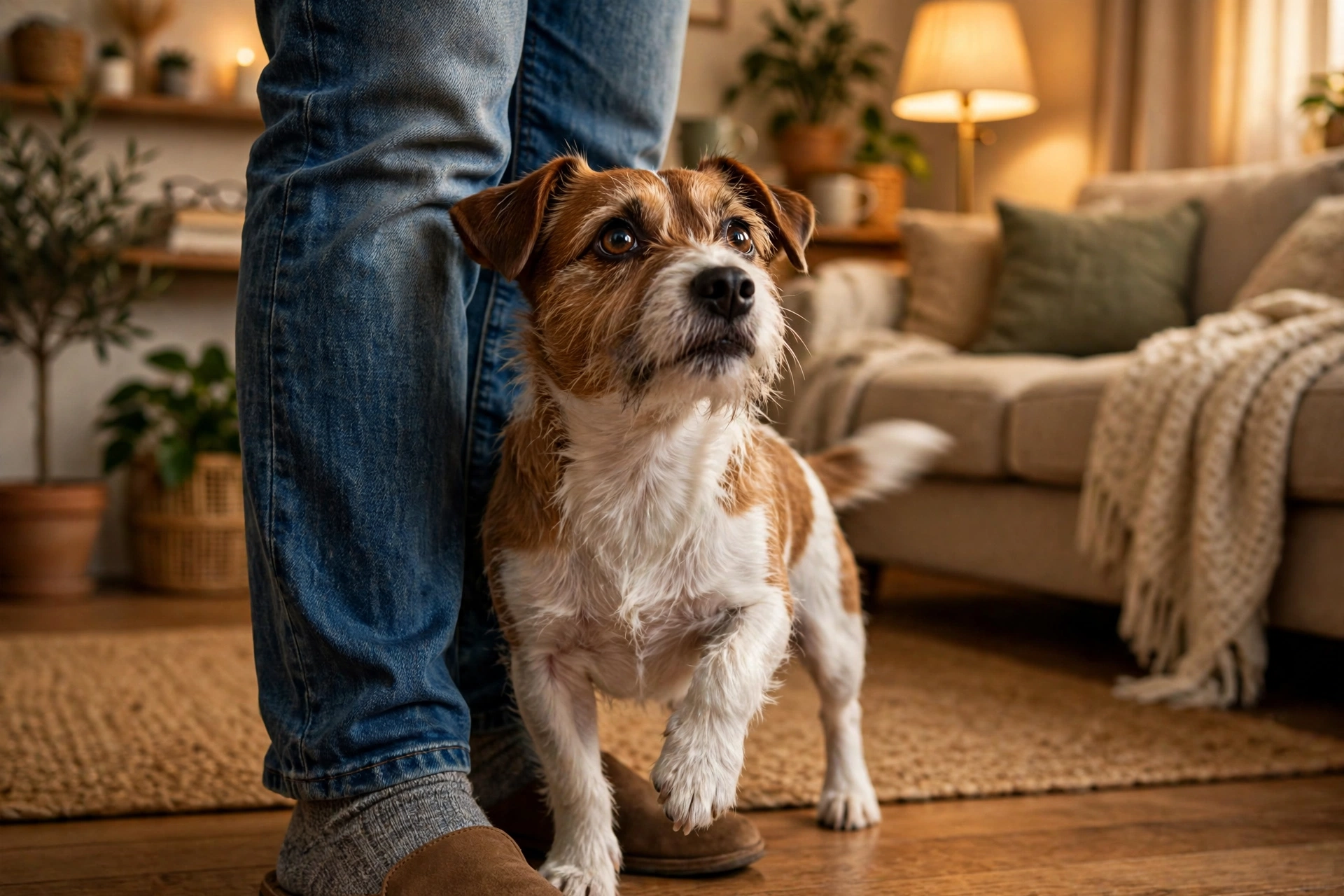
Normal clingy dogs follow you and then nap. Anxious dogs follow you and cannot stop moving — pacing, whining, eyes locked on you, unable to rest even when you sit still beside them. The difference is settling. What to do: build independence slowly with short, rewarded separations; give them a safe spot of their own.
9. Going Completely Still

Stillness looks like calm, but freezing is one of the last steps before a defensive bite — the dog has run out of polite signals and is locked in fight-or-flight. It is the most misread sign on this list. What to do: stop whatever is happening and let the dog move away freely.
10. Displacement Sniffing and Scratching

Mid-cuddle, the dog suddenly sniffs the carpet with total intensity, scratches an ear, or grooms a paw. That is displacement: an unrelated behavior used to manage discomfort. It looks like distraction; it is self-regulation. What to do: reduce the pressure, offer an exit, and try again with more space.
What NOT to Do When You Spot These Signs
- Do not punish a growl. A growl is the gift right before a bite. Punish it and your dog learns that warnings get them in trouble — so they skip the warning next time.
- Do not force them to face the fear. Dragging a scared dog toward what frightens them is called flooding, and it makes anxiety worse. Slow, gradual exposure works; forced exposure backfires.
- Do not mistake shutdown for calm. A frozen, glazed-over dog is not relaxed — they have checked out. If your dog suddenly “behaves” in a scary situation, ask whether that is confidence or surrender.
- Do not fix the symptom and skip the cause. Calming support is fine, but if the signs are chronic, find the trigger: a routine change, a new person, noise, or pain.
When It Might Be Pain, Not Stress
A lot of what looks like anxiety is actually physical pain — arthritis, dental disease, ear infections, stomach discomfort. Dogs cannot tell you their hip hurts, so they tell you with their behavior, and from the outside, pain behavior looks almost identical to behavioral stress.
Mislabeled pain signs: yelping when picked up a certain way, flinching at the collar, suddenly refusing the couch, nighttime restlessness, new “clinginess,” or new grumpiness. If stress signals are new or worsening — especially in seniors — a vet check comes before a behaviorist visit. Training cannot fix pain.
Frequently Asked Questions
Can dogs really hide their stress?
Yes. They use small, easy-to-miss signals long before escalating — by the time a dog growls, every earlier signal has already been missed.
Is my dog smiling when they pull their lips back?
Almost certainly not. The “appeasement grin” is a nervous signal meaning the dog wants space — a relaxed dog has a loose mouth, soft eyes, and a wiggly body.
Should I comfort my dog when they look stressed?
Calm, low-key comfort is fine. High-pitched fussing can convince them there really is something to worry about — be the calm they can borrow.
When should stress signs become a vet visit?
When they are new, sudden, or worsening — especially in seniors or with physical symptoms like limping or appetite changes. Anxiety-looking signs are often pain.
Can training fix my dog’s stress?
For mild, trigger-based stress, yes — through slow exposure and confidence building. But it cannot fix pain or replace medical care for chronic anxiety. Rule out physical causes first.
Keep Reading
- How to Teach Your Dog to Fetch Your Slippers
- Why Does My Dog Pant So Much?
- What Your Dog’s Sleeping Position Really Means
- How to Train Your Dog to Stop Barking
- Cavalier King Charles Spaniel Barking: What It Means
- Pros and Cons of Sleeping With Your Dog
- When Do Cavalier Puppies Calm Down?
- Common Cavalier King Charles Spaniel Health Issues
- Why Your Cavalier Yelps When Picked Up
Note: I’m a dog lover and home cook, not a certified veterinarian or animal behaviorist. If your dog is showing chronic or worsening stress signs — especially new ones or signs combined with physical symptoms — talk to your vet first to rule out pain or medical causes.