How to Teach Your Dog to Fake It (Play Dead): 7 Steps
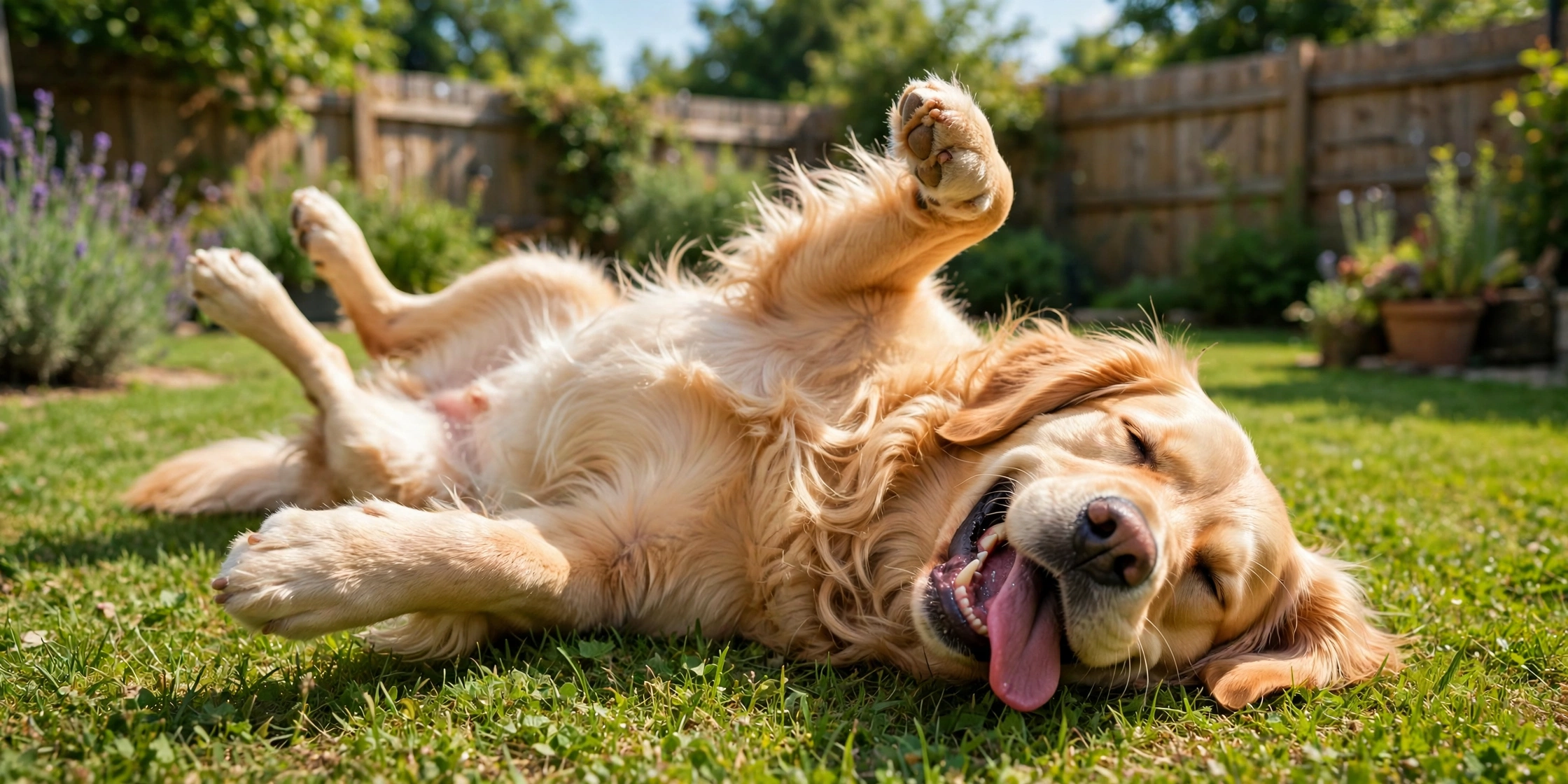
Few tricks get a laugh like a dog dramatically flopping over when you point a finger gun and say “bang!” If you want to learn how to teach dog to fake it, you’re in for one of the most fun training projects around. This classic party trick — also called “play dead” or “bang bang, you’re dead” — is taught with a simple treat-lure progression that most dogs pick up in just a few short sessions. All you need is a calm spot, some tasty treats, and a sense of humor.
Table of Contents
- Step 1: Nail “Down” First
- Step 2: Lure Onto the Side
- Step 3: Mark the Flop
- Step 4: Add the Finger-Gun Cue
- Step 5: Build the Duration
- Step 6: Fade the Lure
- Step 7: Troubleshoot Like a Pro
- Fake It vs. Play Dead
- Frequently Asked Questions
Ready to get started? Here’s a quick shopping list of what you’ll need before your first session:
- Pea-sized, soft, high-value treats — cheese, hot dog bits, or soft training treats work best because your dog can eat them fast and refocus.
- A marker — a clicker or a consistent word like “yes!” spoken the same way every time.
- A soft surface — a rug, mat, or carpet, so flopping onto a hip is comfortable rather than startling.
- A quiet space — low distractions help your dog focus on the tiny mechanics of the trick.
- Short sessions — five to ten minutes, once or twice a day, is the sweet spot. Always quit while you’re ahead.
Step 1: Nail “Down” First

Every version of this trick starts from a solid “down.” If your dog doesn’t reliably lie down on cue yet, teach that first — the whole sequence builds on it. Cue your dog into a down and reward them for settling calmly. You want a relaxed, soft down, not a stiff one, because a tense dog resists tipping sideways.
Pro tip: Keep sessions to five or ten minutes. Training this trick on a soft surface like a rug or mat helps dogs feel comfortable rolling onto their side, especially lean or bony dogs whose hip bones press into hard floors. If your dog doesn’t know “down” at all yet, spend a day or two teaching that first — rushing the foundation always costs more time later than it saves.
Helpful pick: Zuke’s Mini Naturals Training Treats — tiny, soft bites that are easy to dole out without filling your dog up during repetitions.
Step 2: Lure Onto the Side
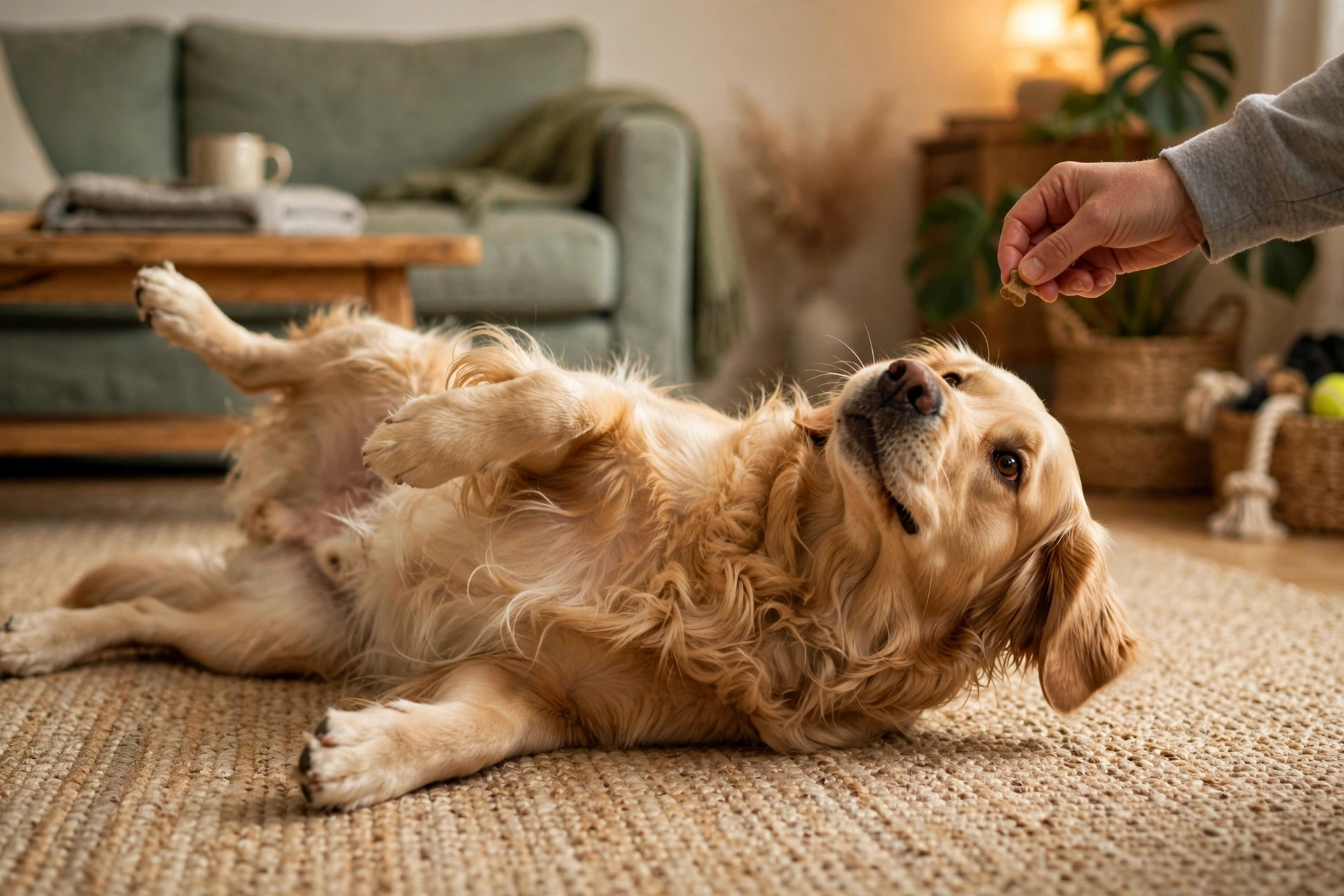
With your dog in a down, hold a treat close to their nose, then slowly move it from their nose toward their shoulder and back toward their spine. To keep tracking the treat, your dog will have to rock onto one hip — and that sideways tilt is the whole trick. Watch which side your dog tips naturally; most dogs favor one side, and it’s far easier to build on the natural choice than to fight it.
Pro tip: If your dog resists, slow the lure way down or gently rest a hand on their shoulder as a guide. Never shove — feeling pushed into a vulnerable position makes many dogs pop back up.
Helpful pick: Egiao Dog Treat Pouch — keeps treats right at your hip so your luring hand stays clean and fast.
Step 3: Mark the Flop
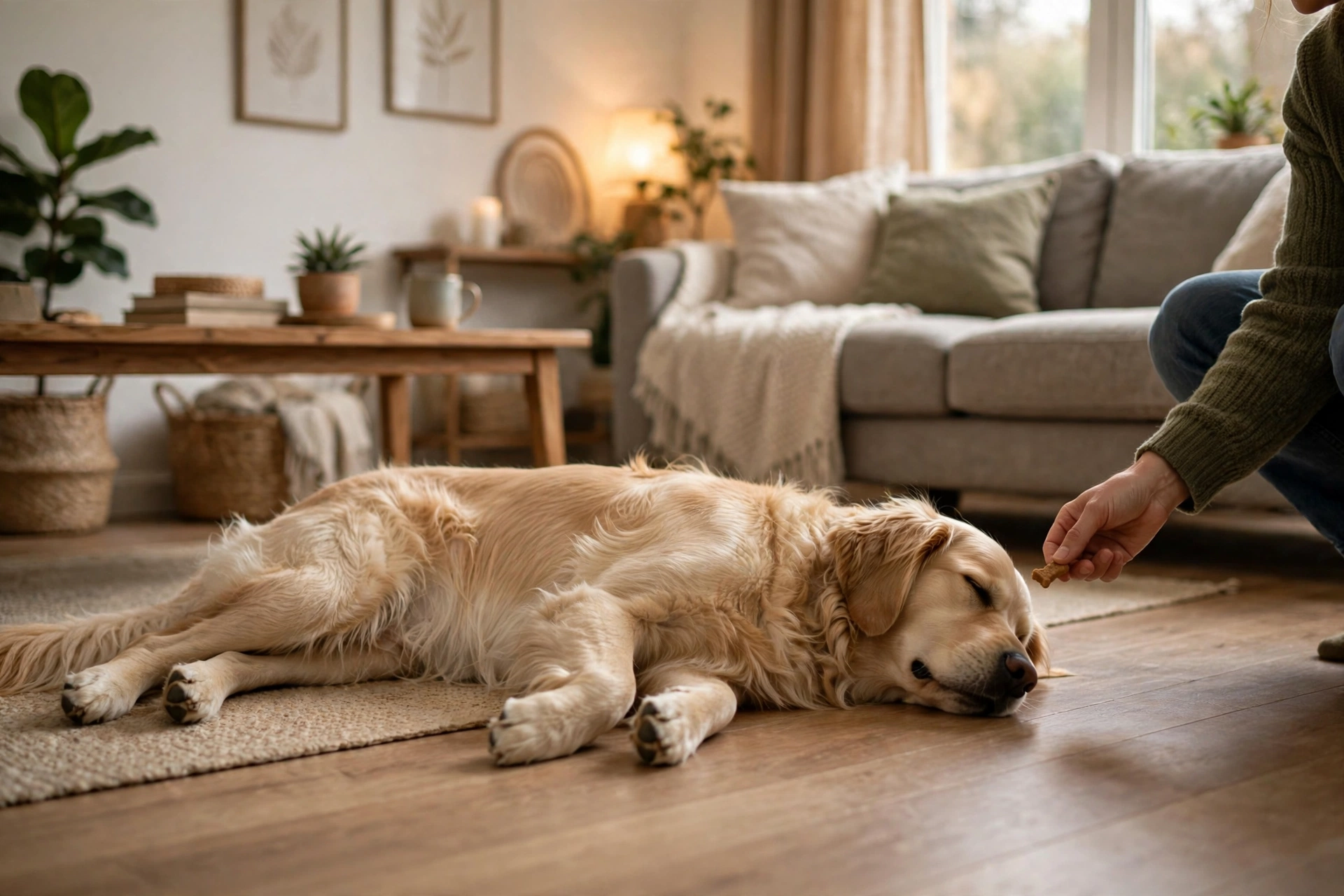
The instant your dog’s shoulder and head touch the ground, mark it — click your clicker or say a bright marker word like “yes!” — then deliver the treat right where they’re lying, so they associate the reward with the flat-on-the-side position. Timing is everything: marking within a second of the flop is what teaches the dog exactly which moment earned the payoff. Repeat this lure-mark-reward loop a handful of times until the sideways roll starts to look smooth.
Pro tip: Deliver the treat while their head is on the ground, not after they pop back up. Feeding low keeps the behavior anchored to the floor.
Helpful pick: STMK Dog Clicker Kit — a precise marker that pinpoints the exact second of the flop.
Step 4: Add the Finger-Gun Cue
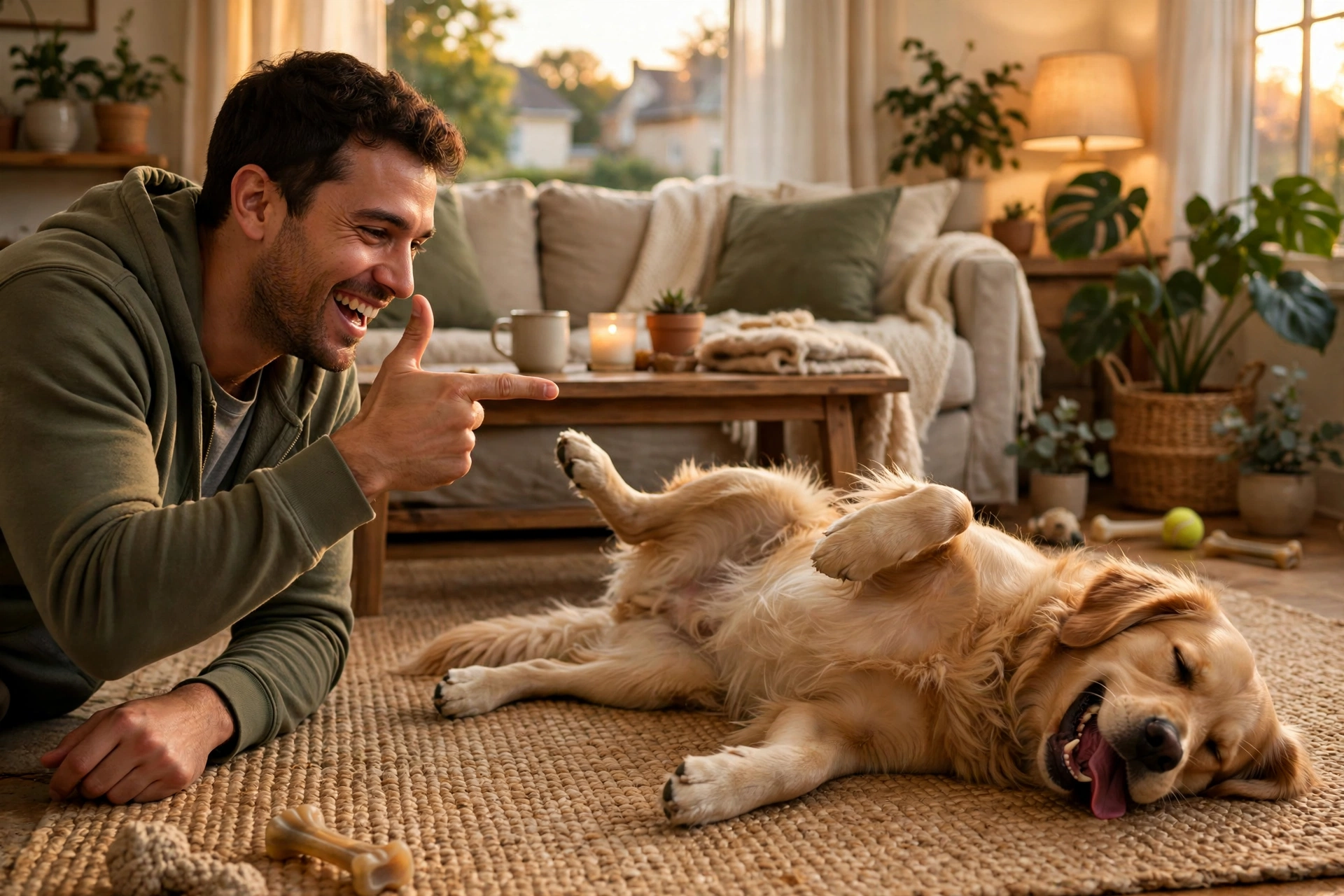
Once your dog reliably follows the lure onto their side, introduce the cue right before you move the treat: say “bang!” in a playful tone and make a finger-gun gesture. The word and the hand signal together become the routine — most dogs start anticipating the flop as soon as they see the finger guns come out. Say the cue once, lure once, mark and reward. After enough repetitions, your dog will begin flopping over on the cue alone, before the lure even moves.
Pro tip: Pick one word and stick with it. “Bang,” “fake it,” “dead,” “splat” — they all work, but mixing cues mid-training confuses the dog. Say the cue in the same cheerful tone each time so it sounds identical from your dog’s perspective, whether you’re in the kitchen or performing at a family gathering.
Helpful pick: PetSafe Treat Pouch Sport — a roomy pouch for longer practice sessions when you start chaining reps.
Step 5: Build the Duration
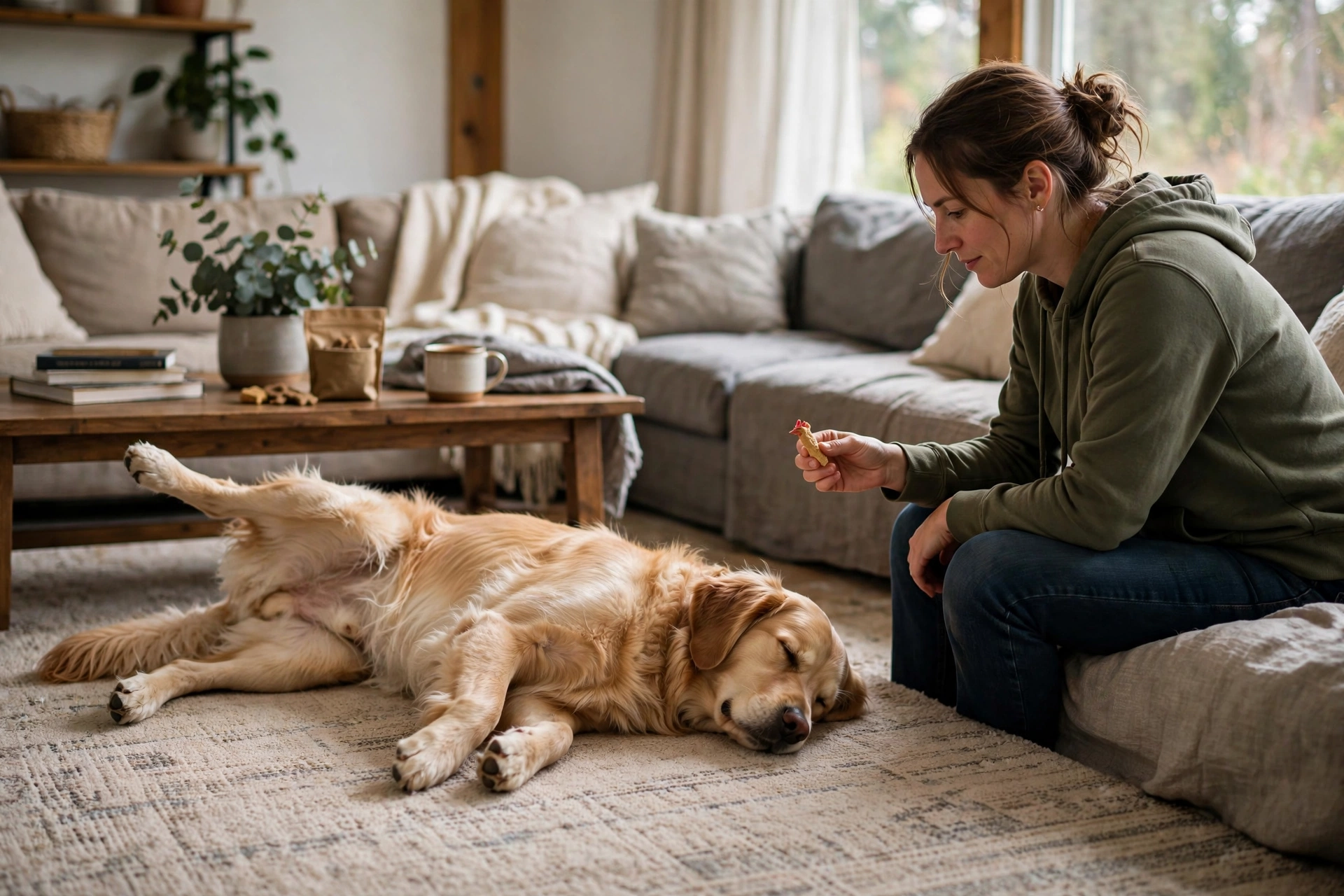
A one-second flop is funny; a five-second hold is legendary. Start stretching the “dead” hold by waiting a beat longer before you mark and reward. Build gradually — one second, then two, then five — and only add time when your dog holds the position calmly. If they pop up early, you asked for too long; drop back to the last successful hold and build up again more slowly.
Pro tip: Add a release word like “okay!” or “alive!” so your dog knows exactly when the trick ends. This keeps the hold crisp instead of wishy-washy.
Helpful pick: KONG Classic — a stuffed Kong between reps keeps your dog settled while you plan the next set.
Step 6: Fade the Lure
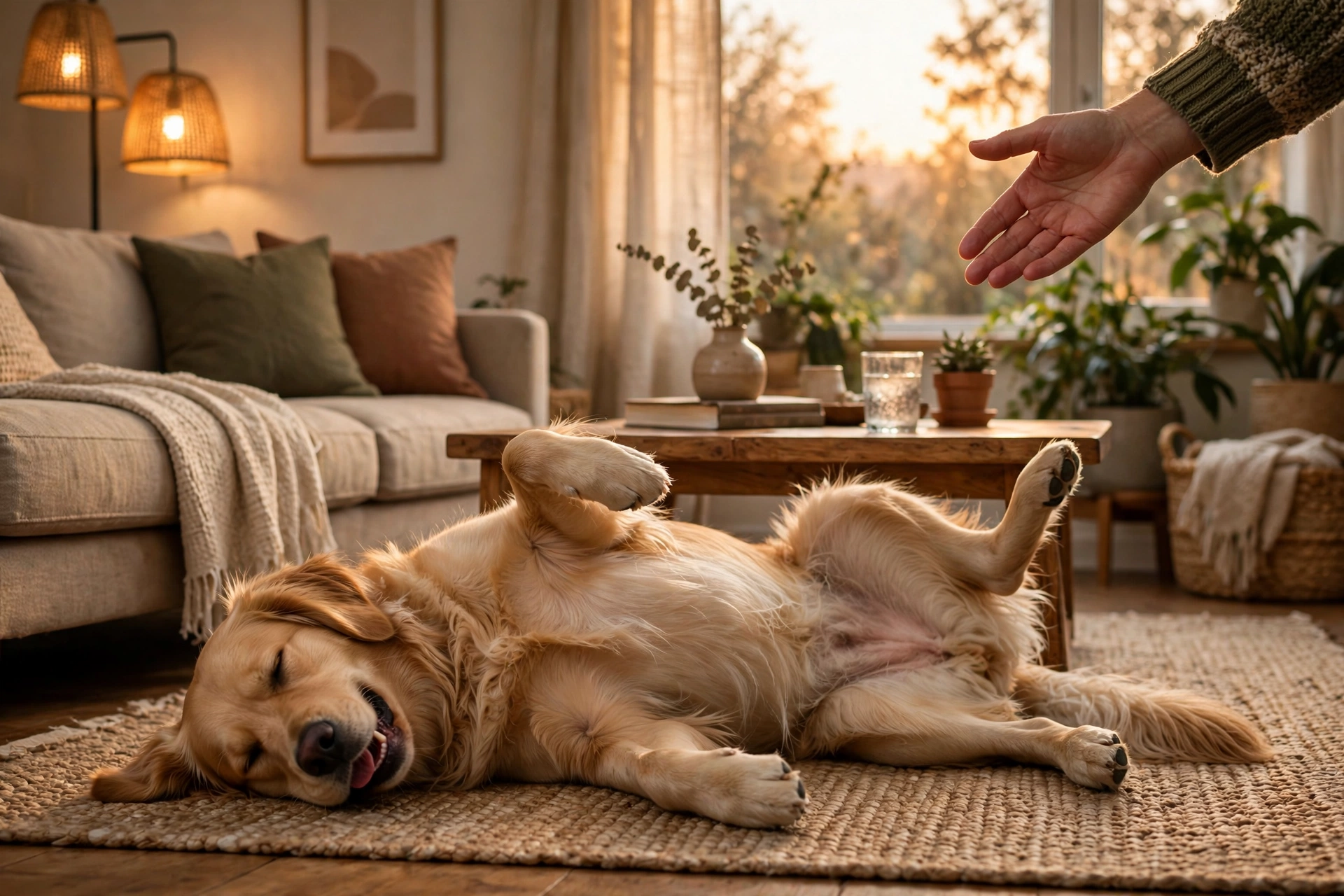
Now reduce the food lure until the cue and finger guns do the work on their own. Start by making your lure gesture smaller — half the movement, then a flick — and finally just the verbal cue and hand signal. Reward from your pocket instead of the luring hand. Dogs that truly “get it” will flop over the moment they hear “bang,” no treat in sight required.
Pro tip: If your dog stalls without the lure, go back to luring a few reps, then make the fade smaller and slower. Fading too fast is the most common reason dogs regress here.
Helpful pick: Outward Hound Tornado Puzzle Toy — a great between-session brain game so your dog stays sharp without drilling one trick endlessly.
Step 7: Troubleshoot Like a Pro
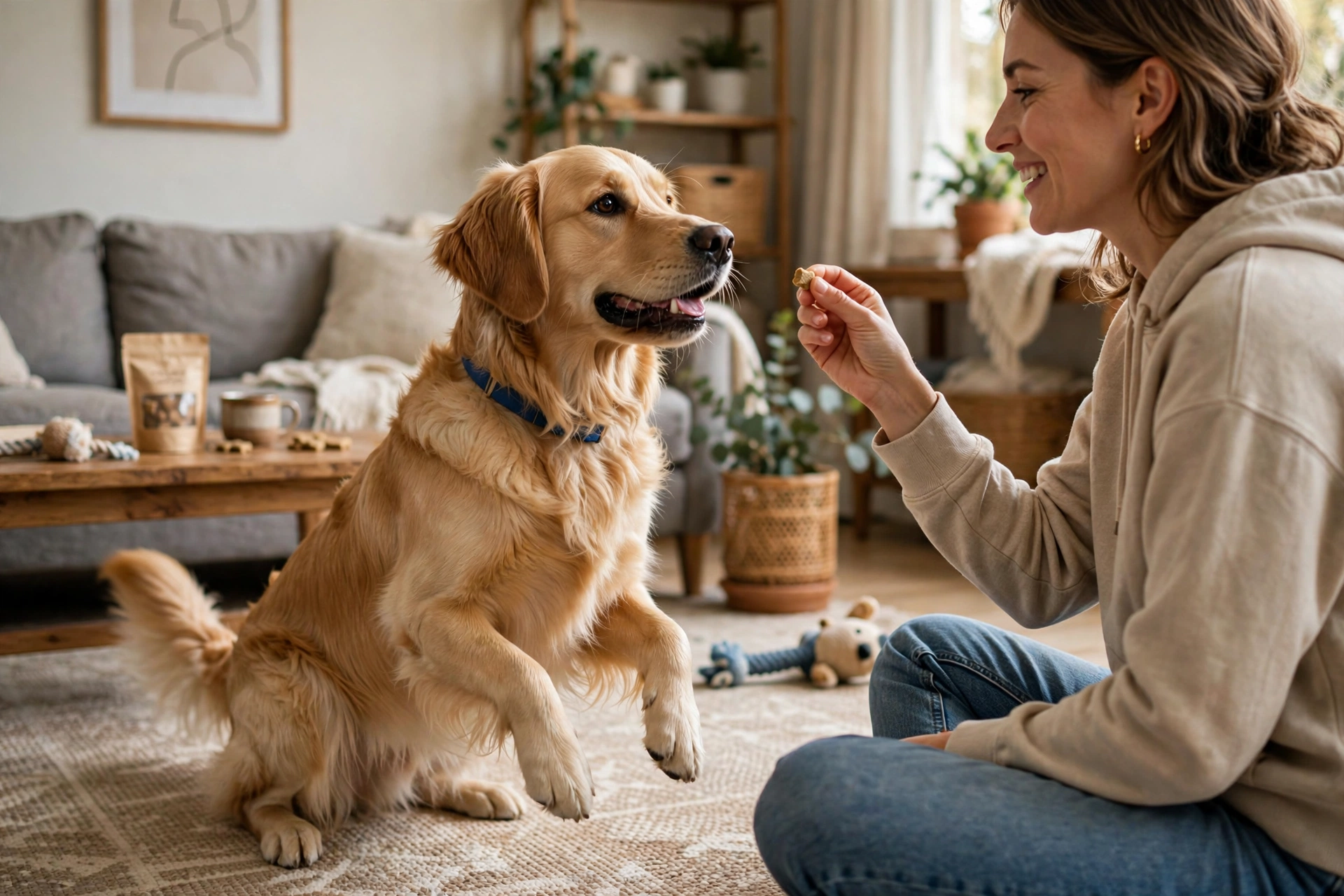
Dog keeps popping up? The lure may be moving too high — keep the treat glued to their nose and low toward the shoulder. Rolling all the way over? Stop rotating your hand the moment they reach their side; you want a flop, not a roll. Getting bored? End the session on a high note with something easy they already know, then try again tomorrow. Most dogs have “bang!” down within a week of short daily sessions.
Pro tip: Older dogs, puppies with developing joints, or dogs with back or hip issues should take it extra easy — practice on padding and keep sessions gentle. When in doubt, check with your vet.
Helpful pick: Chuckit! Classic Ball Launcher — the perfect high-energy break when you need to reset a frustrated training session.
Fake It vs. Play Dead
“Fake it” and “play dead” are really the same trick wearing different outfits. “Play dead” is usually taught with the cue “bang” or “dead” and a flat-on-the-side finish; “fake it” leans into the comedy — owners often teach it with “fake it!” and let the dog add their own drama, like a slow-motion collapse or an exaggerated groan. The training mechanics are identical: lure to the side, mark the flop, add the cue, build duration, fade the lure. The only real difference is style — so pick whichever name makes you laugh and teach that one.
Frequently Asked Questions
How long does it take to teach a dog to fake it?
Most dogs learn the basic flop in 3–7 days of short (5–10 minute) sessions. A crisp, reliable response on cue alone usually takes 2–3 weeks of practice.
What age can a puppy learn this trick?
Puppies as young as 8–12 weeks can start learning the early lure steps. Keep it gentle and short — puppies tire fast and their joints are still developing.
Why does my dog roll all the way over instead of staying on their side?
Your lure hand is probably traveling too far. Stop the rotation the moment their side touches the floor and mark immediately, so they learn that “sideways flat” — not a full roll — is the winning position.
Can I use “bang!” if I have guests over?
Absolutely — that’s the whole point! Many families add a finger-gun gesture and let guests give the cue. Just keep treats handy and make sure your dog is enjoying the attention.
Is it safe for older dogs?
For most healthy senior dogs, yes, as long as you practice on a soft surface and keep sessions short. If your dog has arthritis, hip dysplasia, or back problems, ask your vet first.
Keep Reading
- How to Teach Your Dog to Play Dead
- How to Teach Your Dog to Bow: 7 Steps
- How to Teach Your Dog to Sit Pretty: 7 Steps
- How to Teach Your Dog to Give a Hug: 7 Steps
- How to Teach Your Dog to Spin
As an Amazon Associate, PetPostHub earns from qualifying purchases.