
Why Does My Dog Lick My Chin? 5 Reasons

You lean in for a cuddle, and your dog goes straight for your chin. It is slobbery, ticklish, and oddly sweet — but why does my dog lick my chin? Chin licking is one of the most common little behaviors dogs direct at their favorite humans, and it usually means something positive. In this guide, we break down the 5 most common reasons dogs lick chins, what each one is telling you, and how to gently manage it when the kisses get a little too enthusiastic.
Table of Contents
- 1. Affection: The Canine Love Language
- 2. Grooming: You Are Part of the Pack
- 3. Salty Taste: You Are Deliciously Flavored
- 4. Submission: A Polite “We Are Good”
- 5. Habit: It Just Feels Good
- How to Redirect Chin Licking
- Frequently Asked Questions
1. Affection: The Canine Love Language

What it means: For most dogs, licking is the closest thing they have to a kiss. The chin is simply an easy target — it is right at dog height when you bend down to greet them, and it is one of the first parts of your face they can reach. A loose, wiggly body, a wagging tail, and a relaxed tongue usually mean this is pure affection. Your dog is saying, “I missed you, and I am so happy you are here.”
What to do: If you enjoy it, enjoy it. If it is too much, stay calm — pushing your dog away suddenly can confuse them. Instead, praise a calm sit or a gentle nuzzle with no licking, so your dog learns there are other ways to say hello that also get rewarded.
Helpful pick: Zuke’s Mini Naturals Training Treats — perfect pocket-sized rewards for reinforcing a calm greeting instead of a lick-fest.
2. Grooming: You Are Part of the Pack
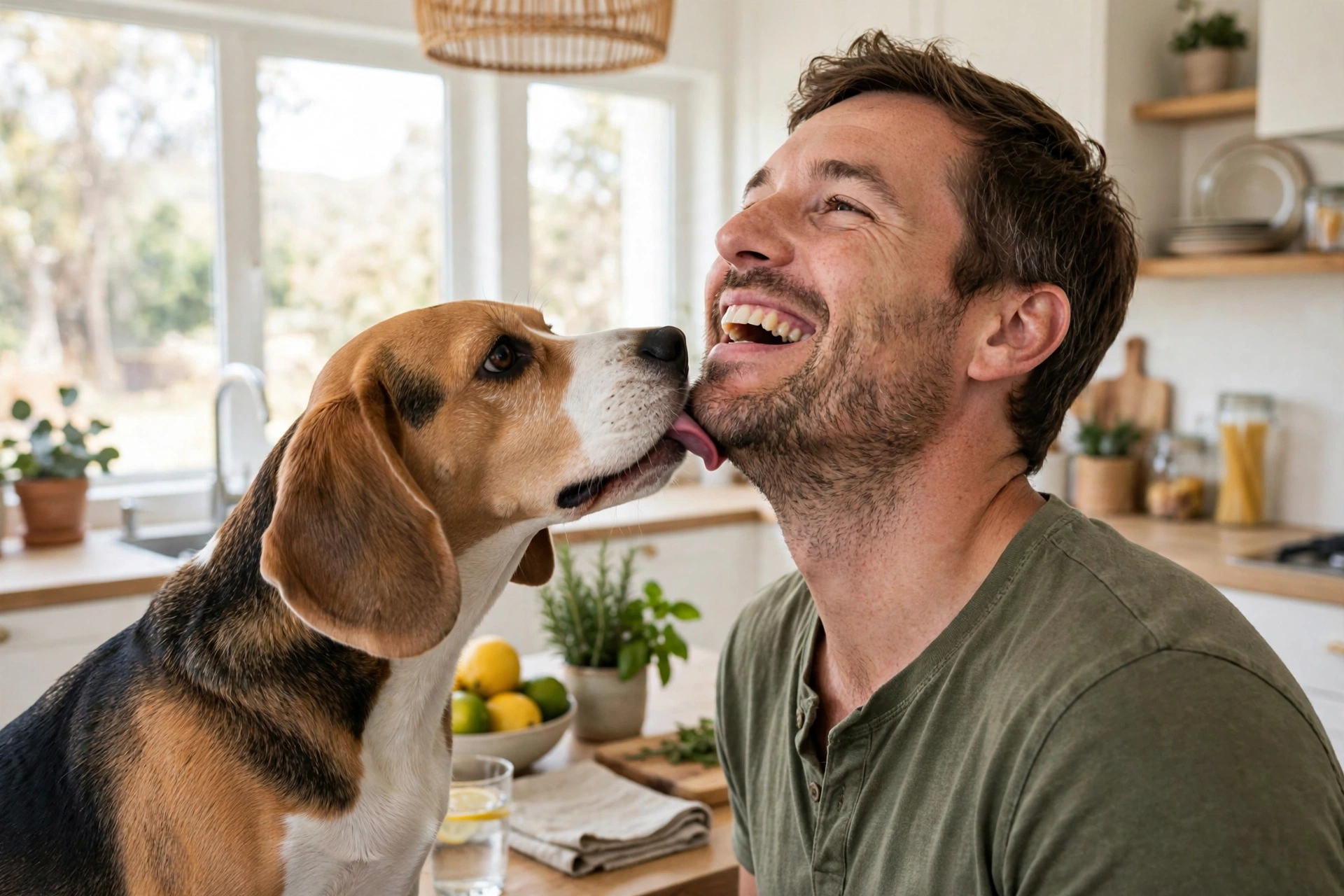
What it means: Dogs groom the faces, ears, and chins of other dogs they are close to. It is a bonding ritual that keeps relationships strong. When your dog licks your chin, they may be extending that same pack-grooming behavior to you — you are family, so you get the treatment. This is especially common in dogs who live with other dogs and already groom their housemates regularly.
What to do: This is a compliment, and there is no reason to scold it. If it happens right after you eat, wipe your chin first — you will be less interesting if there is nothing flavorful on it. You can also teach a “gentle” cue so your dog switches from licking to simply resting their chin on your shoulder.
Helpful pick: Greenies Original Dental Treats — keep those grooming kisses fresh with a vet-accepted dental chew.
3. Salty Taste: You Are Deliciously Flavored

What it means: Human skin is naturally a little salty, especially after exercise, a warm day, or a salty snack. Dogs have far fewer taste buds than humans, so salt and leftover food residue stand out to them. If your dog suddenly becomes obsessed with your chin right after your workout or dinner, it is probably the taste, not a deep emotional message.
What to do: Wash your face before cuddle time, particularly after exercise. This simple step removes the salty reward and usually dials the licking way down. It also keeps the whole interaction more hygienic for both of you.
Helpful pick: KONG Classic — redirect that tongue toward something tastier by stuffing a KONG with peanut butter and freezing it.
4. Submission: A Polite “We Are Good”

What it means: Face and chin licking has roots in ancient canine communication. Puppies lick the muzzles of adult dogs as a sign of deference — a way of saying, “I respect you, we are on good terms.” When an adult dog licks your chin, especially a nervous or newly adopted dog, it can carry that same meaning: a polite social signal that says “you are in charge, and I am glad.” Watch for soft body language — lowered ears, a tucked tail, a gentle approach.
What to do: Be kind in response. Crouch down to their level, speak softly, and let them know you are a friend, not a threat. Over time, as your dog’s confidence grows, the appeasement licking often decreases on its own. For a rescue dog that is still settling in, patience is the best response.
Helpful pick: ADAPTIL Calm Home Diffuser — a vet-recommended way to support a calmer, more confident environment for a nervous dog.
5. Habit: It Just Feels Good
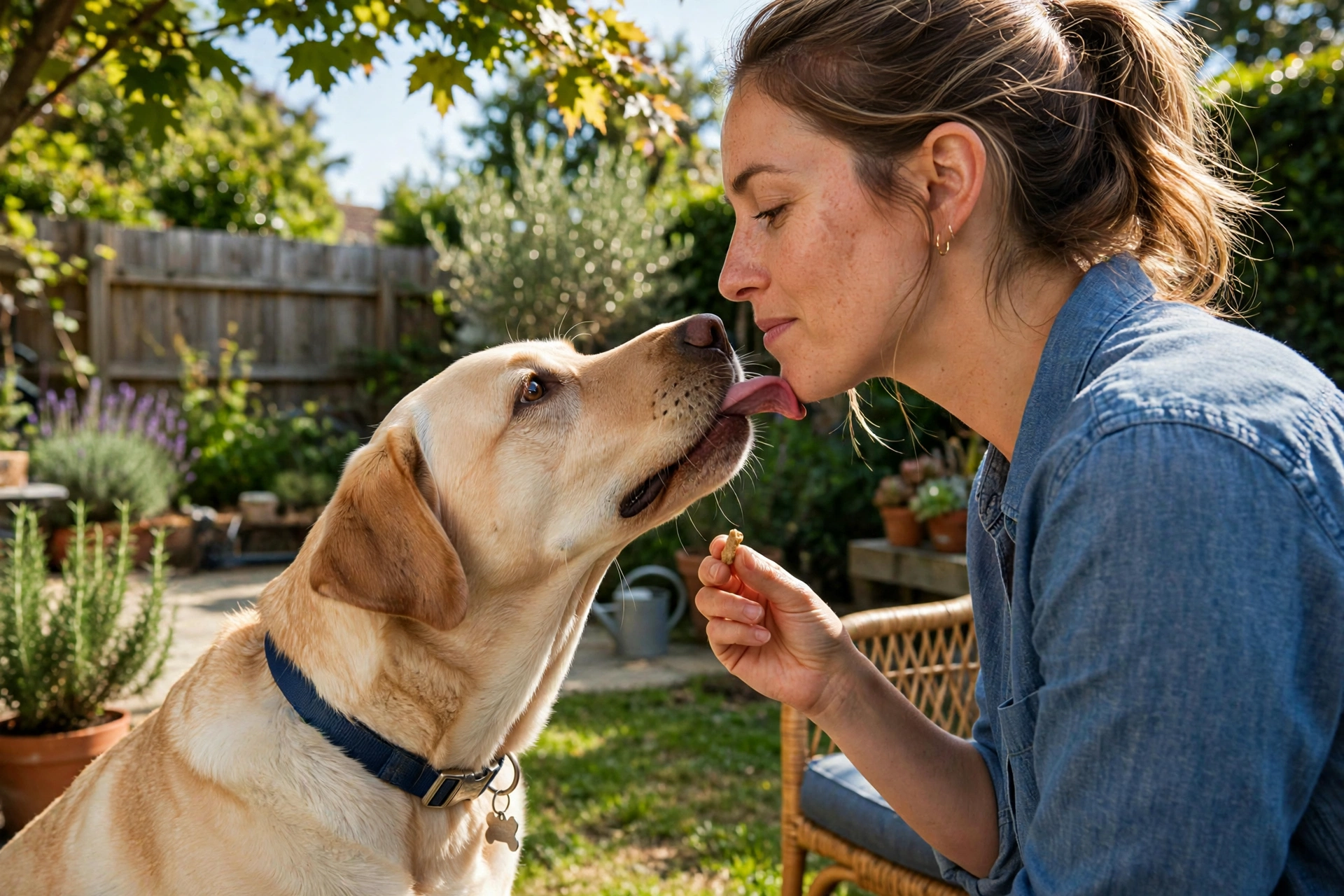
What it means: Sometimes there is no grand meaning at all. Licking releases feel-good endorphins in a dog’s brain, so if chin licking has been fun and rewarding in the past — you laughed, you cuddled, you gave attention — it simply becomes a habit. Your dog learned that chin licks get a reaction, and reactions are what dogs live for.
What to do: Break the cycle by not rewarding it. Turn your head calmly, stand up, or redirect to a toy or a simple cue like “sit.” The moment your dog offers a different behavior, reward that instead. Consistency from everyone in the household matters — if one person laughs and encourages it, the habit will stick around.
Helpful pick: Egiao Dog Treat Pouch — keep treats within easy reach so you can instantly reward the behavior you want instead.
How to Redirect Chin Licking
Whether you find it adorable or a little too slobbery, here is a simple plan for managing chin licking. The goal is never to make your dog feel rejected — just to channel that affection into habits that work for both of you.
- Stay neutral: Do not laugh, scold, or push dramatically — any big reaction can accidentally reinforce the licking.
- Teach a replacement: Ask for a “sit” or “chin rest” before the licking starts, and reward that behavior generously.
- Remove the reward: Wipe your face after meals and workouts so your chin is less tasty.
- Redirect the tongue: Offer a stuffed KONG, lick mat, or chew when your dog comes in for kisses.
- Stay consistent: Make sure everyone in the family follows the same rules — mixed signals keep habits alive.
Frequently Asked Questions
Is it safe to let my dog lick my chin?
For healthy adults and dogs, the occasional lick on intact skin is low risk. However, dog saliva can carry bacteria, so avoid face licking if you have cuts, sores, eczema, or a weakened immune system — and always wash up afterward.
Why does my dog lick my chin but not my face?
The chin is simply the easiest part of your face to reach when you lean down. Many dogs are naturally drawn to the muzzle area of their social partners — in the canine world, the chin and mouth area are where greeting behavior is directed.
Why does my dog lick my chin so much at night?
Evening cuddle sessions are prime licking time because your dog is relaxed, close to you, and getting lots of attention. If it has become a nightly ritual, it is likely a habit — redirect with a chew or a calm “place” cue before bed.
Does my dog licking my chin mean he loves me?
Often, yes. In most cases chin licking is affectionate, social behavior — a dog’s version of a kiss. Combined with a wiggly body and happy eyes, it is one of the clearest signs your dog adores you. Related: signs your dog loves you.
How do I stop my dog from licking my chin without hurting his feelings?
Redirect rather than punish. Turn away calmly, ask for a different behavior like “sit,” and reward that instead. Your dog still gets attention — just for something other than licking. You can also learn the difference between licking and sniffing behavior in our guide on why dogs sniff your eyes.
Keep Reading
- Why Does My Dog Lick My Nose? 5 Reasons
- Why Does My Dog Lick My Ears? 5 Reasons
- Why Does My Dog Lick My Hands? 5 Reasons
As an Amazon Associate, PetPostHub earns from qualifying purchases.


One Comment