Puppy Feeding Schedule: How Much & How Often by Age (Vet Guide)

Bringing home a puppy is pure joy — and a lot of questions. One of the biggest is getting their nutrition right, and a consistent puppy feeding schedule is the single most important tool you have. Puppies grow astonishingly fast, and in their first year they need far more calories per pound than an adult dog, delivered in small, frequent meals their tiny stomachs can actually handle.
This vet-reviewed guide walks you through exactly how often to feed a puppy at every stage, how much food belongs in the bowl, and the mistakes that can set growth off track. Keep in mind that every puppy is an individual: breed size, activity level, and health all shift the numbers, so treat this guide as your framework and confirm the final plan with your veterinarian.
Table of Contents
- Puppy Feeding Schedule by Age
- 8–12 Weeks: Four Meals a Day
- 3–6 Months: Three Meals a Day
- 6–12 Months: Two to Three Meals a Day
- 12+ Months: Transitioning to Adult Food
- How Much Food Does a Puppy Need?
- Common Feeding Mistakes
- Frequently Asked Questions
Puppy Feeding Schedule by Age

The broad pattern vets and welfare organizations agree on is simple: feed often when they are very young, then gradually drop meals as the stomach grows and growth slows.
One exception: toy and very small breeds are prone to low blood sugar, so they may need four to five small meals a day well past the point larger puppies drop to three. If you have a tiny pup, ask your vet about meal frequency at your first checkup. And no matter the age, spread meals evenly through the day — steady intervals keep energy and digestion stable.
Before we break it down by stage: feed a puppy-specific formula labeled complete and balanced for growth by the AAFCO — it is richer in protein, fat, calcium, and DHA than adult food. See our ultimate guide to dog nutrition for more on quality nutrition at every life stage.
8–12 Weeks: Four Meals a Day
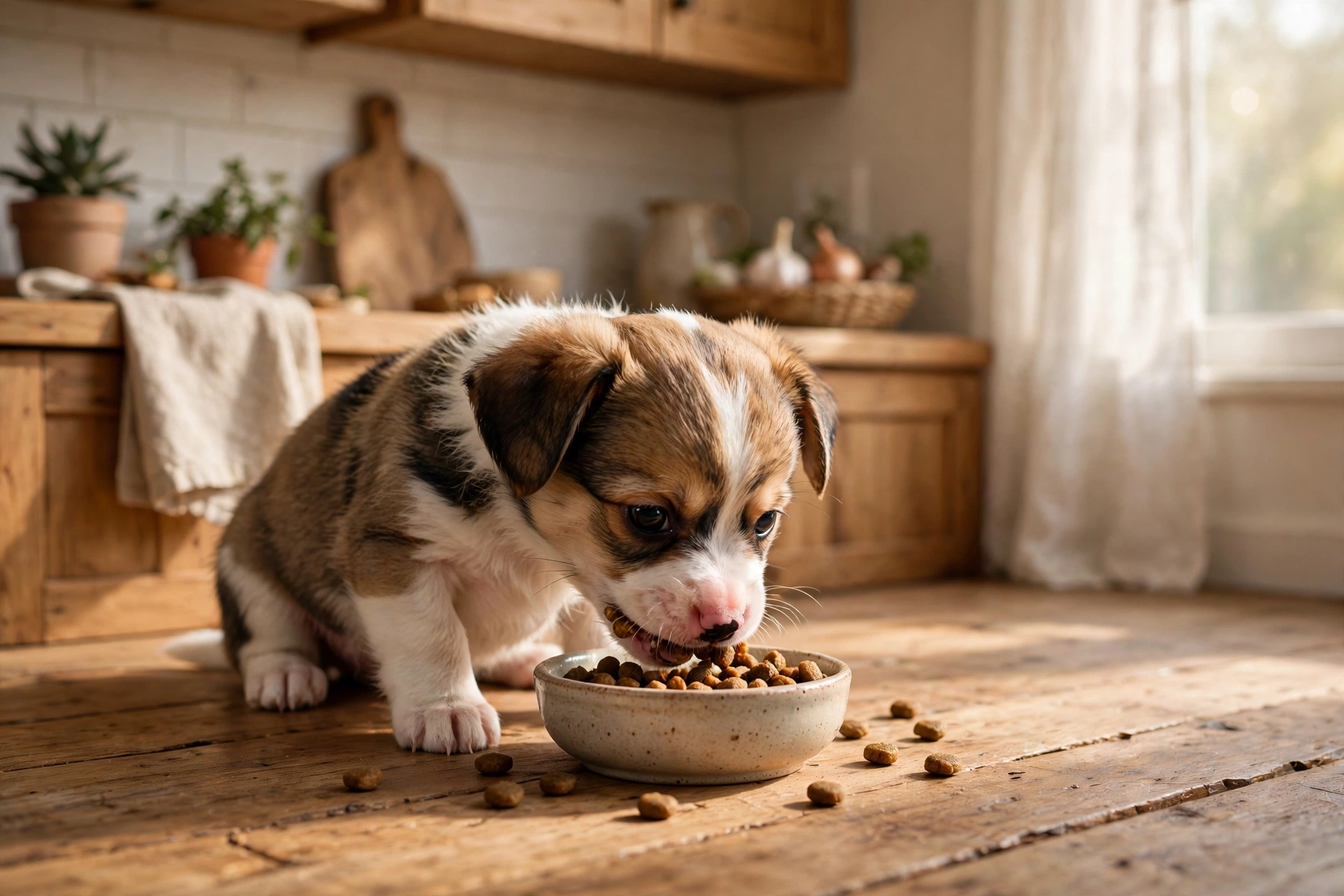
At 8–12 weeks, your puppy’s stomach is small but their energy needs are enormous relative to their size. Four small meals a day is the standard: little and often prevents both hunger dips and the stomach overload that causes vomiting and loose stools. Keep feeding whatever the breeder or shelter was using for the first week or two — a sudden food switch on top of a new home is a recipe for digestive upset.
Meals per day: 4. Portion guidance: Start with the food bag’s daily amount for your puppy’s current weight and divide it into four equal portions. For a small-breed puppy this may total just 1/2 to 1 cup of kibble per day; a medium-breed puppy may need 1 to 2 cups. Weigh your puppy weekly — steady gains of roughly 2–4% of body weight per week are typical at this age.
Sample schedule: 7:00 AM breakfast → 11:30 AM lunch → 4:00 PM dinner → 8:00 PM supper. Keep the overnight gap under about 9 hours. Offer fresh water with each meal, and lift the bowl after 15–20 minutes — this teaches that mealtimes are mealtimes and makes house training far easier.
Helpful pick: Hill’s Science Diet Puppy Small Bites Dry Dog Food — a vet-recommended puppy formula with DHA for brain and eye development and small, easy-to-chew kibble sized for young puppies.
3–6 Months: Three Meals a Day

Around three to four months, most puppies can comfortably move down to three meals a day. Their stomachs are bigger, they are settling into house training, and growth remains rapid — this is the phase where muscle and skeleton are developing fastest, so protein quality still matters a great deal. It is also prime teething time, which can temporarily reduce appetite; if you notice chewing pain, check our puppy teething timeline to see what is normal.
Meals per day: 3. Portion guidance: Recalculate the daily amount on the food bag as your puppy’s weight climbs — by four to five months many puppies are eating noticeably more than they did at eight weeks. A medium-breed puppy may now take 1.5–2.5 cups per day total; toy breeds far less. Continue weekly weigh-ins and watch body condition (see the section below).
Sample schedule: 7:00 AM breakfast → 12:30 PM lunch → 5:30 PM dinner, timed around routine — breakfast after the morning potty break, dinner before evening play. Wait at least an hour after meals before vigorous exercise.
6–12 Months: Two to Three Meals a Day
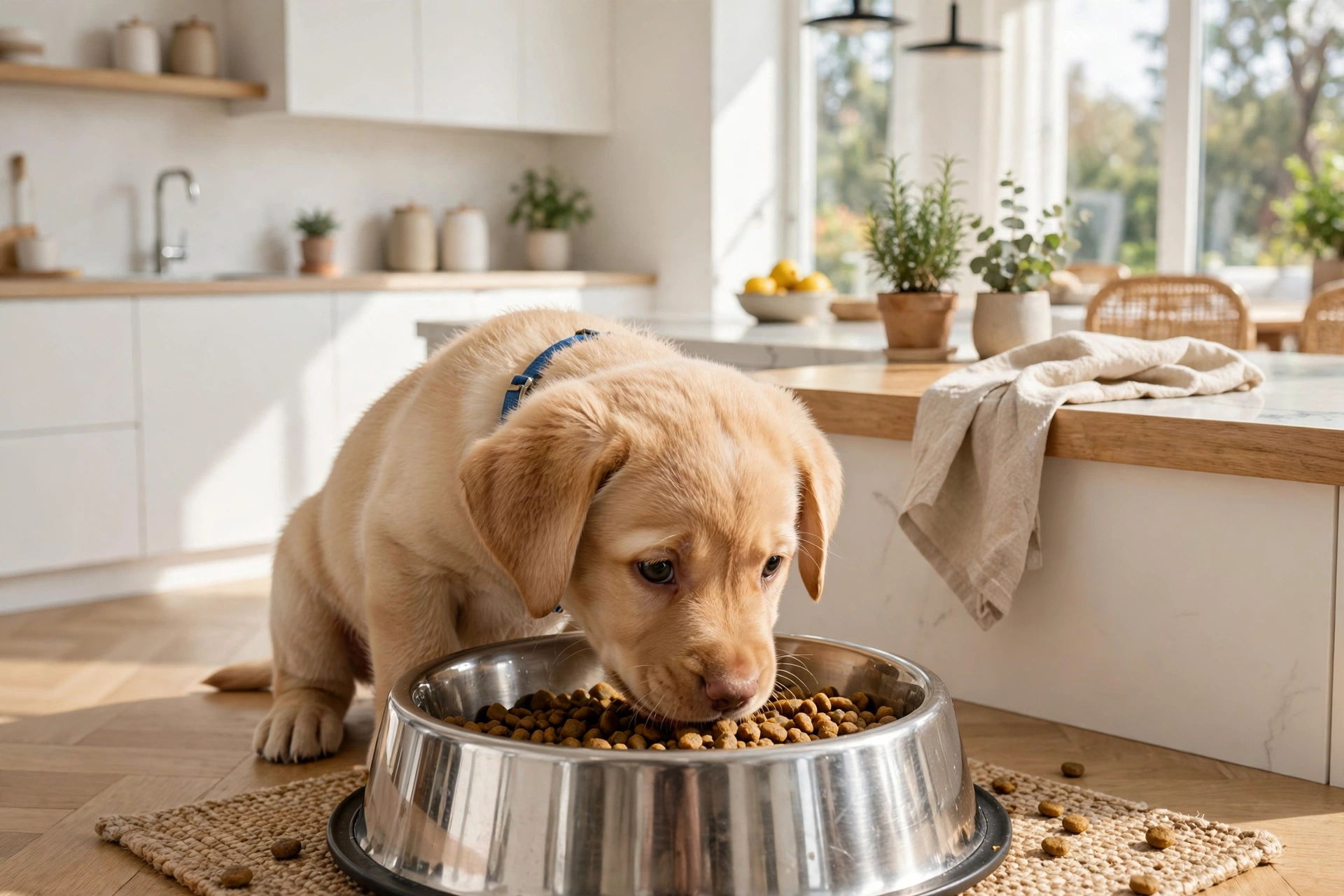
From six months, growth begins to slow and most puppies transition toward two meals a day — many are fully on two by around six to seven months, while large-breed puppies often benefit from staying on three meals a little longer. Small breeds, on the other hand, may be nearly done growing by this point and are usually fine with two meals.
Meals per day: 2–3. Portion guidance: Growth is slowing, so recheck portions monthly — this is where overfeeding creeps in. Keep large-breed puppies on a large-breed puppy formula with controlled calcium and phosphorus to protect developing joints.
Sample schedule: 7:00 AM breakfast → 6:00 PM dinner (drop the midday meal once your pup holds weight and energy well on two). If your puppy seems ravenous or vomits bile in the mornings, keep a small midday meal a while longer rather than forcing the transition.
Helpful pick: LAKIPETN Elevated Dog Feeder with Stainless Steel Bowls — adjusts from 3.1 to 12 inches, so it grows with your pup from puppyhood to adulthood for a more comfortable eating posture.
12+ Months: Transitioning to Adult Food
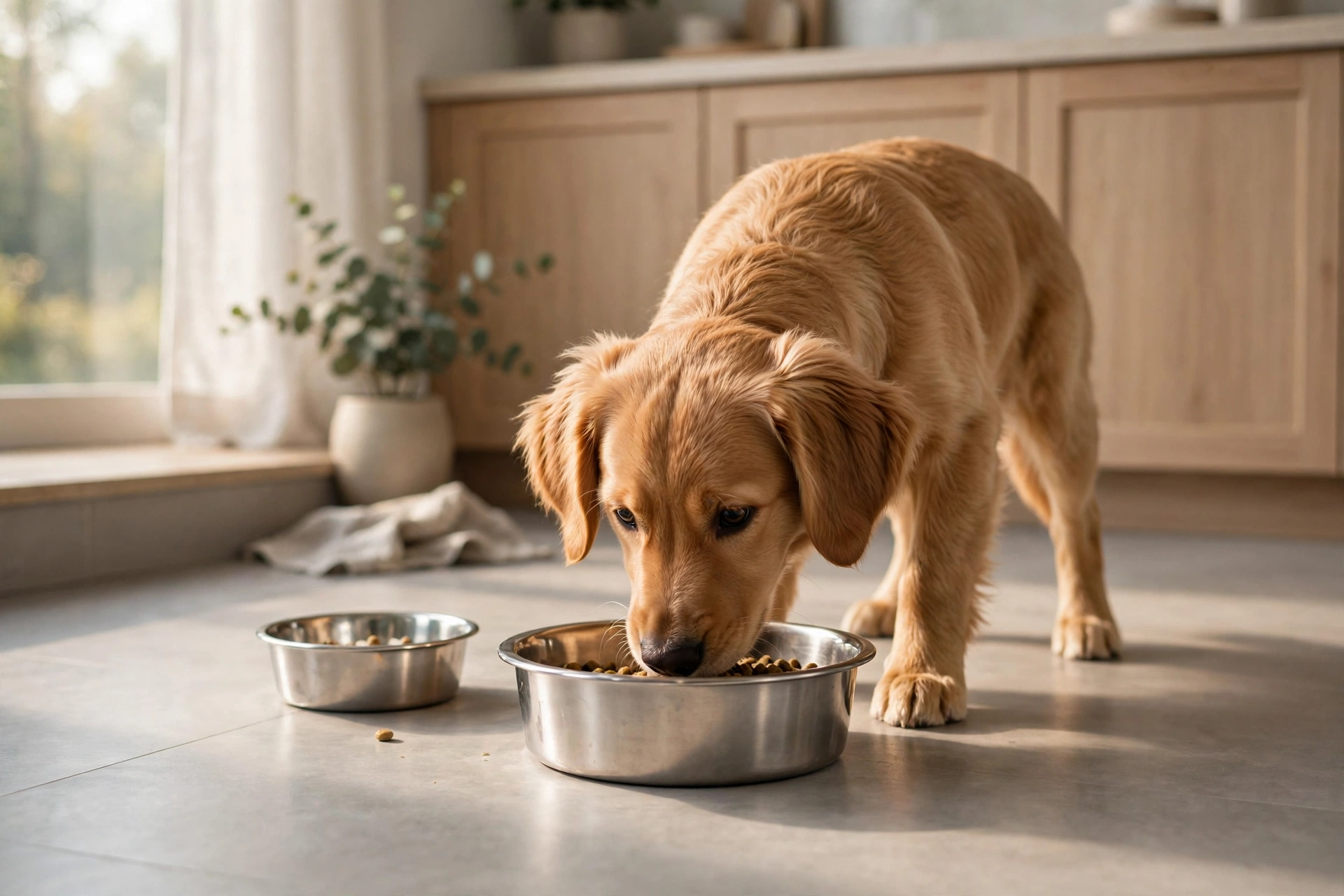
Most dogs are nutritionally adult by their first birthday — but not all. Small breeds may be ready at 9–12 months, while large and giant breeds keep growing until 18–24 months and should stay on puppy food until your vet approves the switch. For help choosing the right formula, see our guide to the best puppy food for small breeds.
Meals per day: 2 for life. Transition guidance: Never swap foods overnight. Mix the new adult food with the old puppy food over 7–10 days: roughly 25/75 for days 1–3, 50/50 for days 4–6, 75/25 for days 7–9, then 100% adult food. If stools loosen at any step, pause there for an extra day or two before continuing.
Sample schedule: 7:00 AM breakfast → 6:00 PM dinner. Keep times consistent — dogs thrive on routine, and a regular schedule also regulates digestion and house training. If your puppy came from a rescue or unknown background and you are unsure of their true age, your vet can estimate it from teeth and growth plates.
Helpful pick: Outward Hound Fun Feeder Slo Bowl (Small) — if your pup inhales meals in under a minute, a maze-style slow feeder stretches eating up to 10 times longer, aiding digestion and reducing bloat risk.
How Much Food Does a Puppy Need?

Frequency is only half the equation — the other half is the daily amount. Start with the feeding chart on your food bag, choosing the row that matches your puppy’s expected adult weight (ask your vet or breeder if you are unsure), not their current weight. That gives you the total daily amount, which you then divide by the number of meals from the schedule above.
General daily guidelines for dry puppy food:
- Toy breeds (adult weight under 12 lbs): roughly 1/2 to 1 cup per day
- Small breeds (12–25 lbs): roughly 3/4 to 1.5 cups per day
- Medium breeds (25–50 lbs): roughly 1.5 to 2.5 cups per day
- Large breeds (50–100 lbs): roughly 2.5 to 4 cups per day
These are starting points, not prescriptions. Calorie density varies widely between formulas, so the bag chart for your specific food always wins. Weigh your puppy weekly during growth and adjust up or down by about 10% at a time.
Use body condition, not just the scale. The best tool is the 9-point body condition score your vet uses: you should be able to feel the ribs under a thin layer of fat, see a visible waist from above, and a tucked-up belly from the side. A 4–5 out of 9 is ideal. If ribs, spine, and hip bones are prominent, increase portions — and if your puppy is losing weight despite eating well, see our guide on how to help a dog gain weight and talk to your vet.
Helpful pick: Palksky Stainless Steel Pet Food Measuring Scoop (2-Pack) — a true 1-cup scoop with clear markings beats eyeballing portions; consistent measuring is what keeps the body condition score on track.
Common Feeding Mistakes
1. Free-feeding all day. Leaving food out constantly sounds convenient, but it destroys appetite at mealtimes, makes house training unpredictable, hides appetite changes that signal illness, and invites obesity. Scheduled meals are one of the simplest health tools you own.
2. Switching foods abruptly. A sudden change in diet is the most common cause of puppy diarrhea. Whether you are changing brands or moving to adult food, blend over 7–10 days as described above.
3. Overfeeding “because they are growing.” Extra food does not build a bigger, healthier dog — it builds a faster-growing one, and too-rapid growth is linked to skeletal problems, especially in large breeds. Follow the bag chart and body condition score, not the puppy’s begging.
4. Feeding adult dog food to a puppy. Adult formulas lack the calorie density, protein levels, and DHA a growing puppy needs, and the calcium balance may be wrong for large breeds. Keep puppies on growth-formulated food until the vet approves the switch.
5. Too many treats and table scraps. Treats should stay under 10% of daily calories. A puppy training heavily with treats needs slightly smaller meals to compensate — and human foods like chocolate, grapes, onions, and xylitol are toxic, so keep the plate to yourself.
6. Inconsistent schedules. Feeding at random times confuses digestion and makes house training harder. Set meal times you can keep seven days a week, and fold basic training into the routine — a well-fed puppy is also a great student for the socialization work in our puppy socialization checklist.
7. Skipping vet checkups. Growth, teeth, parasites, and weight should be reviewed at every puppy visit. If your puppy refuses food for more than 24 hours or vomits repeatedly, call your vet — those are medical red flags, not schedule tweaks.
Frequently Asked Questions
How many times a day should I feed my puppy?
Feed four meals a day from 8–12 weeks, three meals a day from 3–6 months, and two to three meals from 6–12 months. Most dogs settle on two meals a day as adults. Tiny toy-breed puppies may need four to five small meals in the early months to keep blood sugar steady — check with your vet.
What are the best times to feed a puppy?
Consistency matters more than the exact clock. A typical rhythm is 7:00 AM, midday, and 5:30 PM for three meals, dropping to 7:00 AM and 6:00 PM for two. Keep the overnight gap under nine hours for young puppies.
Can I feed my puppy once a day?
No — one meal a day is not appropriate for puppies. Their small stomachs cannot hold a full day’s nutrition, and the long gap between meals can cause low blood sugar, vomiting of bile, and poor growth. Even most adult dogs do better on two meals than one.
How do I know if I am overfeeding my puppy?
Watch the body condition score rather than the bowl: ribs should be easily felt but not seen, with a visible waist and tucked belly. Rapid weight gain, loose stools, and a disappearing waistline are classic signs of too much food. Weigh weekly and adjust portions by about 10% at a time.
When should my puppy switch from puppy food to adult food?
Small breeds typically switch at 9–12 months; medium breeds around 12 months; large and giant breeds at 18–24 months, as their growth period is much longer. Transition gradually over 7–10 days and confirm the timing with your vet, who can factor in your dog’s size, growth rate, and body condition.
As an Amazon Associate, PetPostHub earns from qualifying purchases. This means we may earn a small commission if you buy through our links, at no extra cost to you.