
Puppy Teething Timeline: Stages, Symptoms & Soothing Tips

If you have just brought home a puppy, you are about to witness one of the fastest transformations in the animal kingdom: a toothless newborn becoming a sharp-toothed little land shark, then losing those needle teeth to make room for a full set of adult chompers. Understanding the puppy teething timeline helps you know what is normal, when to offer relief, and when a tooth issue is worth a vet visit. This guide walks you through every stage — from the toothless first weeks to the full set of 42 adult teeth — plus simple, safe ways to soothe your teething pup.
Table of Contents
- Stage 1: Birth to 2 Weeks — The Toothless Phase
- Stage 2: 3 to 4 Weeks — Baby Teeth Erupt
- Stage 3: 4 to 6 Weeks — The Full Baby Set
- Stage 4: 12 to 16 Weeks — Baby Teeth Fall Out
- Stage 5: 16 to 24 Weeks — Adult Teeth Arrive
- 6 Ways to Soothe a Teething Puppy
- When to Call the Vet
- Frequently Asked Questions
Stage 1: Birth to 2 Weeks — The Toothless Phase

What is happening: Puppies are born completely toothless. During the first two weeks of life, they cannot see, hear, or chew — they simply nurse and sleep. Teeth are not needed because the mother’s milk provides all their nutrition.
Symptoms: None related to teething. You will only notice the usual newborn behaviors: nursing, sleeping, and tiny squeaks.
Care tips: This stage belongs to the breeder. Keep the whelping area warm, clean, and quiet. There is nothing you need to do about teeth yet — they will arrive soon enough.
Stage 2: 3 to 4 Weeks — Baby Teeth Erupt

What is happening: Around the third week, the first baby (deciduous) teeth begin to poke through the gums — usually the incisors first, followed by the canines. This coincides with the puppy’s eyes and ears opening, and breeders often start introducing soft, mushy puppy food at this point.
Symptoms: Mild gum sensitivity and lots of mouthing. Puppies start testing their mouths on littermates, blankets, and anything within reach.
Care tips: If you are the breeder, offer soft, soaked puppy food so the pup can practice with its new teeth. Avoid hard kibble or toys at this age — the gums are still delicate. This is also when gentle handling of the mouth (brief, positive touches) builds a foundation for future dental care.
Stage 3: 4 to 6 Weeks — The Full Baby Set

What is happening: By 6 to 8 weeks, most puppies have their complete set of 28 baby teeth: 12 incisors, 4 canines, and 12 premolars. (Puppies do not have molars — those come with the adult set.) This is the famous “needle teeth” phase, and anyone who has played with a puppy this age knows exactly why they are called that.
Symptoms: Constant mouthing, nibbling on fingers, and play-biting with littermates. The mother dog will often start weaning the pups around now — partly because those sharp little teeth are not much fun to nurse with.
Care tips: Most puppies go to their new homes around 8 weeks with this full baby set. Start redirecting mouthing onto appropriate soft toys right away, and reward gentle play. This is the perfect window to begin positive mouth-handling: briefly lift the lips, touch the gums, and reward — it pays off enormously later when you need to brush adult teeth or check for problems.
Stage 4: 12 to 16 Weeks — Baby Teeth Fall Out
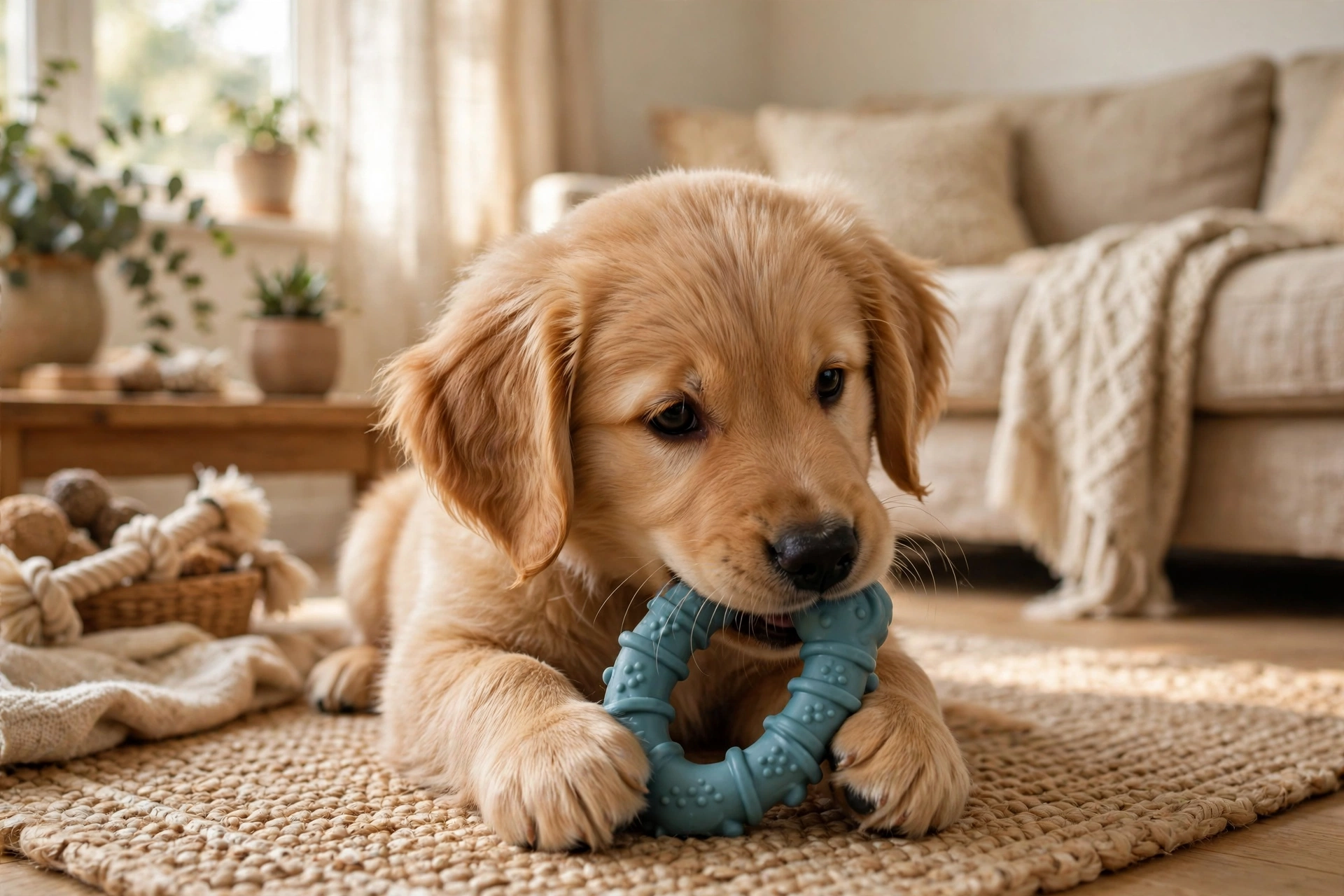
What is happening: Around 3 to 4 months, the adult teeth begin pushing up from below, and the baby teeth start falling out — incisors first. You may find tiny teeth on the floor, in bedding, or stuck in toys. Many are simply swallowed, which is completely safe. This is the stage most owners notice teething for the first time, because the chewing intensifies dramatically.
Symptoms: Increased chewing and gnawing, mild drooling, slightly red or swollen gums, the occasional tiny spot of blood on a toy, and sometimes a temporary dip in appetite or mood. A few puppies whimper more than usual.
Care tips: This is peak “puppy-proof everything” season. Move shoes, cables, and valuables out of reach, and offer a rotation of soft, safe chew outlets. Skip very hard items — antlers, real bones, and ice can crack developing adult teeth. A quick mouth check each week helps you track progress and spot anything unusual.
Stage 5: 16 to 24 Weeks — Adult Teeth Arrive

What is happening: Between 4 and 7 months, the adult teeth finish erupting: incisors, canines, premolars, and — for the first time — molars at the back of the mouth. By about 6 to 7 months, most puppies sport their full set of 42 permanent teeth. The frantic chewing usually eases as the mouth settles, though adolescent dogs may still chew out of boredom well beyond teething.
Symptoms: Chewing gradually decreases. Gums return to a healthy pink. Some dogs experience a second mini “chew everything” phase during adolescence (6–12 months) — that is behavioral, not dental.
Care tips: Celebrate the new smile by starting a dental routine: introduce a soft finger brush or enzymatic toothpaste, and schedule a dental check at your vet visit around 6 months. Good habits started now protect those 42 teeth for life.
6 Ways to Soothe a Teething Puppy
- Offer soft rubber teething toys. Toys made specifically for teething puppies are gentler than adult chew toys and sized for small mouths. Helpful pick: KONG Puppy — made from a softer puppy-specific rubber that is gentle on baby teeth and sore gums.
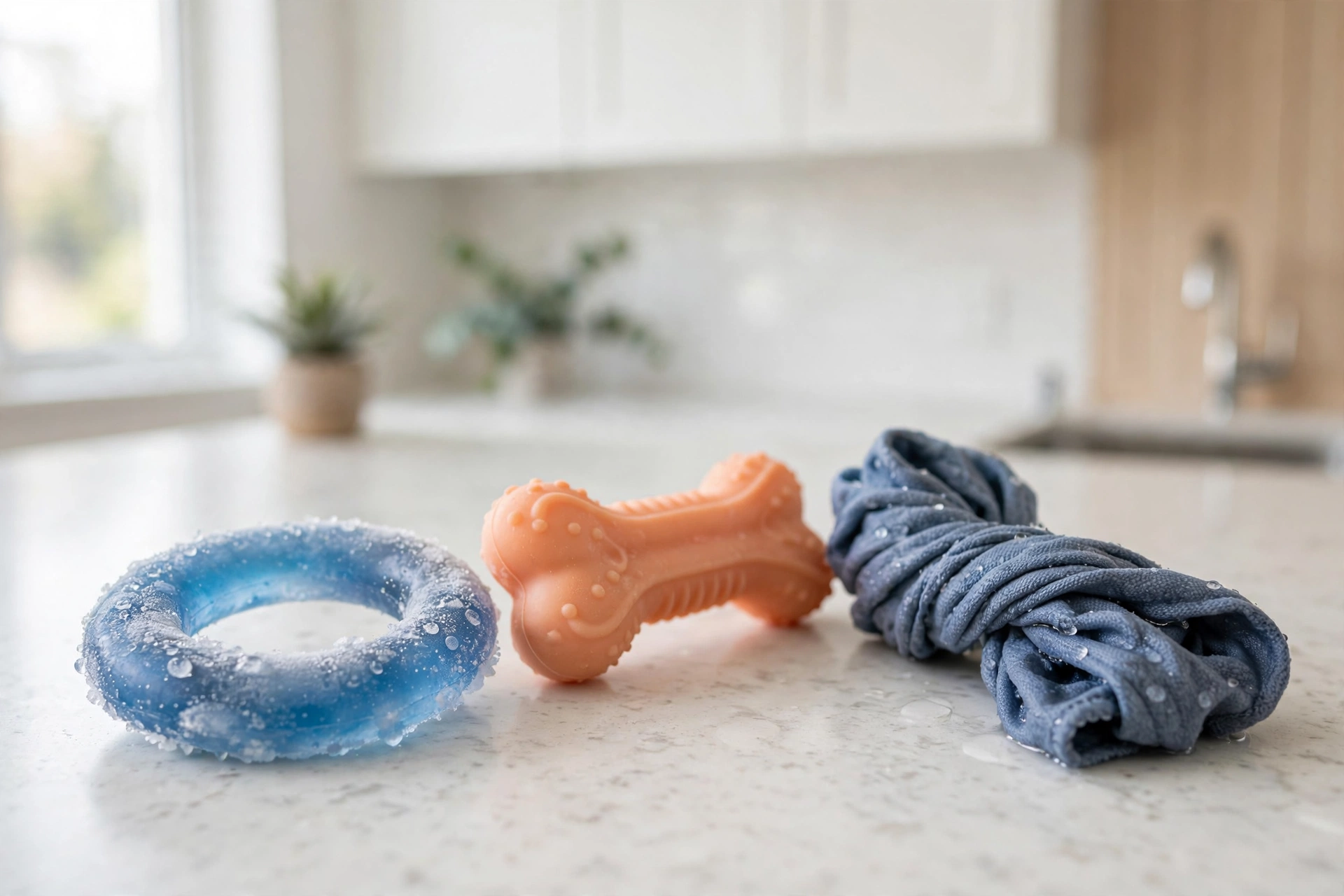
- Freeze a teething stick. Soak-and-freeze toys provide cool, soothing relief for inflamed gums. Helpful pick: Petstages Cool Teething Stick — soak it in water, pop it in the freezer, and it delivers icy comfort on sore gums.
- Try a freezable chew ring. Textured, flavored rings give puppies something appropriate to gnaw and can be chilled for extra relief. Helpful pick: Nylabone Ring Bone Puppy Chew — chicken-flavored with nubs that massage gums while your pup chews.
- Use a frozen washcloth. Wet a clean washcloth, twist it, and freeze it. The cold numbs sore gums and the texture satisfies the urge to chew. Always supervise — remove it if your pup starts tearing pieces off.
- Offer frozen treats. Stuff a puppy-safe toy with peanut butter (xylitol-free) or plain pumpkin and freeze it. The cold soothes while the tasty filling keeps them busy. Read our lick mat ideas for dogs for more frozen enrichment inspiration.
- Try a stuffable pacifier toy. Small, soft toys designed for tiny mouths can be filled with kibble for extended comfort-chewing. Helpful pick: KONG Puppy Binkie — a pacifier-shaped toy with soft puppy rubber that eases aching teeth and gums.
Pair these with solid training foundations — our guide to common dog training mistakes will help you channel that chew energy the right way — and keep your home safe with our puppy-proofing checklist.
When to Call the Vet
Teething is almost always a normal, healthy process — but a few situations deserve professional attention:
- Retained baby teeth: If an adult tooth erupts while the baby tooth is still firmly in place (a “double tooth”), call your vet. This is most common with the canines in small breeds, and a retained tooth can trap food and misalign the bite.
- Excessive bleeding: A tiny fleck of blood on a toy is normal; steady or heavy bleeding is not.
- Refusal to eat for more than a day, significant swelling of the face, or a foul odor from the mouth.
- Missing adult teeth by 7 months — some teeth may be impacted and need an X-ray.
- High fever or pronounced lethargy — teething should not make your puppy truly sick.
As your puppy grows past teething, nutrition matters too — see our guide to the best puppy food for small breeds and track development with our puppy growth stages timeline.
Frequently Asked Questions
When do puppies start teething?
Baby teeth begin erupting around 3 weeks of age, and the full set of 28 is usually in by 6 to 8 weeks. The phase most owners notice — losing baby teeth — starts around 12 to 16 weeks.
When do puppies stop teething?
Most puppies have their full set of 42 adult teeth by 6 to 7 months, and teething discomfort ends around then. Chewing for fun or boredom can continue well into adolescence, so keep appropriate chew toys available.
Is it normal for puppies to swallow their baby teeth?
Yes, completely. Many baby teeth are swallowed unnoticed during eating or play and pass through harmlessly. Finding a few tiny teeth around the house is a bonus, not a requirement.
Do puppies feel pain when teething?
Most experience mild discomfort rather than true pain — sore gums, extra drooling, and a powerful urge to chew. A little whimpering or a temporary appetite dip can be normal, but genuine distress, fever, or heavy bleeding warrants a vet check.
Can I give my teething puppy ice cubes?
Small ice chips are generally fine for most puppies and can soothe gums, but avoid large hard cubes that could chip teeth — especially in small breeds. Frozen toys and frozen treats are safer, purpose-built alternatives.
As an Amazon Associate, PetPostHub earns from qualifying purchases.





5 Comments