What to Do When Your Dog Vomits: A Calm Step-by-Step Guide (2026)

Finding vomit on the rug is never how you wanted your morning to start, but knowing what to do when your dog vomits turns a scary moment into a manageable one. Most episodes are minor — a too-fast meal, a mouthful of grass, or mild stomach upset that passes on its own. The real skill is knowing which episodes are routine and which ones mean your dog needs a vet right now. This guide walks you through both, step by step.
First, Make Sure It’s Actually Vomiting
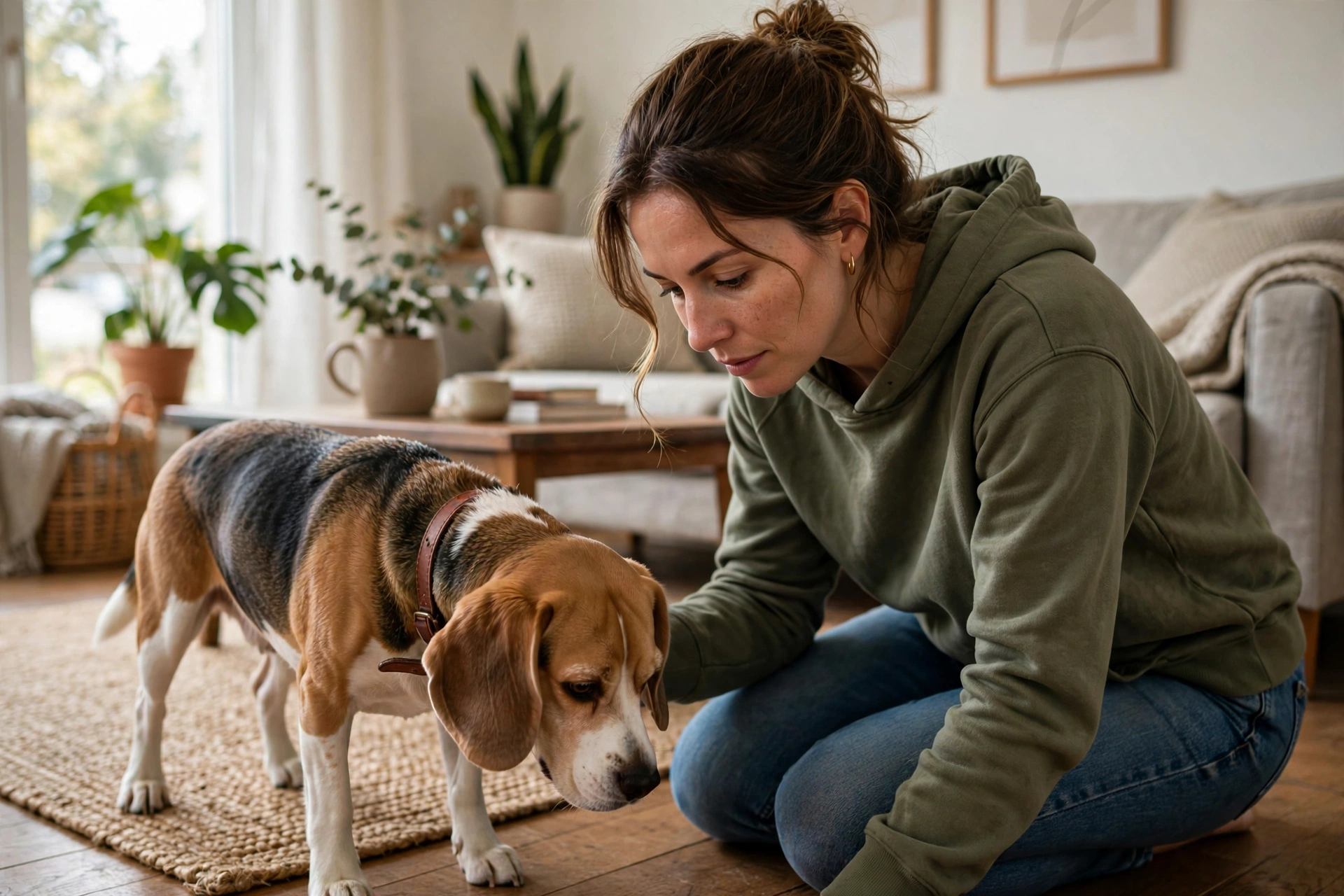
Before you do anything else, take a breath and look at what actually happened. What looks like vomiting is sometimes regurgitation or coughing, and each one points your vet in a different direction.
Vomiting is active: you see the sides heave, hear retching, and notice drooling beforehand. What comes up is partially digested food, often mixed with stomach acid or yellow foam. Regurgitation is passive: no heaving, no warning — your dog lowers its head and undigested food slides out, looking almost exactly as it did in the bowl. Coughing usually brings up white foam or clear mucus with a hacking sound and no food at all.
If you can, snap a quick photo of what came up and note the time — your vet can learn a lot from color, texture, and whether it looks digested.
Do a 60-Second Safety Check

Once you have confirmed it is vomiting, spend one minute checking for warning signs. These red flags are what separate a “wait and watch” situation from a veterinary emergency.
- Blood in the vomit: bright red streaks or a dark brown, coffee-ground appearance both warrant a call to the vet.
- A swollen or hard belly: with restlessness or unproductive retching, this can signal bloat — a twisting of the stomach that can become fatal within hours.
- Pale, white, or blue gums: healthy gums are pink and springy. Pale gums can indicate shock or internal bleeding.
- Repeated vomiting: more than twice in 24 hours, or being unable to keep water down, needs professional care.
- Extreme lethargy or collapse: a dog that vomits and then won’t get up is not having a mild episode.
- Suspected poisoning: chocolate, xylitol, rat poison, antifreeze, or a toxic plant — don’t wait for symptoms, act now.
- Vomiting with severe diarrhea: especially dangerous in puppies, since dehydration sets in fast.
Emergency Vet Now or Monitor at Home?

With your safety check done, the decision gets simpler. Go to the emergency vet now if: there is blood in the vomit; the abdomen is distended or your dog is retching without producing anything; your dog can’t keep water down for 12 hours; a toxin may have been eaten; your dog seized, collapsed, or is barely responsive; or vomiting has continued for 24 hours without improvement. When in doubt, call the clinic and describe what you see — they will tell you whether to come in.
Monitoring at home is usually reasonable when: your dog vomited once or twice but is otherwise bright, playful, and interested in water; the vomit was food or grass with no blood; and gums are pink and moist. Keep a close eye on your dog for 12 to 24 hours and be ready to call the vet if anything changes.
Puppies, senior dogs, and dogs with chronic illness deserve extra caution — puppies dehydrate quickly, so call your vet sooner rather than later with a young pup.
First 12 Hours: What to Do at Home
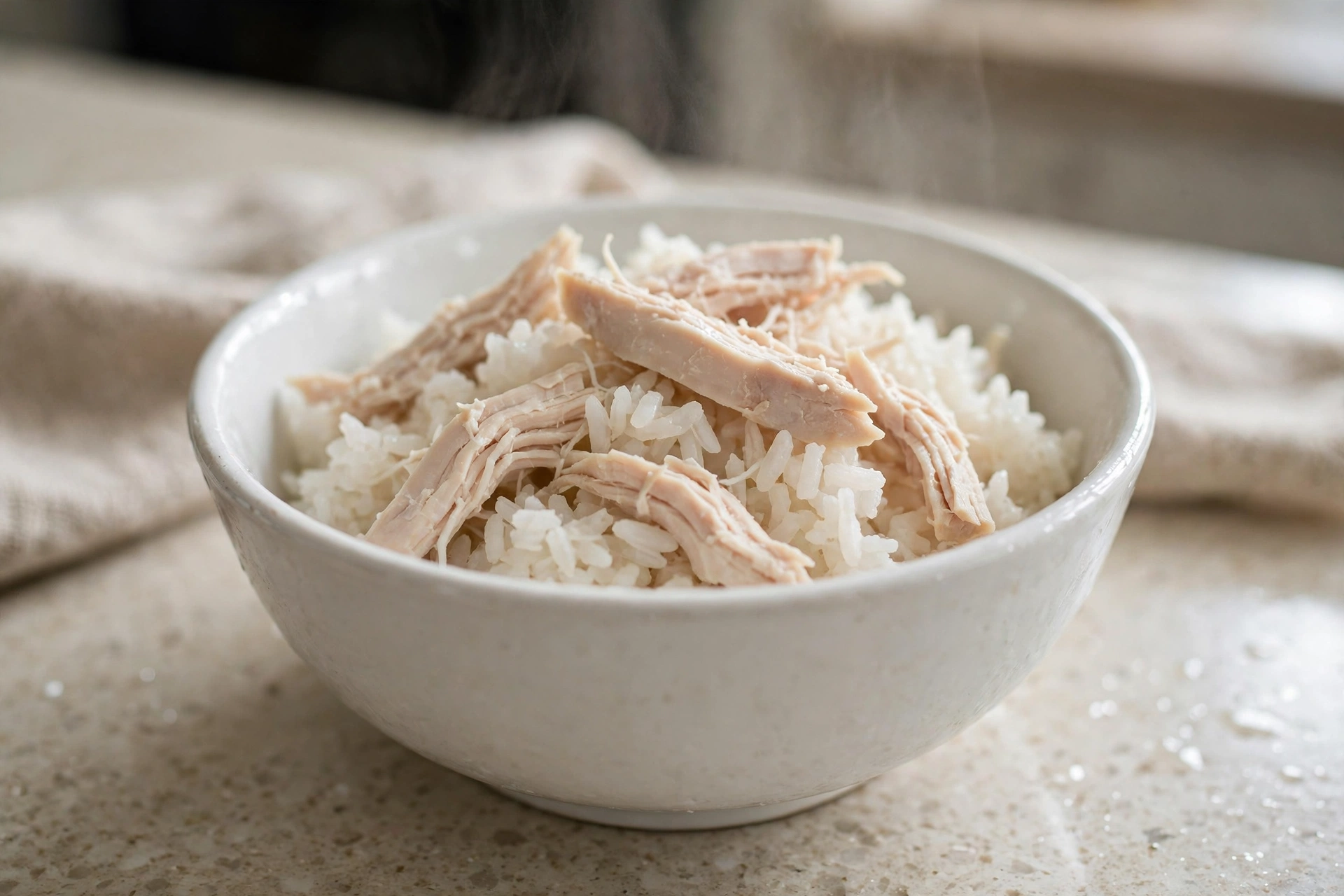
If your dog doesn’t need emergency care, the first 12 hours are about resting the stomach: stop the vomiting cycle, prevent dehydration, and give the digestive tract time to calm down.
Step 1 — Rest the stomach with a short fast. Withhold food for 4 to 6 hours for an adult dog (2 to 3 hours max for puppies). Food on an irritated stomach usually comes right back up.
Step 2 — Reintroduce water slowly. Offer a few laps of water every hour rather than a full bowl — gulping is a common trigger for a second round of vomiting.
Step 3 — Start a bland meal. Once your dog has kept water down for a couple of hours, offer a small bland meal: plain boiled boneless, skinless chicken mixed with plain white rice in roughly a 1-to-3 ratio — about a tablespoon per 10 pounds of body weight. For a chicken allergy, swap in boiled lean ground turkey or plain cottage cheese.
What NOT to do: don’t give human medicines like ibuprofen or aspirin — both are toxic to dogs. Don’t give anti-nausea or anti-diarrhea drugs unless your vet specifically says so. Don’t force-feed, offer milk, or tempt your dog with treats and table scraps. And don’t switch to a brand-new dog food mid-recovery — new food on a sensitive stomach often restarts the cycle.
Day 1–2: Gentle Feeding Plan

Once the first 12 hours go well, keep things gentle for another day or two. Recovery feeding means small, frequent, boring meals — exactly what a healing stomach needs.
On day two, start mixing regular food back in — a quarter regular to three-quarters bland at first, then fully back to normal over two to three days. Soft stool for a day is normal, but if vomiting returns or your dog stops eating, call your vet.
Everyday Causes That Are Usually Mild
Most dogs vomit occasionally for reasons that sound alarming but are no big deal:
- Eating too fast: dogs that inhale dinner in 30 seconds often bring some back up, then act completely fine.
- Grass eating: a little grass followed by a vomit and a quick recovery is extremely common.
- Dietary indiscretion: garbage, spoiled food, or something gross on a walk — usually resolves within 24 hours.
- Car sickness: common in puppies, who usually outgrow it.
- Mild stress or excitement: a new routine, visitors, or fireworks can produce a one-off episode.
- Abrupt food changes: switching kibble suddenly can upset even sturdy stomachs.
The pattern with mild causes is consistent: one or two episodes, then your dog bounces back to normal behavior and appetite within a day.
Serious Causes You Can’t Ignore
- Bloat (gastric dilatation-volvulus): the stomach fills with gas and twists. Signs include a swollen belly, drooling, restlessness, and retching with nothing coming up. Fatal within hours without surgery.
- Intestinal blockage: toys, socks, or bones lodged in the gut cause repeated vomiting and can cut off blood supply to the intestine.
- Poisoning: chocolate, xylitol, antifreeze, rat poison, grapes, and certain plants — vomiting is often an early sign.
- Pancreatitis: often triggered by a fatty meal, causing repeated vomiting plus abdominal pain.
- Organ disease: kidney failure, liver disease, and Addison’s disease can all present with vomiting alongside lethargy and appetite loss.
- Hemorrhagic gastroenteritis: sudden bloody vomit and diarrhea with rapid dehydration — an emergency.
If the vomiting doesn’t follow the mild pattern — brief episode, quick bounce-back — treat it as serious until a vet says otherwise.
What Your Vet Will Do and Ask

Your vet will start with questions: how many times your dog vomited, what the vomit looked like, whether your dog ate anything unusual, and what food and medications it gets. The exam covers gums, hydration, belly tenderness, and temperature, and the vet may recommend bloodwork, X-rays, a fecal test, or an ultrasound.
Before you leave, make sure you understand three things: the diagnosis or most likely cause, the treatment plan including medication doses, and exactly which warning signs should bring you back immediately.
How to Prevent Future Episodes
- Feed on a consistent schedule: two or three regular meals beat one huge dinner.
- Slow down fast eaters: a slow-feeder bowl or snuffle mat turns a 30-second inhale into a 10-minute meal.
- Secure the trash: a locking lid removes the number-one temptation.
- Transition foods gradually: mix new with old over 7 to 10 days.
- Pick up chewable hazards: socks, stuffed toys, and small objects — especially with puppies.
- Store food properly: sealed containers keep kibble fresh and noses out.
Keep Reading
- Homemade Dog Food Recipes
- 13 Easy Baked Dog Treats Better Than Store-Bought
- 15 Dog Training Tips That Work
- 17 Dog Body Language Signals Owners Miss
- Indoor Dog Park Ideas
Frequently Asked Questions
How long should I wait before feeding my dog after it vomits?
Withhold food for 4 to 6 hours for an adult dog (2 to 3 for puppies), then offer a small bland meal if vomiting has stopped. If vomiting returns when food is reintroduced, call your vet.
Is it okay if my dog vomits yellow foam?
Yellow foam is usually bile from an empty stomach — a single episode often just means your dog needs its next meal. Repeated bile vomiting with lethargy or appetite loss deserves a vet visit.
When is dog vomiting an emergency?
Blood in the vomit, a swollen hard belly, retching without producing anything, inability to keep water down for 12 hours, suspected toxin ingestion, or collapse/extreme lethargy — all go straight to the vet.
Can I give my dog anything at home to stop vomiting?
Don’t give human medicines or over-the-counter drugs unless your vet specifically recommends them — many are toxic to dogs. The safest home approach is a short fast, slow water reintroduction, and bland food.
Why does my dog keep vomiting but act normal otherwise?
Occasional vomiting with a quick return to normal behavior is often just mild stomach upset — eating too fast, grass, or stress. But if it keeps happening over days, get a vet check to rule out food sensitivity, parasites, or chronic issues.