Why Does My Dog Hump Other Dogs? 5 Reasons

Discovering your dog mounting other dogs at the park can be embarrassing — you freeze, other owners stare, and you wonder where your pup learned such behavior. The good news: when you ask why does my dog hump other dogs, the answer is rarely about dominance or bad manners. Mounting is a normal canine behavior with several common triggers, from playfulness to anxiety. This guide breaks down the five most common reasons behind the behavior and what to do about each one, so you can handle it calmly and effectively.
Quick answer: Dogs hump other dogs mostly because of play/excitement, over-arousal, anxiety, attention-seeking, or occasionally a medical issue like a urinary infection. It is rarely about dominance. Redirect calmly, reward calm behavior, and see a vet if the behavior is sudden or excessive.
Table of Contents
- Reason 1: Play and Excitement
- Reason 2: Over-Arousal
- Reason 3: Anxiety or Stress
- Reason 4: Attention-Seeking
- Reason 5: A Medical Issue
- How to Stop the Humping
- Frequently Asked Questions
1. Play and Excitement

What it means: This is the number one reason dogs hump each other. In the middle of a joyful play session, dogs mix up a whole sequence of behaviors — chasing, wrestling, mouthing, and mounting. Mounting is simply one of the physical “moves” in the play repertoire, especially common in puppies who are still learning social skills. Veterinary behaviorists note that it is completely normal in the play of older dogs too, as long as it does not go too far. You will often see dogs take turns, with one mounting and then the other returning the favor a few minutes later.
What to do: Watch the overall body language. If tails are wagging, bodies are loose and bouncy, and both dogs keep re-engaging voluntarily, it is play. Let brief, mutual mounting go — but step in the moment one dog looks stressed, tries to escape, or the other dog’s owner looks uncomfortable. Interrupt with a cheerful recall or a short game of fetch to reset the energy. Practicing structured play at home builds better self-control at the park. Our guide to dog zoomies explains another burst of play energy that looks wild but is totally normal.
Helpful pick: YILAKO Flirt Pole — a fantastic way to burn off wild play energy in a structured, directed game before you visit the dog park.
2. Over-Arousal

What it means: Think of this as excitement boiling over. When a dog’s arousal level shoots past the point where he can think clearly — new dogs arriving, intense roughhousing, lots of noise — all that energy has to go somewhere. Some dogs channel it into barking, some into the zoomies, and some into mounting. This is a displacement behavior: the dog is not being naughty, he is simply overflowing. It tends to happen at the peak of stimulation, like right when you walk into the dog park or when a favorite playmate arrives.
What to do: The fix is arousal management, not punishment. If your dog is a chronic over-arouser, take him to the park after a long walk so some edge is already off. Practice calm entries — wait until he settles before releasing him to play — and take short breaks during play sessions, calling him back for a few treats and a pat before letting him go again. Teaching a solid recall makes these resets easy. See how to teach your dog to come when called for a step-by-step method that works even around distractions.
Helpful pick: Outward Hound Tornado Puzzle Toy — engaging puzzle play that works the brain and lowers arousal in a calm, focused way.
3. Anxiety or Stress

What it means: For some dogs, mounting is a self-soothing behavior. Just like humans fidget or pace when nervous, an anxious dog may mount to cope with social discomfort — a new environment, too many unfamiliar dogs, visitors arriving, or tense interactions. The repetitive motion can be calming for the dog, even though it looks anything but calm to everyone watching. Dogs who are generally anxious in their daily life are the most likely to use mounting as a coping tool.
What to do: Do not scold — that adds stress to stress. Instead, look for what triggers the anxiety and reduce it. Give your dog space from overwhelming situations, offer an escape route at the dog park, and keep introductions slow. If anxiety is a broader pattern, work on confidence-building with short training sessions and calm routines. Learn to read the early warning signs in our article on signs your dog is stressed so you can intervene before the mounting even starts.
Helpful pick: Zesty Paws Calming Chews — a chew formulated with ingredients that support calm behavior during stressful outings and social situations.
4. Attention-Seeking
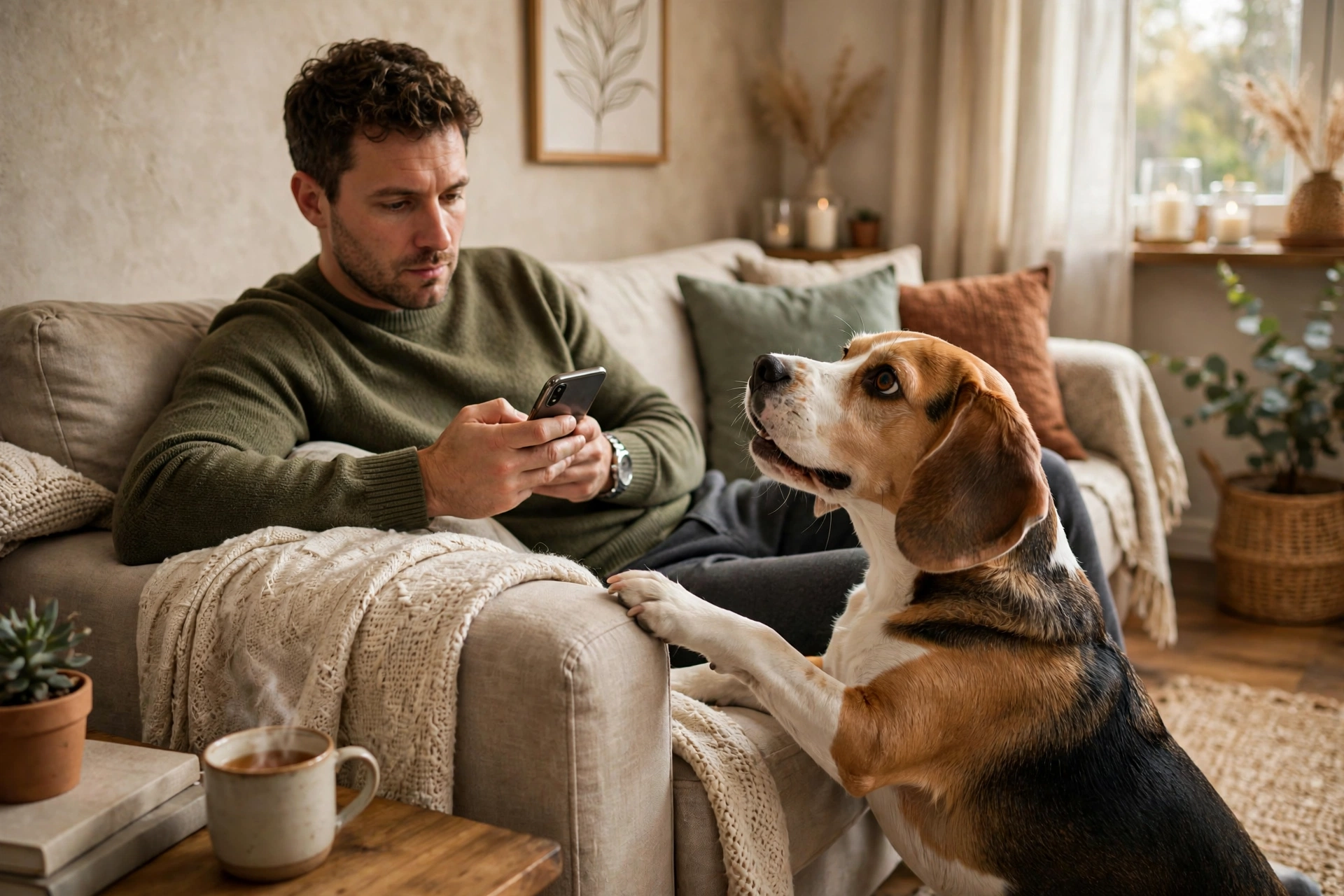
What it means: Dogs are brilliant at learning what gets a reaction. If mounting another dog at the park — or your leg at home — reliably produces a big dramatic response from you (yelling, running over, grabbing the leash), your dog may start doing it precisely because it works. Even negative attention is attention. Some dogs learn that a quick mount is the fastest way to get every human in the vicinity to look their way.
What to do: Flip the script. When your dog mounts, interrupt calmly and boringly — no shouting, no chasing, no big scene. Just quietly lead him away. Then heavily reward the opposite: calm greetings, four paws on the floor, polite sniffing. Practice greeting manners on leash with a friend’s dog, rewarding every calm moment with treats. Keep a treat pouch handy so you are always ready to pay for good behavior. For broader social skills, our guide to socializing an adult dog is a great companion read.
Helpful pick: Egiao Dog Treat Pouch — keeps rewards within reach so you can instantly reinforce calm behavior during training and outings.
5. A Medical Issue (See Your Vet)

What it means: Occasionally, humping is not behavioral at all. Medical problems in the urinary or reproductive area can cause discomfort that the dog tries to relieve by mounting. Common culprits include urinary tract infections, urinary incontinence, skin allergies or itchiness around the rear, and prostate issues in unneutered males. This is worth suspecting if the behavior started suddenly, is much more frequent than usual, or is paired with licking the genital area, straining to urinate, or accidents in the house.
What to do: If the mounting is new, sudden, or obsessive, book a vet visit — do not try to train it away first. A simple urine test can rule out infection, and treating the underlying cause usually resolves the behavior quickly. Also note that intact dogs of both sexes may mount due to hormones; spaying or neutering can help, though a habit learned before the surgery may persist and still need training. Understanding your dog’s full communication picture helps too — check out our dog body language guide to tell stress signals from play signals.
Helpful pick: PetMedics Non-Contact Pet Thermometer — a quick, stress-free way to check for fever at home when you suspect your dog may not be feeling well.
How to Stop the Humping
Whatever the reason, the training approach is the same: stay calm, interrupt early, and redirect. Here is a simple plan that works:
- Interrupt without drama. Call your dog’s name or use a happy “this way!” and lead him away. Avoid yelling or yanking — that raises arousal and can make things worse.
- Redirect to an incompatible behavior. Ask for a sit, a down, or a quick hand-target. A dog holding a sit cannot mount anyone.
- Reward calm choices. Treat generously when your dog greets another dog politely, disengages on his own, or plays without mounting. You get more of whatever you pay for.
- Manage the environment. Tired dogs hump less. Exercise before the park, take play breaks, and avoid overwhelming situations your dog is not ready for.
- Be consistent. Every family member and dog walker should respond the same way. Mixed messages keep the habit alive.
- Know when to leave. If your dog cannot settle even after a few redirects, the kindest move is to end the park visit on a calm note. Short, successful outings build better habits than long, chaotic ones.
One important note on dominance: while mounting is often blamed on dominance, behaviorists say it is very rarely the actual cause. Do not try to “assert dominance” back — calm, consistent training works far better.
Frequently Asked Questions
Is it normal for female dogs to hump other dogs?
Yes. Mounting is not limited to males — females, including spayed ones, mount for all the same reasons: play, excitement, anxiety, and attention. It is a normal canine behavior, not a gender issue.
Will neutering stop my dog from humping?
It can reduce hormonally driven mounting, especially if done before the habit forms. But since most humping is about play, arousal, or anxiety rather than hormones, neutering alone usually is not a complete fix — training and management still matter.
Should I let other dogs correct my dog’s humping?
A quick, appropriate correction from a well-socialized dog can be a useful lesson. But do not rely on it — some dogs overreact, and fights can start. It is safer for you to step in and redirect your own dog.
Why does my dog only hump certain dogs?
Often it is about the other dog’s energy or the situation. Submissive, tolerant dogs get mounted more because they do not object. Certain play styles or high-energy partners can also trigger the behavior in your dog.
When should I worry about humping?
See your vet if the behavior appears suddenly, becomes obsessive, or is paired with licking, straining to urinate, accidents, or other signs of discomfort. Otherwise, treat it as a training and management project.
As an Amazon Associate, PetPostHub earns from qualifying purchases.