Why Does My Dog Stare at the Wall? 6 Reasons (Vet Explains)

If you’ve ever walked into a room to find your dog sitting stock-still, eyes locked on a blank stretch of wall, you know how unsettling it can feel. You might be asking yourself, why does my dog stare at the wall — and whether it’s something to worry about. The truth is, wall staring can be anything from a harmless sign of your dog’s supercharged senses to an early warning of a health problem. This guide walks you through the six most common reasons, what each one looks like, and exactly when to pick up the phone and call your vet.
Table of Contents
- 1. They’re Hearing Something You Can’t
- 2. Canine Cognitive Dysfunction (Dog Dementia)
- 3. Partial or Focal Seizures
- 4. Compulsive Behavior
- 5. Anxiety or Fear
- 6. Vision Problems
- When Wall Staring Needs a Vet Visit
- Frequently Asked Questions
1. They’re Hearing Something You Can’t

What it means: This is the most common — and most harmless — explanation. Dogs hear frequencies up to about 65,000 Hz, roughly double what humans can detect. Your dog may be locked onto the scurrying of a mouse behind the drywall, water moving through pipes, insects in the woodwork, or even the hum of electrical wiring. Their gaze looks focused and alert, ears pricked or swiveling, and they may tilt their head or follow the sound along the wall.
What to do: Watch for a few minutes. If your dog’s body language is alert but relaxed — soft eyes, loose posture, tail in a neutral position — they’re simply investigating. Call their name: if they respond normally and walk over happily, there’s nothing to worry about. If the staring happens in the same spot every evening, consider whether something inside the wall (pests, plumbing) might need your attention too.
Helpful pick: Furbo Mini 360° Pet Camera — lets you check what your dog is fixating on while you’re away, so you can tell a curious listener from a worried starer.
2. Canine Cognitive Dysfunction (Dog Dementia)
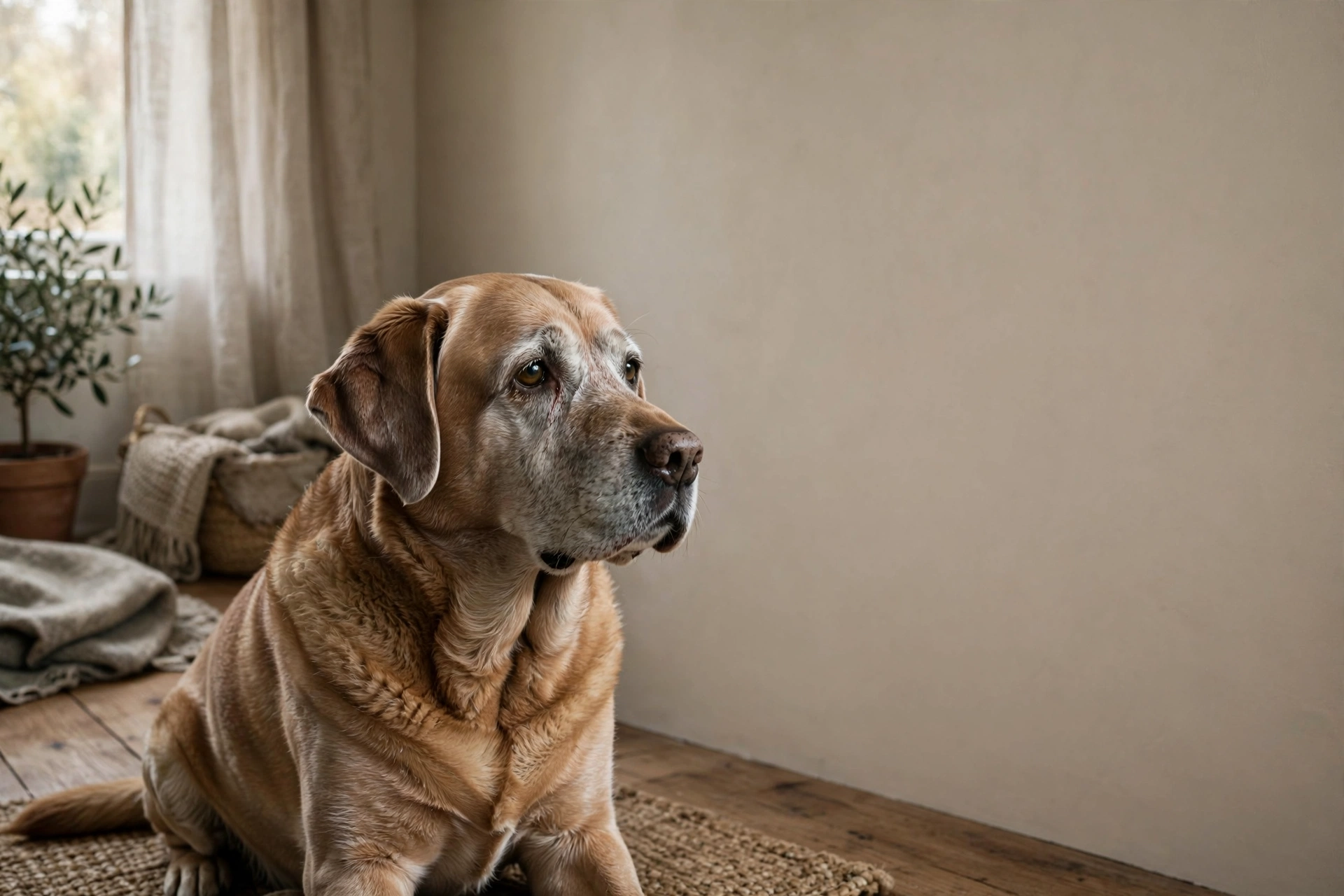
What it means: In senior dogs (usually age 11 and up), blank wall staring is one of the classic signs of Canine Cognitive Dysfunction Syndrome (CCDS), the dog equivalent of Alzheimer’s disease. Research suggests more than half of dogs between 11 and 16 show some signs of cognitive decline. Unlike curious listening, dementia-related staring looks vacant: your dog seems “not really there,” may not respond when called, and might get stuck in corners or behind furniture. Other clues include disrupted sleep (pacing at night), house-soiling in a previously trained dog, and seeming confused in familiar rooms.
What to do: Don’t scold or startle your dog — confusion is frightening enough. Gently guide them back to their bed and keep furniture layouts stable so they can navigate by memory. Book a vet visit for a proper diagnosis; while there’s no cure for CCDS, prescription diets, brain-supporting supplements, mental enrichment, and certain medications can slow the progression and improve quality of life.
Helpful pick: Zesty Paws 8-in-1 Multivitamin Bites — supports overall senior health with nutrients that help aging dogs stay active; ask your vet about brain-support options too.
3. Partial or Focal Seizures

What it means: A “staring spell” can sometimes be a focal (partial) seizure — abnormal electrical activity in one part of the brain. During a focal seizure, a dog may suddenly freeze and stare blankly at a wall or into space, and you may notice facial twitching, lip smacking, fly-biting at the air, or one limb paddling. Unlike a grand mal seizure, the dog stays upright and may seem partially aware. These episodes usually last seconds to a couple of minutes and are most concerning when they happen repeatedly or in clusters.
What to do: Stay calm, keep your hands away from your dog’s mouth, and quietly note how long the episode lasts and what exactly you see — video it on your phone if you can safely do so. That footage is gold for your vet’s diagnosis. Seizures can stem from epilepsy, liver disease, brain tumors, or toxin exposure, so a vet workup (bloodwork and possibly imaging) is essential.
Helpful pick: Furhaven Orthopedic Sofa Bed — gives a dog recovering from neurological episodes a soft, supportive place to rest; cushioning matters for senior or unsteady dogs.
4. Compulsive Behavior

What it means: Some dogs develop canine compulsive disorder (similar to OCD in people), where staring at walls becomes part of a repetitive ritual — often alongside tail chasing, spinning, shadow chasing, or snapping at invisible flies. This usually starts as a stress response or boredom outlet and hardens into a habit. Compulsive staring tends to look intense and trance-like, and it’s hard to interrupt: calling your dog’s name may barely register, and they’ll return to it again and again at similar times of day.
What to do: Don’t punish the behavior — that raises stress and makes compulsions worse. Instead, interrupt gently (a cheerful “let’s go!” works), then redirect to an engaging activity: a training game, a sniff walk, or a food puzzle. Increase daily mental and physical enrichment. If the behavior persists or escalates, ask your vet about a referral to a veterinary behaviorist; some cases respond well to a combination of behavior modification and medication.
Helpful pick: Outward Hound Dog Tornado Puzzle — redirects fixated energy into healthy problem-solving with spinning treat compartments.
5. Anxiety or Fear

What it means: Dogs sometimes “zone out” and stare at walls as a way to self-soothe when they’re anxious or overwhelmed — much like a person staring into space during a stressful day. This is more common after changes like moving house, new family members, loud construction, or the loss of a companion. The staring often comes with other stress signals: yawning, lip licking, tucked tail, pinned ears, or avoiding certain rooms.
What to do: Identify and reduce the stressor if you can. Give your dog a predictable routine and a quiet, cozy safe space they can retreat to. Calm background noise, gentle exercise, and puzzle feeders help lower baseline stress. Avoid forcing your dog into the situations that trigger the behavior, and consider talking to your vet about calming aids if the anxiety is ongoing.
Helpful pick: ADAPTIL Calm Home Diffuser — releases a calming pheromone that supports relaxation during stressful transitions like moves or household changes.
6. Vision Problems
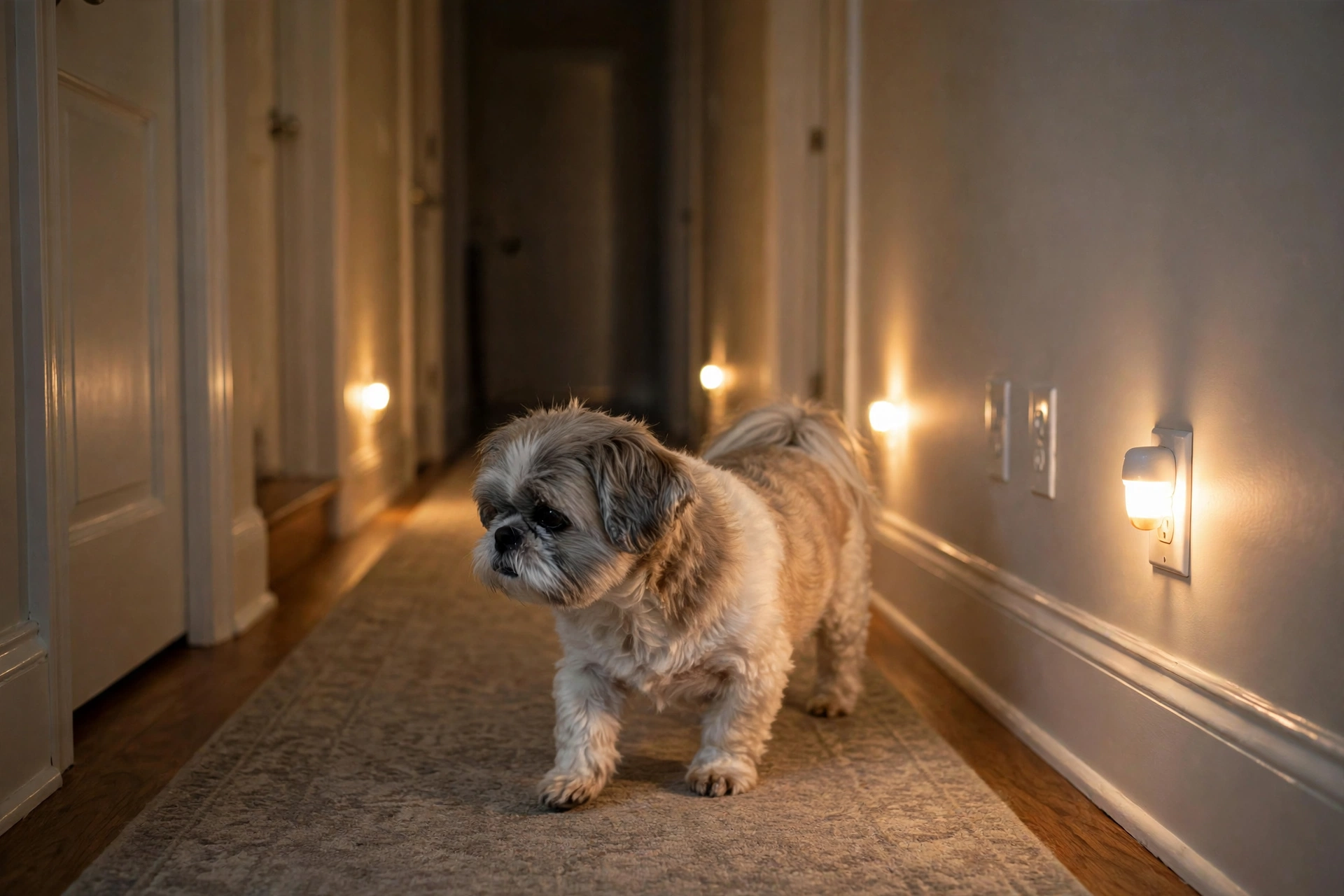
What it means: A dog losing its vision may stare at walls because it’s struggling to make sense of its surroundings. Conditions like cataracts, glaucoma, sudden acquired retinal degeneration (SARDS), or simply age-related nuclear sclerosis can leave a dog disoriented in dim light or unfamiliar rooms. Watch for bumping into furniture, hesitating at stairs or doorways, startling easily when touched, and eyes that look cloudy or change color.
What to do: Keep your home layout consistent — don’t rearrange furniture — and use scent markers or textured mats to help your dog map the house. Night lights in hallways can help dogs with partial vision navigate after dark. And get a vet eye exam promptly: some causes (like glaucoma) are painful and need urgent treatment, while others can be managed with simple home adjustments.
Helpful pick: GEPLAD 6-Pack LED Night Light — soft warm-white plug-in lights help a vision-impaired dog navigate hallways safely at night.
When Wall Staring Needs a Vet Visit
An occasional, alert stare that breaks when you call your dog’s name is usually nothing to worry about. Call your vet promptly if you notice any of these red flags:
- Staring episodes are new, frequent, or getting longer
- Your dog seems vacant or doesn’t respond to their name
- Staring comes with twitching, lip smacking, paddling limbs, or drooling
- Your dog gets stuck in corners or seems lost in familiar rooms
- Changes in sleep, appetite, house training, or social behavior
- Bumping into furniture, cloudy eyes, or hesitation on stairs
- Staring combined with vomiting, lethargy, or loss of coordination
Keep a simple log — date, time, duration, and what you observed — and share any video with your vet. The more detail you bring, the faster your vet can narrow down the cause.
Keep reading: Senior Dog Care Tips · Signs Your Dog Is in Pain · Why Does My Dog Stare at Me? · Dog Body Language Guide · Signs Your Dog Is Stressed
Frequently Asked Questions
Is it normal for dogs to stare at walls?
Occasionally, yes — especially in younger dogs with sharp hearing who’ve locked onto a sound inside the wall. It becomes a concern when the staring is frequent, blank or vacant, hard to interrupt, or paired with other behavior changes.
Can dogs see ghosts when they stare at walls?
There’s no scientific evidence for ghosts, but dogs genuinely perceive things we can’t — high-frequency sounds, faint vibrations, and smells inside walls. What looks spooky is usually just superhuman hearing at work.
Why is my old dog suddenly staring at the wall?
Sudden wall staring in a senior dog is most often linked to Canine Cognitive Dysfunction (dementia), but it can also signal vision loss, partial seizures, or another neurological issue. A vet check is the right move — many mimicking conditions are treatable.
Should I interrupt my dog when they stare at the wall?
If the stare is brief and alert, you can simply call them over. If it looks vacant, trance-like, or compulsive, interrupt gently and redirect to a pleasant activity — and mention the episodes to your vet.
What does a focal seizure look like in a dog?
Focal seizures often look like sudden “staring spells”: the dog freezes, stares blankly, and may show facial twitches, lip smacking, or fly-biting. Episodes last seconds to minutes. Video the episode if possible and show it to your vet.
As an Amazon Associate, PetPostHub earns from qualifying purchases.