Why Does My Dog Snore? 6 Reasons (And When to Worry)

If you have ever wondered why does my dog snore so loudly during naps, you are not alone. That rhythmic rumble drifting from the dog bed is one of the most common — and endearing — sounds in a pet household. The good news is that most dog snoring is completely normal. But in some cases, snoring can point to something worth addressing, from extra weight to breathing problems that deserve a vet visit.
This guide walks you through the six most common reasons dogs snore, what you can do about each one, and the warning signs that mean your pup should be checked out.
Table of Contents
- 1. Breed Anatomy (Flat-Faced Breeds Snore the Most)
- 2. Sleeping Position
- 3. Allergies or Congestion
- 4. Extra Weight
- 5. Dry Air
- 6. Sleep Apnea (Rare, But Real)
- When Snoring Needs a Vet Visit
- Frequently Asked Questions
1. Breed Anatomy (Flat-Faced Breeds Snore the Most)
Some dogs are simply built to snore. Brachycephalic breeds — the flat-faced cuties like Pugs, Bulldogs, Shih Tzus, Boston Terriers, and Boxers — have shortened skulls, narrow nostrils, elongated soft palates, and compact airways. All of that crowded anatomy makes airflow more turbulent during sleep, which creates the classic snore.
What it means: For these breeds, light snoring is a lifelong trait, not a sickness. It is simply how their airways are shaped.
What to do: Keep flat-faced dogs at a healthy weight, avoid overheating, and make sure they sleep on a bed that lets their head rest in a comfortable, slightly elevated position so their airway stays as open as possible. And get to know what is “normal” for your dog — if their snoring suddenly gets much louder or they start snoring while awake and struggling, that is worth a vet conversation.
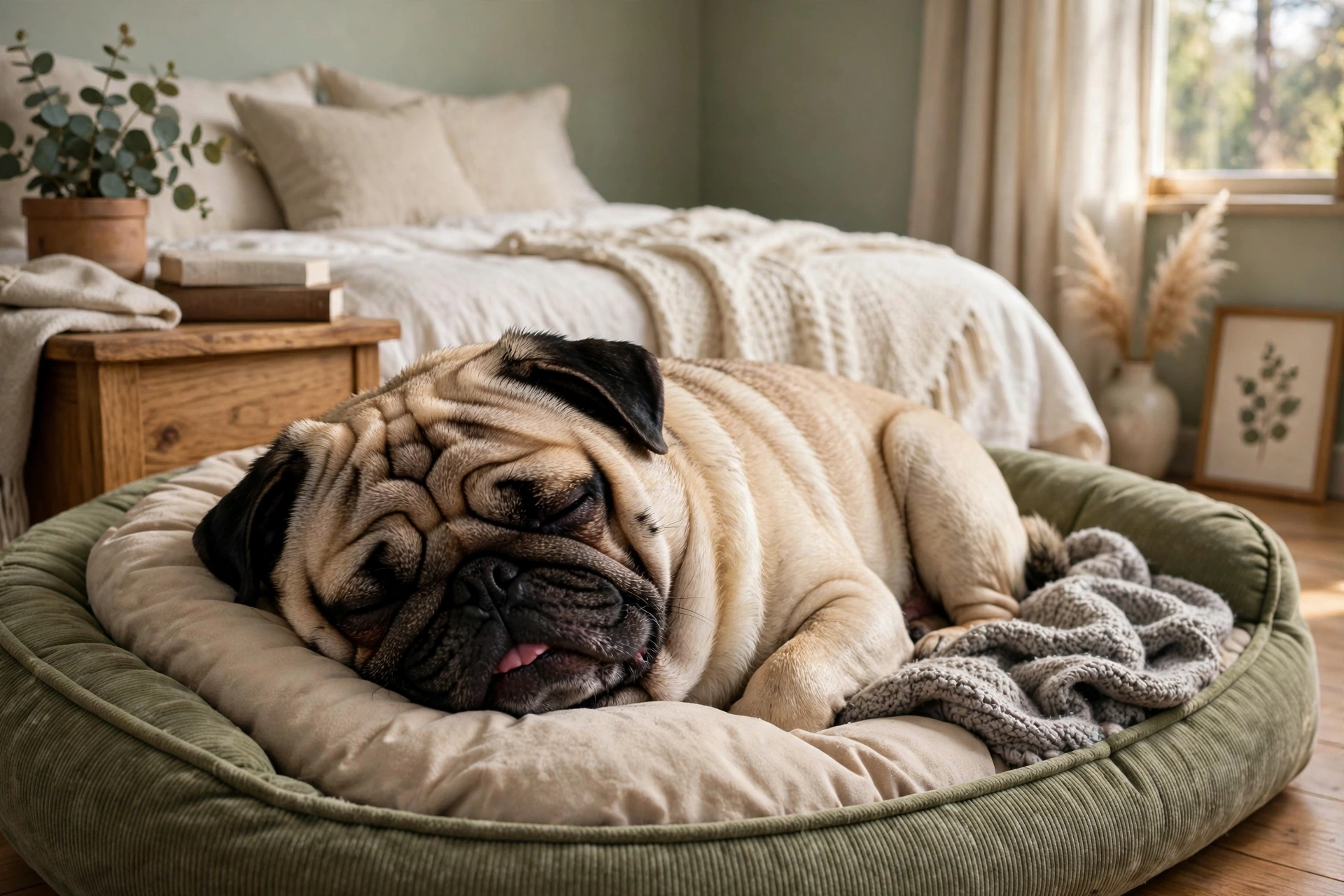
Helpful pick: Best Friends by Sheri Calming Donut Cuddler Bed — the raised rim gives snoring-prone dogs a comfy place to rest their chin, which can open the airway a little.
2. Sleeping Position
Sometimes snoring is nothing more than gravity. When a dog sleeps on their back or with their neck bent at an odd angle, the tongue and soft tissues of the throat relax and partially block the airway. The result is an instant snore that vanishes the moment they shift position — just like people.
What it means: Position-related snoring is completely harmless and the easiest kind to fix.
What to do: A supportive bed with a bolster encourages dogs to sleep with their head resting at a natural angle instead of flat on their back. If your dog only snores in one position and is silent otherwise, you can relax — there is nothing to fix.

Helpful pick: Furhaven Orthopedic Sofa Dog Bed — the wrap-around bolsters support your dog’s head and neck in a side-sleeping position that tends to quiet snoring.
3. Allergies or Congestion
Does your dog snore more in spring or after a dusty day outside? Environmental allergens — pollen, dust mites, mold, pet dander, even cleaning product residue — can inflame the tissues lining the nasal passages and throat. That swelling narrows the airway and produces snoring, often alongside sneezing, a runny nose, or itchy eyes.
What it means: Seasonal or situational snoring usually points to irritation rather than illness.
What to do: Wash bedding weekly in hot water, vacuum sleeping areas with a HEPA-filter vacuum, and keep windows closed on high-pollen days. Running an air purifier in the room where your dog sleeps can make a noticeable difference. If congestion comes with discharge, coughing, or loss of appetite, see your vet — it could be a respiratory infection instead.

Helpful pick: LEVOIT Core 300-P Air Purifier — filtering pollen, dust, and dander from your dog’s sleeping area supports clearer breathing and quieter nights.
4. Extra Weight
One of the most common — and most fixable — causes of snoring is extra pounds. Fat deposits around the neck and chest press inward on the airway, narrowing it from the outside, and abdominal fat can interfere with the diaphragm. Even a modest amount of excess weight can turn a silent sleeper into a freight train.
What it means: If your dog started snoring as they gained weight, the snoring is likely mechanical pressure on the airway.
What to do: Talk to your vet about a healthy target weight and a feeding plan. Many dogs snore dramatically less after losing just 5 to 10 percent of their body weight. Combine portion control with daily walks — and keep treats to training rewards rather than table extras.

Helpful pick: Hill’s Science Diet Adult Perfect Weight Dry Dog Food — a vet-trusted weight-management formula that supports safe, gradual weight loss and lean muscle.
5. Dry Air
Heated indoor air in winter (or air conditioning in summer) can dry out the mucous membranes lining your dog’s nose and throat. Dry tissues vibrate more easily and can swell slightly, both of which make snoring louder. If your dog’s snoring gets worse when the heat kicks on, dry air is a likely culprit.
What it means: Environmental dryness is irritating but easy to remedy.
What to do: Run a cool-mist humidifier in the room where your dog sleeps, aiming for indoor humidity around 40 to 50 percent. Make sure fresh water is always available, and avoid letting your dog sleep right next to heating vents, which blast dry air directly at their face.
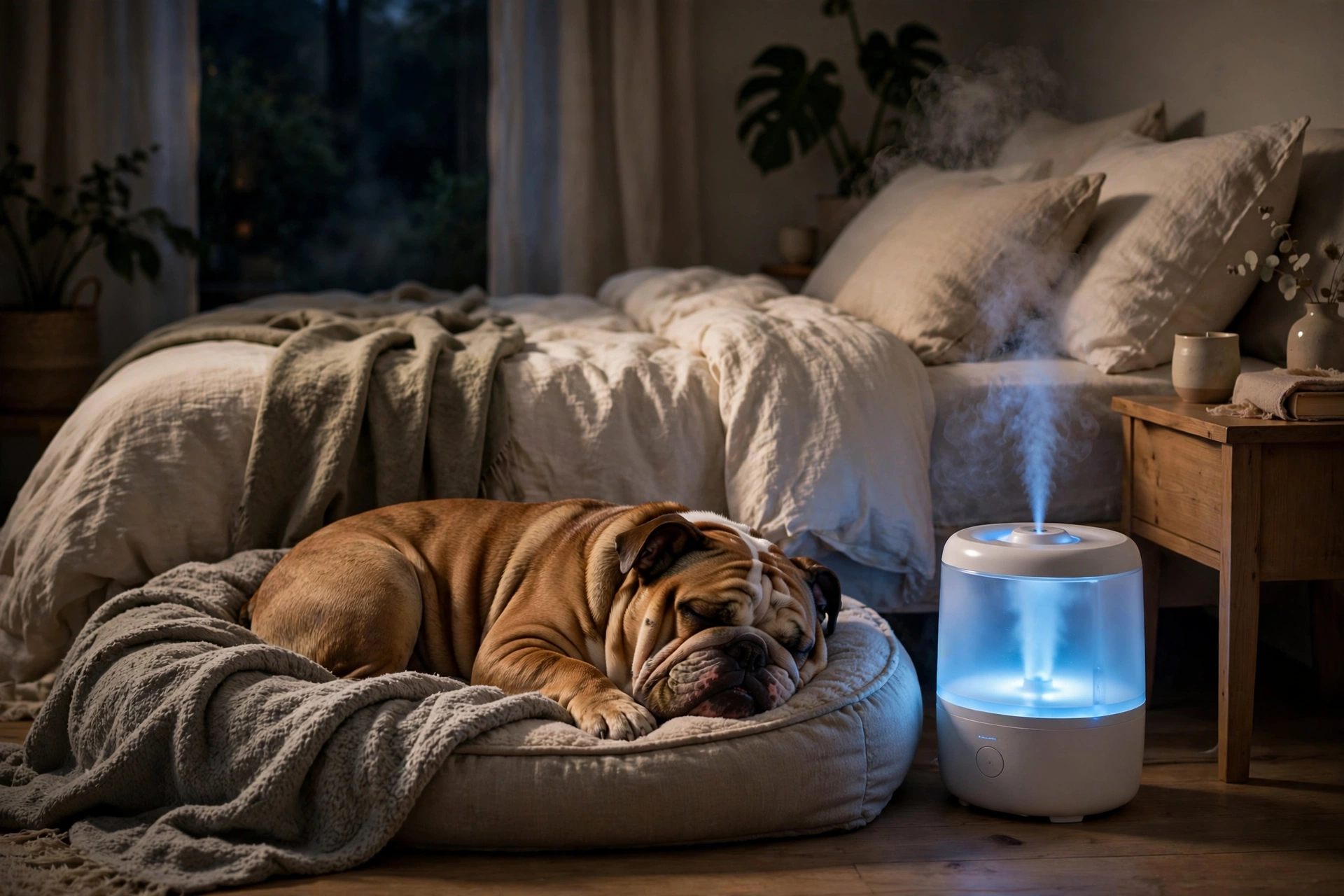
Helpful pick: Dreo 6L Top Fill Cool Mist Humidifier — quiet, long-runtime humidification that keeps bedroom air comfortable for both you and your snoring pup.
6. Sleep Apnea (Rare, But Real)
Just like people, dogs can develop sleep apnea — repeated pauses in breathing during sleep. It is uncommon, but it is most likely in brachycephalic breeds and overweight dogs. Signs include gasping or choking sounds, waking up suddenly, restless sleep, and extreme daytime sleepiness.
What it means: This is the one snoring cause that always deserves professional attention.
What to do: If you notice actual pauses in breathing (not just noise), talk to your vet. A pet camera can help you record what is happening at night so your vet can see exactly what you are seeing. Never try to treat this at home — sleep apnea needs a proper diagnosis.
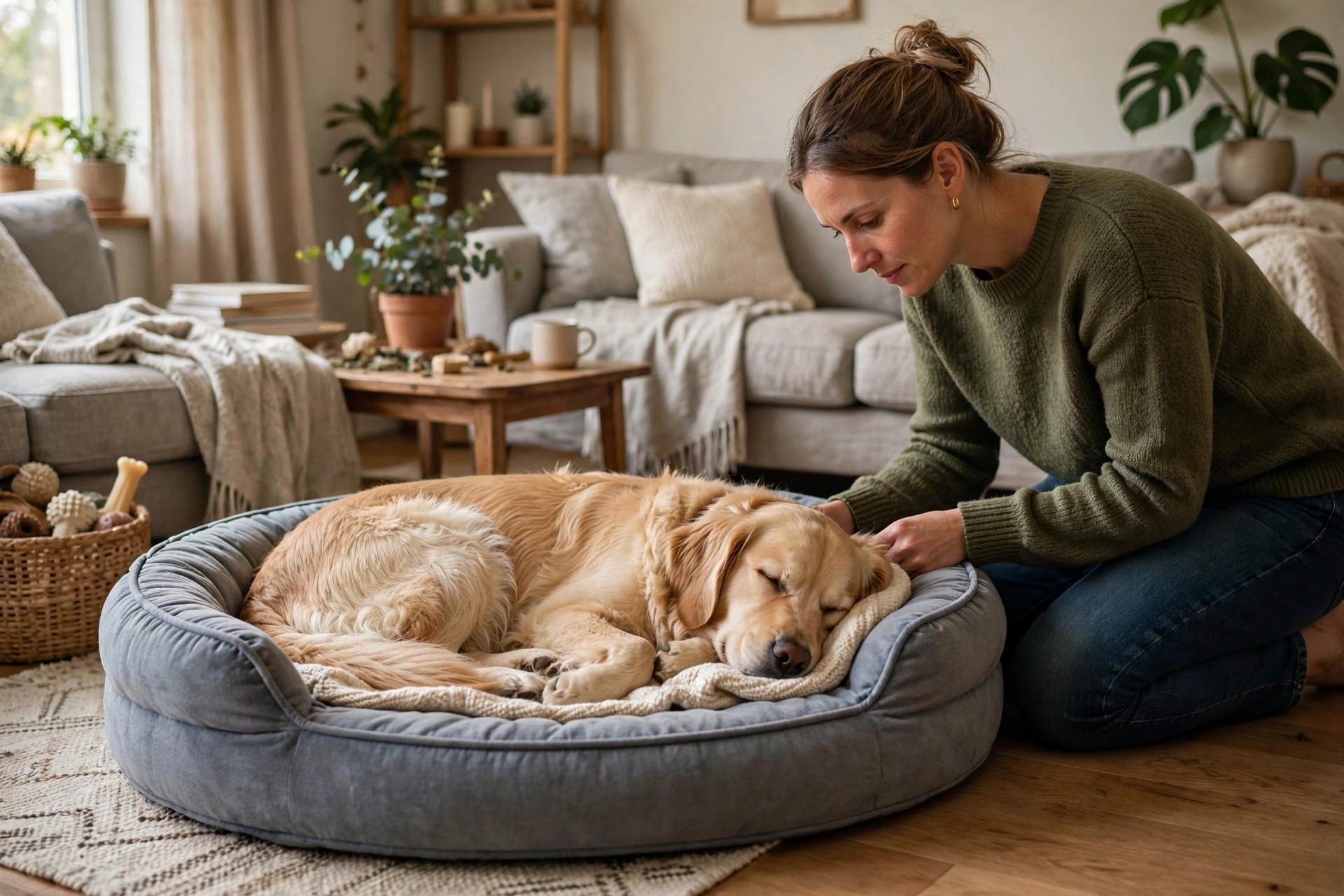
Helpful pick: Furbo Mini 360° Pet Camera — record your dog’s nighttime breathing patterns so you can share real footage with your vet.
When Snoring Needs a Vet Visit
Most snoring is harmless, but call your vet if you notice any of these red flags:
- Snoring started suddenly in a dog that never snored before
- Loud snoring accompanied by gasping, choking, or pauses in breathing
- Nasal discharge, sneezing fits, coughing, or a drop in appetite
- Snoring while awake with visible effort to breathe
- Extreme daytime sleepiness or a drop in energy
- Snoring that gets progressively louder over weeks
Your vet may check for nasal obstructions, infections, growths, or conditions like laryngeal paralysis (most common in older large-breed dogs), all of which are treatable when caught early.
Keep reading: Dog Sleeping Positions: What They Mean · Do Dogs Dream? · Dog Allergy Symptoms & Relief · Signs Your Dog Is in Pain · Dog Anxious at Night? 8 Ways to Help
3 Snoring Fixes to Try Tonight
Before your next vet visit is even on the calendar, these small changes can quiet the nightly rumble:
- Gently shift their position. If your dog is snoring on their back, a soft nudge onto their side often stops it instantly. A bolster bed makes side-sleeping the default.
- Run the humidifier. In heated or air-conditioned homes, a cool-mist humidifier in the bedroom adds moisture to the air and reduces throat irritation within a night or two.
- Clean the sleep zone. Wash bedding, vacuum the room, and keep the dog out of dusty laundry piles. Fewer allergens means clearer airways and quieter breathing.
If these tweaks make a noticeable difference, you have likely found the culprit — and if they do not, that is useful information to bring to your vet.
Frequently Asked Questions
Is it normal for dogs to snore?
Yes — light, consistent snoring is normal, especially in flat-faced breeds, older dogs, and dogs sleeping on their backs. It becomes a concern when it starts suddenly, gets much louder, or comes with breathing difficulty or other symptoms.
Why did my dog suddenly start snoring?
Sudden-onset snoring deserves attention. Common causes include weight gain, a respiratory infection, allergies, a foreign object in the nose, or a new growth. If the snoring appeared out of nowhere, see your vet.
Do puppies snore?
Yes, puppies can snore, usually because they fall into deep sleep in funny positions or because their little airways are still developing. Puppy snoring is almost always harmless and often fades as they grow.
Can I stop my dog from snoring?
You cannot change your dog’s anatomy, but you can reduce snoring by keeping them at a healthy weight, using a humidifier, cleaning allergens from their sleeping area, and giving them a supportive bed that keeps the airway open.
Should I wake my dog up when they snore loudly?
No — let sleeping dogs lie. Waking a dog repeatedly disrupts their rest. If the snoring worries you, record a video and show it to your vet instead of interrupting their sleep.
As an Amazon Associate, PetPostHub earns from qualifying purchases.