Frozen Pineapple Coconut Dog Treats: Easy Homemade Pupsicles
Frozen Pineapple Coconut Dog Treats
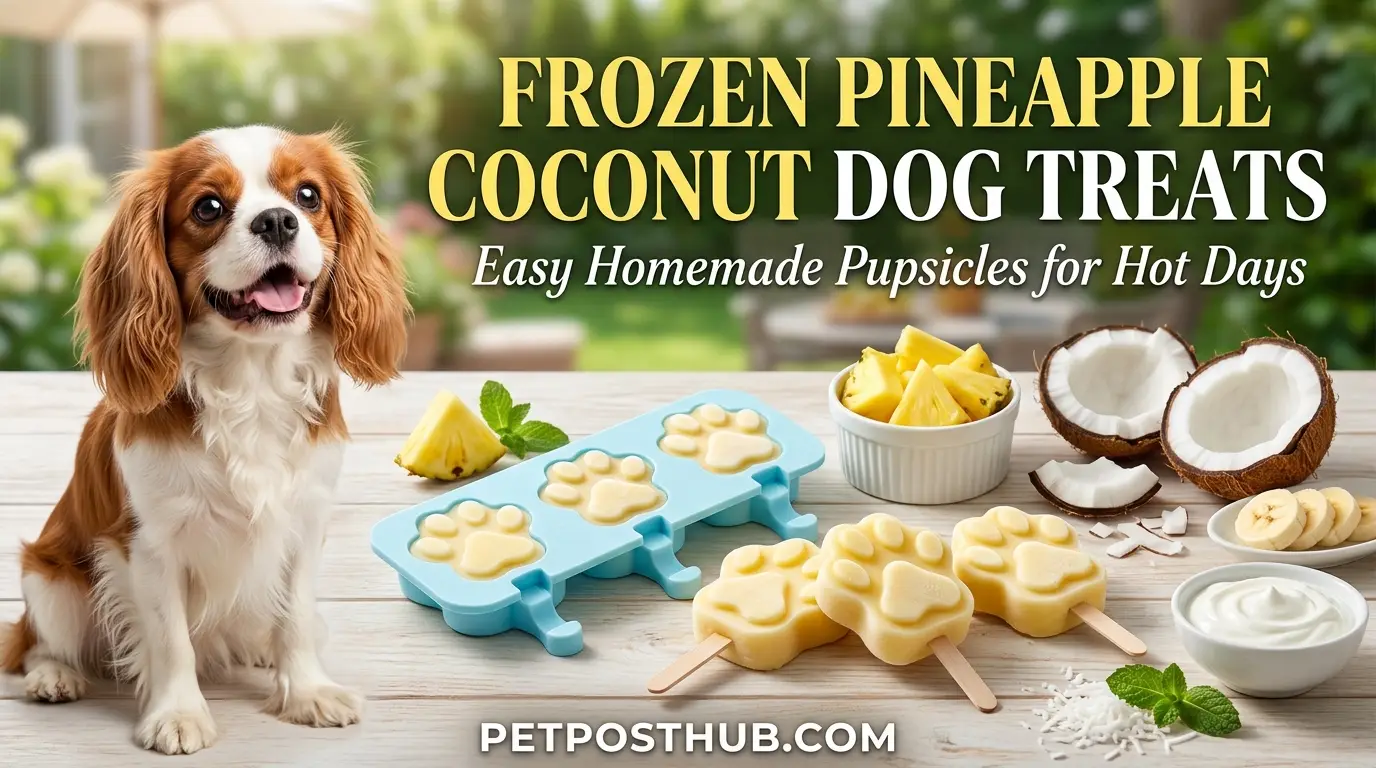
When summer temperatures climb, a cold homemade treat can be a simple way to give your dog something refreshing. These frozen pineapple coconut dog treats combine fresh pineapple, unsweetened coconut milk, plain Greek yogurt, and banana into creamy little pupsicles that are easy to make at home.
They take only a few minutes to prepare and can be made in paw-shaped molds, ice cube trays, or even a shallow dish. They are especially handy for dogs that enjoy frozen enrichment during warm weather.
Why Make Homemade Frozen Dog Treats?
Store-bought treats aren’t the only option. Making your own lets you control exactly what goes into your dog’s snack.
These pineapple coconut pupsicles are:
- Easy to prepare with everyday ingredients
- Naturally sweet from fruit
- Convenient to portion
- Refreshing on warm days
- Suitable for small or large dogs when appropriately portioned
- Easy to customize for dogs with certain food sensitivities
The biggest ingredient rule is simple: use plain, unsweetened ingredients and avoid products containing added sweeteners.
Ingredients
- 1 cup fresh pineapple, cored and chopped
- 1 cup full-fat, unsweetened coconut milk
- ½ cup plain unsweetened Greek yogurt
- 1 small ripe banana
- 2 tablespoons coconut water, optional
Fresh pineapple is preferable to pineapple packed in syrup. If using frozen pineapple, allow it to soften slightly before blending.
For dogs that don’t tolerate dairy well, a suitable lactose-free plain yogurt can be used.
How to Make Pineapple Coconut Dog Treats
1. Prepare the Pineapple
Remove the pineapple skin and tough center. Cut the edible fruit into chunks and measure one cup.
Never give your dog the tough pineapple core, as it can be difficult to chew and digest.
2. Blend the Ingredients
Place the pineapple, coconut milk, Greek yogurt, and banana into a blender.
Blend until smooth and creamy. If the mixture is too thick to pour, add a small amount of coconut water and blend again.
3. Fill Your Molds
Pour the mixture into small silicone molds or an ice cube tray.
Small molds make portion control easier, particularly for small breeds such as Cavalier King Charles Spaniels.
4. Freeze
Place the molds on a level freezer shelf and freeze for at least 4 hours, or until completely solid.
For larger or deeper molds, freezing overnight is usually easier.
How Much Should You Give Your Dog?
These treats should be considered occasional snacks rather than a replacement for your dog’s regular food.
Start with a small portion, particularly if your dog has never eaten pineapple or coconut before. Watch for digestive upset after introducing any new ingredient.
A useful approach is to make small treats for small dogs and larger portions for bigger dogs, while keeping all treats within your dog’s overall daily calorie allowance.
If your dog has a sensitive stomach, pancreatitis history, diabetes, or another condition affected by diet, ask your veterinarian before introducing homemade treats.
Can Dogs Eat Pineapple and Coconut?
Many dogs can enjoy small amounts of plain fresh pineapple, but individual tolerance varies. Pineapple contains natural sugars, so moderation is important.
Coconut products also vary considerably. Avoid sweetened coconut milk, coconut cream, syrups, and products containing potentially harmful sweeteners.
Always check the ingredient label before adding packaged coconut products to homemade dog treats.
Easy Variations
You can change the recipe while keeping the basic frozen-treat concept.
Berry pupsicles: Replace some pineapple with dog-safe berries.
Banana coconut treats: Use more banana and reduce the pineapple.
Layered pupsicles: Freeze a thin coconut-yogurt layer first, then add banana and pineapple layers.
Enrichment treats: Instead of molds, freeze the mixture inside a suitable food-stuffable toy for longer-lasting enrichment.
How to Store Them
Once completely frozen, remove the treats from their molds and transfer them to an airtight freezer container or freezer bag.
For best texture and flavor, use them within about 3 months. Label the container with the preparation date so you know how long they’ve been stored.
Frequently Asked Questions
Are frozen pineapple treats good for dogs?
Plain pineapple can be an occasional treat for many dogs. Frozen pineapple treats can provide a refreshing snack, but portions should remain moderate because pineapple contains natural sugar.
Can I use canned pineapple?
Fresh or frozen pineapple is a better choice. If using canned pineapple, avoid varieties packed in syrup or containing added sugar.
Can puppies eat these treats?
Puppies may be able to eat small amounts of the ingredients, but introduce new foods gradually. Ask your veterinarian if your puppy has dietary restrictions or digestive problems.
Can I make these without yogurt?
Yes. You can make a simpler version using pineapple, banana, and unsweetened coconut milk. The texture may be somewhat icier.
How long do homemade dog treats last in the freezer?
For the best quality, keep these treats properly sealed and use them within approximately three months.
Final Thoughts
These frozen pineapple coconut dog treats are an easy summer snack when your pup needs something cool and refreshing. With fresh pineapple, banana, coconut milk, and yogurt, you can prepare a freezer-friendly treat in just a few minutes.
Use small molds for easier portion control, introduce new ingredients gradually, and always choose unsweetened products. A little preparation can turn a hot afternoon into a much happier one for your four-legged friend.
Homemade treats should complement, not replace, a complete and balanced diet. If your dog has a medical condition or special dietary needs, consult your veterinarian before introducing new foods.