
Why Does My Dog Sleep with His Tongue Out? 5 Reasons
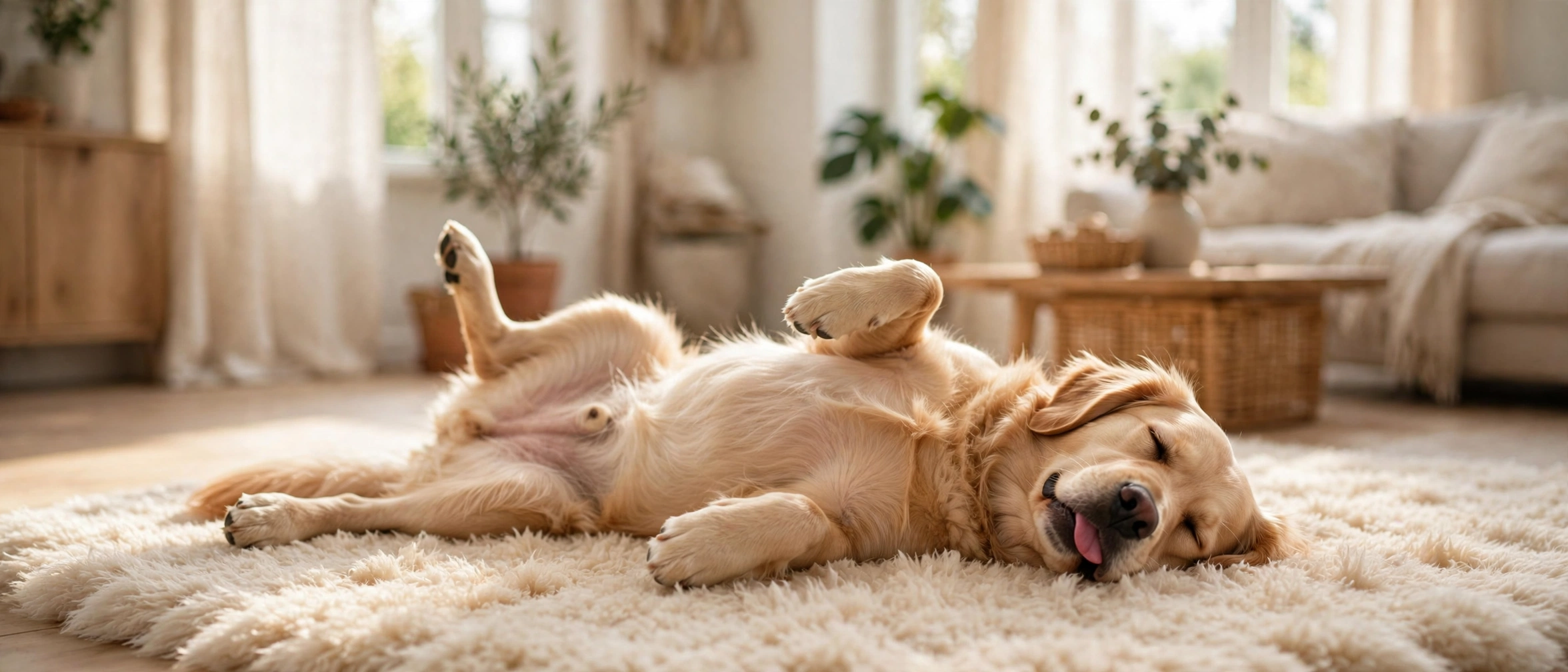
You look over at your sleeping dog and spot it: a tiny pink tongue tipping out of his mouth, completely relaxed. If you’ve ever wondered why does my dog sleep with his tongue out, you’re not alone — this adorable little habit, lovingly called the “blep” by dog lovers everywhere, is one of the cutest mysteries in the canine world.
The good news? Most of the time, a tongue-out snooze is completely harmless and actually a compliment — it usually means your pup feels so safe and comfortable with you that he’s letting every last muscle relax. But in a few cases, that little blep can be a clue about dental issues, heat, or medication side effects. Let’s break down the 5 most common reasons your dog sleeps with his tongue out, and when you should (and shouldn’t) worry.
Table of Contents
- 1. Total Relaxation (the Classic Blep)
- 2. It’s a Breed Trait
- 3. Dental Issues or Missing Teeth
- 4. He’s Cooling Down from Heat
- 5. Medication or Sedation Side Effects
- When Tongue-Out Sleeping Needs a Vet
- Frequently Asked Questions
1. Total Relaxation (the Classic Blep)
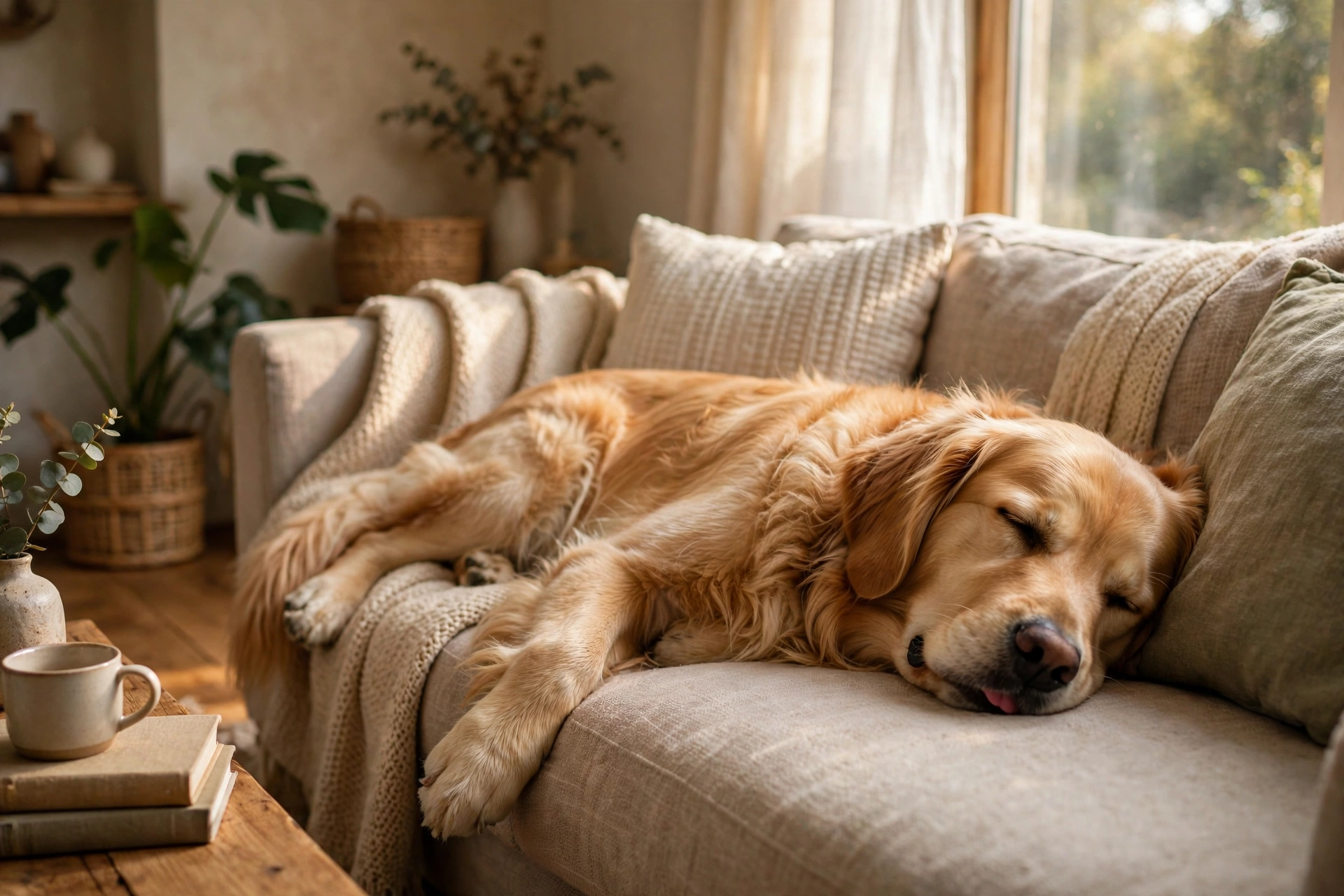
What it means: This is by far the most common reason dogs sleep with their tongues out. During deep sleep — especially the REM phase when dogs dream — their jaw muscles go completely slack. When the jaw relaxes, the tongue simply isn’t being held inside anymore, so it slips forward a little. Dogs don’t fully relax like this unless they feel completely safe, so a sleeping blep is basically your dog saying, “I trust you with everything.”
What to do: Absolutely nothing — just enjoy the cuteness. A dog who bleps in his sleep after a busy day of walks, play, and naps is a dog living his best life. If anything, take it as a sign that his bed, his routine, and his home feel secure to him.
Helpful pick: Best Friends by Sheri Donut Calming Dog Bed — a plush donut bed that gives deep sleepers a cozy nest to sink into.
2. It’s a Breed Trait
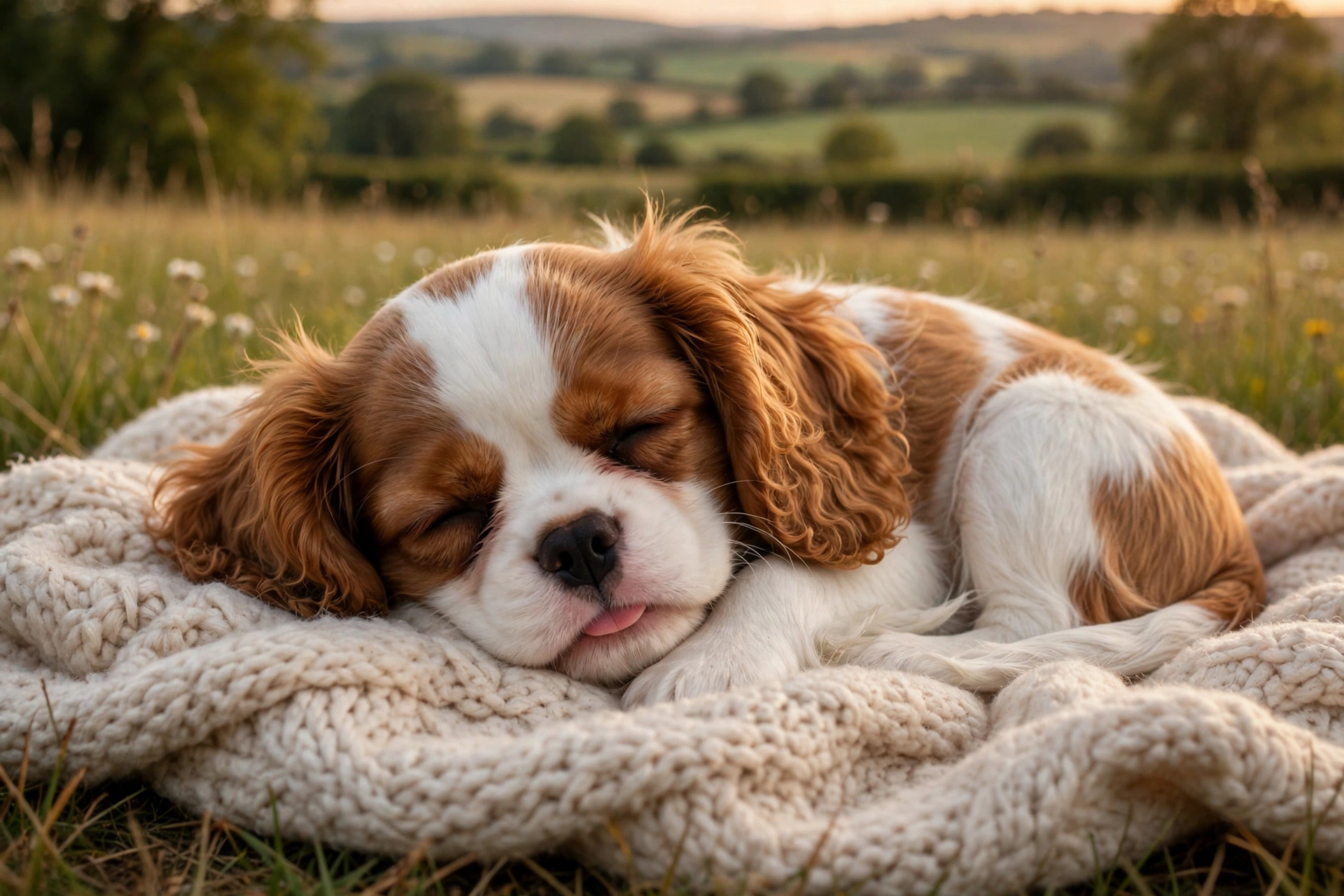
What it means: Some breeds are simply built to blep. Flat-faced (brachycephalic) breeds like Pugs, Bulldogs, and Shih Tzus often have tongues that are a little too long for their short mouths, so the tongue spills out during sleep. Even longer-faced breeds like Cavalier King Charles Spaniels — famous for their gentle, dopey sweetness — commonly sleep with a tiny tongue tip showing simply because their relaxed jaws let it peek through.
What to do: If your dog has always done this and his vet has never flagged a problem, it’s just part of his charm. Just keep an eye on brachycephalic breeds for snoring or labored breathing during sleep, since their airways need a little extra attention.
Helpful pick: Bedsure ComfyFleece Orthopedic Dog Bed — supportive foam that helps short-muzzled breeds rest in a comfy head-elevated position.
3. Dental Issues or Missing Teeth
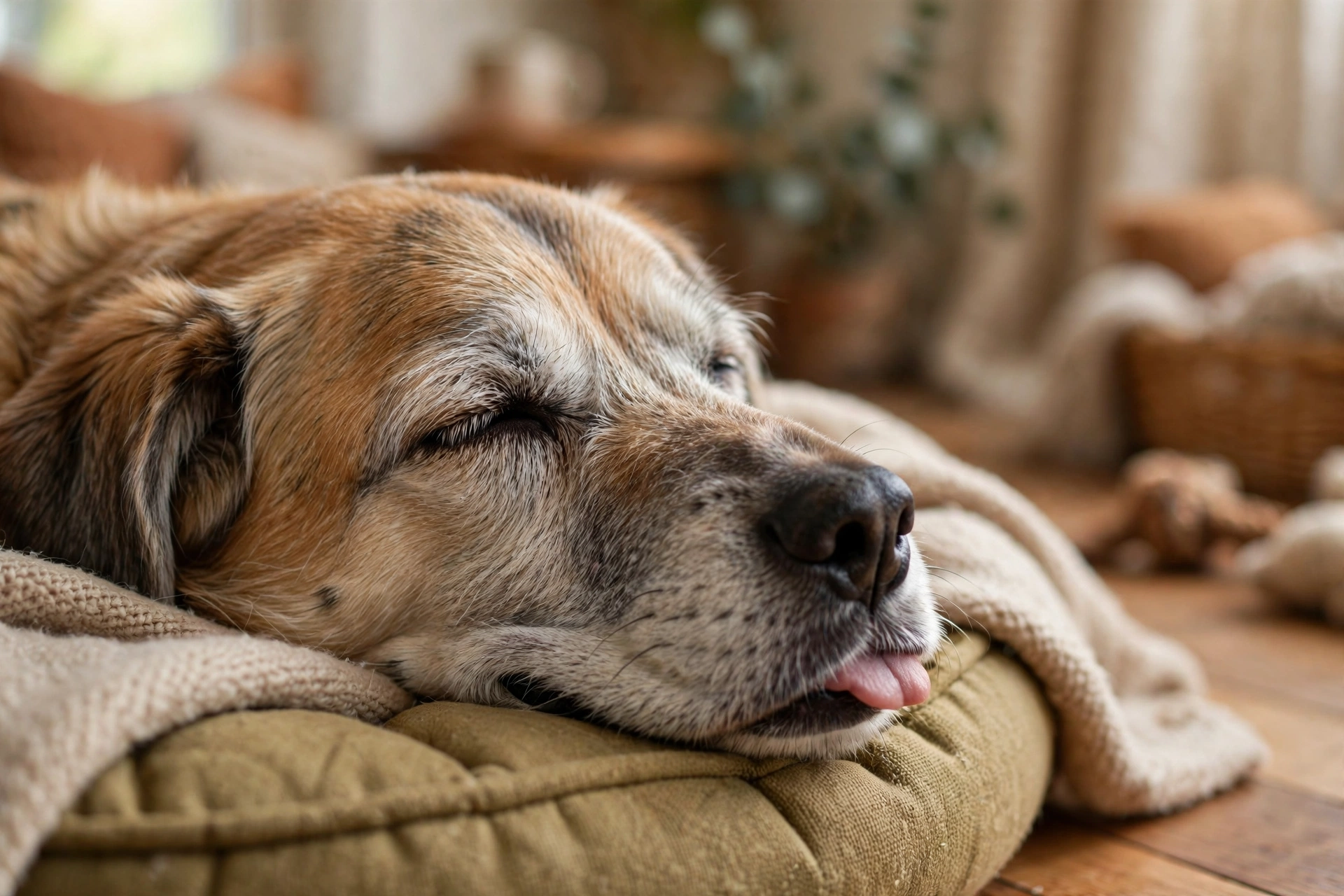
What it means: Missing teeth, loose teeth, or gum disease can change how a dog’s tongue rests inside the mouth. Older dogs especially may lose the teeth that used to “hold” the tongue in place, so it slips out more easily during sleep. In some cases, a dog sleeps with his tongue out because his mouth is sore and holding the tongue inside feels uncomfortable.
What to do: Peek at his mouth when he’s awake and relaxed — red gums, bad breath, drooling, or dropped food are all worth mentioning to your vet. This is a vet note, not a diagnosis: a routine dental check can catch issues early, and most dogs do great after a cleaning.
Helpful pick: Greenies Original Dental Treats — daily chews that help fight plaque and freshen breath between vet cleanings.
4. He’s Cooling Down from Heat
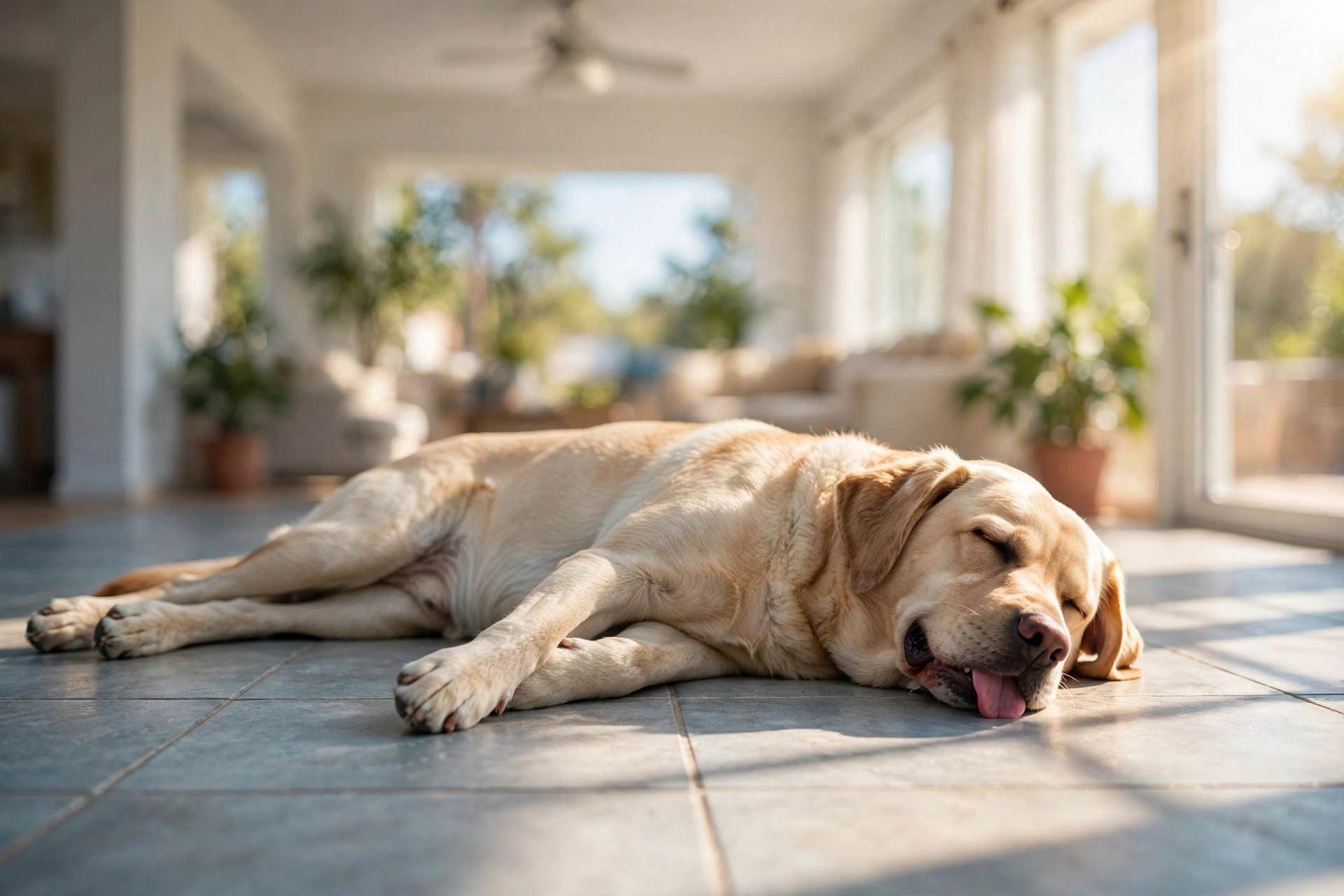
What it means: Dogs barely sweat — they release heat through panting and the blood vessels in their tongues. If your dog was panting before he dozed off, his tongue may stay hanging out for a while after his breathing slows down. Sleeping on cool tile or stretching out flat (the famous “sploot”) alongside the blep is classic warm-weather dog behavior.
What to do: Make sure he has fresh water and a cool spot to sleep. On hot days, limit midday exercise, and never leave him in a hot car. If he’s panting heavily while awake and won’t settle, that’s worth more attention than a peaceful sleep blep.
Helpful pick: Ruffwear Swamp Cooler Dog Neck Gaiter — an evaporative-cooling wrap that helps dogs stay comfortable on warm days.
5. Medication or Sedation Side Effects
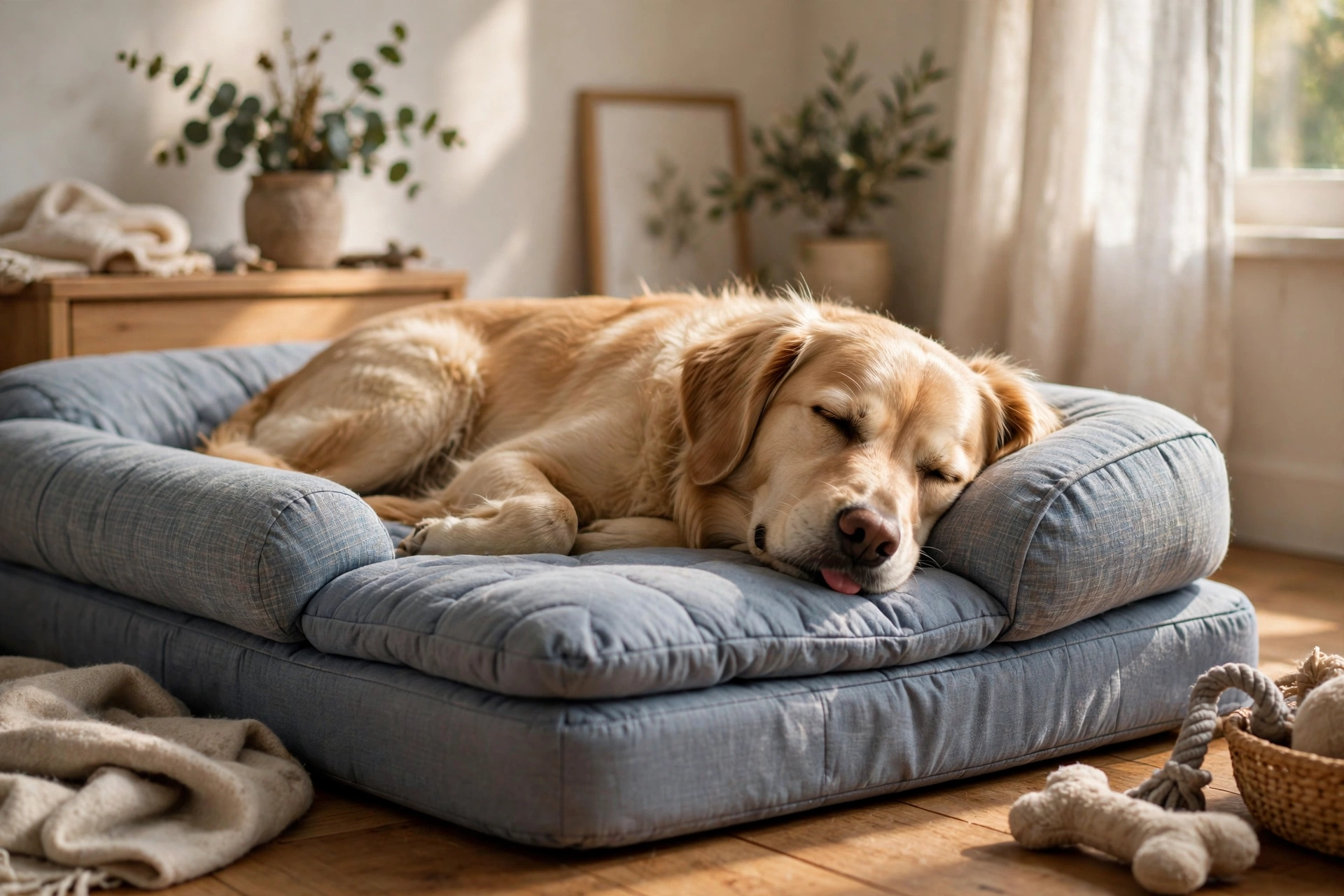
What it means: Some medications — including sedatives, anti-anxiety drugs, and certain steroids — relax muscles or increase panting, which can leave the tongue out during sleep. Dogs recovering from anesthesia after surgery or a dental procedure often blep for a day or two as the drugs wear off.
What to do: Vet note: if the tongue-out sleeping started right after a new medication, tell your vet — they may want to adjust the dose or timing. A post-surgery blep that fades within a day or two is normal; anything that worsens or comes with weakness, vomiting, or trouble walking deserves a call.
Helpful pick: ADAPTIL Calm Home Diffuser — a pheromone diffuser that helps keep a recovering dog’s space calm and restful.
When Tongue-Out Sleeping Needs a Vet
A sleepy blep is almost always adorable and harmless. But call your vet if you notice any of these red flags:
- The behavior started suddenly out of nowhere, especially in an older dog.
- His tongue hangs out while he’s awake too and he can’t seem to pull it back in.
- Heavy drooling, dropping food, or trouble chewing alongside the blep.
- Labored or noisy breathing, coughing, or bluish gums.
- Weakness, wobbliness, or confusion when he wakes up.
Trust your gut — you know your dog’s normal. A lifelong blepper blepping is fine; a dog who never blepped suddenly doing it 24/7 is worth a checkup.
Frequently Asked Questions
Is it normal for dogs to sleep with their tongues out?
Yes — it’s one of the most normal and beloved dog behaviors there is. Deep relaxation lets the jaw go slack, and the tongue slips out. It’s most common in puppies, seniors, and flat-faced breeds.
Why does my puppy sleep with his tongue out?
Puppies are champion deep sleepers, and their smaller mouths mean less room to keep the tongue tucked in. Puppy bleps are almost always just pure, adorable relaxation.
Should I push my dog’s tongue back in while he sleeps?
No need — and it’s better not to. Waking him up to fuss with his mouth can startle him, and a tongue-out sleeper is a comfortable sleeper. Leave the blep alone.
Can a dog’s tongue dry out if it hangs out while sleeping?
Occasionally the tip can get a little dry, but dogs naturally lick and swallow when they stir, which re-moistens it. If the tongue ever looks cracked, discolored, or swollen, have your vet take a look.
Do dogs dream when they sleep with their tongues out?
Often, yes! The tongue-out look is most common during REM sleep — the same phase where dogs twitch their paws and whimper softly. He’s probably chasing dream squirrels.
Keep Reading
- Why Does My Dog Dream?
- Why Does My Dog Talk in His Sleep?
- Why Does My Dog Sleep with His Eyes Open?
- Why Does My Dog Pant at Night?
- How to Clean Dog Teeth Naturally
As an Amazon Associate, PetPostHub earns from qualifying purchases.


