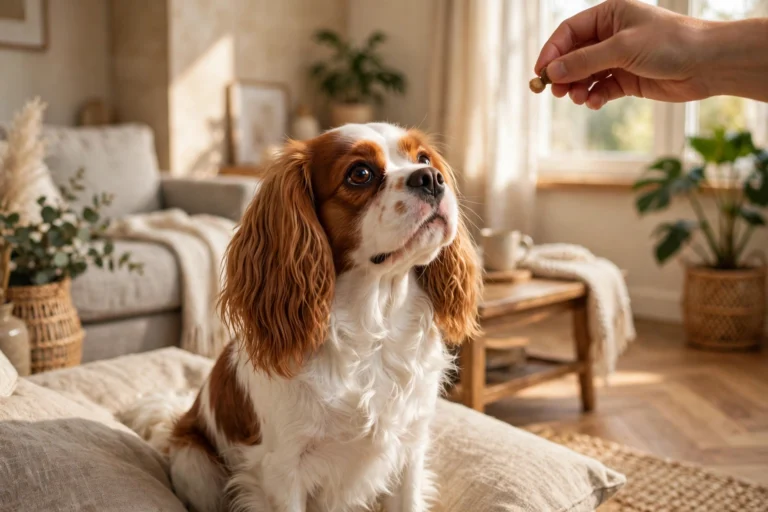
Why Does My Dog Sleep with His Eyes Open? 5 Reasons
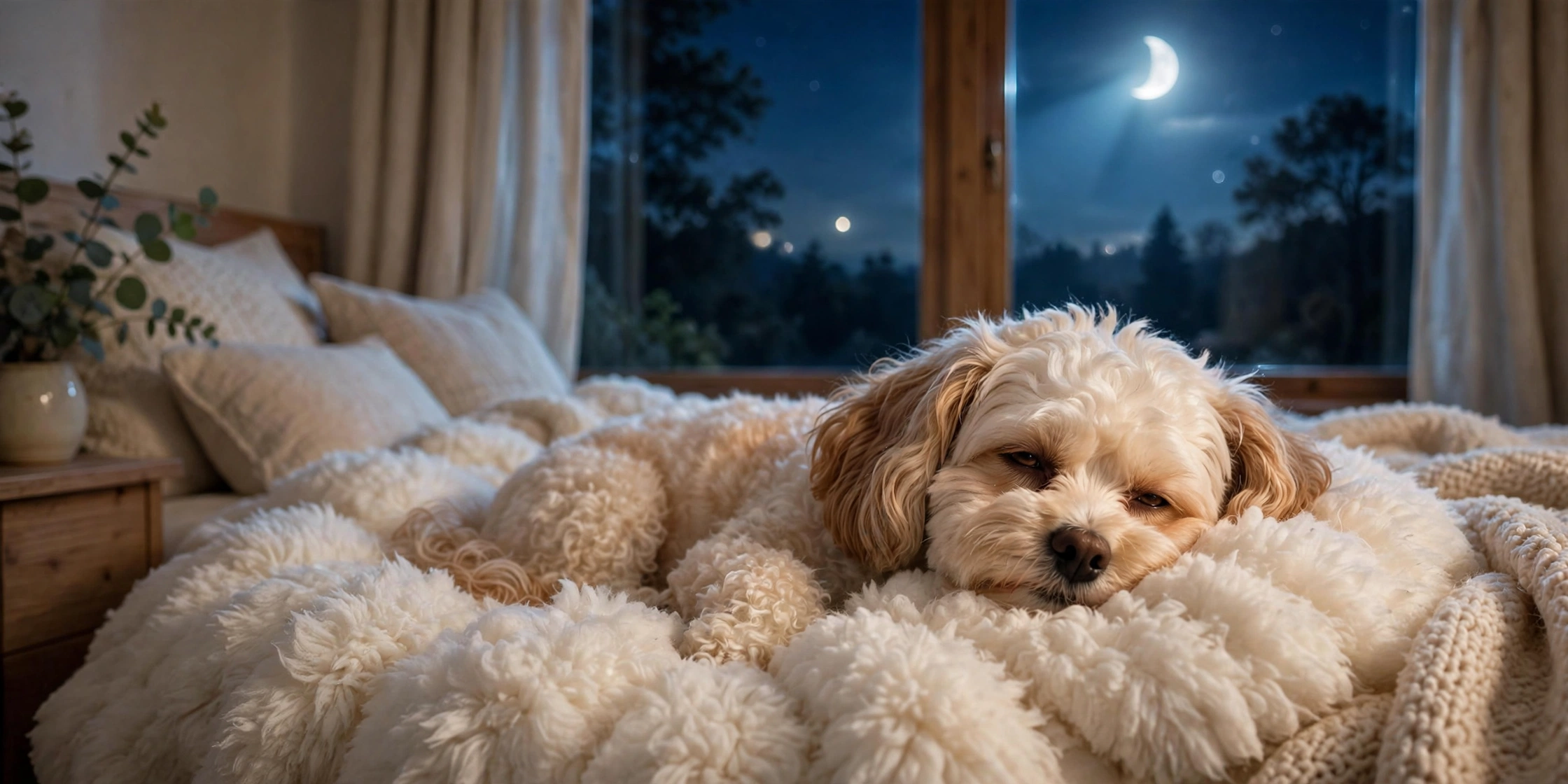
You tuck your dog in for the night, glance back — and freeze. His eyes are open. Not just a lazy half-blink, but genuinely open, staring across the room while he’s clearly fast asleep. It looks a little creepy, honestly. Is he sleepwalking? Having a seizure? If you’re googling “why does my dog sleep with eyes open,” here’s the reassuring short answer: in most cases it’s completely normal.
Here’s the good news: in most cases, sleeping with the eyes open (or half open) is completely normal for dogs. There’s a short list of reasons behind it, and only one of them is worth worrying about. Below are the 5 reasons your dog naps with his eyes open, plus exactly when it’s a vet visit and when it’s just your weird, wonderful dog being himself.
Quick answer: Dogs often sleep with their eyes open because of their third eyelid (a built-in protective membrane), deep REM sleep, breed-related facial structure, or simply being a light sleeper. It’s only a concern if the eye stays open while awake, or comes with redness, discharge, squinting, or facial drooping.
Table of Contents
- 1. The Third Eyelid Is Doing Its Job
- 2. He’s in Deep REM Sleep (and Dreaming)
- 3. It’s a Breed Trait: Prominent or Loose Eyes
- 4. He’s a Light Sleeper, Not Fully Asleep
- 5. An Eye Issue or Nerve Problem
- When Open-Eye Sleeping Needs a Vet
- Frequently Asked Questions
1. The Third Eyelid Is Doing Its Job
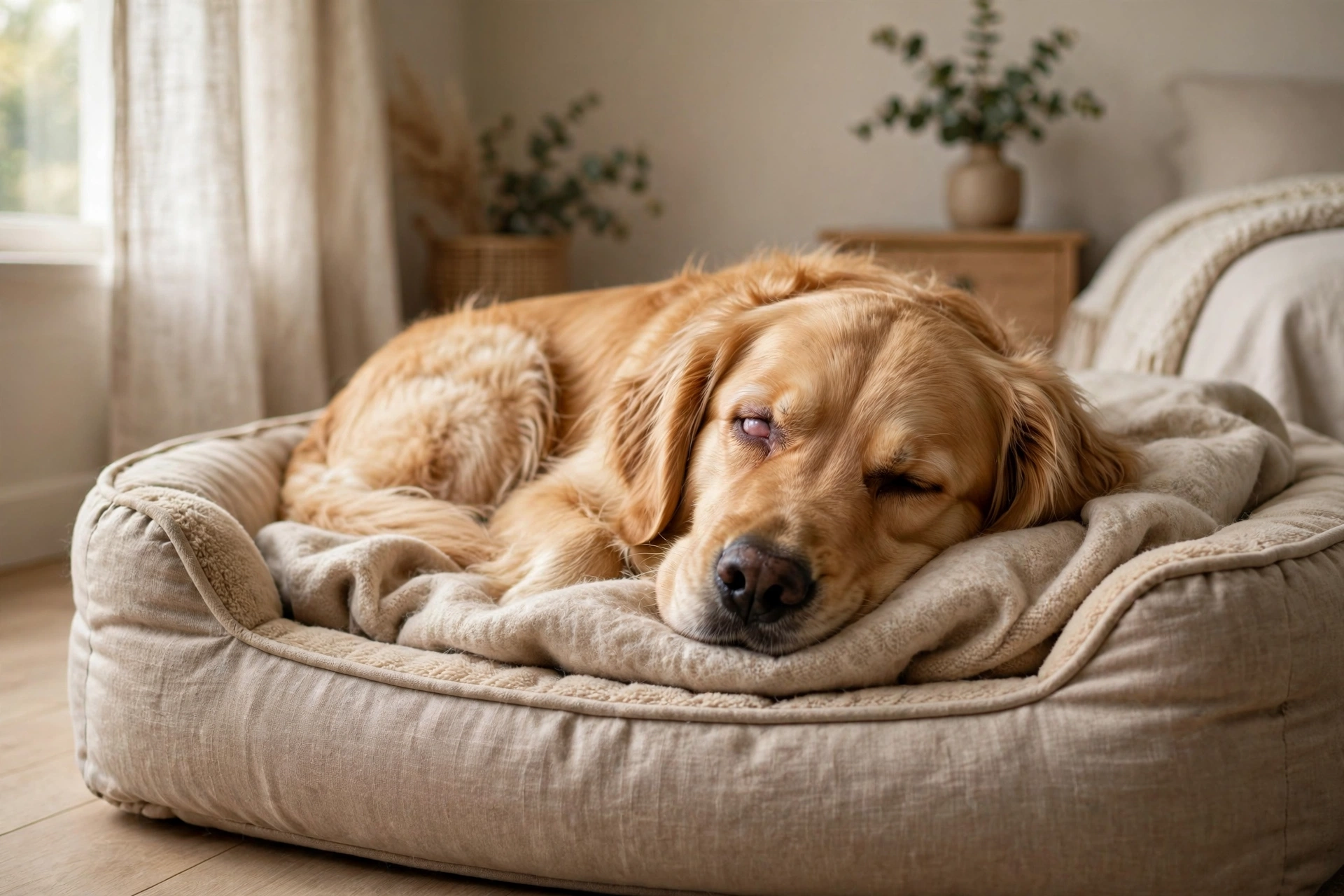
What it means: Dogs have a third eyelid, called the nictitating membrane — a pale, translucent membrane that sits in the inner corner of the eye and sweeps across it whenever the main lids close. When your dog drifts off, the outer lids may relax into a half-open position while the third eyelid stays up, guarding the eyeball. From across the room, the pale membrane can look like the eye itself is open, giving you that spooky “he’s staring at me” effect.
This membrane produces part of the tear film and sweeps debris away, so the eye stays moist and protected even when the outer lids aren’t fully shut. It’s a built-in safety system, and it’s one of the most common explanations for open-eyed sleeping.
What to do: Nothing — this is exactly what the membrane is for. If your dog’s eyes look dry or dusty in the mornings, a gentle wipe of the eye area with a pre-soaked pad is all the maintenance needed.
Helpful pick: Miracle Care Eye Wash Pads — gentle pre-soaked pads that wipe away overnight crust and debris without stinging.
2. He’s in Deep REM Sleep (and Dreaming)
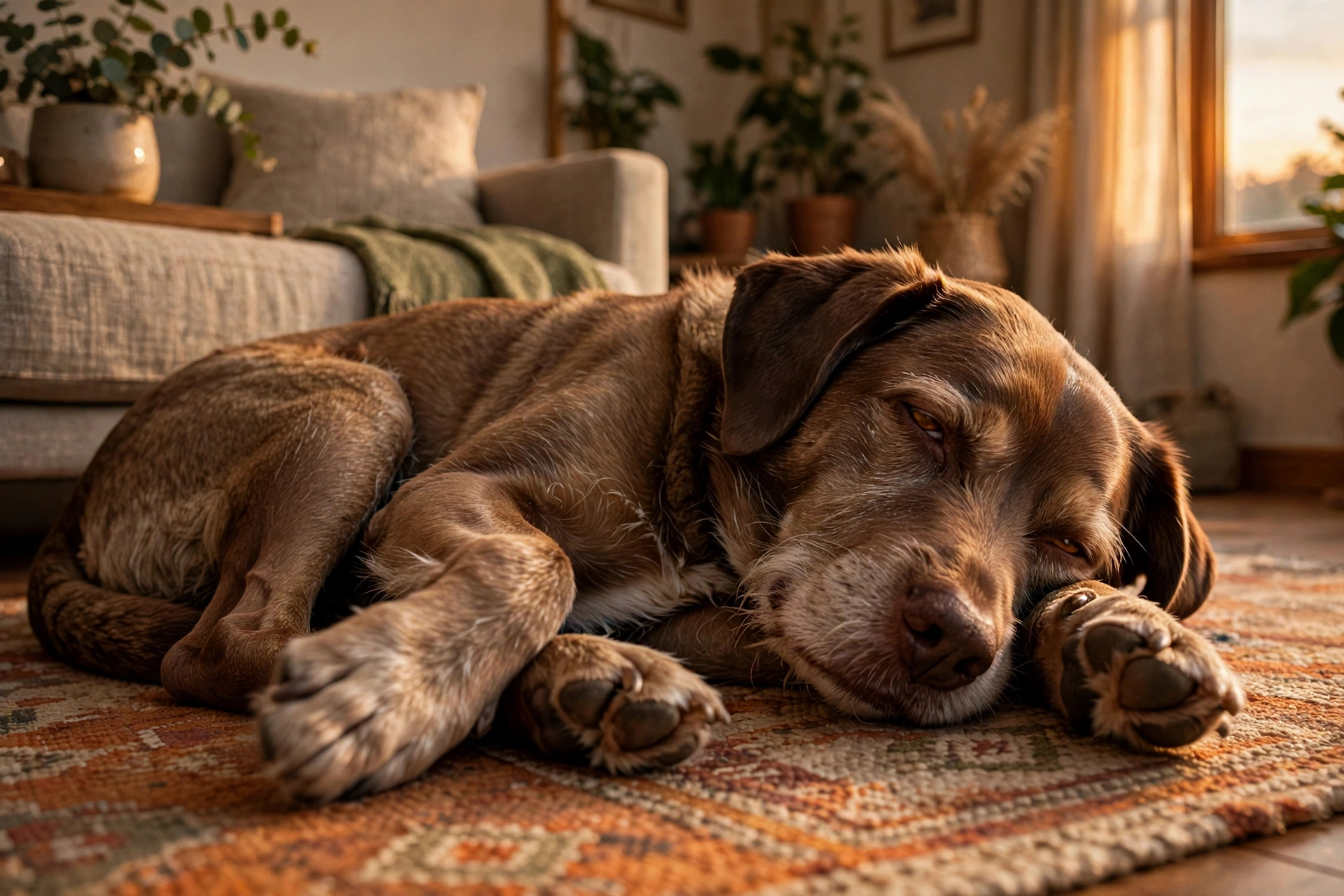
What it means: A dog’s sleep cycle runs about 20 minutes (compared to roughly 90 for us), and REM — the dreaming phase — can start sooner and run more often. During REM sleep, the brain is highly active, muscles twitch, paws paddle, and the eyes dart around beneath the lids. Those rapid eye movements are strong enough to nudge an eyelid open. If your dog’s eyes pop open mid-nap alongside twitching feet, ear flicks, or quiet barks and whimpers, he’s not awake — he’s running through a particularly vivid dream.
This is actually a sign of healthy, restorative sleep. Puppies and senior dogs spend an even bigger share of their sleep in REM, which is why they’re the most likely to doze with their eyes open.
What to do: Let him dream. Don’t wake him mid-REM — startled dogs can snap before they realize where they are. If you must rouse him, say his name gently rather than touching him.
Helpful pick: SmartPetLove Snuggle Puppy — the pulsing heartbeat and warmth of this cuddle toy helps dogs settle into calm, deep sleep (and fewer startled awakenings).
3. It’s a Breed Trait: Prominent or Loose Eyes
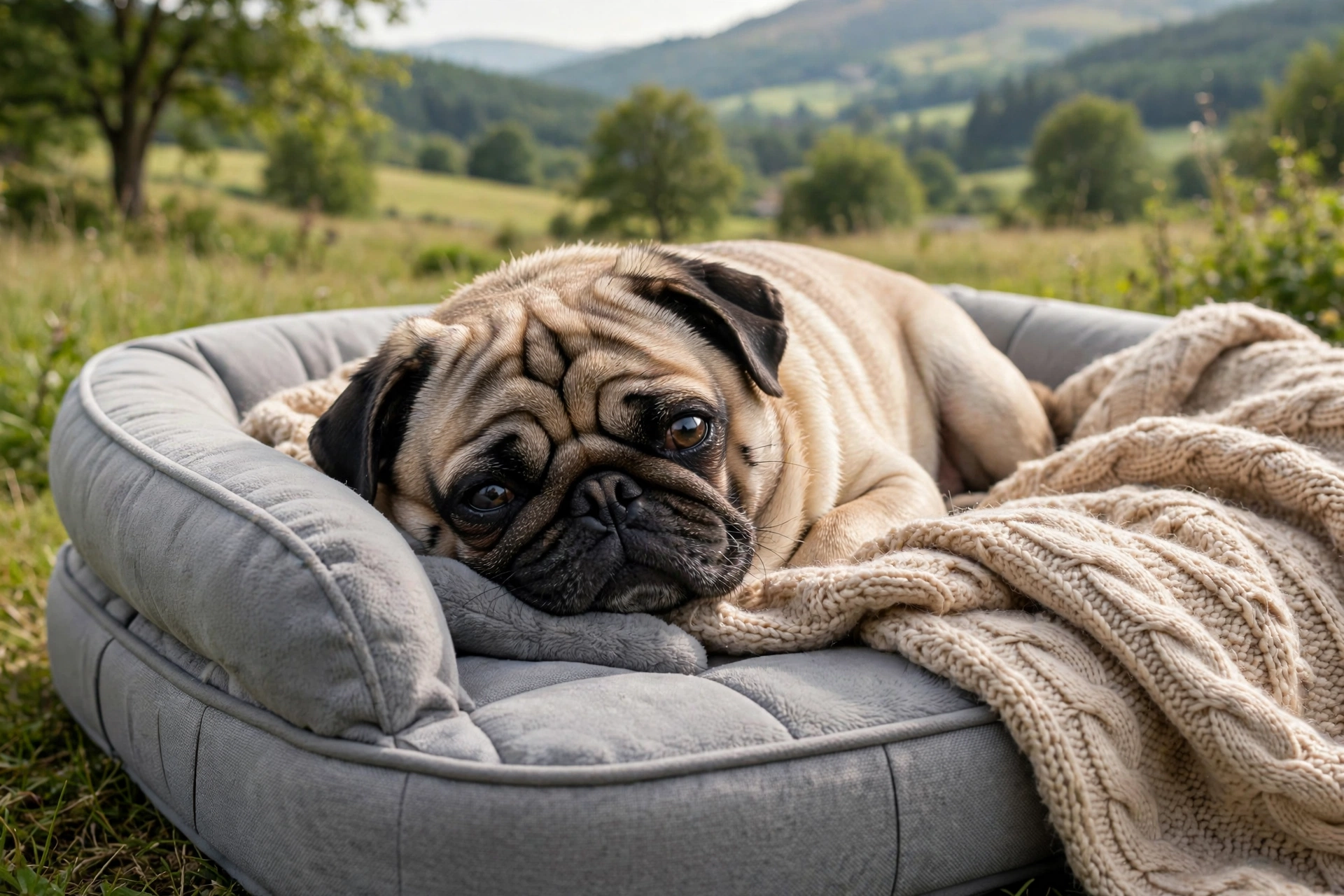
What it means: Some dogs are simply built this way. Brachycephalic (flat-faced) breeds like Pugs, Shih Tzus, French Bulldogs, and Boston Terriers have prominent, bulging eyes that their eyelids can’t fully cover. Breeds with loose, droopy facial skin — Bloodhounds, Shar-Peis, English Bulldogs — can also show more eye surface during rest. For these dogs, sleeping with the eyes partly open isn’t a quirk; it’s anatomy.
The same relaxed-face effect happens with age: older dogs of any breed can develop looser eyelids, so a dog who’s always slept with his eyes shut may start snoozing half-open in his senior years.
What to do: Accept it as part of your dog’s charm. For flat-faced breeds and seniors, keep an eye out for eye dryness, since more exposed surface means more evaporation — and mention it at their regular vet checkup.
Helpful pick: Bedsure ComfyFleece Orthopedic Dog Bed — supportive foam gives senior dogs (and flat-faced breeds with loose facial muscles) a proper, restful sleep position.
4. He’s a Light Sleeper, Not Fully Asleep
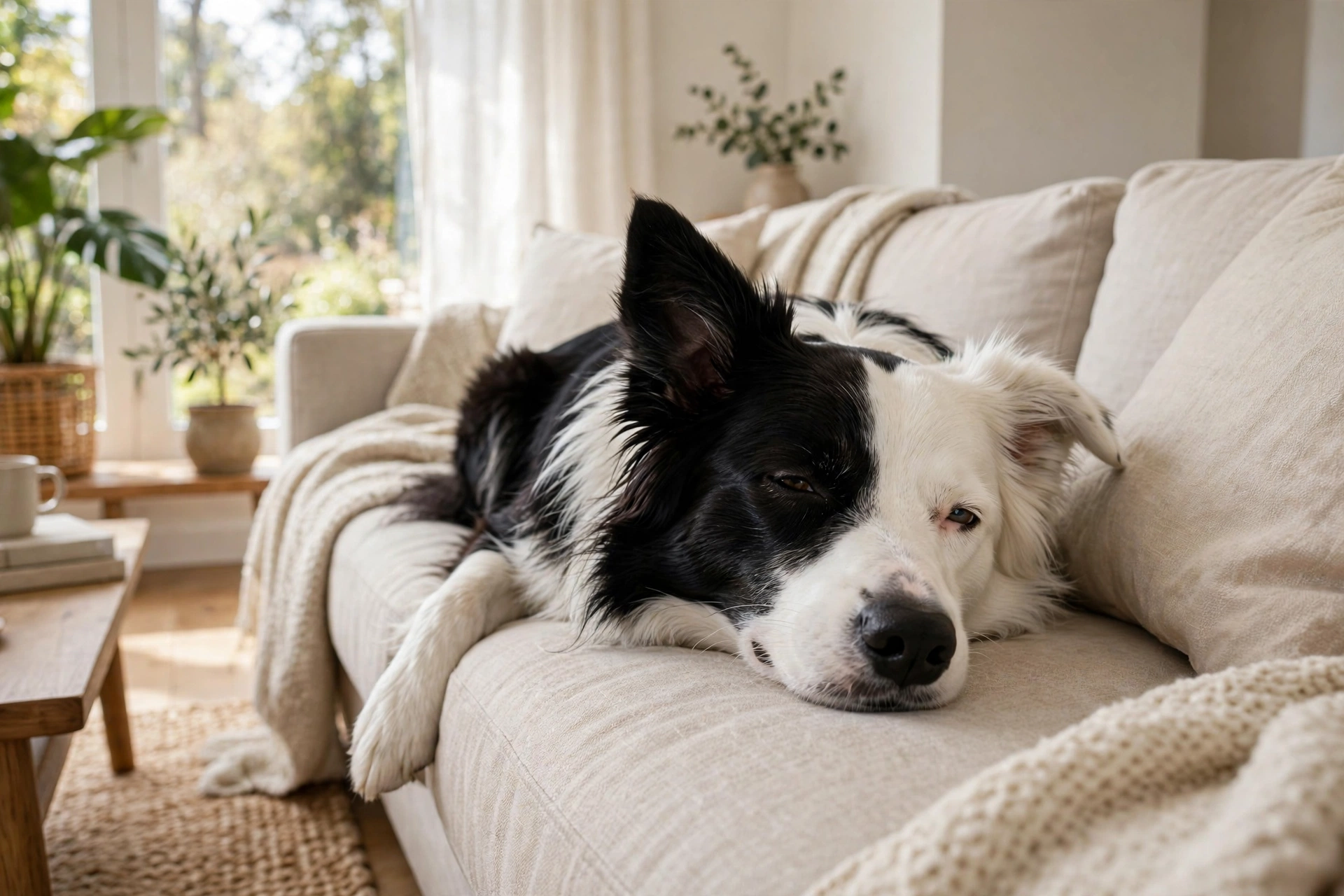
What it means: Dogs spend most of their 12–16 daily sleep hours in light sleep, not deep sleep. During the early, light phase of each cycle, the brain stays semi-alert and the body stays ready to move. Eyelids soften and drift half open, one ear stays perked, and the dog can snap awake at a dropped spoon or a doorbell. It looks like sleeping with the eyes open because, technically, it is — but it’s the lightest form of sleep.
Dogs who are lighter sleepers tend to be the household “guardians,” the anxious, or simply dogs who’ve learned that good things (walks, dinner, the treat jar) happen fast. Some dogs also genuinely look alert between sleep cycles: they wake briefly as one 20-minute cycle ends, keep their eyes open in a relaxed daze, then sink back down.
What to do: Nothing — light sleep with half-open eyes is normal. If your dog seems restless, never fully settling, look at whether the household is too noisy or unpredictable at nap time.
Helpful pick: Yogasleep Pawzz White Noise Machine — steady, pet-safe white noise masks the household sounds that keep light sleepers half awake.
5. An Eye Issue or Nerve Problem
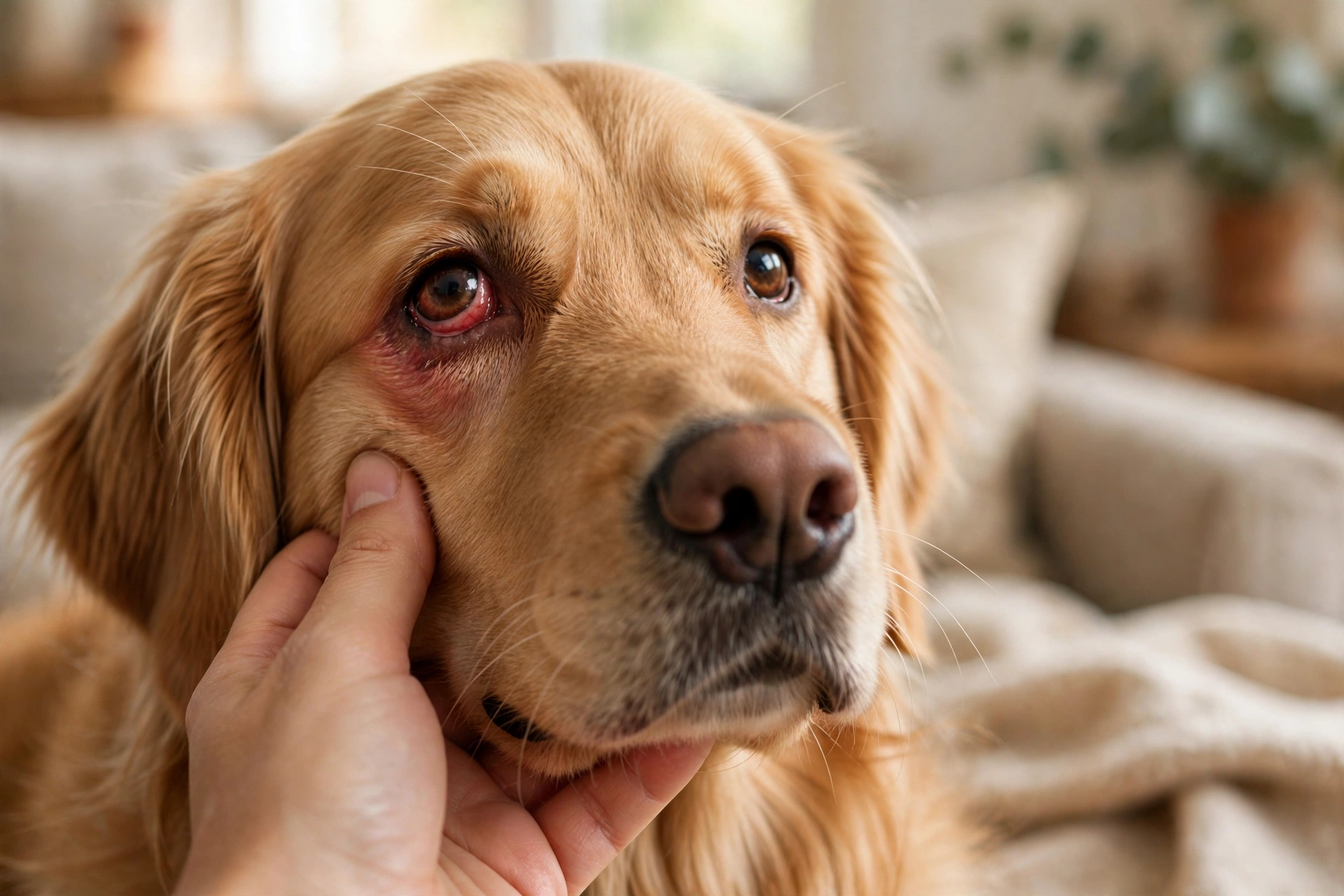
What it means: This is the one reason to take seriously — but it has a clear tell. Normal open-eyed sleeping happens only during sleep. If your dog’s eye won’t close properly while he’s awake — can’t blink fully, holds one eye half open all the time, or shows facial drooping on one side — that can point to an eye injury, corneal problem, infection, or a facial nerve issue. Accompanying red flags include redness, cloudiness, discharge, squinting, pawing at the eye, or sudden behavior changes.
What to do: First, test the difference: watch your dog when he’s fully awake. If he blinks both eyes normally and the eyes look clear, the sleep behavior is almost certainly harmless. If you notice any of the warning signs above — especially facial drooping or an eye that can’t close — see your vet promptly, because an unprotected cornea can dry out and get damaged quickly.
Helpful pick: Vetericyn Plus Dog and Cat Eye Wash — a safe, vet-recommended rinse to flush mild irritation and debris while you monitor (never a substitute for a vet visit if symptoms persist).
When Open-Eye Sleeping Needs a Vet
Open-eyed sleeping is normal when: the dog wakes up easily and acts normally, the eyes look clear and moist, he blinks fully when awake, and there’s no redness, discharge, or pain. Call your vet if: an eye stays open while the dog is awake, you see redness, swelling, discharge, or cloudiness, your dog squints or paws at the eye, or one side of the face droops.
If you’re unsure whether a behavior is a dream or something more, a short phone video of it is incredibly helpful — vets would much rather see 30 seconds of REM twitching than hear a description.
Frequently Asked Questions
Can a dog’s eyes get dry from sleeping with them open?
Usually no — the third eyelid keeps the surface protected and moist during normal sleep. Dryness is mainly a risk when the dog cannot blink or close the eye properly while awake.
My dog sleeps with only one eye open. Is that normal?
Often yes. Dogs frequently rest in asymmetric positions that stretch one side of the face, letting one lid drift open while the other stays shut. Watch for one-sided facial drooping or redness, which would be a vet visit.
Is it normal for puppies to sleep with their eyes open?
Very. Puppies spend more time in REM sleep than adult dogs, so twitching, vocalizing, and half-open eyes during naps are classic puppy behavior.
Should I wake my dog if his eyes are open while he twitches?
No — he’s most likely dreaming. Waking a dog from deep REM can cause a startled reaction. Let him finish the dream and wake on his own.
What if my senior dog just started sleeping with his eyes open?
This is common as facial muscles loosen with age. Keep an eye on eye moisture and mention the change at his next vet checkup, especially if you notice redness or discharge.
Keep Reading
- Why Does My Dog Talk in His Sleep? 5 Reasons
- Why Does My Dog Mumble? 5 Reasons
- Dog Body Language Guide: 15 Signals
- Signs Your Dog Is Stressed: 12 Signals
- Why Does My Dog Stretch So Much? 5 Reasons
As an Amazon Associate, PetPostHub earns from qualifying purchases.