Puppy-Proofing Your House: 8-Step Room-by-Room Checklist
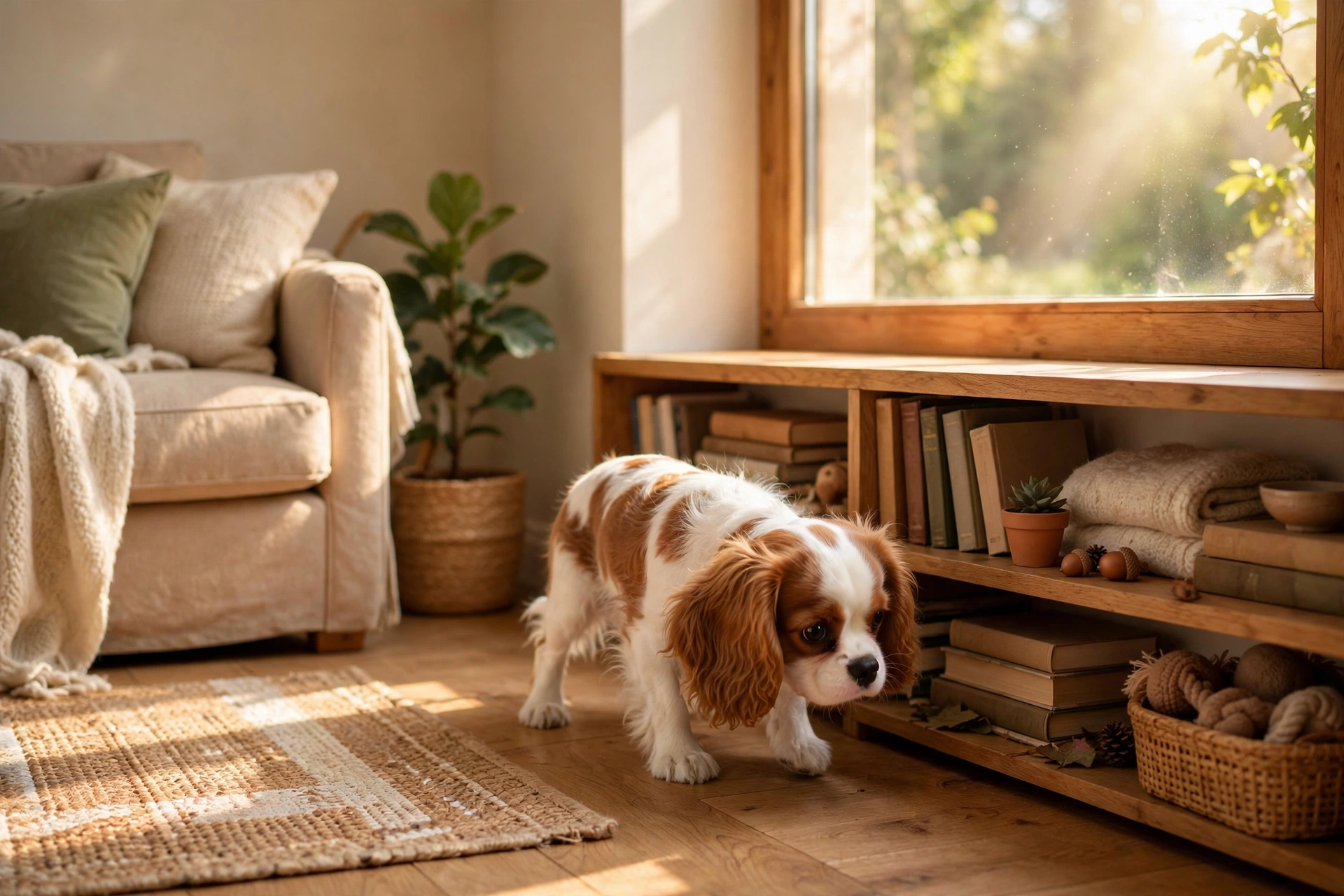
Bringing home a puppy is pure joy — until you watch your new best friend chew through a phone charger, nose open a cabinet, or try to swallow a sock. Puppy proofing your house before your pup arrives is the single best way to keep them safe and protect your belongings from those sharp little teeth.
Puppies explore the world with their mouths, and everything at their eye level is fair game. The good news is that a thorough puppy-proofing session takes just an afternoon. Walk through this room-by-room checklist, and your home will be ready for even the most curious little explorer.
Table of Contents
- 1. Secure Cords and Outlets
- 2. Lock Up Chemicals and Cabinets
- 3. Remove Small Swallowable Objects
- 4. Lock Down Trash Cans
- 5. Check Your Houseplants
- 6. Block Stairs and Openings
- 7. Move Fragile Items Out of Reach
- 8. Create a Safe Puppy Zone
- Frequently Asked Questions
1. Secure Cords and Outlets

Dangling phone chargers, lamp cords, and TV cables are irresistible to teething puppies — and chewing through a live cord can cause burns, shocks, or worse. Get down on your hands and knees and look at every room from puppy height. Bundle loose cables with ties, tuck them behind furniture, and cover the ones you cannot hide with a chew-proof cord sleeve.
Do not forget low electrical outlets. Curious noses love to investigate them, so pop in outlet covers on any sockets your puppy can reach. Pay special attention to the areas behind the couch and TV stand, where cords tend to cluster out of sight.
Helpful pick: Chewsafe Pet Cord Cover (3-Pack) — a bitter-apple-infused sleeve that slides over cables so chewing them is no fun at all.
2. Lock Up Chemicals and Cabinets
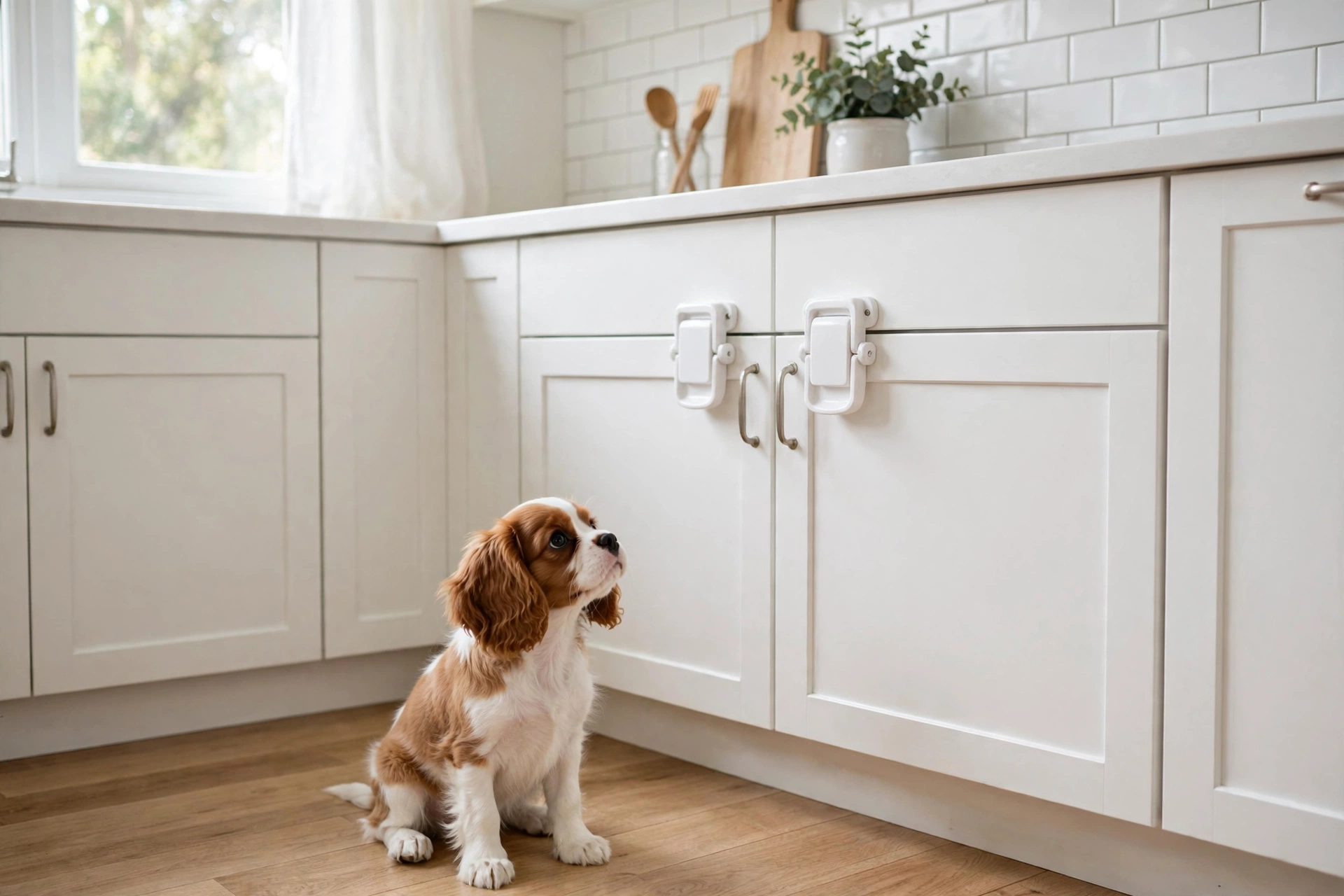
Under-sink cabinets are a treasure trove of danger for puppies: cleaning sprays, dishwasher pods, drain cleaners, and pest traps. A puppy’s nose will lead them straight there. Install childproof latches on every lower cabinet and drawer that holds chemicals, medicines, or sharp tools.
Move everyday hazards higher up too. Rat poison, ant baits, and even seemingly harmless items like sugar-free gum (which can contain xylitol, toxic to dogs) should live well above puppy nose level or behind a latched door. Check the laundry room as well — detergent pods look like toys to a puppy.
Helpful pick: Inaya Child Proof Cabinet Locks (6-Pack) — strong adhesive latches that install in minutes with no drilling.
3. Remove Small Swallowable Objects
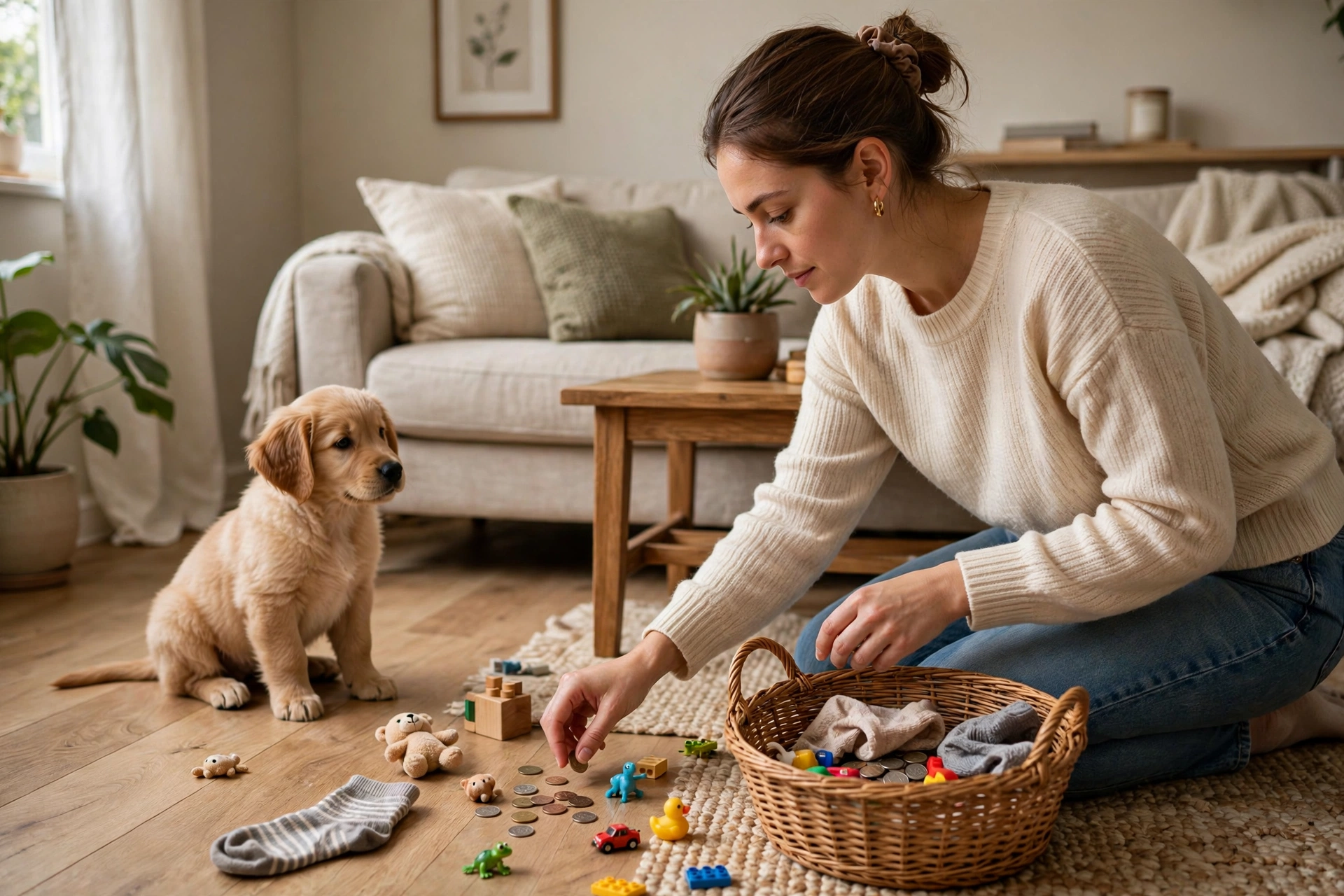
If it fits in your puppy’s mouth, assume it will end up there. Socks, hair ties, coins, bottle caps, kids’ toys with small parts, and shoe insoles are classic foreign-body surgery culprits. Do a “floor sweep” of every room and pick up anything smaller than a tennis ball.
Get the whole household on board: shoes go in the closet, laundry goes in a lidded hamper, and kids’ toys stay in closed bedrooms. Make it a habit to scan the floor before letting your puppy into a new room — a two-minute check beats an emergency vet visit every time.
Helpful pick: Snuffle Mat for Dogs — redirect that busy foraging nose onto a safe sniffing game instead of floor treasures.
4. Lock Down Trash Cans
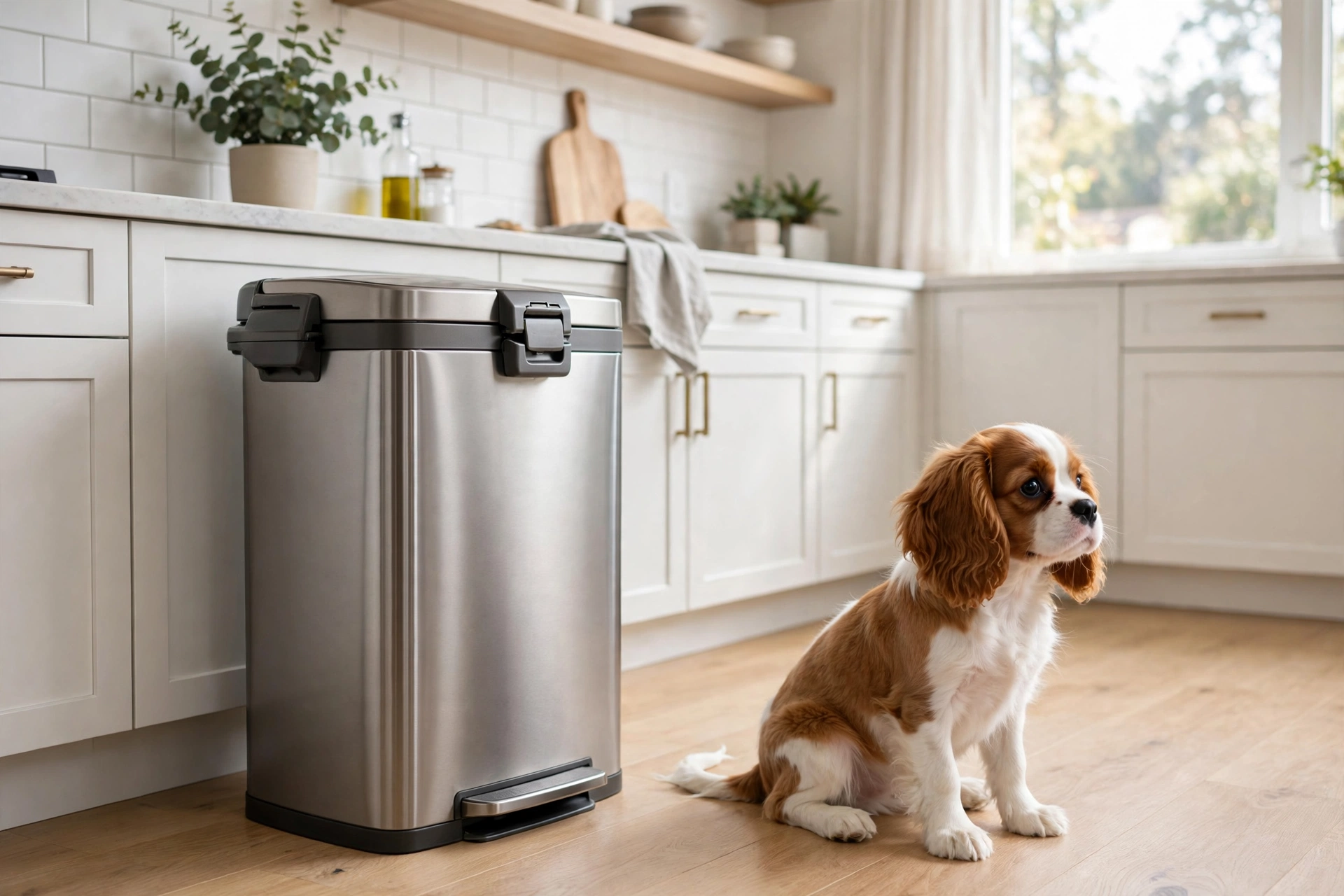
To your puppy, the kitchen trash is a buffet of chicken bones, food wrappers, coffee grounds, and other dangerous delights. Switch to cans with locking lids or step pedals that a puppy cannot nose open, and never leave bathroom trash (dental floss, razors, medications) within reach.
Take kitchen trash out frequently, especially after cooking. Chicken and turkey bones splinter and can tear the digestive tract, so a holiday dinner’s leftovers in an open bin are a genuine emergency waiting to happen.
Helpful pick: KONG Classic — stuff it with peanut butter and freeze it; a busy puppy ignores the trash entirely.
5. Check Your Houseplants
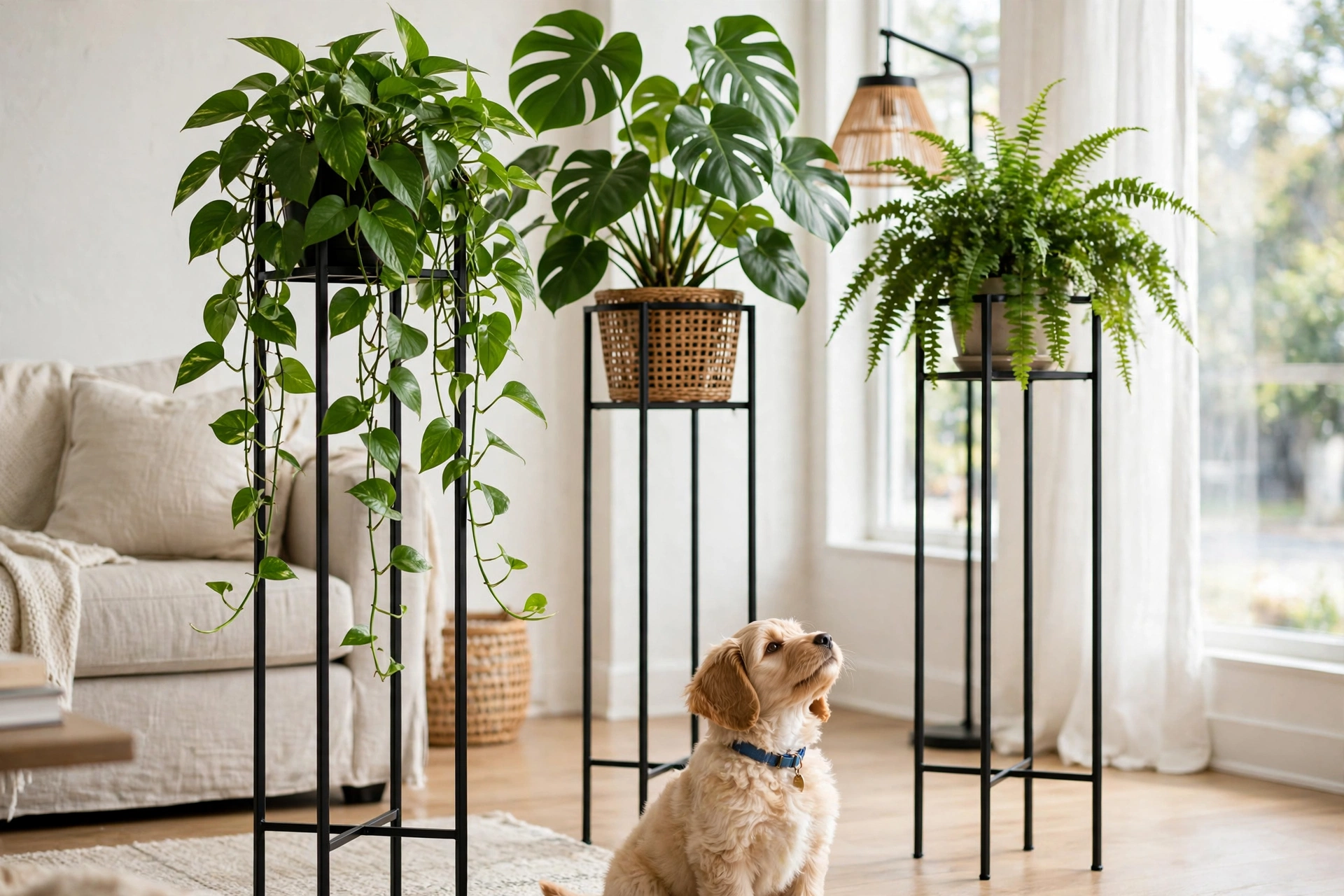
Many popular houseplants are toxic to dogs — lilies, sago palms, pothos, dieffenbachia, and aloe vera among them. Puppies love to dig in potting soil and chew leaves, so identify every plant in your home and move the risky ones to high shelves, hanging planters, or rooms the puppy cannot enter.
The simplest fix is elevation: a tall plant stand lifts your greenery well above curious jaws while keeping your decor intact. Also watch for fallen leaves on the floor, and keep bags of fertilizer and potting soil sealed and stored away.
Helpful pick: CASIMR 32-Inch Tall Metal Plant Stand — lifts plants safely out of puppy reach and looks great doing it.
6. Block Stairs and Openings

Steep stairs are risky for clumsy little legs and growing joints — a tumble can cause real injury, and repeated stair climbing is hard on developing hips and elbows in large breeds. Install a sturdy baby gate at the top and bottom of staircases until your puppy is older and coordinated.
Use gates to section off-limits rooms too: the home office full of cables, the nursery, or any room you have not finished proofing. A gate is also your best friend during house training, keeping your puppy in the room with you where you can supervise.
Helpful pick: Newnice Baby Gate for Doorways — pressure-mounted, so it goes up in minutes with no damage to your walls.
7. Move Fragile Items Out of Reach

A wagging tail becomes a wrecking ball at coffee-table height. Move vases, picture frames, candles, and glass decor to high shelves for the first few months. Anything wobbly at tail level will eventually meet the floor — and broken glass plus puppy paws is a bad combination.
For the pieces you cannot bear to put away, anchor them. A dab of removable museum putty under vases, figurines, and photo frames keeps them firmly in place through even the most enthusiastic zoomies, and it peels off cleanly when puppyhood chaos passes.
Helpful pick: Quakehold! Museum Putty — secures fragile decor against wagging tails and zoomies, removes without residue.
8. Create a Safe Puppy Zone

Even a fully proofed house is a lot of freedom for a brand-new puppy. Set up one fully safe area — a crate, an exercise pen, or a gated kitchen corner — with a bed, water, and chew toys. This is your puppy’s den: a place to rest, decompress, and stay safe when you cannot supervise directly.
Dogs are natural den animals, and most puppies settle into a crate routine quickly when it is introduced positively. Start with short, happy crate sessions paired with treats, and never use the crate as punishment. Over time, this safe zone becomes your puppy’s favorite spot in the house.
Helpful pick: MidWest iCrate Dog Crate — sturdy, well-ventilated, and includes a divider panel so it grows with your puppy.
Frequently Asked Questions
When should I puppy-proof my house?
Before your puppy comes home — ideally a few days ahead. Walking through the checklist with fresh eyes is much easier without an excited puppy underfoot, and it lets you order any supplies like gates or latches in time.
What is the most dangerous thing for puppies in a typical home?
Cleaning chemicals and medications top the list, followed by electrical cords and small swallowable objects. Secure those three categories first, then work through the rest of the checklist.
Do I need to puppy-proof if I crate train?
Yes. A crate keeps your puppy safe when unsupervised, but they still need supervised time outside it — for play, training, and bonding. Proof the rooms where your puppy will spend that time.
How long does puppy-proofing last?
The intense phase lasts through teething (up to about 6–8 months), but many habits — latched chemical cabinets, secured trash, gated stairs — are worth keeping permanently. Most owners gradually relax restrictions as their dog matures and proves trustworthy.
Are baby gates strong enough for puppies?
A quality pressure-mounted or hardware-mounted gate handles most puppies easily. For large, powerful breeds or determined jumpers, choose a taller, hardware-mounted gate and never leave it as the only barrier for a dog that has learned to climb.
Keep Reading
- Foods Dogs Can and Can’t Eat
- Best Dog Food for Allergies
- How to Teach Your Dog to Come When Called
- Dog Body Language Guide
- Signs Your Dog Loves You
- How to Help a Dog With Separation Anxiety
As an Amazon Associate, PetPostHub earns from qualifying purchases.