
7 Best Dog Supplements Vets Recommend (2026 Buying Guide)

Even the best dog food can’t cover every nutritional gap, which is why finding the best dog supplements for your pup’s specific needs can make a real difference in their energy, mobility, and overall quality of life. From joint-supporting chews for aging hips to probiotics that calm a sensitive stomach, the right supplement fills in what kibble leaves out — but with thousands of products making bold claims, choosing wisely matters.
This guide breaks down seven vet-trusted supplement categories, what to look for on the label, and our top pick in each one — so you can shop with confidence instead of guesswork. Quick note: supplements support health; they don’t replace veterinary care. Always check with your vet before starting anything new, especially if your dog takes medication or has a diagnosed condition.
Table of Contents
- How to Choose a Dog Supplement
- The 7 Best Dog Supplements
- When Does Your Dog Actually Need a Supplement?
- Frequently Asked Questions
How to Choose a Dog Supplement
Dog supplements aren’t regulated the way prescription medications are, so quality varies a lot between brands. Before you buy, run through this quick checklist:
- Look for the NASC seal. The National Animal Supplement Council audits members for manufacturing quality and honest labeling — it’s the single most reliable trust marker in the industry.
- Read the active ingredients, not just the front label. Exact amounts of glucosamine, EPA/DHA, or CFUs (for probiotics) should be printed clearly. Vague “proprietary blends” that hide dosages are a red flag.
- Match the form to your dog. Soft chews work for most dogs, powders mix easily into food, and liquids or pump oils suit picky eaters. The best supplement is the one your dog will actually take every day.
- Check third-party testing. Independent lab verification — especially for fish oils, where heavy-metal purity matters — separates premium products from cheap filler.
- Start one at a time. Introduce a single supplement and give it 4–8 weeks before judging results. That way you’ll know what’s actually helping.
- Talk to your vet first. This matters most for dogs on medication, with chronic conditions, or with thyroid issues (some seaweed-based products are naturally high in iodine). A quick call can prevent interactions and wasted money.
If your dog’s diet needs a broader reset first, our homemade dog food recipes and guide to the best foods for dogs with allergies are good places to start.
The 7 Best Dog Supplements
Each pick below leads its category for ingredient transparency, reputation, and real-world results. Every product links to Amazon, where you can check current availability and reviews.
1. Zesty Paws Multivitamin Treats — Best Overall Multivitamin

Best for: Everyday all-around nutritional support for dogs of all ages.
If you only buy one supplement, make it a solid multivitamin. Zesty Paws’ 8-in-1 formula covers hip and joint support (glucosamine, chondroitin, OptiMSM), skin and coat health (cod liver oil, vitamin E), heart and liver support (CoQ10, antioxidants), and even gut health with a probiotic blend — all in a chicken-flavored chew most dogs treat like a snack. It’s NASC-audited, third-party tested, and made in the USA, which checks every box on our quality list.
One honest consideration: Because it’s a broad formula, dogs with a specific diagnosed deficiency may still need a targeted product on top of it — think of this as the foundation, not the whole house.
- Pros: Covers 8 health areas in one chew; NASC seal; tasty chicken flavor picky dogs accept
- Cons: Not a substitute for targeted joint or probiotic formulas in dogs with real issues
Check price on Amazon — Zesty Paws Multivitamin Treats
2. Nutramax Dasuquin with MSM — Best for Hips & Joints

Best for: Senior dogs, large breeds prone to hip issues, and active dogs needing mobility support.
Dasuquin is the joint supplement veterinarians recommend more than any other brand, and the formula explains why: glucosamine and chondroitin for cartilage support, MSM as a sulfur source for connective tissue, plus avocado/soybean unsaponifiables (ASU) — a researched ingredient shown to work synergistically with glucosamine. The soft-chew format makes daily dosing easy, and Nutramax has spent 25+ years building its reputation on rigorous quality checks that go beyond industry standards.
One honest consideration: Joint supplements support mobility over weeks, not days — expect 4–6 weeks of consistent use before judging results, and keep your vet in the loop on dosing for your dog’s weight.
- Pros: #1 vet-recommended joint brand; researched ASU + MSM formula; tasty soft chews
- Cons: Premium price point; needs consistent long-term use to show benefits
Check price on Amazon — Nutramax Dasuquin with MSM
3. Nordic Naturals Omega-3 Pet — Best for Skin & Coat

Best for: Dogs with dry, itchy skin, dull coats, or excessive shedding.
Omega-3s (EPA and DHA) are among the most broadly useful nutrients you can add to a dog’s diet, supporting skin moisture, coat shine, and even joint and heart health. Nordic Naturals sources its oil from wild-caught anchovies and sardines, protects it from oxygen at every production step to prevent rancidity, and third-party tests every batch for heavy metals — the three things that separate a great fish oil from a mediocre one. The soft gels are easy to puncture onto food for small dogs or feed whole to large ones.
One honest consideration: Fish oil adds calories, so factor it into your dog’s daily intake — relevant if you’re already managing portions with our dog food for weight loss guide.
- Pros: Wild-caught, third-party tested for purity; no fishy burps when fresh; supports skin, coat, joints, and heart
- Cons: Soft gels can be fiddly for very small dogs; must be stored properly to stay fresh
Check price on Amazon — Nordic Naturals Omega-3 Pet
4. Purina Pro Plan FortiFlora — Best Probiotic for Digestion

Best for: Dogs with sensitive stomachs, occasional loose stools, gas, or post-antibiotic gut recovery.
FortiFlora is the probiotic veterinarians reach for most — it contains a researched strain of live microorganisms with a guaranteed CFU count, microencapsulated to survive the trip to the gut where they’re needed. Beyond digestion, a balanced gut microbiome supports immune function too. The chewable tablet format is simpler than the original powder sachets for daily use, and feeding directions are straightforward: one tablet daily.
One honest consideration: Probiotics manage and support digestive health; they aren’t a fix for chronic diarrhea or vomiting on their own — persistent GI symptoms deserve a vet visit, not just a supplement.
- Pros: #1 vet-recommended probiotic brand; guaranteed live cultures; easy chewable tablets
- Cons: Single-strain formula (some dogs do better with multi-strain blends); daily consistency required
Check price on Amazon — Purina Pro Plan FortiFlora
5. Zesty Paws Calming Chews — Best for Anxiety & Stress

Best for: Separation anxiety, thunderstorm and fireworks stress, travel nerves, and vet-visit jitters.
Anxious dogs need support that calms without sedating, and this formula leans on well-studied ingredients: Suntheanine (a premium L-theanine) for promoting relaxation, plus ashwagandha, valerian root, chamomile, and L-tryptophan for everyday composure. The bacon flavor means most dogs take them willingly — important, because a calming chew only works if it actually gets eaten before the stressful event. Give it 30–60 minutes ahead of fireworks, travel, or departures for the best effect.
One honest consideration: Calming supplements take the edge off normal stress; they won’t resolve severe separation anxiety alone — that needs a behavior plan (and often a vet or certified behaviorist) alongside.
- Pros: Non-sedating calming blend with Suntheanine; bacon flavor dogs love; NASC-audited brand
- Cons: Timing matters (give before the stressor); not a standalone fix for severe anxiety
Check price on Amazon — Zesty Paws Calming Chews
6. Pet Honesty Senior Multivitamin — Best for Senior Dogs

Best for: Dogs 7+ needing age-targeted nutritional support.
Senior dogs have different needs than younger ones: joints need more support, digestion slows, and coats can dull with age. Pet Honesty’s senior formula bundles glucosamine for mobility, probiotics for gut health, omega fish oil for skin and coat, plus essential vitamins for heart and immune support — all in a duck-flavored chew. It’s made in the USA in a GMP-compliant facility, and Pet Honesty is a NASC member company, so the quality credentials are solid.
One honest consideration: Senior dogs often take medications, so run this by your vet first to rule out interactions — especially important for heart or thyroid prescriptions.
- Pros: Age-targeted formula (joint + gut + coat in one); duck flavor; NASC member, GMP facility
- Cons: Vet check recommended before combining with senior medications
Check price on Amazon — Pet Honesty Senior Multivitamin
7. ProDen PlaqueOff Powder — Best for Dental Health
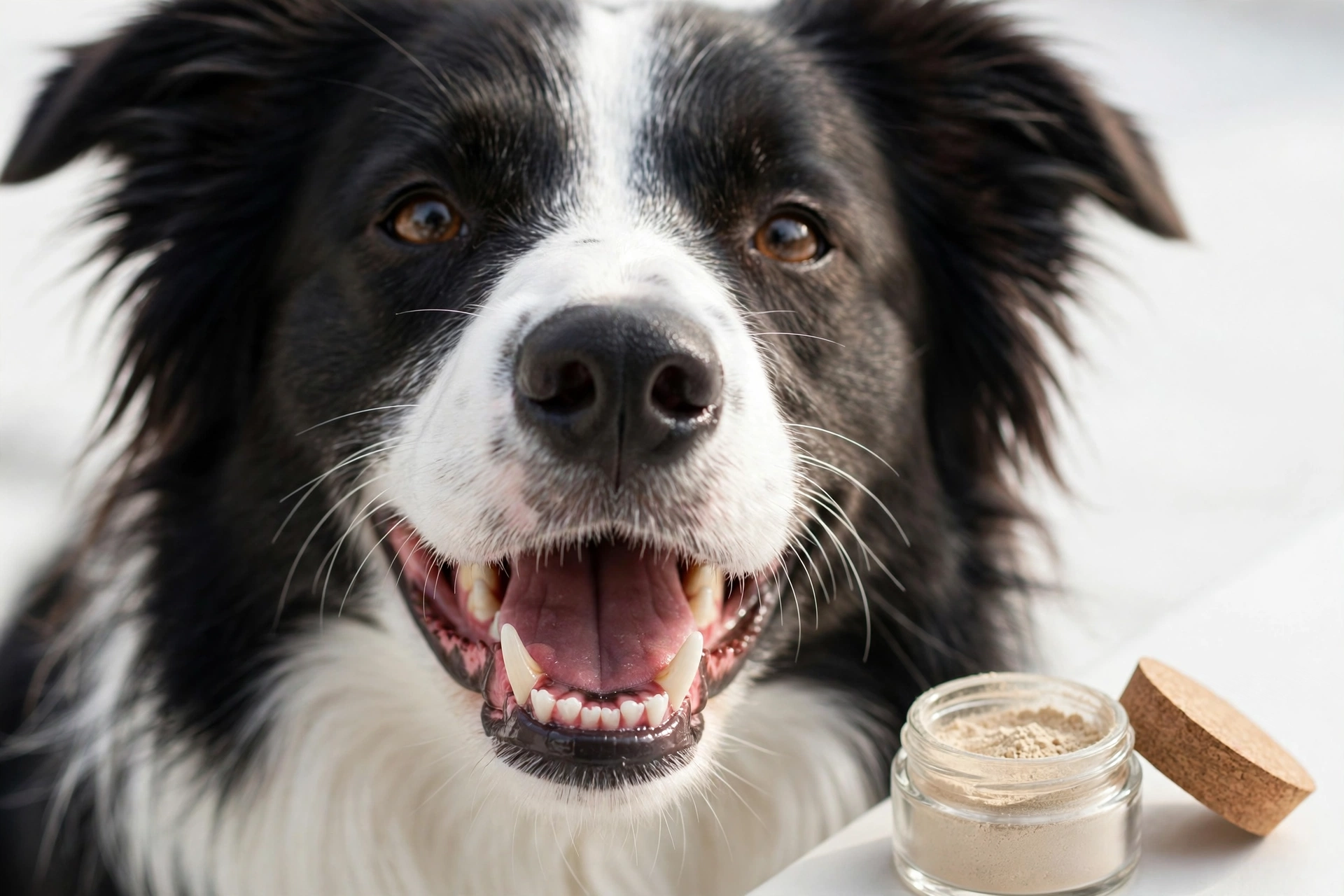
Best for: Dogs who won’t tolerate brushing, and owners wanting low-effort plaque support.
Dental disease affects most dogs by age three, yet brushing is a battle many owners lose. PlaqueOff takes a different approach: a natural seaweed powder (sustainably harvested kelp) that you sprinkle on food daily. It works systemically through saliva to help soften plaque and tartar buildup over time and freshen breath — no brushing required. For dogs that already get regular dental care, it also pairs well with hands-on routines like our DIY dog toothpaste guide.
One honest consideration: Seaweed is naturally high in iodine, so dogs with thyroid conditions should skip this one — and it supports dental hygiene but doesn’t replace professional cleanings for advanced dental disease.
- Pros: No brushing needed — just sprinkle on food; natural single-ingredient formula; supports fresher breath
- Cons: Not for dogs with thyroid issues; results build gradually over weeks
Check price on Amazon — ProDen PlaqueOff Powder
When Does Your Dog Actually Need a Supplement?
Not every dog needs every supplement — and piling on products “just in case” wastes money and can even cause imbalances. Here’s a practical way to decide:
- Start with the diet. A complete, balanced food covers the basics for most healthy adult dogs. Supplements earn their place when there’s a gap: homemade diets (which often need balancing), senior dogs, or large breeds with known joint risk.
- Match the supplement to a real sign. Stiffness on stairs points to joint support; flaky skin points to omega-3s; recurring soft stools point to probiotics. If you can’t name the problem, you probably don’t need the product yet.
- Let bloodwork guide you. Annual vet checkups with blood panels can reveal deficiencies or early organ changes that a targeted supplement can support — far more reliable than guessing.
- Reassess twice a year. Puppies become adults, adults become seniors, and needs change. Review your supplement lineup at each vet visit and drop what’s no longer pulling its weight.
Frequently Asked Questions
Are dog supplements safe?
Quality supplements from NASC-audited brands are generally safe when dosed by weight and used as directed. The main risks come from overdosing, poor-quality products with hidden ingredients, or interactions with medications — all reasons to loop in your vet first.
Can I give my dog human supplements instead?
It’s not recommended. Human formulas may contain xylitol (toxic to dogs), iron levels that are unsafe for dogs, or dosages designed for human body weight. Stick with pet-formulated products.
How long before I see results?
Most supplements need 4–8 weeks of consistent daily use. Joint formulas are the slowest to show effects; probiotics and calming chews often show changes sooner. If nothing changes after two months, reassess with your vet.
Do puppies need supplements?
Most puppies on a complete puppy food don’t need extras. The exception is large-breed puppies, where vets sometimes recommend joint-support nutrients during rapid growth — but only under veterinary guidance, since excess calcium and calories can harm developing joints.
Can supplements replace a vet visit?
No. Supplements support health; they don’t diagnose or treat disease. Limping, chronic digestive issues, sudden behavior changes, or lumps always warrant a vet visit first — then ask which supplements might help alongside treatment.
As an Amazon Associate, PetPostHub earns from qualifying purchases.





2 Comments