Puppy’s First Vet Visit: The Complete Checklist (2026)

Bringing home a puppy is pure joy — and one of the very first things on your to-do list should be the puppy first vet visit checklist. That first appointment, usually when your puppy is between 6 and 8 weeks old, sets the tone for a lifetime of good health. It is when your vet builds your puppy’s medical record, checks them from nose to tail, and maps out vaccinations and preventive care for the months ahead.
Feeling a little nervous? That is completely normal. A first vet visit is a big milestone for you and your puppy both. The good news is that with a little preparation, it can be smooth, quick, and even fun for your pup. This complete checklist walks you through exactly when to go, what to bring, what the vet will do, what questions to ask, and how much it usually costs — so you can walk in confident and walk out with a plan.
Table of Contents
- 1. Schedule the Visit at the Right Time
- 2. What to Bring to the Appointment
- 3. The Physical Exam, Explained
- 4. Vaccination Schedule
- 5. Parasite Prevention
- 6. Microchipping and ID
- 7. Questions to Ask Your Vet
- 8. After the Visit: What Comes Next
- Cost of a First Vet Visit
- Frequently Asked Questions
1. Schedule the Visit at the Right Time

Plan your puppy’s first vet visit within the first week of bringing them home, ideally when they are 6 to 8 weeks old. If you adopted from a breeder or shelter, they may have already had a first checkup and a round of shots — but your own vet still needs to see them soon, because maternal antibodies begin wearing off around this age, leaving puppies vulnerable to illness.
When you call to book, tell the clinic your puppy’s age, breed, and weight, and mention whether they have had any prior vaccines. Ask how long the appointment will last (30 to 45 minutes is typical) and whether they want you to arrive a few minutes early for paperwork. Booking a morning slot is often smart: clinics tend to run on time earlier in the day, and your puppy will be fresher and less stressed.
Pro tip: If your puppy shows any worrying signs before the visit — refusal to eat, lethargy, vomiting, or diarrhea — do not wait for the scheduled date. Call the clinic and ask to be seen sooner.
Helpful pick: Sherpa Original Deluxe Pet Carrier — a cozy, secure carrier keeps a tiny puppy safe on the car ride and calm in the waiting room.
2. What to Bring to the Appointment
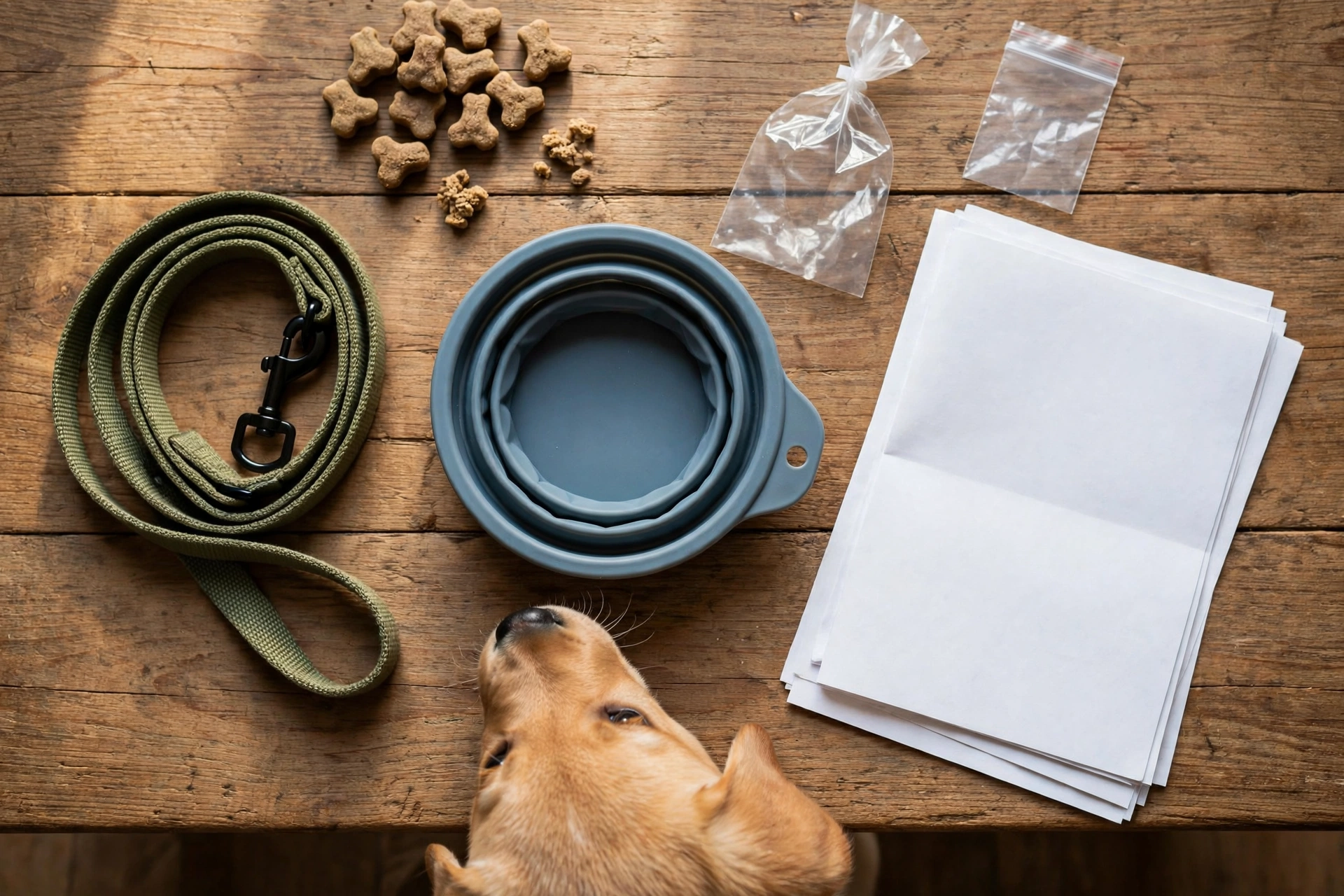
Walking in prepared makes everything easier — for you, the vet, and your puppy. Gather these the night before:
- Vaccination and health records from the breeder or shelter, including dates of any shots or deworming.
- A fresh stool sample (no more than 12 hours old, in a sealed bag) so the vet can test for intestinal parasites.
- Your puppy’s food label or brand name, plus notes on how much and how often you feed.
- A short list of your questions — you will forget them otherwise (see section 7).
- Tiny training treats to reward calm behavior during the exam.
- A leash, collar or harness — and a carrier for very small puppies.
- A favorite small toy or blanket with familiar smells for comfort.
Write down anything unusual you have noticed at home: soft stool, scratching, sneezing, unusual sounds, or appetite quirks. Vets love specifics — “she sneezed four times yesterday morning” is far more useful than “she sneezes sometimes.”
Helpful pick: Zuke’s Mini Naturals Training Treats — tiny, low-calorie bites are perfect for rewarding your puppy through the exam without filling them up.
3. The Physical Exam, Explained
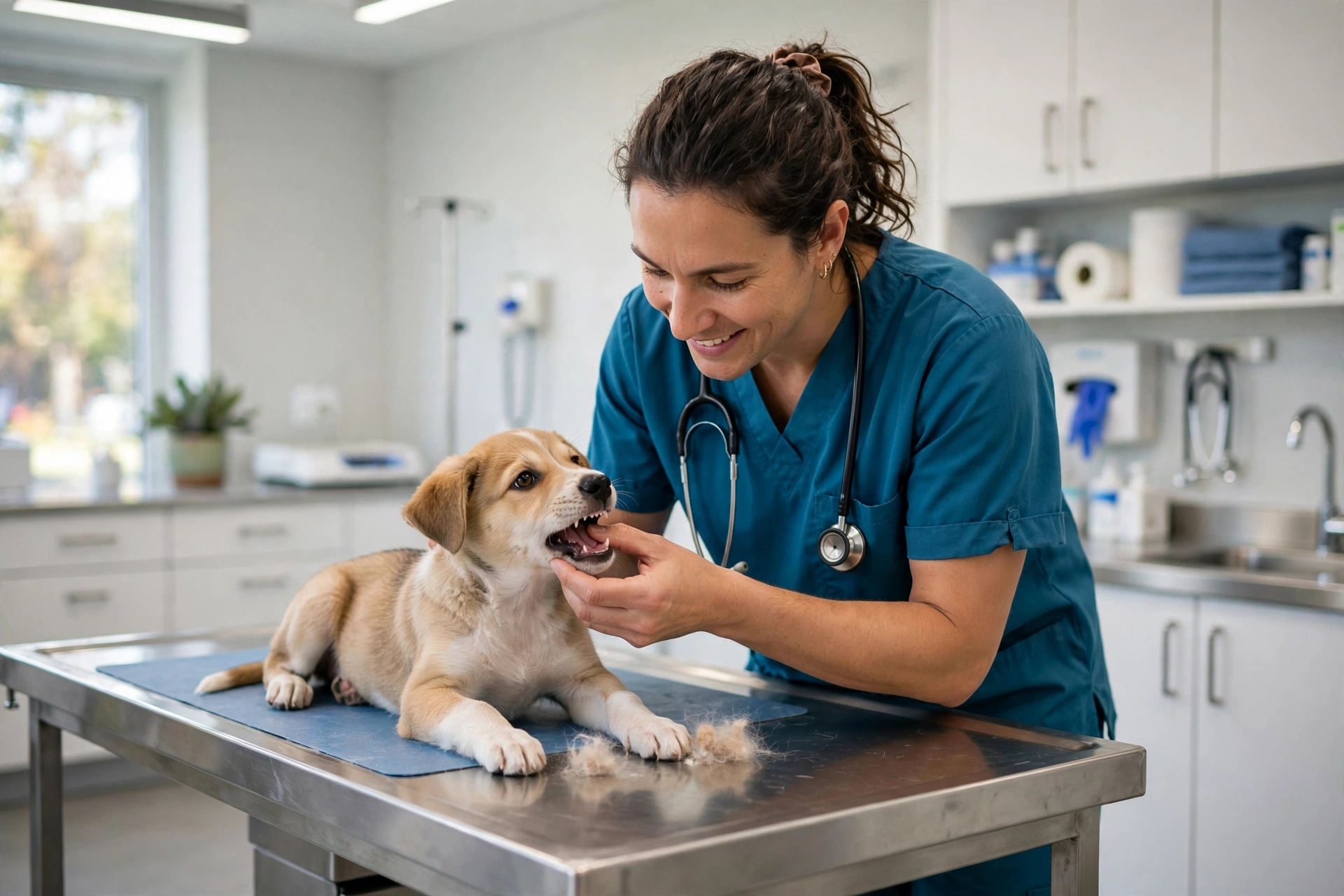
The first visit centers on a complete nose-to-tail physical exam. The vet will watch how your puppy moves, then check weight, listen to the heart and lungs with a stethoscope, and examine the eyes, ears, nose, mouth, teeth, skin, coat, feet, and nails. They will feel the lymph nodes, joints, and belly to check for anything unusual, and take temperature, pulse, and respiratory rate.
This exam gives the vet a healthy baseline to compare against for your puppy’s whole life. Expect them to narrate what they are doing — good vets do this to teach you what to watch for at home, like how healthy gums should look or how to feel for a normal heartbeat.
One area that often surprises new owners is the dental check. Puppy teeth start falling out around 4 months, and early dental habits make adult tooth care much easier. Ask your vet to show you how to lift your puppy’s lips and get them comfortable with mouth handling — it pays off for years.
Helpful pick: Virbac C.E.T. Oral Hygiene Kit — with the vet’s okay, start gentle toothbrushing at home early so your puppy grows up comfortable with dental care.
4. Vaccination Schedule
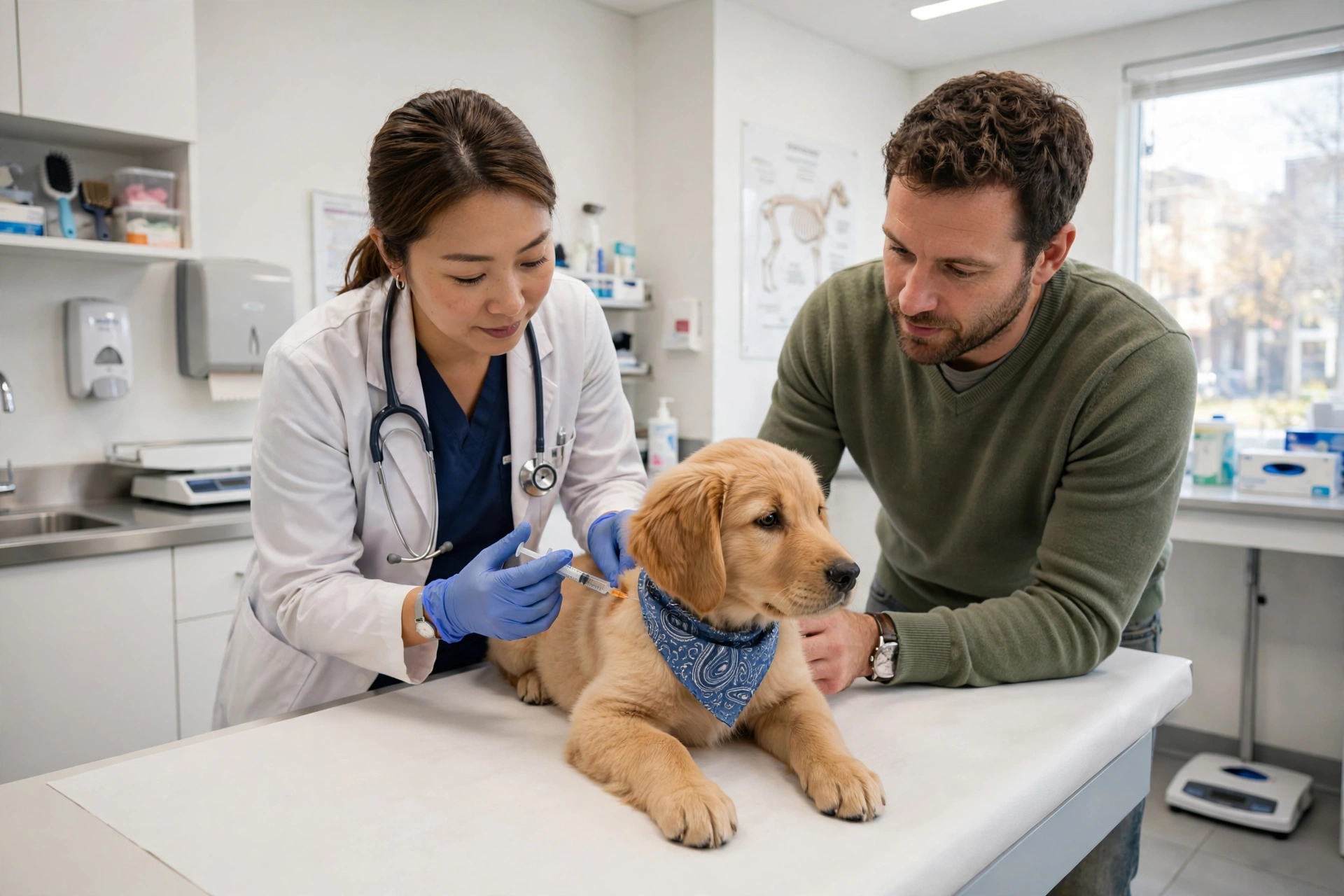
Vaccinations are the single most important part of the first few vet visits. Your vet will build a vaccine schedule based on your puppy’s age, prior shots, and local disease risks. The typical core series looks like this:
- 6–8 weeks: DHPP (distemper, hepatitis, parainfluenza, parvovirus), sometimes split across visits.
- 10–12 weeks: DHPP booster, plus Bordetella if your puppy will be around other dogs.
- 14–16 weeks: DHPP booster and rabies (required by law in most areas).
- 12–16 months: Booster round to lock in long-term immunity.
Between rounds, keep your puppy away from high-traffic dog areas, dog parks, and unfamiliar dogs until your vet says their immunity is complete. It is hard to wait, but parvovirus and distemper are serious risks for partially vaccinated puppies. See our puppy vaccination schedule guide for the full timeline.
Ask your vet to record every vaccine in a booklet or app you can show groomers and boarding facilities later — most require proof of vaccination.
Helpful pick: LickiMat Soother — smear a little peanut butter on it to keep your puppy happily distracted during shots.
5. Parasite Prevention
Nearly all puppies carry or are exposed to parasites, so expect the vet to test the stool sample you brought for roundworms, hookworms, and other intestinal parasites. Many puppies get a first deworming at this visit regardless of results, since false negatives happen.
Your vet will also start a plan for flea, tick, and heartworm prevention — but timing matters, and most products have minimum age and weight requirements, so do not buy anything over the counter before the visit. The vet will prescribe the right product and dose for your specific puppy and your region.
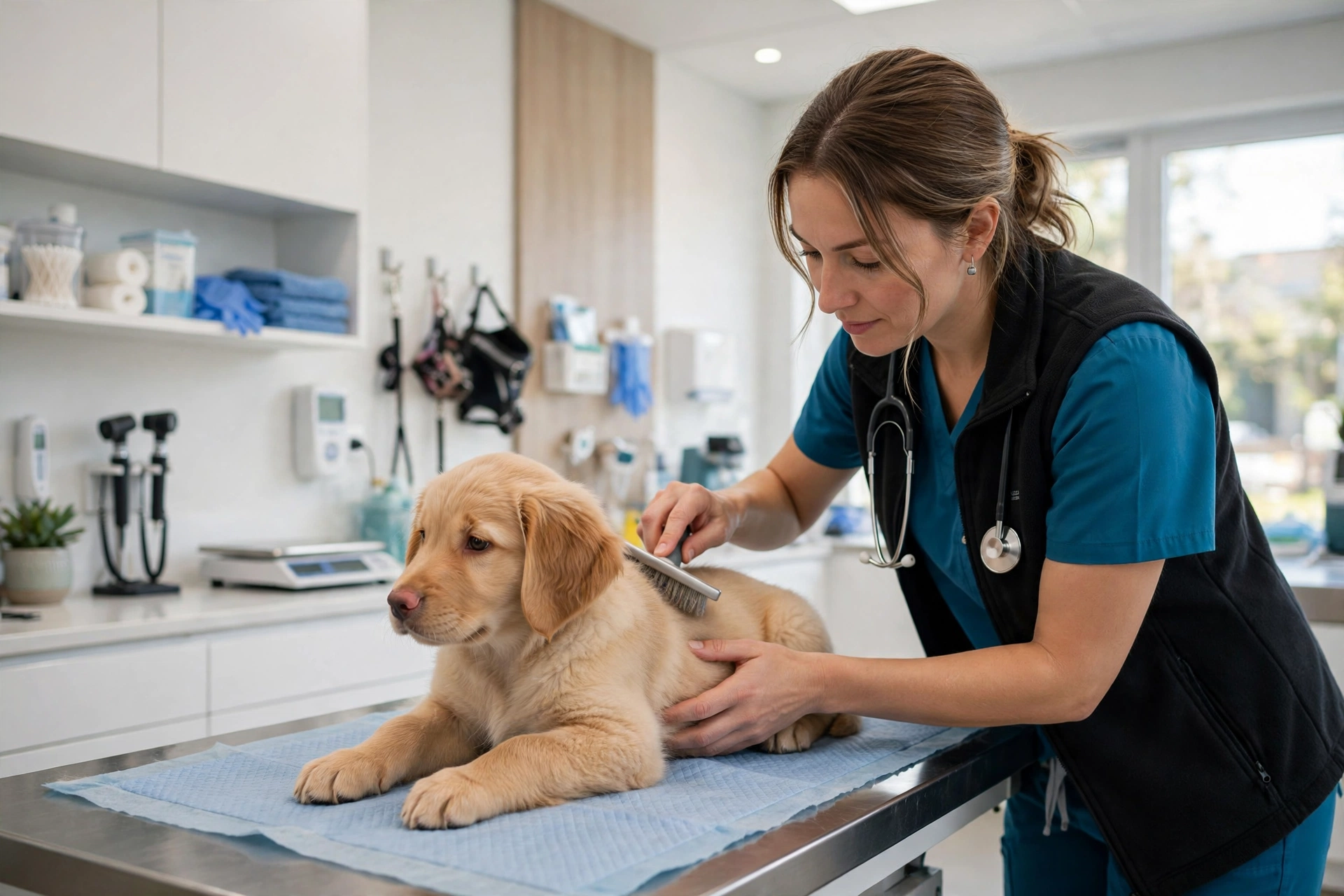
Between visits, get in the habit of running your hands through your puppy’s coat during cuddle time. Feeling for bumps, scabs, or tiny moving specks is the simplest early-warning system there is — and it doubles as bonding.
Helpful pick: Hertzko Self-Cleaning Slicker Brush — regular gentle brushing lets you spot flea dirt, ticks, or skin changes early while keeping your puppy’s coat healthy.
6. Microchipping and ID

The first visit is the ideal time to discuss microchipping. A microchip is a tiny device, about the size of a grain of rice, inserted under the skin between the shoulder blades. It takes seconds, causes minimal discomfort, and permanently links your puppy to you in a national registry. Collars slip off and tags fade — a microchip does not.
Ask your vet which registry they recommend and make sure you complete the registration yourself with your current contact details. A chip that was never registered is almost useless if your dog ever gets lost.
Pair the chip with a visible collar tag as a first line of defense — a finder can call you immediately without needing a scanner. Check the tag every few months as your puppy grows, since lettering wears and collars need resizing.
Helpful pick: GoTags Personalized Stainless Steel Pet ID Tag — a durable, engraved tag with your phone number is the fastest way home for a lost puppy.
7. Questions to Ask Your Vet
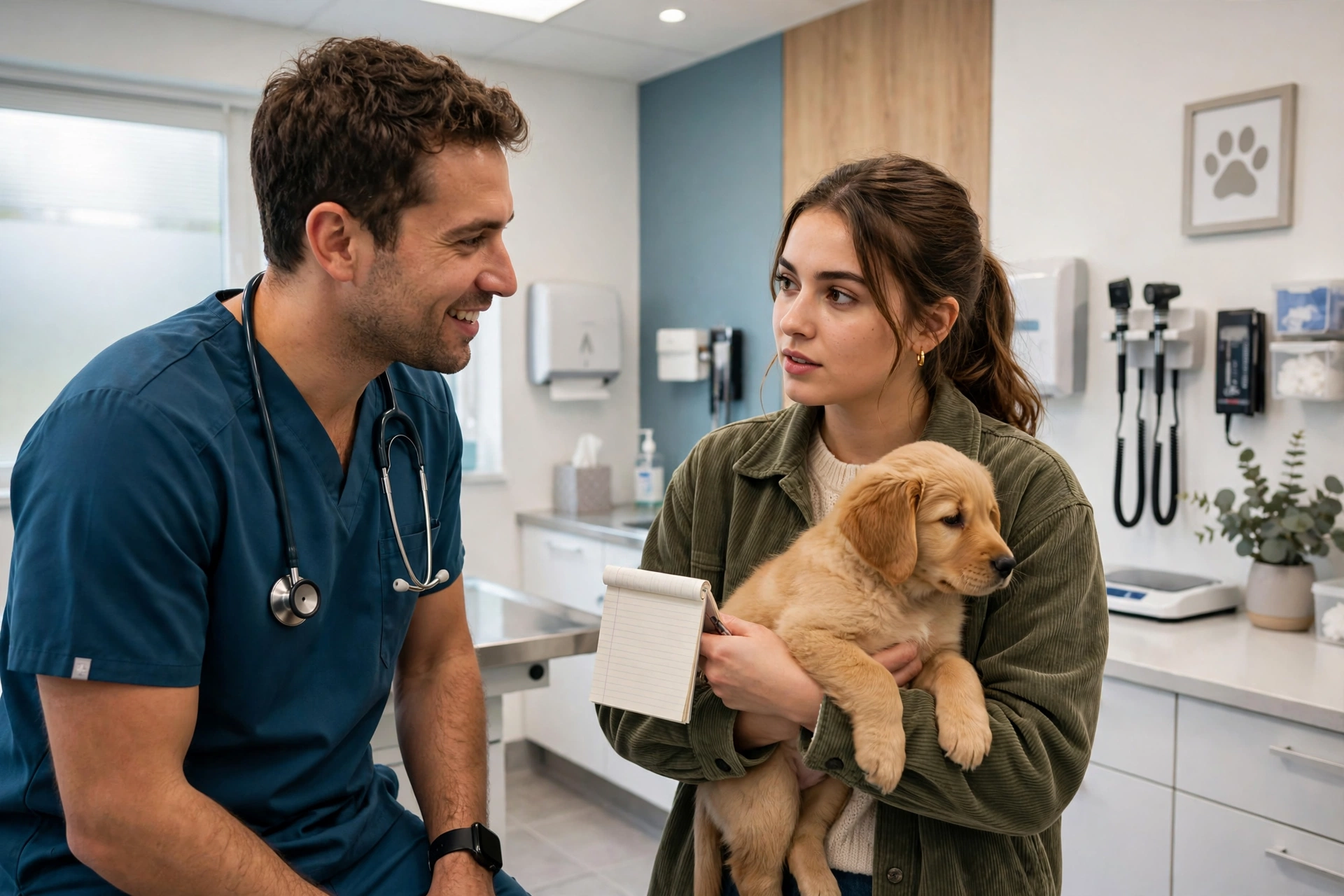
Your first visit is also a planning session. Do not be shy — vets expect a long list from new puppy parents. Good questions to ask include:
- What food do you recommend, and how much should I feed at this age? (See our puppy feeding schedule and best puppy food for small breeds guides for a head start.)
- When can my puppy start going to puppy classes or socializing with other dogs?
- What is the right age for spaying or neutering?
- How should I handle house training, crate training, and biting?
- What behavior or health red flags should I watch for between visits?
- Which emergency clinic do you recommend after hours?
Also ask about socialization timing — the window between 8 and 16 weeks is critical for confidence, and your vet can advise how to socialize safely before vaccines are complete. Our puppy socialization checklist walks you through it week by week.
Helpful pick: Zak George’s Dog Training Revolution — a practical, positive-reinforcement guide to the training questions your vet will only have minutes to cover.
8. After the Visit: What Comes Next

Most puppies bounce right back after their first visit, but a little tiredness or mild soreness at the injection site is normal for 24 hours. Offer water, a normal meal, and a quiet place to rest. Watch for anything more serious — facial swelling, persistent vomiting, or extreme lethargy warrant a call to the vet.
Before you leave the clinic, make sure you have: the date of the next visit (usually 3–4 weeks later for the next vaccine round), a written vaccine record, any prescribed preventives with dosing instructions, and confirmation that the microchip registration is in progress.
At home, start the habits your vet recommended: daily handling exercises (touch paws, ears, and mouth), gentle brushing, and short positive training sessions. A puppy who is handled kindly every day grows into a dog who is easy to examine — at the vet and at home. If your puppy came from a shelter or rescue, our guide to bonding with a new rescue dog can help with the transition too.
Helpful pick: Snuggle Puppy — its gentle heartbeat and warmth help a tired puppy settle down after the excitement of their big day.
Cost of a First Vet Visit
Expect to pay roughly $75 to $200 for a standard first visit in most US areas, depending on your region and what is included. A typical breakdown: exam fee ($50–$90), core vaccines ($20–$40 each), fecal test ($25–$50), deworming ($10–$25), and microchipping ($40–$75, if done at this visit). Puppy wellness packages that bundle the first several visits often save 15–25% — ask if your clinic offers one.
Costs vary widely by city, so treat these as ballparks, not quotes. If budget is tight, ask your vet to prioritize: the exam and core vaccines come first, and they can tell you honestly what can safely wait a few weeks. Many communities also run low-cost vaccine clinics worth asking about.
Frequently Asked Questions
When should a puppy have their first vet visit?
Within the first week of bringing your puppy home, usually at 6 to 8 weeks of age. Even if the breeder or shelter did a first checkup, your own vet should establish a baseline and start the vaccine series right away.
What does the vet do at a puppy’s first visit?
A full nose-to-tail physical exam, a fecal test for parasites, the first round of core vaccines (or a booster schedule), deworming, and a discussion of nutrition, training, parasite prevention, and microchipping.
Can I bring my puppy to the vet before they are fully vaccinated?
Yes — the clinic visit itself is essential and safe when handled properly. Keep your puppy in a carrier or your arms in the waiting room, avoid letting them sniff other animals’ waste, and follow your vet’s guidance about dog parks and public grass until the vaccine series is complete.
Is it normal for a puppy to be sleepy after their first vet visit?
Yes. Mild tiredness, slightly reduced appetite, or a tender spot where the vaccine was given are all normal for up to 24 hours. Call your vet if you see facial swelling, repeated vomiting, or extreme lethargy.
Should I get my puppy microchipped at the first visit?
It is an excellent idea. The procedure takes seconds, and doing it early means your puppy is protected from day one. Just be sure you personally complete the registry enrollment with your up-to-date contact information.
As an Amazon Associate, PetPostHub earns from qualifying purchases.