10 Beautiful Cat Safe House Plants That Are Non-Toxic and Easy to Care For
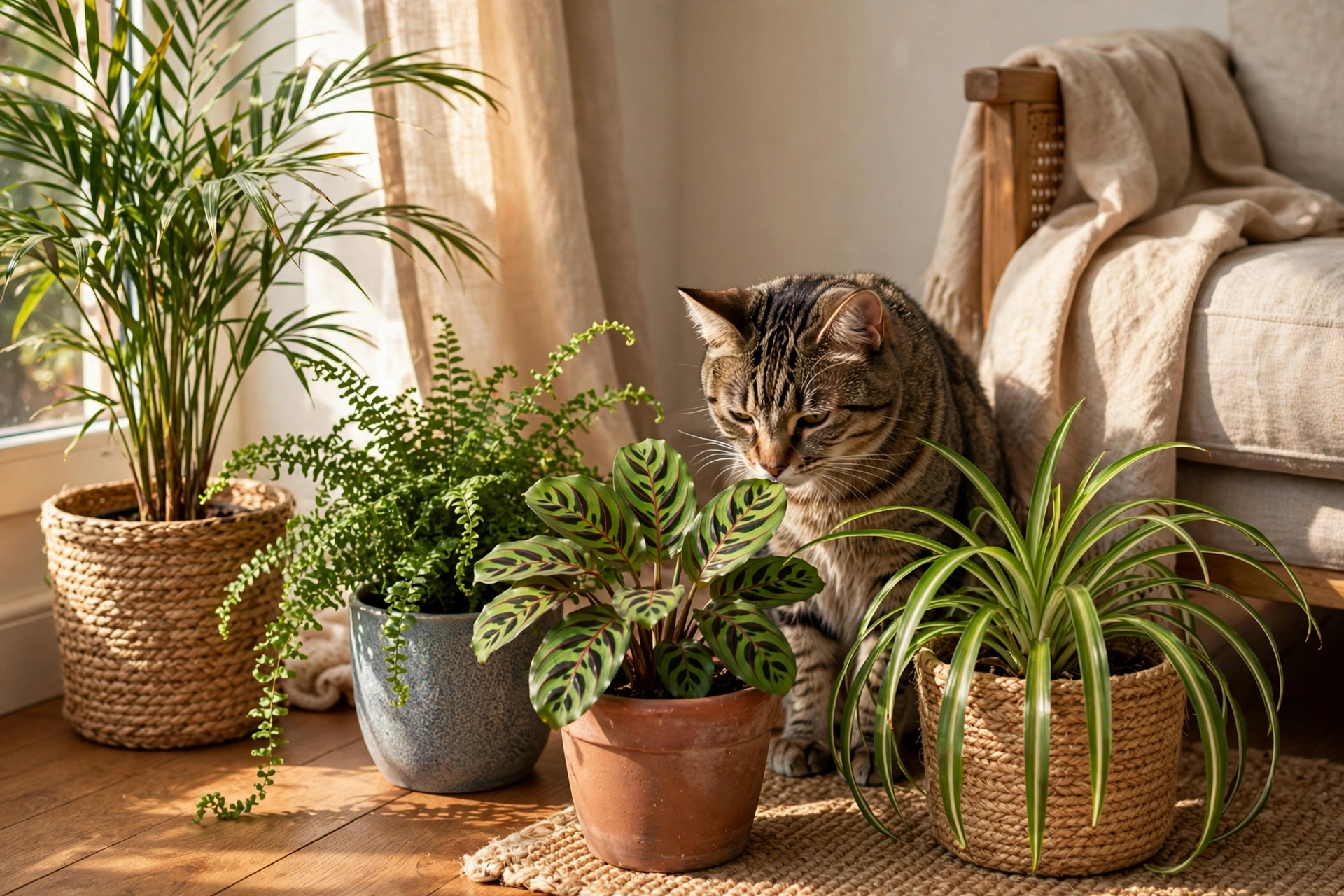
You have finally styled your living room the way you always wanted, and then your cat decides the new plants are a salad bar. It is a familiar struggle: the prettiest houseplants are often the most dangerous for curious cats. If you want cat safe house plants that keep both your decor dreams and your feline friend healthy, you do not have to give up greenery. Plenty of genuinely beautiful plants are completely non-toxic to cats, and they can handle the occasional curious nibble without a trip to the vet.
1. Boston Fern (Nephrolepis exaltata)
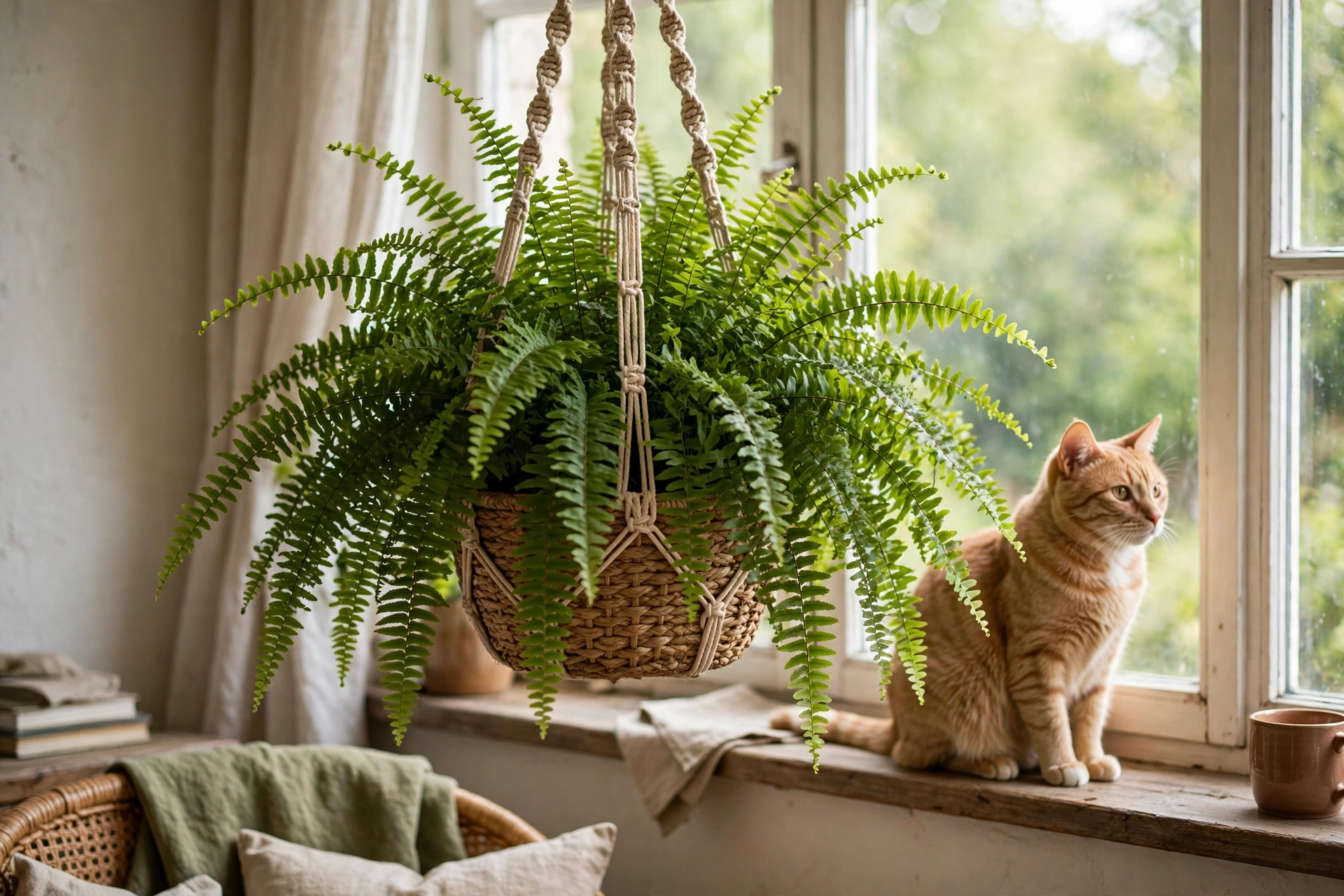
With its soft, arching fronds, the Boston fern is one of the most forgiving cat-safe plants you can own. It loves humidity and indirect light, and its fluffy texture looks stunning in a hanging basket where cats can only admire it from below. Mist the fronds a few times a week and keep the soil evenly moist, and it rewards you with dense green growth. Even if your cat bats at the fronds, nothing harmful happens.
2. Spider Plant (Chlorophytum comosum)
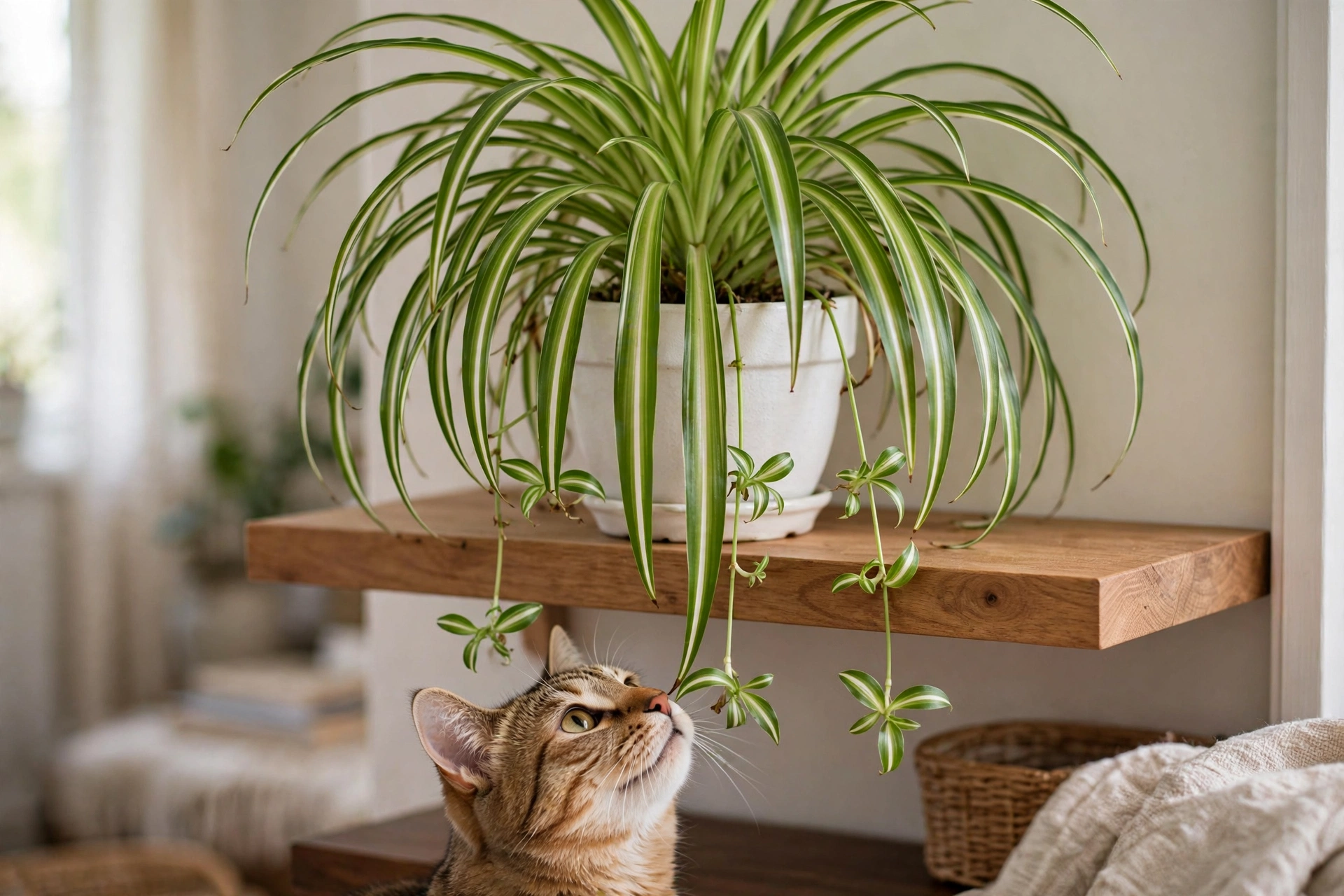
Spider plants are practically indestructible, which makes them perfect for homes with pets. The long, striped leaves cascade beautifully from a shelf or hanging pot, and the dangling baby plantlets are endlessly entertaining for cats to watch (and completely safe to sniff). Bright indirect light and a drink when the top inch of soil dries out are all it asks for. Bonus: spider plants are known for supporting cleaner indoor air.
3. Parlor Palm (Chamaedorea elegans)
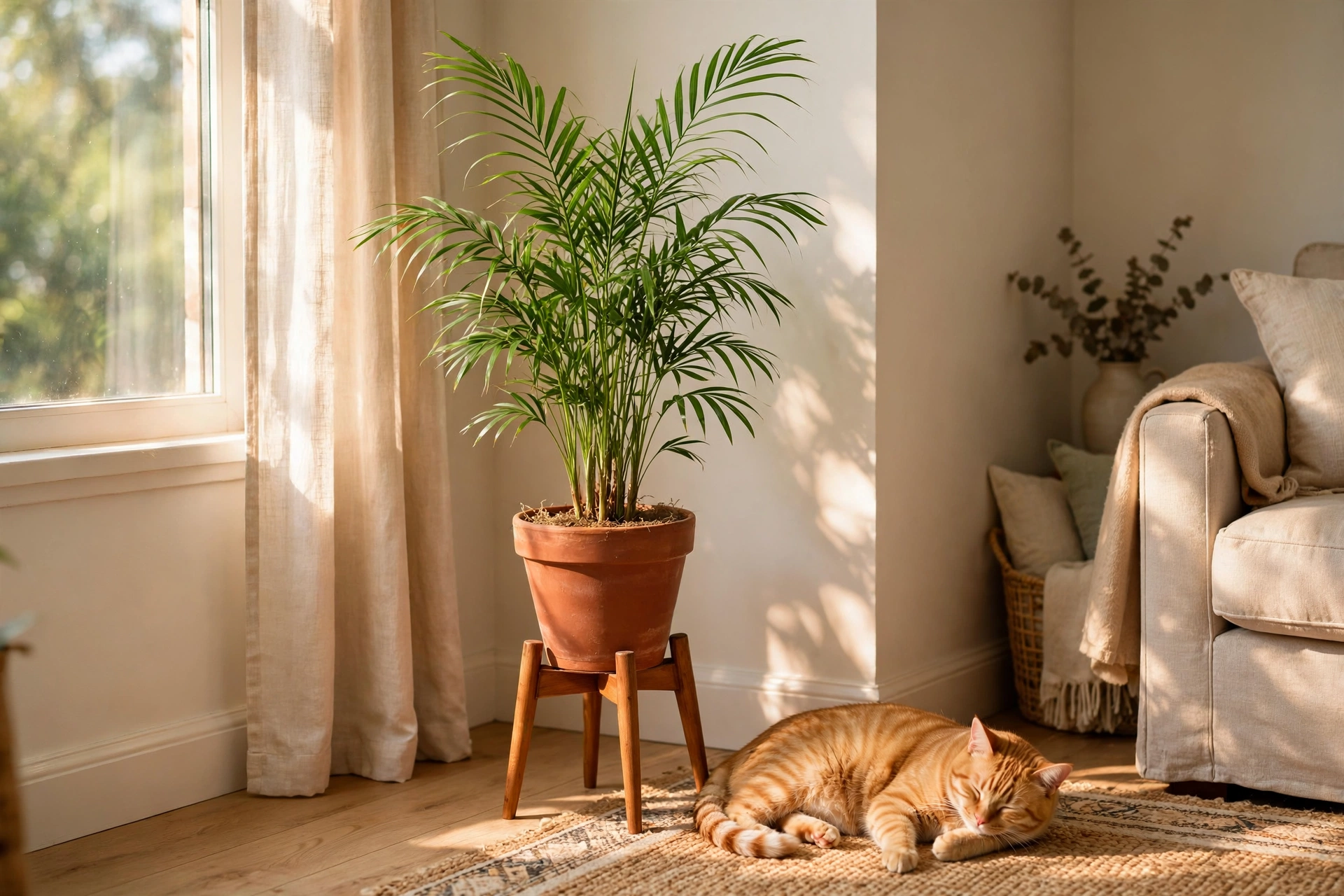
If you want a statement plant with zero toxicity worries, the parlor palm is a winner. Its feathery, tropical fronds bring instant height and elegance to any corner, and it tolerates lower light better than most palms. Cats can brush past it, sniff it, or nap beside it without any risk. Water when the top couple of inches of soil feel dry, and give it bright indirect light for the best fronds.
4. Prayer Plant / Calathea (Goeppertia)
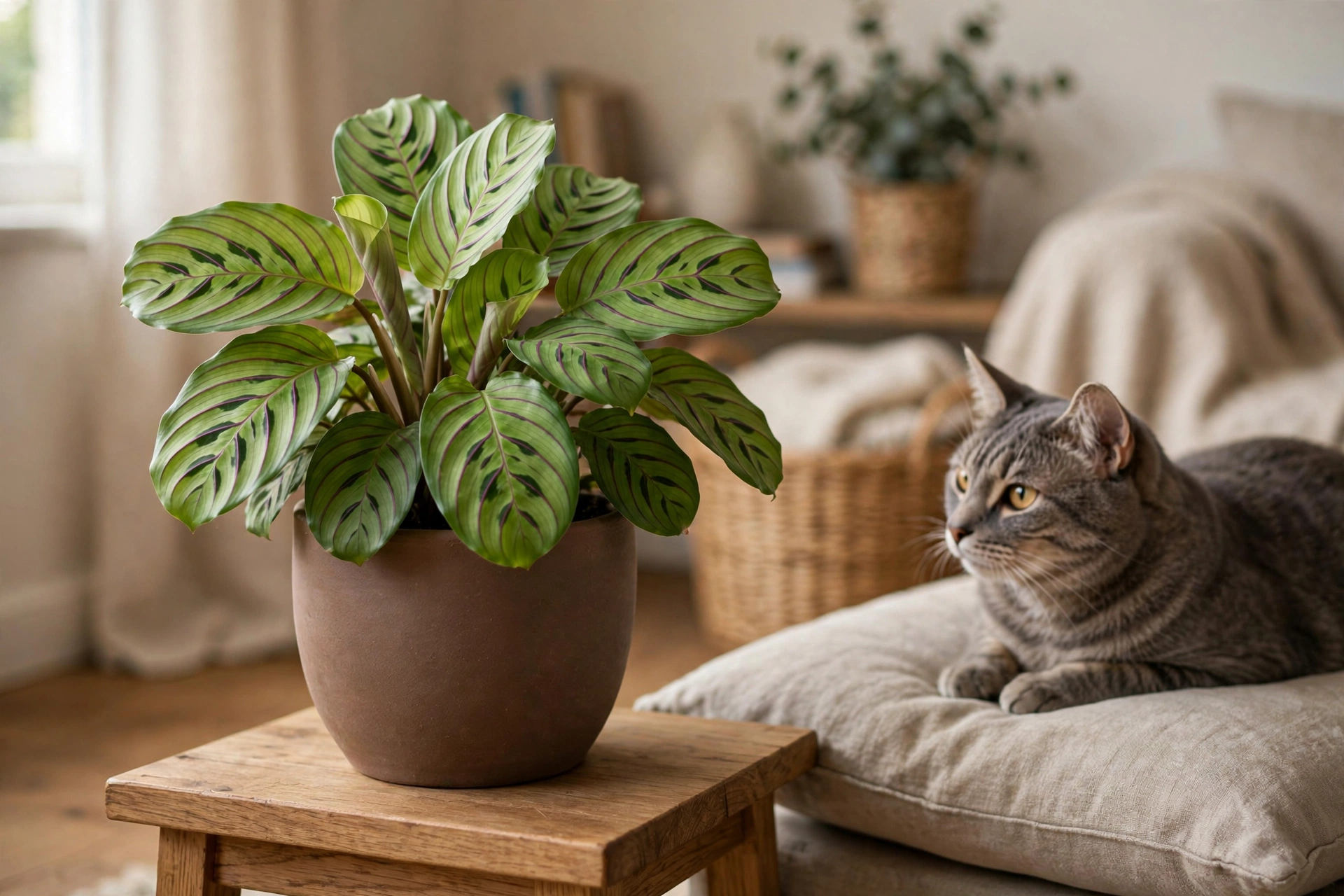
Prayer plants are the artists of the houseplant world, with bold leaf patterns that look hand-painted. They are also 100% non-toxic to cats. Their leaves fold upward at night, which is a fun detail cats seem to enjoy watching. They prefer indirect light and consistent moisture, and they will curl their leaves inward if they are unhappy, giving you a clear early signal. A pebble tray underneath helps keep the humidity they love.
5. Watermelon Peperomia (Peperomia argyreia)
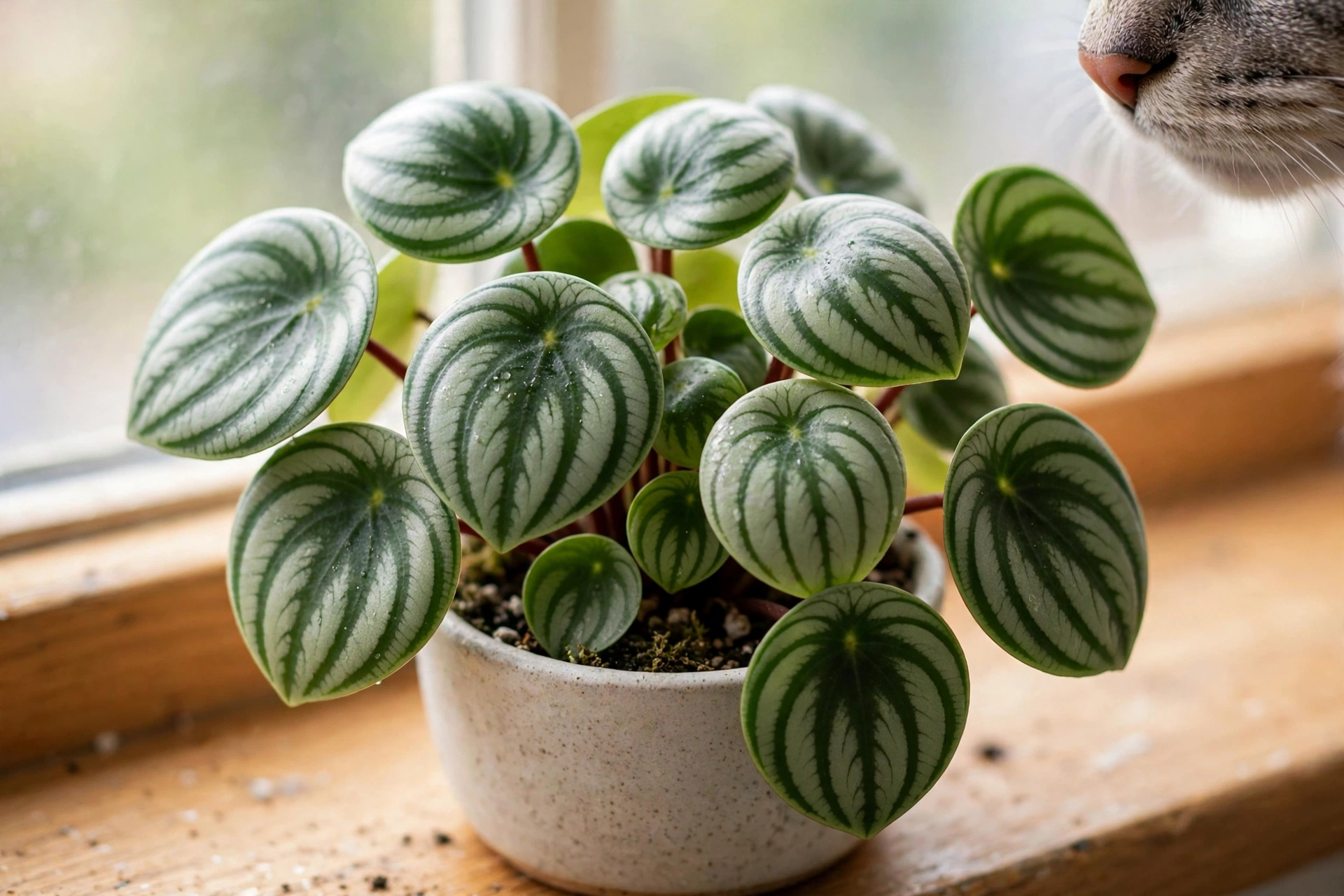
Few plants get compliments like the watermelon peperomia. Its round leaves carry silvery-green stripes that genuinely resemble tiny watermelon rinds. It stays compact, so it fits anywhere from a bookshelf to a desk, and it is completely safe for cats to investigate. It thrives in indirect light and hates wet feet, so let the soil dry slightly between waterings. A moisture meter takes the guesswork out of it.
6. Chinese Money Plant (Pilea peperomioides)
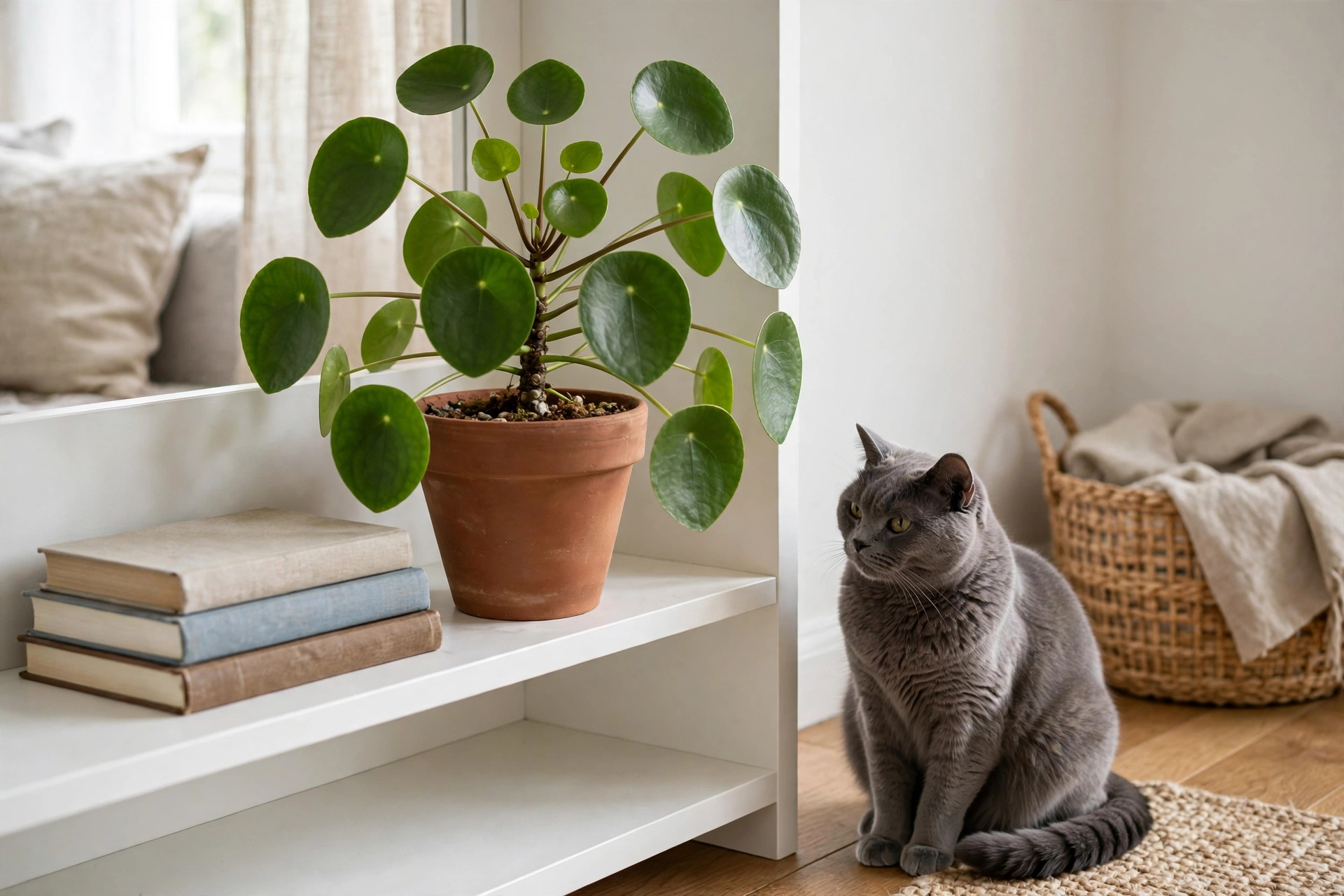
The pilea’s perfectly round, coin-shaped leaves on slender stems give it a sculptural, modern look that suits any style. It is fully non-toxic to cats, and it produces baby offshoots (pups) at its base that you can separate and gift to friends. Give it bright indirect light and rotate the pot weekly so it grows evenly instead of leaning toward the window. Let the top inch of soil dry out between drinks.
7. Cast Iron Plant (Aspidistra elatior)
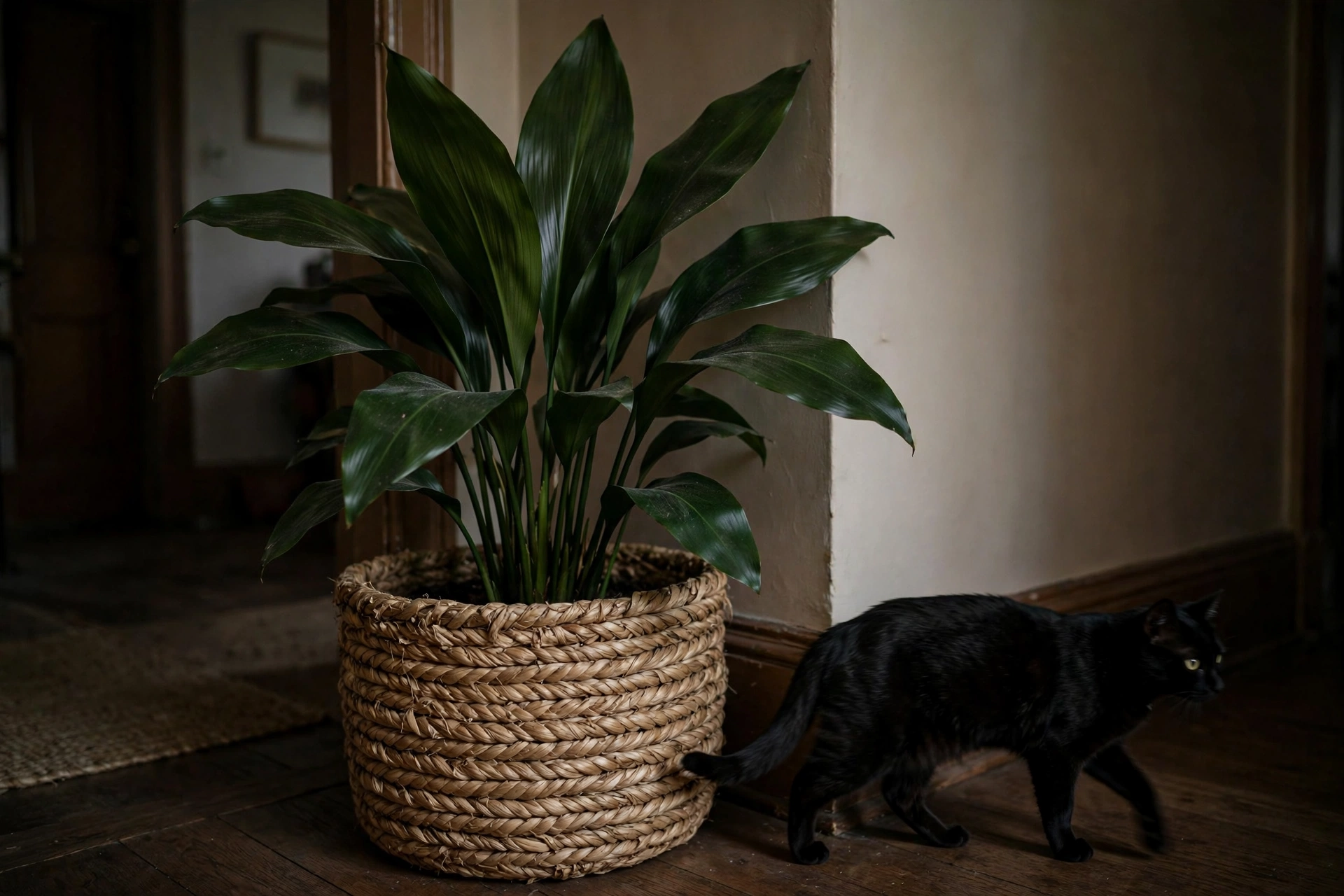
The cast iron plant earned its name: it tolerates low light, irregular watering, and general neglect better than almost any other houseplant, and it is completely safe for cats. Its broad, dark-green leaves look rich and architectural in a woven basket. This is the plant for that dark hallway or shaded corner where nothing else survives. Water sparingly, letting the soil dry out between waterings, and it will thrive for years.
8. Phalaenopsis Orchid

Orchids bring unmatched elegance, and the phalaenopsis is non-toxic to cats, so you can display it with confidence. The blooms last for weeks or even months with bright indirect light and the classic ice-cube watering method. Keep the bark mix barely moist rather than soggy, and your orchid will reward you with repeat flower spikes season after season. Place it on a coffee table or shelf where the whole room can enjoy it.
9. Bromeliad (Guzmania)
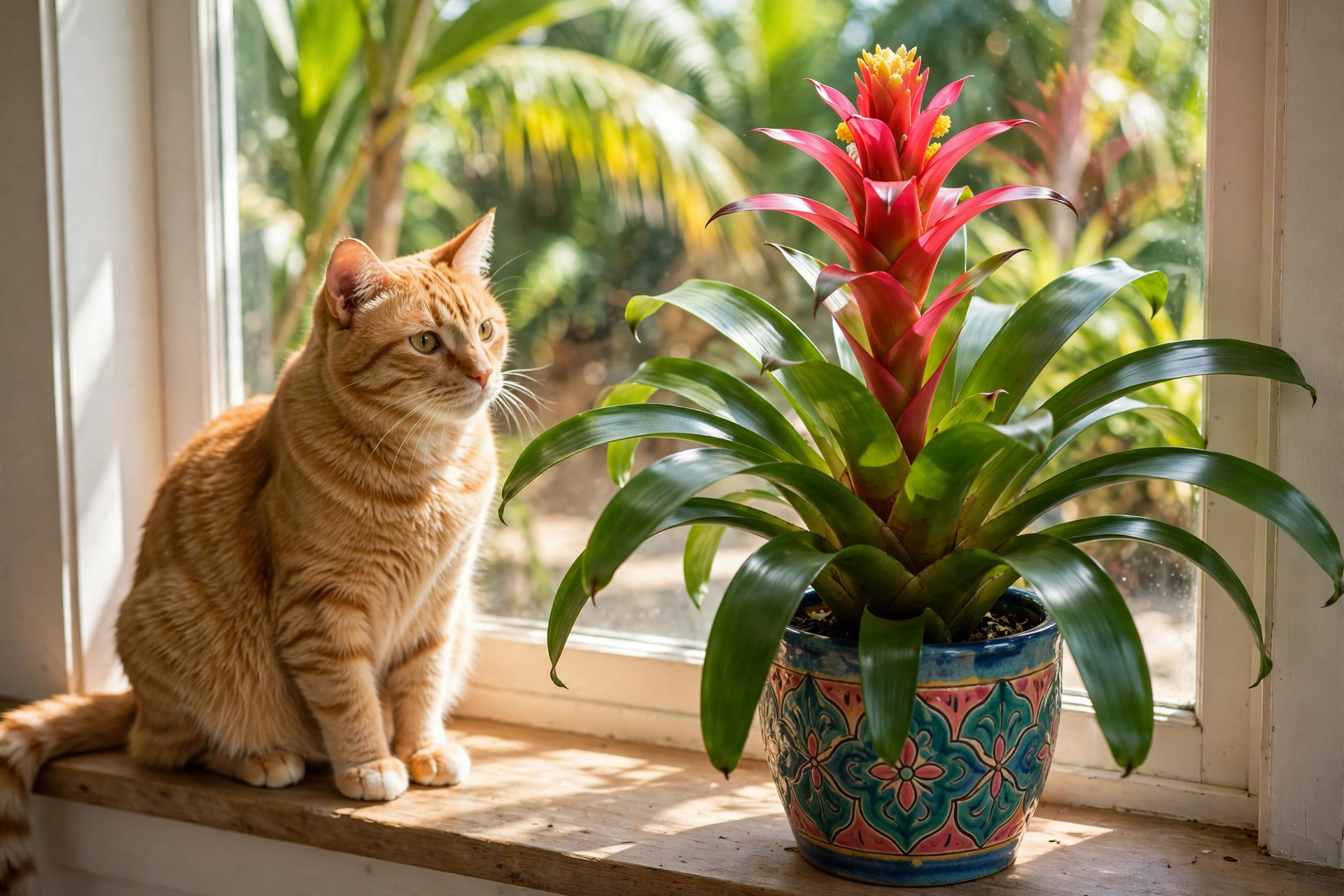
If your home needs a pop of color, a bromeliad delivers with its dramatic flower spike in pink, red, or orange. The entire plant is non-toxic to cats. Bromeliads like bright indirect light and a little water kept in their central cup, refreshed regularly. They are also compact, so they work well on windowsills and side tables. One plant gives you months of tropical color with very little fuss.
10. Zebra Haworthia (Haworthiopsis attenuata)
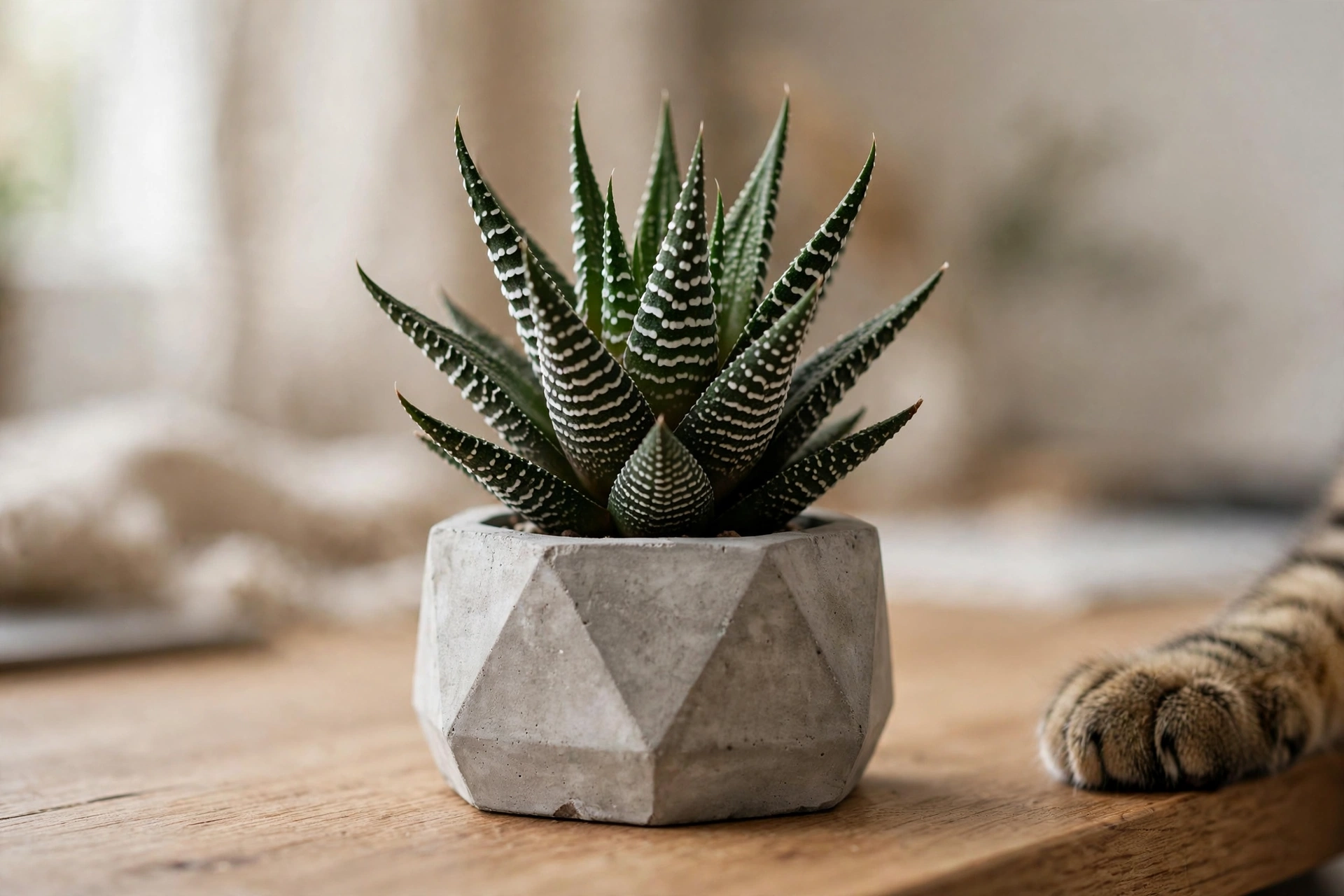
Succulent lovers with cats should skip aloe and jade (both problematic for pets) and reach for the zebra haworthia instead. Its dark-green triangular leaves with raised white stripes look striking in a small concrete or ceramic pot, and it is completely safe for cats. It wants bright light and very little water — let the soil dry out fully between drinks. Perfect for a desk, shelf, or sunny windowsill.
Keep Reading
- 7 DIY Cat Enclosure Ideas for Safe Outdoor Time
- 7 DIY Cat Patio Ideas for Safe Outdoor Time
- 7 DIY Cat Hammock Ideas Your Cat Will Love
- 16 DIY Cat Wall Ideas to Transform Your Space
- 12 Clever Cat Cage Ideas Your Feline Will Actually Love
Frequently Asked Questions
Are all ferns safe for cats?
No. True ferns like Boston fern, maidenhair fern, and bird’s nest fern are non-toxic to cats, but asparagus fern and several lookalikes are not. Always check the exact species name against a trusted toxicity list before bringing a plant home.
What should I do if my cat eats a houseplant?
If the plant is on a confirmed non-toxic list, your cat will most likely be fine, though you can still watch for mild stomach upset. If you are unsure about the plant or your cat shows symptoms like vomiting or lethargy, contact your veterinarian right away.
How can I stop my cat from chewing my plants?
Grow a small pot of cat grass or catnip to give your cat a safe chewing outlet, place plants on high shelves or in hanging baskets, and use bitter deterrent sprays on leaves as a backup. Most cats lose interest once an easier alternative exists.
Are succulents safe for cats?
Some are, but many popular succulents are not. Safe options include zebra haworthia, echeveria, and burro’s tail. Avoid aloe vera, jade plants, and kalanchoe, which can cause serious problems for cats.
Is it safe to use fertilizer on plants around cats?
Most houseplant fertilizers are safe once absorbed into the soil and watered in, but keep cats away from freshly treated soil and store fertilizer containers securely. Choose pet-safe products when available and follow label directions.