Cavalier King Charles Spaniel Breeders in Massachusetts: How to Find a Reputable One

Bringing home a Cavalier King Charles Spaniel puppy is exciting — these gentle, affectionate toy dogs have a way of melting hearts from Boston to the Berkshires. But finding trustworthy Cavalier King Charles Spaniel breeders in Massachusetts takes more than a quick online search. A great breeder sets your puppy up for a lifetime of health and happiness, while a careless one can leave you with heartbreak and vet bills.
This guide walks you through exactly how to find a reputable Cavalier breeder anywhere in Massachusetts: what health testing to demand, the questions that separate professionals from pretenders, the red flags that should send you running, and the rescue routes worth considering before you buy.
Table of Contents
- What to Look for in a Reputable Massachusetts Breeder
- Questions to Ask Before You Commit
- Red Flags to Avoid
- Cavalier Adoption and Rescue Options in Massachusetts
- Frequently Asked Questions
What to Look for in a Reputable Massachusetts Breeder

A reputable breeder treats breeding as a responsibility, not a business model. Here is what that looks like in practice.
Documented health testing. Cavaliers are prone to specific inherited conditions, and a serious breeder screens for them before ever producing a litter. Ask for proof of: annual heart clearances by a board-certified cardiologist (mitral valve disease is the breed’s biggest threat), annual eye exams certified through OFA/CAER, and hip and patella evaluations. DNA testing for episodic falling syndrome and curly coat/dry eye is a strong plus. If a breeder says “my vet says they’re healthy” instead of showing you certificates, keep looking.
AKC registration and pedigree transparency. Puppies from a reputable program come with AKC registration papers and a pedigree you can trace. The breeder should happily tell you about the parents — and often the grandparents — including their health history and temperaments.
A written contract with a health guarantee. Expect a clear contract covering a health guarantee (commonly one to several years), a spay/neuter agreement for pet-quality puppies, and — very importantly — a take-back clause: the breeder will take the dog back at any age if you can no longer keep it. Breeders who care about their puppies for life put it in writing.
Raised in a home, not a kennel row. Puppies raised underfoot in a family home arrive pre-socialized to household sounds, people, and handling. Ask how the puppies are socialized before they go home — early neurological stimulation, exposure to different surfaces and sounds, and gentle handling all matter.
An in-person visit is welcome. The single best way to evaluate a breeder is to meet them where the puppies live. You get to see the cleanliness of the environment, meet the mother dog, and watch how the breeder interacts with their dogs. A breeder who discourages visits — or only wants to meet in a parking lot — is telling you everything you need to know.
Questions to Ask Before You Commit

There are no silly questions when you are about to add a family member. A good breeder will welcome every one of these — and will probably ask you just as many in return.
- How long have you been breeding Cavalier King Charles Spaniels, and how many litters do you raise per year?
- What health tests do you perform on your breeding dogs? Can I see copies of the clearances for both parents?
- Do you offer a written health guarantee, and what does it cover?
- Can I meet the mother dog (and the father, if he is on site)?
- How do you socialize your puppies before they go to their new homes?
- What food do you feed your dogs and puppies, and what should I continue feeding at first?
- What is your process for matching a puppy’s temperament to the right family?
- Will you be available for advice and support after the puppy comes home?
Pay attention to how they answer, not just what they say. Detailed, enthusiastic answers signal a breeder who knows and loves their dogs. Vague or defensive answers are a warning sign. And take it as a very good sign when the breeder interviews you — the best breeders are picky about where their puppies go.
Red Flags to Avoid

Walk away if you spot any of these:
- No health testing documentation. Verbal assurances are not clearances. If they cannot show you OFA/heart/eye certificates, leave.
- Always has puppies available. Reputable breeders have waiting lists and breed sparingly. Someone with multiple litters ready year-round is prioritizing volume.
- Won’t let you visit. Refusing home visits, or insisting on meeting somewhere neutral, hides the conditions the puppies are raised in.
- Sells puppies under eight weeks old. Puppies need those early weeks with their mother and littermates for proper development. Massachusetts law also sets minimum age requirements for sale.
- No contract, no take-back policy. A breeder unwilling to put guarantees in writing — or to take a dog back if things go wrong — is not standing behind their puppies.
- Pressure tactics. “Someone else wants this puppy tomorrow” or demands for cash-only, no-questions deals are classic signs of a puppy mill or broker.
Remember the two operations to avoid entirely: puppy mills (large-scale facilities that prioritize profit over welfare) and backyard breeders (casual breeders with little knowledge of health testing or socialization). Both can look convincing online — which is exactly why the in-person visit matters so much.
Cavalier Adoption and Rescue Options in Massachusetts
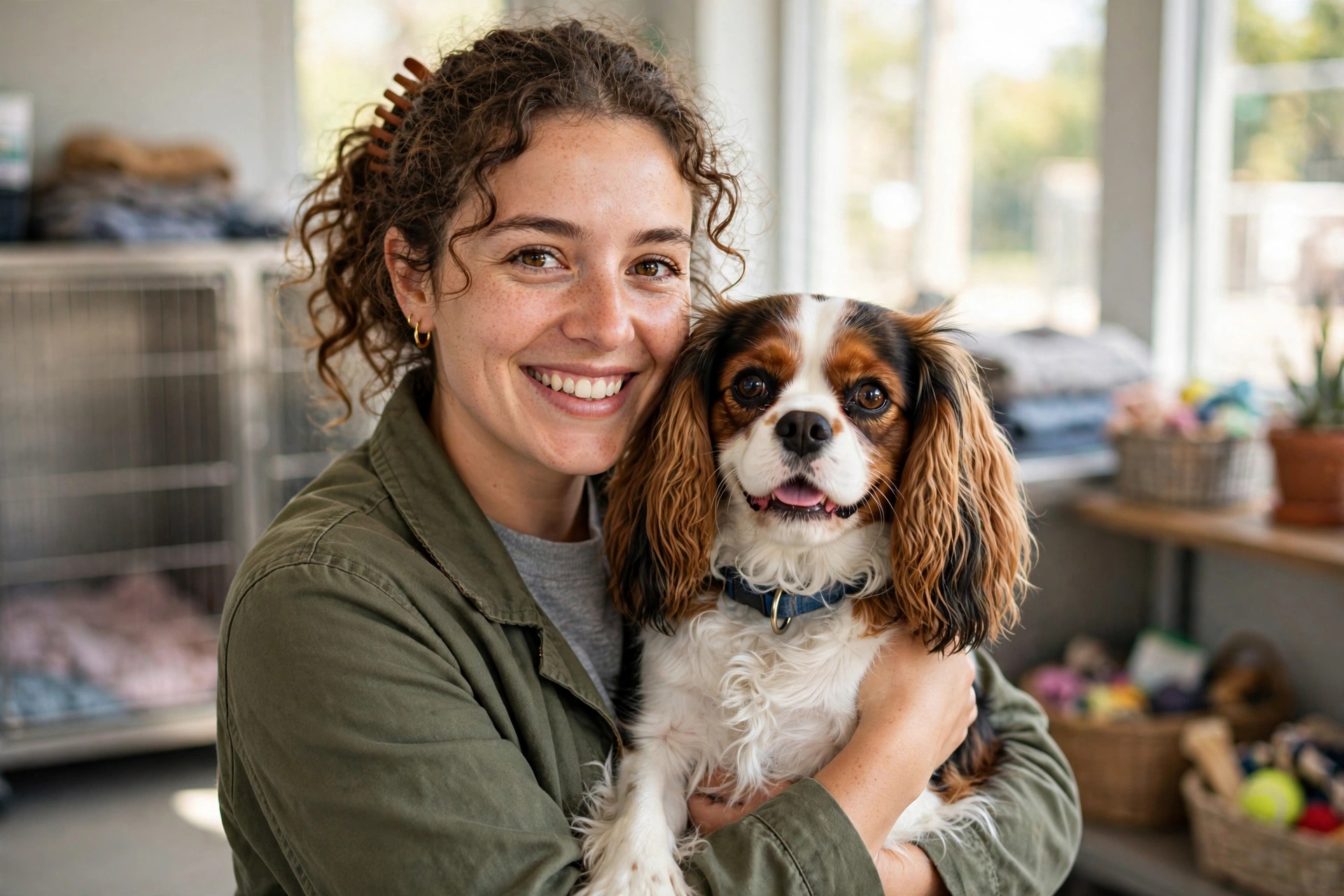
Buying from a breeder is not the only path to a Cavalier. Adoption can be a wonderful option, especially if you are open to an adult dog.
Breed-specific Cavalier rescues. There are rescue organizations dedicated specifically to Cavalier King Charles Spaniels that operate in or adopt to New England. These groups typically foster dogs in homes, complete veterinary work, and match each dog to the right family. Because Cavaliers are popular, expect an application process and possibly a wait — but rescue Cavaliers, including young adults, do come through.
The AKC rescue network. The national breed club maintains a rescue network, and regional Cavalier clubs in the Northeast often have rescue contacts. This is a trustworthy starting point for finding legitimate rescue options rather than stumbling onto questionable listings.
Local shelters and humane societies. Massachusetts shelters occasionally receive Cavaliers and Cavalier mixes. Check shelter websites regularly and set up alerts — purebreds in shelters tend to be adopted fast.
Adoption listing platforms. Sites like Adopt-a-Pet let you search specifically for Cavalier King Charles Spaniels near your Massachusetts zip code across shelters and rescues at once.
Whether you buy or adopt, the same rule applies: a legitimate rescue will ask you plenty of questions, provide veterinary records, and take the dog back if the placement does not work out.
Frequently Asked Questions

How much do Cavalier King Charles Spaniel puppies cost in Massachusetts?
Expect to pay roughly $1,500 to $4,000 from a reputable breeder, depending on pedigree, coat color, and whether the puppy is show or pet quality. Prices well below that range are a red flag — health testing, quality care, and proper raising cost real money, and a suspiciously cheap puppy often means corners were cut.
How long is the wait for a Cavalier puppy from a good breeder?
Often six months to over a year. Reputable breeders breed infrequently and maintain waiting lists. A breeder who can hand you a puppy next week is not the breeder you want.
Should I visit the breeder before putting down a deposit?
Yes — always. Meeting the breeder in person, seeing the puppies’ living conditions, and meeting the mother dog is the most reliable way to confirm everything you have been told. Never send a deposit to a breeder you have not thoroughly vetted.
Are Cavalier King Charles Spaniels good for first-time owners in Massachusetts?
They are one of the best breeds for first-time owners: gentle, eager to please, and adaptable to apartments or houses. Just budget for the breed’s known health needs — regular heart checkups are a must — and know that they do not love being left alone for long stretches.
What is the difference between a breeder and a puppy broker?
A breeder raises the puppies themselves and can show you the parents and the home environment. A broker buys puppies from various sources and resells them, often with little knowledge of health history. Always buy from the person who actually raised the puppy.