
How to Get Dog Smells Out of Your House: 10 Tips That Work

Every dog owner knows the moment: a guest walks in, wrinkles their nose, and you realize you’ve gone nose-blind to the dog smells lingering from every corner of your house. Living with a dog doesn’t have to mean living with that musty aroma. With the right routine, your home can smell fresh. Here are 10 practical tips that actually work.
Table of Contents
- 1. Wash Your Dog’s Bedding Every Week
- 2. Bathe Your Dog on a Regular Schedule
- 3. Brush Out Loose, Odor-Trapping Fur
- 4. Treat Accidents With an Enzymatic Cleaner
- 5. Wash Paws After Every Walk
- 6. Don’t Ignore Smelly Breath
- 7. Wash Collars, Leashes, and Harnesses
- 8. Choose Toys You Can Actually Wash
- 9. Support Skin and Coat Health From the Inside
- 10. Keep the Crate Fresh
- Frequently Asked Questions
1. Wash Your Dog’s Bedding Every Week
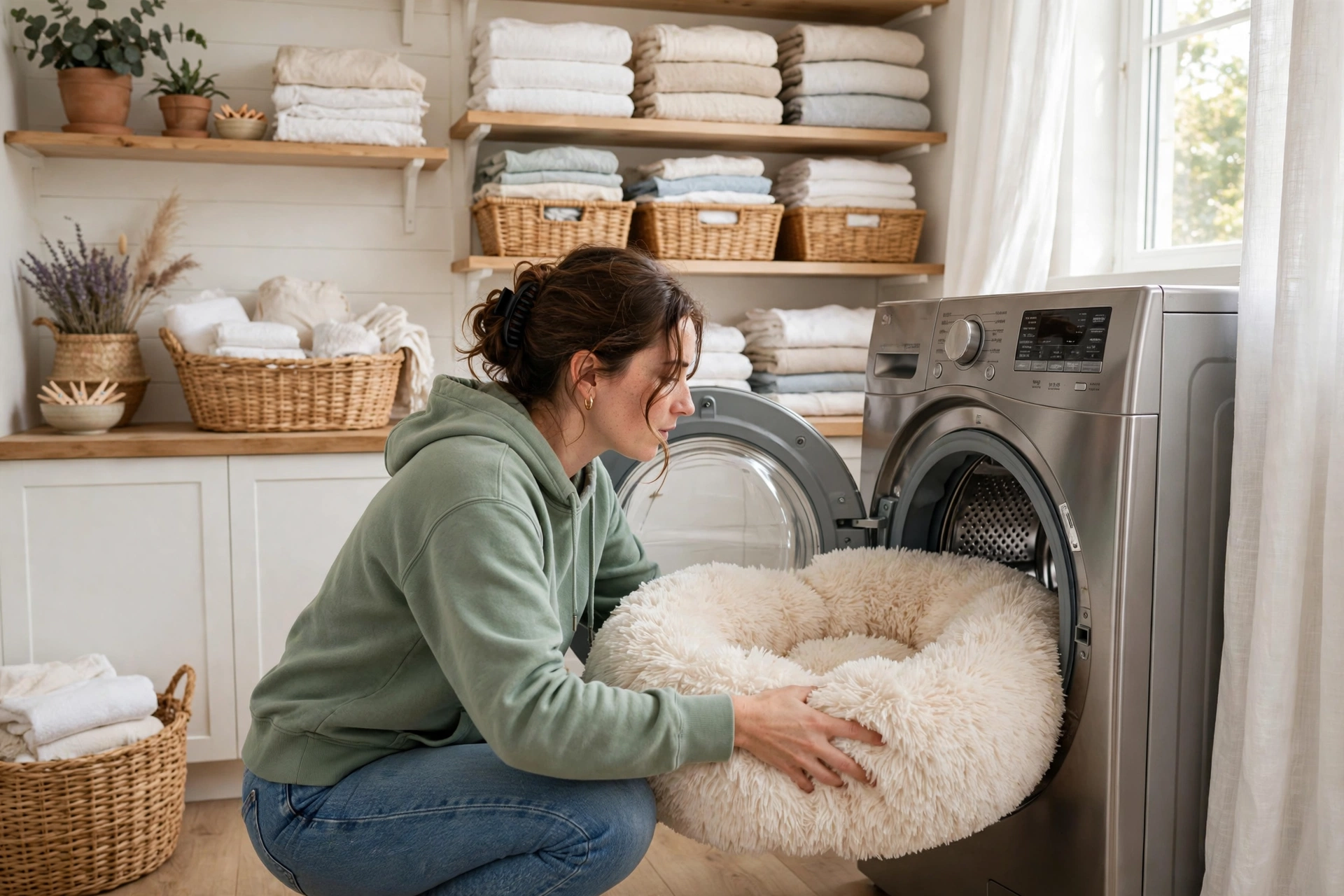
Your dog’s bed is ground zero for household dog odor. Body oils, drool, shed fur, and the occasional muddy paw all soak into the fabric day after day. A weekly wash in hot water with a pet-safe detergent breaks that buildup cycle before the smell migrates into your sofa and rugs.
If your current bed can’t survive the washing machine, consider switching to one designed for it — a machine-washable bed makes this habit effortless instead of a chore you dread.
Helpful pick: Best Friends by Sheri Calming Donut Dog Bed — a cozy, machine-washable bed that makes the weekly wash simple.
2. Bathe Your Dog on a Regular Schedule
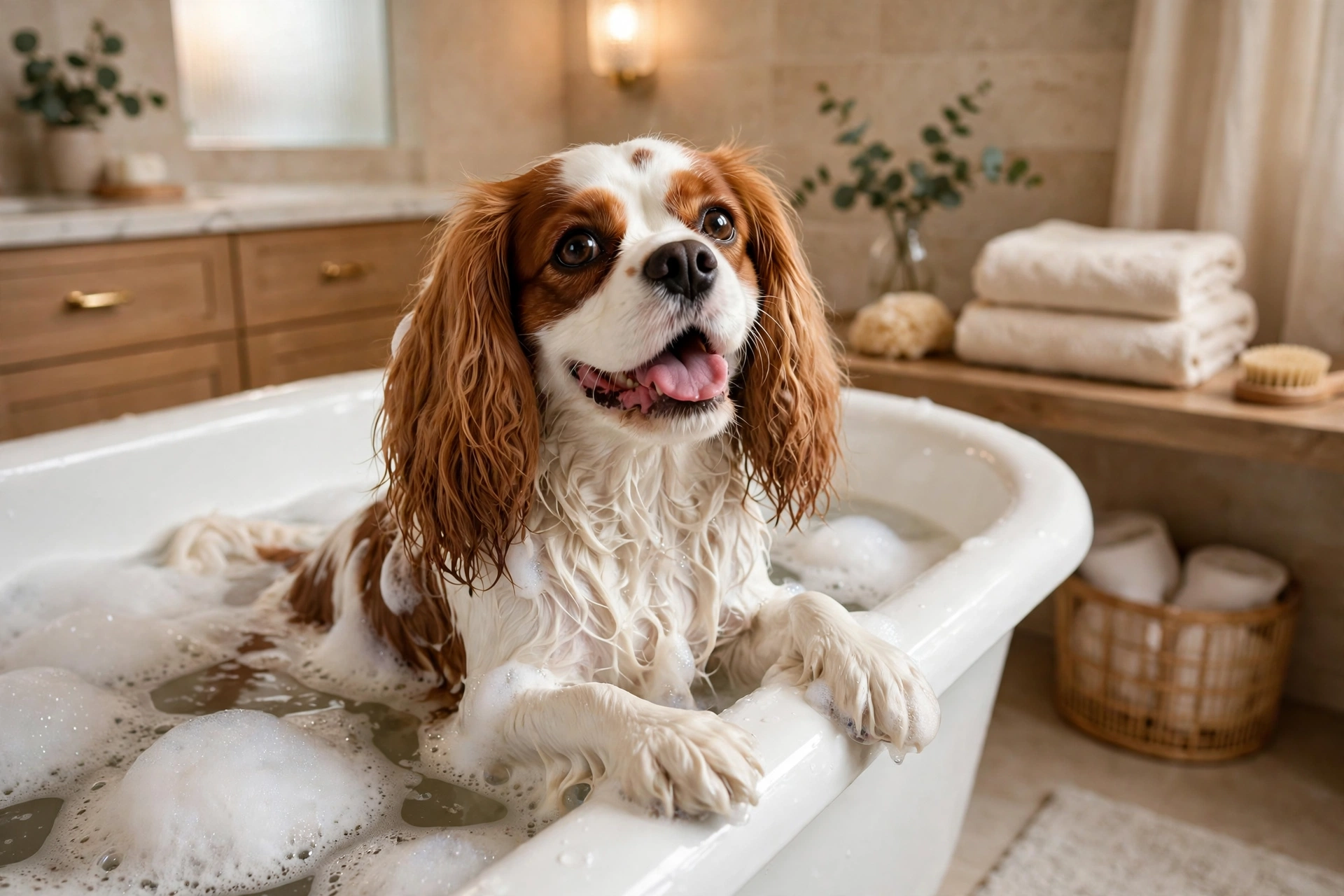
Most dogs need a bath every four to eight weeks, depending on their coat and lifestyle. Bathing too often strips natural oils and can actually make odor worse by drying out the skin. Find your dog’s rhythm and stick to it.
Between baths, deodorizing wipes are a lifesaver — a quick wipe-down after a rainy walk or a dusty dog-park session keeps your dog fresh without a full bath. Focus on the paws, belly, and behind the ears, where odors love to hide.
Helpful pick: Earth Rated Deodorizing Dog Wipes — handy for quick freshen-ups between bath days.
3. Brush Out Loose, Odor-Trapping Fur

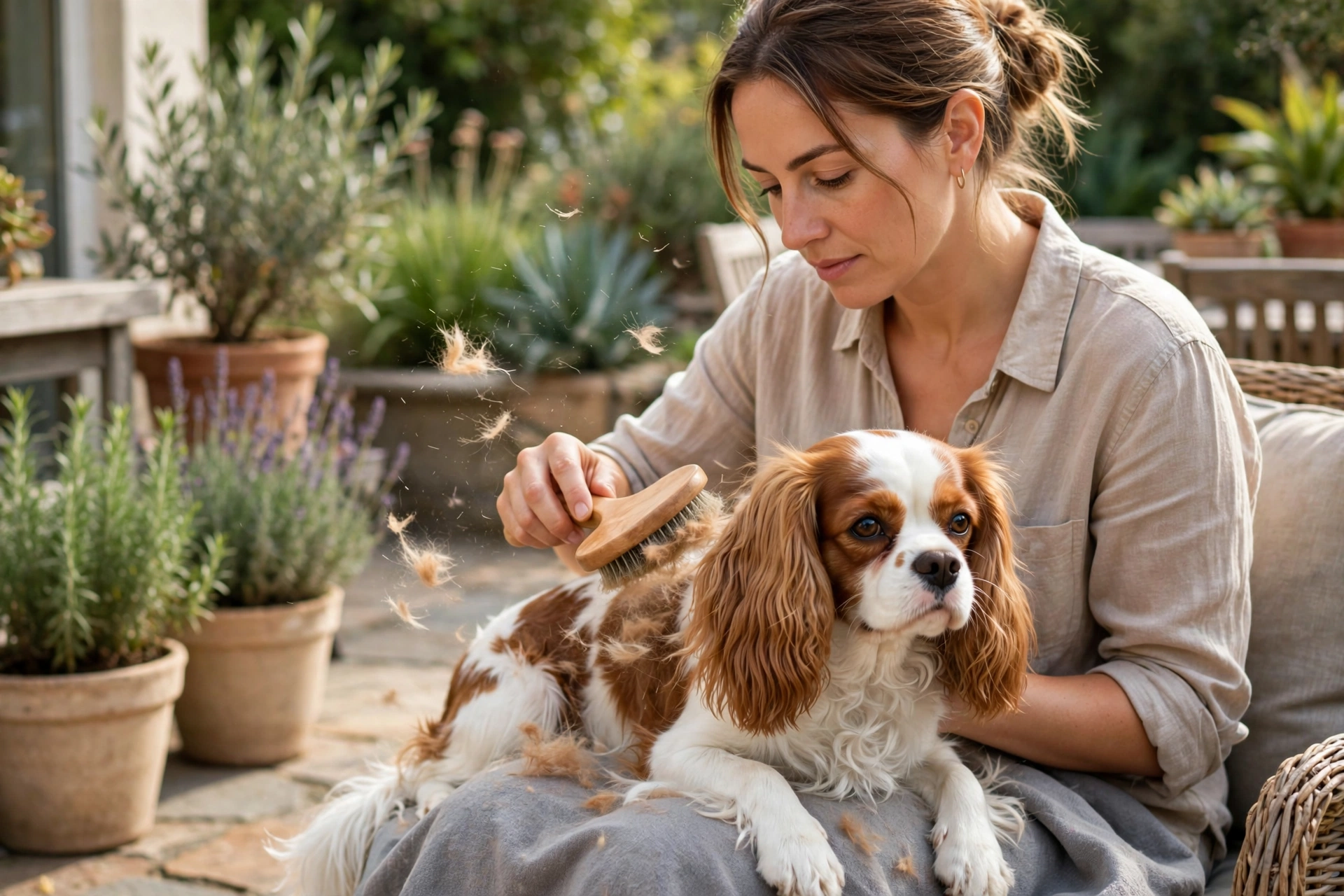
Loose fur doesn’t just pile up in corners — it traps body oils and odors, then distributes them across your furniture, carpets, and clothes. A few minutes of brushing a few times a week removes that fur at the source instead of letting it season your entire home.
Brushing also spreads your dog’s natural oils evenly through the coat, which supports a healthier coat and a milder natural scent. Do it outside or in one easy-to-clean spot.
Helpful pick: Hertzko Self-Cleaning Slicker Brush — lifts loose fur fast and the self-cleaning button makes cleanup painless.
4. Treat Accidents With an Enzymatic Cleaner

Here’s the mistake almost everyone makes: reaching for a regular household cleaner on a pet accident. Standard cleaners mask the smell for you, but the proteins in urine and vomit stay behind — and your dog can still smell them, which encourages repeat accidents in the same spot.
Enzymatic cleaners work differently. They contain bacteria that digest the odor-causing proteins until nothing is left for your nose — or your dog’s — to detect. Soak the spot thoroughly, let it air dry completely, and don’t scrub the stain deeper into the fibers first.
Helpful pick: Zeiff Pet Stain and Odor Remover — an enzymatic formula that targets tough pet odors at the source.
5. Wash Paws After Every Walk

Your dog’s paws pick up everything outdoors: mud, grass, sidewalk grime, and the occasional mystery substance. Every step inside then stamps that cocktail onto your floors. A thirty-second paw wash at the door keeps the outdoors where it belongs.
Portable paw washers make this genuinely easy — fill with a little warm water, twist gently, and dry with a towel. It protects your floors from the slow buildup of grime that turns into a lingering musty smell.
Helpful pick: Dexas MudBuster Portable Dog Paw Cleaner — a quick twist at the door keeps muddy-paw smells out of your home.
6. Don’t Ignore Smelly Breath

That “dog smell” in your house isn’t always coming from the coat. Dogs with dental disease can fill a room with an unpleasant odor every time they pant or yawn near the sofa. Most dogs show signs of gum disease by age three, yet dental care is the most skipped part of dog hygiene.
Daily dental treats that scrub as your dog chews are an easy starting point, alongside regular vet dental checkups. If your dog’s breath is suddenly much worse than usual, see your vet — it can signal infection or a tooth problem.
Helpful pick: Greenies Teenie Natural Dental Dog Treats — a tasty daily habit that supports cleaner teeth and fresher breath.
7. Wash Collars, Leashes, and Harnesses

Nylon collars and leashes are odor sponges. They soak up neck oils, rain, sweat, and walk grime, then sit in a basket by the door broadcasting it all. Most people never think to wash them.
Toss nylon gear in a mesh laundry bag on a gentle cycle once a month, or hand-wash with mild soap and warm water. Leather collars need a wipe-down with a damp cloth and occasional conditioning instead. Either way, your entryway will smell noticeably better.
Helpful pick: Mycicy Reflective Nylon Dog Leash — a durable everyday leash that handles regular washing with ease.
8. Choose Toys You Can Actually Wash
Plush squeaky toys collect drool, dirt, and bacteria until they develop a personality of their own — olfactorily speaking. When you shop for toys, check the care label first. Rubber and silicone toys that can go in the dishwasher (top rack, no heated dry) stay fresh for years instead of months.
Rotate a small set of washable toys and run them through the dishwasher or a sink soak weekly. Your dog won’t mind the rotation — novelty makes old toys exciting again.
Helpful pick: KONG Classic Stuffable Dog Toy — tough natural rubber that’s easy to wash and built to last.
9. Support Skin and Coat Health From the Inside

A dull, flaky, or greasy coat smells stronger than a healthy one — that’s just biology. Skin issues like dryness or excess oil production ramp up the natural doggy odor, and no amount of air freshener fixes what starts at the skin.
Omega-3 fatty acids support healthy skin and a glossy coat, which is one reason many owners notice their dog smells better after adding a quality fish oil to meals. Always check with your vet before starting any supplement.
Helpful pick: Zesty Paws Salmon Oil for Dogs — omega-3s that support skin and coat health (ask your vet first).
10. Keep the Crate Fresh
Crates are cozy dens — which also makes them odor traps. The bedding, the pan underneath, and the bars themselves collect fur, drool, and the occasional accident. A quick weekly wipe-down of the pan and bars with a pet-safe cleaner, plus fresh bedding, takes five minutes and makes a real difference.
Crates with a removable slide-out pan are the easiest to keep fresh, since you can pull the whole thing out and wash it in the tub.
Helpful pick: MidWest Double Door iCrate — sturdy with an easy-clean slide-out pan that simplifies crate hygiene.
Frequently Asked Questions
Why does my house smell like dog even after cleaning?
Odor hides in soft surfaces — upholstery, curtains, rugs, and dog bedding absorb oils over time. If surface cleaning doesn’t fix it, wash or deep-clean the fabrics themselves, and treat accidents with an enzymatic cleaner rather than masking them.
How often should I wash my dog’s bedding?
Once a week is the sweet spot for most dogs. If your dog swims, hikes, or has skin issues, wash it twice a week. Keep a spare bed or blanket so there’s always a fresh one ready.
Do air fresheners get rid of dog smell?
They mask it temporarily but don’t remove the source. Scented products layered over real odor can actually smell worse. Fix the source first — bedding, baths, accidents, dental health — and you’ll need far less fragrance.
Why does my dog smell worse after a bath?
A wet coat releases trapped oils, which is why damp dogs smell stronger. Make sure your dog dries completely, rinse shampoo out fully, and rule out skin or ear infections if the smell persists after drying.
When should I see a vet about my dog’s odor?
If the smell is sudden, unusually strong, or localized — like one ear, the mouth, or the skin — see your vet. Persistent odor can signal infections, dental disease, or skin conditions that need treatment, not just a bath.
Keep Reading
- Do Cavalier King Charles Spaniels Smell? Honest Answer
- Cavalier King Charles Spaniel Health Issues to Know
- Foods Dogs Can and Can’t Eat: Complete List
- Best Dog Food for Allergies (2026 Guide)
- Dog Body Language Guide: What Your Dog Is Telling You
- Signs Your Dog Loves You: 12 Heart-Melting Clues
As an Amazon Associate, PetPostHub earns from qualifying purchases.


