How to Teach Your Dog to Spin Around: 7 Steps
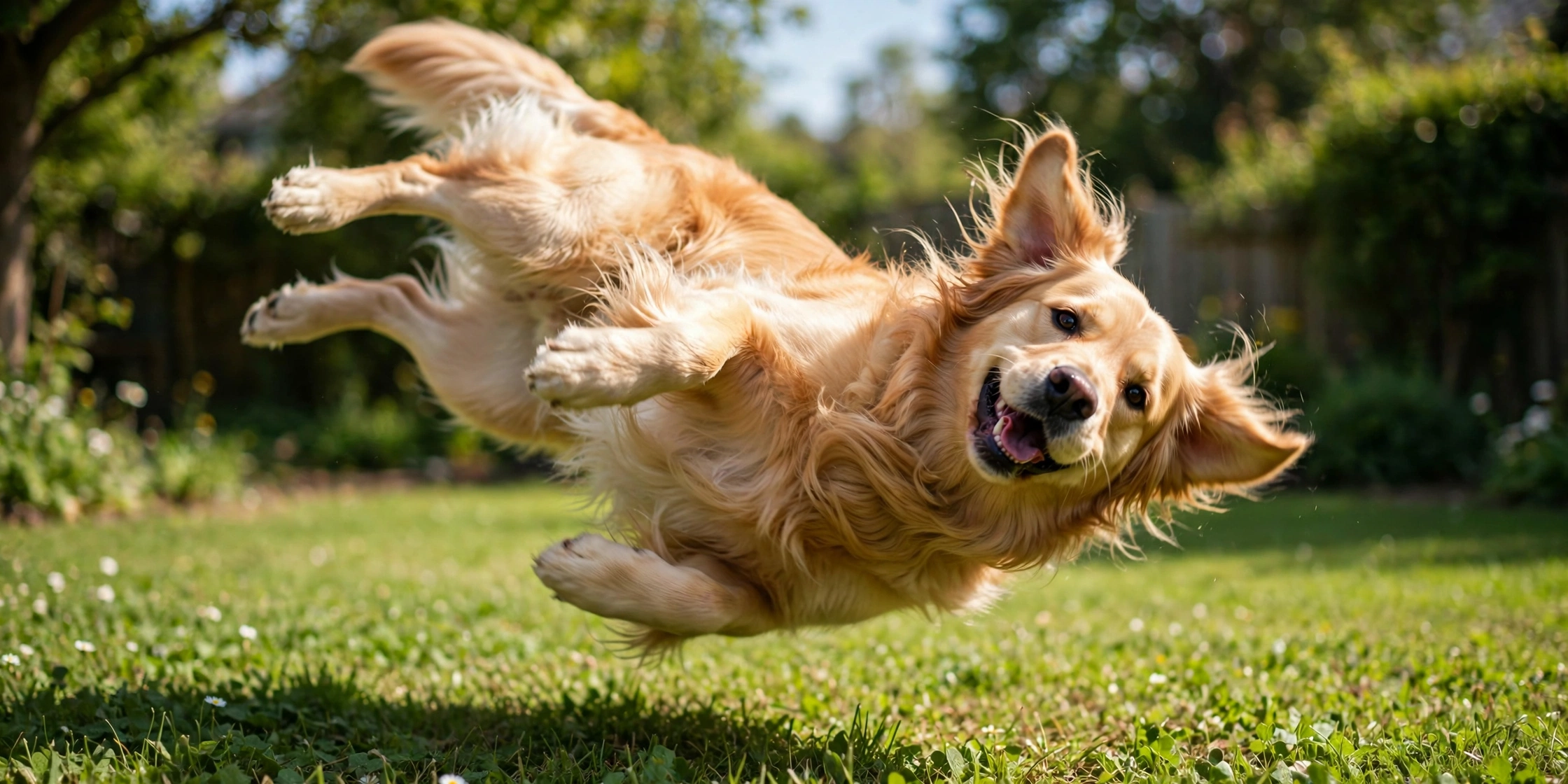
Learning how to teach your dog to spin around is one of the most rewarding party tricks you can add to your pup’s repertoire. It’s a simple, joyful move — your dog whips around in a tight 360-degree circle — that looks far more impressive than it actually is to train. Most dogs pick it up in just a few short sessions, and the benefits go beyond showing off: spin builds body awareness, burns mental energy, and even works as a warm-up before walks or agility work.
In this guide, you’ll learn how to teach dog to spin around in 7 easy steps, plus what to do when your dog gets dizzy or just won’t complete the turn. Let’s get twirling.
Table of Contents
- Step 1: Lure a Nose Turn
- Step 2: Reward Small Circles
- Step 3: Fade the Lure
- Step 4: Name It “Spin”
- Step 5: Add the Opposite Direction
- Step 6: Practice the Hold
- Step 7: Troubleshoot (Dizzy, Won’t Complete)
- Spin vs. Twirl: What’s the Difference?
- Frequently Asked Questions
- Keep Reading
Step 1: Lure a Nose Turn
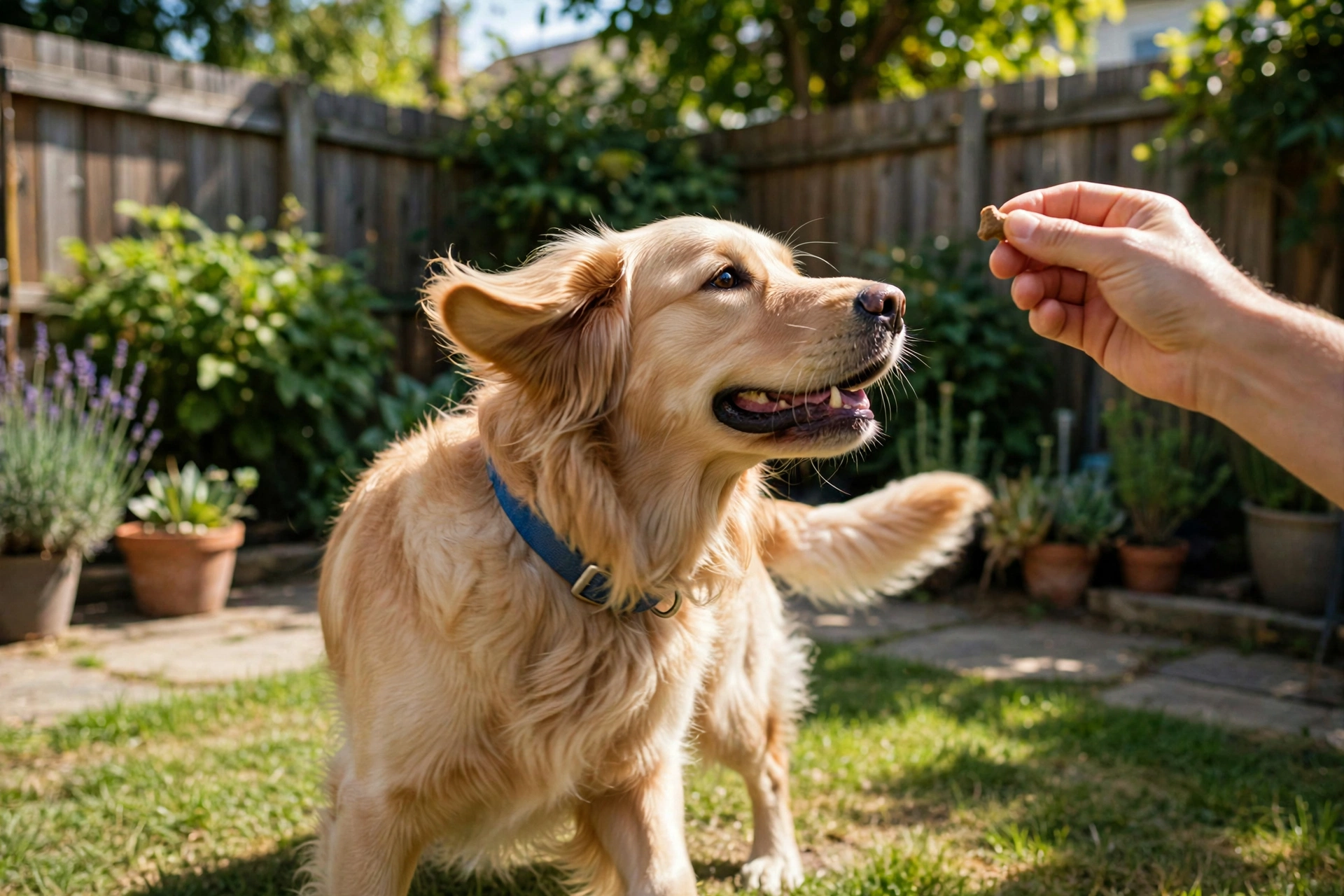
Start with your dog standing in front of you. Hold a high-value treat right at their nose — close enough that they can smell it and even lick it, but not snatch it. Slowly move the treat to one side, guiding their head in a small arc. The moment your dog’s nose turns even a few inches, mark it with a cheerful “Yes!” and reward.
Keep the treat at nose height the whole time. Too high and your dog will sit or jump; too low and they’ll lie down instead of turning. This tiny head turn is the foundation of the whole trick, so reward it generously for a few repetitions before moving on.
Helpful pick: Zuke’s Mini Naturals — small, soft training treats sized perfectly for quick luring rewards.
Step 2: Reward Small Circles
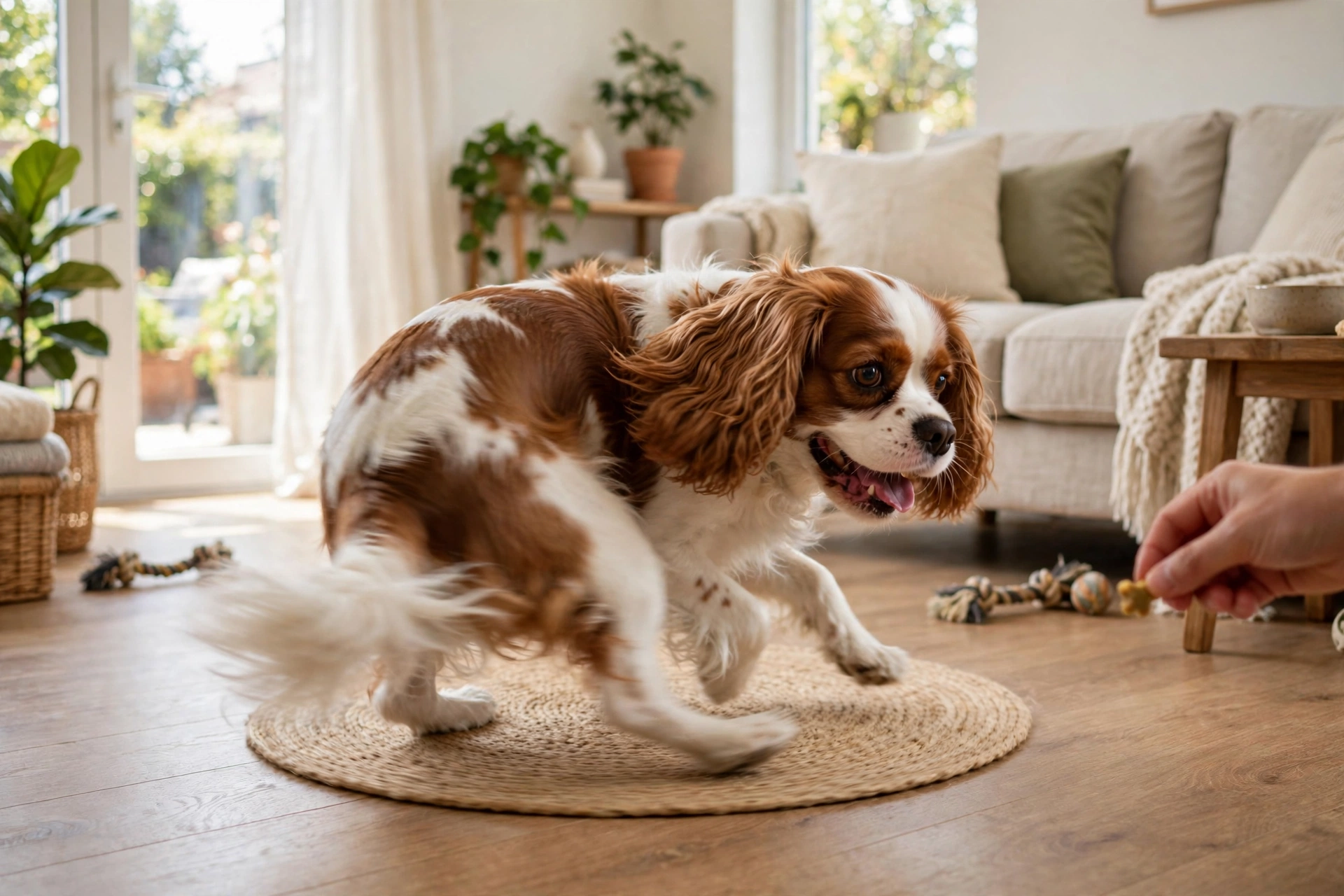
Once your dog happily turns their nose for the treat, start widening the arc. Move the lure farther back toward their tail, guiding them into a quarter turn, then a half turn, rewarding each success. If your dog stalls partway around, don’t get greedy — reward the partial turn and build from there.
Think of it like a clock face: reward at 3 o’clock, then 6 o’clock, then 9 o’clock, until your dog sweeps all the way back to 12 for a full 360-degree spin. Reward every completed rotation enthusiastically.
Helpful pick: Egiao Dog Treat Pouch — keeps treats handy at your waist so you can mark and reward without fumbling.
Step 3: Fade the Lure
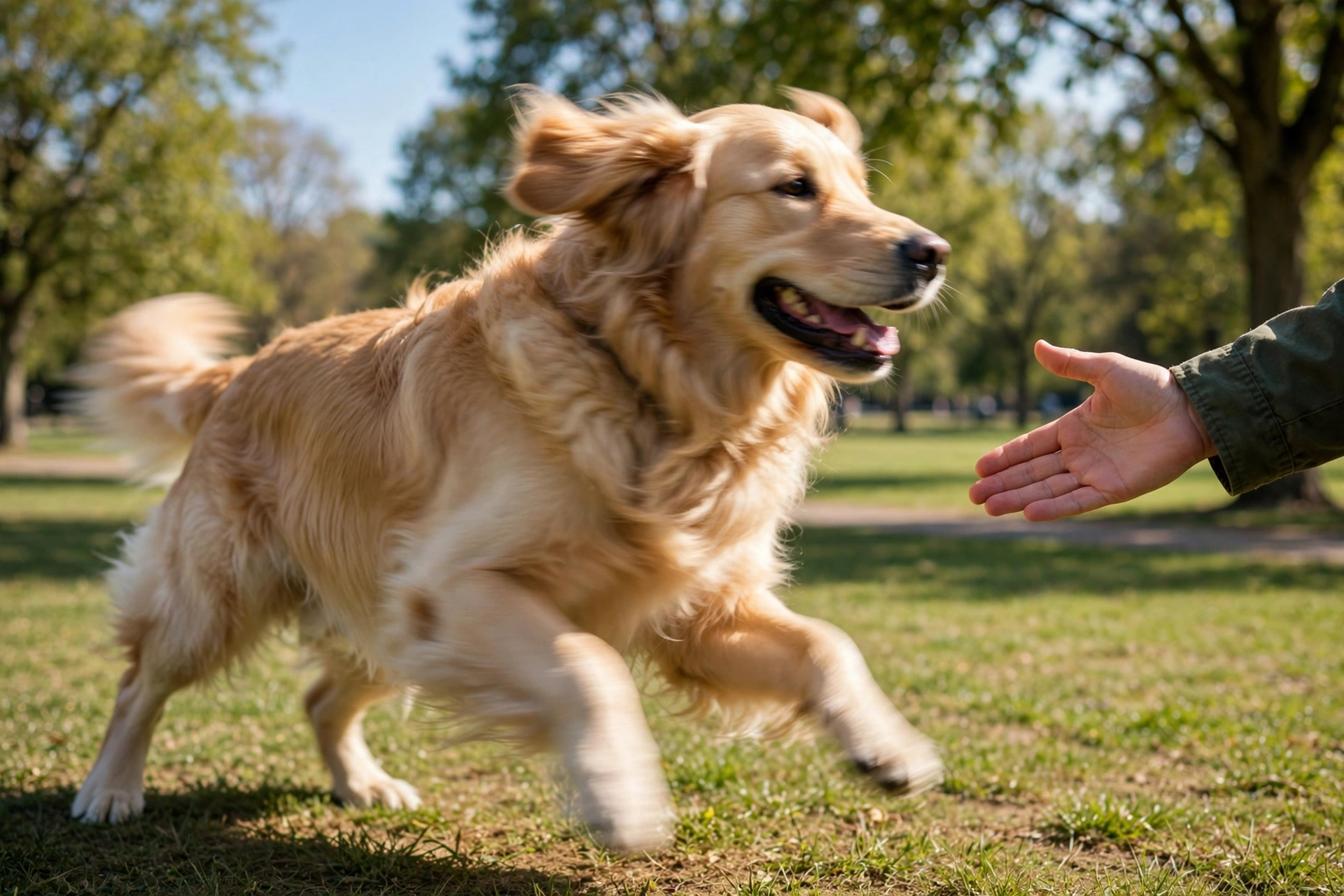
Here’s where most beginners get stuck — if you lure forever, your dog will only spin when they see a treat. To avoid that, gradually fade the lure. Move the treat farther from your dog’s nose while keeping the same hand motion, then switch to an empty hand making the circular signal.
When your dog follows the empty-hand gesture through a full spin, mark the moment they complete the turn and reward from your other hand or treat pouch. If they stall without the lure in your hand, you’re fading too fast — go back one step and rebuild.
Helpful pick: STMK Dog Clicker Kit — a crisp clicker marks the exact moment of a completed spin better than words alone.
Step 4: Name It “Spin”
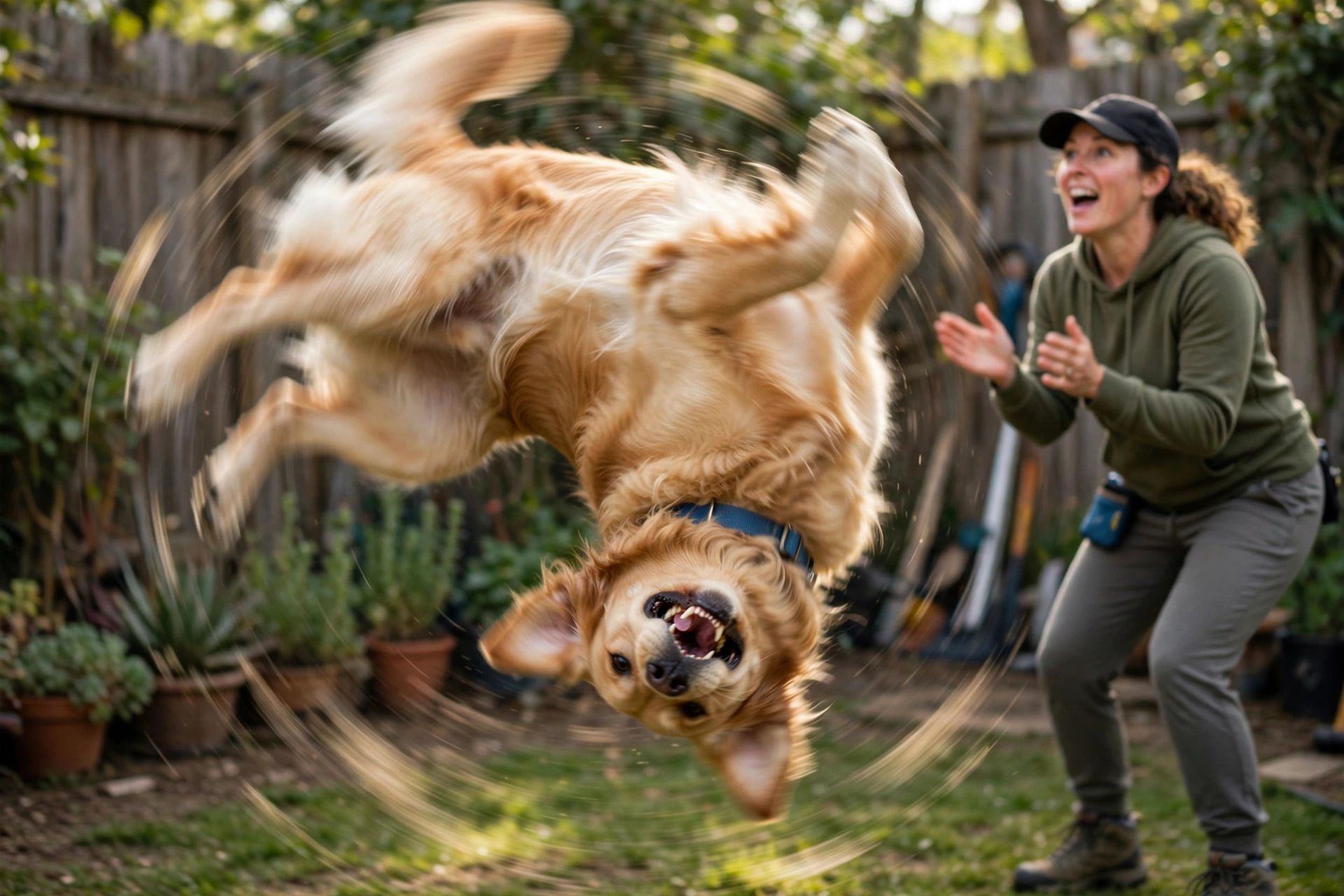
Now that your dog understands the motion, add the verbal cue. Say “spin” right before you give the hand signal, then reward the completed turn. Repeat this pairing five or six times per session. Dogs learn the word fastest when it predicts the gesture they already know.
Over the next few sessions, make your hand signal smaller and smaller — use fewer fingers, raise your hand higher, bring it closer to your body — until your dog spins on the word alone. End every session on a success, even if that means going back to an easy lured rep.
Helpful pick: PetSafe Treat Pouch Sport — quick-access treat storage keeps your reward timing sharp as you name the trick.
Step 5: Add the Opposite Direction
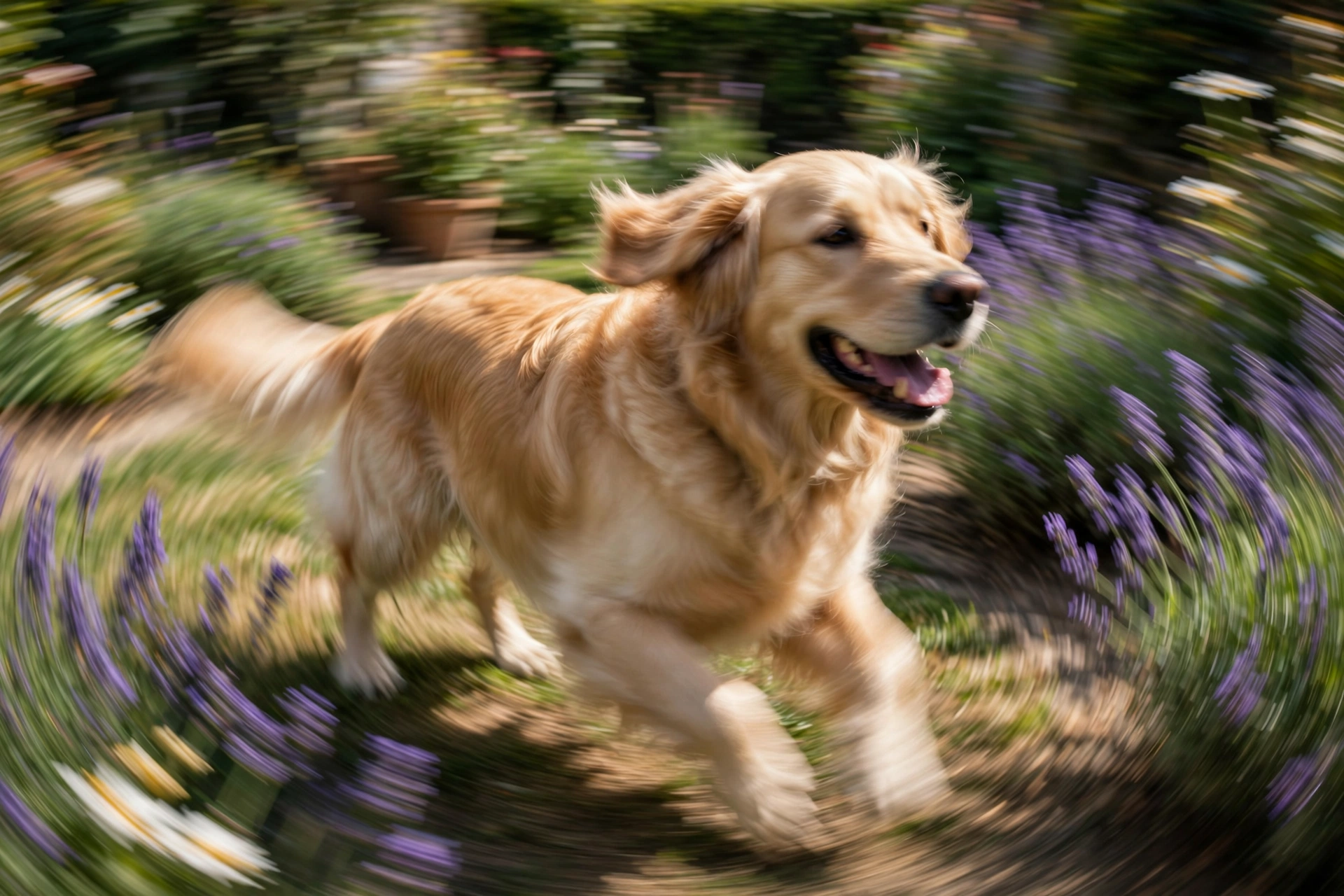
Most dogs naturally prefer one direction, but training both is great for balanced body awareness — and it gives you a second trick for free. Use a different cue word (many trainers use “twirl” for the opposite direction) and start the lure on the other side, just like Step 1.
Don’t rush this: teach the second direction in separate sessions so the cues don’t blur together. Once each direction works on its own cue, alternate randomly so your dog learns to listen for which word you say.
Helpful pick: KONG Classic — stuff and freeze it as a jackpot reward after a great two-direction session.
Step 6: Practice the Hold
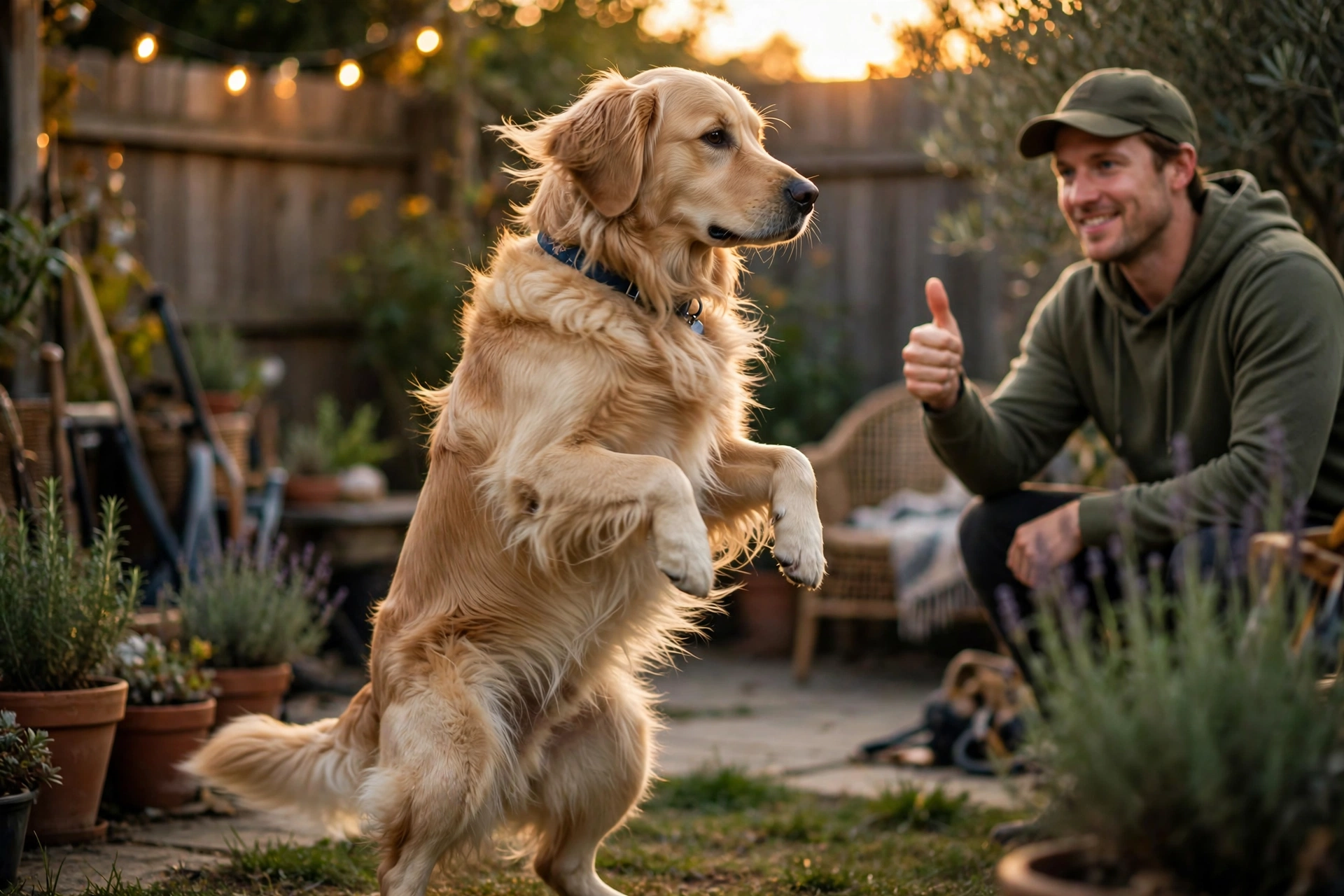
Practice means polishing. Ask for spins in different rooms, in the yard, and on different surfaces so the trick holds up outside your living room. Start adding a brief pause before the reward — your dog learns to finish the full 360 and wait for the payoff instead of spinning wildly off-balance.
Keep sessions short (three to five minutes) and always quit while your dog is still excited. Spin is also an excellent warm-up before a walk or training class: a couple of reps burns off that first burst of energy and gets your dog focused on you.
Helpful pick: Benebone Wishbone — a long-lasting chew for winding down after an enthusiastic spin practice session.
Step 7: Troubleshoot (Dizzy, Won’t Complete)

Dog gets dizzy: Limit sessions to just a few spins at a time and always reward calmly between reps. If your dog wobbles, stop the session — spinning is meant to be fun, not a workout.
Dog won’t complete the turn: You’re asking for too much at once. Go back to rewarding quarter turns, and make sure the lure stays at nose height — too high causes sitting, too low causes lying down.
Dog spins without being asked: This is actually good news — it means the behavior is strong! Just stop rewarding un-cued spins and only pay for the ones that follow your cue.
Helpful pick: Chuckit! Ball Launcher — trade a few spin reps for a game of fetch to keep training sessions playful and balanced.
Spin vs. Twirl: What’s the Difference?
There’s no official rule — it’s simply your naming choice. Most trainers assign “spin” to one direction (usually clockwise) and “twirl” to the opposite direction (counterclockwise). Using two different words lets you show off a dog who can turn either way on command, which looks fantastic and keeps your dog thinking.
Frequently Asked Questions
How long does it take to teach a dog to spin?
Most dogs learn the lured spin in two or three short sessions; getting it reliable on a verbal cue alone usually takes one to two weeks of brief daily practice.
Which direction should I teach first?
Watch which way your dog naturally turns when excited — that’s usually the easiest direction to start with. Train the opposite direction separately later.
Can senior dogs learn to spin?
Yes, as long as the movement is comfortable for them. Ask for slow, wide turns rather than tight fast ones, and skip this trick if your vet has flagged any spinal or balance issues.
Why does my dog sit instead of spinning?
Your lure is probably too high — when the treat rises above nose level, most dogs default to sitting. Lower your hand to nose height and try again.
Is spinning bad for dogs?
A few spins are perfectly fine for healthy dogs. Keep reps low, sessions short, and stop if your dog looks dizzy or uncomfortable.
Keep Reading
- How to Teach Your Dog to Spin
- How to Teach Your Dog to Wave: 7 Steps
- How to Teach Your Dog to Crawl
- How to Teach Your Dog to Play Dead: 7 Steps
- How to Teach Your Dog to Bow: 7 Steps
As an Amazon Associate, PetPostHub earns from qualifying purchases.