
10 Superfoods for Dogs: Nutrient Powerhouses to Add to the Bowl

You’ve probably heard the term “superfood” tossed around in human nutrition circles — but did you know many of the same nutrient-dense foods can benefit your dog, too? Adding superfoods for dogs to the bowl is one of the simplest ways to support your pup’s immune system, digestion, coat, and overall vitality, without overhauling their diet. The key is knowing which foods are safe, how much to serve, and what to skip.
In this guide, we’ll walk through 10 of the best superfoods for dogs, the nutrients that make each one special, and exactly how to serve them safely. A quick rule of thumb first: extras and toppers should make up no more than 10% of your dog’s daily calories — the rest should come from a complete, balanced dog food. And as always, introduce one new food at a time and check with your vet if your dog has a health condition or takes medication.
Table of Contents
1. Blueberries

Key nutrients: Antioxidants (anthocyanins), vitamin C, vitamin K, fiber.
Blueberries are often called nature’s candy for dogs — and for good reason. Their deep color comes from anthocyanins, powerful antioxidants that help protect cells from oxidative damage and support brain health, which is especially valuable for senior dogs. They’re also low in calories, making them a guilt-free training reward.
How to serve safely: Serve fresh or frozen, whole or halved for very small dogs (a whole blueberry can be a choking hazard for tiny breeds). A small handful a few times a week is plenty. Frozen blueberries also make a fantastic summer enrichment treat. Always wash them first, and skip any sweetened or dried versions with added sugar.
Helpful pick: Pupford Freeze Dried Blueberry Treats — a single-ingredient, shelf-stable way to give your dog blueberry goodness on the go.
2. Pumpkin
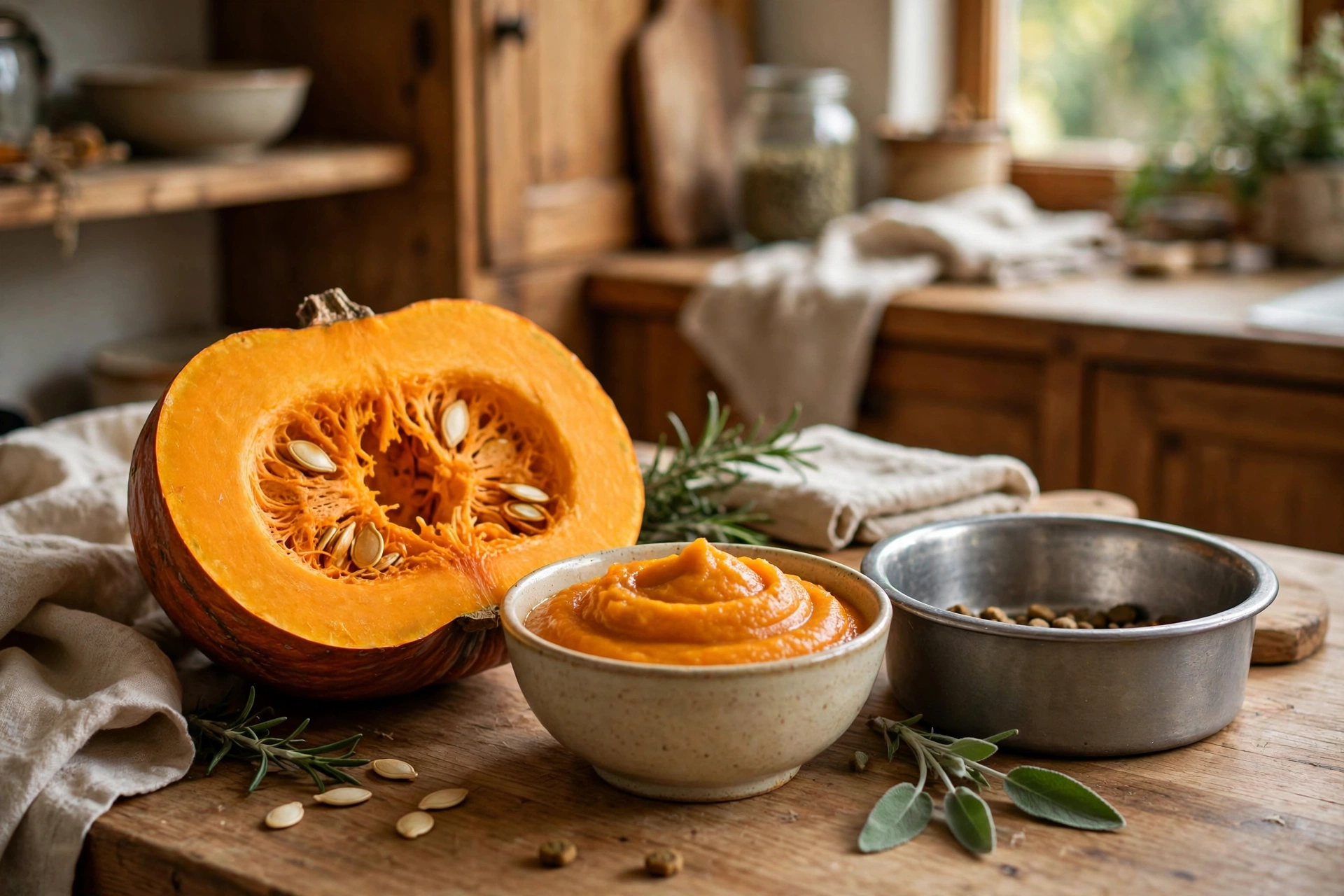
Key nutrients: Soluble fiber, vitamin A, vitamin C, potassium, iron.
Pumpkin is the digestive superhero of the dog world. Its soluble fiber helps regulate bowel movements — it can firm up loose stools and also ease mild constipation, working in both directions. It’s also rich in vitamin A, which supports eye health and immune function, and its high fiber content helps dogs feel full, which can support healthy weight management.
How to serve safely: Use plain, cooked pumpkin or 100% pure canned pumpkin (not pumpkin pie filling, which contains sugar and spices). Start with 1–2 teaspoons for small dogs and 1–2 tablespoons for large dogs, mixed into meals. Introduce gradually to avoid tummy upset.
Helpful pick: Diggin’ Your Dog Firm Up Pumpkin Powder — a concentrated pumpkin powder you can sprinkle on food for easy digestive support.
3. Salmon

Key nutrients: Omega-3 fatty acids (EPA & DHA), high-quality protein, vitamin D, B vitamins.
Salmon is one of the richest natural sources of omega-3 fatty acids, which support healthy skin and a glossy coat, joint comfort, brain function, and a normal inflammatory response. It’s also an excellent source of complete protein and vitamin D.
How to serve safely: Always serve salmon fully cooked — never raw, as raw salmon can carry parasites that cause salmon poisoning disease. Remove all bones, skip heavy seasonings (especially garlic and onion), and serve plain, boneless, skinless portions as an occasional topper, once or twice a week. For a daily omega-3 boost, many owners use a pet-formulated salmon or fish oil instead.
Helpful pick: Zesty Paws Omega-3 Bites — a tasty chew formulated to support skin, coat, and joint health with omega fatty acids.
4. Sweet Potato

Key nutrients: Beta-carotene (vitamin A), fiber, vitamin B6, potassium, manganese.
Sweet potatoes are nutritional powerhouses packed with beta-carotene, which the body converts to vitamin A to support vision, immune health, and skin. Their fiber aids digestion, and they’re a gentle, slow-burning energy source — great for active dogs.
How to serve safely: Serve cooked only — baked, steamed, or boiled, then cooled and cut into bite-sized pieces. Never serve raw sweet potato, which is hard to digest. Skip marshmallows, butter, and brown sugar (save the casserole for yourself). Dehydrated sweet potato chews are also a popular single-ingredient treat.
Helpful pick: Wholesome Pride Sweet Potato Chews — 100% all-natural, single-ingredient sweet potato treats with no additives.
5. Spinach
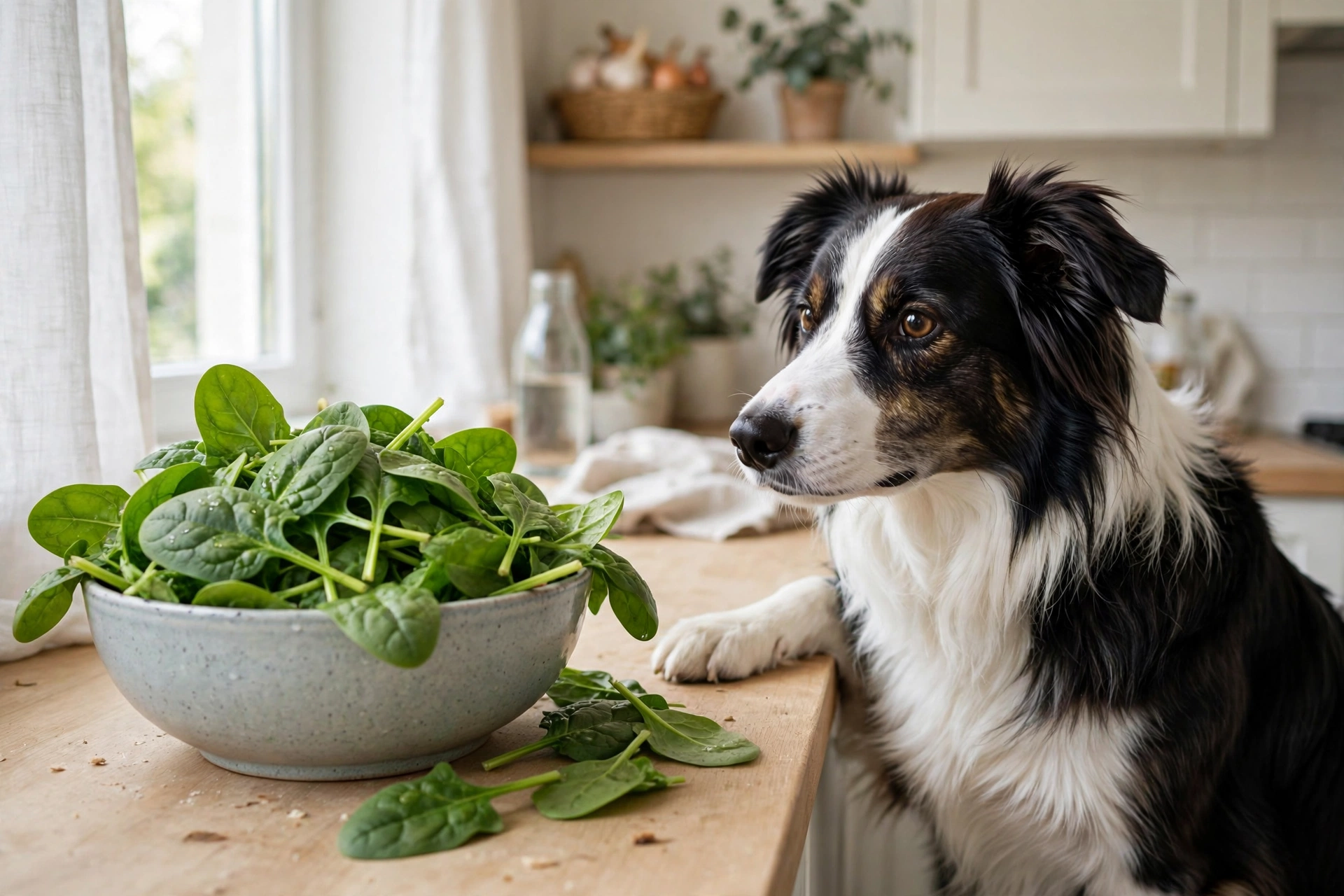
Key nutrients: Vitamins A, C, and K, iron, calcium, fiber, antioxidants.
Spinach is loaded with vitamins and minerals that support bone health, immune function, and overall vitality. Its antioxidants help combat oxidative stress, and the fiber supports healthy digestion. It’s one of the most nutrient-dense greens you can add to your dog’s bowl.
How to serve safely: Serve in moderation — a small amount of lightly steamed or finely chopped raw spinach mixed into food is ideal. Spinach contains oxalates, so dogs with kidney issues should skip it, and large amounts can interfere with calcium absorption. If your dog turns up their nose at greens, a pet-formulated greens powder is an easy alternative.
Helpful pick: Natural Dog Company Super Greens Food Topper — a blend of spinach, barley grass, spirulina, and other greens to sprinkle on meals.
6. Carrots

Key nutrients: Beta-carotene (vitamin A), fiber, vitamin K1, potassium, antioxidants.
Carrots are the perfect low-calorie crunch. Their beta-carotene supports vision and immune health, the fiber promotes healthy digestion, and the satisfying crunch can help scrape plaque from teeth, supporting dental health naturally. They’re also gentle on the stomach, making them ideal for dogs watching their weight.
How to serve safely: Serve raw baby carrots as crunchy treats, or steam and chop larger carrots for easier chewing. Cut into appropriately sized pieces for small dogs to prevent choking. Frozen carrots make a soothing chew for teething puppies. As always, wash them well first.
Helpful pick: Charlee Bear Veggie Treats — crunchy, low-calorie veggie treats (under 3 calories each) perfect for training rewards.
7. Eggs

Key nutrients: Complete protein (all essential amino acids), biotin, selenium, riboflavin, vitamin B12.
Eggs are one of the most complete protein sources available, containing every essential amino acid your dog needs for muscle maintenance and tissue repair. They’re also rich in biotin and selenium, which support healthy skin and coat, plus B vitamins for energy metabolism.
How to serve safely: Always cook eggs thoroughly — scrambled, boiled, or poached with no oil, butter, salt, or seasoning. Raw eggs carry a salmonella risk and contain avidin, which can interfere with biotin absorption. One egg a few times a week is a good topper for most dogs; adjust for small breeds.
Helpful pick: JADINGSFARM Freeze Dried Egg Yolk Treats — single-ingredient freeze-dried egg yolk treats and toppers rich in protein and nutrients.
8. Plain Yogurt & Kefir

Key nutrients: Probiotics, calcium, protein.
Plain yogurt and kefir are natural sources of probiotics — beneficial bacteria that support gut health and digestion. A healthy gut is closely tied to immune function, so these fermented dairy foods can be a gentle daily boost, especially for dogs with sensitive stomachs. They’re also good sources of calcium and protein.
How to serve safely: Choose plain, unsweetened yogurt or kefir with live active cultures — no added sugar, sweeteners (especially xylitol, which is toxic to dogs), or flavorings. A spoonful for small dogs or a few tablespoons for large dogs, a few times a week, is plenty. Skip dairy entirely if your dog is lactose intolerant, or try a goat-milk-based option, which many dogs digest more easily.
Helpful pick: The Honest Kitchen Instant Goat’s Milk — a probiotic-rich goat milk powder that mixes with water for an easy digestive topper.
9. Turmeric

Key nutrients: Curcumin (antioxidant compound).
Turmeric’s golden color comes from curcumin, a compound studied for its antioxidant properties and its potential to support a normal inflammatory response — which is why it’s popular with owners of senior dogs and active breeds. It’s one of the most researched “golden” ingredients in pet nutrition.
How to serve safely: A tiny pinch is all you need — turmeric should be given in very small amounts and always mixed with a healthy fat (like coconut oil) and a crack of black pepper to improve absorption. Too much can cause stomach upset. Turmeric can interact with certain medications, so check with your vet first, especially if your dog takes blood thinners or has gallbladder issues.
Helpful pick: Simply Organic Ground Turmeric — pure, organic turmeric powder for sprinkling a pinch into homemade golden paste or food.
10. Bone Broth

Key nutrients: Collagen, glucosamine, chondroitin, gelatin, amino acids, minerals.
Bone broth is made by slow-simmering bones and connective tissue, releasing collagen, glucosamine, and chondroitin — nutrients that support joint health and mobility. Its gelatin can also be soothing to the digestive tract, and the savory flavor makes it irresistible to picky eaters. It’s also a great way to add hydration to dry kibble.
How to serve safely: Use pet-safe bone broth only — many store broths for humans contain onion, garlic, and excess sodium, all of which are harmful to dogs. Pour a few tablespoons over kibble, freeze it into cubes for summer treats, or serve warm (not hot) as a comforting topper for senior dogs.
Helpful pick: Brutus Bone Broth for Dogs — a dog-formulated bone broth made without onion, garlic, or excess salt.
How to Add Superfoods to Your Dog’s Diet
Ready to upgrade the bowl? Keep these ground rules in mind:
- Start small and slow. Introduce one new food at a time in tiny amounts, and watch for digestive upset over 2–3 days before adding the next.
- Stick to the 10% rule. Treats, toppers, and extras combined should make up no more than 10% of daily calories. Superfoods enhance a balanced diet — they don’t replace it.
- Keep it plain. No added salt, sugar, butter, garlic, onion, or artificial sweeteners. Xylitol (also labeled birch sugar) is extremely toxic to dogs — always check labels.
- Prep them right. Cook what needs cooking (salmon, eggs, sweet potato), wash produce, and cut everything to a safe size for your dog.
- Consider your dog’s needs. Puppies, seniors, and dogs with kidney disease, pancreatitis, or food allergies may need a modified approach — your vet can help tailor the list.
- Rotate for variety. You don’t need all ten every day. Rotating a few superfoods through the week keeps meals interesting and covers a wider nutrient spectrum.
Want a deeper dive on what’s safe versus off-limits? Check our complete guide to foods dogs can and can’t eat, our breakdown of omega-3 for dogs, and our roundup of the best dog supplements. For picky eaters, try sneaking superfoods into lick mat recipes or check our guide to the best dog food for allergies if sensitivities are a concern.
Frequently Asked Questions
What is the healthiest superfood for dogs?
There’s no single winner — different superfoods shine in different areas. Blueberries lead on antioxidants, salmon on omega-3s, pumpkin on fiber for digestion, and bone broth on joint-supporting collagen. A rotation of several is better than relying on just one.
Can I give my dog superfoods every day?
Yes, in small amounts. Most of these foods can be part of a daily routine as toppers, as long as the total extras stay under 10% of daily calories. Variety through the week is ideal.
Are superfoods safe for puppies?
Most are, in tiny portions — pumpkin and plain yogurt are gentle favorites for young tummies. But a growing puppy’s main nutrition should come from a complete puppy food, so keep extras minimal and introduce one at a time.
Can superfoods replace my dog’s regular food?
No. Superfoods are supplements to a complete, balanced diet, not replacements. They fill small nutritional gaps and add variety, but your dog’s primary food should always meet AAFCO nutritional standards.
Which human foods should I never give my dog?
Chocolate, grapes and raisins, onions and garlic, xylitol (birch sugar), macadamia nuts, alcohol, and cooked bones are all dangerous. When in doubt, check our full safety list of foods dogs can and can’t eat or call your vet.
As an Amazon Associate, PetPostHub earns from qualifying purchases.





2 Comments